
BASIC STRUCTURE OF CELL SAURABH MARU ASSISTANT PROFESSOR
BASIC STRUCTURE OF CELL SAURABH MARU ASSISTANT PROFESSOR SCHOOL OF PHARMACY & TECHNOLOGY MANAGEMENT, SVKM’S NMIMS, SHIRPUR

BASIC STRUCTURE OF A CELL
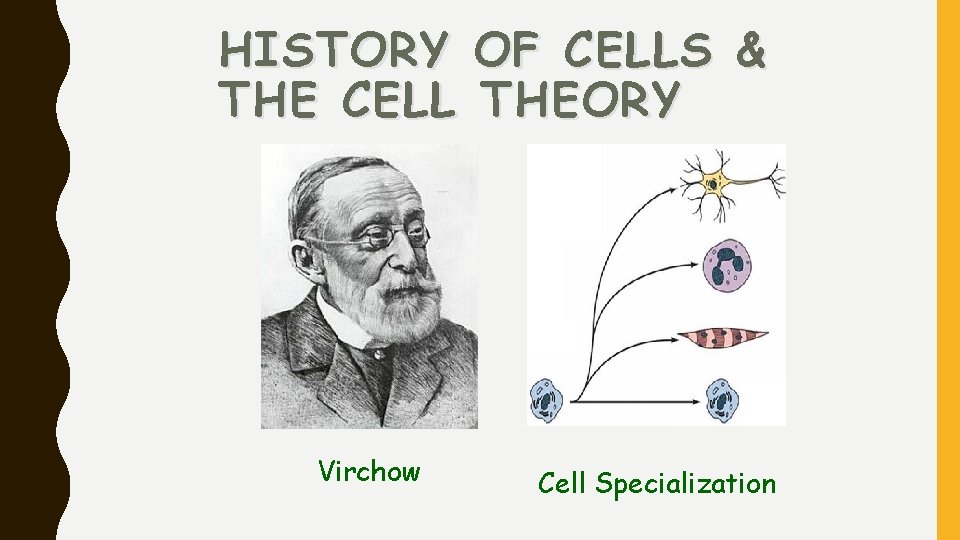
HISTORY THE CELL Virchow OF CELLS & THEORY Cell Specialization
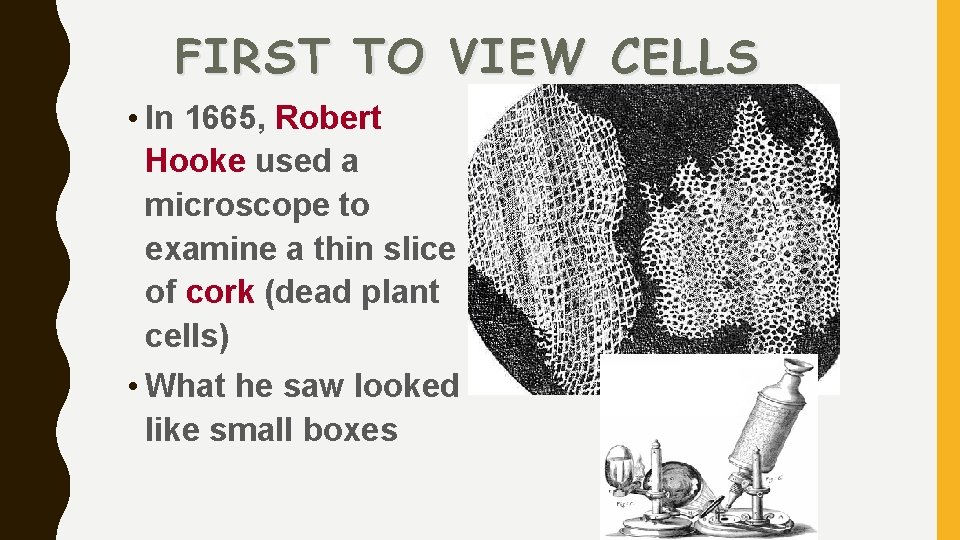
FIRST TO VIEW CELLS • In 1665, Robert Hooke used a microscope to examine a thin slice of cork (dead plant cells) • What he saw looked like small boxes

FIRST TO VIEW CELLS • Hooke is responsible for naming cells • Hooke called them “CELLS” because they looked like the small rooms that monks lived in called Cells
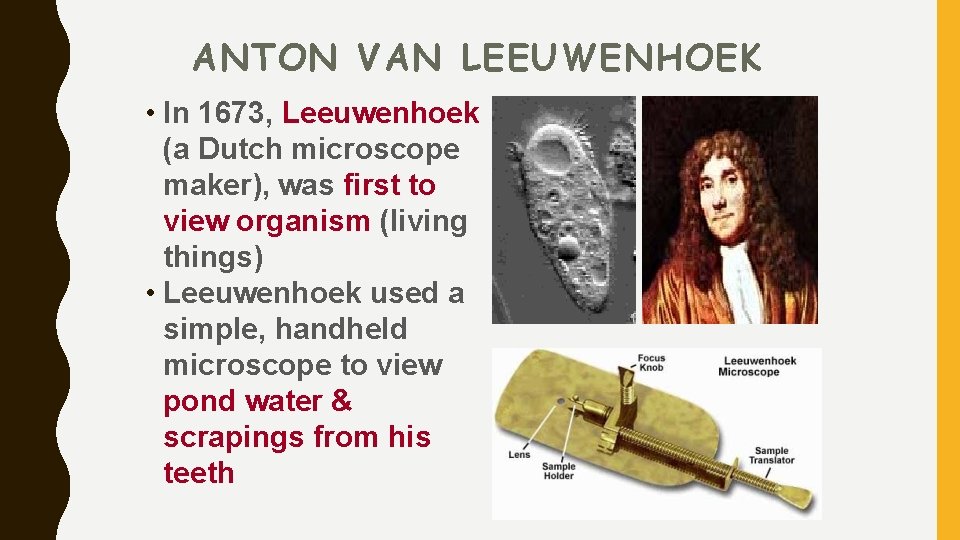
ANTON VAN LEEUWENHOEK • In 1673, Leeuwenhoek (a Dutch microscope maker), was first to view organism (living things) • Leeuwenhoek used a simple, handheld microscope to view pond water & scrapings from his teeth
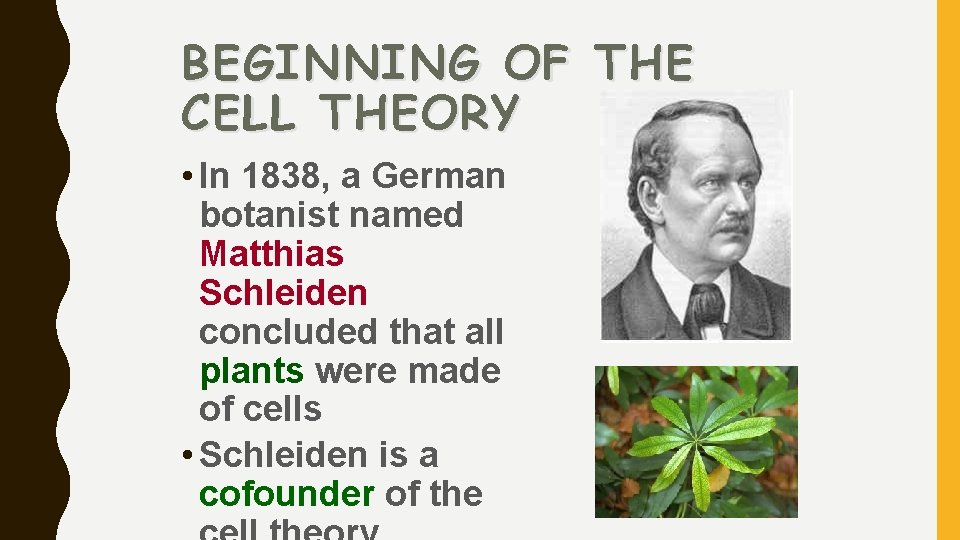
BEGINNING OF THE CELL THEORY • In 1838, a German botanist named Matthias Schleiden concluded that all plants were made of cells • Schleiden is a cofounder of the
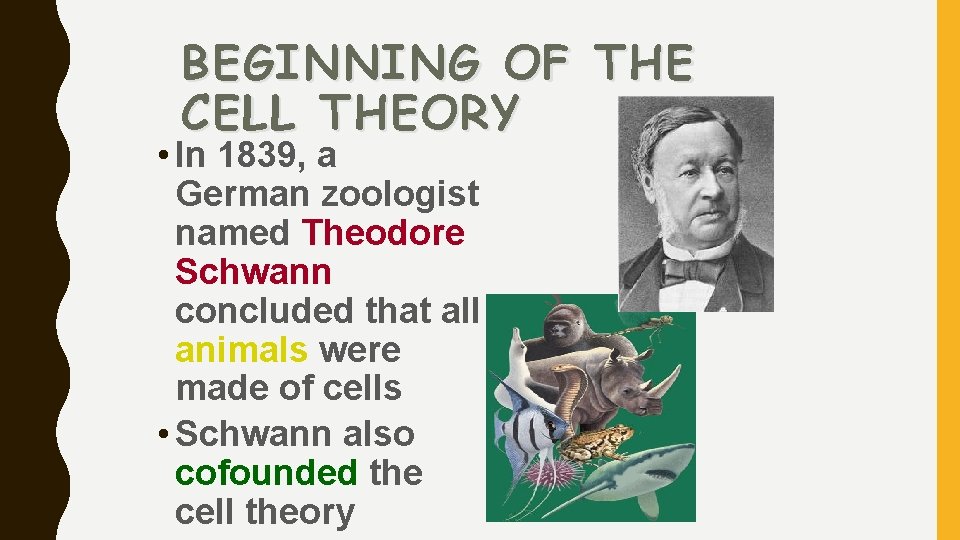
BEGINNING OF THE CELL THEORY • In 1839, a German zoologist named Theodore Schwann concluded that all animals were made of cells • Schwann also cofounded the cell theory

BEGINNING OF THE CELL THEORY • In 1855, a German medical doctor named Rudolph Virchow observed, under the microscope, cells dividing • He reasoned that all cells come from other preexisting cells by cell division
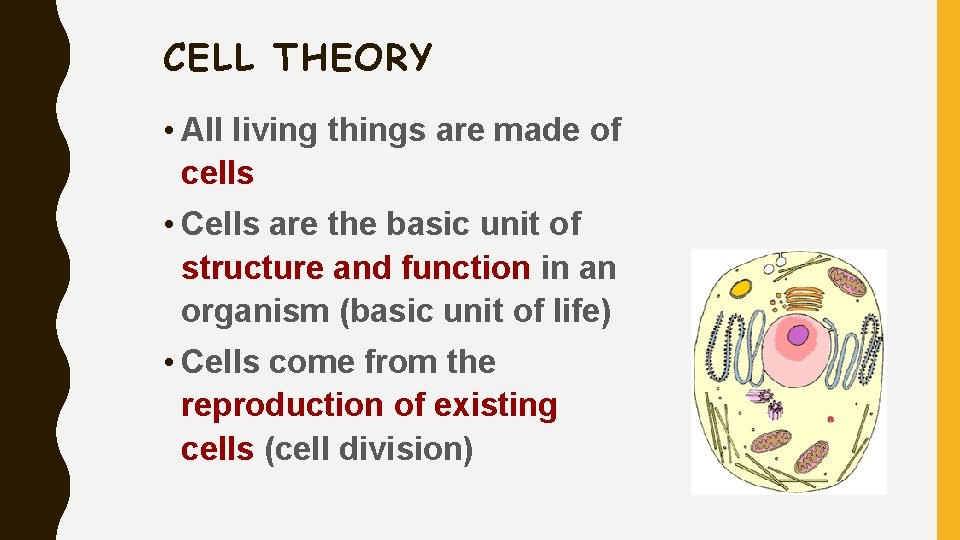
CELL THEORY • All living things are made of cells • Cells are the basic unit of structure and function in an organism (basic unit of life) • Cells come from the reproduction of existing cells (cell division)
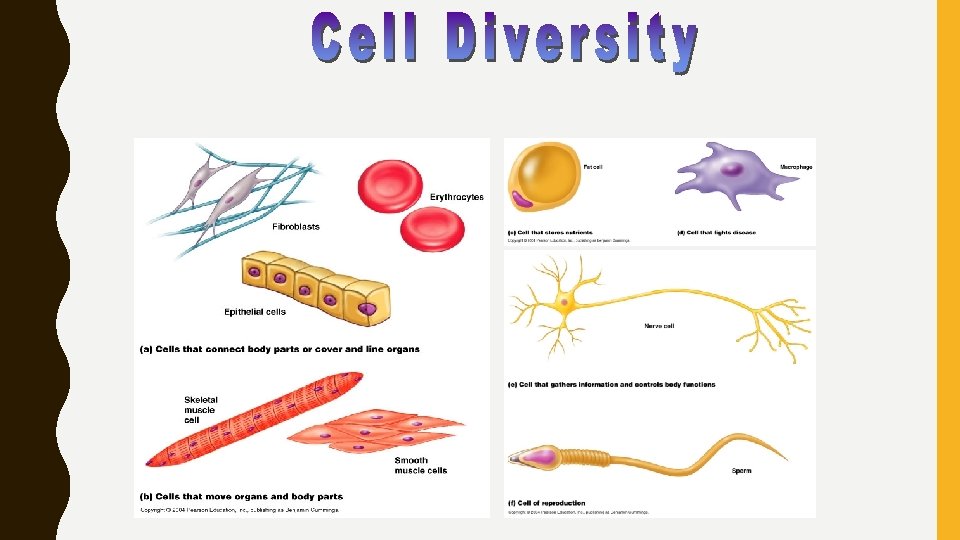

SIMPLE OR COMPLEX CELLS
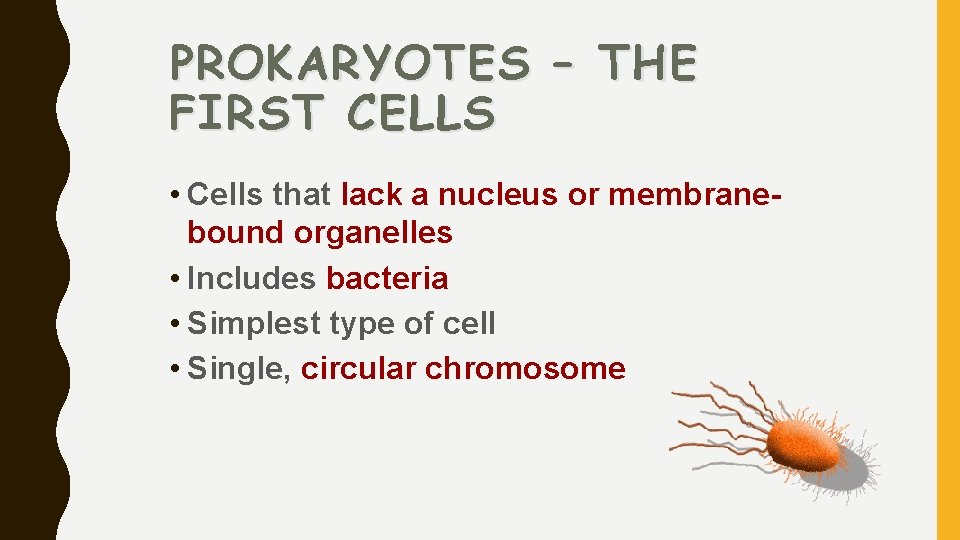
PROKARYOTES – THE FIRST CELLS • Cells that lack a nucleus or membranebound organelles • Includes bacteria • Simplest type of cell • Single, circular chromosome
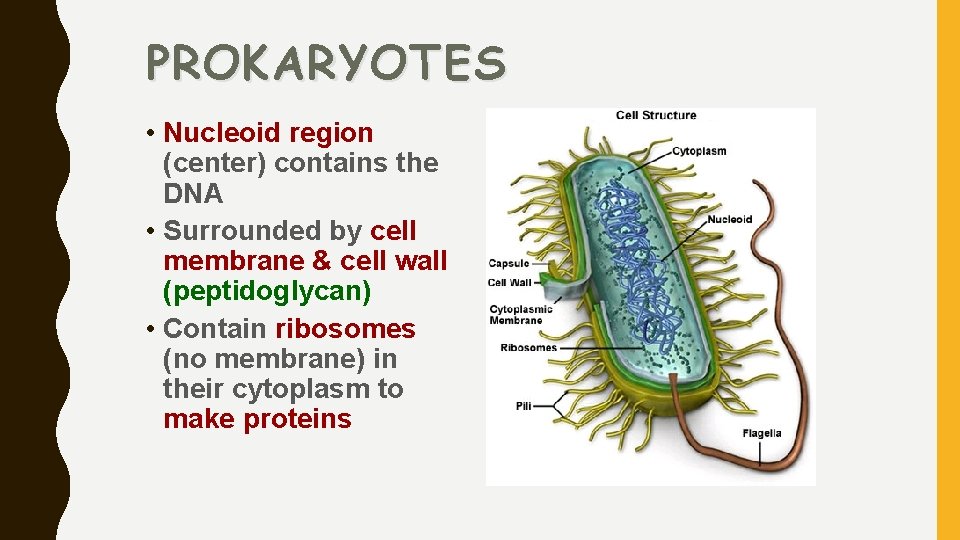
PROKARYOTES • Nucleoid region (center) contains the DNA • Surrounded by cell membrane & cell wall (peptidoglycan) • Contain ribosomes (no membrane) in their cytoplasm to make proteins
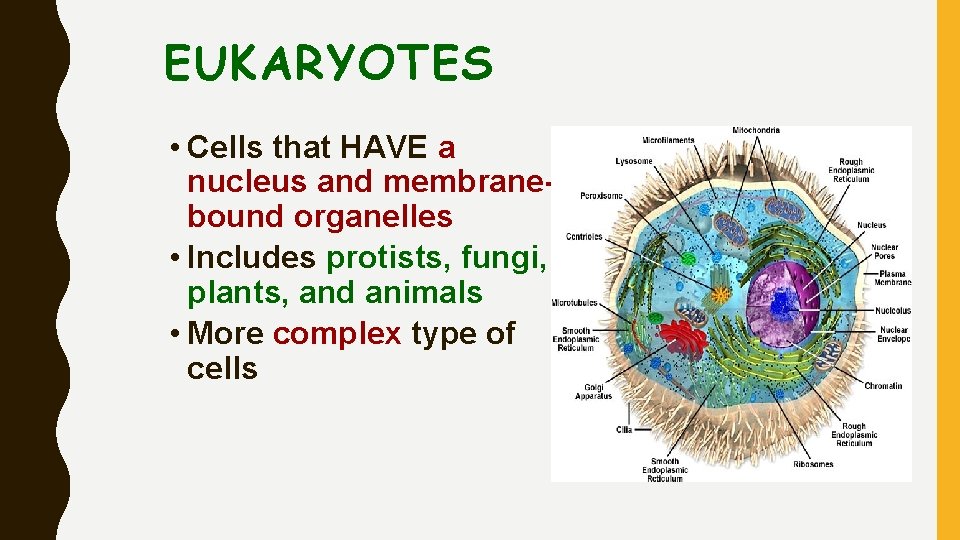
EUKARYOTES • Cells that HAVE a nucleus and membranebound organelles • Includes protists, fungi, plants, and animals • More complex type of cells
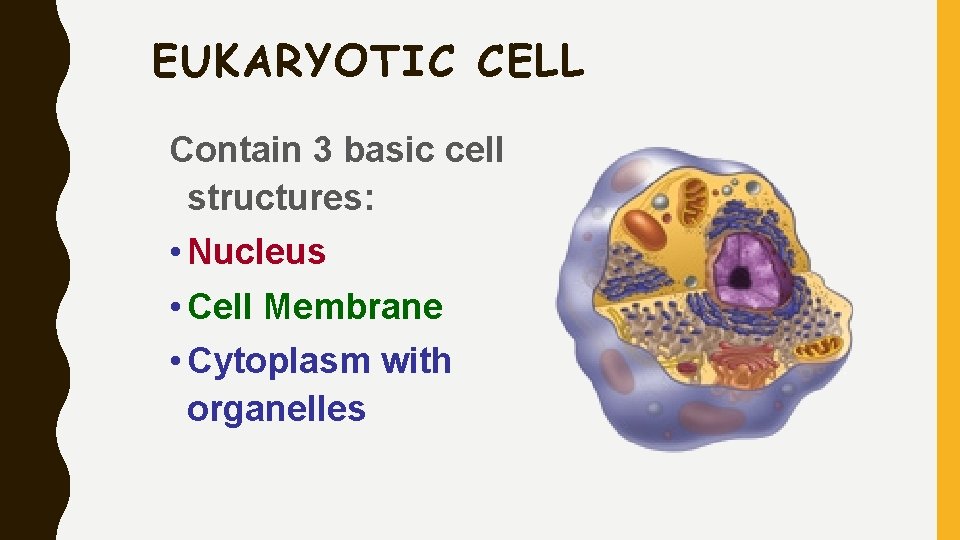
EUKARYOTIC CELL Contain 3 basic cell structures: • Nucleus • Cell Membrane • Cytoplasm with organelles
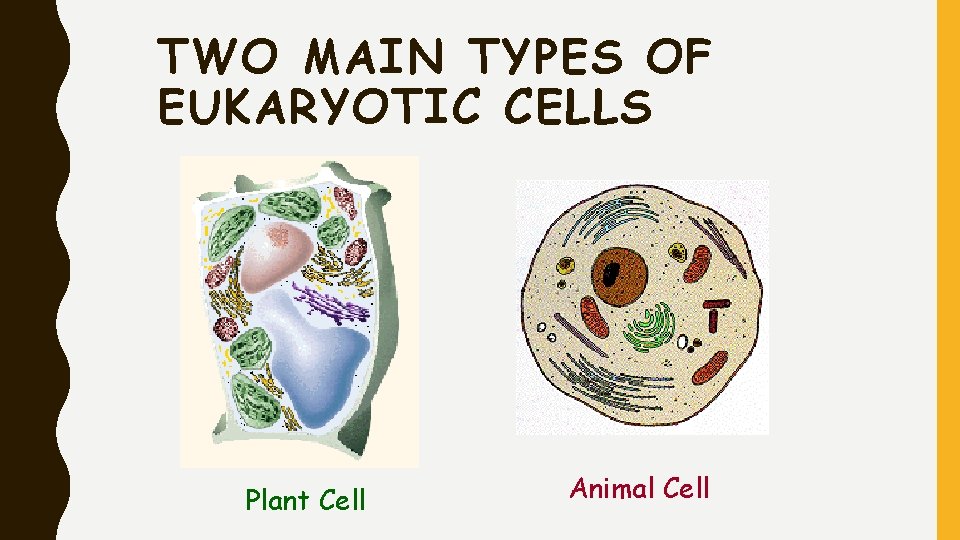
TWO MAIN TYPES OF EUKARYOTIC CELLS Plant Cell Animal Cell
ORGANELLES
ORGANELLES • Very small (Microscopic) • Perform various functions for a cell • Found in the cytoplasm • May or may not be membranebound
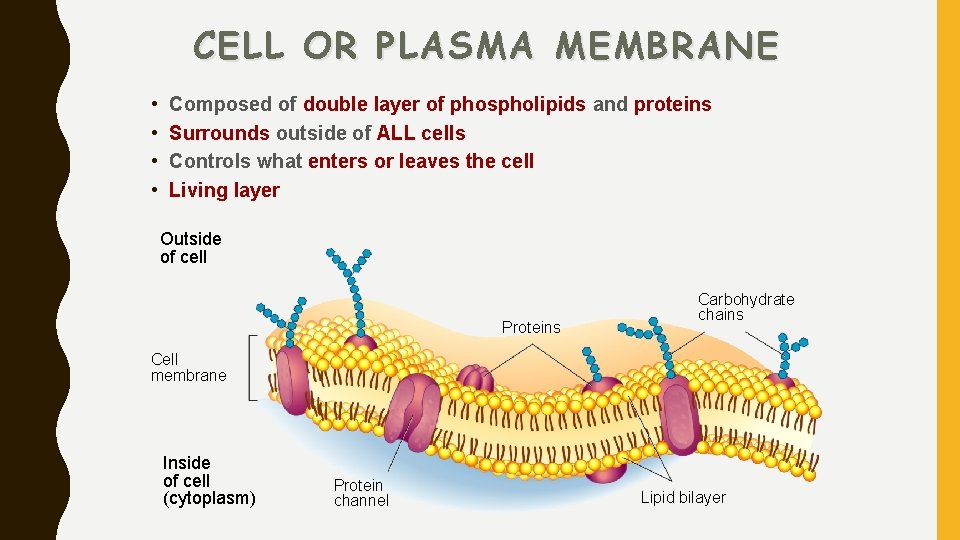
CELL OR PLASMA MEMBRANE • • Composed of double layer of phospholipids and proteins Surrounds outside of ALL cells Controls what enters or leaves the cell Living layer Outside of cell Proteins Carbohydrate chains Cell membrane Inside of cell (cytoplasm) Protein channel Lipid bilayer
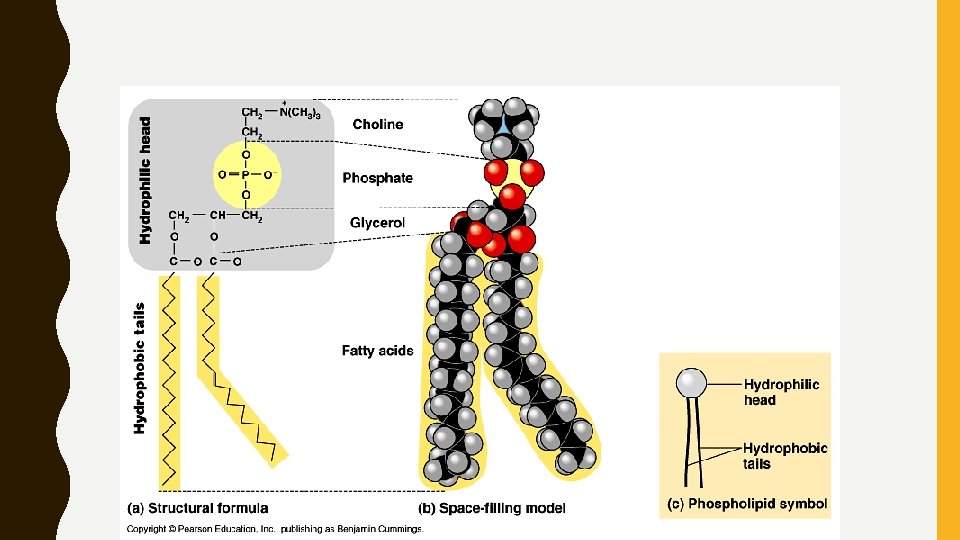
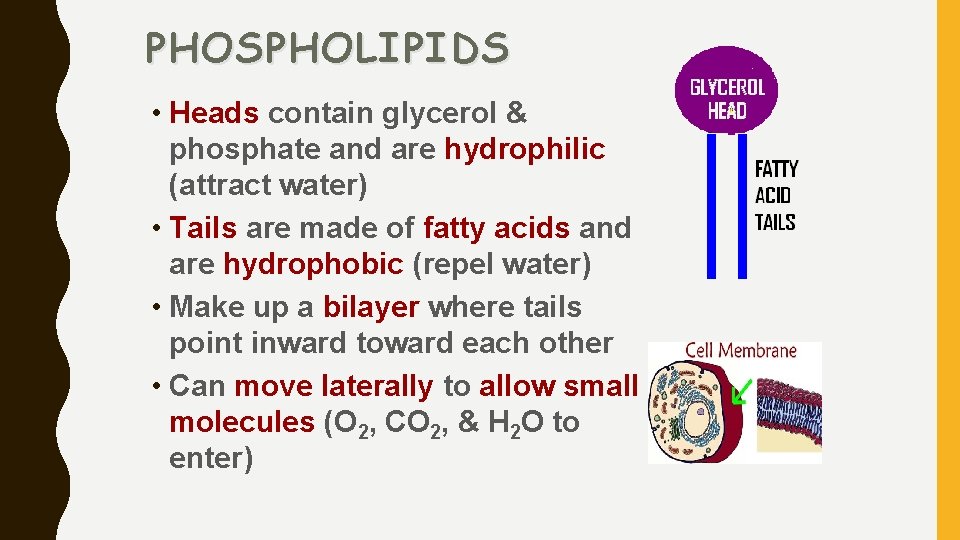
PHOSPHOLIPIDS • Heads contain glycerol & phosphate and are hydrophilic (attract water) • Tails are made of fatty acids and are hydrophobic (repel water) • Make up a bilayer where tails point inward toward each other • Can move laterally to allow small molecules (O 2, CO 2, & H 2 O to enter)
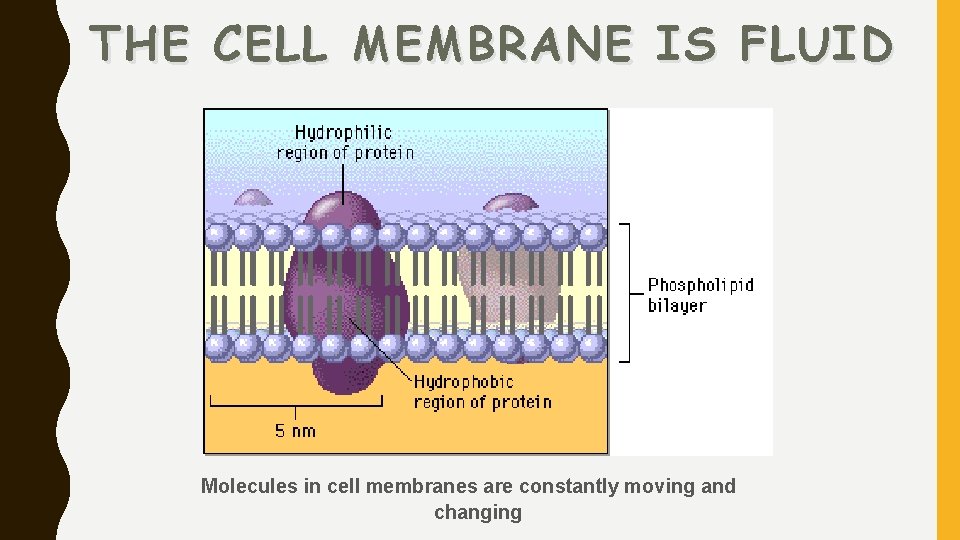
THE CELL MEMBRANE IS FLUID Molecules in cell membranes are constantly moving and changing
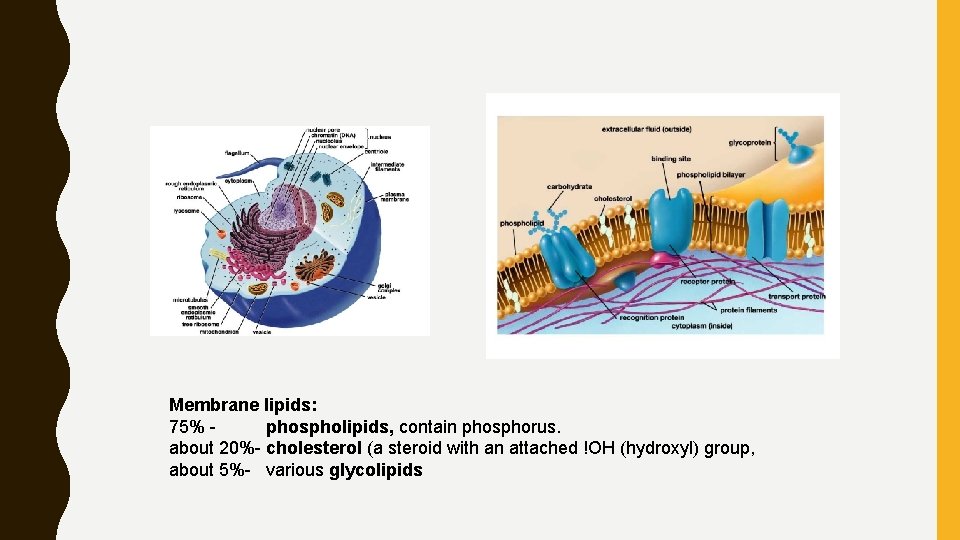
Membrane lipids: 75% phospholipids, contain phosphorus. about 20%- cholesterol (a steroid with an attached !OH (hydroxyl) group, about 5%- various glycolipids
Bilayer arrangementbecause lipids are amphipathic molecules -have both polar and nonpolar parts. In phospholipids polar part- phosphate-containing “head, ” hydrophilic nonpolar parts- two long fatty acid “tails, ” hydrophobic hydrocarbon chains “like seeks like, ”- phospholipid molecules orient themselves in bilayer with their hydrophilic heads facing outward. Heads face watery fluid on either side—cytosol on inside and extracellular fluid on outside. Hydrophobic fatty acid tails in each half of the bilayer point toward one another, forming a nonpolar, hydrophobic region in membrane’s interior
Cholesterol molecules - weakly amphipathic -interspersed among other lipids in both layers of membrane OH group - only polar region of cholesterol, - forms hydrogen bonds with polar heads of phospholipids and glycolipids stiff steroid rings and hydrocarbon tail of cholesterol are nonpolar; fit among fatty acid tails of phospholipids and glycolipids: carbohydrate groups of form a polar “head”; their fatty acid “tails” nonpolar glycolipids appear only in membrane layer that faces extracellular fluid, a reason for two sides of bilayer are asymmetric or different
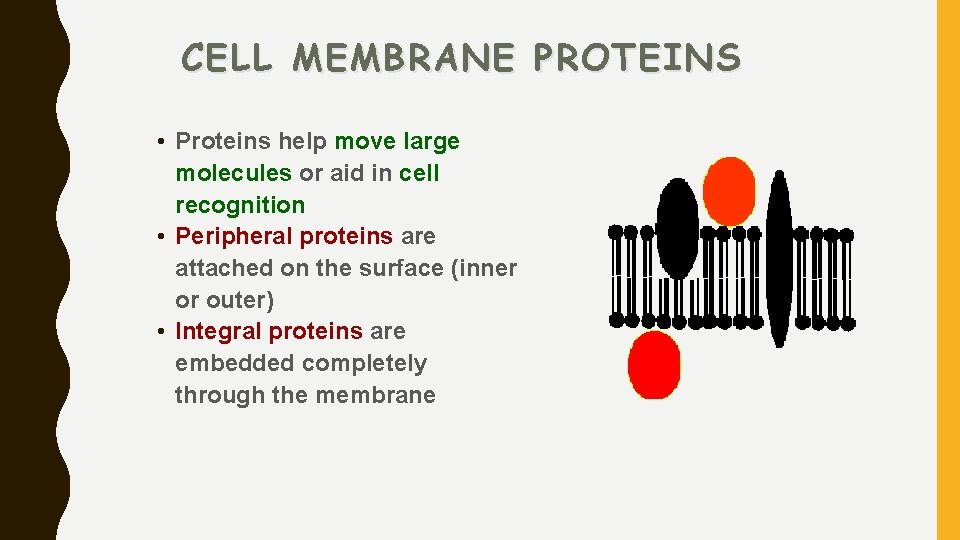
CELL MEMBRANE PROTEINS • Proteins help move large molecules or aid in cell recognition • Peripheral proteins are attached on the surface (inner or outer) • Integral proteins are embedded completely through the membrane
Many integral proteins are glycoproteins • Carbohydrate groups attached to ends that protrude into extracellular fluid. • The carbohydrates are oligosaccharides (oligo-few; -saccharides sugars), chains of 2 to 60 monosaccharides • Carbohydrate portions of glycolipids and glycoproteins form an extensive sugary coat called the glycocalyx • Pattern of carbohydrates in glycocalyx varies from one cell to another. • Glycocalyx acts like a molecular “signature” – enables cells to recognize one another.
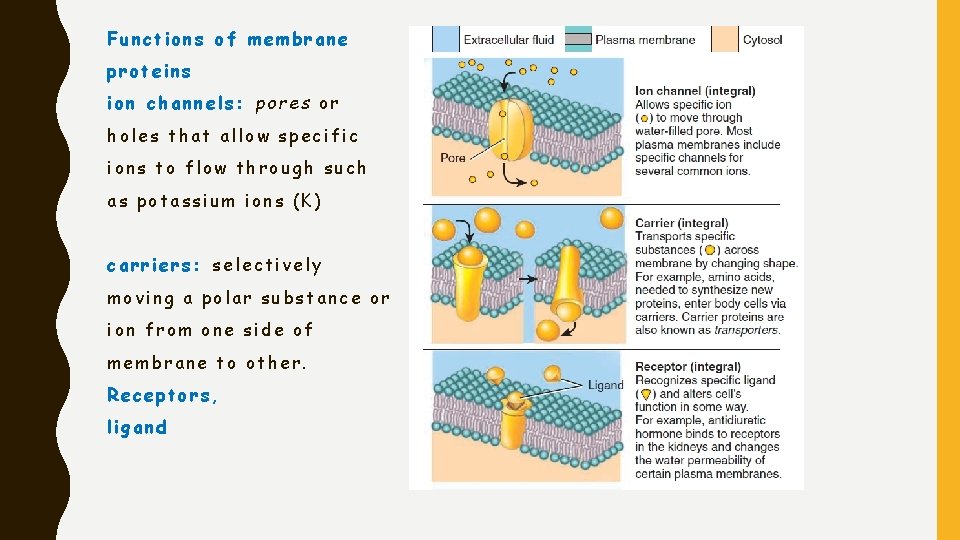
Functions of membrane proteins ion channels: pores or holes that allow specific ions to flow through such as potassium ions (K) carriers: selectively moving a polar substance or ion from one side of membrane to other. Receptors, ligand
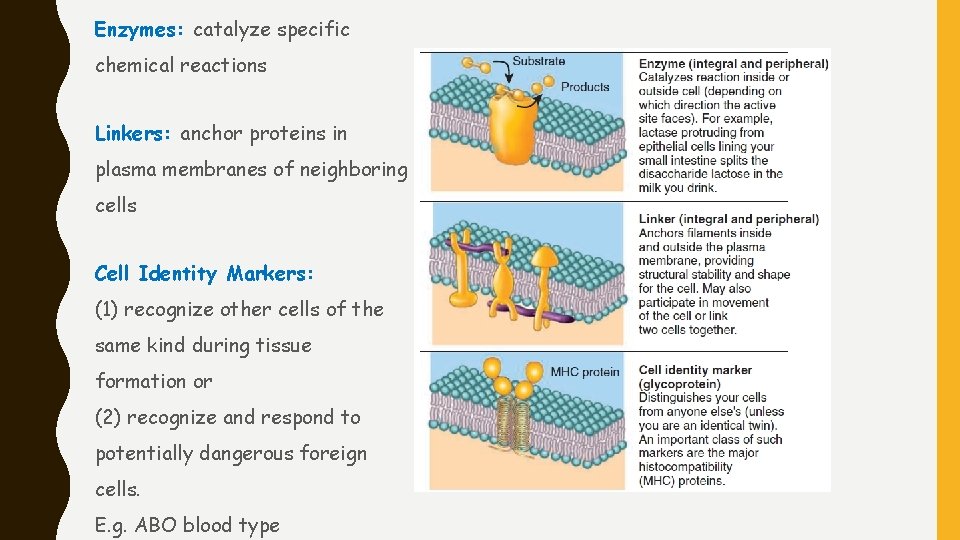
Enzymes: catalyze specific chemical reactions Linkers: anchor proteins in plasma membranes of neighboring cells Cell Identity Markers: (1) recognize other cells of the same kind during tissue formation or (2) recognize and respond to potentially dangerous foreign cells. E. g. ABO blood type
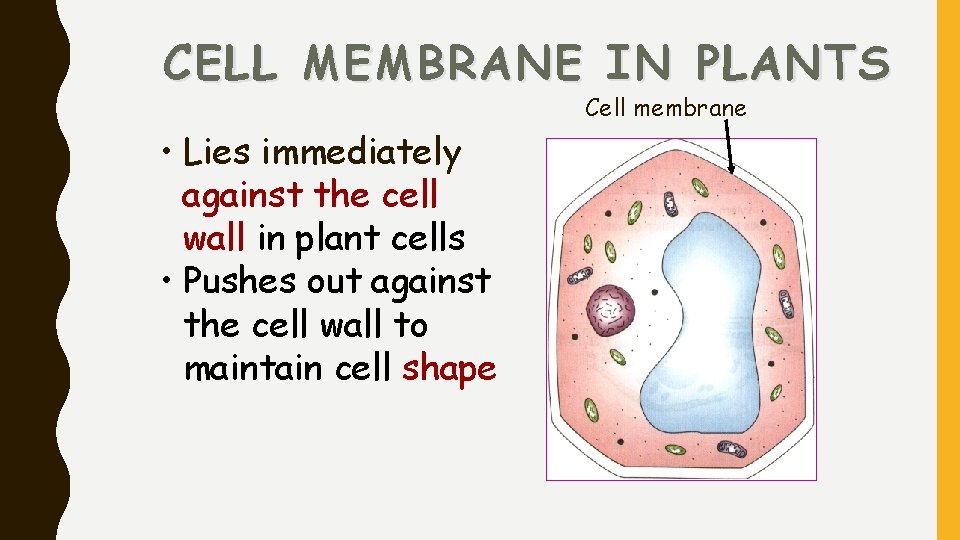
CELL MEMBRANE IN PLANTS Cell membrane • Lies immediately against the cell wall in plant cells • Pushes out against the cell wall to maintain cell shape
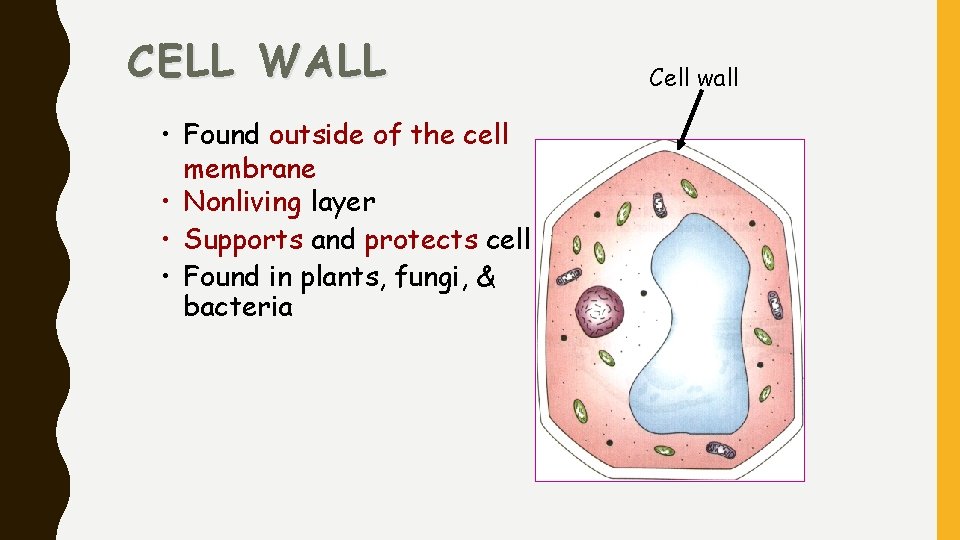
CELL WALL • Found outside of the cell membrane • Nonliving layer • Supports and protects cell • Found in plants, fungi, & bacteria Cell wall
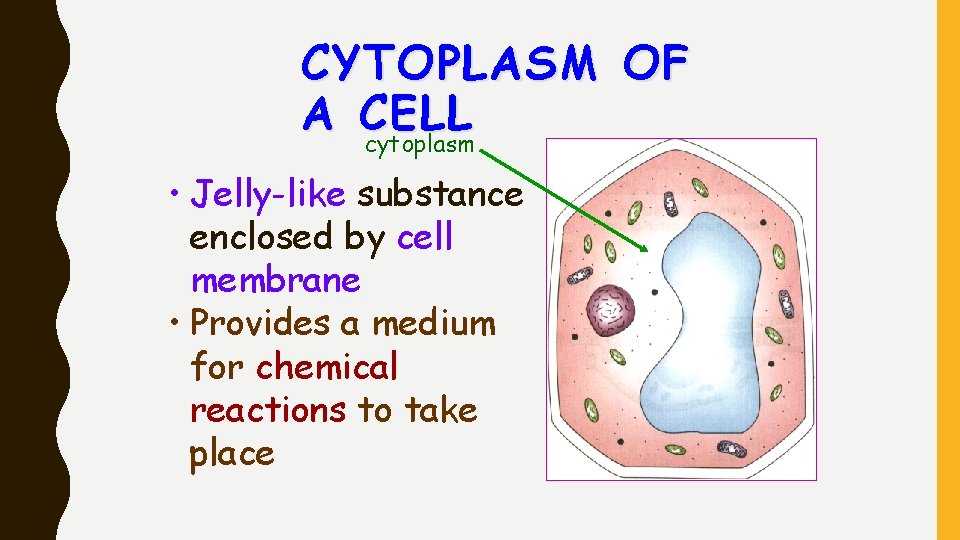
CYTOPLASM OF A CELL cytoplasm • Jelly-like substance enclosed by cell membrane • Provides a medium for chemical reactions to take place
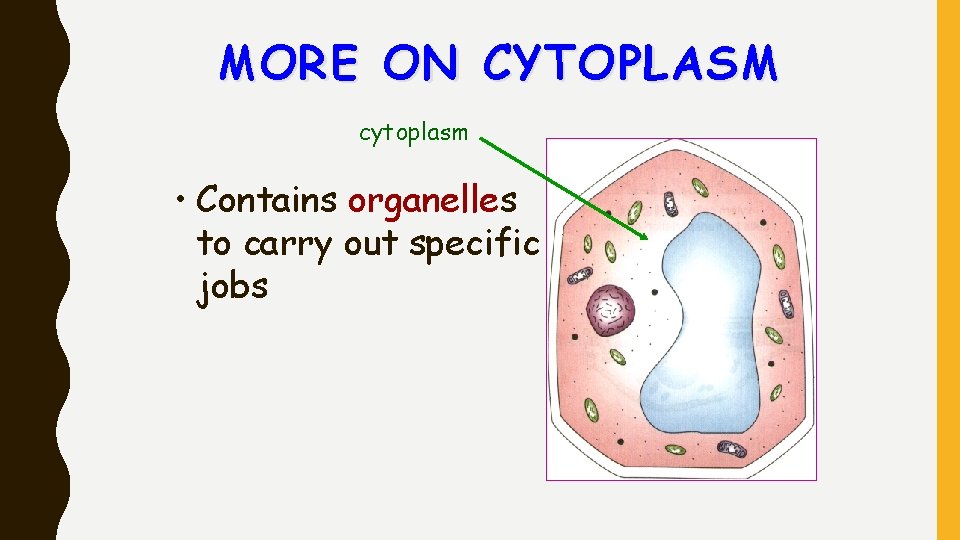
MORE ON CYTOPLASM cytoplasm • Contains organelles to carry out specific jobs
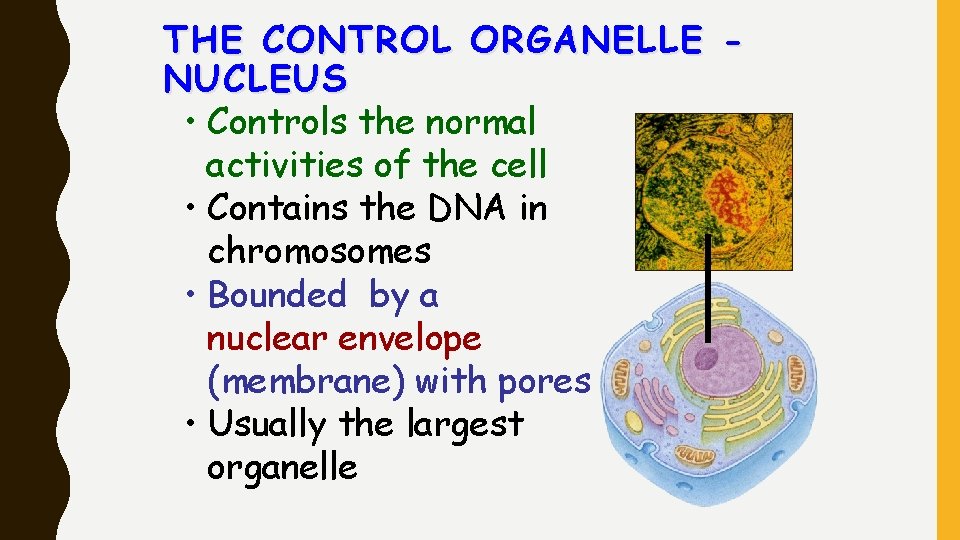
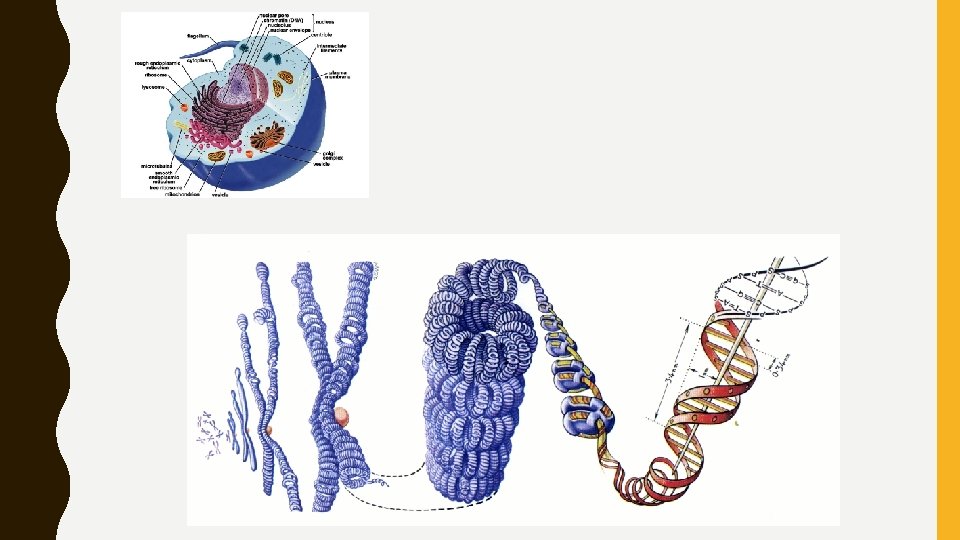
THE CONTROL ORGANELLE NUCLEUS • Controls the normal activities of the cell • Contains the DNA in chromosomes • Bounded by a nuclear envelope (membrane) with pores • Usually the largest organelle
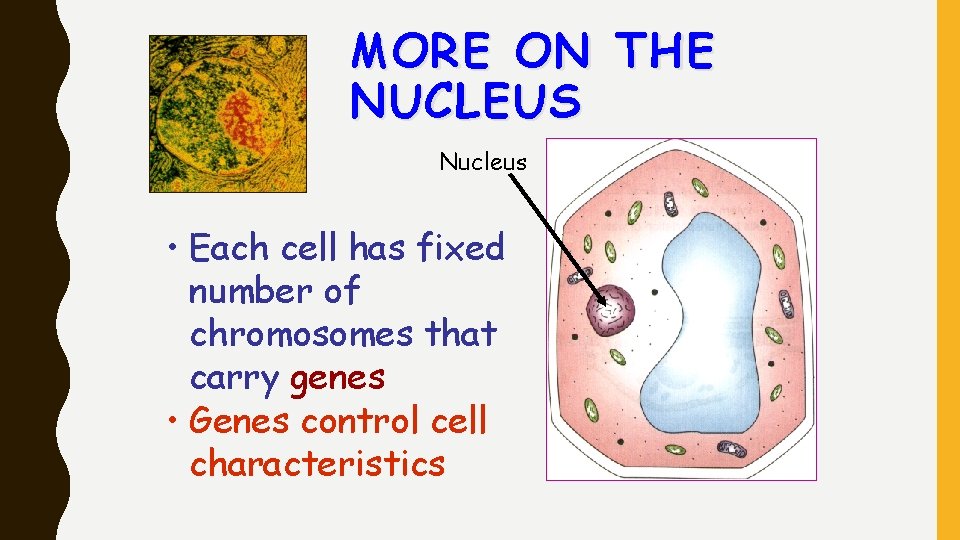
MORE ON THE NUCLEUS Nucleus • Each cell has fixed number of chromosomes that carry genes • Genes control cell characteristics
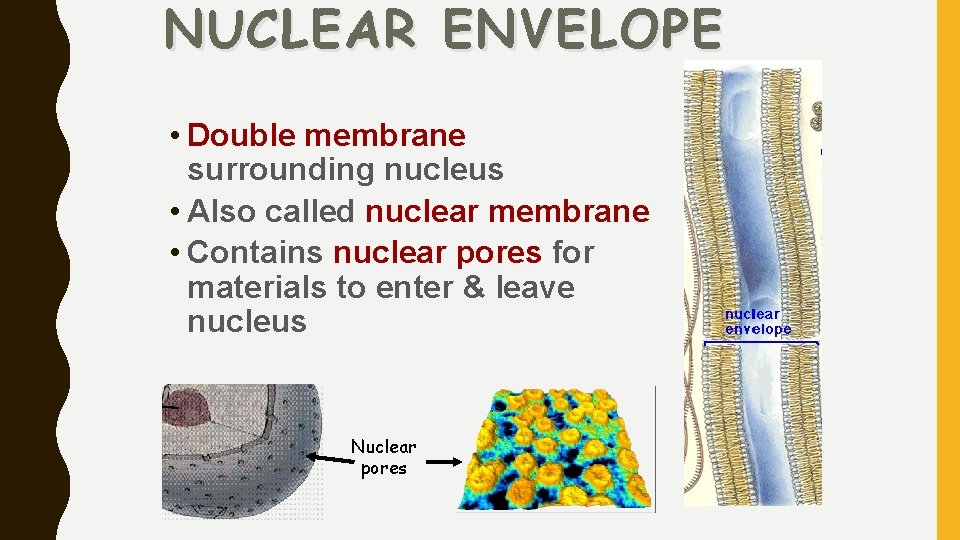
NUCLEAR ENVELOPE • Double membrane surrounding nucleus • Also called nuclear membrane • Contains nuclear pores for materials to enter & leave nucleus Nuclear pores
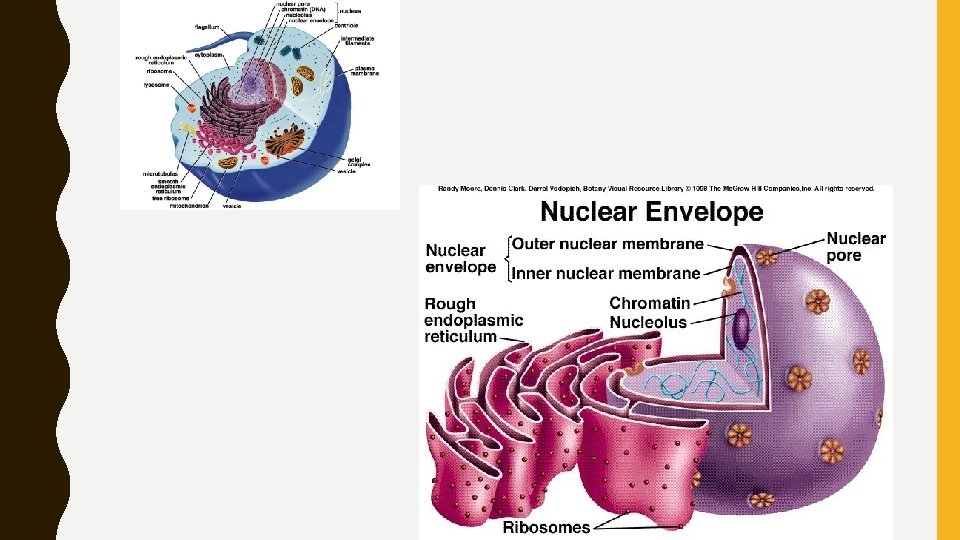
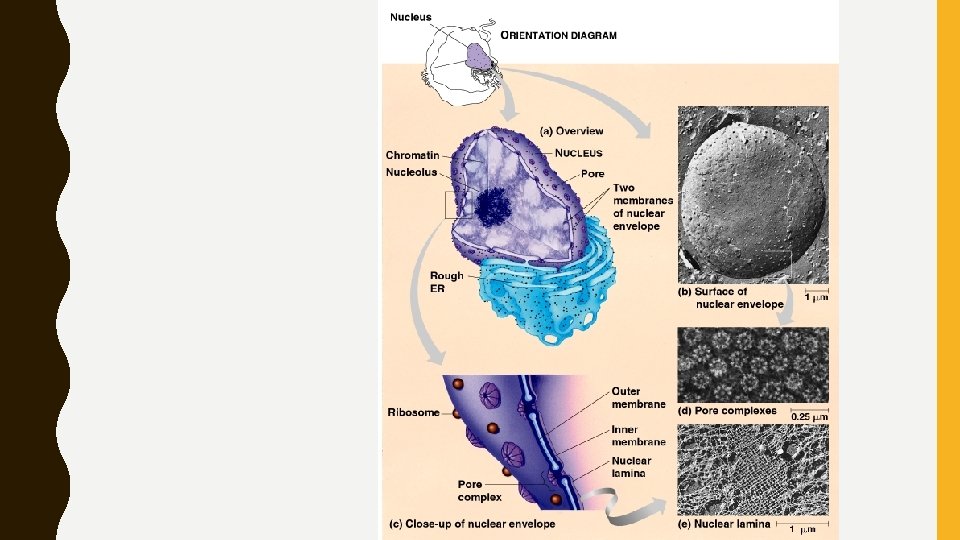
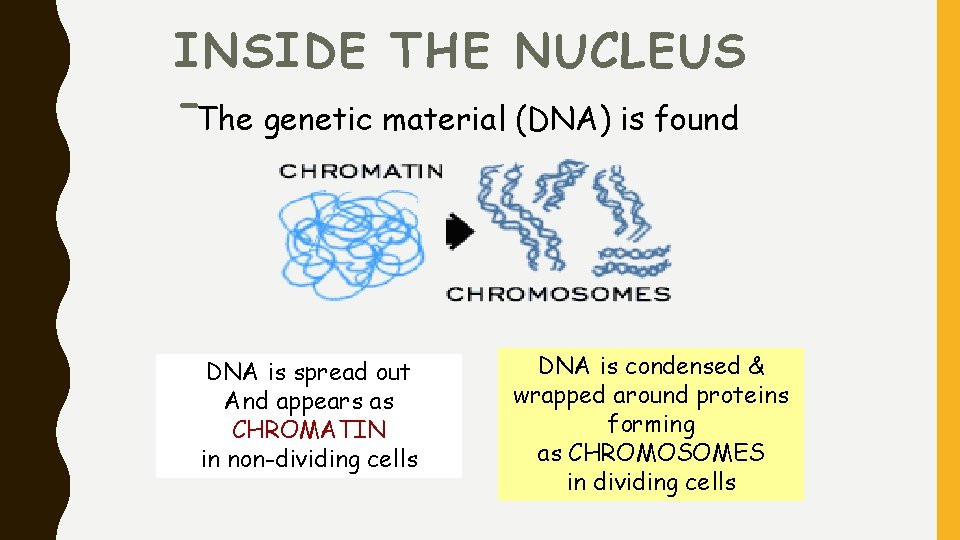
INSIDE THE NUCLEUS -The genetic material (DNA) is found DNA is spread out And appears as CHROMATIN in non-dividing cells DNA is condensed & wrapped around proteins forming as CHROMOSOMES in dividing cells
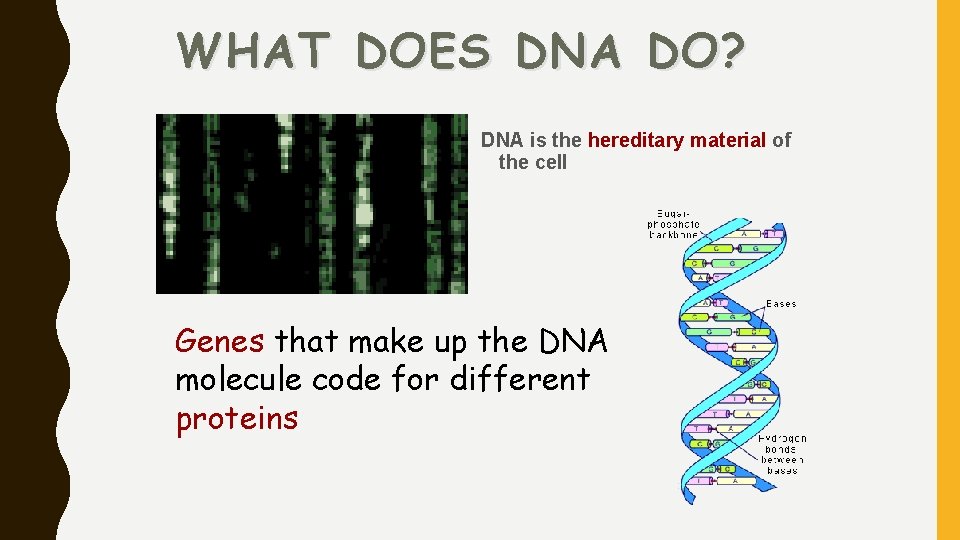
WHAT DOES DNA DO? DNA is the hereditary material of the cell Genes that make up the DNA molecule code for different proteins
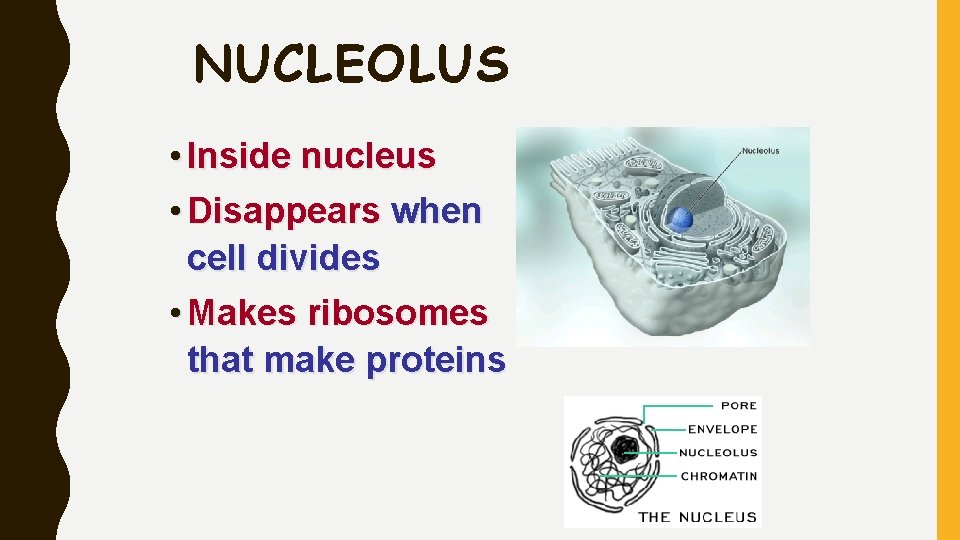
NUCLEOLUS • Inside nucleus • Disappears when cell divides • Makes ribosomes that make proteins
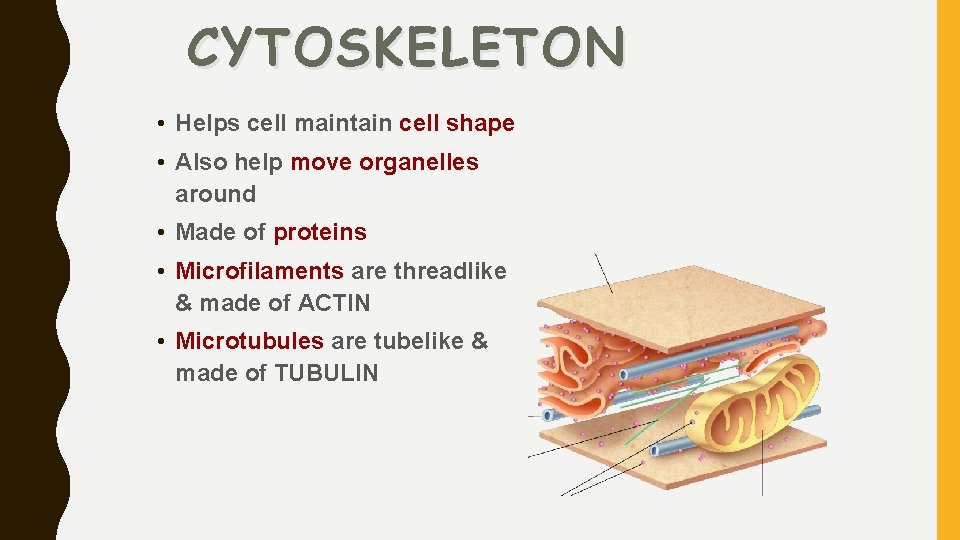
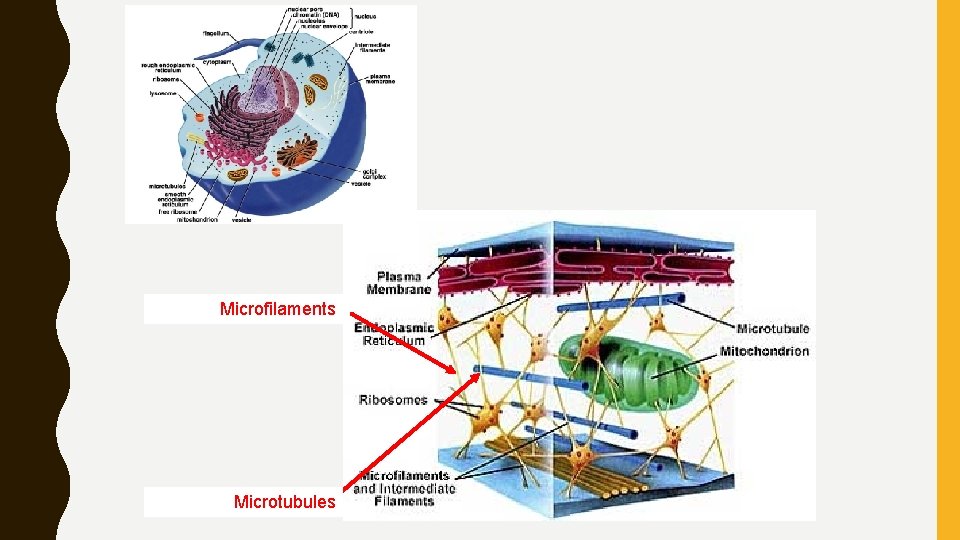
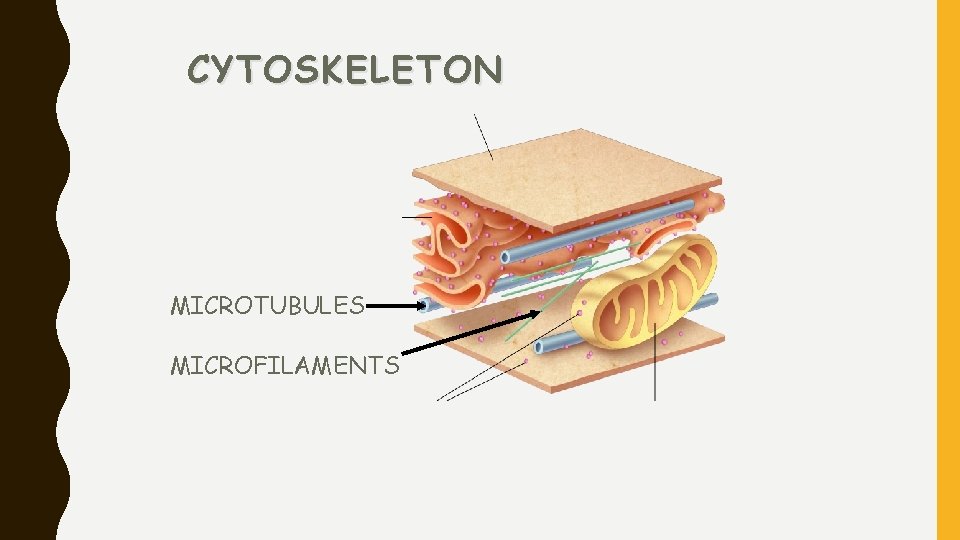
CYTOSKELETON • Helps cell maintain cell shape • Also help move organelles around • Made of proteins • Microfilaments are threadlike & made of ACTIN • Microtubules are tubelike & made of TUBULIN
Microfilaments Microtubules
CYTOSKELETON MICROTUBULES MICROFILAMENTS
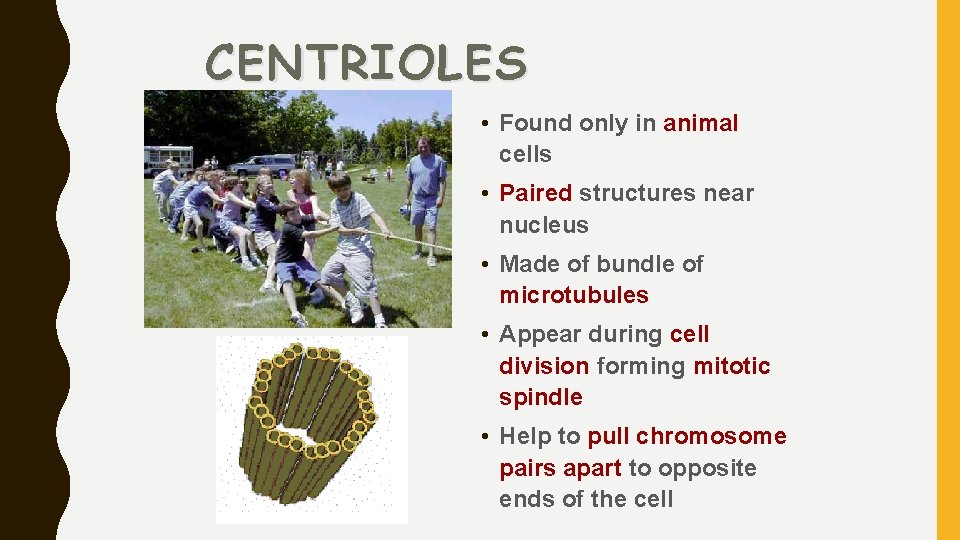
CENTRIOLES • Found only in animal cells • Paired structures near nucleus • Made of bundle of microtubules • Appear during cell division forming mitotic spindle • Help to pull chromosome pairs apart to opposite ends of the cell
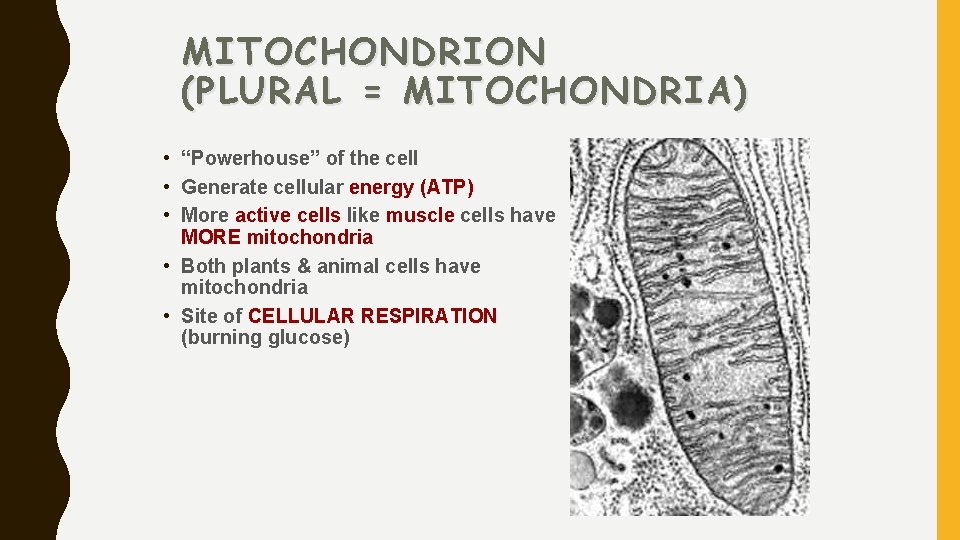
MITOCHONDRION (PLURAL = MITOCHONDRIA) • “Powerhouse” of the cell • Generate cellular energy (ATP) • More active cells like muscle cells have MORE mitochondria • Both plants & animal cells have mitochondria • Site of CELLULAR RESPIRATION (burning glucose)
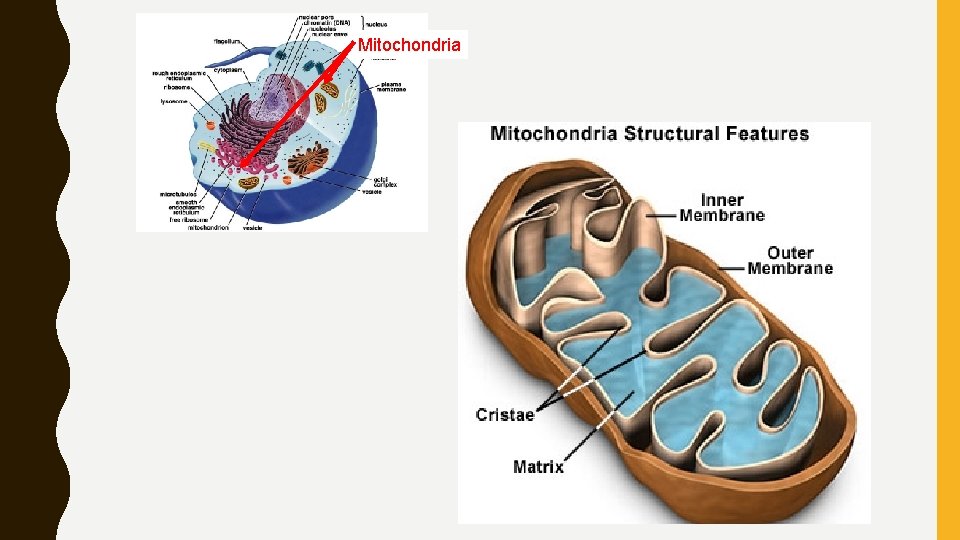
Mitochondria
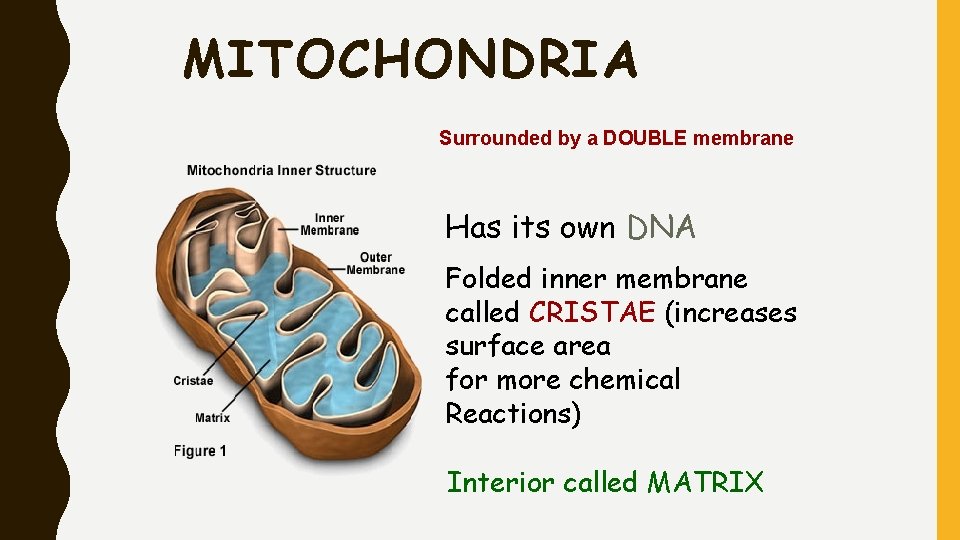
MITOCHONDRIA Surrounded by a DOUBLE membrane Has its own DNA Folded inner membrane called CRISTAE (increases surface area for more chemical Reactions) Interior called MATRIX
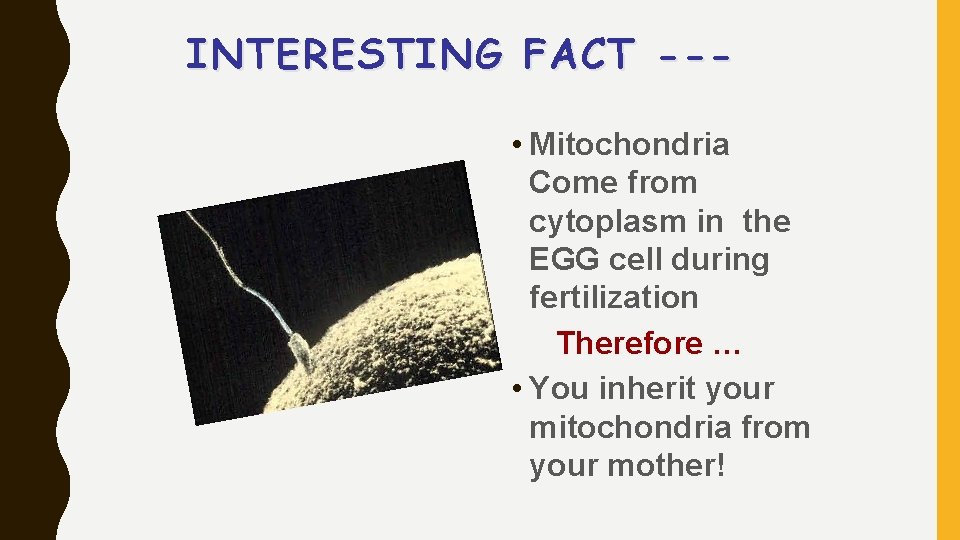
INTERESTING FACT -- • Mitochondria Come from cytoplasm in the EGG cell during fertilization Therefore … • You inherit your mitochondria from your mother!
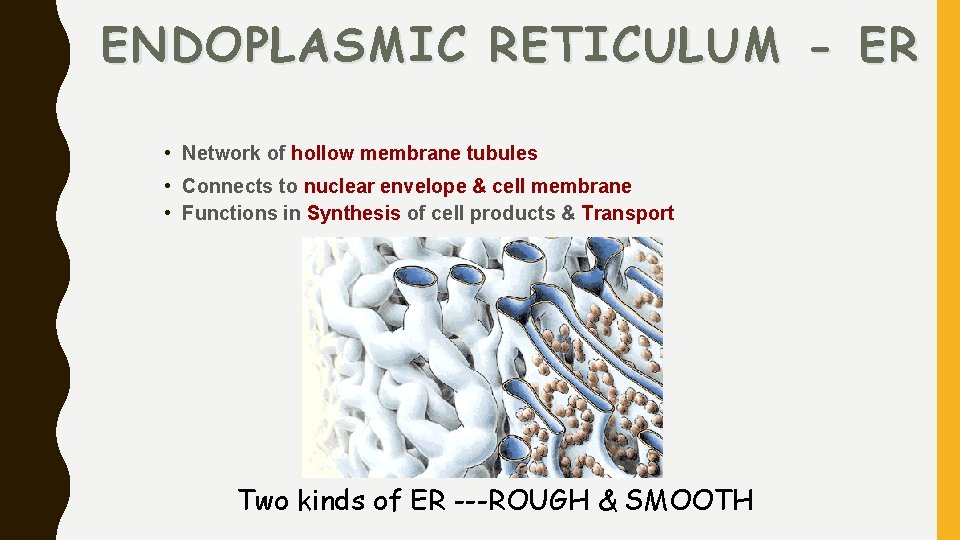
ENDOPLASMIC RETICULUM - ER • Network of hollow membrane tubules • Connects to nuclear envelope & cell membrane • Functions in Synthesis of cell products & Transport Two kinds of ER ---ROUGH & SMOOTH
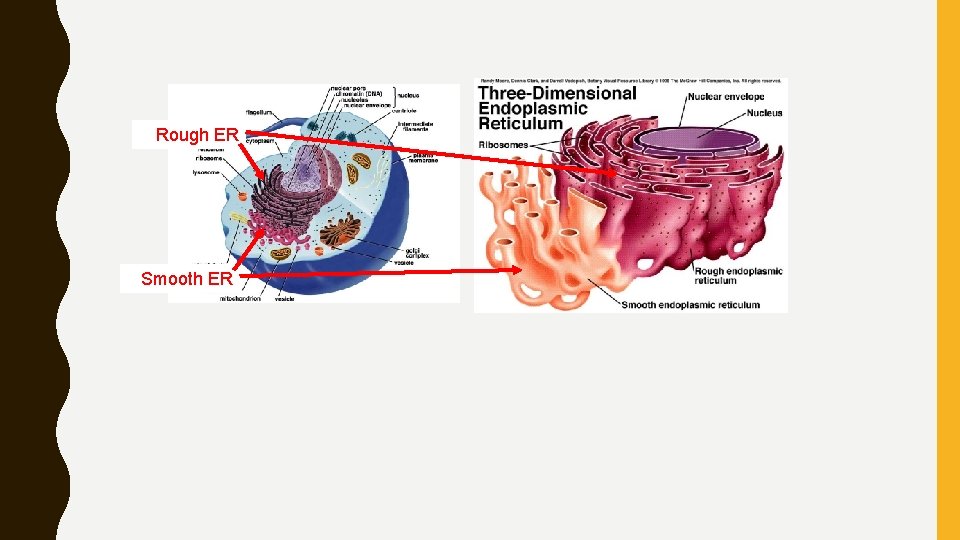
Rough ER Smooth ER
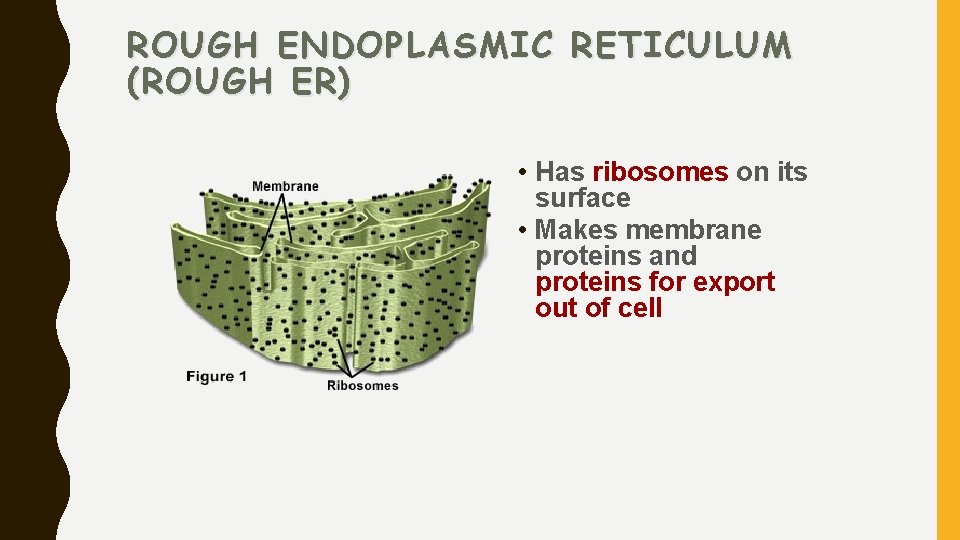
ROUGH ENDOPLASMIC RETICULUM (ROUGH ER) • Has ribosomes on its surface • Makes membrane proteins and proteins for export out of cell
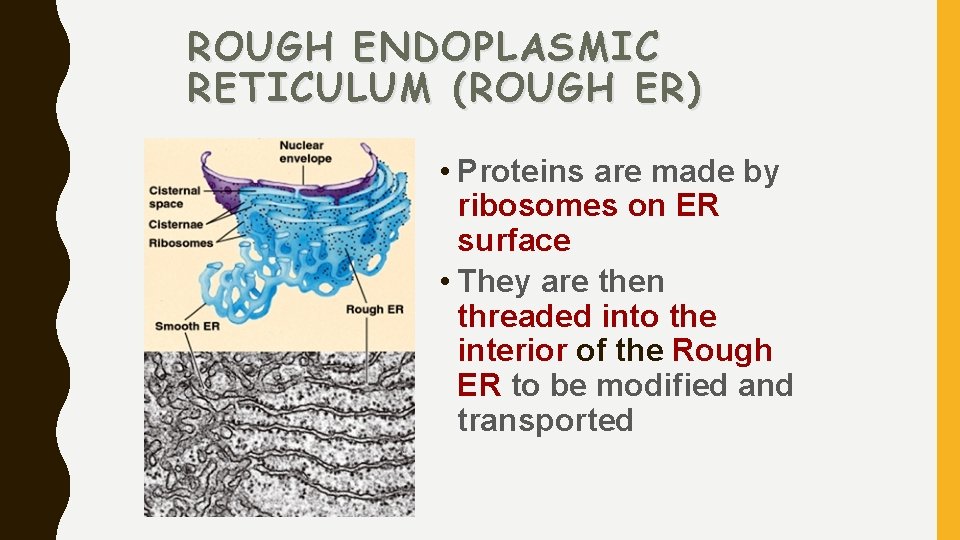
ROUGH ENDOPLASMIC RETICULUM (ROUGH ER) • Proteins are made by ribosomes on ER surface • They are then threaded into the interior of the Rough ER to be modified and transported
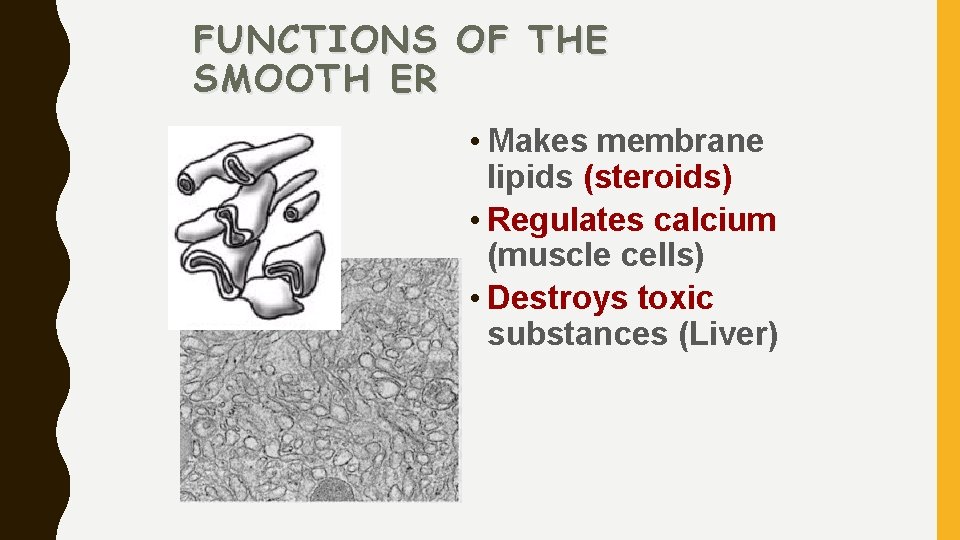
FUNCTIONS OF THE SMOOTH ER • Makes membrane lipids (steroids) • Regulates calcium (muscle cells) • Destroys toxic substances (Liver)
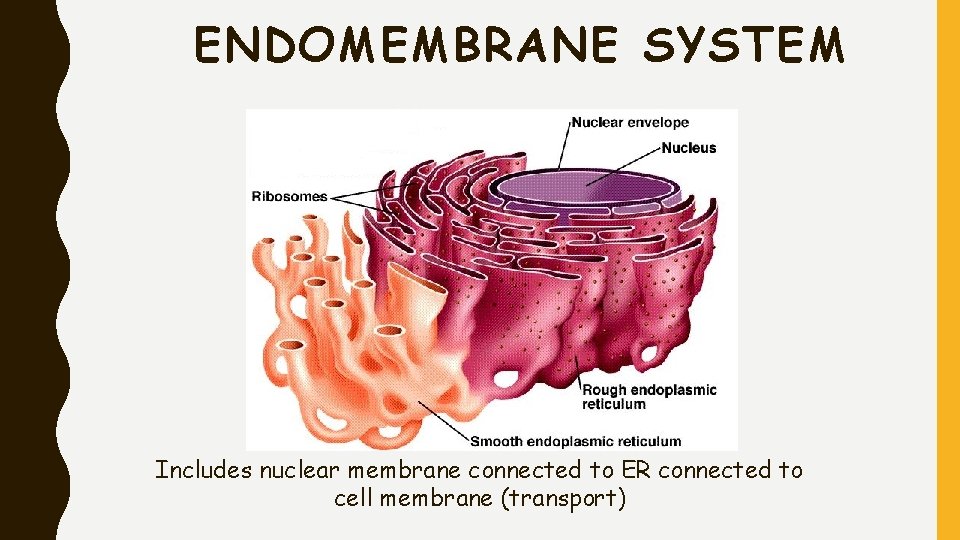
ENDOMEMBRANE SYSTEM Includes nuclear membrane connected to ER connected to cell membrane (transport)
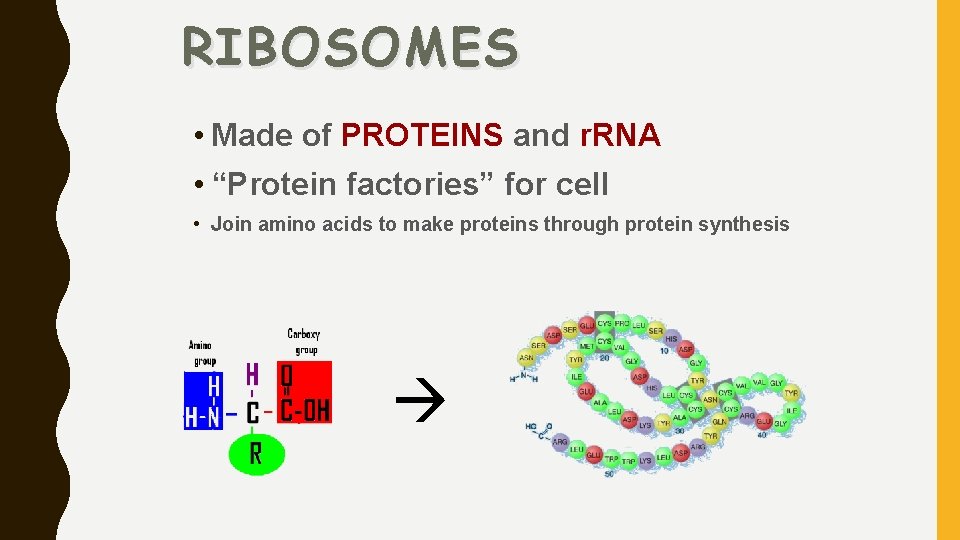
RIBOSOMES • Made of PROTEINS and r. RNA • “Protein factories” for cell • Join amino acids to make proteins through protein synthesis
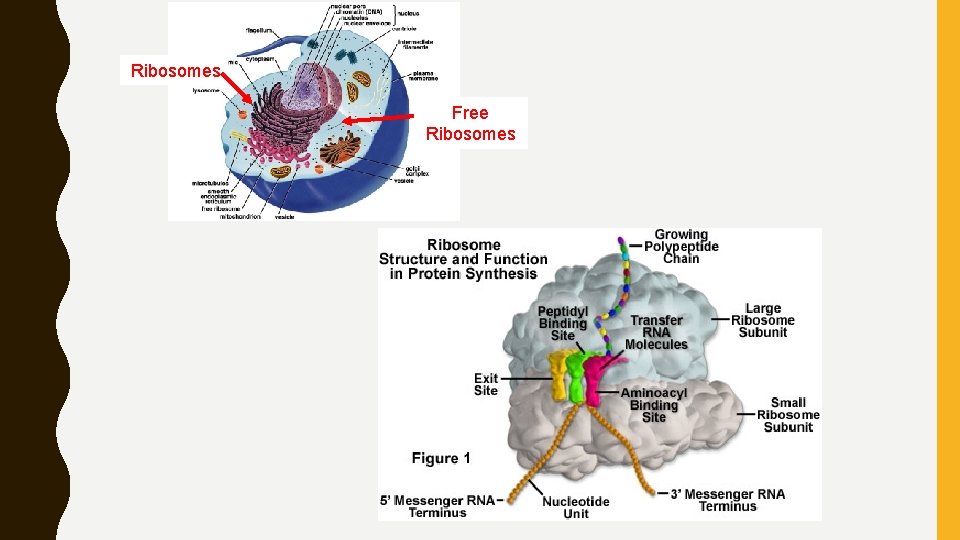
Ribosomes Free Ribosomes
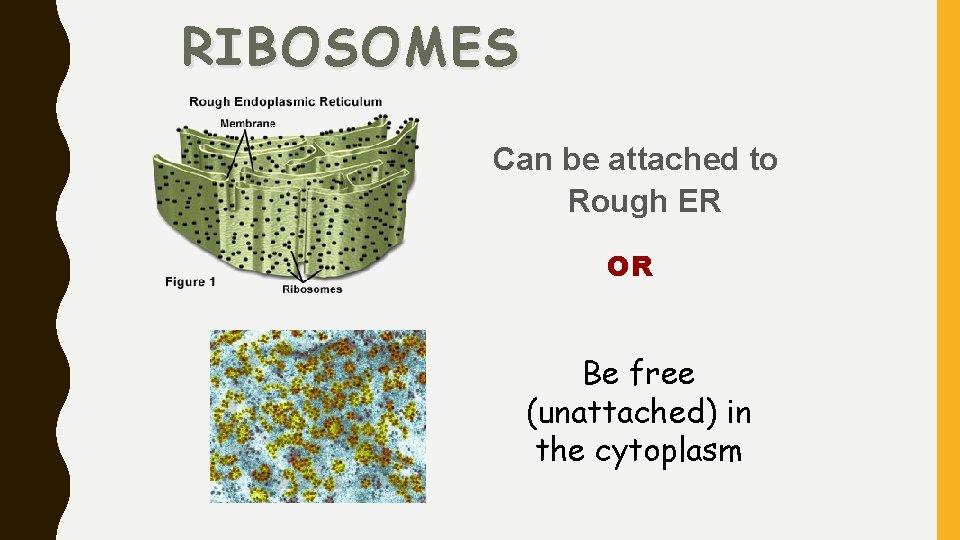
RIBOSOMES Can be attached to Rough ER OR Be free (unattached) in the cytoplasm
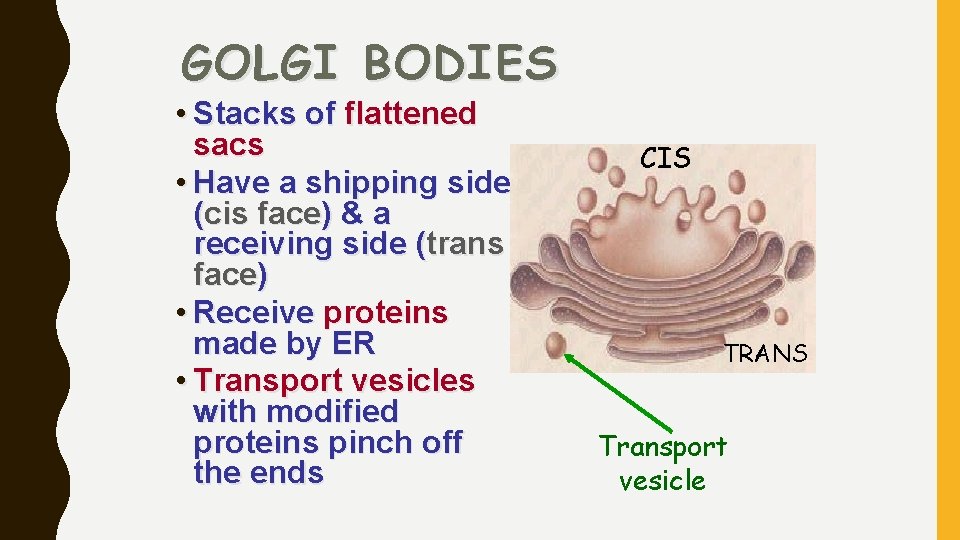
GOLGI BODIES • Stacks of flattened sacs • Have a shipping side (cis face) & a receiving side (trans face) • Receive proteins made by ER • Transport vesicles with modified proteins pinch off the ends CIS TRANS Transport vesicle
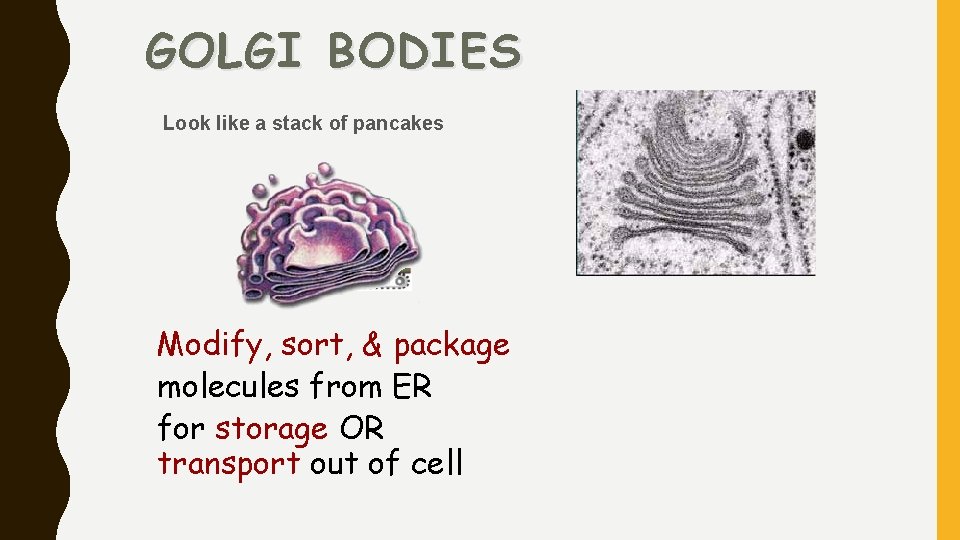
GOLGI BODIES Look like a stack of pancakes Modify, sort, & package molecules from ER for storage OR transport out of cell
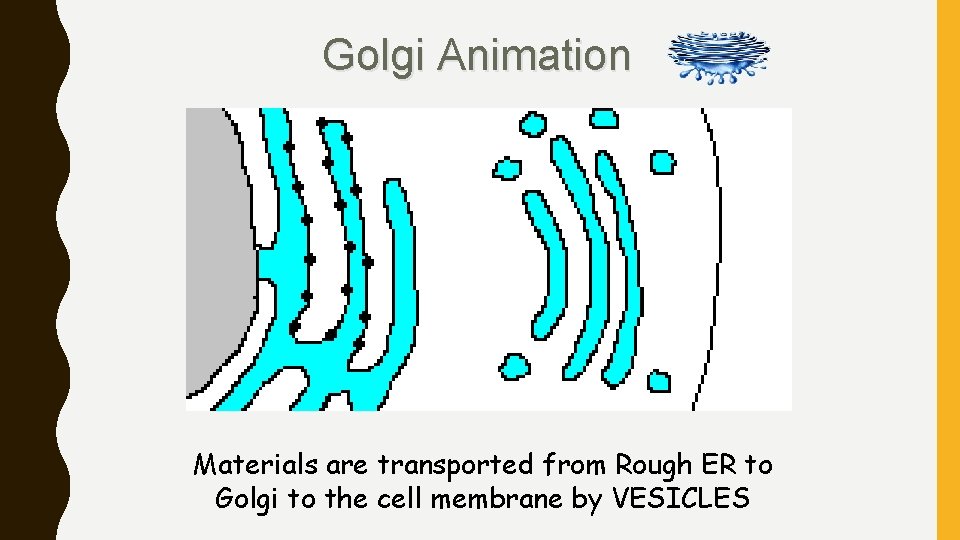
Golgi Animation Materials are transported from Rough ER to Golgi to the cell membrane by VESICLES
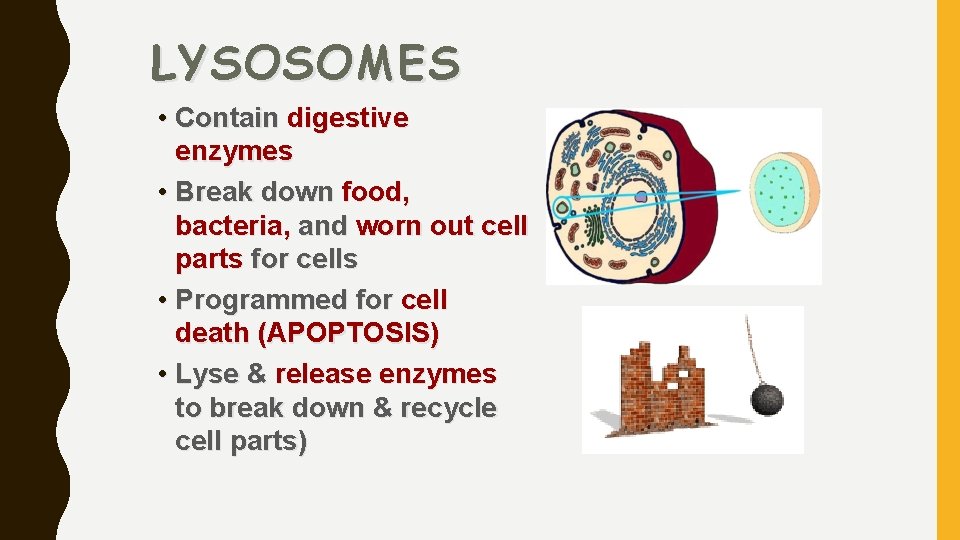
LYSOSOMES • Contain digestive enzymes • Break down food, bacteria, and worn out cell parts for cells • Programmed for cell death (APOPTOSIS) • Lyse & release enzymes to break down & recycle cell parts)
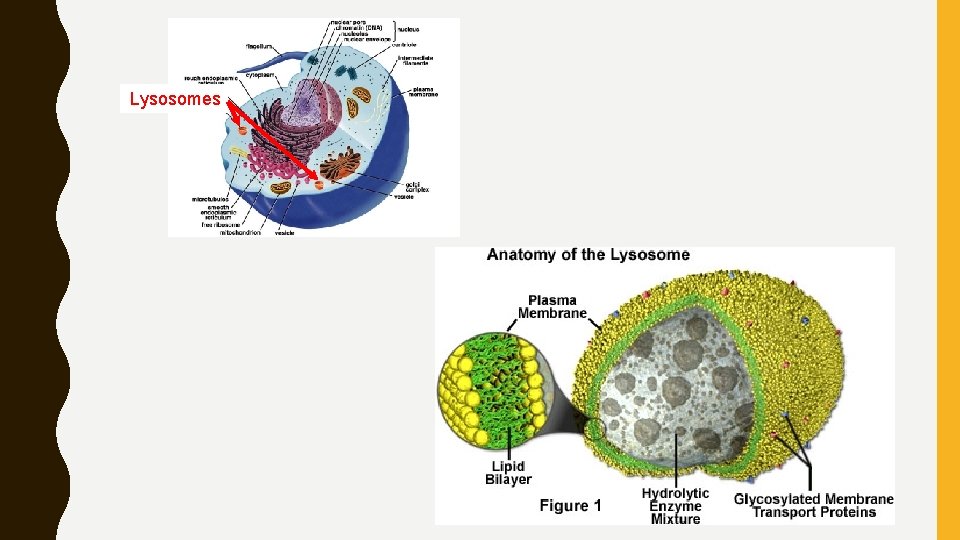
Lysosomes
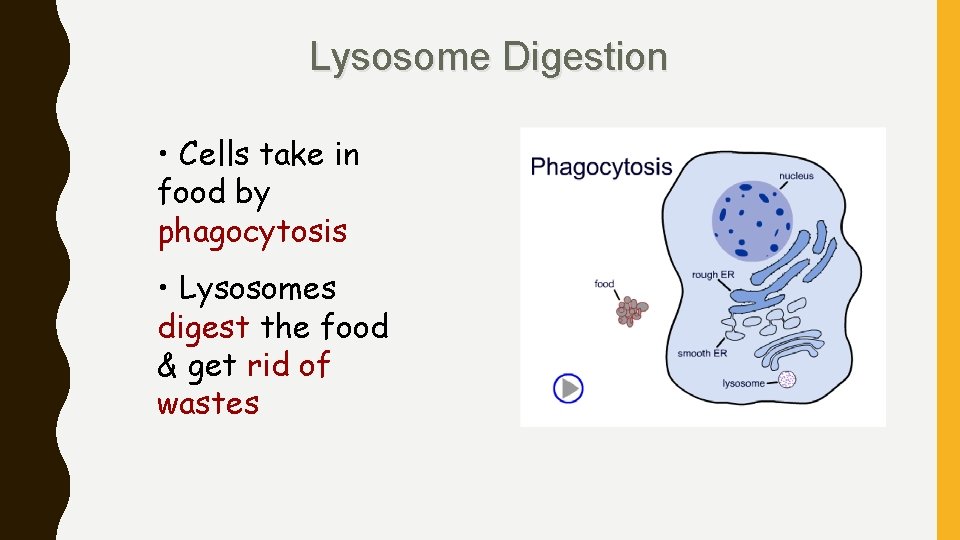
Lysosome Digestion • Cells take in food by phagocytosis • Lysosomes digest the food & get rid of wastes
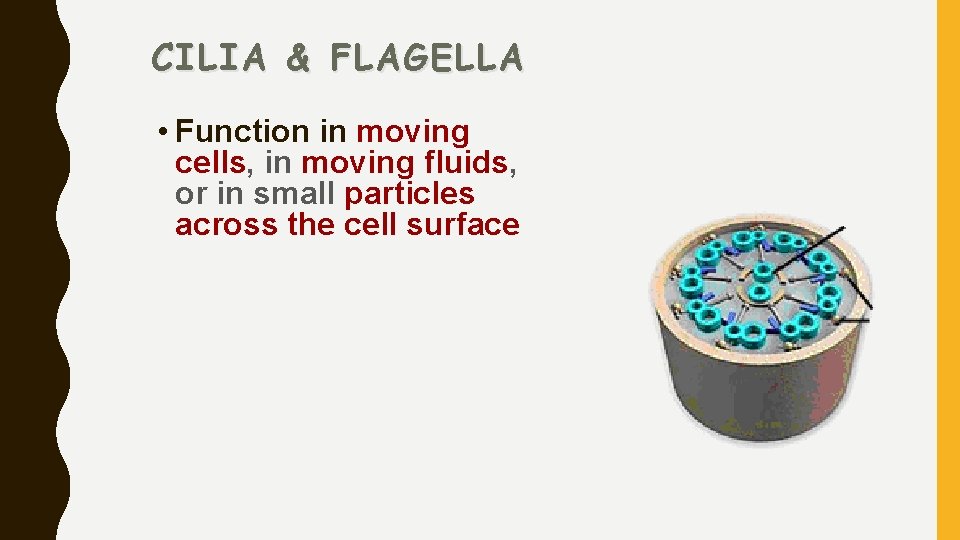
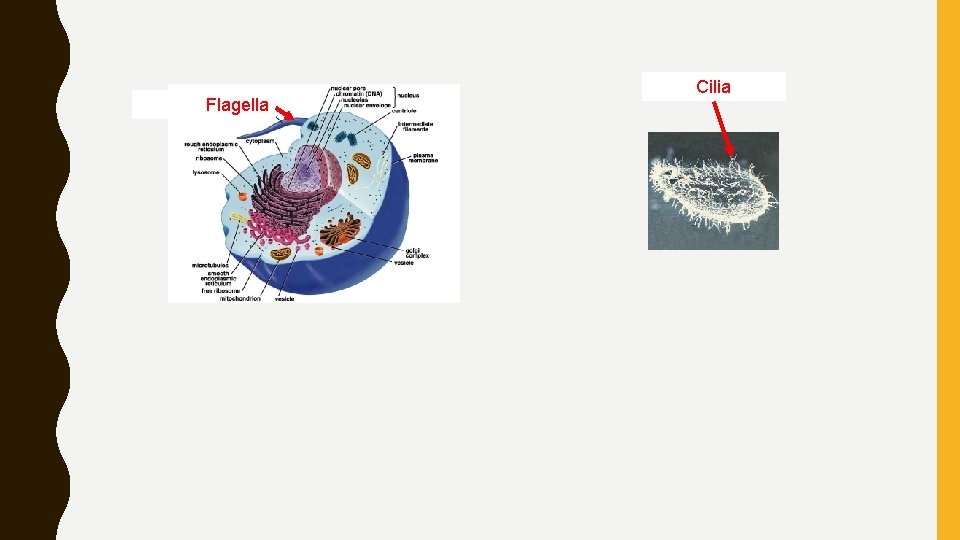
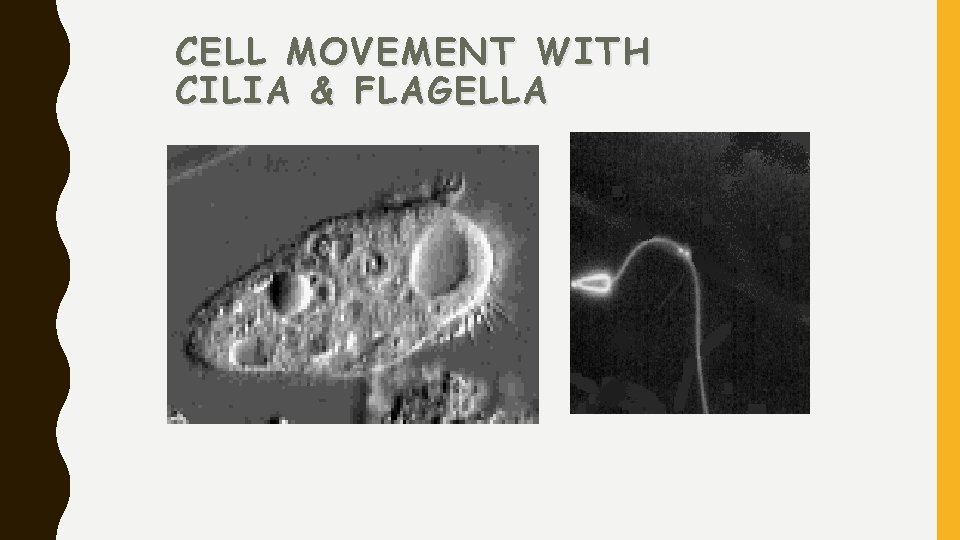
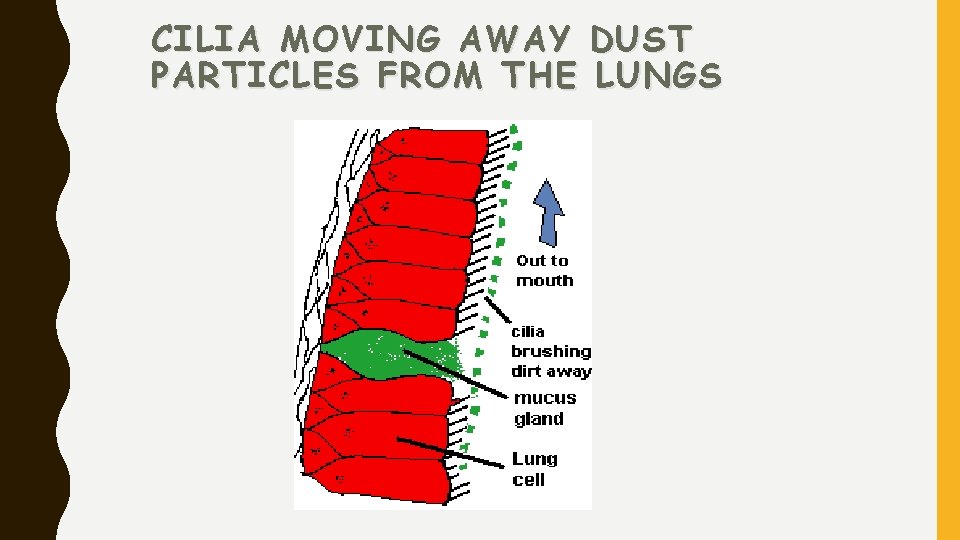
CILIA & FLAGELLA • Function in moving cells, in moving fluids, or in small particles across the cell surface
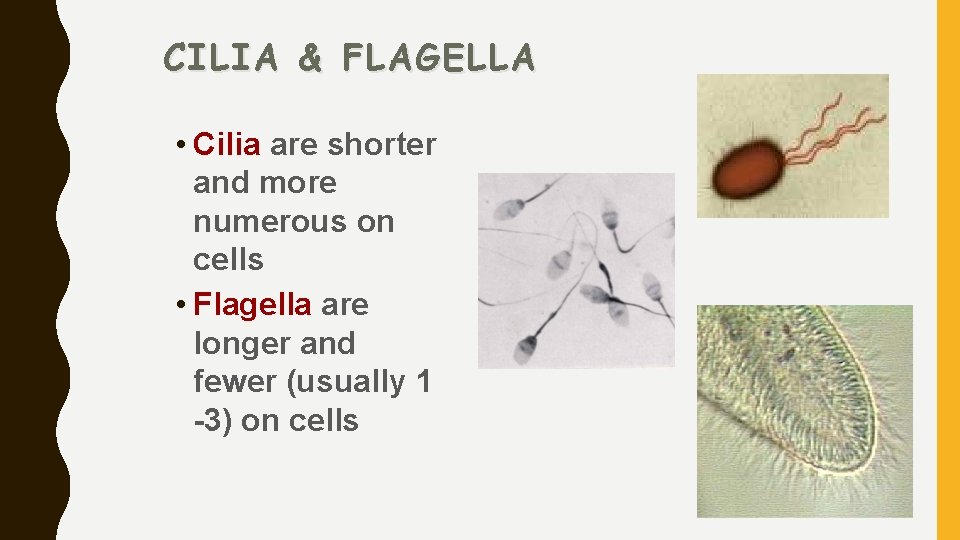
CILIA & FLAGELLA • Cilia are shorter and more numerous on cells • Flagella are longer and fewer (usually 1 -3) on cells
Flagella Cilia
CELL MOVEMENT WITH CILIA & FLAGELLA
CILIA MOVING AWAY PARTICLES FROM THE DUST LUNGS
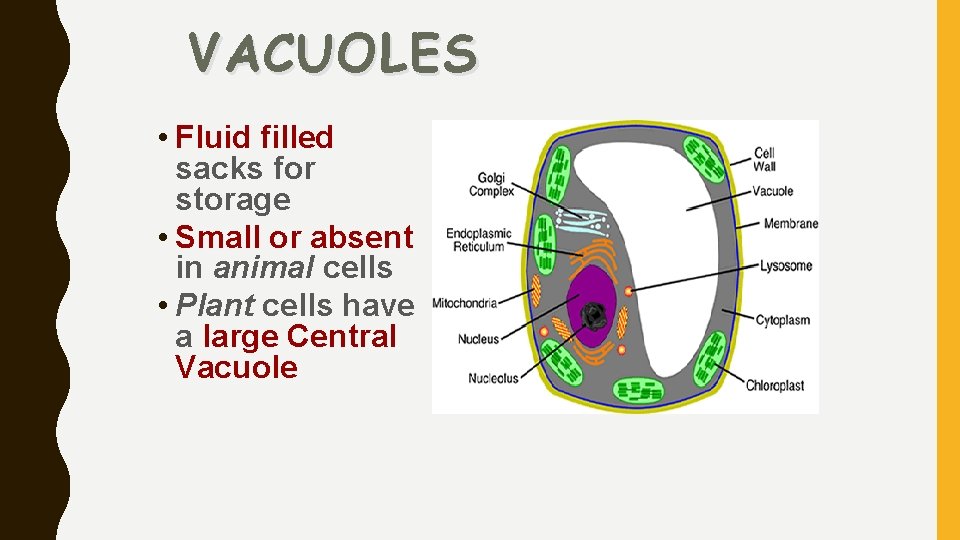
VACUOLES • Fluid filled sacks for storage • Small or absent in animal cells • Plant cells have a large Central Vacuole
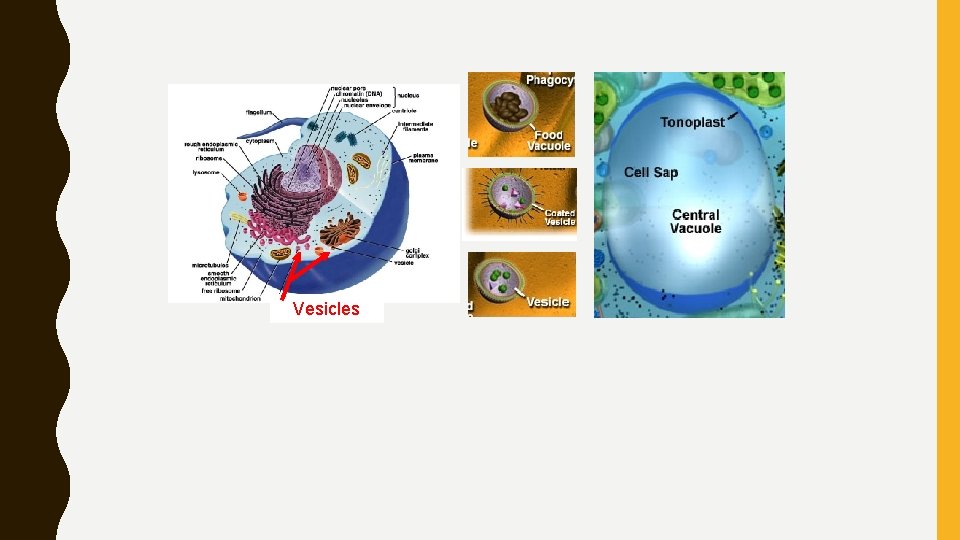
Vesicles
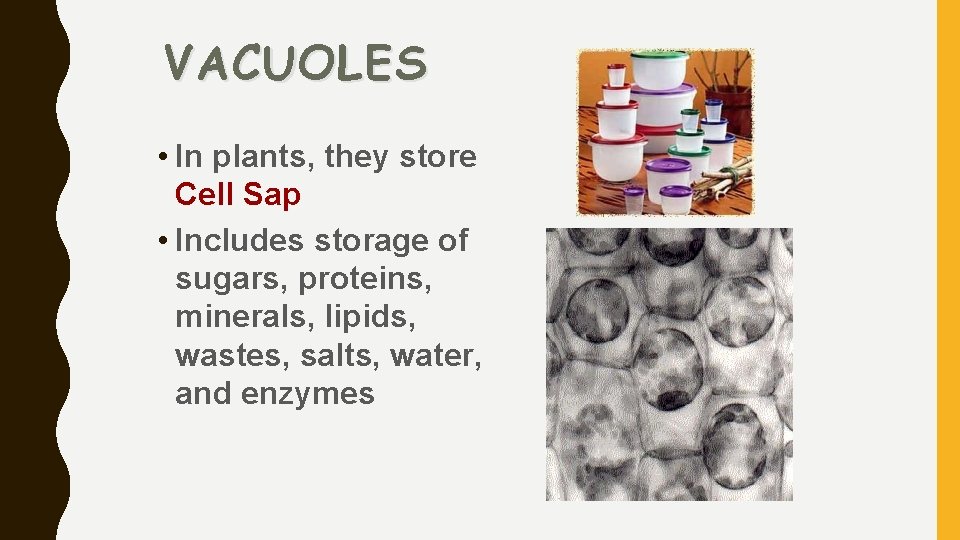
VACUOLES • In plants, they store Cell Sap • Includes storage of sugars, proteins, minerals, lipids, wastes, salts, water, and enzymes
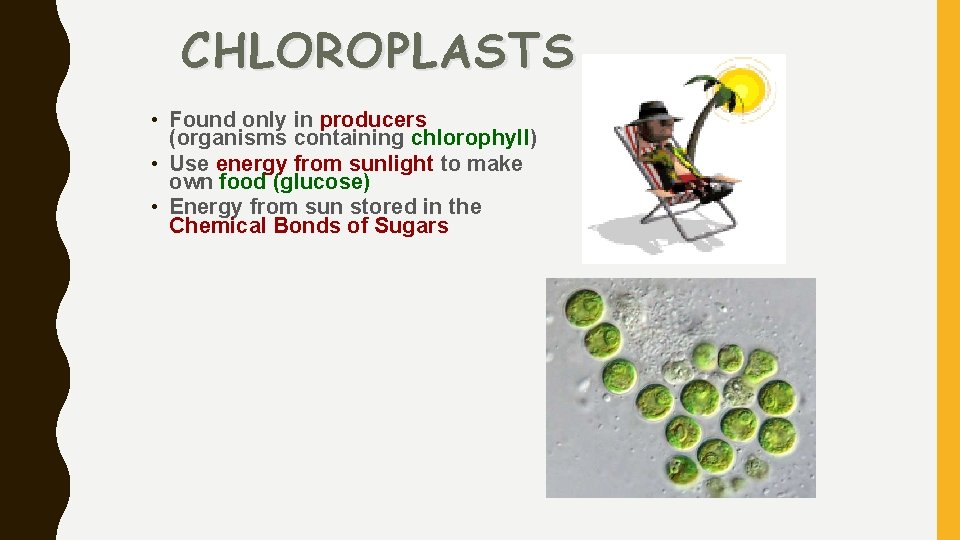
CHLOROPLASTS • Found only in producers (organisms containing chlorophyll) • Use energy from sunlight to make own food (glucose) • Energy from sun stored in the Chemical Bonds of Sugars
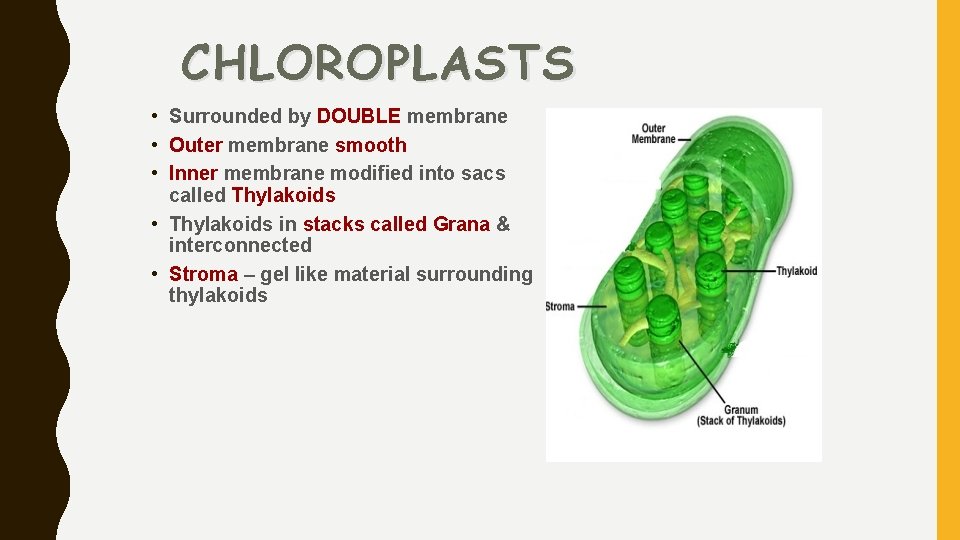
CHLOROPLASTS • Surrounded by DOUBLE membrane • Outer membrane smooth • Inner membrane modified into sacs called Thylakoids • Thylakoids in stacks called Grana & interconnected • Stroma – gel like material surrounding thylakoids
- Slides: 76