
BASIC STRUCTURE OF A CELL CELL THEORY 1
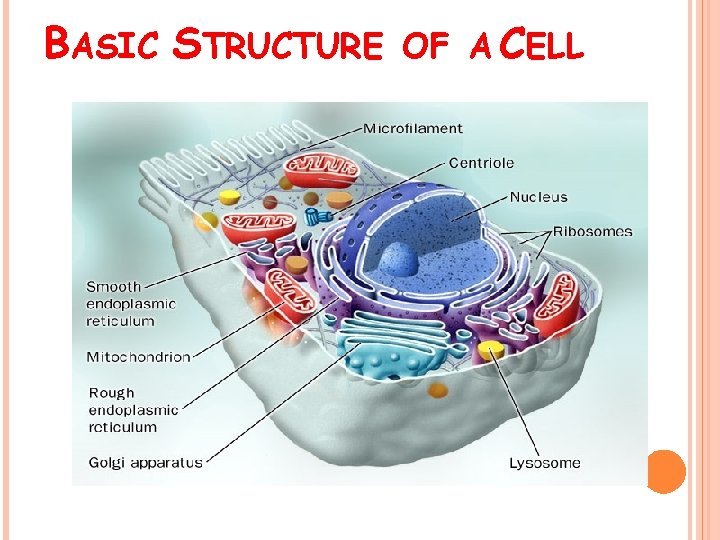
BASIC STRUCTURE OF A CELL
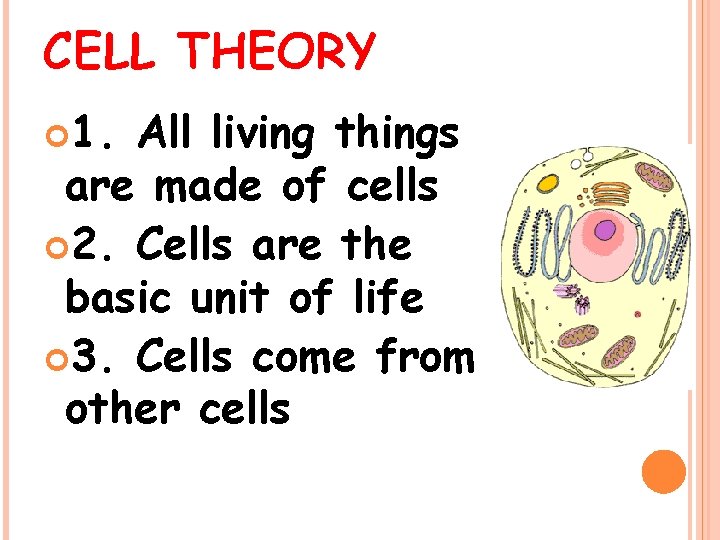
CELL THEORY 1. All living things are made of cells 2. Cells are the basic unit of life 3. Cells come from other cells
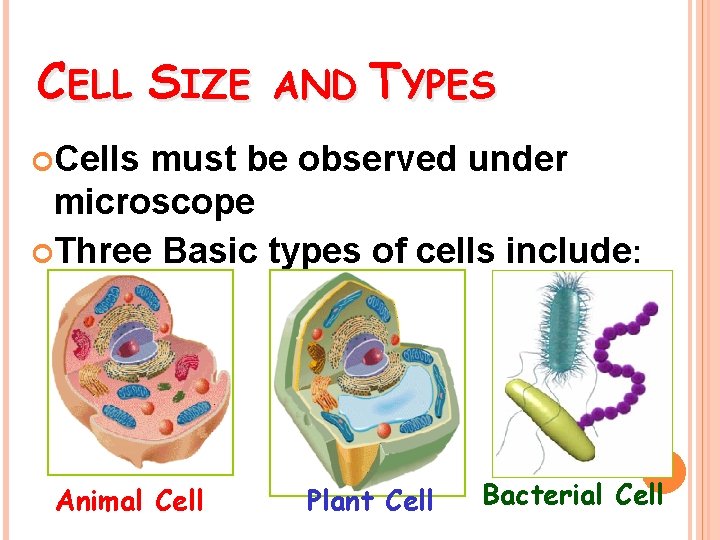
CELL SIZE AND TYPES Cells must be observed under microscope Three Basic types of cells include: Animal Cell Plant Cell Bacterial Cell
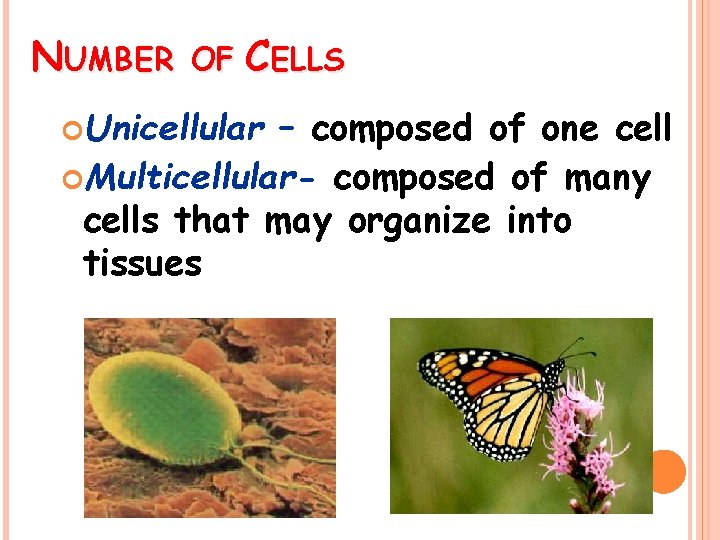
NUMBER OF CELLS Unicellular – composed of one cell Multicellular- composed of many cells that may organize into tissues
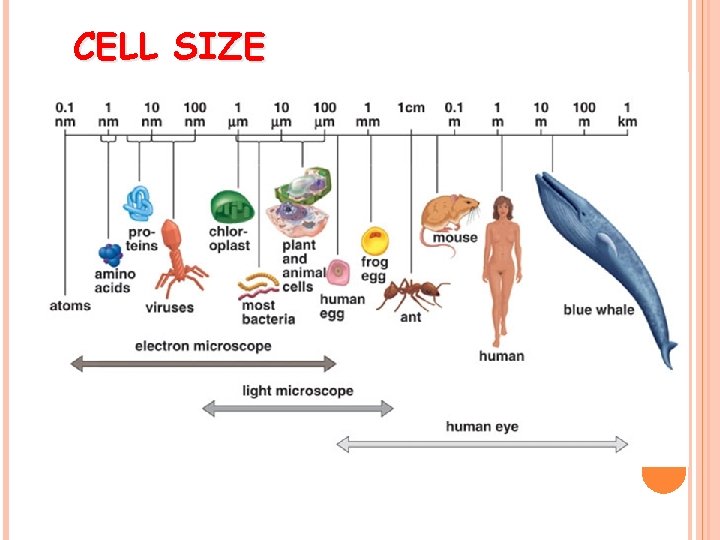
CELL SIZE
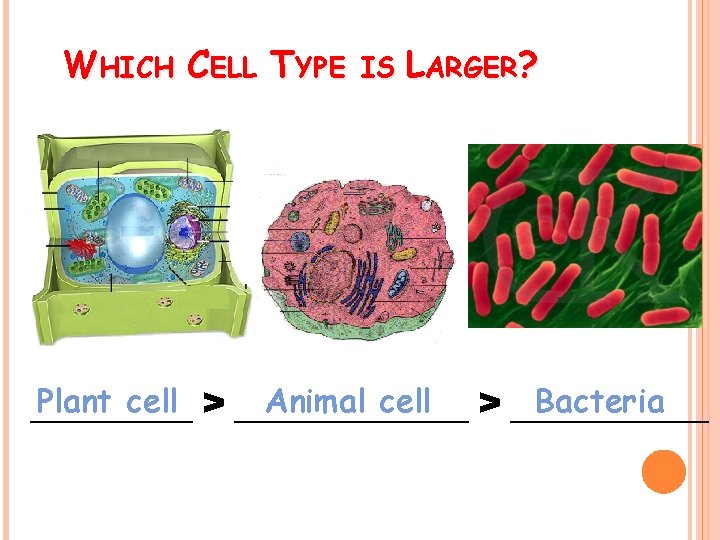
WHICH CELL TYPE IS LARGER? Plant cell > _______ Animal cell > ______ Bacteria _____
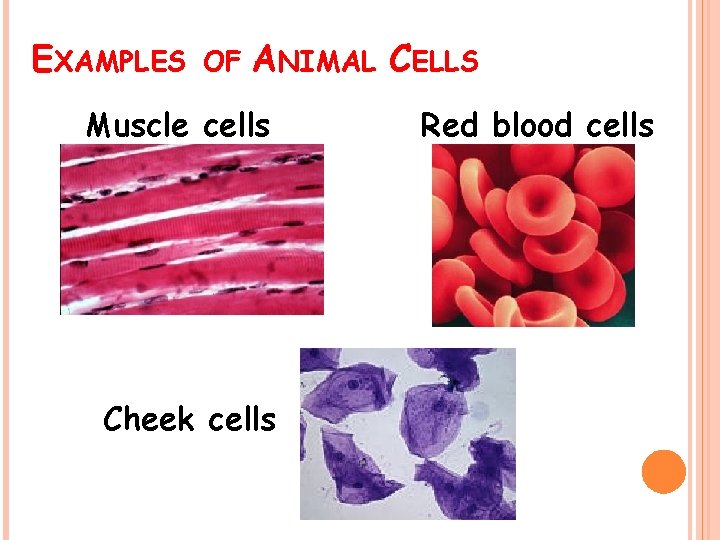
EXAMPLES OF ANIMAL CELLS Muscle cells Cheek cells Red blood cells
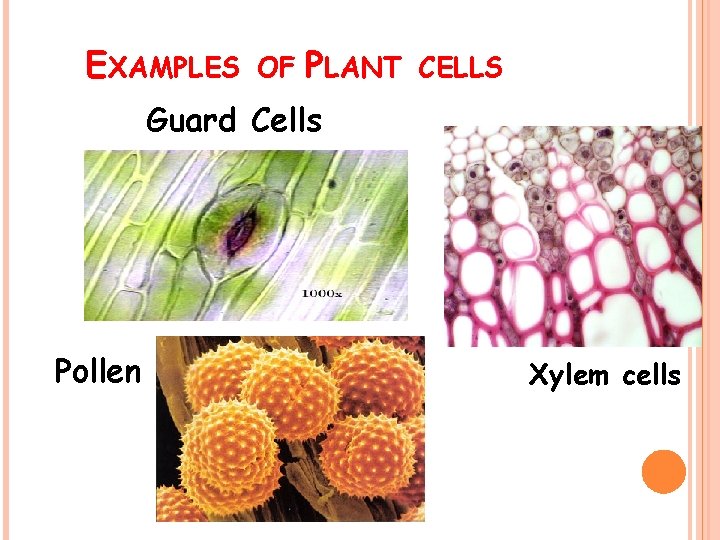
EXAMPLES OF PLANT CELLS Guard Cells Pollen Xylem cells
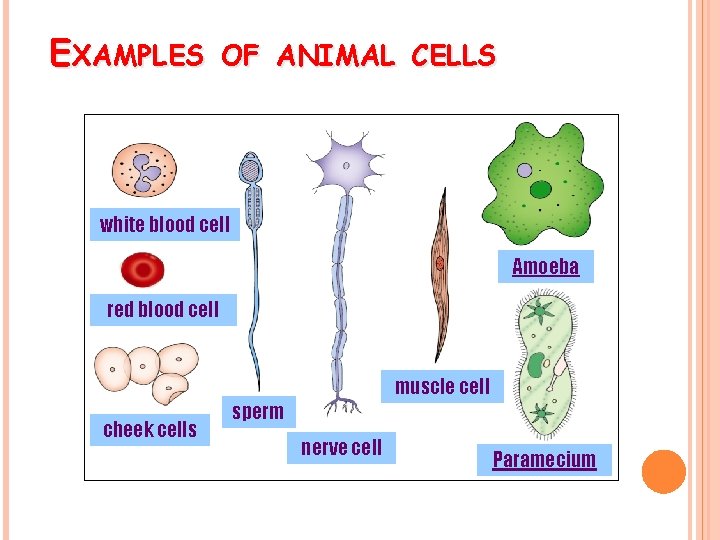
EXAMPLES OF ANIMAL CELLS white blood cell Amoeba red blood cell muscle cell cheek cells sperm nerve cell Paramecium
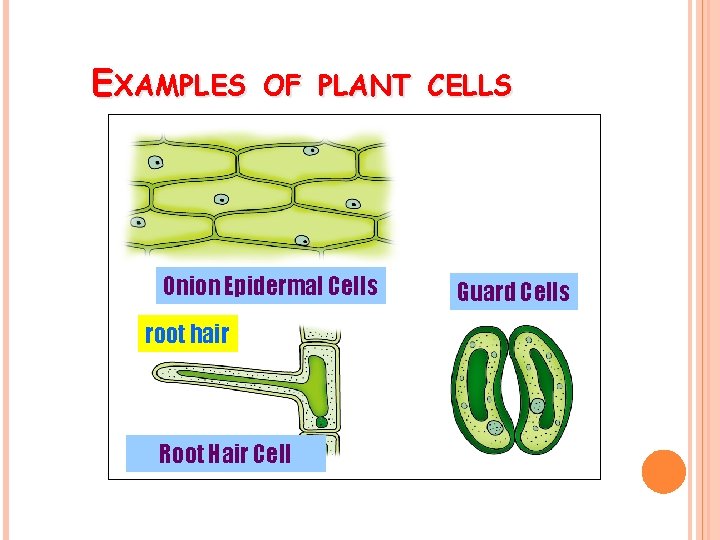
EXAMPLES OF PLANT CELLS Onion Epidermal Cells root hair Root Hair Cell Guard Cells
ORGANELLES “Mini Organs” that perform functions for the cell In cytoplasm
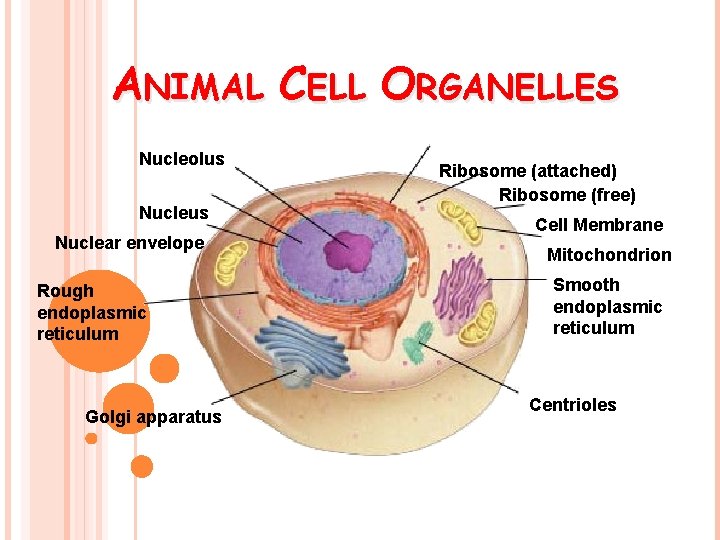
ANIMAL CELL ORGANELLES Nucleolus Nuclear envelope Rough endoplasmic reticulum Golgi apparatus Ribosome (attached) Ribosome (free) Cell Membrane Mitochondrion Smooth endoplasmic reticulum Centrioles
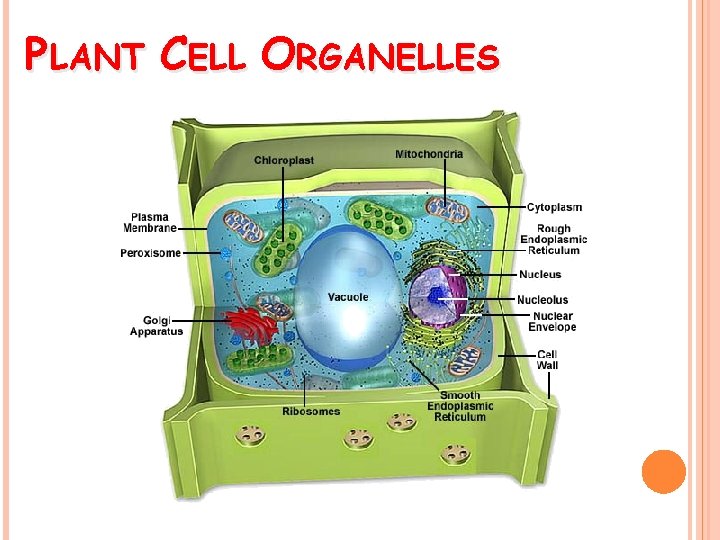
PLANT CELL ORGANELLES
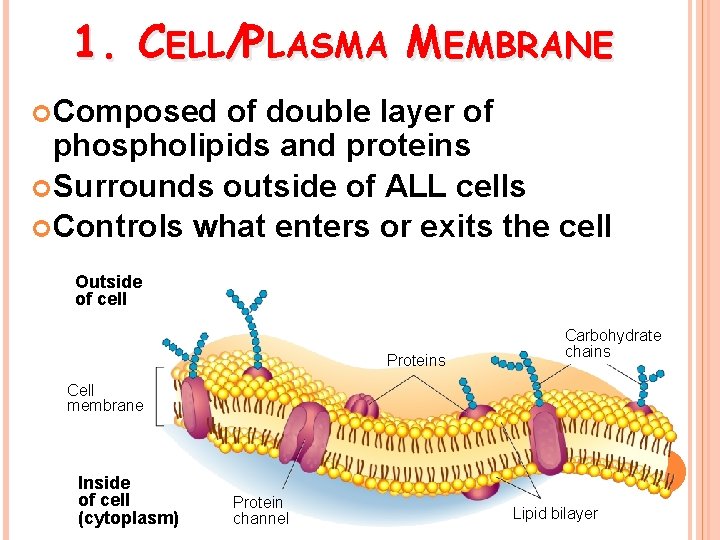
1. CELL/PLASMA MEMBRANE Composed of double layer of phospholipids and proteins Surrounds outside of ALL cells Controls what enters or exits the cell Outside of cell Proteins Carbohydrate chains Cell membrane Inside of cell (cytoplasm) Protein channel Lipid bilayer
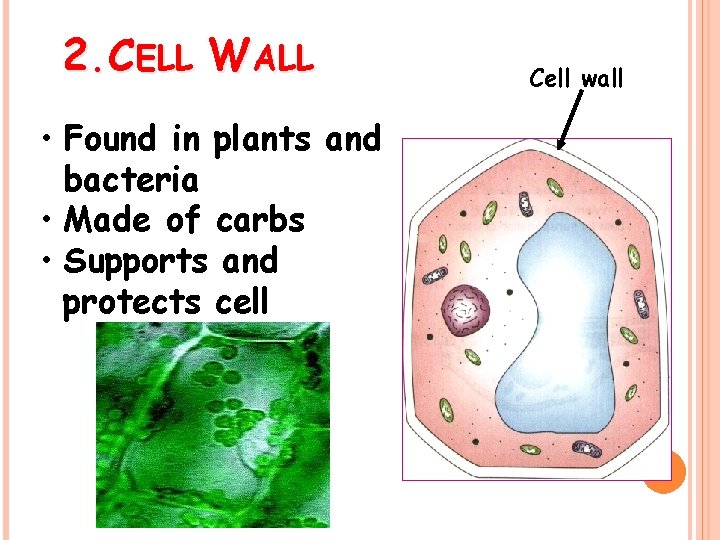
2. CELL WALL • Found in plants and bacteria • Made of carbs • Supports and protects cell Cell wall
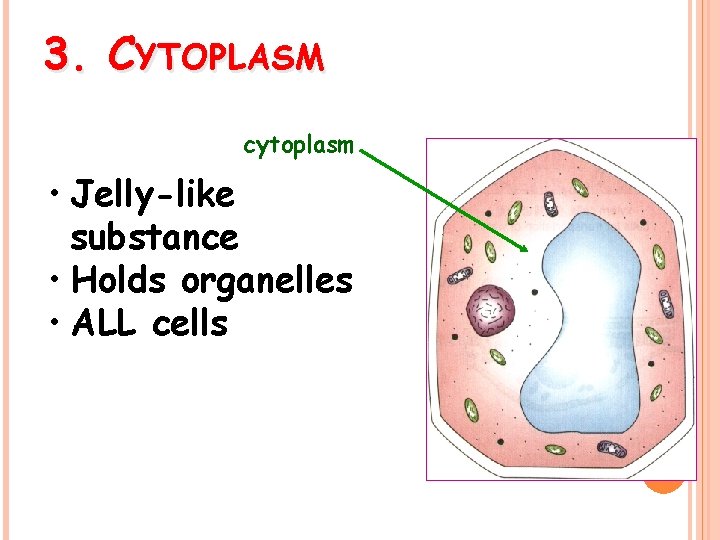
3. CYTOPLASM cytoplasm • Jelly-like substance • Holds organelles • ALL cells
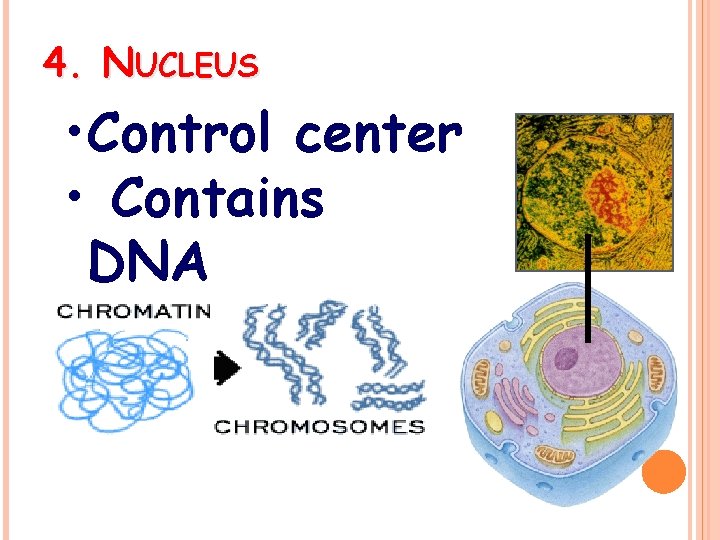
4. NUCLEUS • Control center • Contains DNA
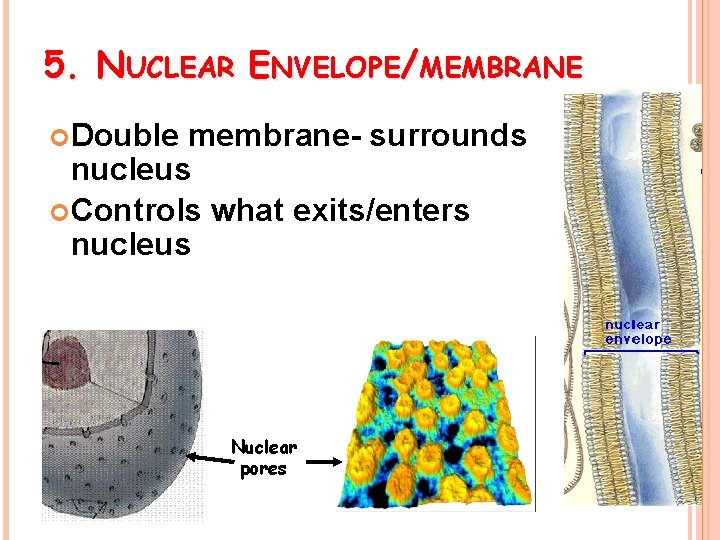
5. NUCLEAR ENVELOPE/MEMBRANE Double membrane- surrounds nucleus Controls what exits/enters nucleus Nuclear pores
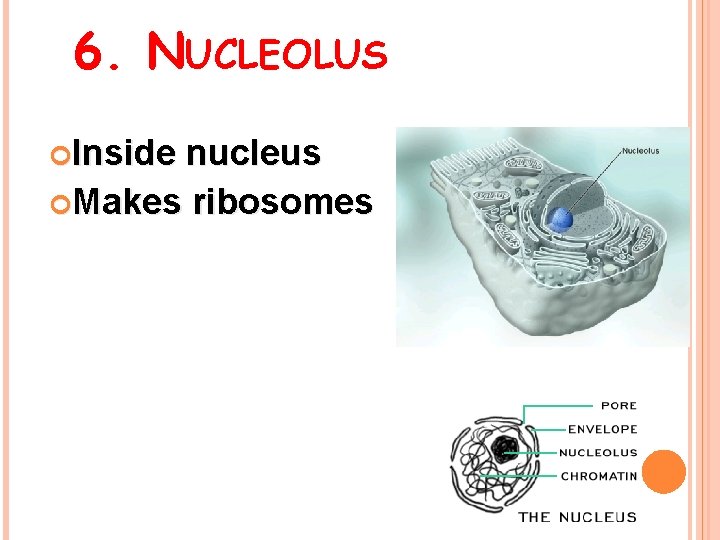
6. NUCLEOLUS Inside nucleus Makes ribosomes
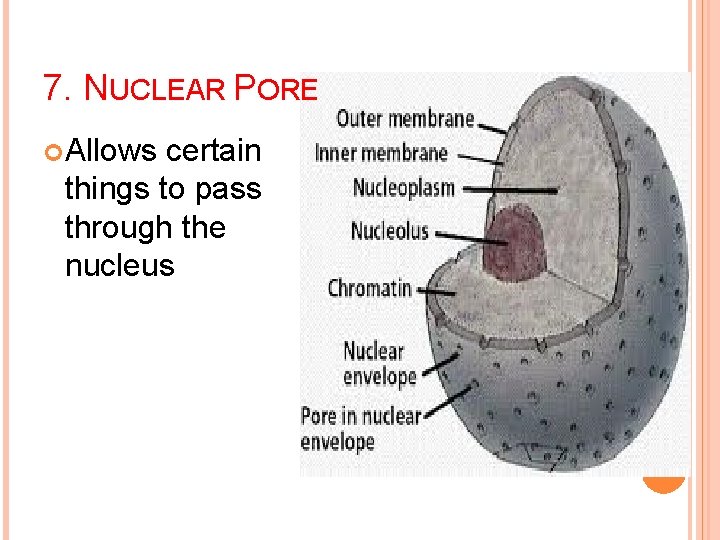
7. NUCLEAR PORE Allows certain things to pass through the nucleus
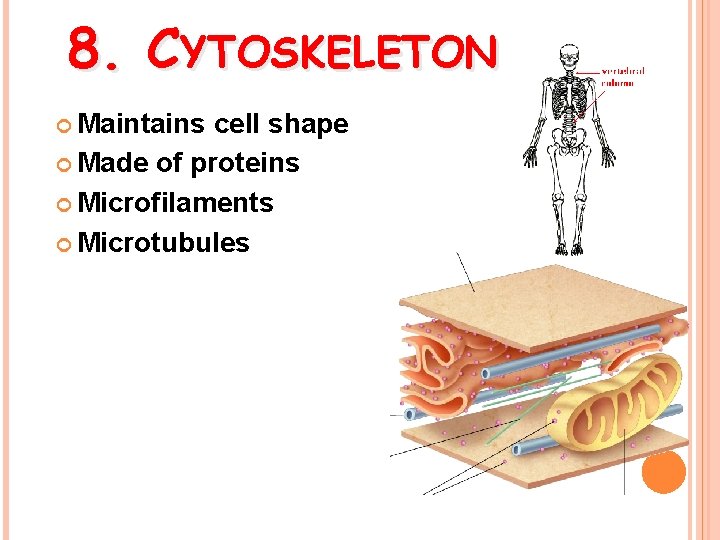
8. CYTOSKELETON Maintains cell shape Made of proteins Microfilaments Microtubules
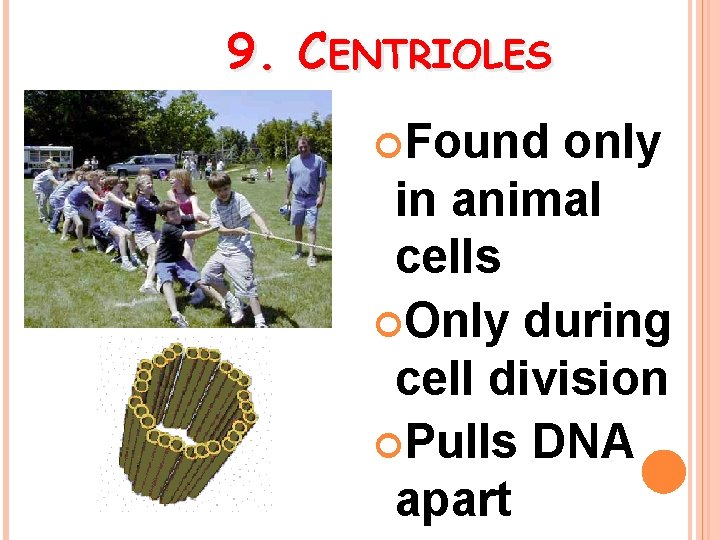
9. CENTRIOLES Found only in animal cells Only during cell division Pulls DNA apart
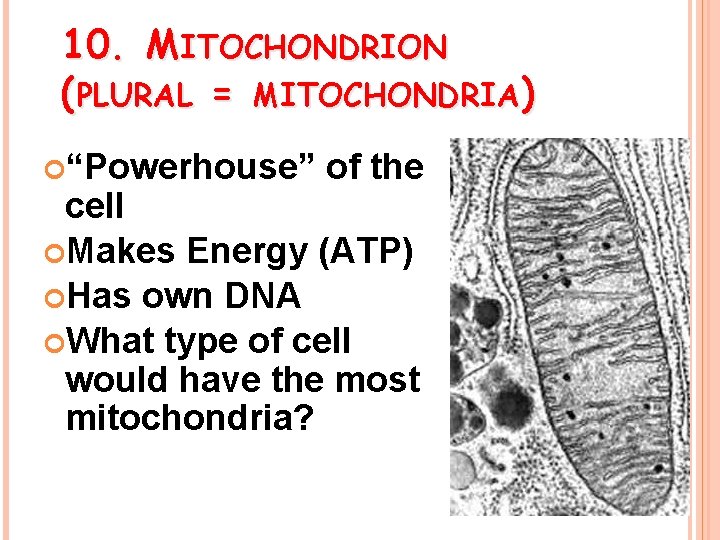
10. MITOCHONDRION (PLURAL = MITOCHONDRIA) “Powerhouse” of the cell Makes Energy (ATP) Has own DNA What type of cell would have the most mitochondria?
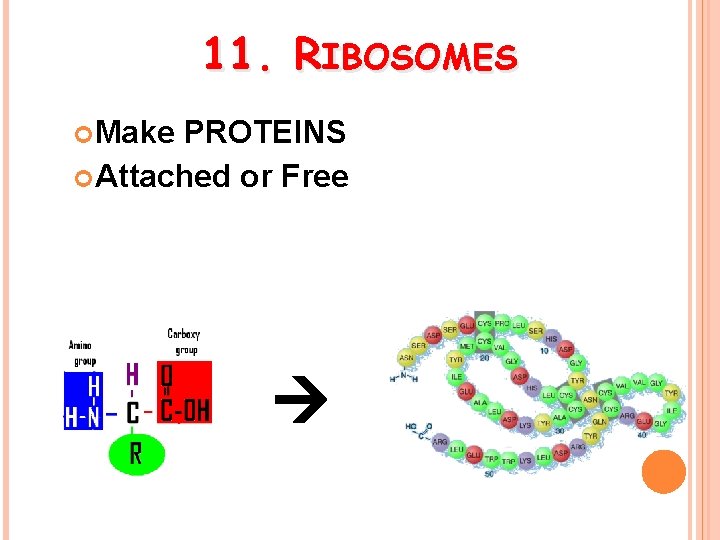
11. RIBOSOMES Make PROTEINS Attached or Free
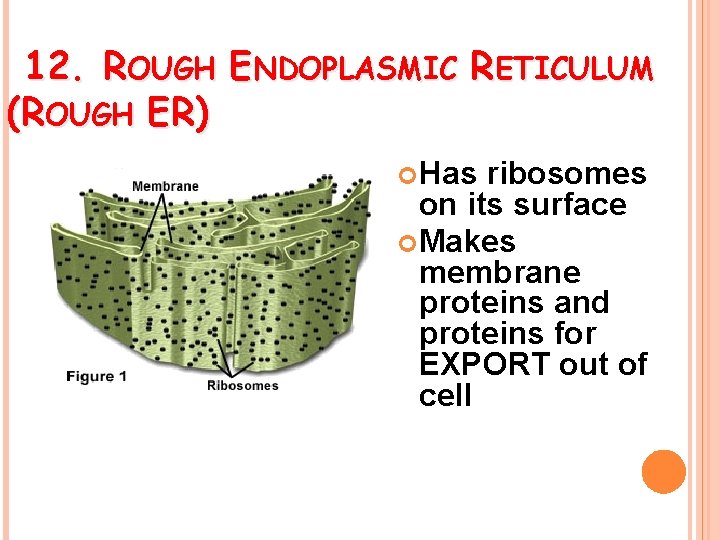
12. ROUGH ENDOPLASMIC RETICULUM (ROUGH ER) Has ribosomes on its surface Makes membrane proteins and proteins for EXPORT out of cell
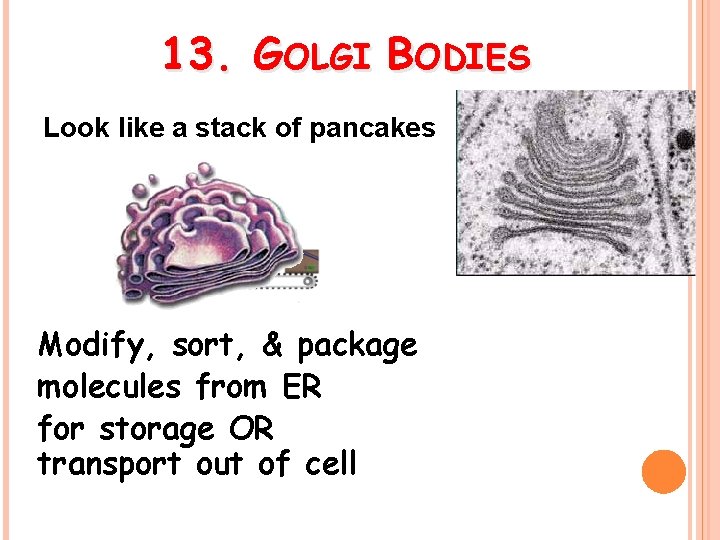
13. GOLGI BODIES Look like a stack of pancakes Modify, sort, & package molecules from ER for storage OR transport out of cell
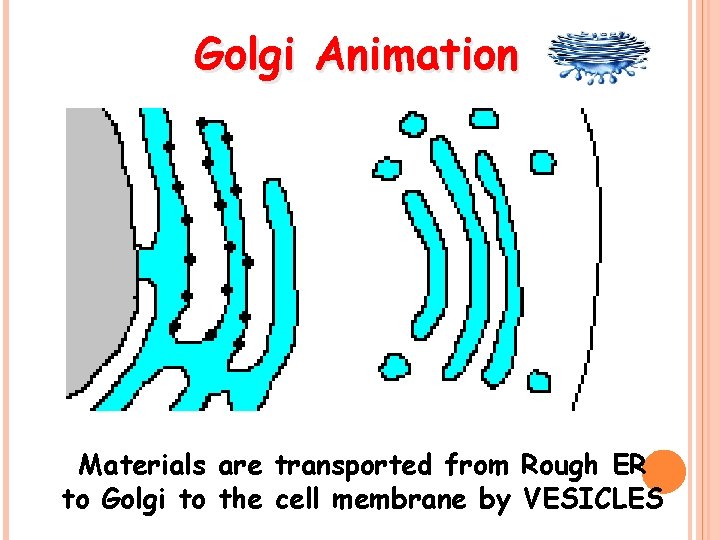
Golgi Animation Materials are transported from Rough ER to Golgi to the cell membrane by VESICLES
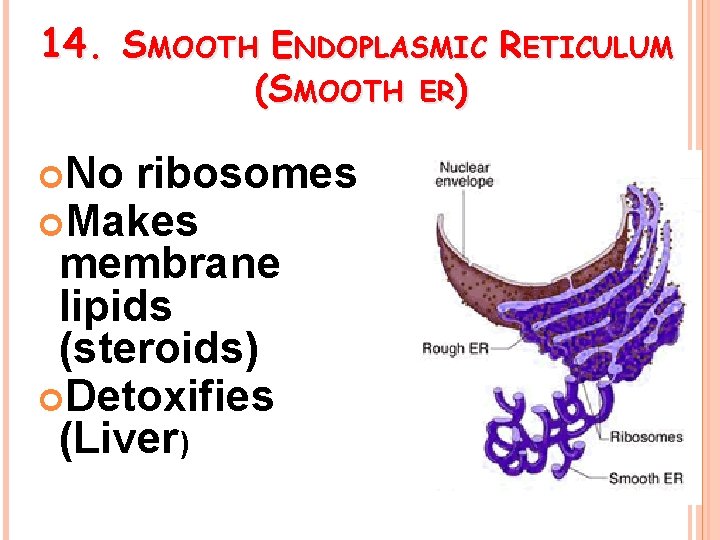
14. SMOOTH ENDOPLASMIC RETICULUM (SMOOTH No ribosomes Makes membrane lipids (steroids) Detoxifies (Liver) ER)
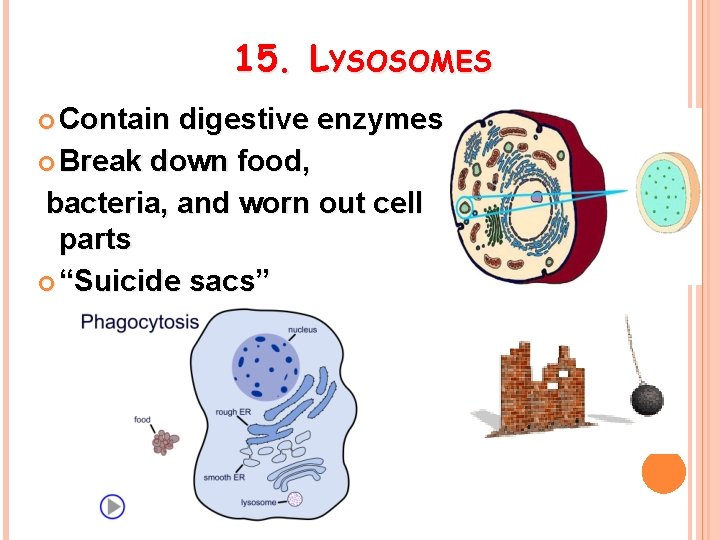
15. LYSOSOMES Contain digestive enzymes Break down food, bacteria, and worn out cell parts “Suicide sacs”
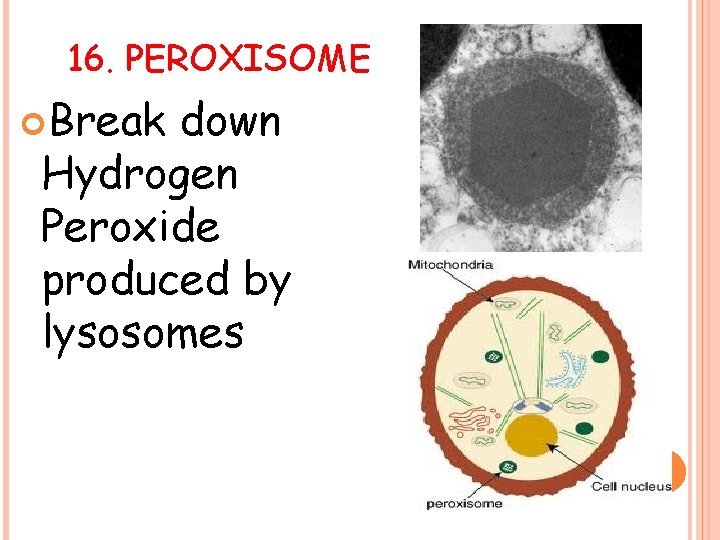
16. PEROXISOME Break down Hydrogen Peroxide produced by lysosomes
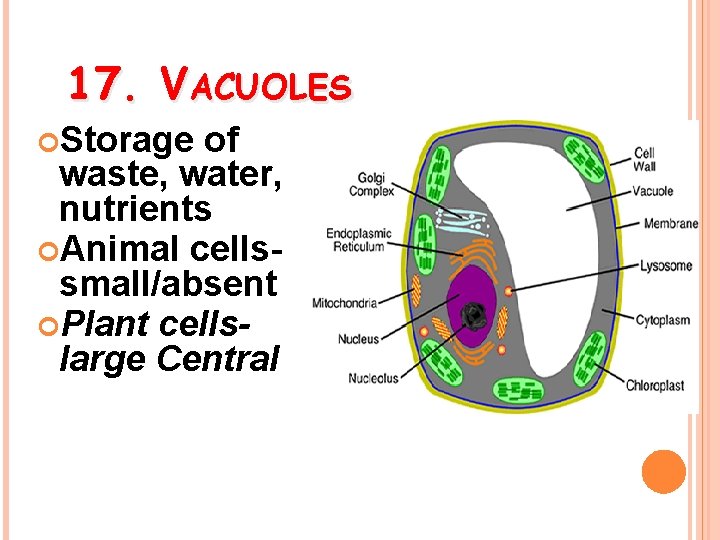
17. VACUOLES Storage of waste, water, nutrients Animal cellssmall/absent Plant cellslarge Central

18. CHLOROPLASTS Plants only Site of Photosynthesis
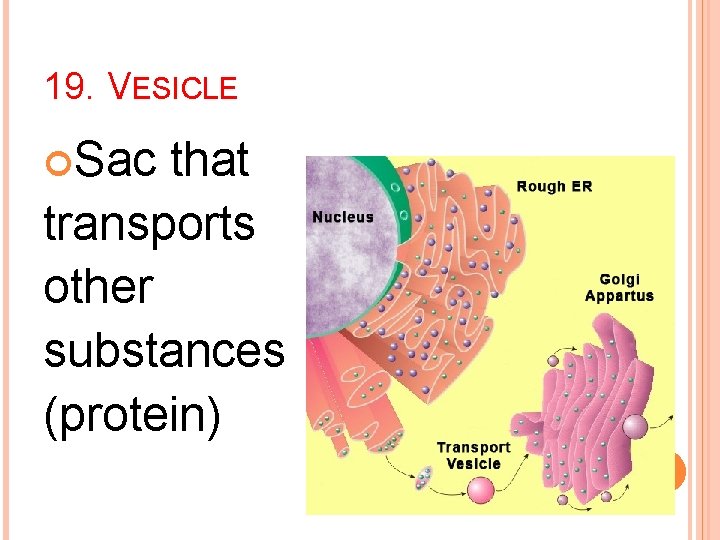
19. VESICLE Sac that transports other substances (protein)
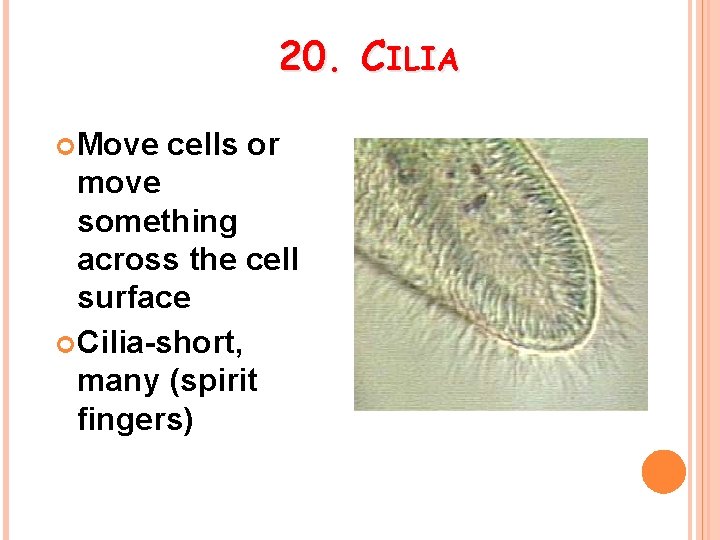
20. CILIA Move cells or move something across the cell surface Cilia-short, many (spirit fingers)
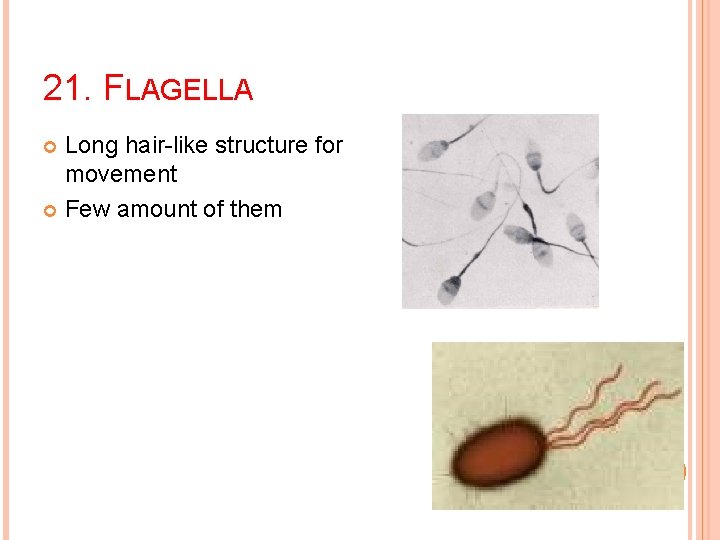
21. FLAGELLA Long hair-like structure for movement Few amount of them
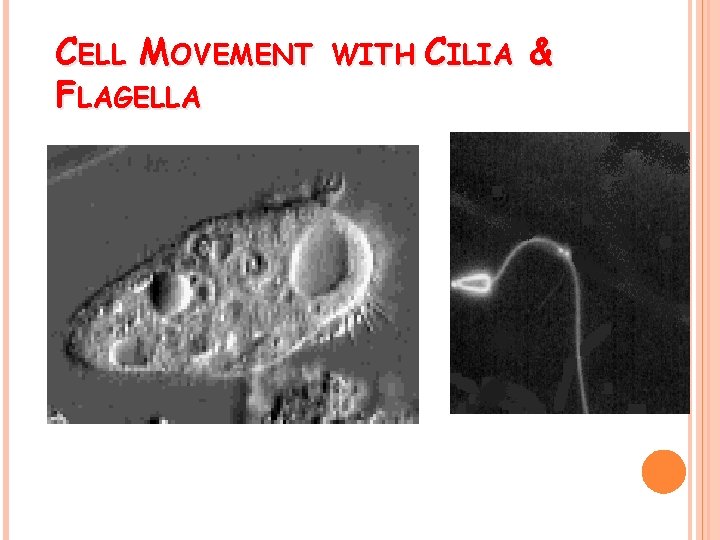
CELL MOVEMENT FLAGELLA WITH CILIA &
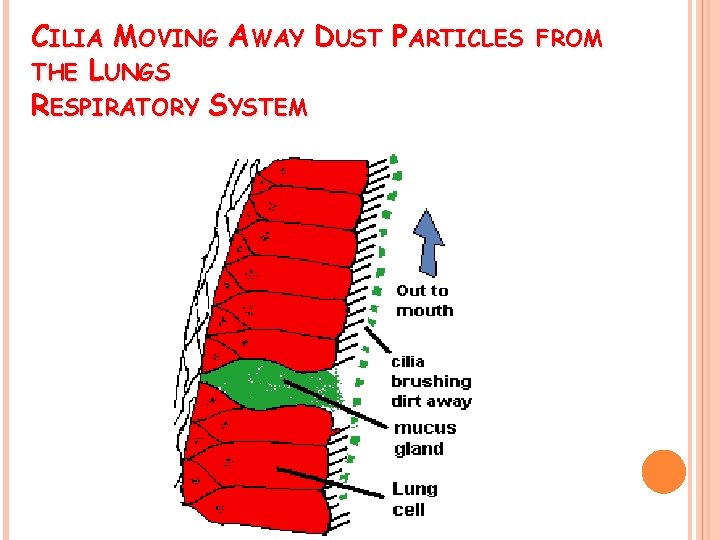
CILIA MOVING AWAY DUST PARTICLES THE LUNGS RESPIRATORY SYSTEM FROM
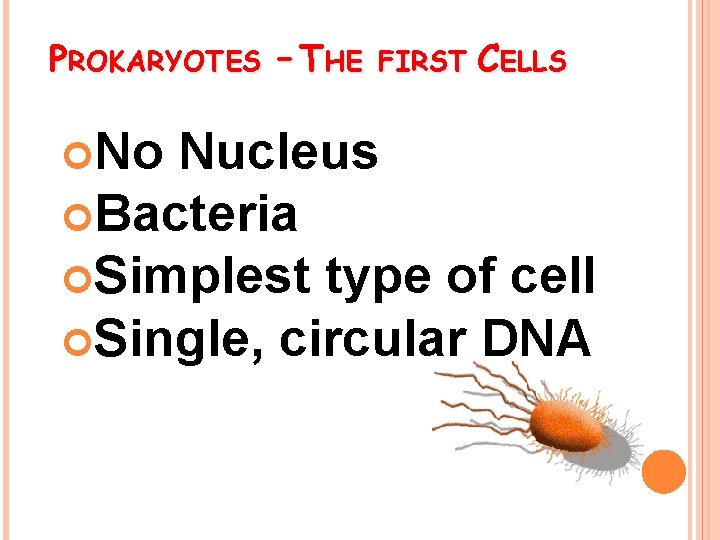
PROKARYOTES – THE No FIRST CELLS Nucleus Bacteria Simplest type of cell Single, circular DNA
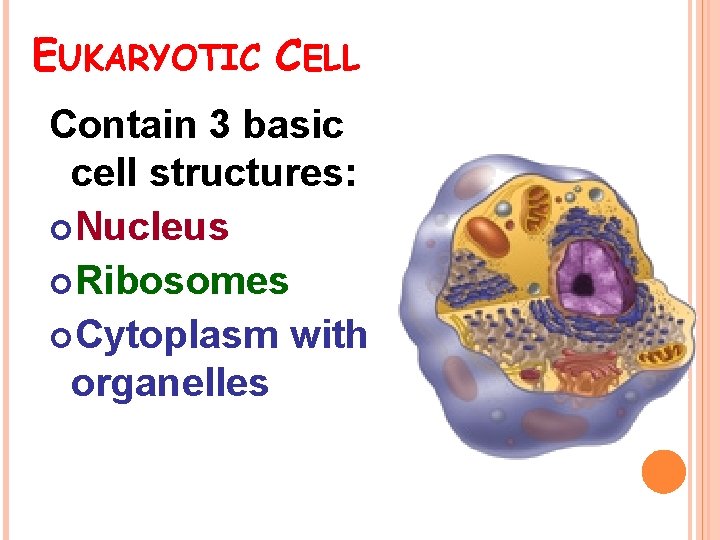
EUKARYOTIC CELL Contain 3 basic cell structures: Nucleus Ribosomes Cytoplasm with organelles
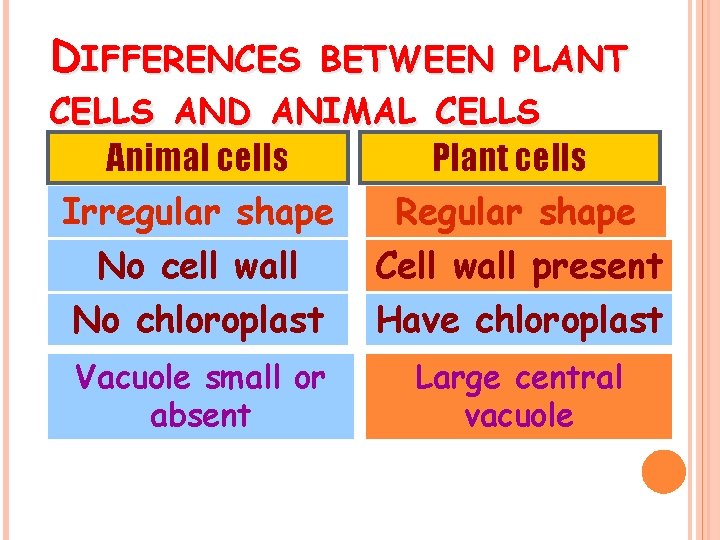
DIFFERENCES BETWEEN PLANT CELLS AND ANIMAL CELLS Animal cells Plant cells Irregular shape No cell wall Regular shape Cell wall present No chloroplast Have chloroplast Vacuole small or absent Large central vacuole
CELL SIZE Question: Are the cells in an elephant bigger, smaller, or about the same size as those in a mouse?
FACTORS AFFECTING CELL SIZE Surface area (plasma membrane surface) is determined by multiplying length times width (L x W) Volume of a cell is determined by multiplying length times width times height (L x W x H) Therefore, Volume increases FASTER than the surface area
CELL SIZE When the surface area is no longer great enough to get rid of all the wastes and to get in enough food and water, then the cell must divide Therefore, the cells of an organism are close in size
CELL SIZE Question: Are the cells in an elephant bigger, smaller, or about the same size as those in a mouse? About the same size, but … The elephant has MANY MORE cells than a mouse!
- Slides: 44