
Basic Structure of a Cell 1 Bellringer Study
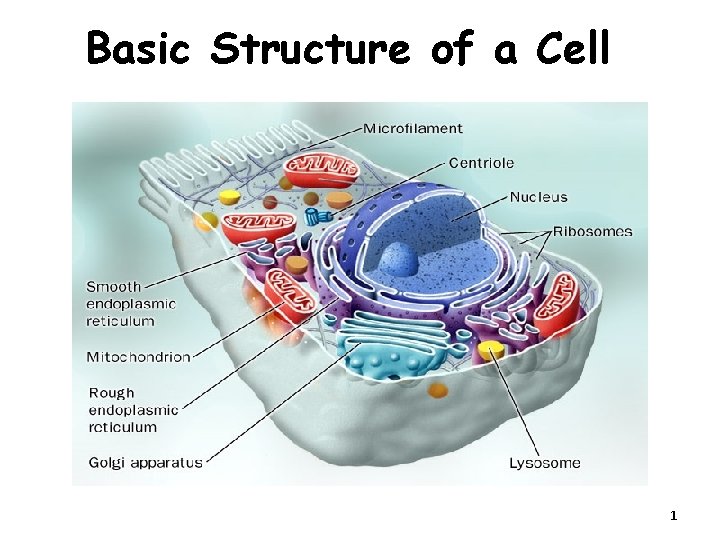
Basic Structure of a Cell 1
Bellringer • Study for you voc quiz ( use notes or take the ziplock bag and match) 2
3
4
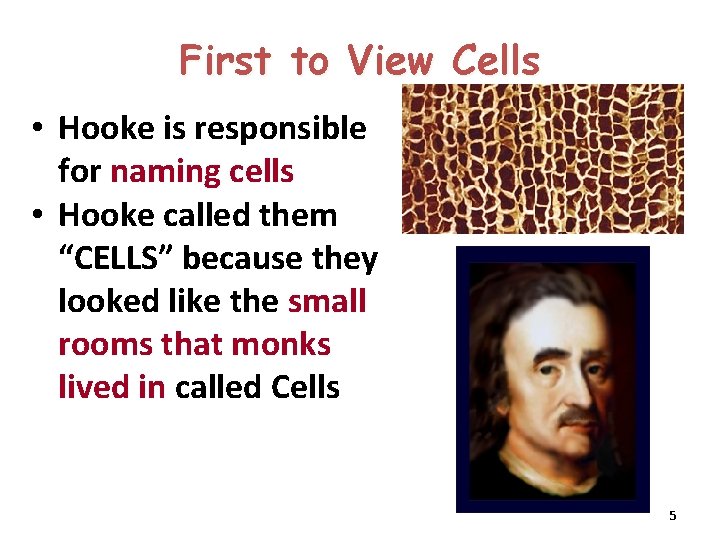
First to View Cells • Hooke is responsible for naming cells • Hooke called them “CELLS” because they looked like the small rooms that monks lived in called Cells 5
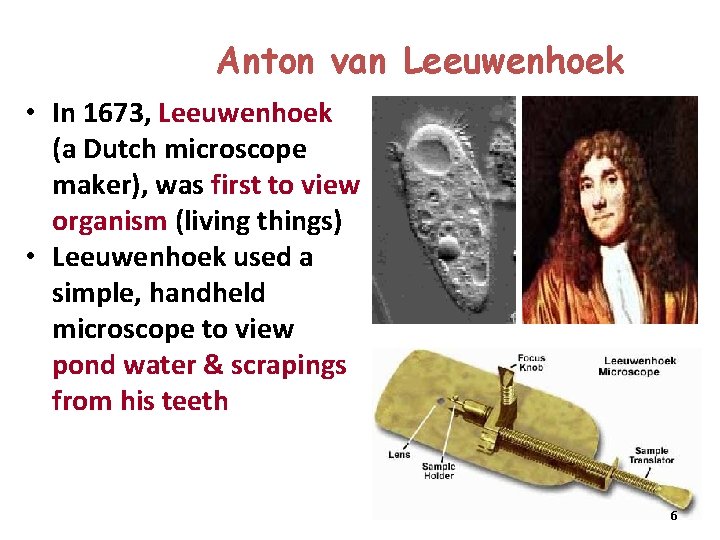
Anton van Leeuwenhoek • In 1673, Leeuwenhoek (a Dutch microscope maker), was first to view organism (living things) • Leeuwenhoek used a simple, handheld microscope to view pond water & scrapings from his teeth 6
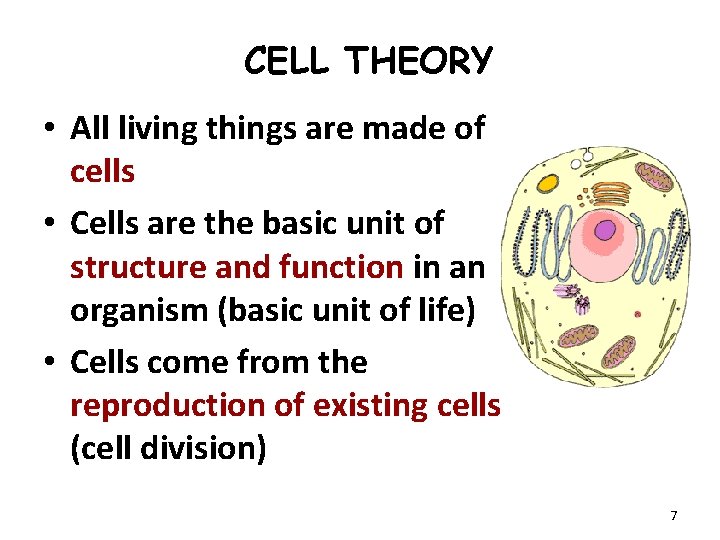
CELL THEORY • All living things are made of cells • Cells are the basic unit of structure and function in an organism (basic unit of life) • Cells come from the reproduction of existing cells (cell division) 7
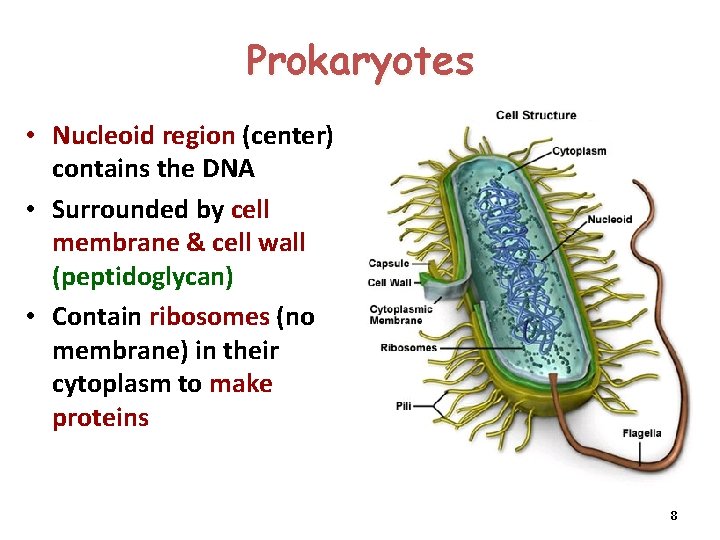
Prokaryotes • Nucleoid region (center) contains the DNA • Surrounded by cell membrane & cell wall (peptidoglycan) • Contain ribosomes (no membrane) in their cytoplasm to make proteins 8
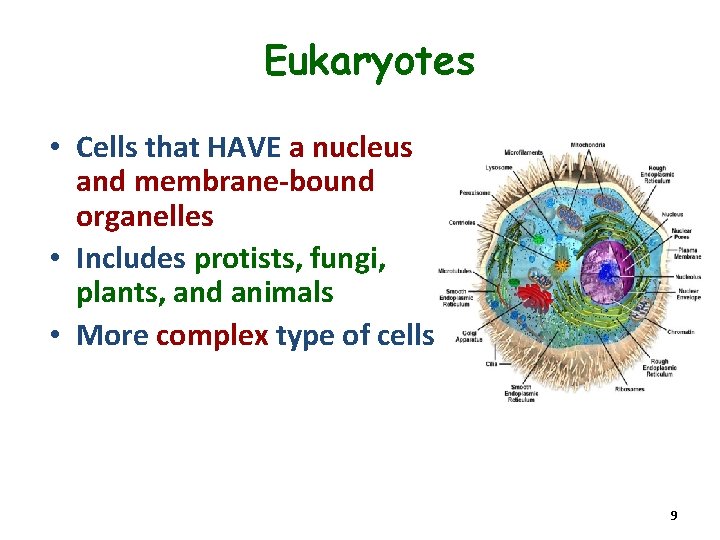
Eukaryotes • Cells that HAVE a nucleus and membrane-bound organelles • Includes protists, fungi, plants, and animals • More complex type of cells 9
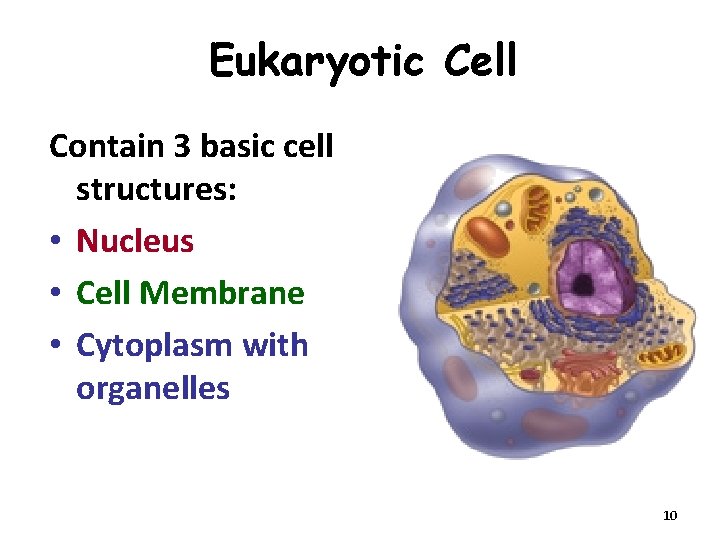
Eukaryotic Cell Contain 3 basic cell structures: • Nucleus • Cell Membrane • Cytoplasm with organelles 10
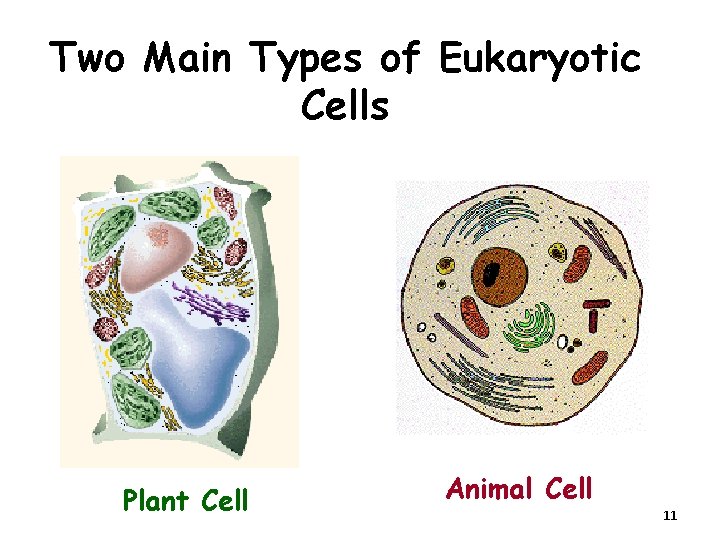
Two Main Types of Eukaryotic Cells Plant Cell Animal Cell 11
Organelles 12
Organelles • • Very small (Microscopic) Perform various functions for a cell Found in the cytoplasm May or may not be membrane-bound 13
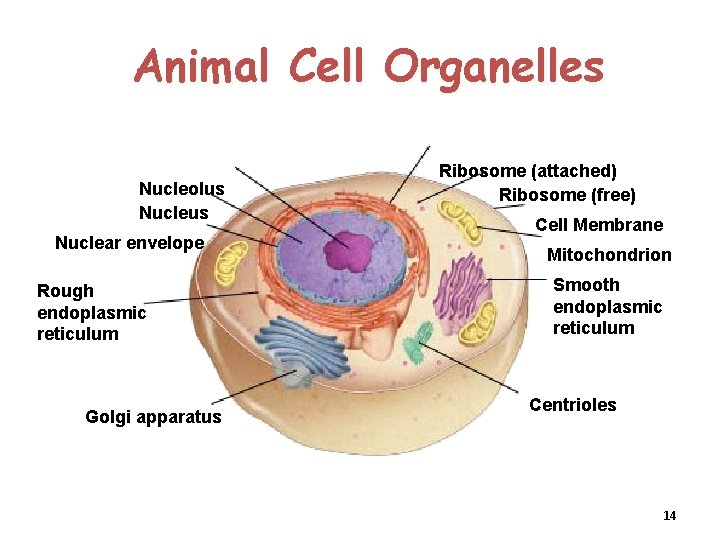
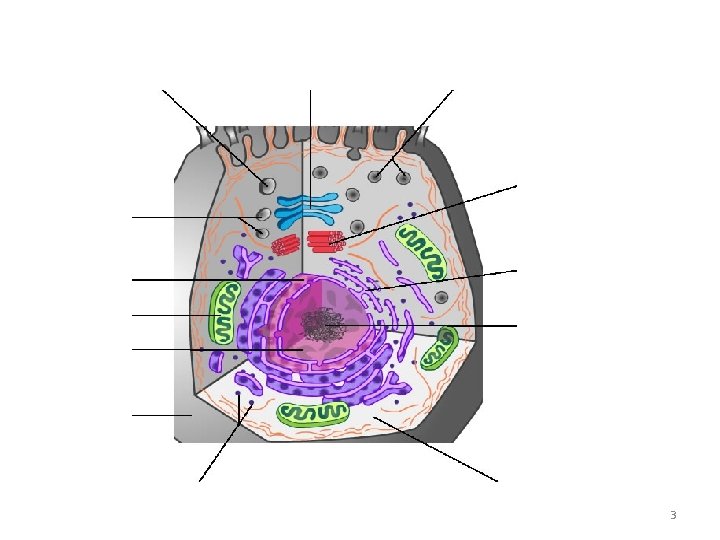
Animal Cell Organelles Nucleolus Nuclear envelope Rough endoplasmic reticulum Golgi apparatus Ribosome (attached) Ribosome (free) Cell Membrane Mitochondrion Smooth endoplasmic reticulum Centrioles 14
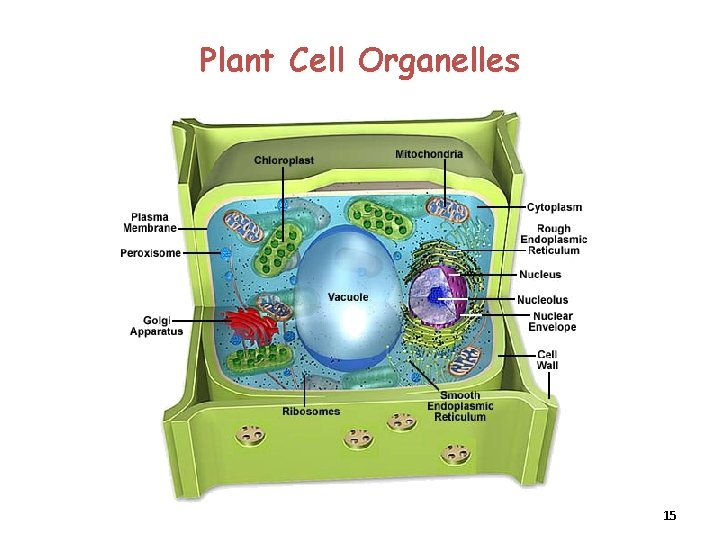
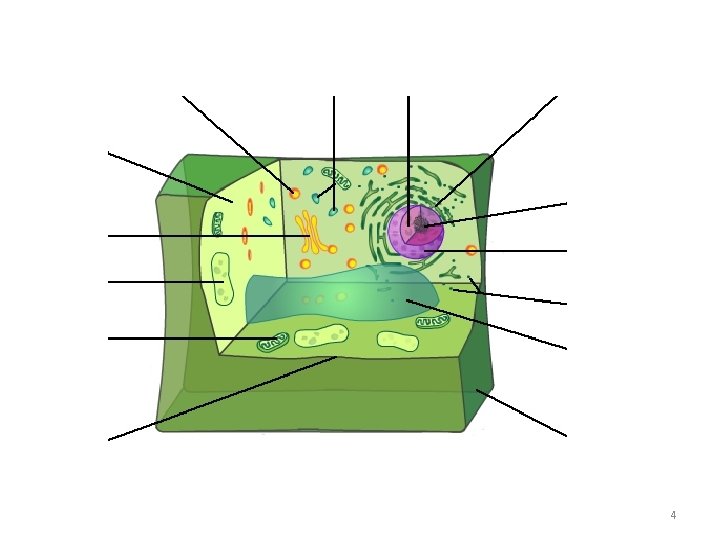
Plant Cell Organelles 15
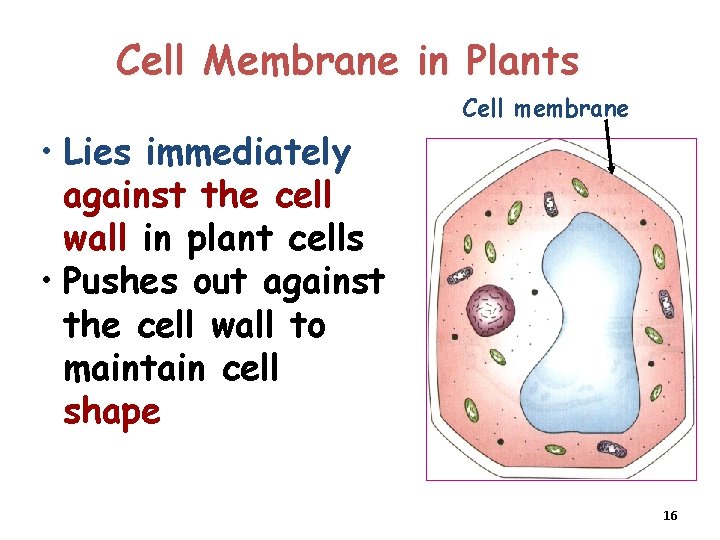
Cell Membrane in Plants Cell membrane • Lies immediately against the cell wall in plant cells • Pushes out against the cell wall to maintain cell shape 16
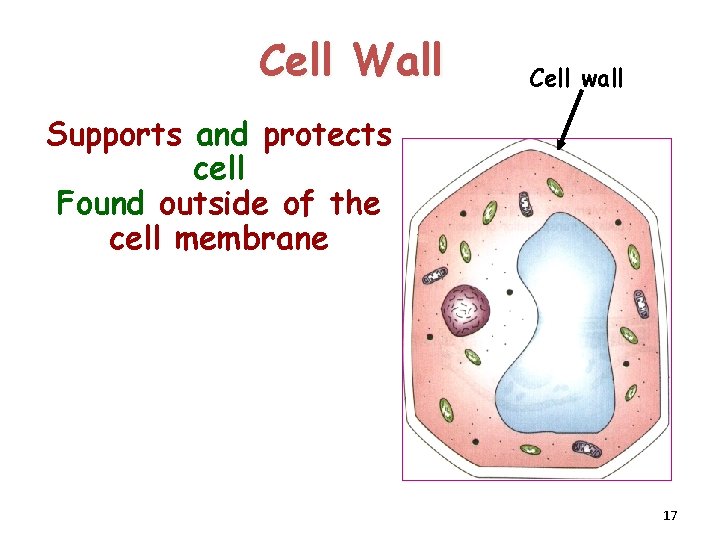
Cell Wall Cell wall Supports and protects cell Found outside of the cell membrane 17
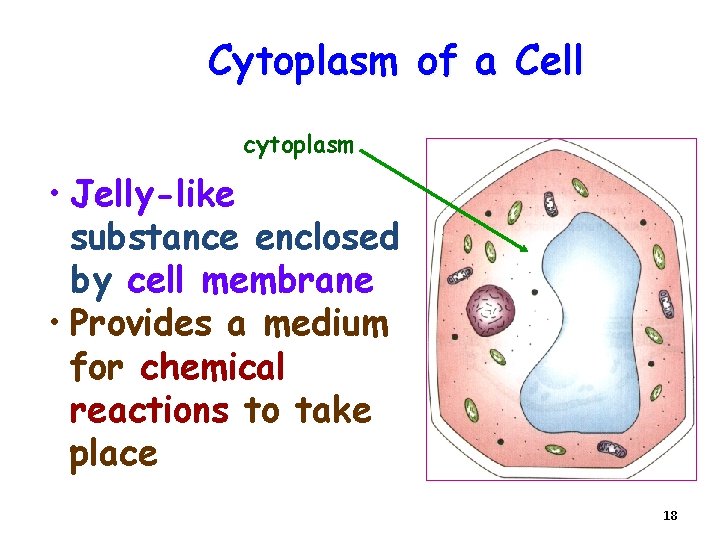
Cytoplasm of a Cell cytoplasm • Jelly-like substance enclosed by cell membrane • Provides a medium for chemical reactions to take place 18
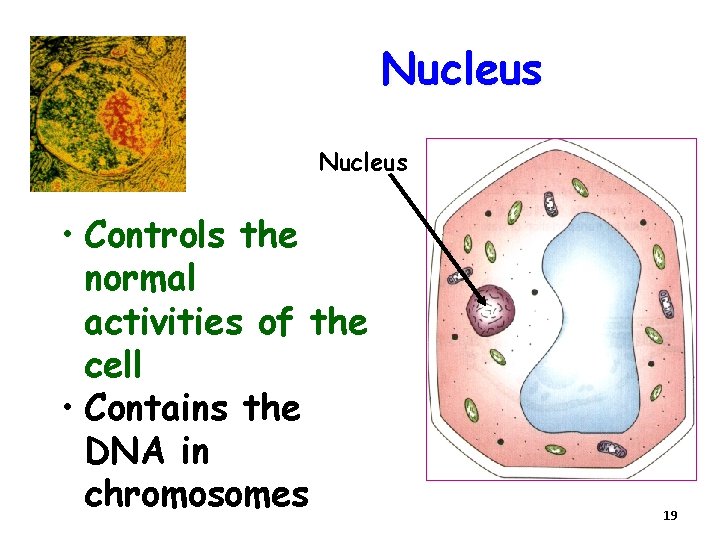
Nucleus • Controls the normal activities of the cell • Contains the DNA in chromosomes 19
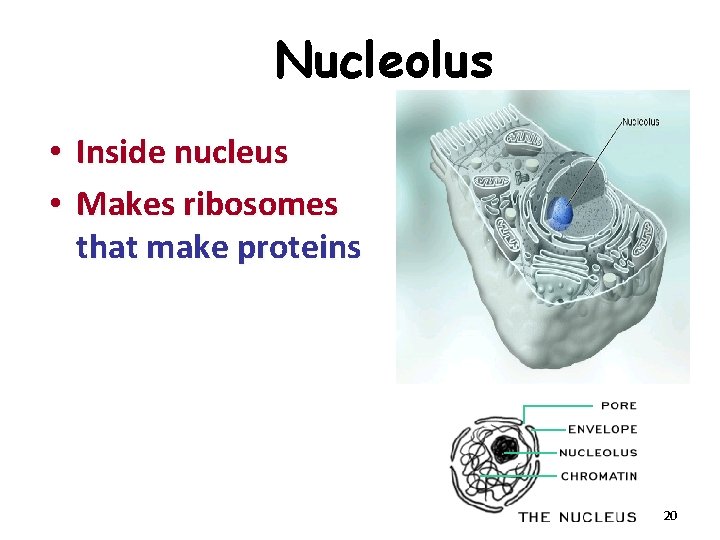
Nucleolus • • Inside nucleus Makes ribosomes that make proteins 20
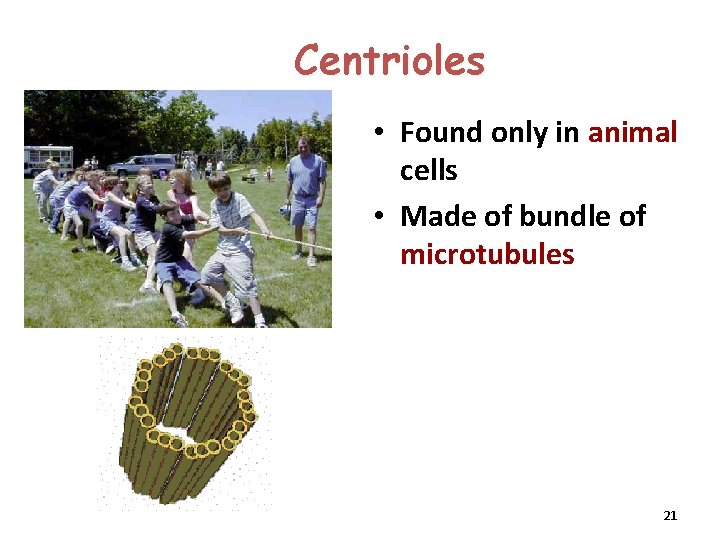
Centrioles • Found only in animal cells • Made of bundle of microtubules 21
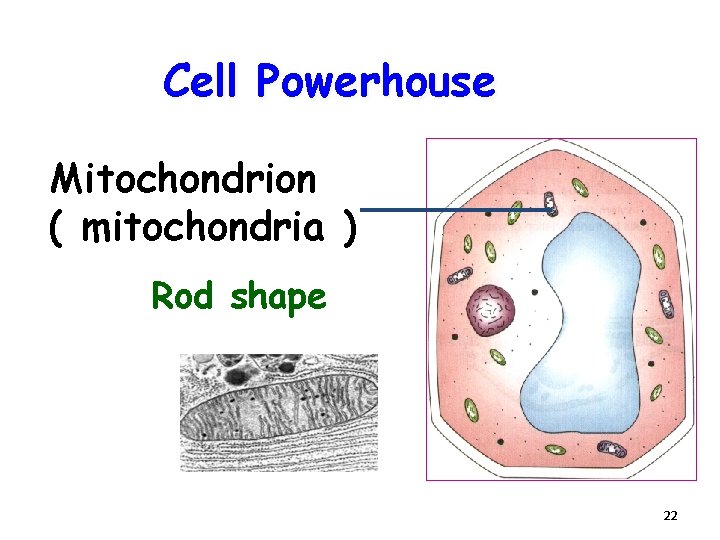
Cell Powerhouse Mitochondrion ( mitochondria ) Rod shape 22
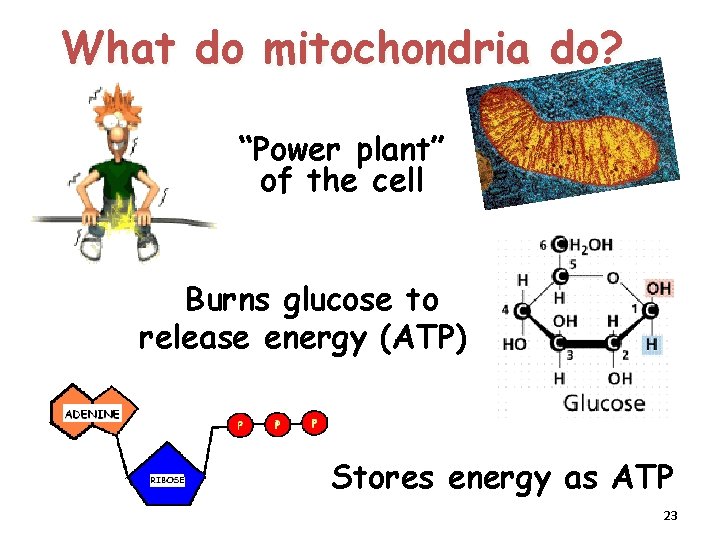
What do mitochondria do? “Power plant” of the cell Burns glucose to release energy (ATP) Stores energy as ATP 23
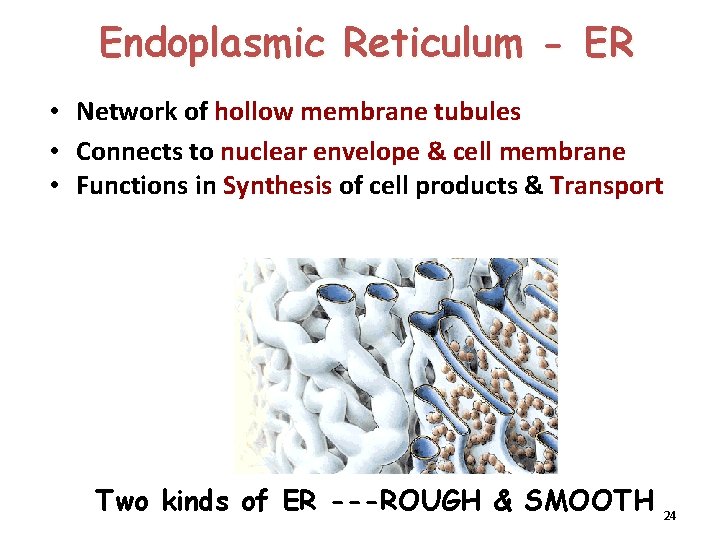
Endoplasmic Reticulum - ER • Network of hollow membrane tubules • Connects to nuclear envelope & cell membrane • Functions in Synthesis of cell products & Transport Two kinds of ER ---ROUGH & SMOOTH 24
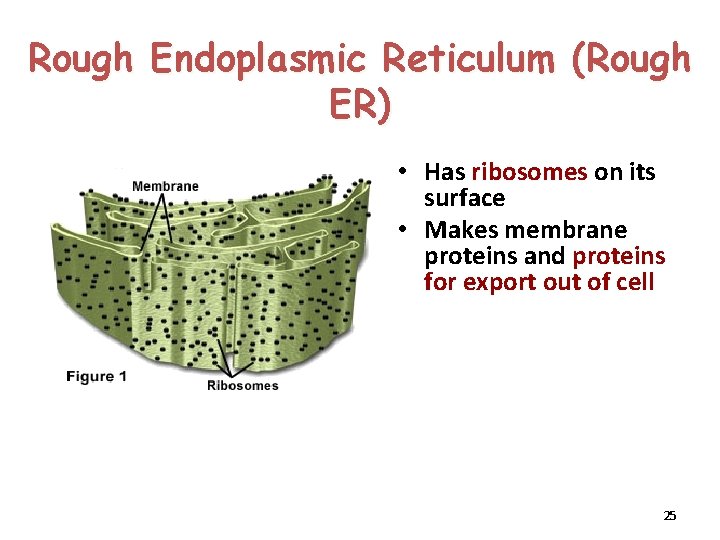
Rough Endoplasmic Reticulum (Rough ER) • Has ribosomes on its surface • Makes membrane proteins and proteins for export out of cell 25
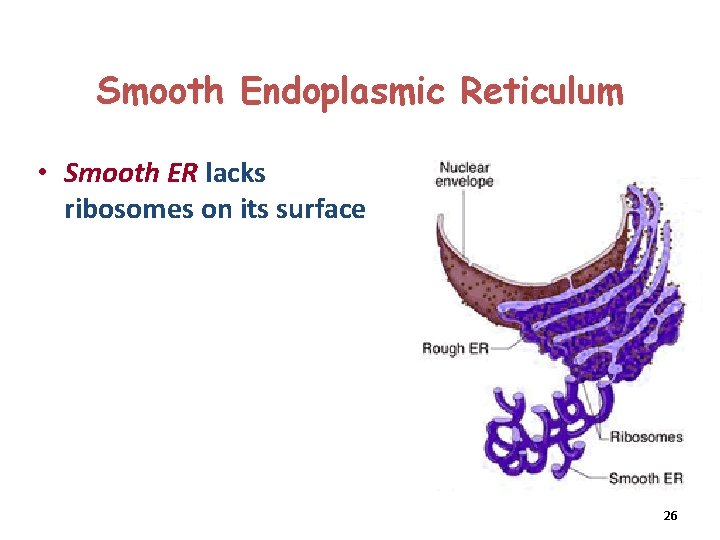
Smooth Endoplasmic Reticulum • Smooth ER lacks ribosomes on its surface 26
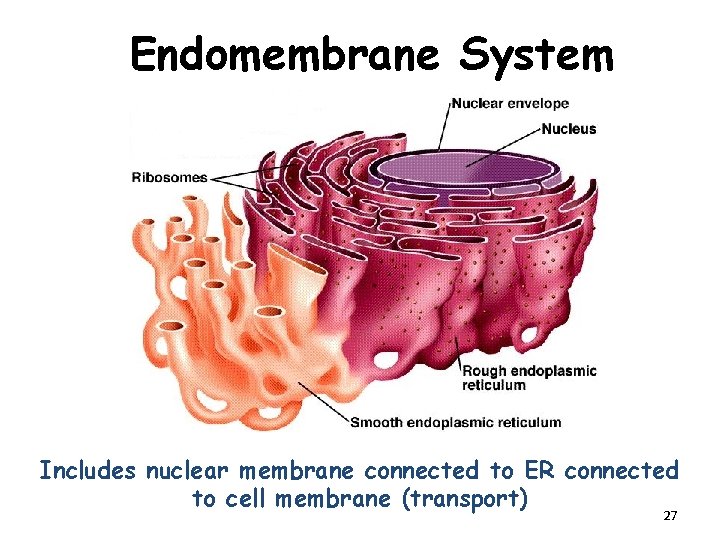
Endomembrane System Includes nuclear membrane connected to ER connected to cell membrane (transport) 27
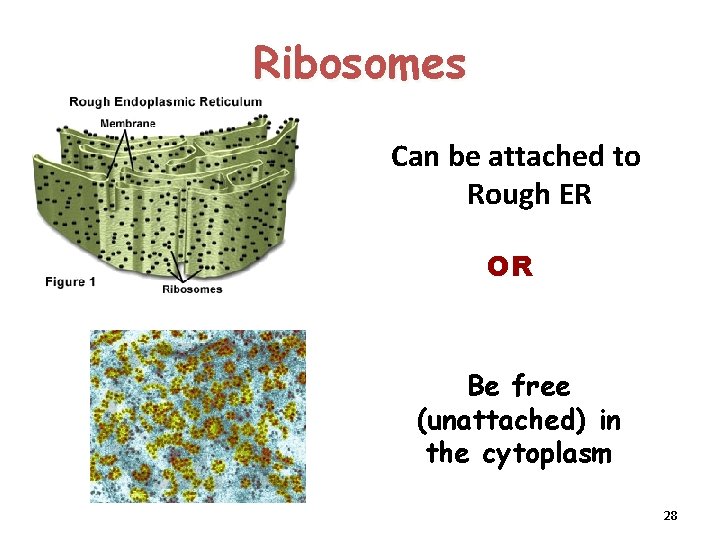
Ribosomes Can be attached to Rough ER OR Be free (unattached) in the cytoplasm 28
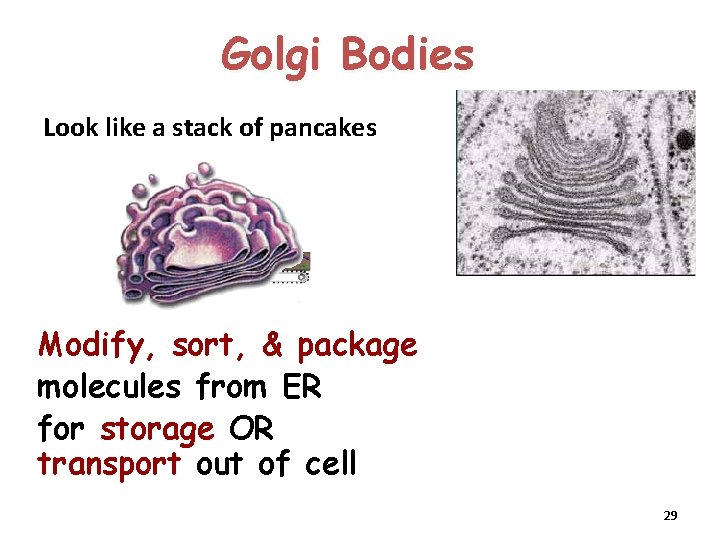
Golgi Bodies Look like a stack of pancakes Modify, sort, & package molecules from ER for storage OR transport out of cell 29
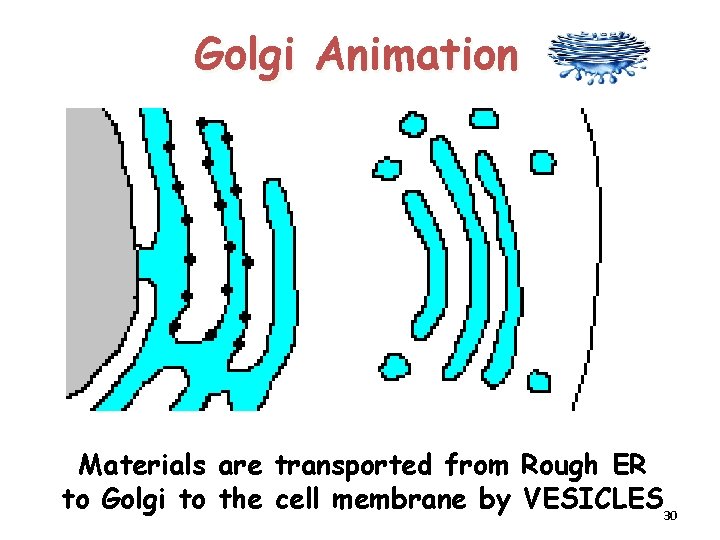
Golgi Animation Materials are transported from Rough ER to Golgi to the cell membrane by VESICLES 30
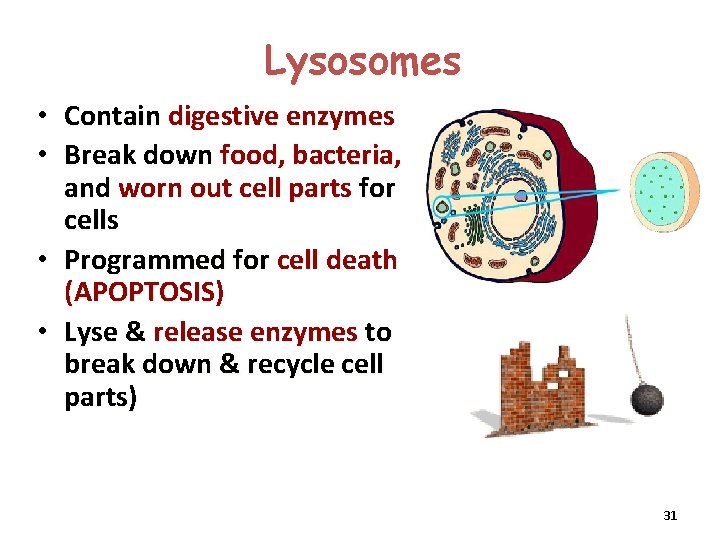
Lysosomes • Contain digestive enzymes • Break down food, bacteria, and worn out cell parts for cells • Programmed for cell death (APOPTOSIS) • Lyse & release enzymes to break down & recycle cell parts) 31
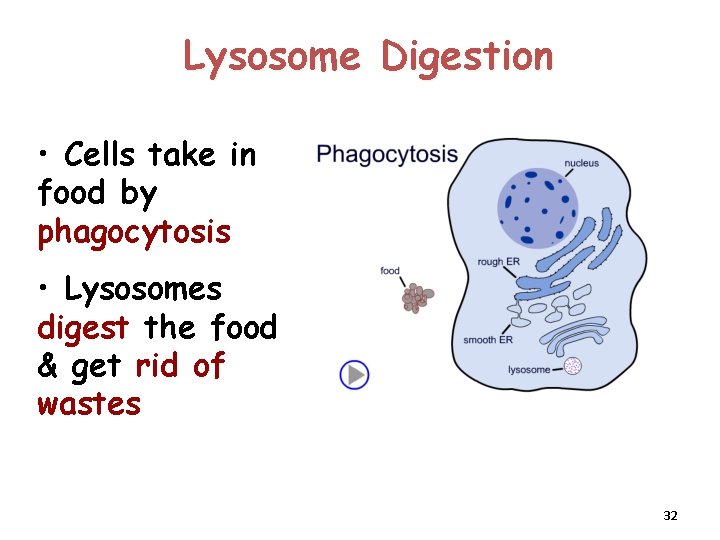
Lysosome Digestion • Cells take in food by phagocytosis • Lysosomes digest the food & get rid of wastes 32
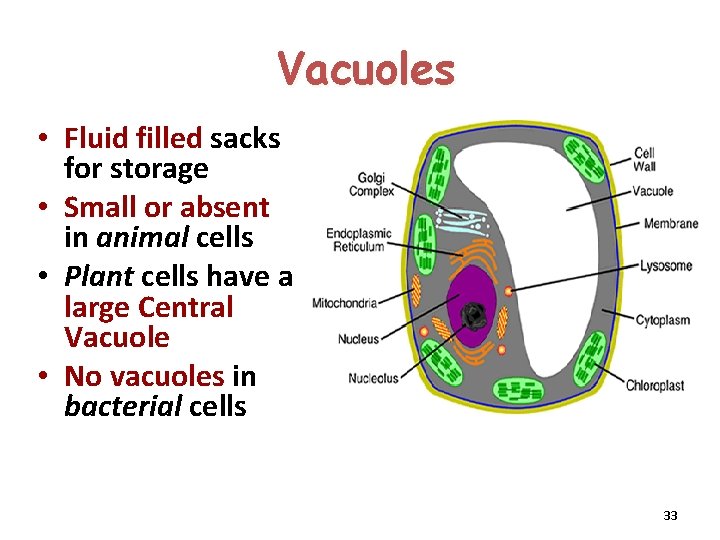
Vacuoles • Fluid filled sacks for storage • Small or absent in animal cells • Plant cells have a large Central Vacuole • No vacuoles in bacterial cells 33
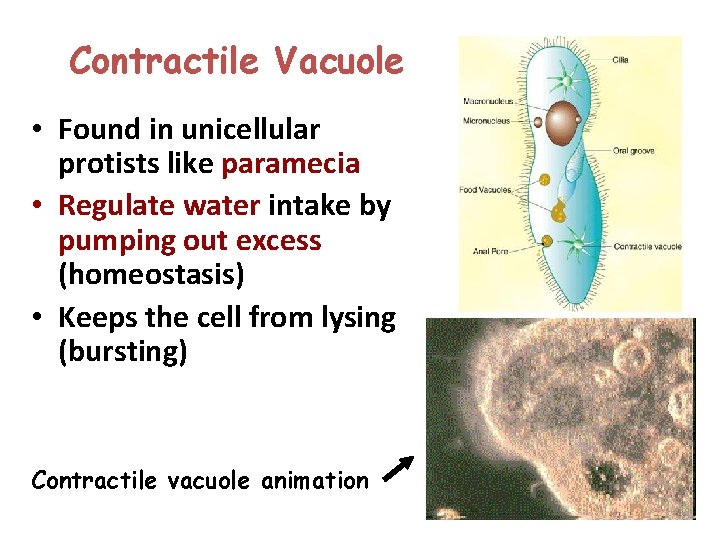
Contractile Vacuole • Found in unicellular protists like paramecia • Regulate water intake by pumping out excess (homeostasis) • Keeps the cell from lysing (bursting) Contractile vacuole animation 34
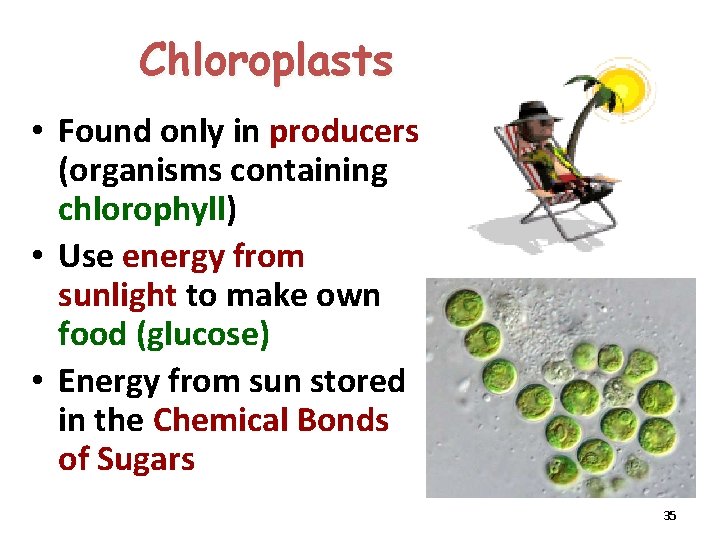
Chloroplasts • Found only in producers (organisms containing chlorophyll) • Use energy from sunlight to make own food (glucose) • Energy from sun stored in the Chemical Bonds of Sugars 35
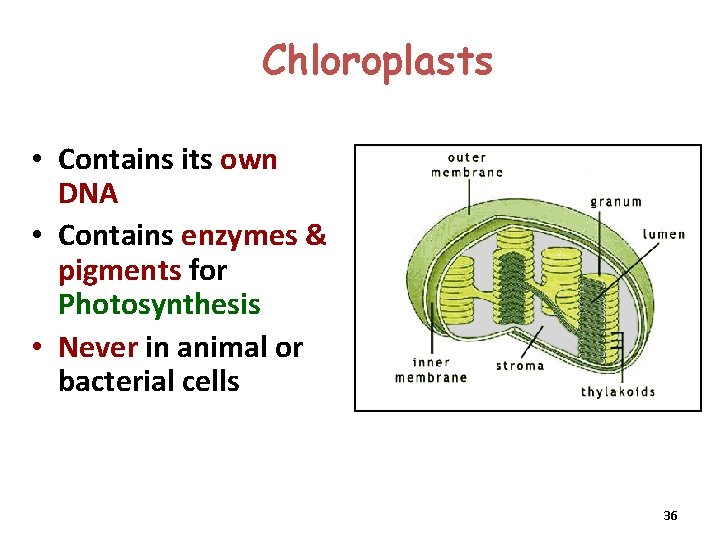
Chloroplasts • Contains its own DNA • Contains enzymes & pigments for Photosynthesis • Never in animal or bacterial cells 36
- Slides: 36