
Basic Stage Lighting This is very basic If
Basic Stage Lighting (This is very basic. If you are interested in knowing more about this, let me know. I can point you in the right direction for you to do your own research. )
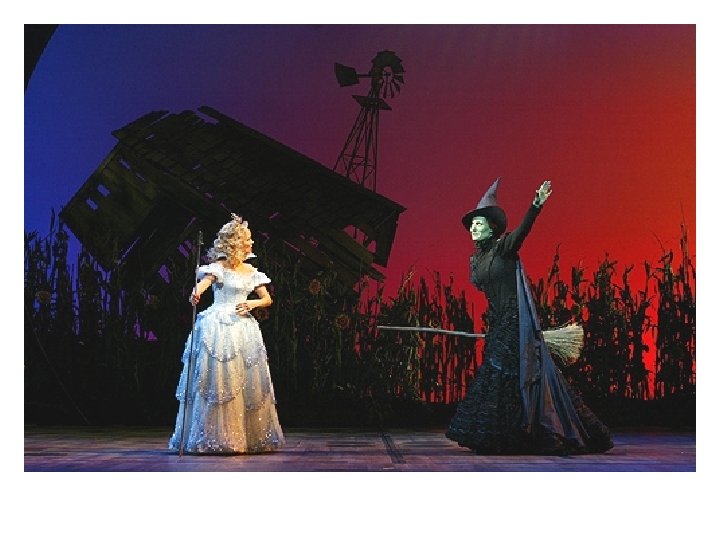
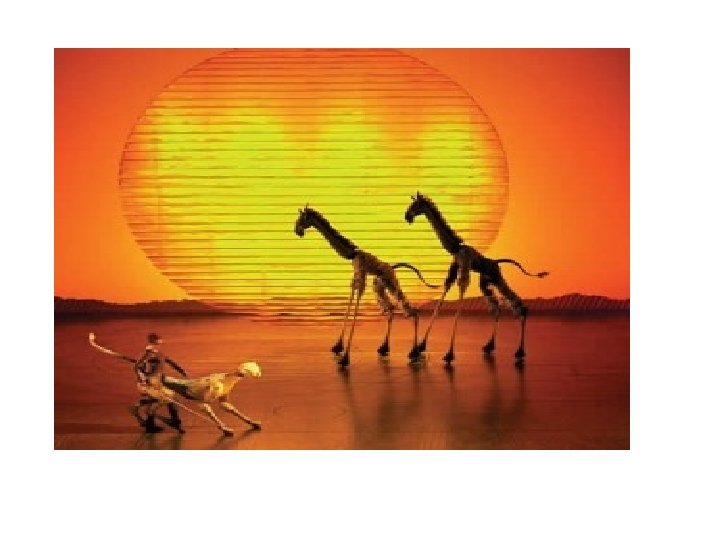
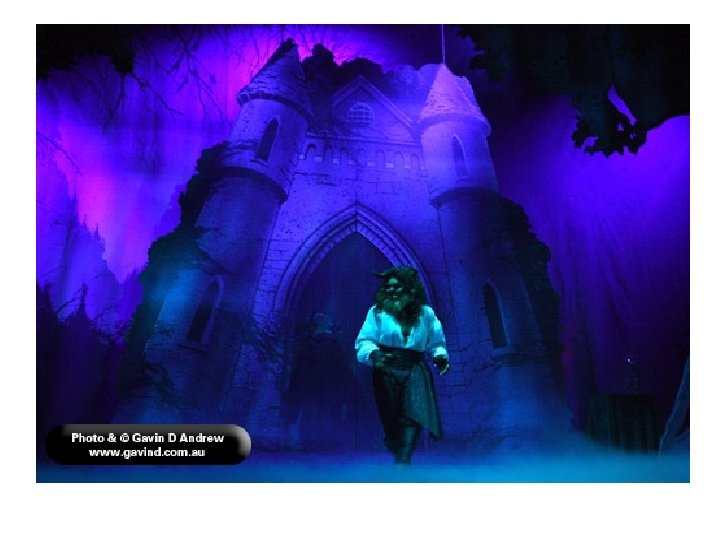
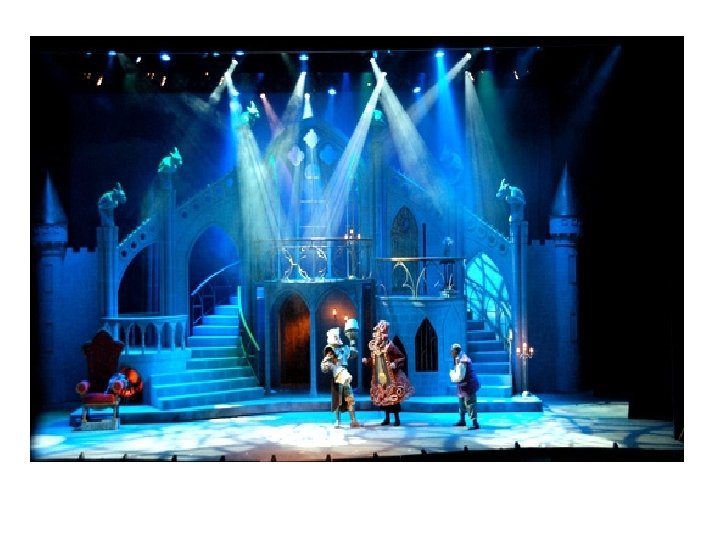
3 Functions of Stage Lighting • Visibility – the audience has to be able to see the onstage action • Emphasis & Mood - bright vs. dim lighting; colors represent mood • Logic – lighting should accurately reproduce obvious light sources; sun, moon, lamps, fireplace, etc.
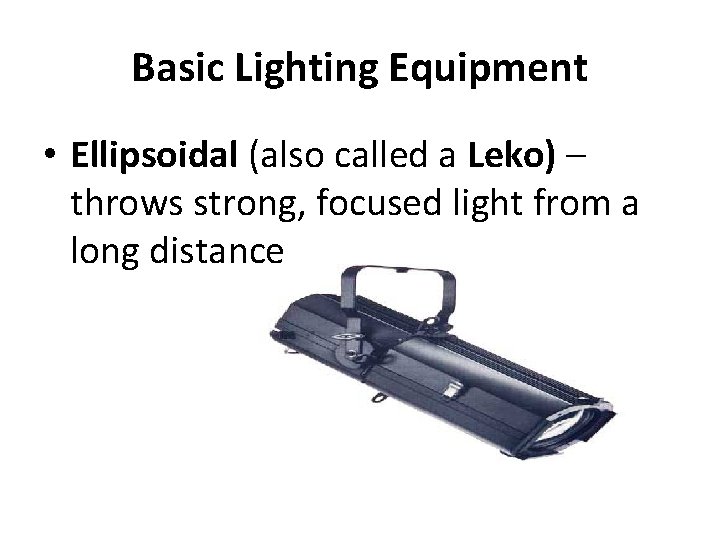
Basic Lighting Equipment • Ellipsoidal (also called a Leko) – throws strong, focused light from a long distance
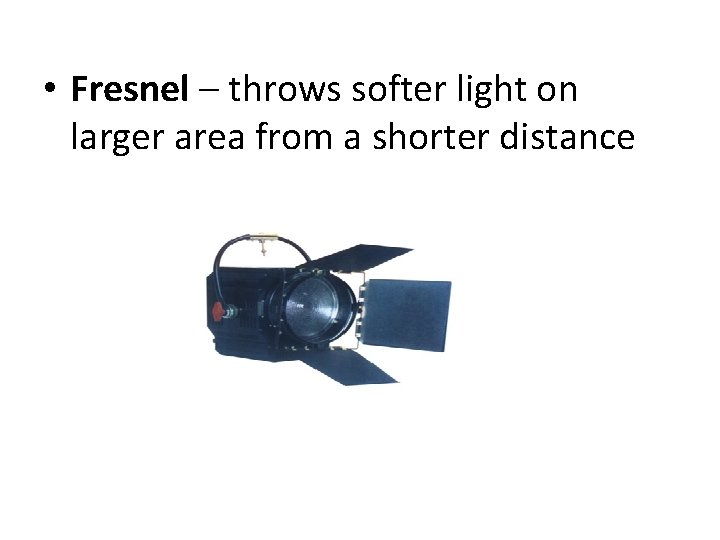
• Fresnel – throws softer light on larger area from a shorter distance
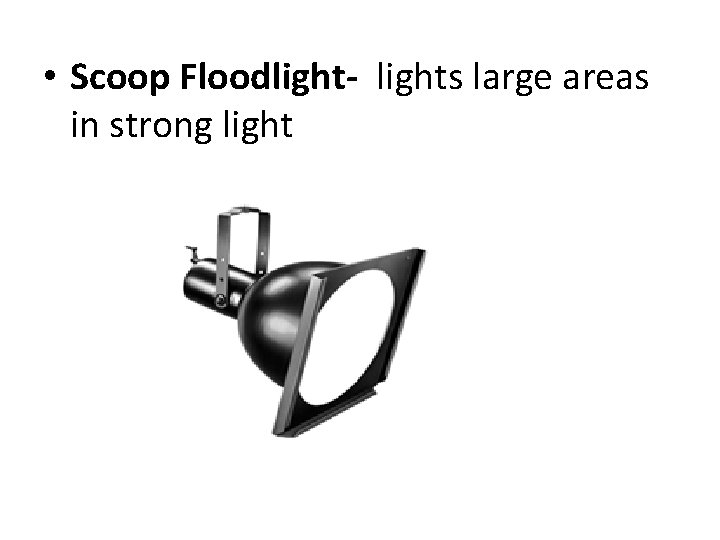
• Scoop Floodlight- lights large areas in strong light
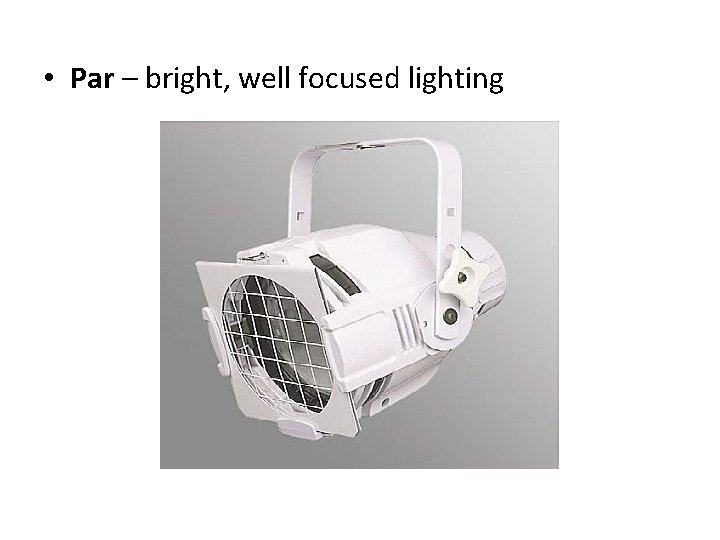
• Par – bright, well focused lighting
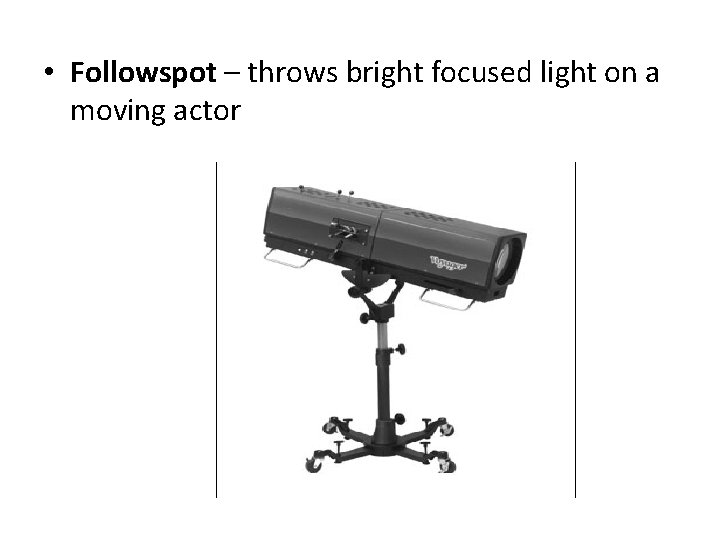
• Followspot – throws bright focused light on a moving actor
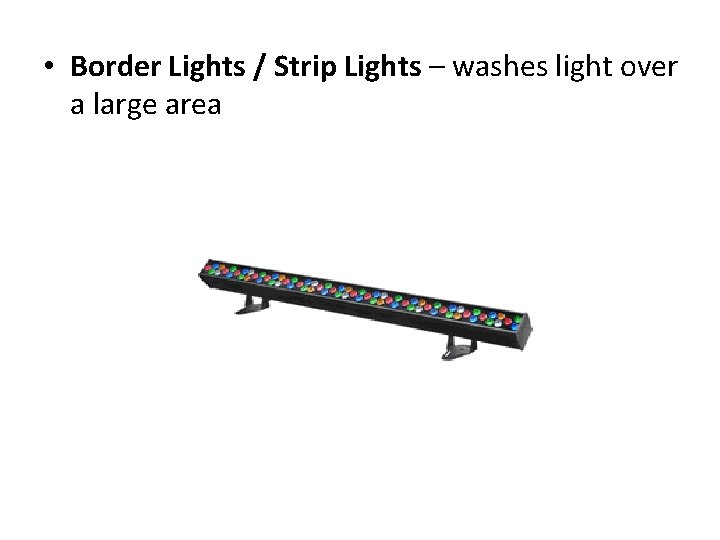
• Border Lights / Strip Lights – washes light over a large area
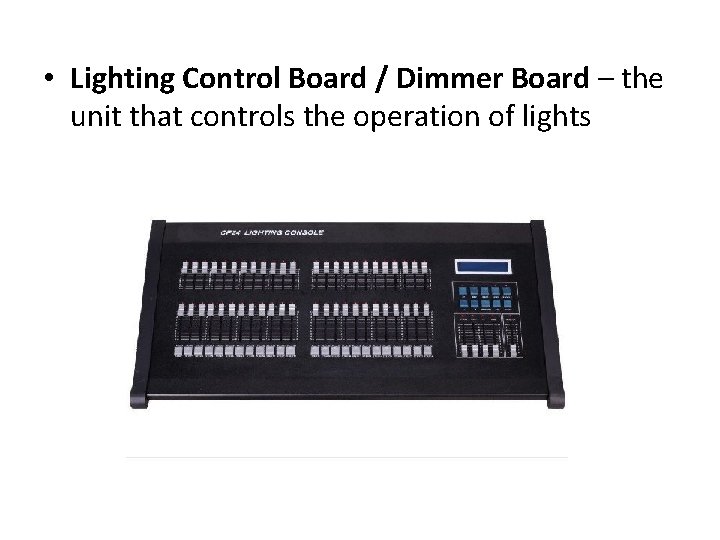
• Lighting Control Board / Dimmer Board – the unit that controls the operation of lights
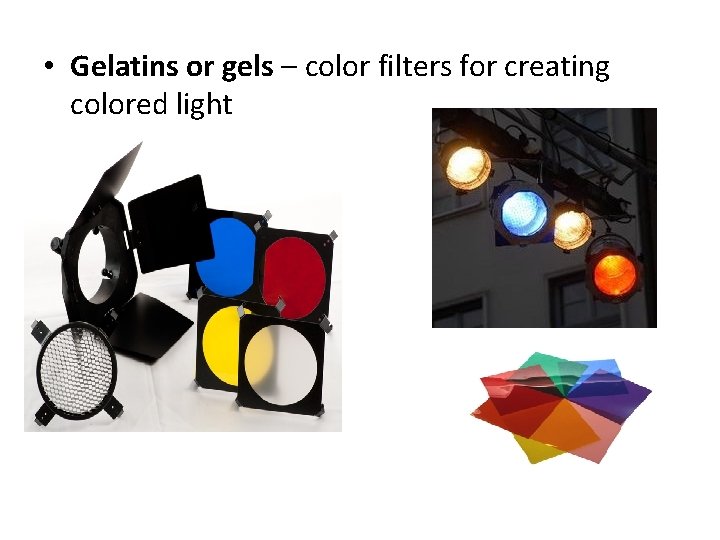
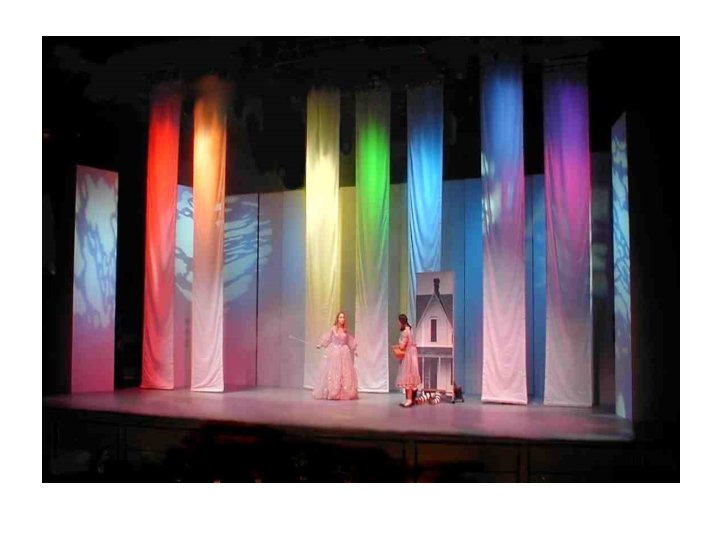
• Gelatins or gels – color filters for creating colored light
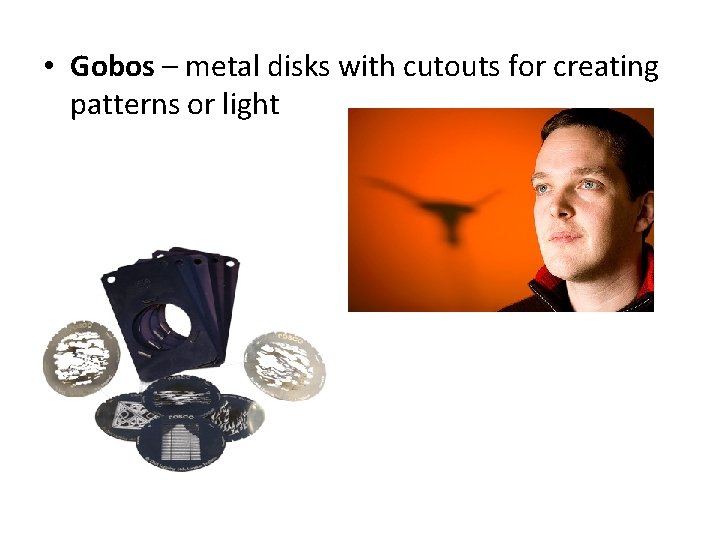
• Gobos – metal disks with cutouts for creating patterns or light
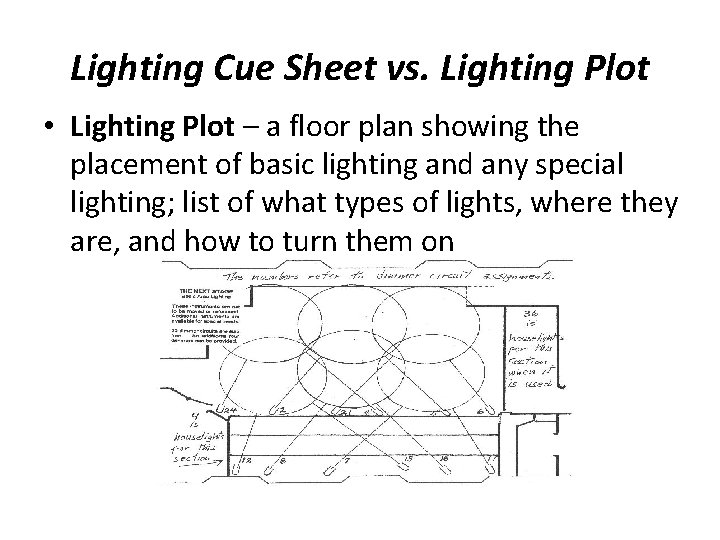
Lighting Cue Sheet vs. Lighting Plot • Lighting Plot – a floor plan showing the placement of basic lighting and any special lighting; list of what types of lights, where they are, and how to turn them on
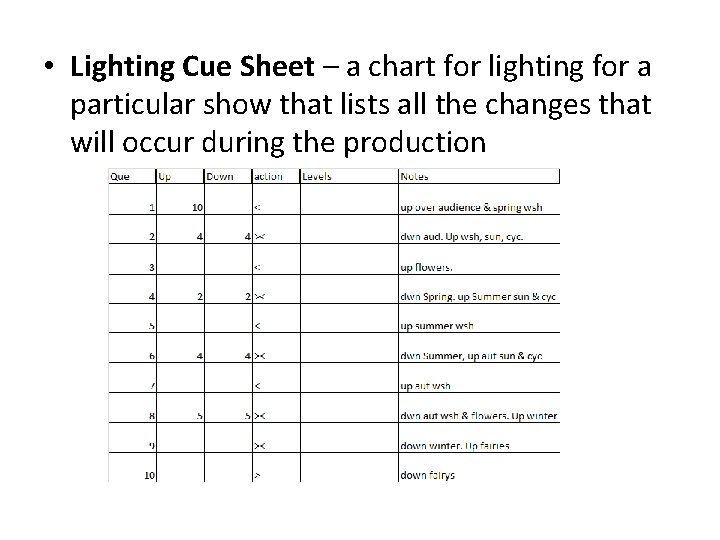
• Lighting Cue Sheet – a chart for lighting for a particular show that lists all the changes that will occur during the production
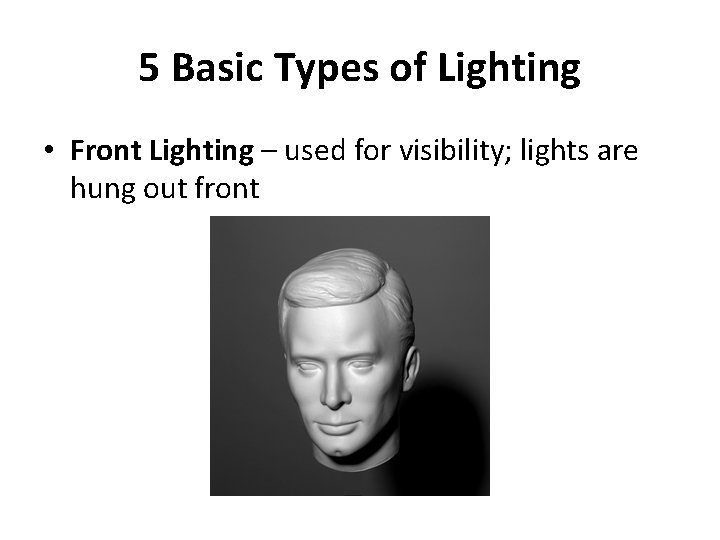
5 Basic Types of Lighting • Front Lighting – used for visibility; lights are hung out front
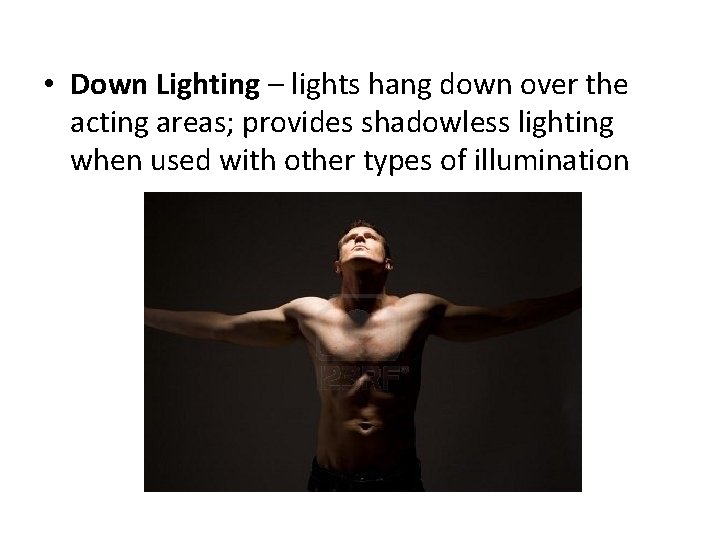
• Down Lighting – lights hang down over the acting areas; provides shadowless lighting when used with other types of illumination
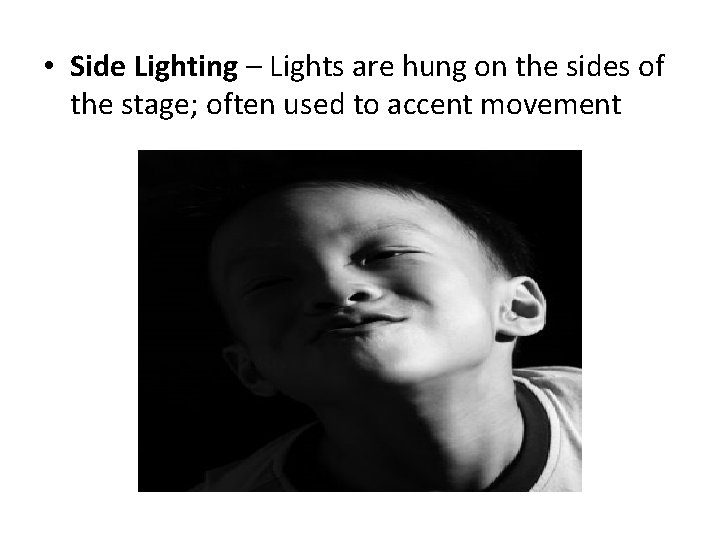
• Side Lighting – Lights are hung on the sides of the stage; often used to accent movement
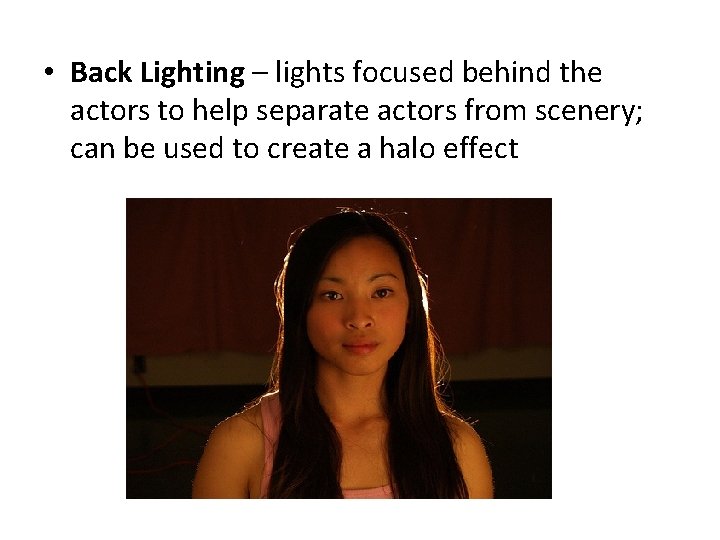
• Back Lighting – lights focused behind the actors to help separate actors from scenery; can be used to create a halo effect
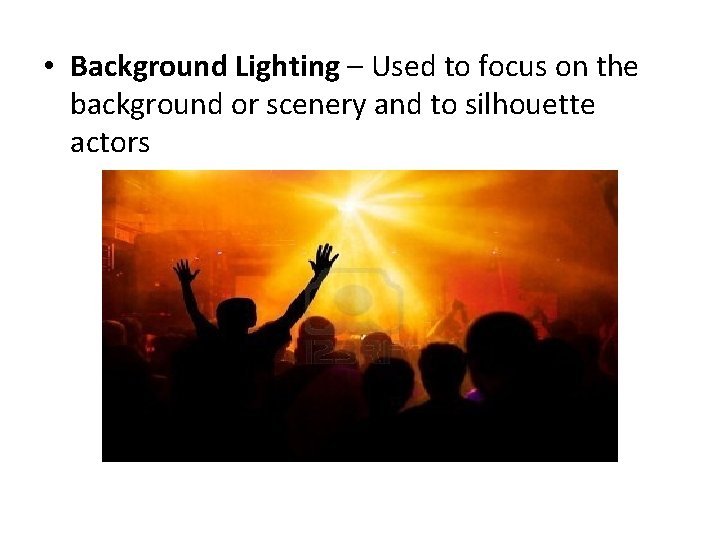
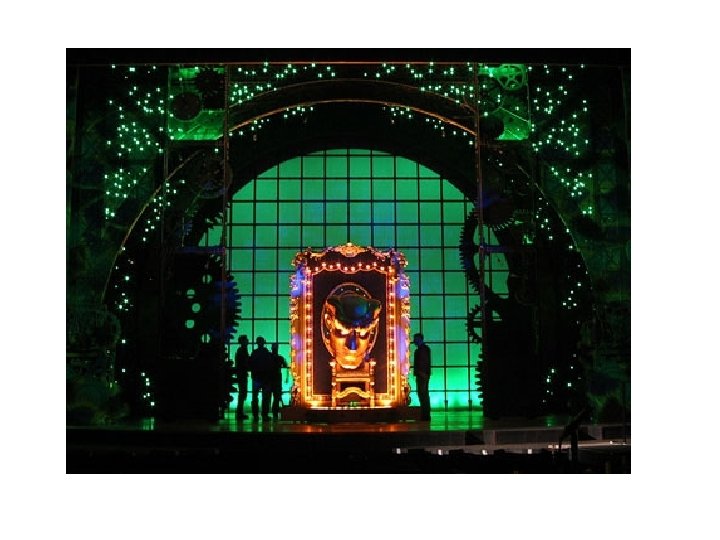
• Background Lighting – Used to focus on the background or scenery and to silhouette actors
- Slides: 30