
Basic Safeguarding Awareness A quick reminder to take

Basic Safeguarding Awareness A quick reminder to take great care of yourself and others during this tutorial session We may have stories that other people are not aware of…
Ground Rules • Some of the content within this session is sensitive and may be difficult to discuss • If you would like to talk about any issues raised, please talk to your tutor, or contact your Designated Person: Email: Deborah. copland@hants. gov. uk Tel: 07926077442 • • Please only challenge the views – not the person. We won’t all agree! Treat each other with respect Confidentiality – what’s said in this room shouldn’t be discussed outside this room Look after yourself
Learning Aim To raise your awareness of what safeguarding is and what to do if you have a safeguarding concern

Learning Outcomes By the end of the workshop, you will: • Have an understanding of what is meant by safeguarding and why it is important • Be able to identify what types of harm Hampshire Achieves wants you to be kept safe from • Know what to do if you have a safeguarding issue/concern, and what happens next • Understand your responsibilities in staying safe and keeping others safe

What is safeguarding? Activity 1: • Working in small groups, discuss what do you think ‘safeguarding’ might mean? • Have you come across this term before? • If not, what do you think it might mean?
Safeguarding definition ‘Safeguarding’ is the duties and responsibilities that those providing a health, social or education service have to carry out to protect individuals from harm. NIACE, 2009
Safeguarding is about: • What we would do if we think you are being harmed (or likely to be harmed) • What you should do if you think someone else was being harmed • What we do if we think you are about to harm someone else • What we need you to do to keep yourself and others safe
Harm means: • Anything which is happening to you which is hurtful; emotionally or physically • It could mean bullying, sexual abuse, physical attack, being forced to do something you don’t want to • It could be at home, at college/training, in the workplace, with friends, online, in the street; anywhere
Confidentiality means: You can share personal information with any of the staff here, but: If the staff member feels that what you tell them puts you, or any other person at risk of harm, they will have to pass it on to Deborah Copland, our designated person, who may have to take it further to support you or others and keep everyone safe They will only tell those who need to know
Safeguarding situations Activity 2 Each group identify from the cards which of these situations may be included under the term ‘safeguarding’
What are we safeguarding against? • Abuse or inappropriate relationships • Grooming (in person, online, by phone, etc) • Inappropriate supervision (by parents or staff, e. g. too much ) • Bullying, cyber-bullying • Self-harm, risky behaviour • Unsafe activities and environments • Accidents e. g. road, home • Crime • Fear of crime
and… • Exploitation including financial, sexual exploitation • Immigration issues • Unsafe environments e. g. parks, sports grounds • Homelessness and unsuitable housing • Victimisation due to race, sexuality, faith, gender, disability and so on • Alcohol and drug misuse • Eating disorders
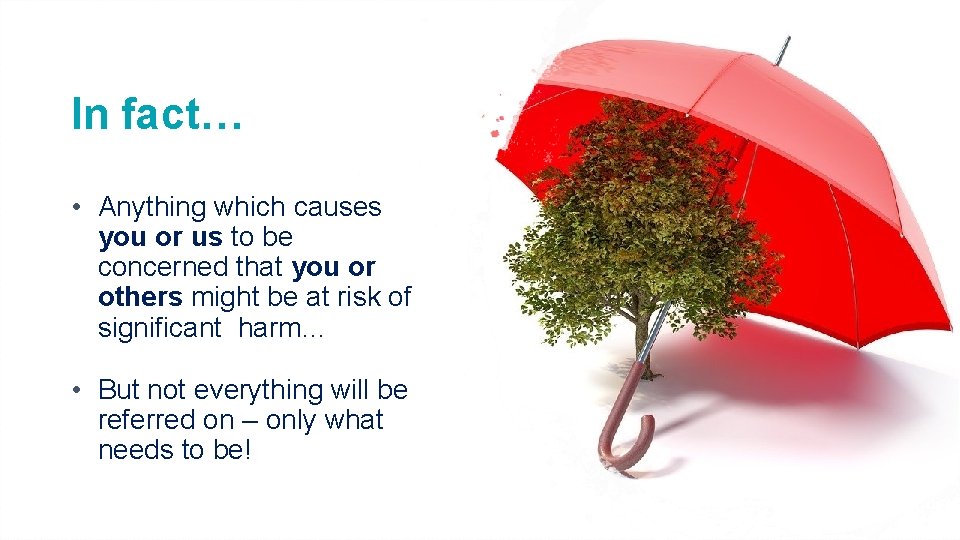
In fact… • Anything which causes you or us to be concerned that you or others might be at risk of significant harm… • But not everything will be referred on – only what needs to be!
What would you do? Activity 3 What are your responsibilities to safeguard yourselves and other learners? Look at the dilemma cards. Discuss what you would do and if this is the right thing to do.
Examples of situations and what would happen? Activity 4 In groups, look at the scenarios you have been given and discuss: What would the staff member do in this situation? What might happen next? How would you feel in this situation? What do you need the staff member to do/ how would you want them to be?
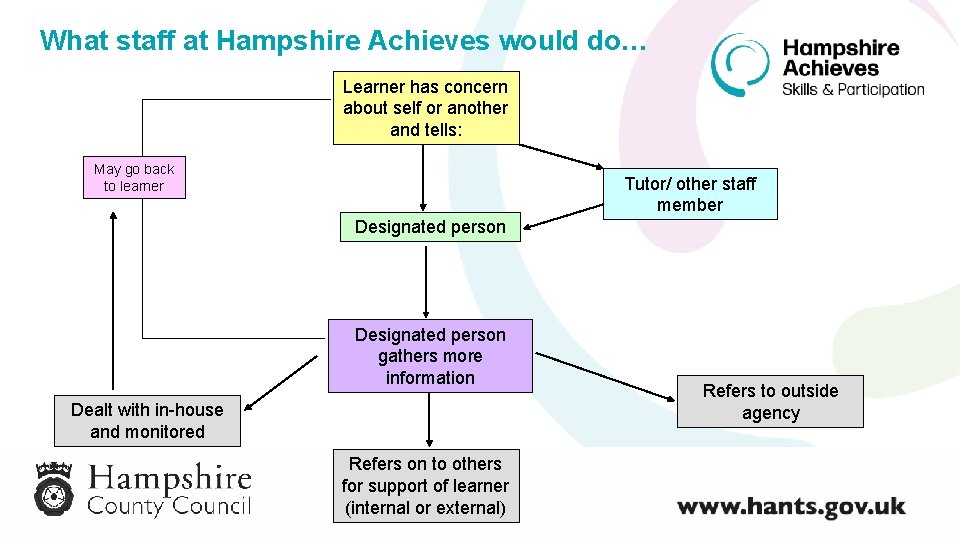
What staff at Hampshire Achieves would do… Learner has concern about self or another and tells: May go back to learner Tutor/ other staff member Designated person gathers more information Dealt with in-house and monitored Refers on to others for support of learner (internal or external) Refers to outside agency
What we do here to keep you safe All Hampshire Achieves staff are trained on how to deal with learners at risk We have internal systems for dealing with concerns We work closely with outside agencies who can help learners in a variety of situations We display the designated person’s contact details on our Virtual Learning Environment and this can be found at www. hampshirefutures. co. uk You can make use of Intranet, learner forums, newsletters* You can raise discussions in tutorials, learner inductions, after sessions etc.
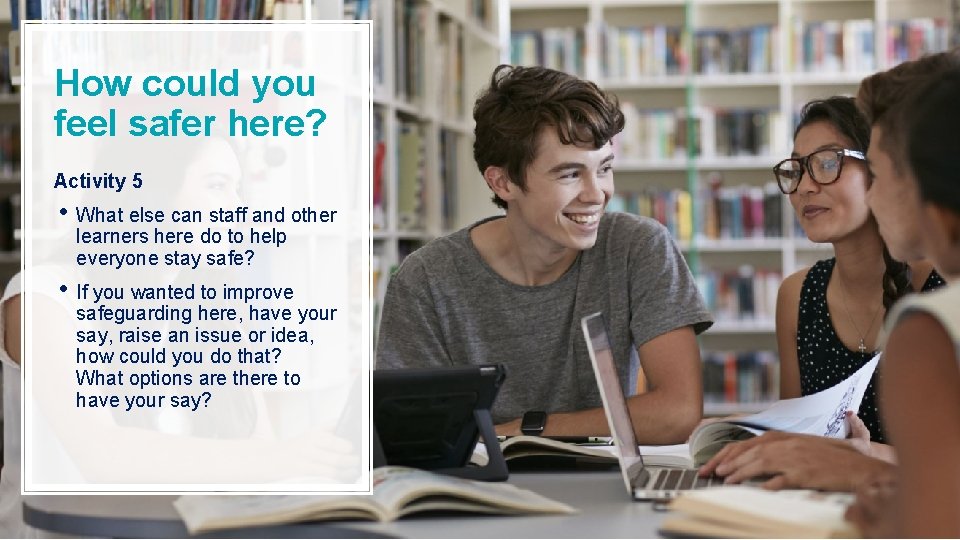
How could you feel safer here? Activity 5 • What else can staff and other learners here do to help everyone stay safe? • If you wanted to improve safeguarding here, have your say, raise an issue or idea, how could you do that? What options are there to have your say?

Any final questions ?
If you have concerns, you can talk to*: • Your Tutor • Student Support Manager • Your Key Worker/Social Worker • Health Assured Service on: Freephone 0800 028 0199
- Slides: 21