
Basic rules of photography By Callum Payne Rule

Basic rules of photography By Callum Payne
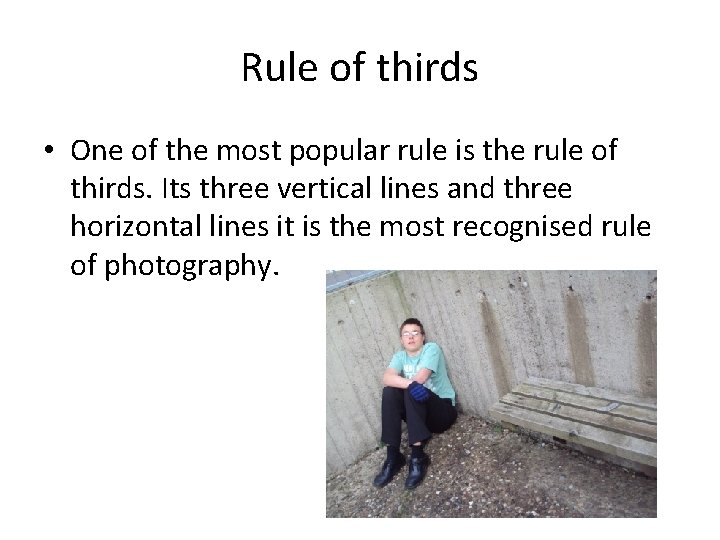
Rule of thirds • One of the most popular rule is the rule of thirds. Its three vertical lines and three horizontal lines it is the most recognised rule of photography.
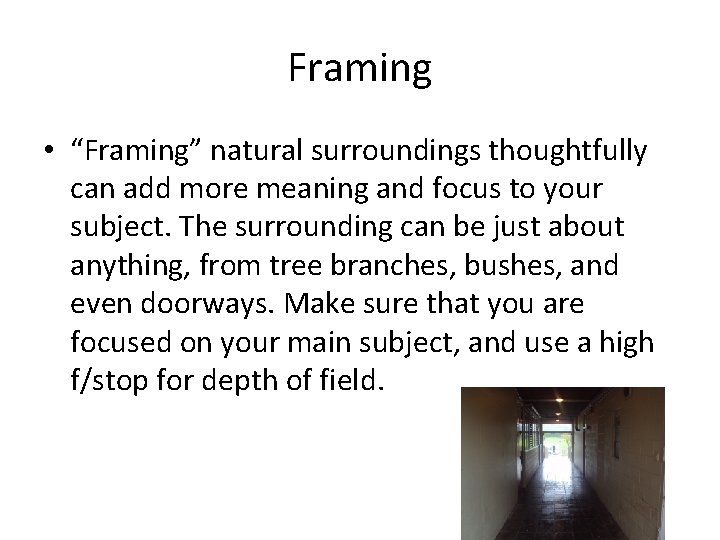
Framing • “Framing” natural surroundings thoughtfully can add more meaning and focus to your subject. The surrounding can be just about anything, from tree branches, bushes, and even doorways. Make sure that you are focused on your main subject, and use a high f/stop for depth of field.
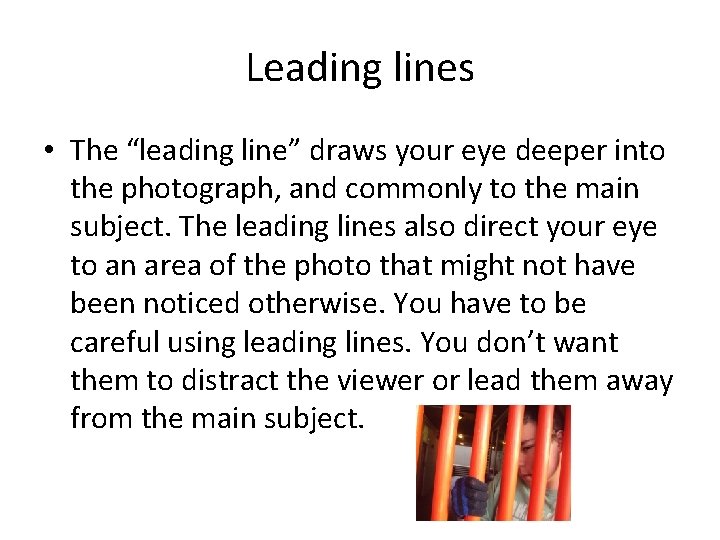
Leading lines • The “leading line” draws your eye deeper into the photograph, and commonly to the main subject. The leading lines also direct your eye to an area of the photo that might not have been noticed otherwise. You have to be careful using leading lines. You don’t want them to distract the viewer or lead them away from the main subject.
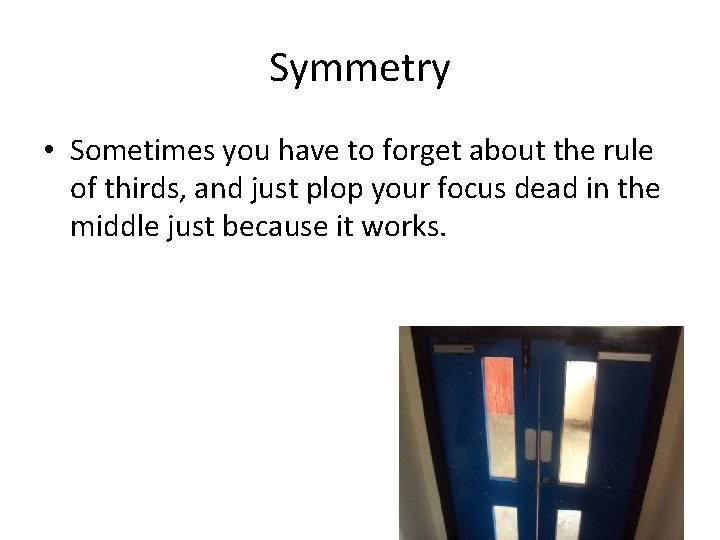
Symmetry • Sometimes you have to forget about the rule of thirds, and just plop your focus dead in the middle just because it works.
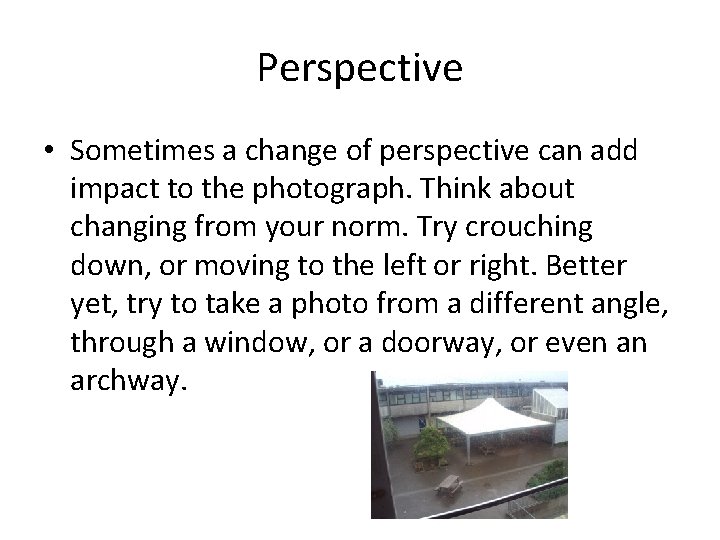
Perspective • Sometimes a change of perspective can add impact to the photograph. Think about changing from your norm. Try crouching down, or moving to the left or right. Better yet, try to take a photo from a different angle, through a window, or a doorway, or even an archway.
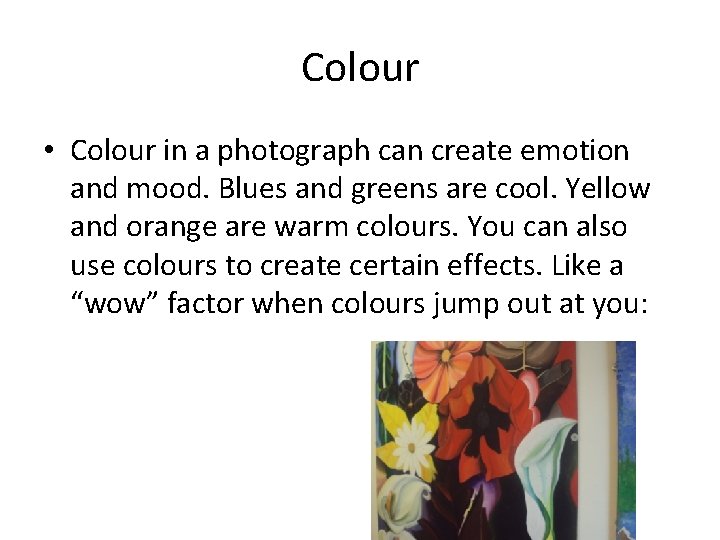
Colour • Colour in a photograph can create emotion and mood. Blues and greens are cool. Yellow and orange are warm colours. You can also use colours to create certain effects. Like a “wow” factor when colours jump out at you:
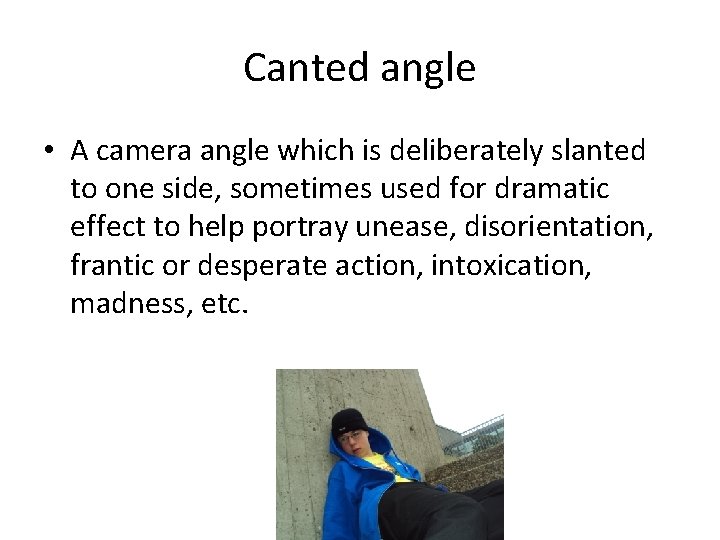
Canted angle • A camera angle which is deliberately slanted to one side, sometimes used for dramatic effect to help portray unease, disorientation, frantic or desperate action, intoxication, madness, etc.
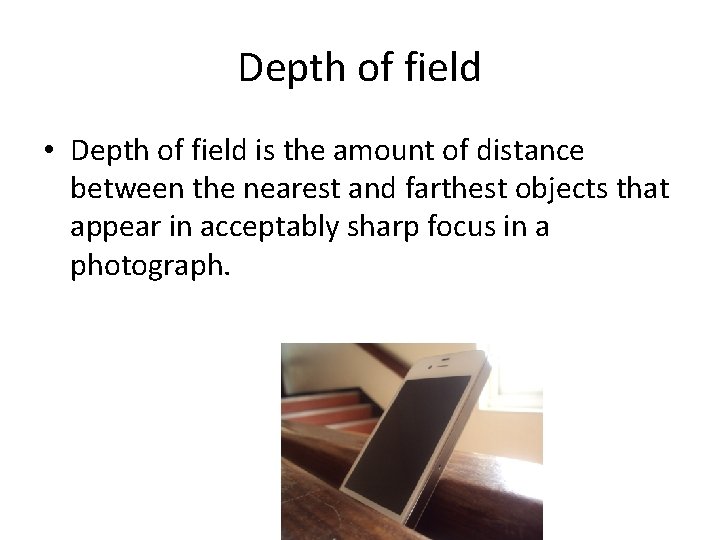
Depth of field • Depth of field is the amount of distance between the nearest and farthest objects that appear in acceptably sharp focus in a photograph.
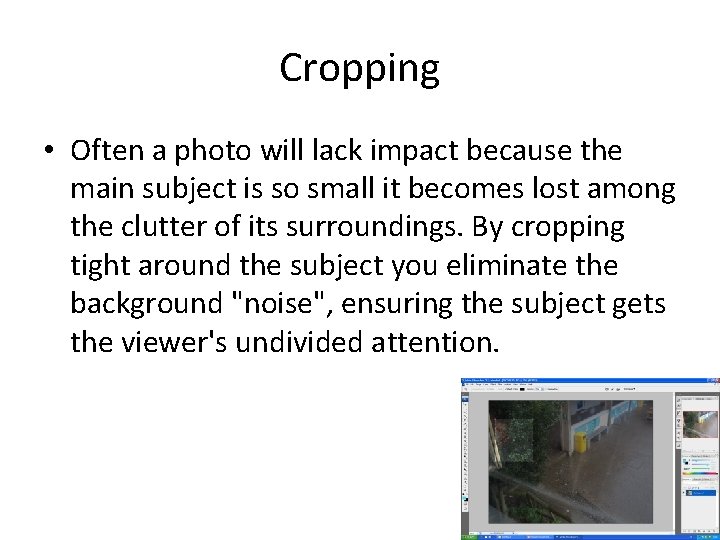
Cropping • Often a photo will lack impact because the main subject is so small it becomes lost among the clutter of its surroundings. By cropping tight around the subject you eliminate the background "noise", ensuring the subject gets the viewer's undivided attention.
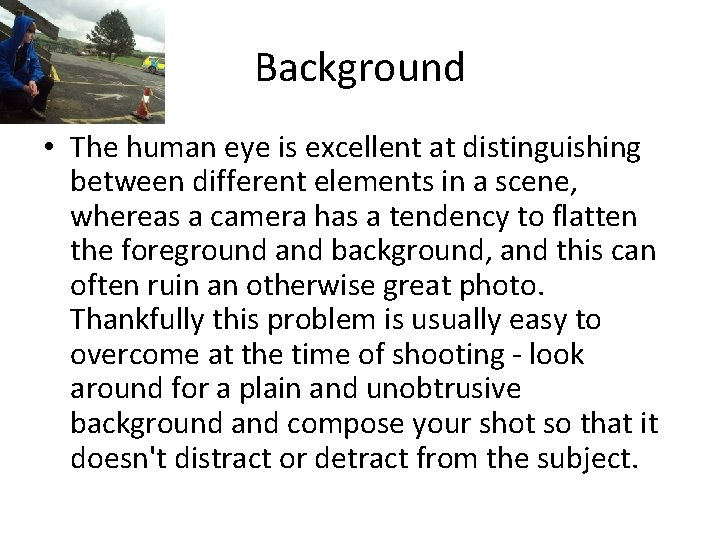
Background • The human eye is excellent at distinguishing between different elements in a scene, whereas a camera has a tendency to flatten the foreground and background, and this can often ruin an otherwise great photo. Thankfully this problem is usually easy to overcome at the time of shooting - look around for a plain and unobtrusive background and compose your shot so that it doesn't distract or detract from the subject.
Balancing elements • This is the main object off centre. When doing this you should always make sure your cancelling the weight to.
Focus • The focus is where part of the picture is blurred to make people focus on the main picture.
- Slides: 13