
BASIC PRINCIPLES OF US CONSTITUTION BASIC DEF Constitution
BASIC PRINCIPLES OF US CONSTITUTION
BASIC DEF. • Constitution - the body of fundamental laws setting out the principles, structures, and processes of government
CONSTITUTIONAL PRINCIPLES (sound familiar? ) 1. Popular Sovereignty 2. Limited Gov’t 3. Separation of Powers (So. P) 4. Checks and Balances 5. Judicial Review 6. Federalism
• Popular sovereignty – ALL political power resides in the people • “We the people of the United States…. do ordain and establish…” • Who are “We the people”? Not all the “Founding Fathers” were enthusiastic about this concept • Too much power? • Alexander Hamilton – “turbulent and changing” opinions of the masses “seldom judge or determine right”
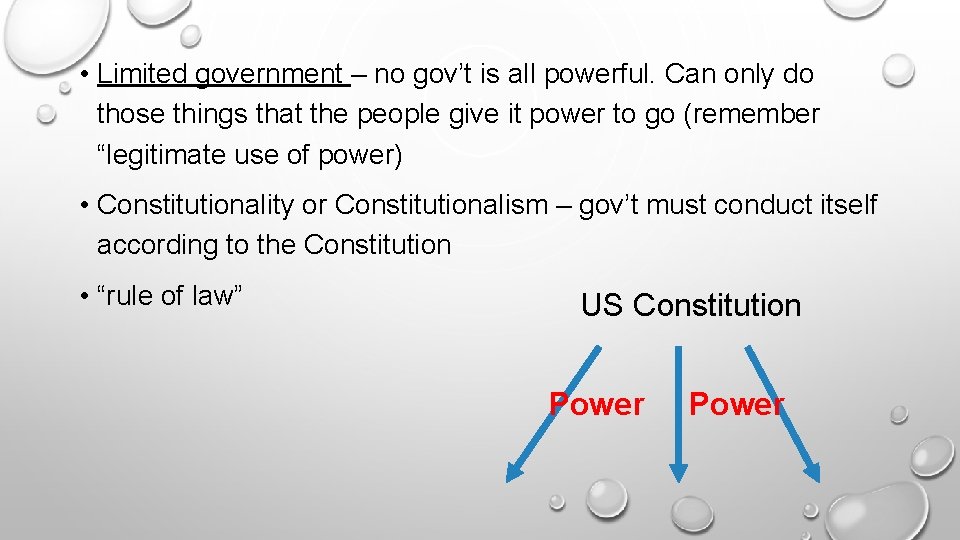
• Limited government – no gov’t is all powerful. Can only do those things that the people give it power to go (remember “legitimate use of power) • Constitutionality or Constitutionalism – gov’t must conduct itself according to the Constitution • “rule of law” US Constitution Power
• Separation of Powers – distributed power between 3 National Gov’t branches • 1 st 3 articles in the Constitution • Where does it talk about the • Executive? • Judicial? • Legislative? • Who makes up these branches?
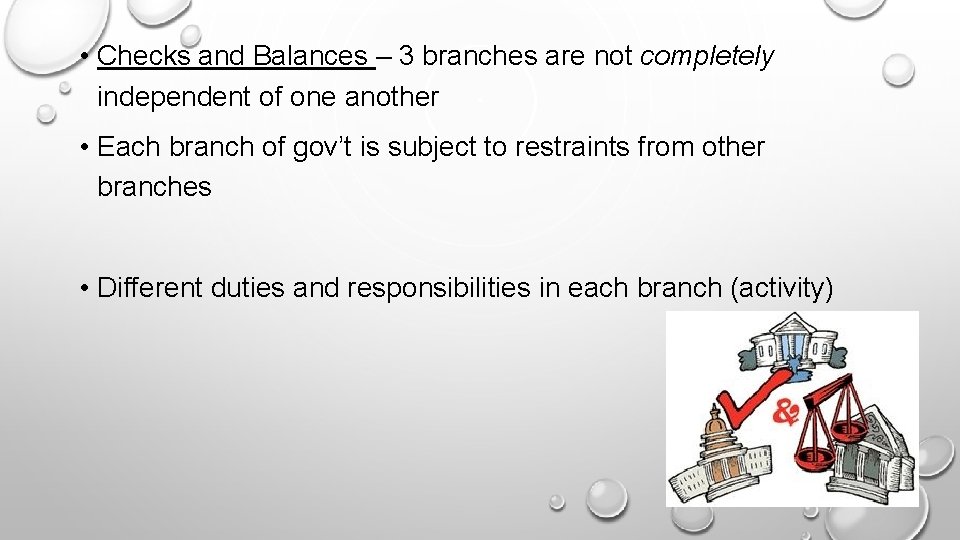
• Checks and Balances – 3 branches are not completely independent of one another • Each branch of gov’t is subject to restraints from other branches • Different duties and responsibilities in each branch (activity)
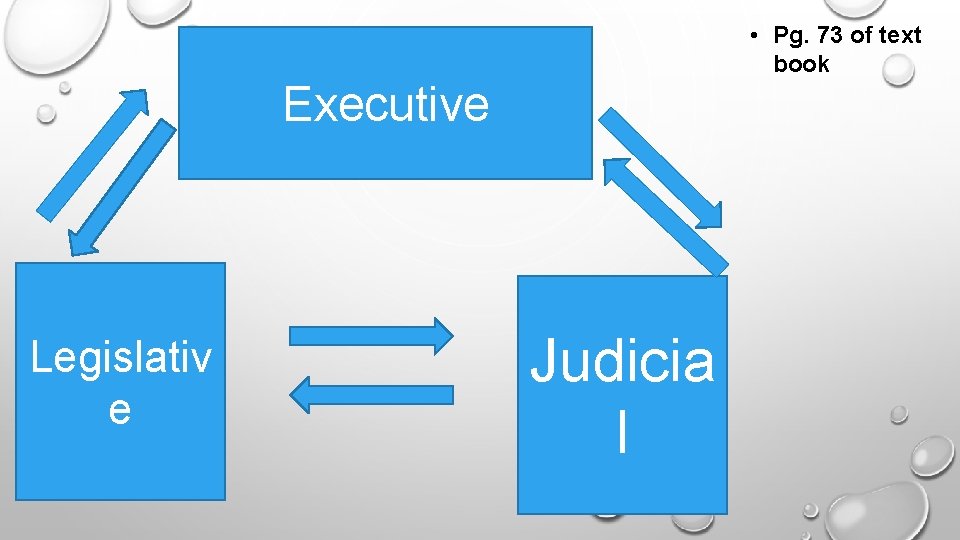
• Pg. 73 of text book Executive Legislativ e Judicia l
• Judicial Review – the power of the court to determine whether a law is constitutional • Marbury v. Madison • “unconstitutional” – gov’t action found to violate the Constitution – null and void • Can you find this in the Constitution?
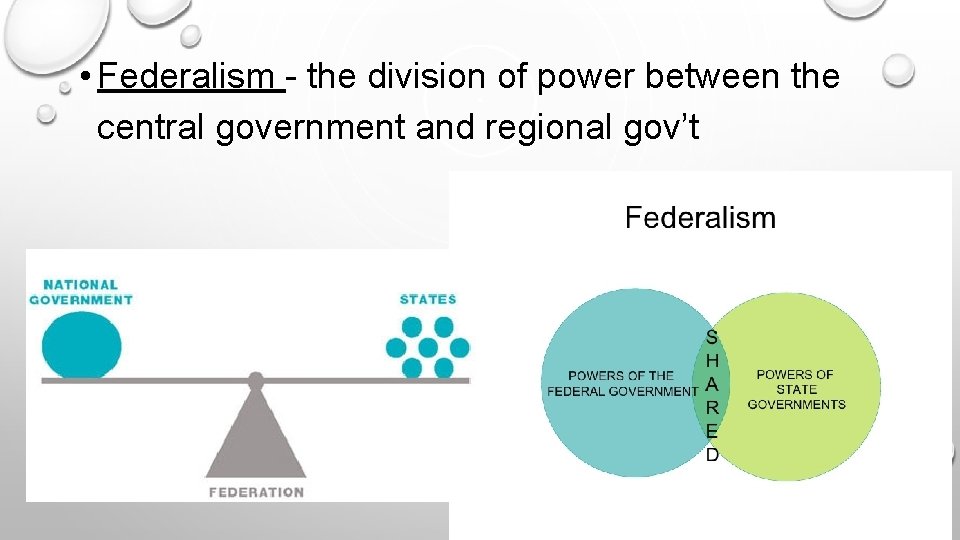
• Federalism - the division of power between the central government and regional gov’t
What do federalism, ratification, and adding amendments have in common? Think about what federalism is (shared power between the States and the National gov’t)

Would you sign your name on just anything?

To ratify or not to ratify? • 9/13 States needed • Debates within the States • Federalist vs. Anti-Federalist • The Constitution has strengthened the central gov’t and taken power away from the states • Where should the power come from? Central or Local?
Federalist Anti-Federalist • James Madison • Patrick Henry • Alexander Hamilton • Richard Henry Lee • John Jay • John Hancock • Samuel Adams What are they arguing about? Strong Central gov’t vs. Strong State gov’t
- Slides: 14