
Basic principles of Osteopathy Osteopathy A system of
Basic principles of Osteopathy
Osteopathy A system of complementary medicine involving the treatment of medical disorders through the manipulation and massage of the skeleton and musculature.
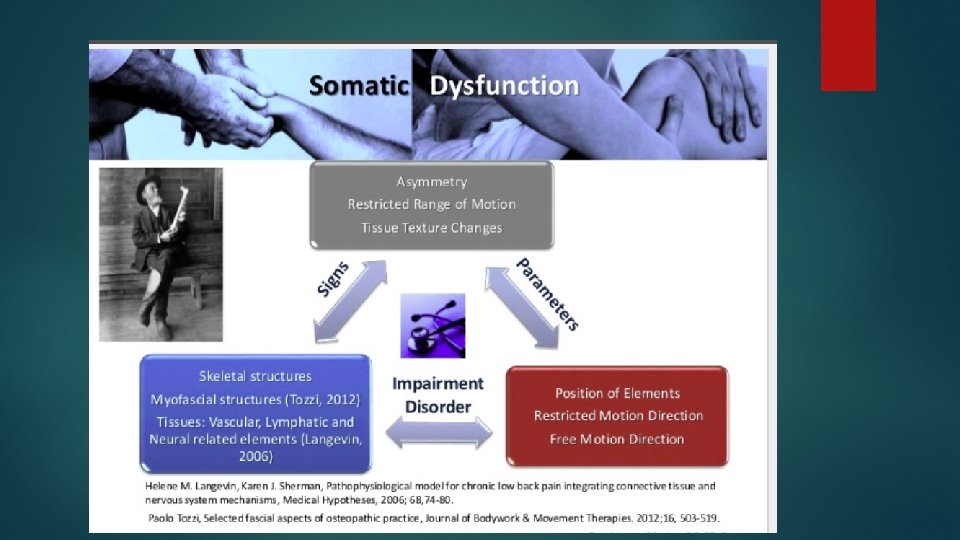
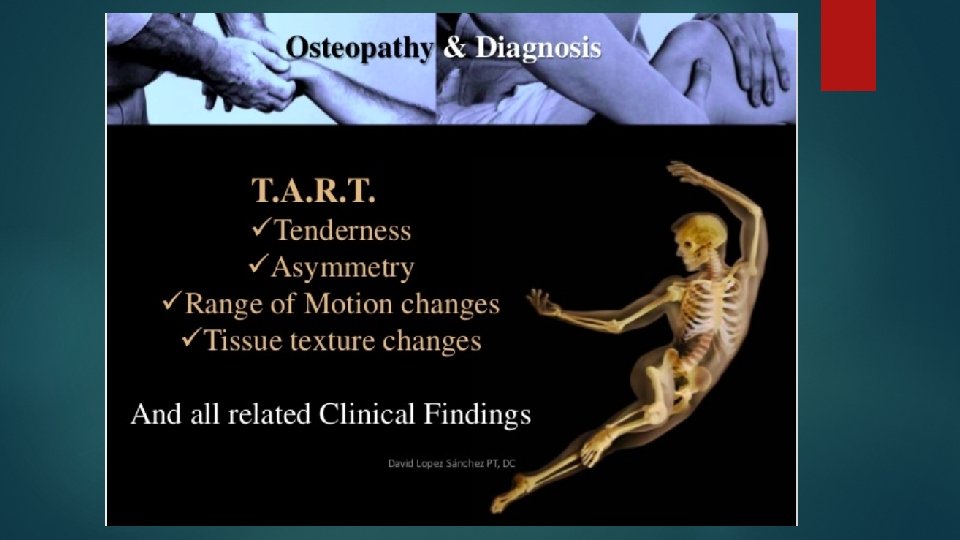
The therapeutic application of manually guided forces by an osteopath to improve physiologic function and/or support homeostasis that has been altered by somatic dysfunction. ” From: Glossary of Osteopathic Terminology Usage
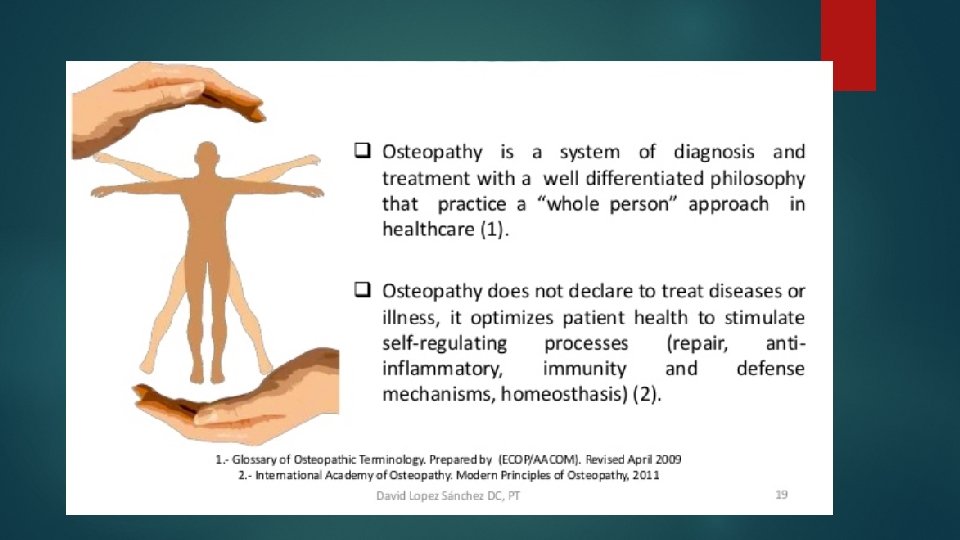

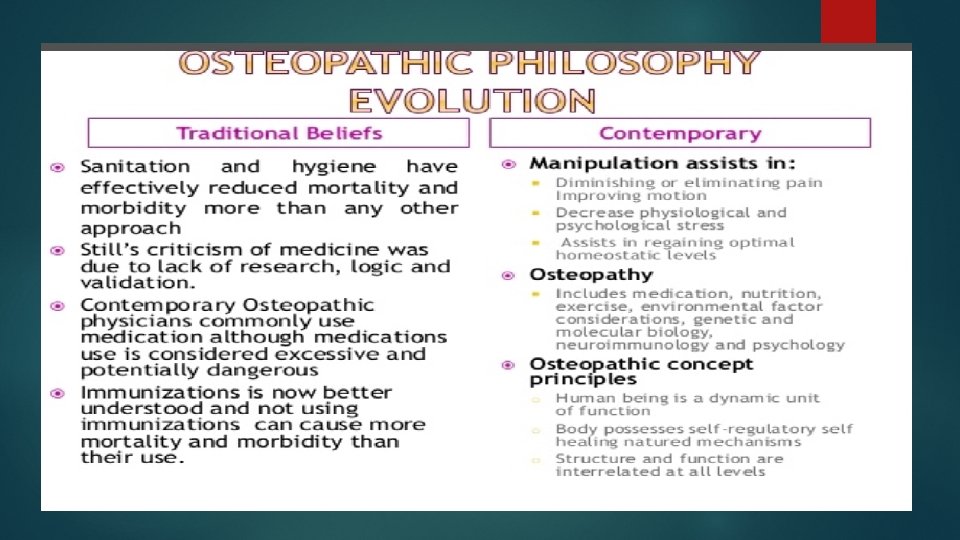
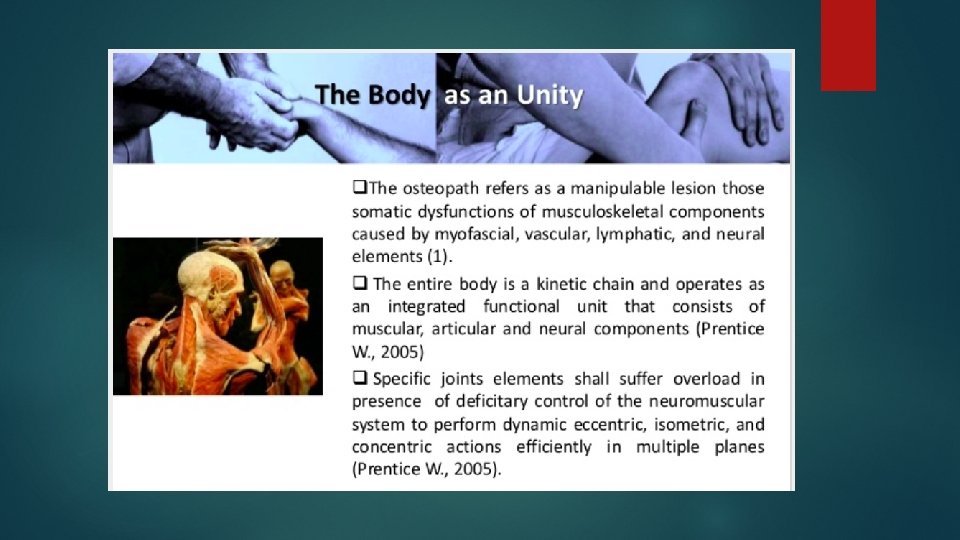
Back to the basic principles of Osteopathy For your general interest, there are four main principles that were established by the founder of Osteopathy, Andrew Taylor Still, at the end of the 19 th Century. They form the basis of Osteopathic philosophy and thinking and influence the decisions made in diagnosing and treating patient's symptoms: 1. The body is a unit The whole body is greater than the sum of its parts with each part affecting each and every other part of the body 2. Structure and function are reciprocally interrelated The body is an integration of person's structure (anatomy) and function (physiology). If the structure of the body is compromised, through overuse injuries or a chronic problem for example, the function will be adversely affected in terms of pain, stiffness, instability, etc and vice versa 3. The body is its own medicine chest The body is usually able to resolve nearly all but the most serious of conditions by removing restrictive barriers and enabling their own healing mechanisms to be stimulated and supported 4. The rule of the artery is supreme Healing requires a good blood supply to provide the necessary immune support and nutrients
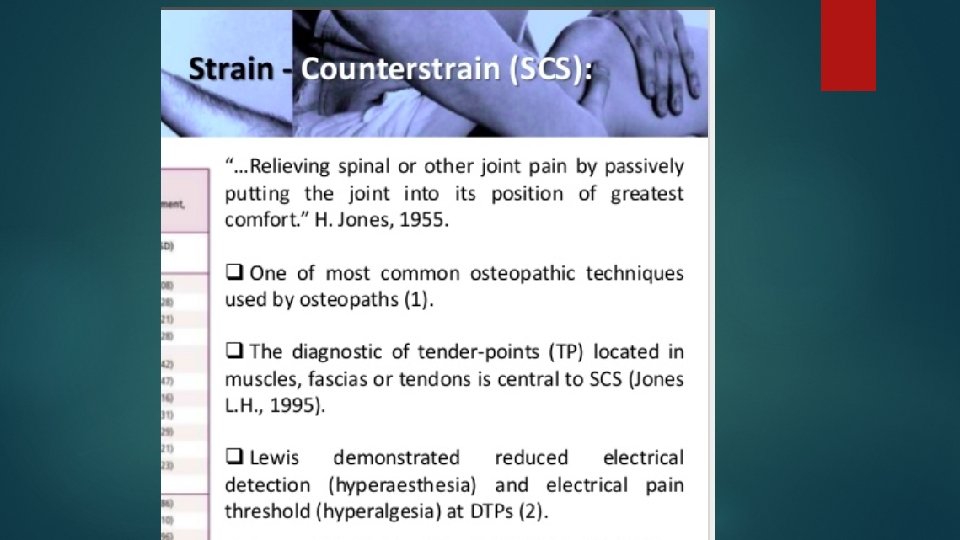
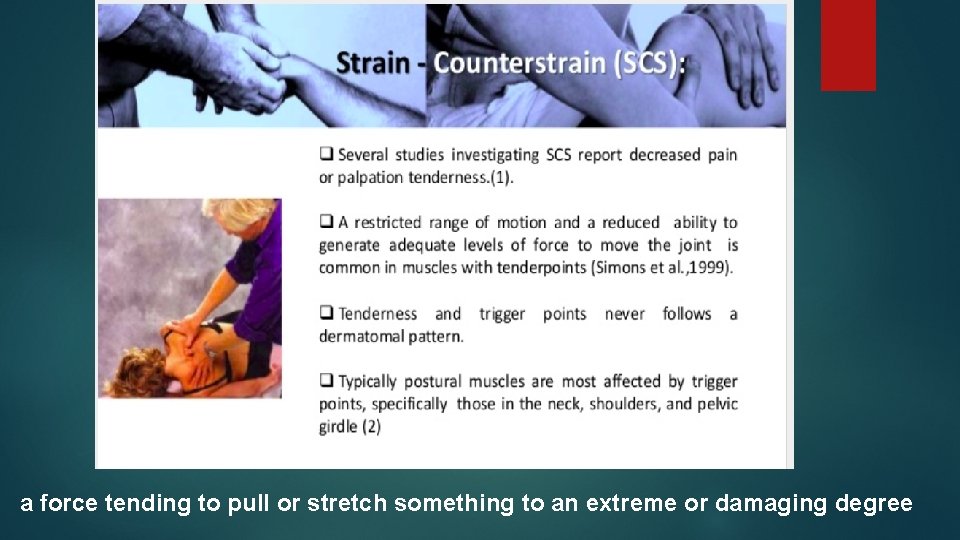
a force tending to pull or stretch something to an extreme or damaging degree

- Slides: 12