
Basic Organization Designs Prentice Hall 2001 Chapter 5
Basic Organization Designs ©Prentice Hall, 2001 Chapter 5 1
Learning Outcomes • Study six elements of organization structure • Understand work specialization • Contrast authority and power • Review the ways in which management can departmentalize • Compare and contrast mechanistic and organic organizations ©Prentice Hall, 2001 Chapter 5 2
Learning Outcomes • Learn how size, strategy, technology, and environment affect organization structures • Contrast divisional and functional structures • Explain the strengths of the matrix structure • Evaluate the boundaryless organization • Define the term organization culture ©Prentice Hall, 2001 Chapter 5 3
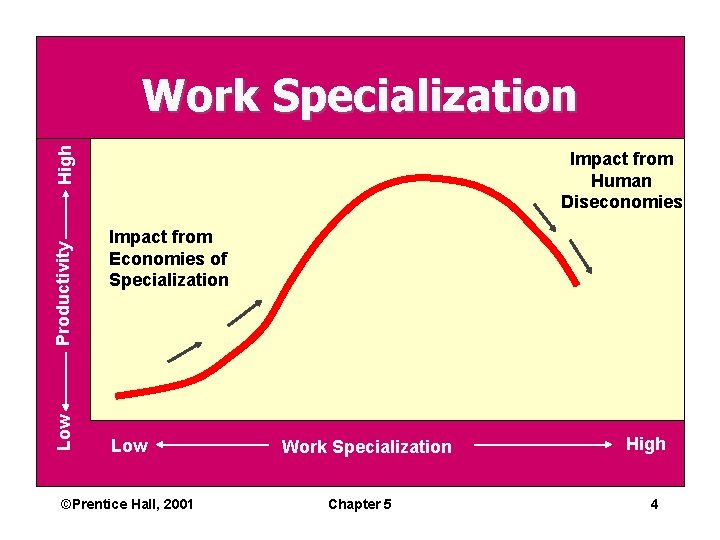
Low Productivity High Work Specialization Impact from Human Diseconomies Impact from Economies of Specialization Low ©Prentice Hall, 2001 Work Specialization Chapter 5 High 4
The Span of Control Level in the Contingency Organization Variables ©Prentice Hall, 2001 Chapter 5 5
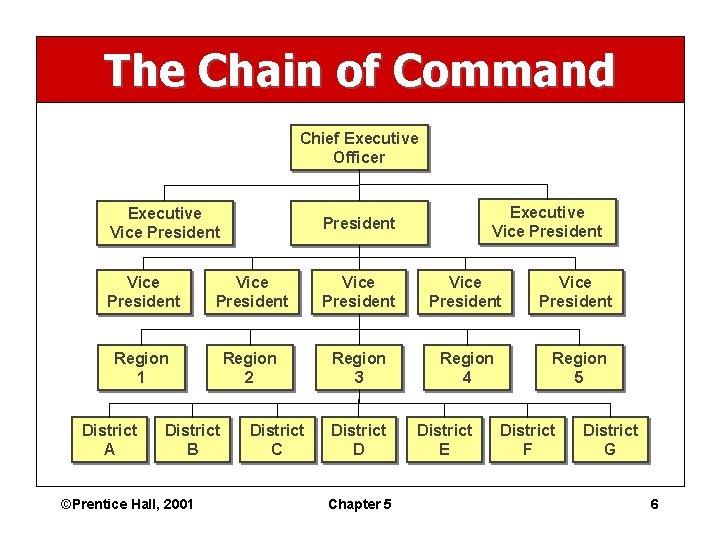
The Chain of Command Chief Executive Officer Executive Vice President Vice President Vice President Region 1 Region 2 Region 3 Region 4 Region 5 District A District B ©Prentice Hall, 2001 District C District D Chapter 5 District E District F District G 6
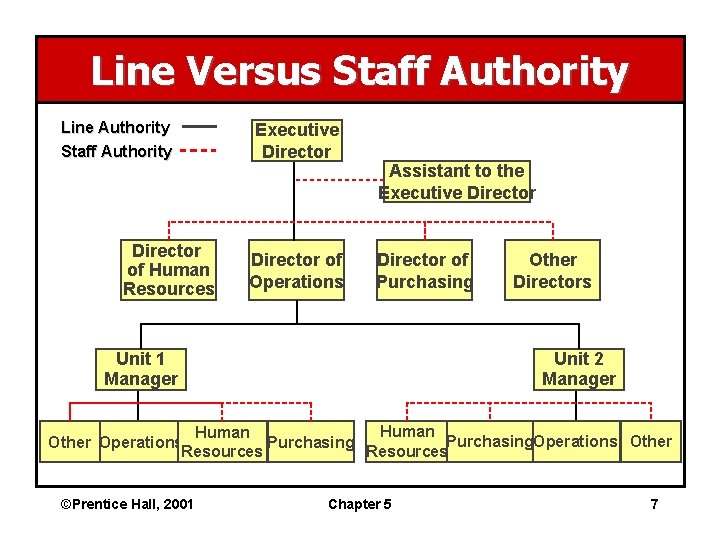
Line Versus Staff Authority Line Authority Staff Authority Director of Human Resources Executive Director of Operations Assistant to the Executive Director of Purchasing Unit 1 Manager Other Directors Unit 2 Manager Human Purchasing. Operations Other Operations Purchasing Resources ©Prentice Hall, 2001 Chapter 5 7
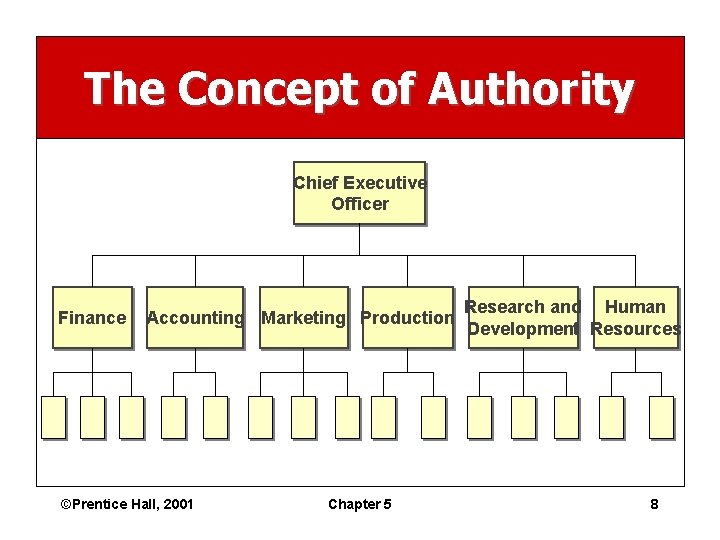
The Concept of Authority Chief Executive Officer Finance Accounting Marketing Production ©Prentice Hall, 2001 Chapter 5 Research and Human Development Resources 8
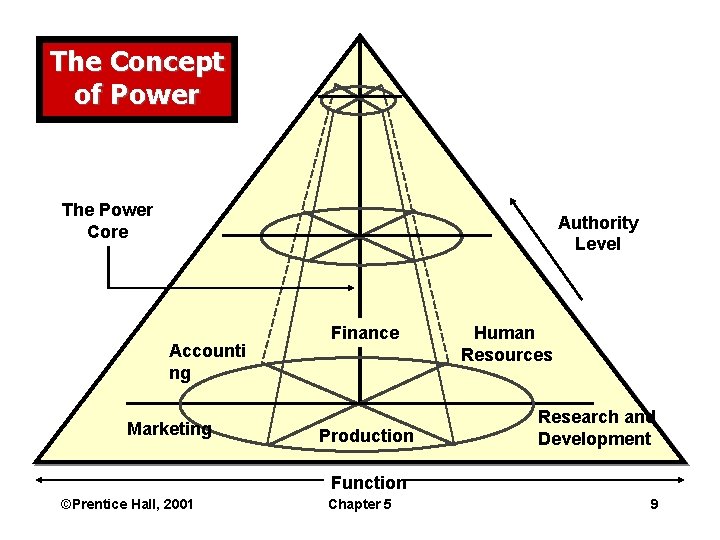
The Concept of Power The Power Core Authority Level Accounti ng Marketing Finance Production Human Resources Research and Development Function ©Prentice Hall, 2001 Chapter 5 9
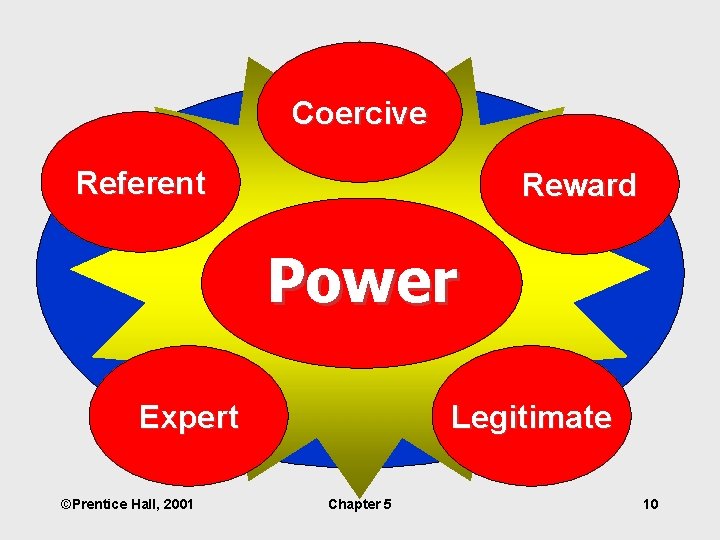
Coercive Referent Reward Power Expert ©Prentice Hall, 2001 Legitimate Chapter 5 10
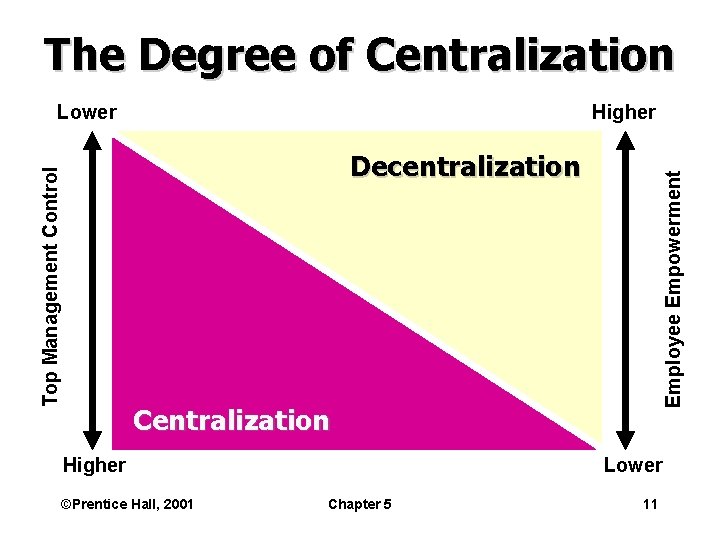
The Degree of Centralization Lower Higher Employee Empowerment Top Management Control Decentralization Centralization Higher ©Prentice Hall, 2001 Lower Chapter 5 11
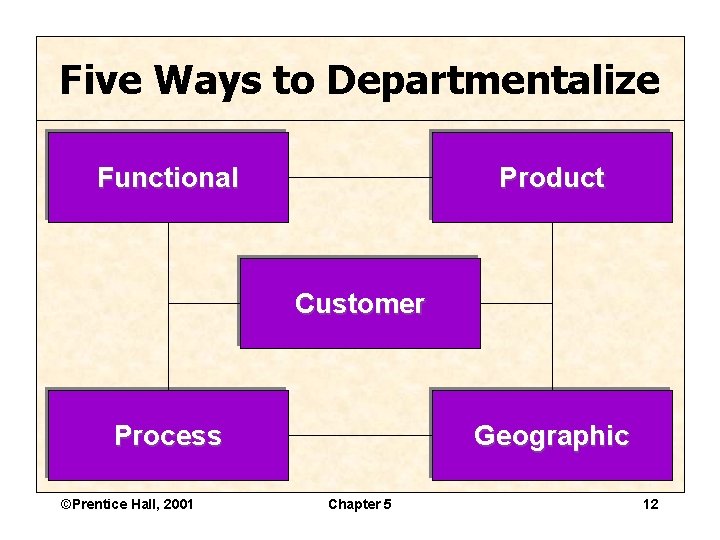
Five Ways to Departmentalize Functional Product Customer Process ©Prentice Hall, 2001 Geographic Chapter 5 12
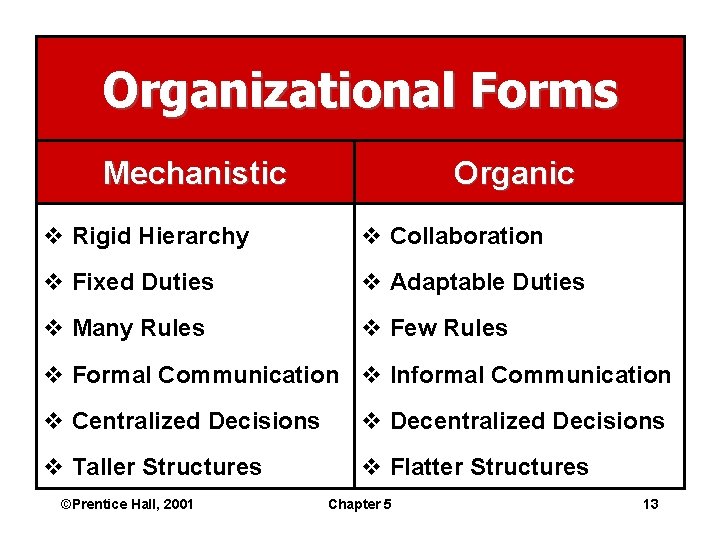
Organizational Forms Mechanistic Organic v Rigid Hierarchy v Collaboration v Fixed Duties v Adaptable Duties v Many Rules v Few Rules v Formal Communication v Informal Communication v Centralized Decisions v Decentralized Decisions v Taller Structures v Flatter Structures ©Prentice Hall, 2001 Chapter 5 13
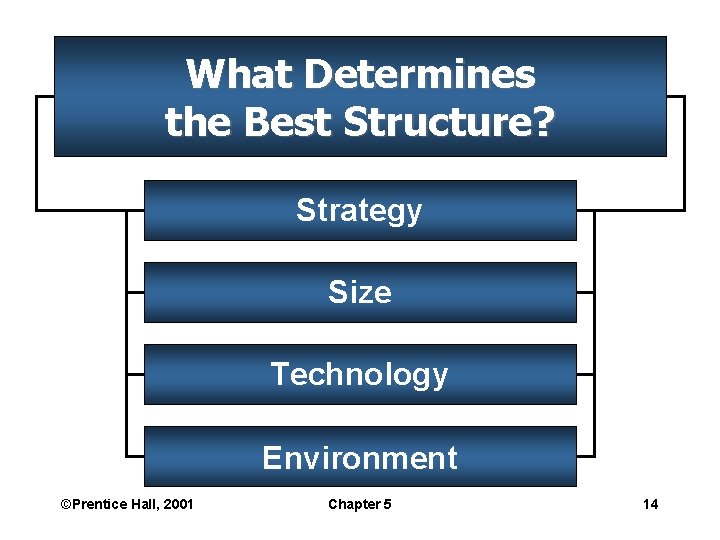
What Determines the Best Structure? Strategy Size Technology Environment ©Prentice Hall, 2001 Chapter 5 14
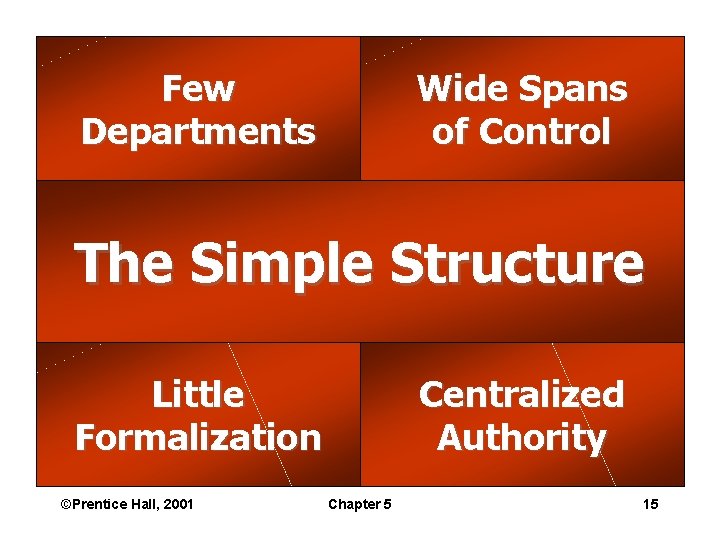
Few Departments Wide Spans of Control The Simple Structure Little Formalization ©Prentice Hall, 2001 Centralized Authority Chapter 5 15
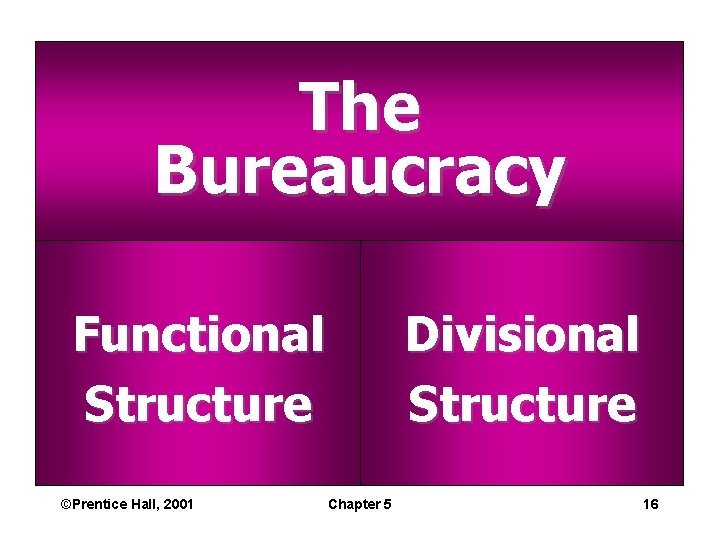
The Bureaucracy Functional Structure ©Prentice Hall, 2001 Divisional Structure Chapter 5 16
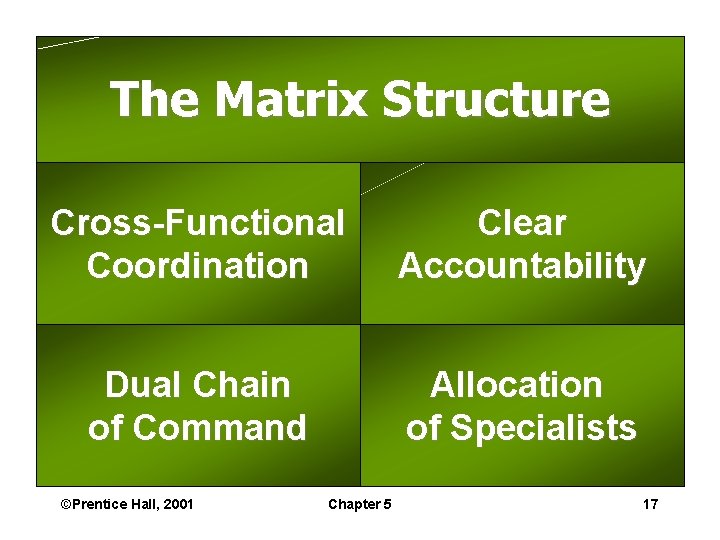
The Matrix Structure Cross-Functional Coordination Clear Accountability Dual Chain of Command Allocation of Specialists ©Prentice Hall, 2001 Chapter 5 17
The Team-Based Structure Empower Workers ©Prentice Hall, 2001 Hold Teams Accountable Chapter 5 18
The Boundaryless Organization Limited Chain of Command ©Prentice Hall, 2001 Widened Spans of Control Chapter 5 Empowered Employee Teams 19
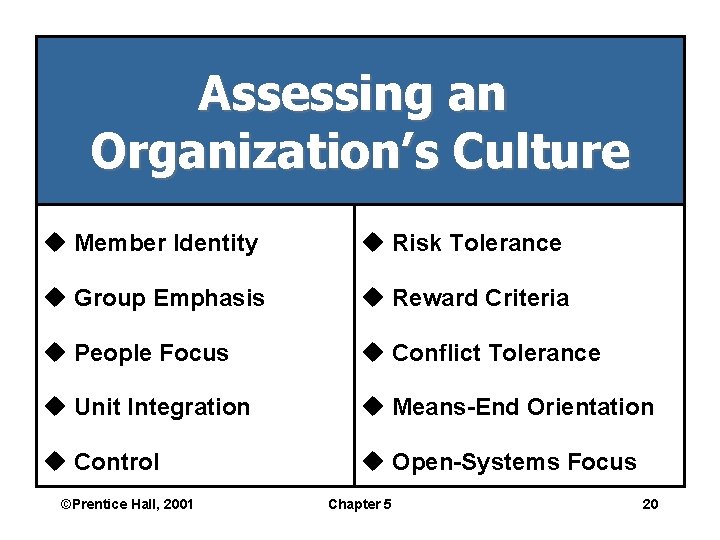
Assessing an Organization’s Culture u Member Identity u Risk Tolerance u Group Emphasis u Reward Criteria u People Focus u Conflict Tolerance u Unit Integration u Means-End Orientation u Control u Open-Systems Focus ©Prentice Hall, 2001 Chapter 5 20
- Slides: 20