
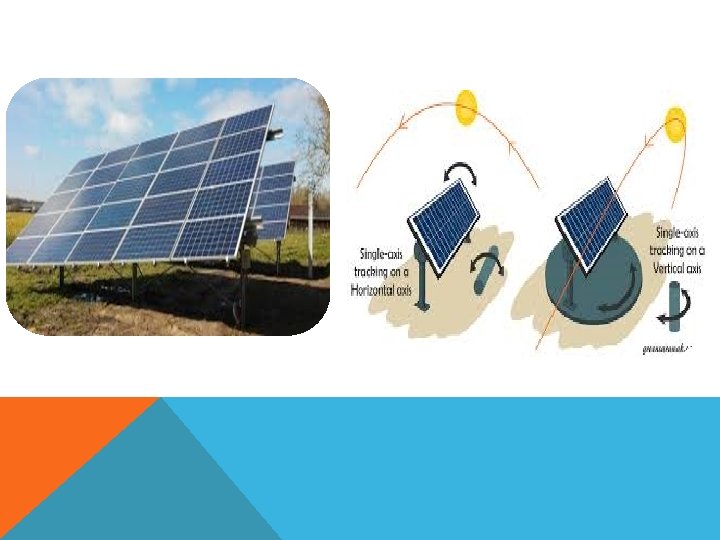
Basic mechanical engineering CONSTRUCTION OF SINGLE AXIS AUTOMATIC
Basic mechanical engineering CONSTRUCTION OF SINGLE AXIS AUTOMATIC SOLAR TRACKING SYSTEM Presented by GUIDANCE: PROFF. Dyaneshwar Banger. (A 04) Nilesh Caugule. (A 10) Saqlain Gavndi. (A 19) KUBADE Navdeep Gavkar. (A 20) Aditya Humbare. (A 21)
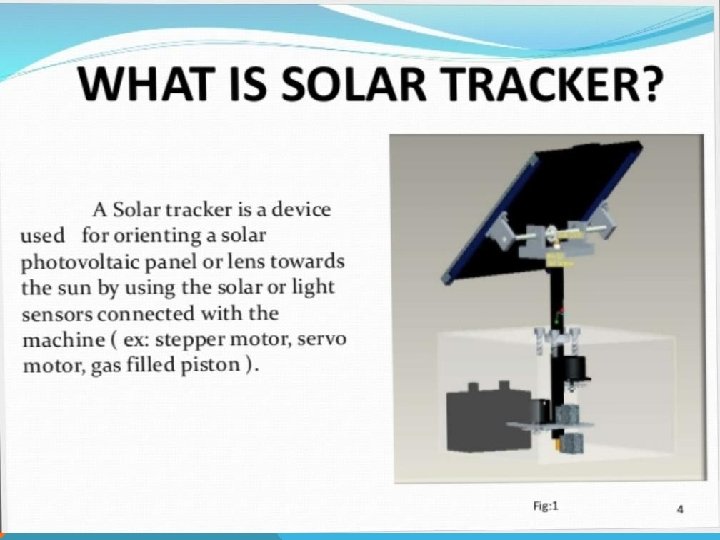
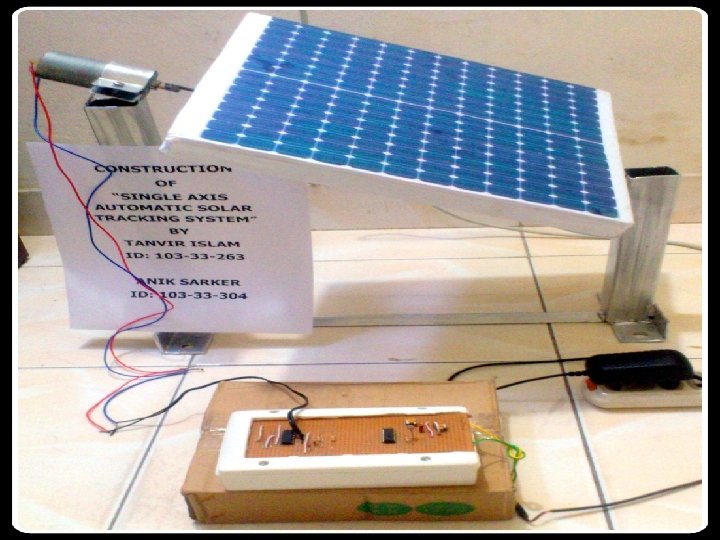
INTRODUCTION Ø Solar power is the conversion of sunlight into electricity, either directly using photovoltaic (PV), or indirectly using concentrated solar power (CSP). Ø To make solar energy more viable, the efficiency of solar array systems must be maximized.
Ø This project helps for power generation by setting the equipment to get maximum sunlight automatically. This system is tracking for maximum intensity of light Ø When there is decrease in intensity of light, this system automatically changes its direction to get maximum intensity of light.
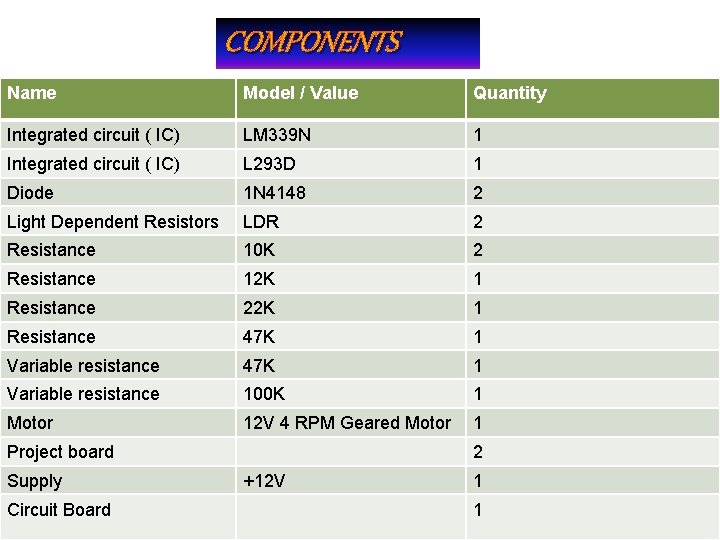
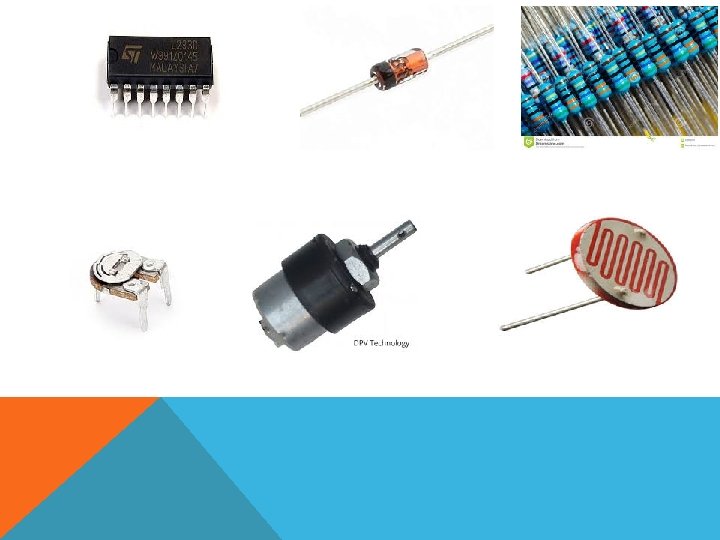
COMPONENTS Name Model / Value Quantity Integrated circuit ( IC) LM 339 N 1 Integrated circuit ( IC) L 293 D 1 Diode 1 N 4148 2 Light Dependent Resistors LDR 2 Resistance 10 K 2 Resistance 12 K 1 Resistance 22 K 1 Resistance 47 K 1 Variable resistance 100 K 1 Motor 12 V 4 RPM Geared Motor 1 Project board Supply Circuit Board 2 +12 V 1 1
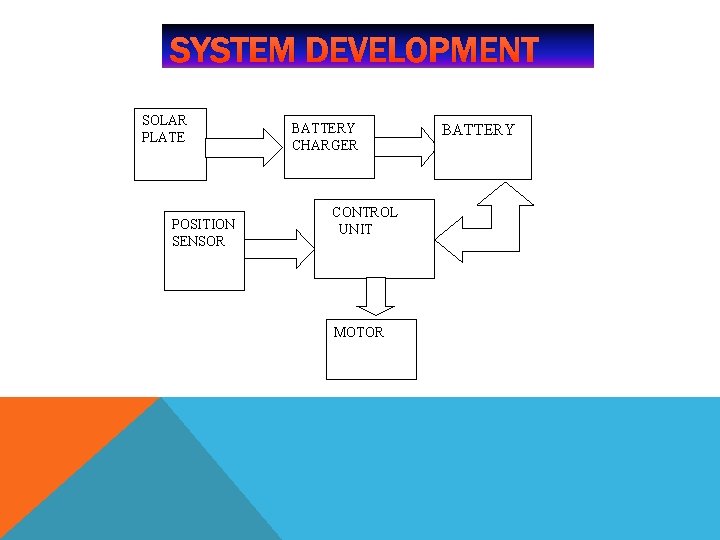
SYSTEM DEVELOPMENT SOLAR PLATE POSITION SENSOR BATTERY CHARGER CONTROL UNIT MOTOR BATTERY
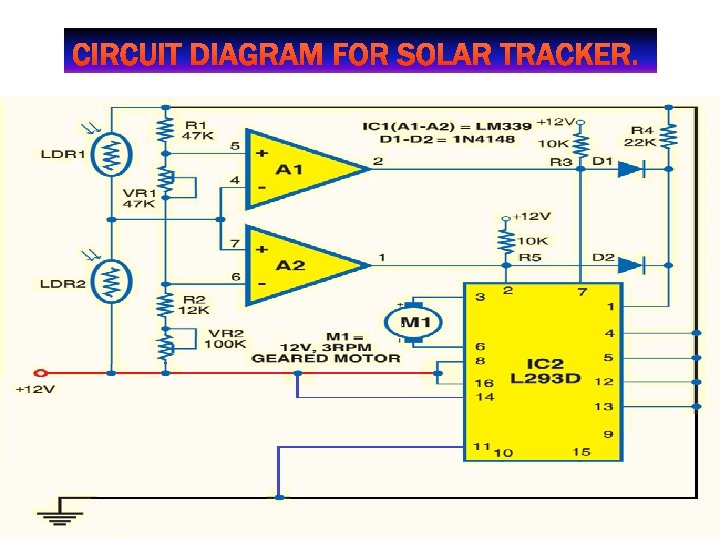
CIRCUIT DIAGRAM FOR SOLAR TRACKER.
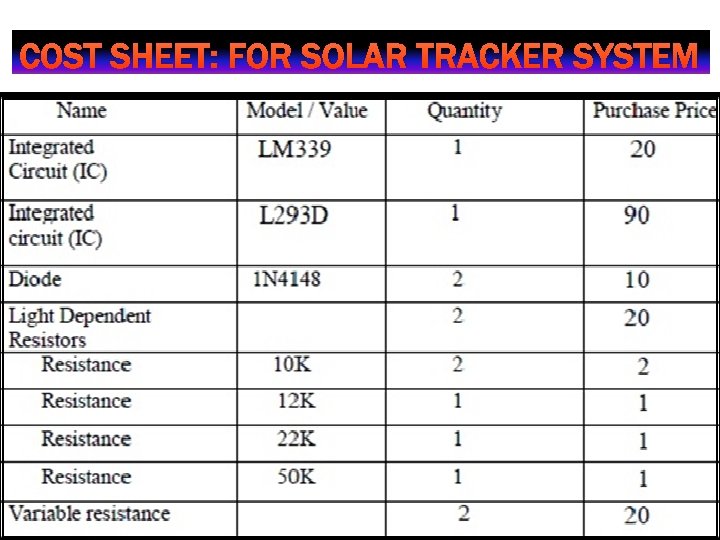
COST SHEET: FOR SOLAR TRACKER SYSTEM
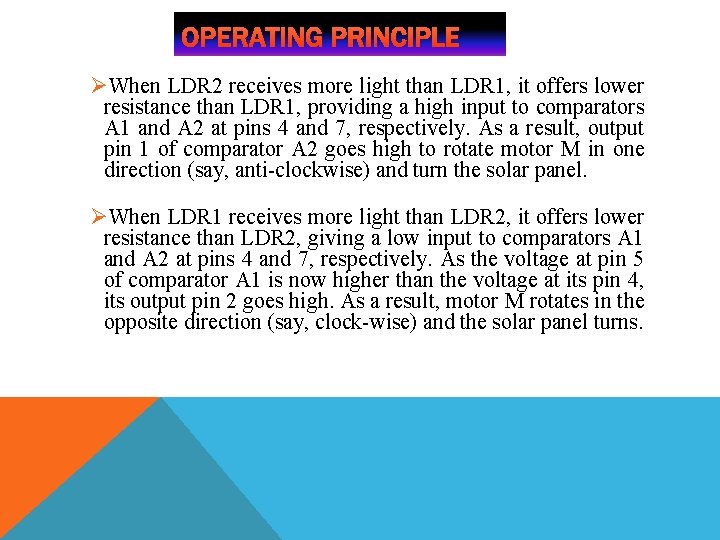
OPERATING PRINCIPLE ØWhen LDR 2 receives more light than LDR 1, it offers lower resistance than LDR 1, providing a high input to comparators A 1 and A 2 at pins 4 and 7, respectively. As a result, output pin 1 of comparator A 2 goes high to rotate motor M in one direction (say, anti-clockwise) and turn the solar panel. ØWhen LDR 1 receives more light than LDR 2, it offers lower resistance than LDR 2, giving a low input to comparators A 1 and A 2 at pins 4 and 7, respectively. As the voltage at pin 5 of comparator A 1 is now higher than the voltage at its pin 4, its output pin 2 goes high. As a result, motor M rotates in the opposite direction (say, clock-wise) and the solar panel turns.
Future Scope: There always remains an infinite scope of improvement to a system design. It’s only the time and financial constraints that impose a limit on the development. Following are the few enhancements that may add further value to the system. q During rains, rainfall sensors can be used to keep the system working. q In future conventional energy is not sufficient for use so there is need of use non-conventional energy source.
USEFUL LINKS 1)https: //www. google. com/imgres? imgurl=https%3 A%2 F%2 Fwww. dpvtechn ology. com%2 Fimage%2 Fcache%2 Fcatalog%2 FProduct%2520 Images 2) https: //www. google. com/search? q=slideshare&tbm=isch&source=iu&ictx.

- Slides: 17