
Basic Maneuvering Tasks Moderate Risk Environment Topic 1
Basic Maneuvering Tasks: Moderate Risk Environment Topic 1 Risk Assessment Topic 2 Space Management Topic 3 Lane Changes Topic 4 Turnabouts Topic 5 Parking 6/8/2021 1
Risk Assessment q Risk is the Chance of Injury, Damage, or Loss q Chance is the Likelihood of a Crash q Injury, Damage, or Loss Are the Consequences of a Crash q Risk Involves Chance of Reward or Consequence 6/8/2021 2
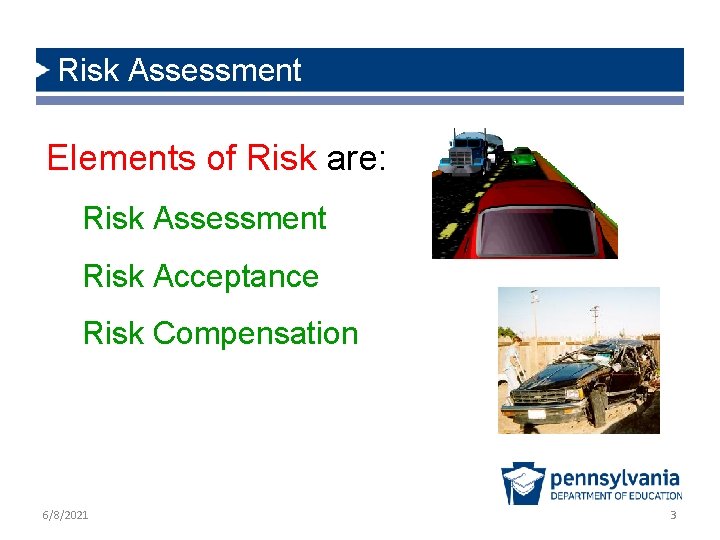
Risk Assessment Elements of Risk are: Risk Assessment Risk Acceptance Risk Compensation 6/8/2021 3
Risk Assessment Involves Knowing: – The Number or Frequency of Risks – The Chance that an Error Can Occur – The Consequences of Errors Committed 6/8/2021 4
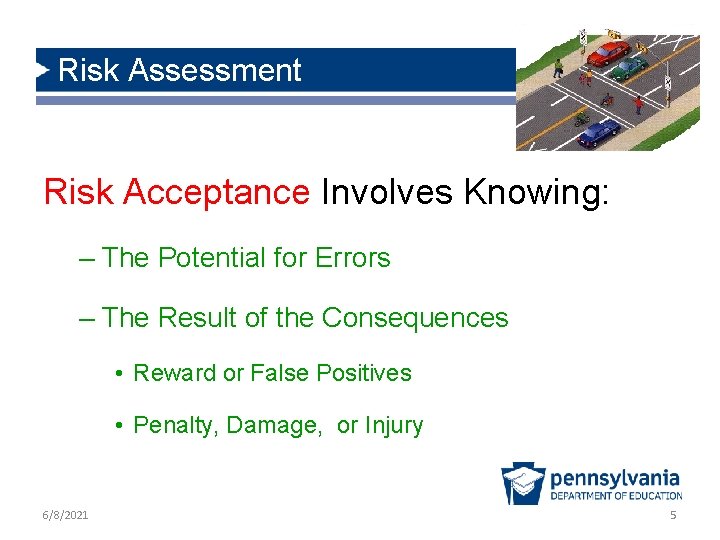
Risk Assessment Risk Acceptance Involves Knowing: – The Potential for Errors – The Result of the Consequences • Reward or False Positives • Penalty, Damage, or Injury 6/8/2021 5
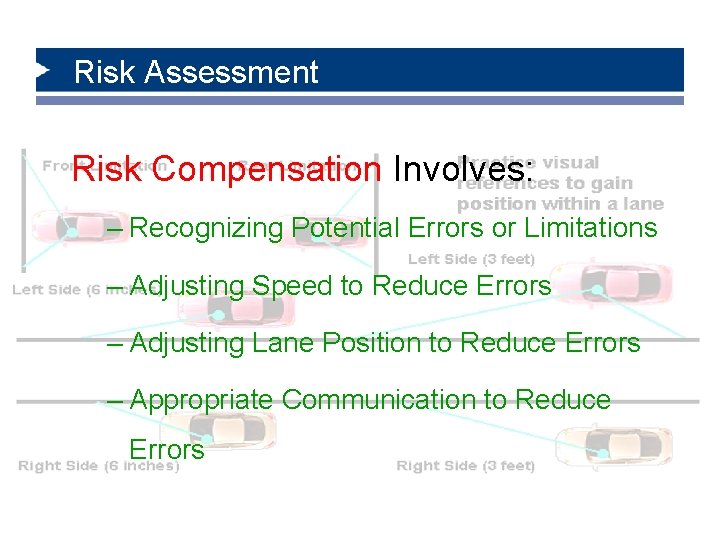
Risk Assessment Risk Compensation Involves: – Recognizing Potential Errors or Limitations – Adjusting Speed to Reduce Errors – Adjusting Lane Position to Reduce Errors – Appropriate Communication to Reduce Errors 6/8/2021 6
Reducing Driving Risk q Decision-making is the most important driver skill q Procedural tasks vs. Processing tasks q Learning from good and bad experiences q Learning by observation 6/8/2021 7
Reducing Driving Risk q Procedures and experience equals habits q Work for developing best procedures and experience q Greater the resistance to change often means the greater the need for changing habits 6/8/2021 8
Reducing Driving Risk Ø Practice is key to sound habits and judgments Ø What to practice is important Ø Good habits and judgment deteriorate over time 6/8/2021 9
Reducing Driving Risk Ø Majority of drivers rate themselves as good Ø Good versus poor procedures and processing Ø Poor driving experiences develop poor driving behaviors 6/8/2021 10
Risk Reduction Goals q Make every driving sequence a good driving sequence q Use processing techniques to make judgments q Develop sound procedures for maneuvers 6/8/2021 11
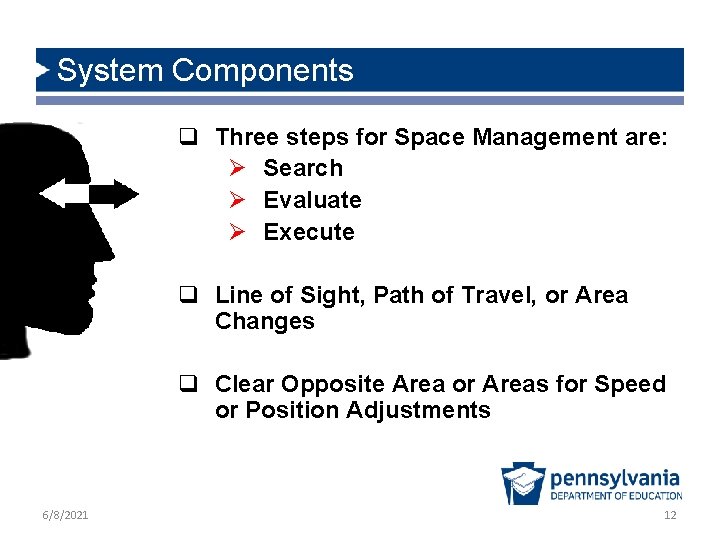
System Components q Three steps for Space Management are: Ø Search Ø Evaluate Ø Execute q Line of Sight, Path of Travel, or Area Changes q Clear Opposite Area or Areas for Speed or Position Adjustments 6/8/2021 12
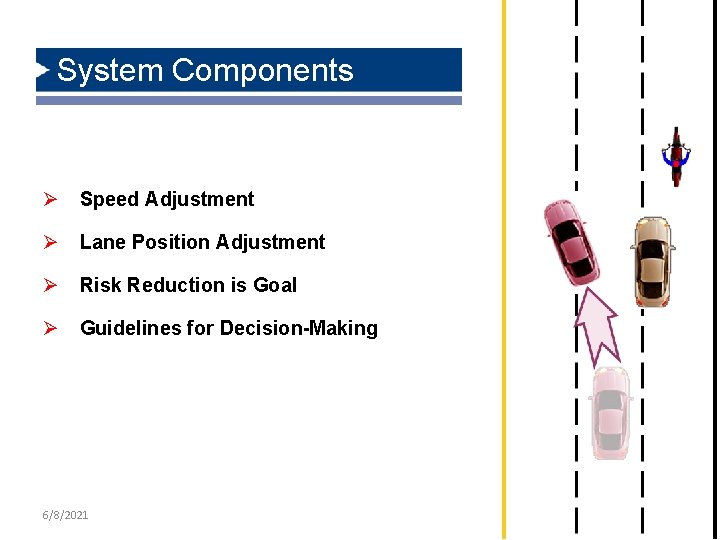
System Components Ø Speed Adjustment Ø Lane Position Adjustment Ø Risk Reduction is Goal Ø Guidelines for Decision-Making 6/8/2021 13
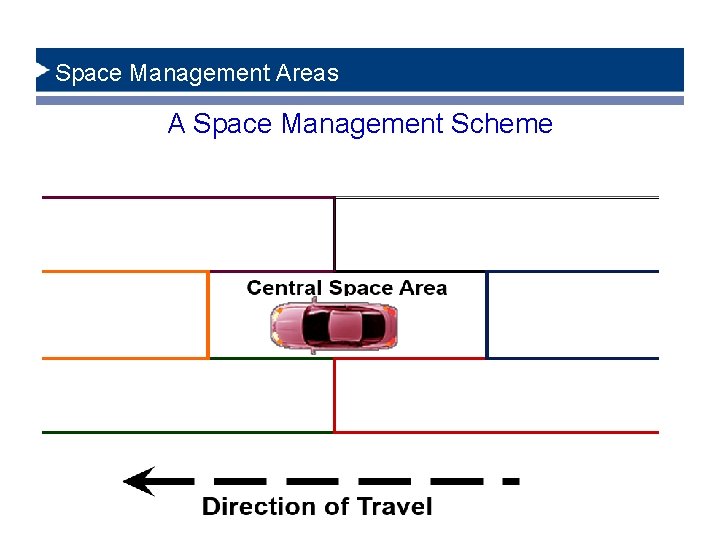
Space Management Areas A Space Management Scheme 6/8/2021 14
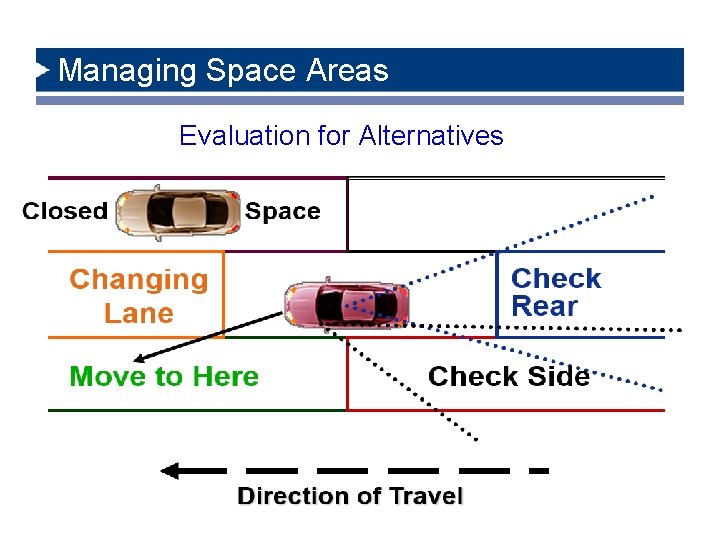
Managing Space Areas Evaluation for Alternatives 6/8/2021 15
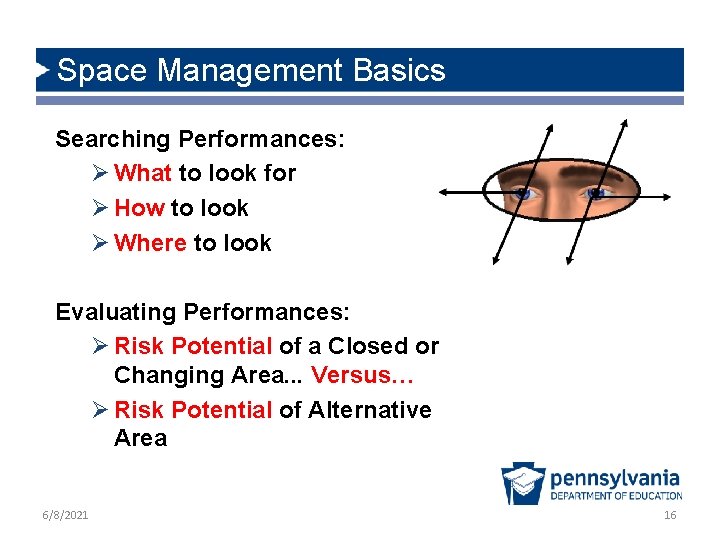
Space Management Basics Searching Performances: Ø What to look for Ø How to look Ø Where to look Evaluating Performances: Ø Risk Potential of a Closed or Changing Area. . . Versus… Ø Risk Potential of Alternative Area 6/8/2021 16
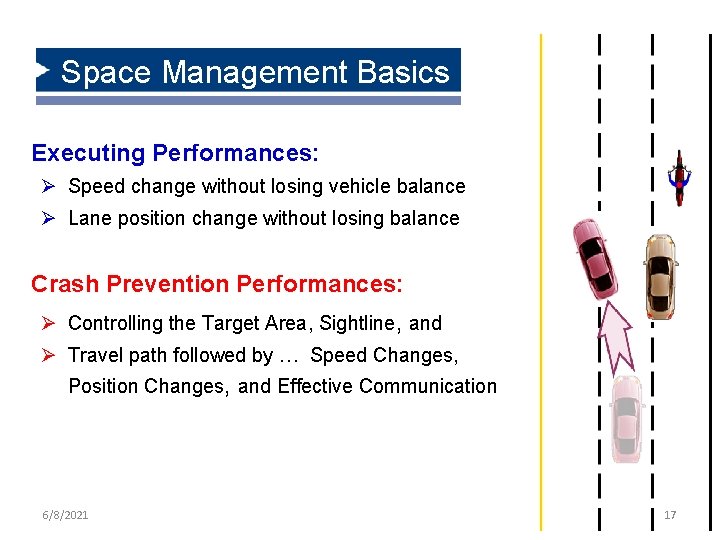
Space Management Basics Executing Performances: Ø Speed change without losing vehicle balance Ø Lane position change without losing balance Crash Prevention Performances: Ø Controlling the Target Area, Sightline, and Ø Travel path followed by … Speed Changes, Position Changes, and Effective Communication 6/8/2021 17
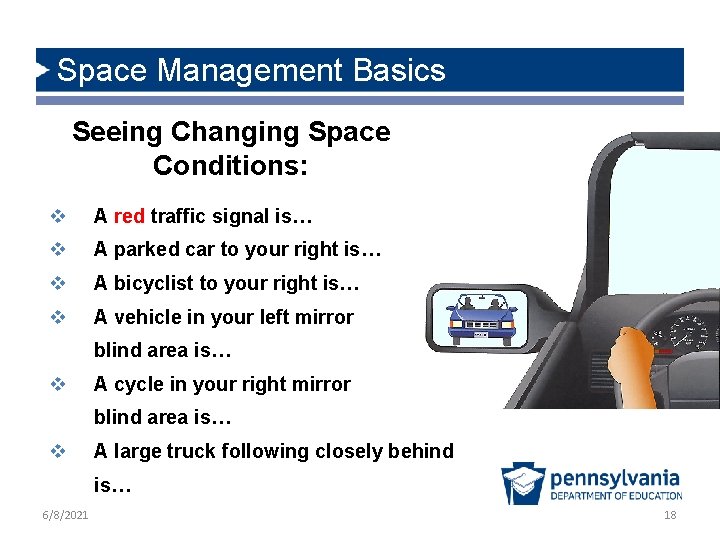
Space Management Basics Seeing Changing Space Conditions: v A red traffic signal is… v A parked car to your right is… v A bicyclist to your right is… v A vehicle in your left mirror blind area is… v A cycle in your right mirror blind area is… v A large truck following closely behind is… 6/8/2021 18
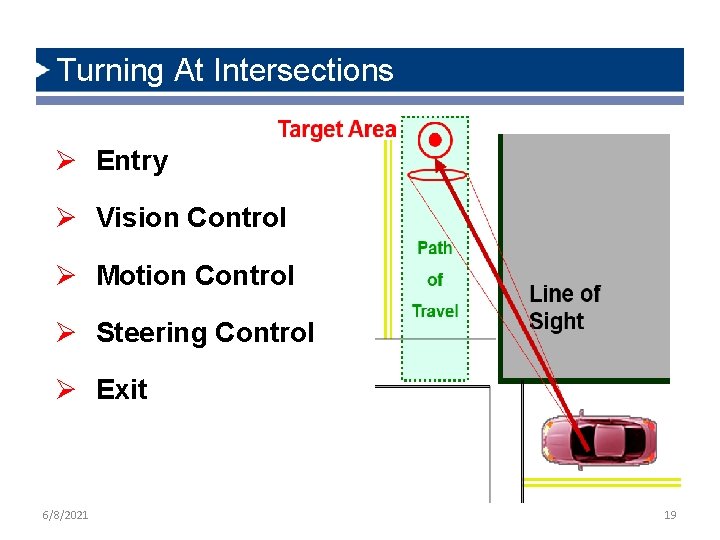
Turning At Intersections Ø Entry Ø Vision Control Ø Motion Control Ø Steering Control Ø Exit 6/8/2021 19
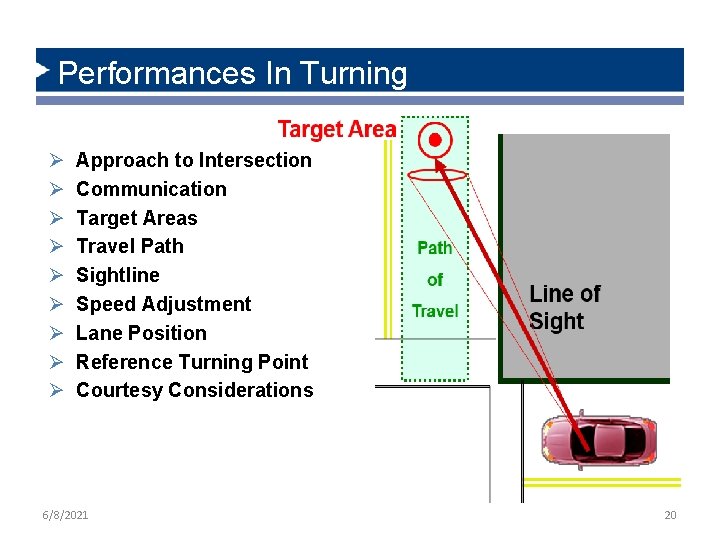
Performances In Turning Ø Ø Ø Ø Ø Approach to Intersection Communication Target Areas Travel Path Sightline Speed Adjustment Lane Position Reference Turning Point Courtesy Considerations 6/8/2021 20
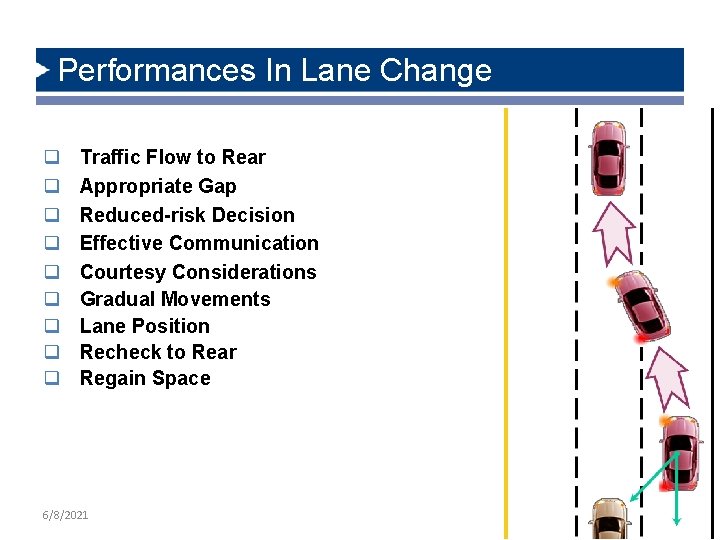
Performances In Lane Change q q q q q Traffic Flow to Rear Appropriate Gap Reduced-risk Decision Effective Communication Courtesy Considerations Gradual Movements Lane Position Recheck to Rear Regain Space 6/8/2021 21
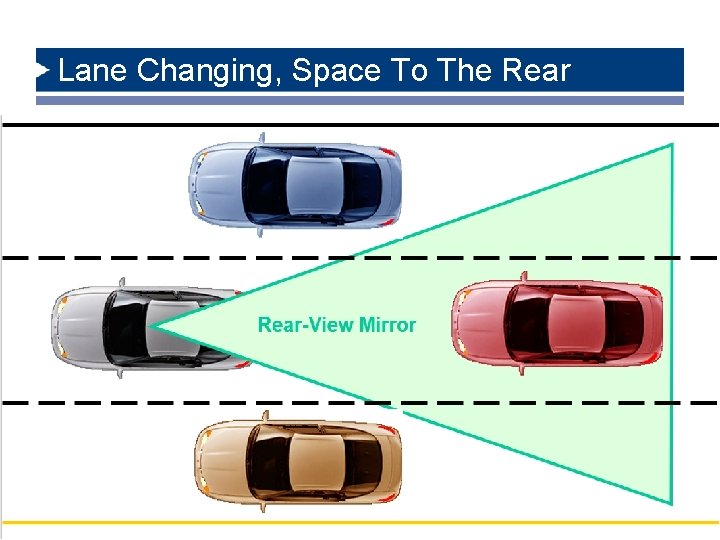
Lane Changing, Space To The Rear 6/8/2021 22
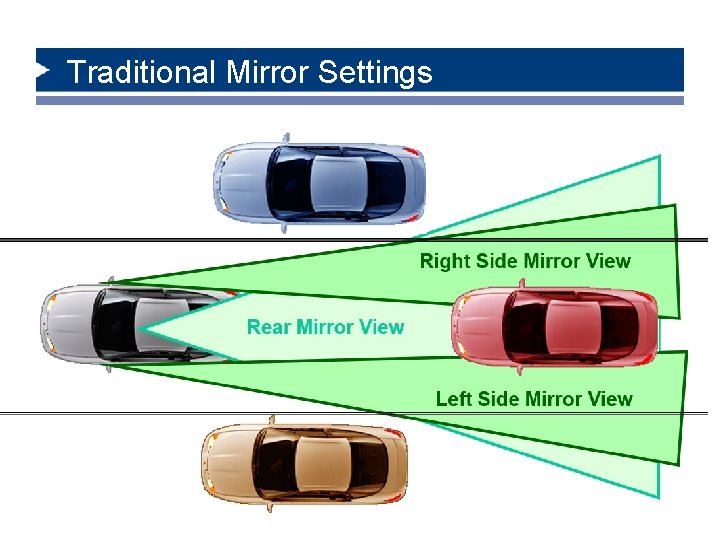
Traditional Mirror Settings 6/8/2021 23
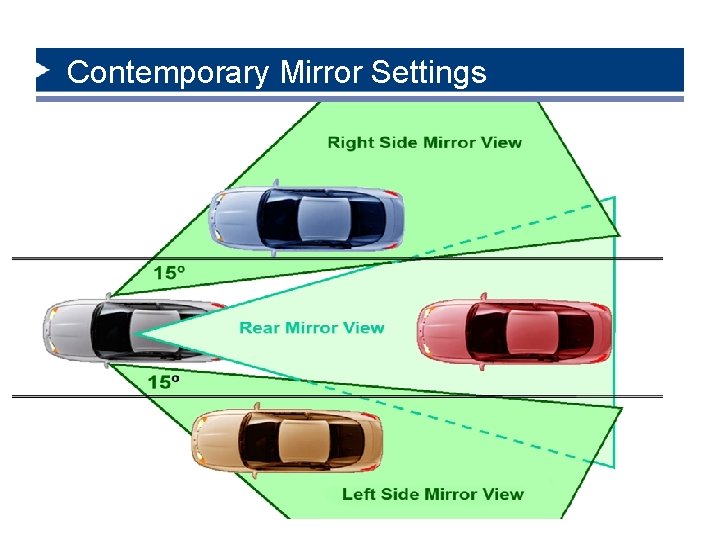
Contemporary Mirror Settings 6/8/2021 24
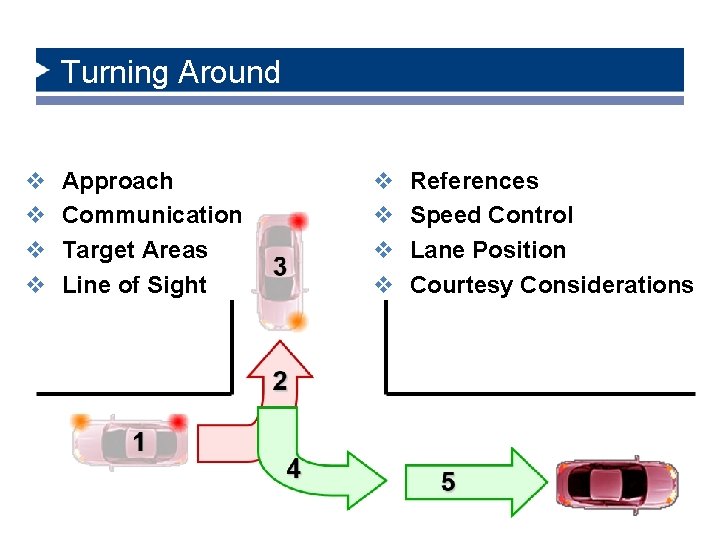
Turning Around v v Approach Communication Target Areas Line of Sight 6/8/2021 v v References Speed Control Lane Position Courtesy Considerations 25
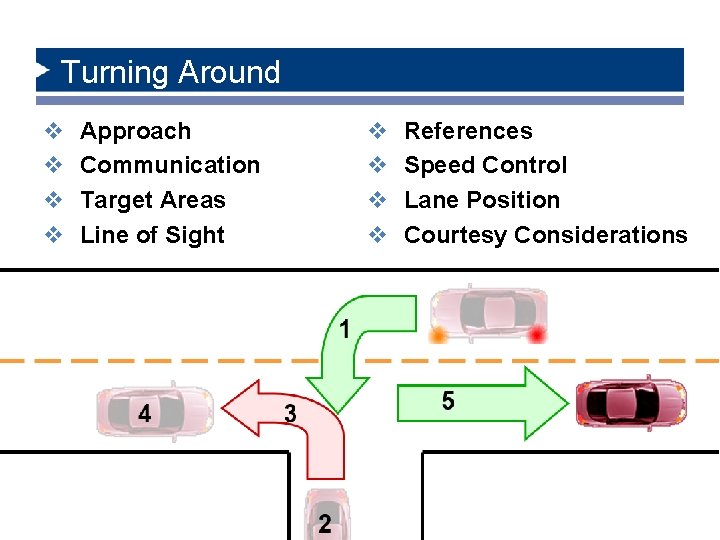
Turning Around v v Approach Communication Target Areas Line of Sight 6/8/2021 v v References Speed Control Lane Position Courtesy Considerations 26
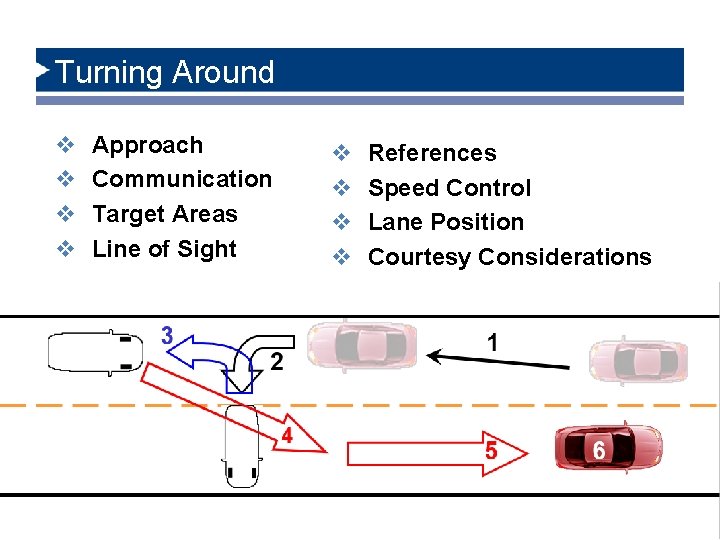
Turning Around v v 6/8/2021 Approach Communication Target Areas Line of Sight v v References Speed Control Lane Position Courtesy Considerations 27
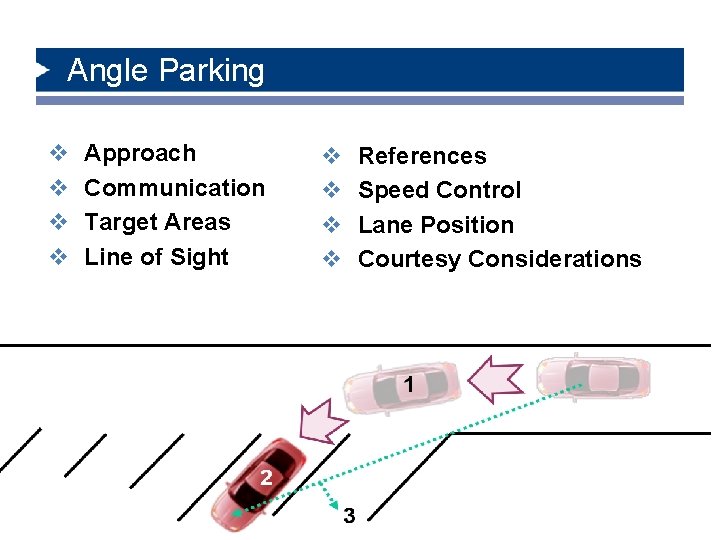
Angle Parking v v Approach Communication Target Areas Line of Sight 6/8/2021 v v References Speed Control Lane Position Courtesy Considerations 28
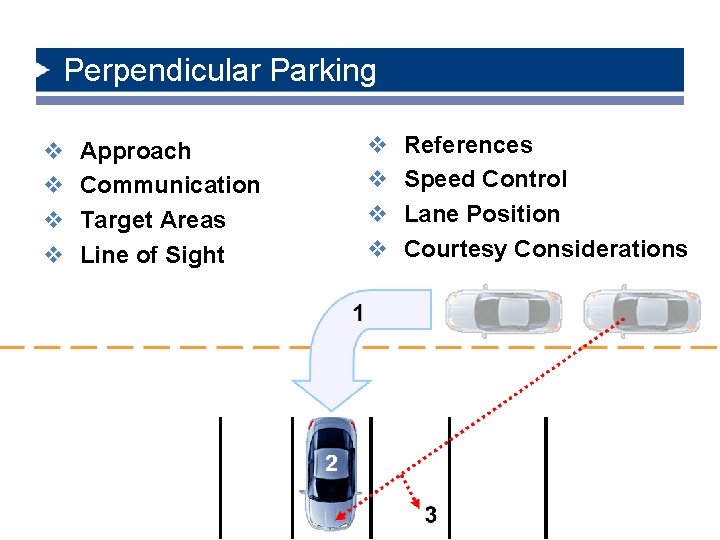
Perpendicular Parking v v Approach Communication Target Areas Line of Sight 6/8/2021 v v References Speed Control Lane Position Courtesy Considerations 29
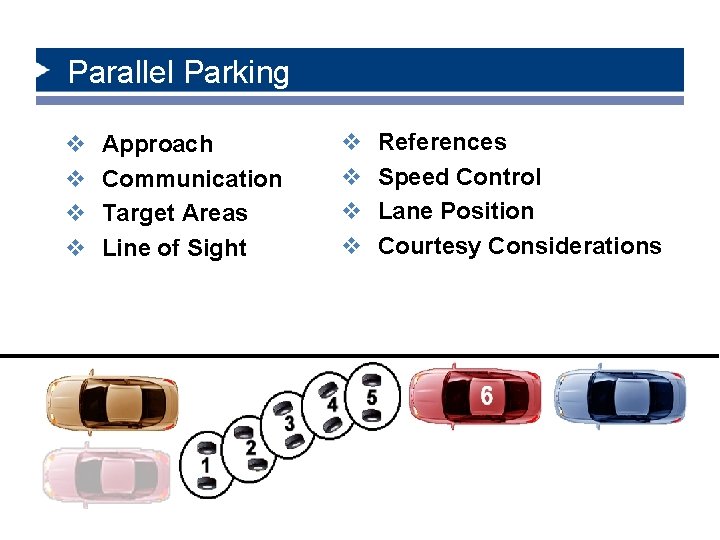
Parallel Parking v v Approach Communication Target Areas Line of Sight v v References Speed Control Lane Position Courtesy Considerations
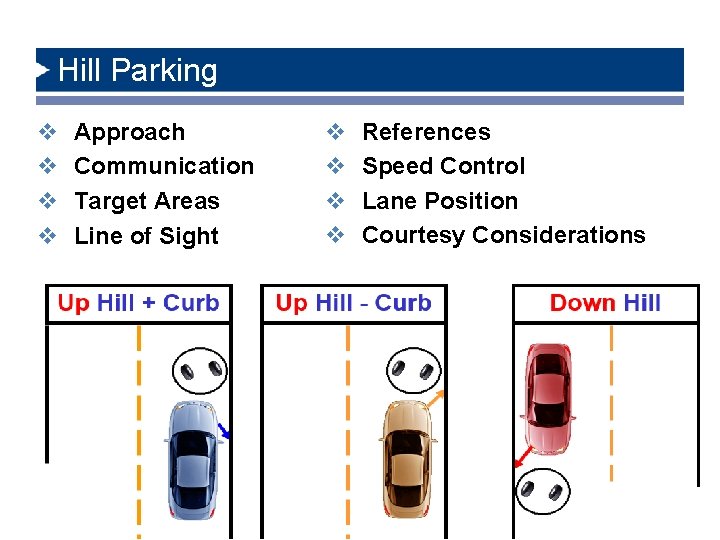
Hill Parking v v Approach Communication Target Areas Line of Sight 6/8/2021 v v References Speed Control Lane Position Courtesy Considerations 31
Contact/Mission For more information on Driver’s Education and Safety please visit PDE’s website at www. education. pa. gov The mission of the Department of Education is to ensure that every learner has access to a world-class education system that academically prepares children and adults to succeed as productive citizens. Further, the Department seeks to establish a culture that is committed to improving opportunities throughout the commonwealth by ensuring that technical support, resources, and optimal learning environments are available for all students, whether children or adults. 6/8/2021 32
- Slides: 32