
BASIC LEADERSHIP Al Mozingo Al Mozingo Background and
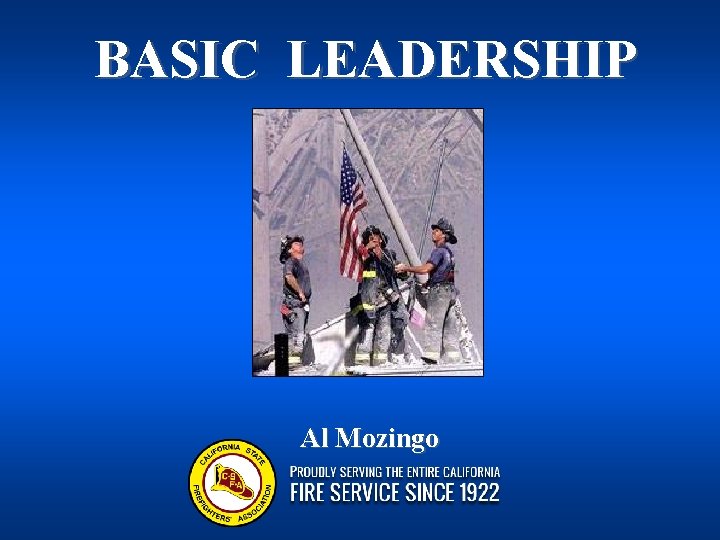
BASIC LEADERSHIP Al Mozingo
Al Mozingo Background and Experience • Military - 6 Years United States Naval Service (Nuclear Submarines) • Fire Service - 30 Years (Captain/Batt. Chief) • Certified Instructor - Organizational Development • Certified Instructor - Leadership Development • Adjunct Instructor - National Fire Academy • College Instructor - Leadership Training • Author - Book - The Principles of Leadership • Author - Fire Journal Column - The Leadership Corner • Adjunct Instructor – The National Fire Academy and the National Emergency Response and Rescue Training Center
WHAT IS LEADERSHIP?
LEADERSHIP IS: The abilities, traits, and talents an individual has to lead others.
WHAT ARE THE TRAITS OF A LEADER?
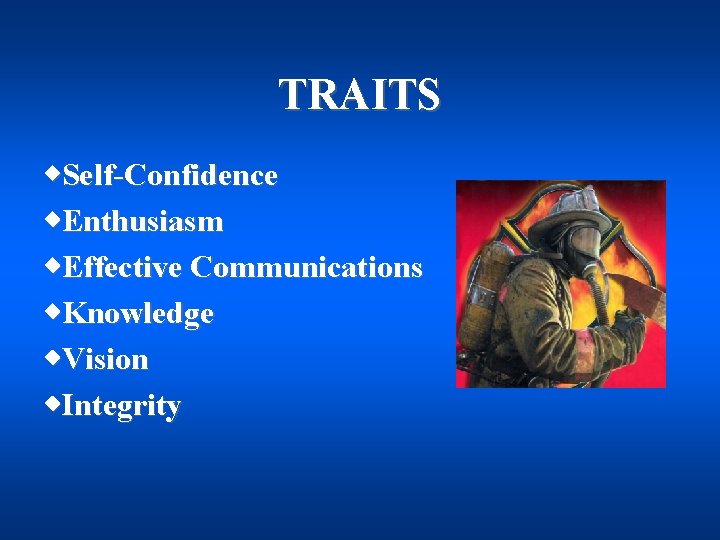
TRAITS w. Self-Confidence w. Enthusiasm w. Effective Communications w. Knowledge w. Vision w. Integrity
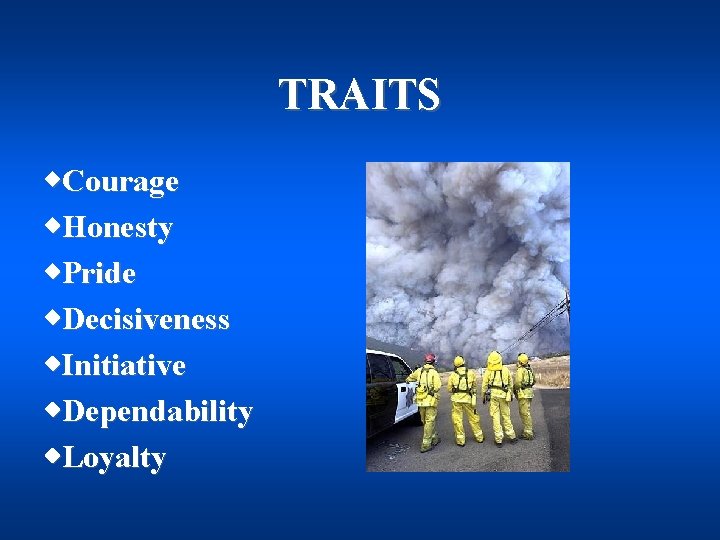
TRAITS w. Courage w. Honesty w. Pride w. Decisiveness w. Initiative w. Dependability w. Loyalty
SKILLS TO IMPROVE YOUR LEADERSHIP ABILITY
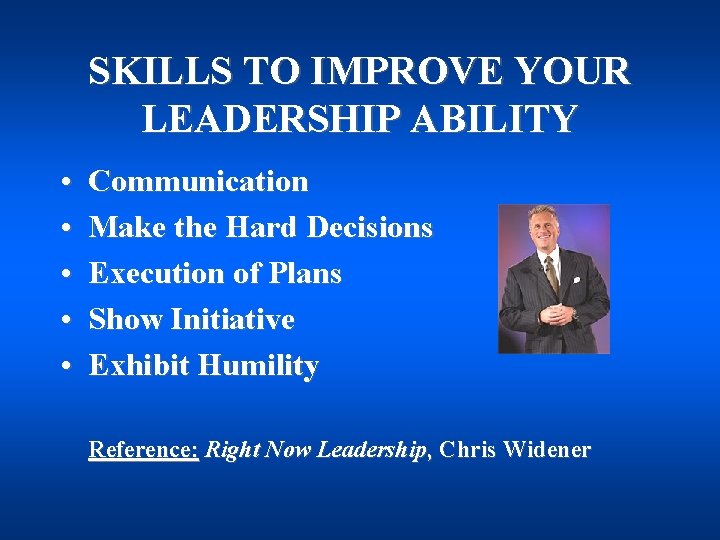
SKILLS TO IMPROVE YOUR LEADERSHIP ABILITY • • • Communication Make the Hard Decisions Execution of Plans Show Initiative Exhibit Humility Reference: Right Now Leadership, Chris Widener
The Department of the Army LEADERSHIP PRINCIPLES

The Department of the Army LEADERSHIP PRINCIPLES 1. Be technically and tactically proficient. 2. Know yourself and seek self-improvement. 3. Know your men & look out for their welfare. 4. Keep your men informed.
The Department of the Army LEADERSHIP PRINCIPLES 5. Set the example. 6. Be sure that the task is understood, supervised, and accomplished. 7. Train your men as a team. 8. Make sound and timely decisions.
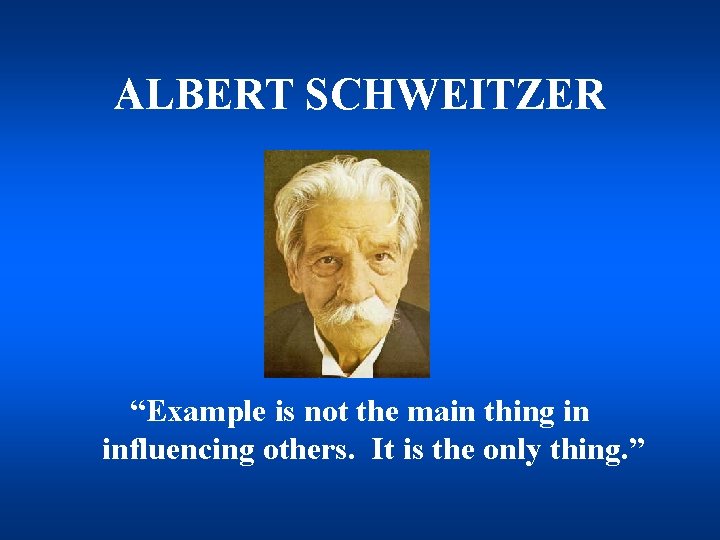
ALBERT SCHWEITZER “Example is not the main thing in influencing others. It is the only thing. ”
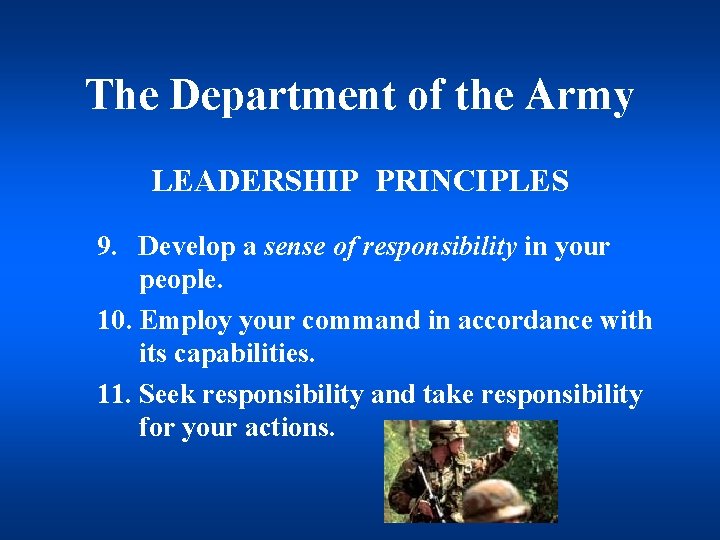
The Department of the Army LEADERSHIP PRINCIPLES 9. Develop a sense of responsibility in your people. 10. Employ your command in accordance with its capabilities. 11. Seek responsibility and take responsibility for your actions.
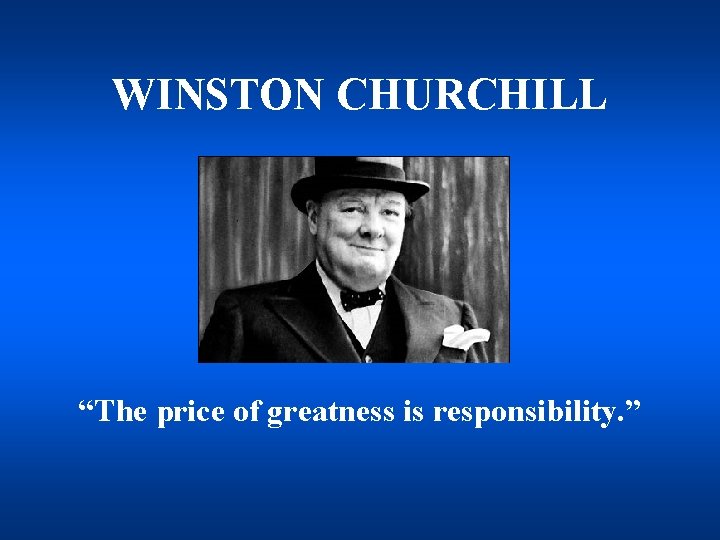
WINSTON CHURCHILL “The price of greatness is responsibility. ”
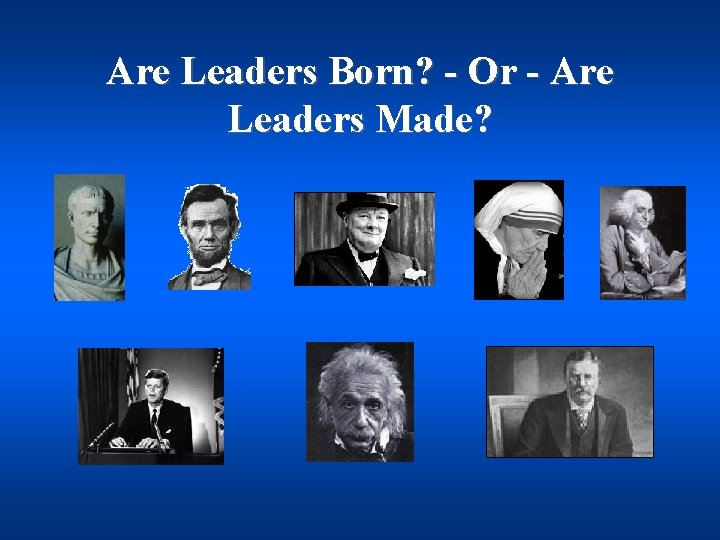
Are Leaders Born? - Or - Are Leaders Made?
Leaders Are Not Born Leaders They Are Made!
THE FUNCTIONS OF A LEADER
THE FUNCTIONS OF A LEADER 1. To Execute Orders, Suggestions, or Requests. 2. To Solve Problems. 3. To Plan for Contingencies. 4. To Develop Good Morale and Teamwork.
Execute Execution is everything! Mark Sanborn Reference: Developing Leaders, Mark Sanborn
THE FUNCTIONS OF A LEADER 5. 6. 7. 8. To Set a Good Example. To Establish Ground Rules. To Set Goals and Objectives. To Provide Positive Motivation.
THE FUNCTIONS OF A LEADER 9. 10. 11. 12. To Delegate to Your People. To Know the Job. To be Loyal to the Organization. To Provide Discipline when Needed.
LEADERSHIP IS YOUR INTERPERSONAL BEHAVIOR THAT INFLUENCES OTHERS TO COOPERATE IN THE ACHIEVEMENT OF CERTAIN OBJECTIVES. Reference: Stoghill
THE USE OF POWER u. Legitimate Power u. Reward Power u. Expertise Power u. Affection Power u. Coercive Power Reference: Management, William F. Glveck
THE USE OF POWER • Legitimate Power is to exercise your influence with legitimate authority that was given to you.
THE USE OF POWER • Reward Power is to exercise your influence by rewarding your followers in some manner.
THE USE OF POWER • Expertise Power is to exercise your influence by showing others how to get the job done. You, in essence, are respected because of your knowledge and skill.
THE USE OF POWER • Affection Power is to exercise your influence by your acceptance with the group. A leader high in Affection Power will be able to have more influence over others.
THE USE OF POWER • Coercive Power is to exercise your influence by coercive factors. For instance, loss of pay, direct disciplinary action, and/or loss of job. This is the type of influence that should be avoided (it develops opposition to the leader). Coercive power is the leader's last resort. When using this remember you’re using negative motivation.
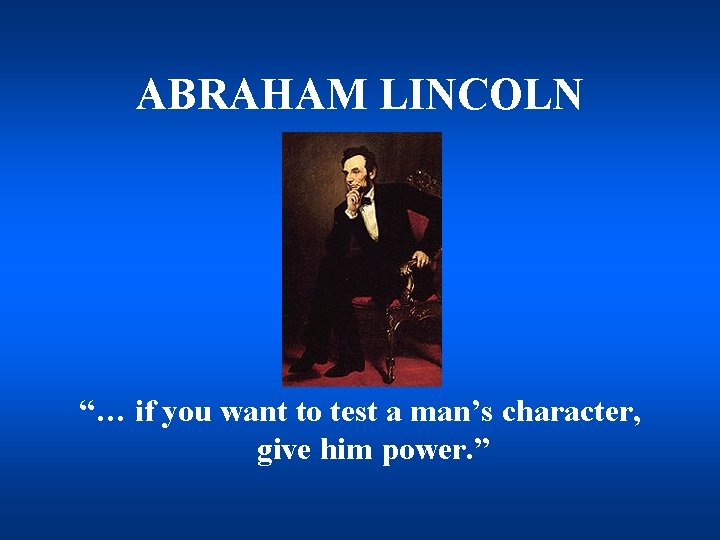
ABRAHAM LINCOLN “… if you want to test a man’s character, give him power. ”

MANAGEMENT
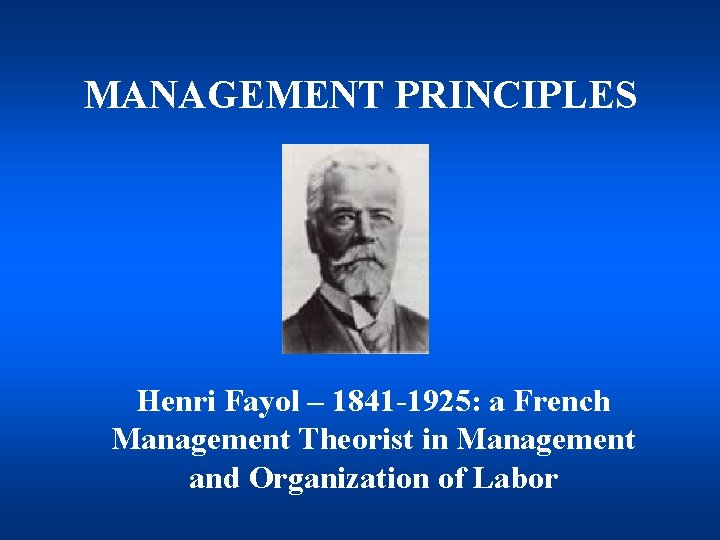
MANAGEMENT PRINCIPLES Henri Fayol – 1841 -1925: a French Management Theorist in Management and Organization of Labor
MANAGEMENT PRINCIPLES Fayol’s definition of management roles and actions distinguishes between five elements. 1. 2. 3. 4. 5. Plan Organize Command Coordinate Control
MANAGEMENT PRINCIPLES 14 Principles of Management (1916) 1. 2. 3. 4. 5. Division of Work – specialization Authority – issue commands Discipline – obey orders Unity of Command – one boss Unity of Direction – the same objective
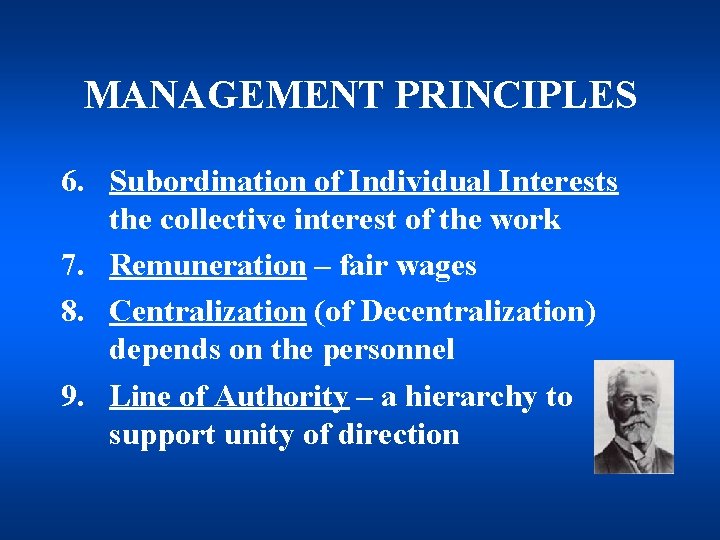
MANAGEMENT PRINCIPLES 6. Subordination of Individual Interests the collective interest of the work 7. Remuneration – fair wages 8. Centralization (of Decentralization) depends on the personnel 9. Line of Authority – a hierarchy to support unity of direction
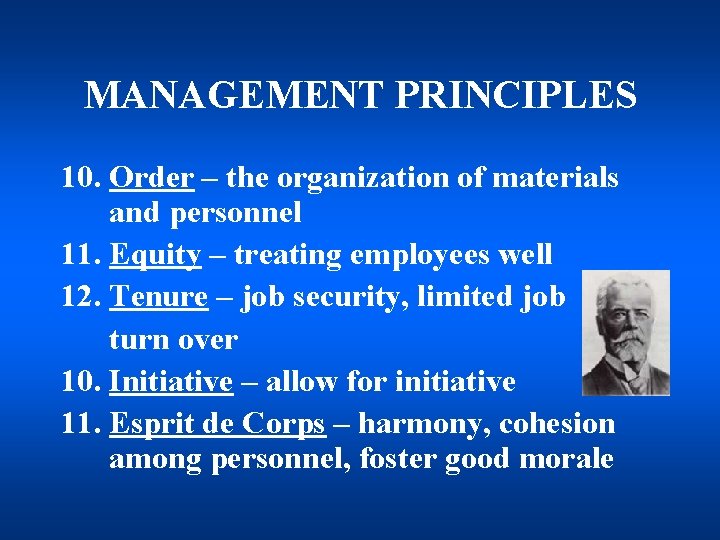
MANAGEMENT PRINCIPLES 10. Order – the organization of materials and personnel 11. Equity – treating employees well 12. Tenure – job security, limited job turn over 10. Initiative – allow for initiative 11. Esprit de Corps – harmony, cohesion among personnel, foster good morale
The Team Building Concept
Conditions for a Successful Team 1. There Must Be a Leader.
Conditions for a Successful Team 1. There Must Be a Leader. 2. The Members are Open and Honest.
Conditions for a Successful Team 1. 2. 3. There Must Be a Leader. The Members are Open and Honest. The Members are Willing to Work.
Conditions for a Successful Team 1. 2. 3. 4. There Must Be a Leader. The Members are Open and Honest. The Members are Willing to Work. All Members Must Have a Positive Attitude.
Conditions for a Successful Team 1. 2. 3. 4. 5. There Must Be a Leader. The Members are Open and Honest. The Members are Willing to Work. All Members Must Have a Positive Attitude. There Must Be No Criticizing - People Must have the Opportunity to Present Their Views.
Conditions for a Successful Team 1. 2. 3. 4. 5. There Must Be a Leader. The Members are Open and Honest. The Members are Willing to Work. All Members Must Have a Positive Attitude. There Must Be No Criticizing - People Must have the Opportunity to Present Their Views.
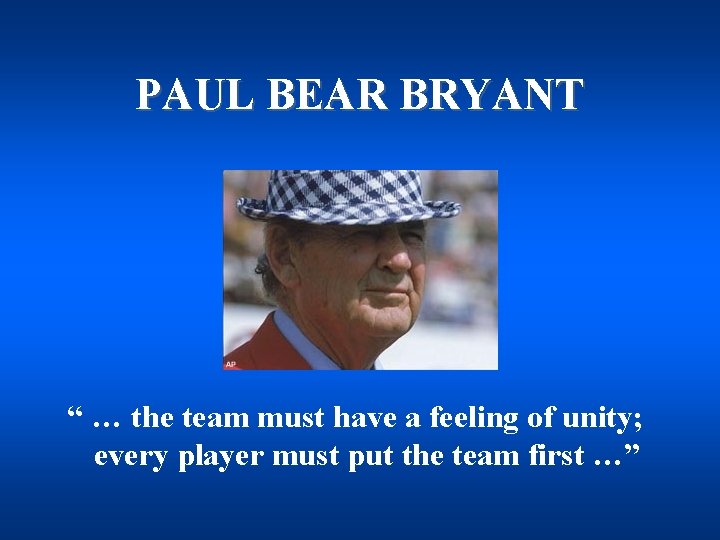
PAUL BEAR BRYANT “ … the team must have a feeling of unity; every player must put the team first …”
GROUP DYNAMICS AND CONFLICT Definition: • Conflict refers to an ongoing state of hostility between people. • Conflict causes people to undermine each other.
GROUP DYNAMICS AND CONFLICT Pitfalls 1. Priorities of the Members 2. Problems with Semantics or Interpretation of the Objectives.
GROUP DYNAMICS AND CONFLICT 3. Animosities of the Members. 4. Ego’s - One Member Trying to Control the Meeting or Process.
GROUP DYNAMICS AND CONFLICT Conflict resolution is often required.
MASLOW’S HIERARCHY OF NEEDS
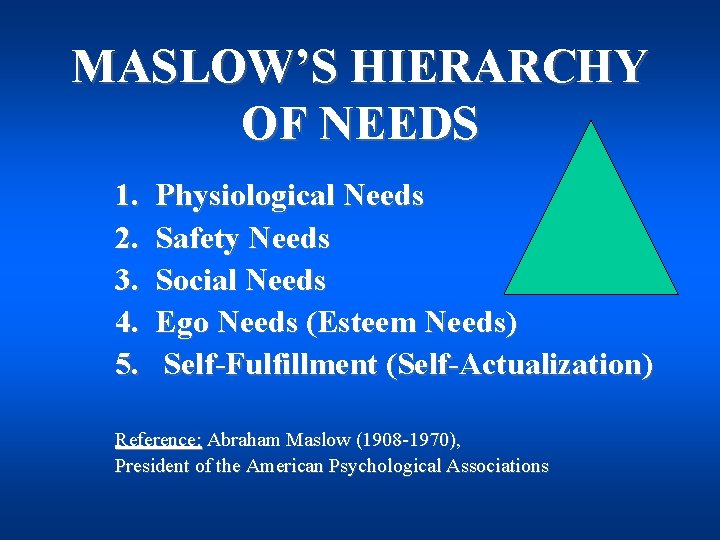
MASLOW’S HIERARCHY OF NEEDS 1. 2. 3. 4. 5. Physiological Needs Safety Needs Social Needs Ego Needs (Esteem Needs) Self-Fulfillment (Self-Actualization) Reference: Abraham Maslow (1908 -1970), President of the American Psychological Associations
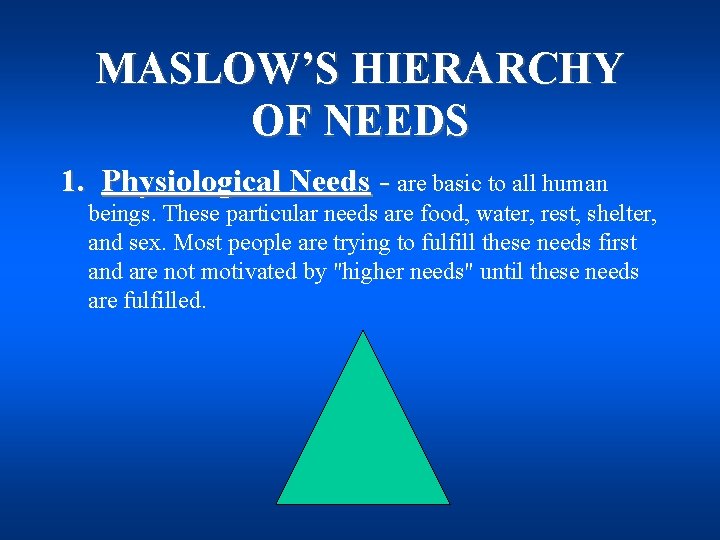
MASLOW’S HIERARCHY OF NEEDS 1. Physiological Needs - are basic to all human beings. These particular needs are food, water, rest, shelter, and sex. Most people are trying to fulfill these needs first and are not motivated by "higher needs" until these needs are fulfilled.
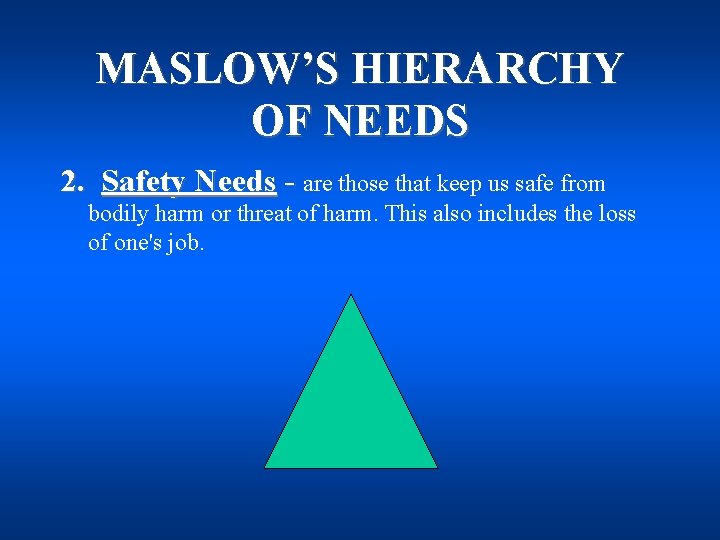
MASLOW’S HIERARCHY OF NEEDS 2. Safety Needs - are those that keep us safe from bodily harm or threat of harm. This also includes the loss of one's job.
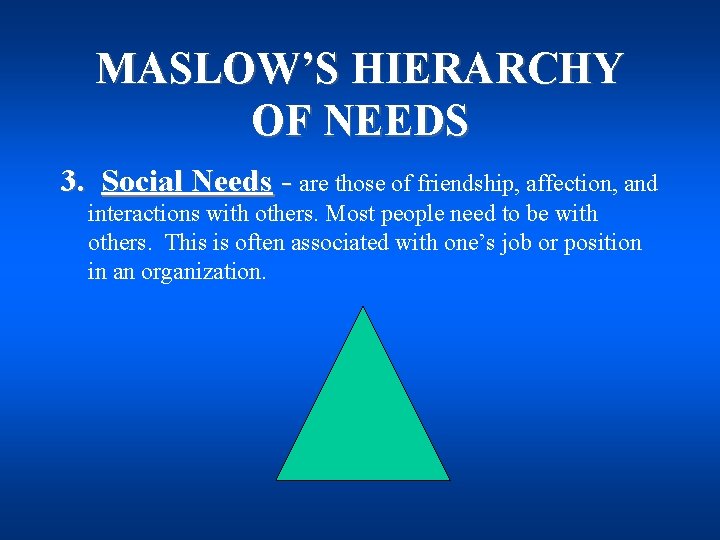
MASLOW’S HIERARCHY OF NEEDS 3. Social Needs - are those of friendship, affection, and interactions with others. Most people need to be with others. This is often associated with one’s job or position in an organization.
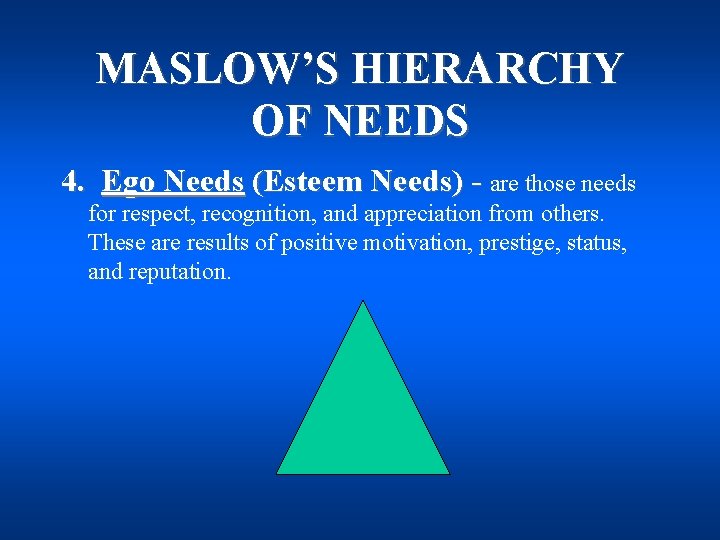
MASLOW’S HIERARCHY OF NEEDS 4. Ego Needs (Esteem Needs) - are those needs for respect, recognition, and appreciation from others. These are results of positive motivation, prestige, status, and reputation.
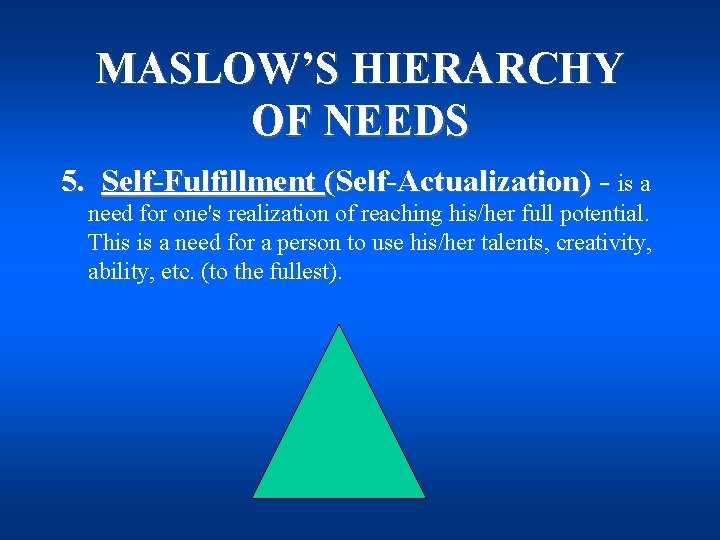
MASLOW’S HIERARCHY OF NEEDS 5. Self-Fulfillment (Self-Actualization) - is a need for one's realization of reaching his/her full potential. This is a need for a person to use his/her talents, creativity, ability, etc. (to the fullest).
Theory X and Theory Y Reference: The Human Side of Enterprise, Mc. Gregor
Theory X Workers must be coerced into work. The Average worker shuns responsibility with lack of ambition.
Theory Y Workers will perform adequately with self-direction and are willing to accept responsibility.
Theory Z From Japan It focuses on the belief that each worker can perform autonomously (Without Supervision) and That workers can be trusted.
Leadership Style
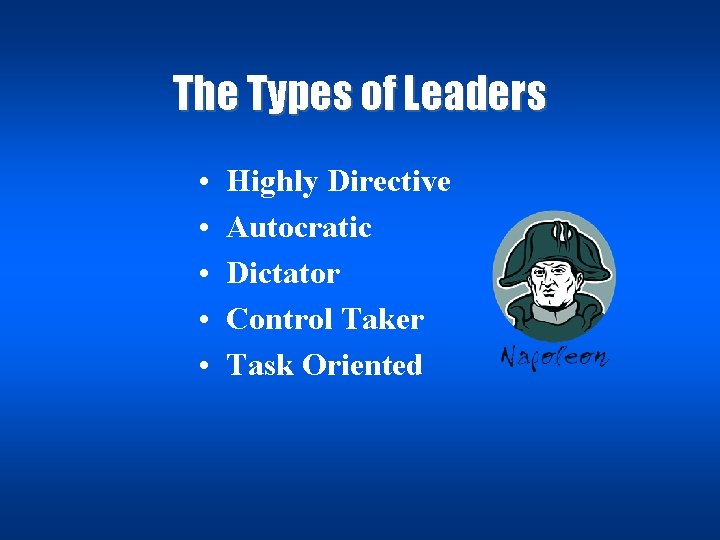
The Types of Leaders • • • Highly Directive Autocratic Dictator Control Taker Task Oriented
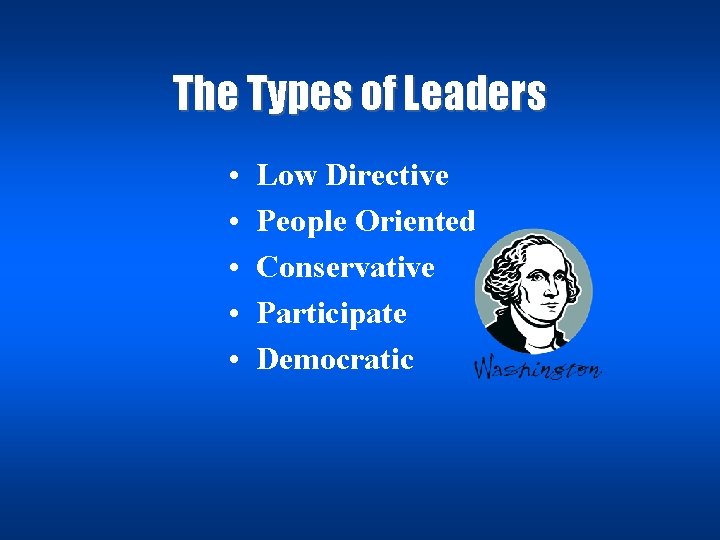
The Types of Leaders • • • Low Directive People Oriented Conservative Participate Democratic
Situational Leadership Style
Situational Leadership Style incorporates the following elements as you provide leadership. Directing Coaching Supporting Delegating Reference: Situational Leader, Paul Hersey & Kenneth Blanchard
Situational Leadership Style Depends Upon: u. The Ability of the Follower u. The Quality Desired u. The Time Required u. The Situation / Goal / Task
Situational Leadership Style Depends Upon: • Directing is when the leader determines that the task needs his or her direct attention. • Then the leader tells the person: • What to do, how, when, and where to perform the task.
Situational Leadership Style Depends Upon: • Coaching is when the leader determines that direction is needed for the person performing the task • Wants to provide some input. • Control over the decision making remains with the leader, but someone else performs the task.
Situational Leadership Style Depends Upon: • Supporting is when the leader determines the task at hand can be accomplished by another person. • This is a more participatory style where the leader actually listens and facilitates the problemsolving/decision-making process.
Situational Leadership Style Depends Upon: • Delegating is when the leader determines the task can be performed by another. • The leader has some discussion with the person to perform the task, to define the task. • The task is given to that person to perform. • This person is also then allowed to “Run their own show. ”
Situational Leadership is considered the best leadership style, the most flexible, and is adaptable to the situation.
IS LEADERSHIP A SCIENCE OR AN ART? • Is it more of skill or character? • Is it more tangible or intangible?
The Art of Leadership is the activity of influencing people to cooperate toward some goal which they come to find desirable.
The Art of Leadership is not a process of exploitation, but a process of helping others achieve objectives that are important to them.
The Art of Leadership Executive Work
Executive Work 1. 2. 3. 4. Planning Policies and Procedures Organizing the Activities of Others Delegating Responsibility Controlling in Terms of Results Desired
Executive Work 5. Supervising the Process of Results 6. Giving General Orders and Instructions 7. Coordinating the Efforts and Elements 8. Training Key People Reference: The Art of Leadership, Ordway Teal
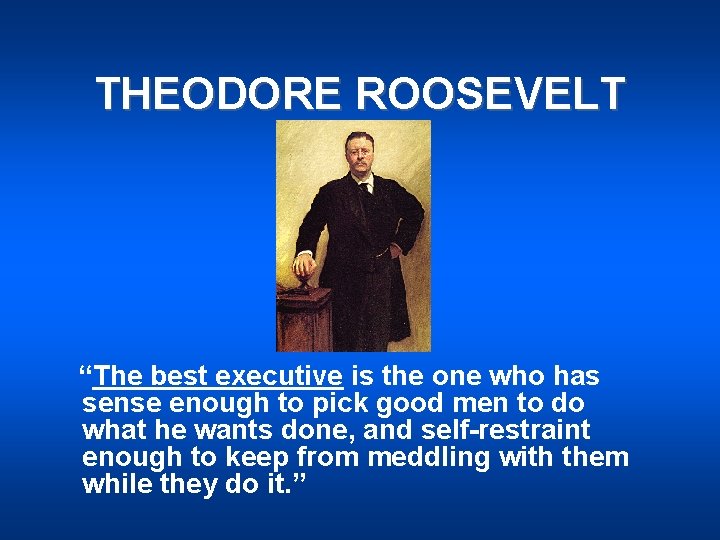
THEODORE ROOSEVELT “The best executive is the one who has sense enough to pick good men to do what he wants done, and self-restraint enough to keep from meddling with them while they do it. ”
What are the Methods Used To Assist in Leading Others?
Methods Used To Assist in Leading Others E E E Suggesting By Example Giving Orders Persuasion Establishing a Situation Discipline
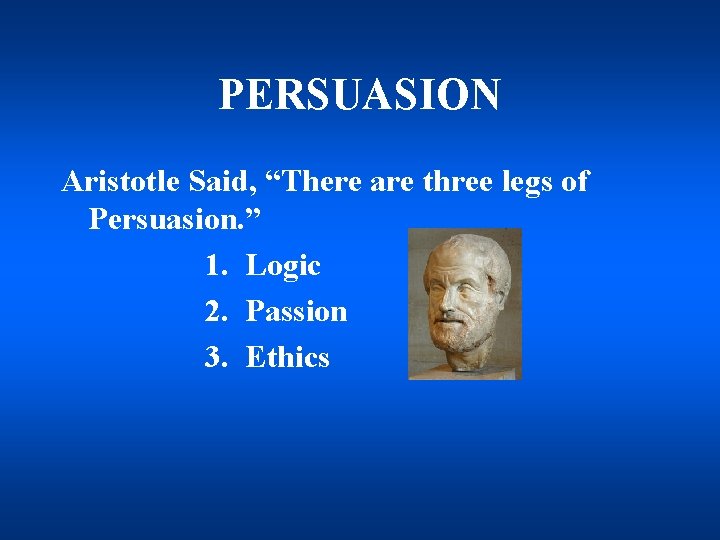
PERSUASION Aristotle Said, “There are three legs of Persuasion. ” 1. Logic 2. Passion 3. Ethics
PERSUASION As leaders we need to learn how to influence others through persuasion. Reference: Secrets of Influence, Chris Widener
DISCIPLINE “An Education in Conduct. ”
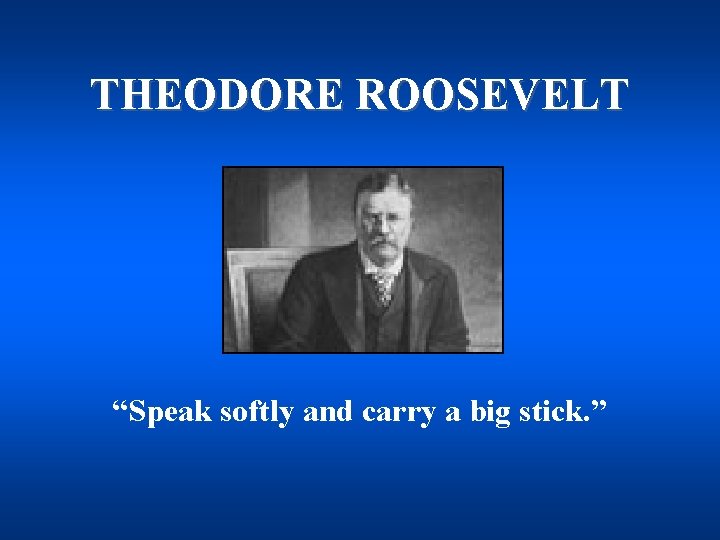
THEODORE ROOSEVELT “Speak softly and carry a big stick. ”
LEADERSHIP ATTITUDE What is a leadership attitude?
A Leader Must Have the Right Attitude t Friendly t Good Manners t Tone of Voice
A Leader Must Have the Right Attitude t Empathy t Consideration t Show Respect
EMPATHY • Identification with and understanding of another's situation, feelings, and motives. • The ability to participate in another’s feelings.
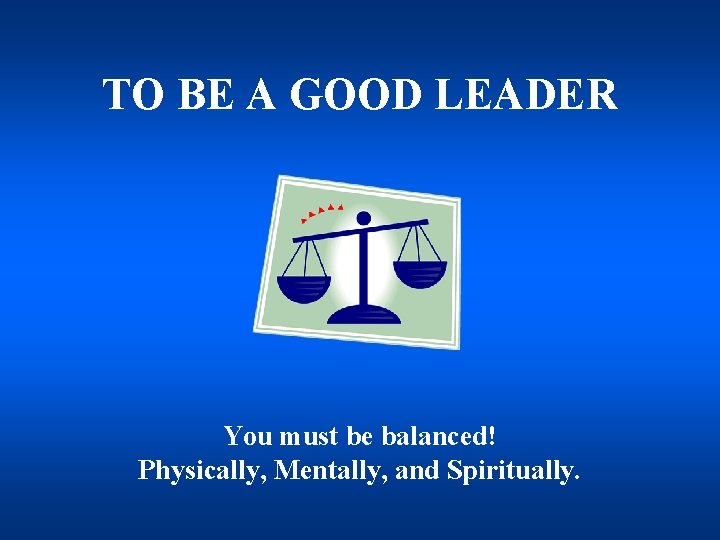
TO BE A GOOD LEADER You must be balanced! Physically, Mentally, and Spiritually.
Assessing Yourself (A Balanced Life) • • Are you a happy person? Are you healthy? Are you prosperous? Are you secure? Do you have friends? Do you love someone? Does someone love you? Reference: The Foundations for Successful Change, Ziglar
The End
- Slides: 90