
BASIC INSTRUMENTATION ELECTRICITY Voltage and Current R 1
BASIC INSTRUMENTATION ELECTRICITY
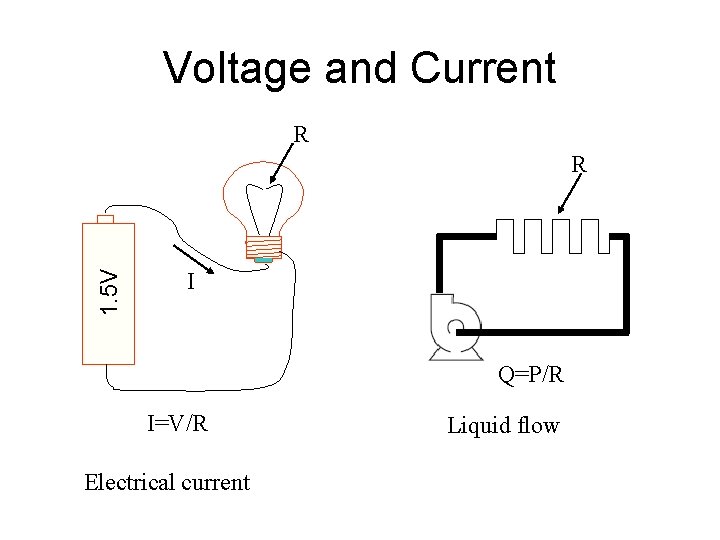
Voltage and Current R 1. 5 V R I Q=P/R I=V/R Electrical current Liquid flow
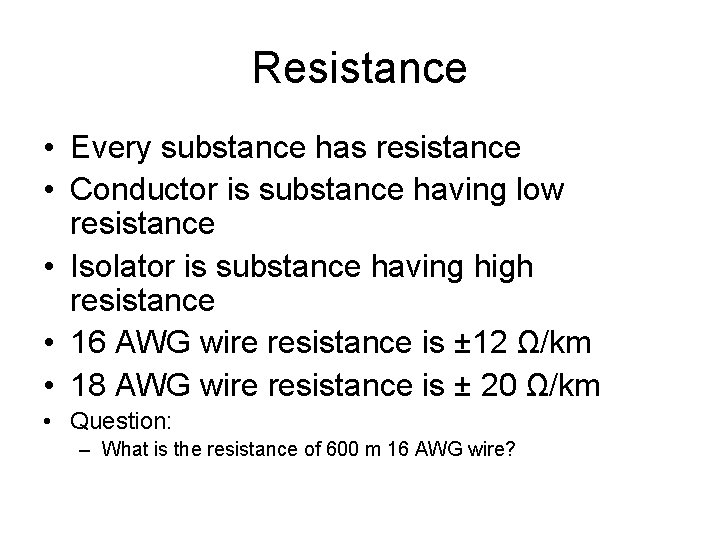
Resistance • Every substance has resistance • Conductor is substance having low resistance • Isolator is substance having high resistance • 16 AWG wire resistance is ± 12 Ω/km • 18 AWG wire resistance is ± 20 Ω/km • Question: – What is the resistance of 600 m 16 AWG wire?
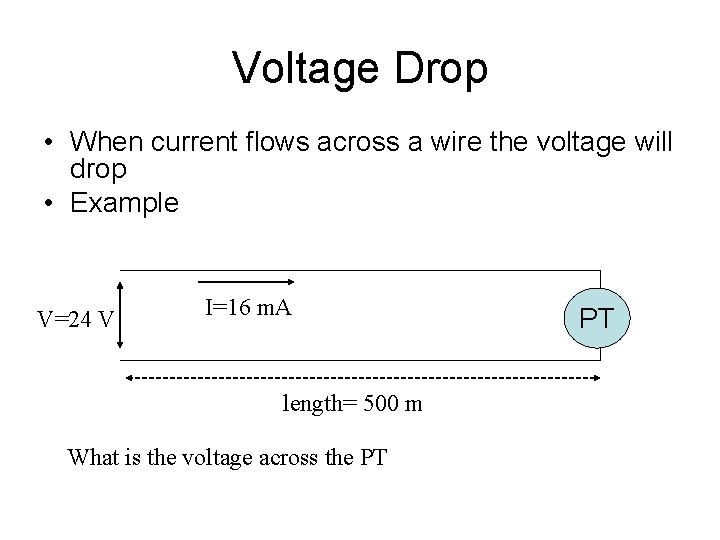
Voltage Drop • When current flows across a wire the voltage will drop • Example V=24 V I=16 m. A length= 500 m What is the voltage across the PT PT
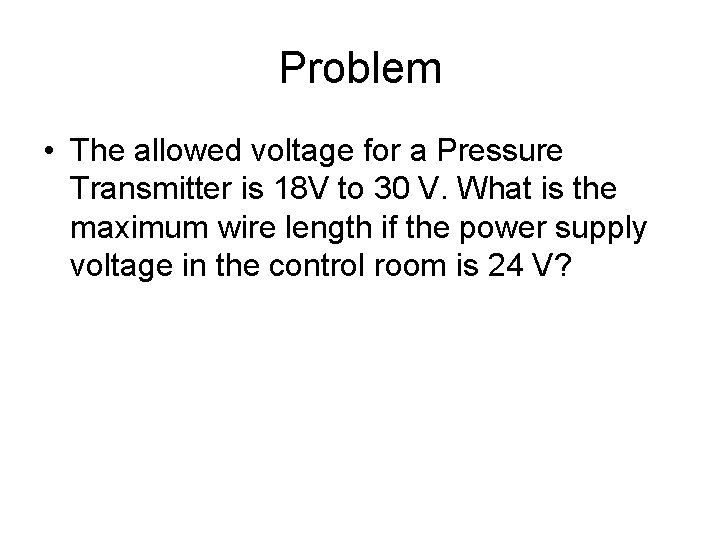
Problem • The allowed voltage for a Pressure Transmitter is 18 V to 30 V. What is the maximum wire length if the power supply voltage in the control room is 24 V?
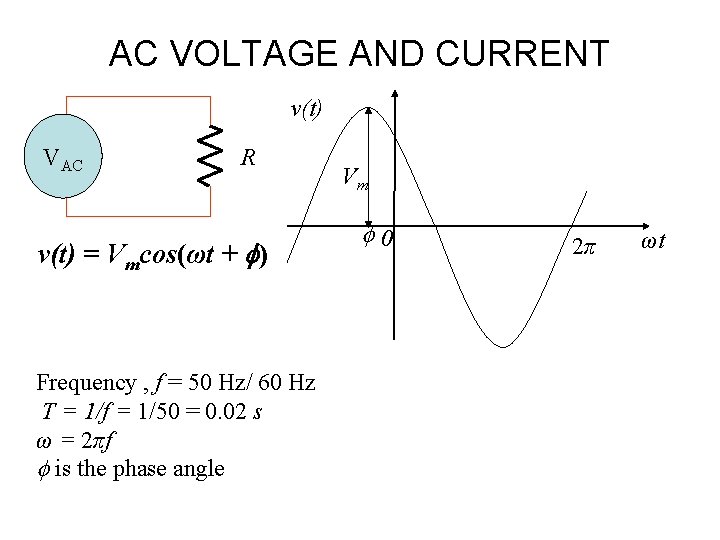
AC VOLTAGE AND CURRENT v(t) VAC R v(t) = Vmcos(ωt + ) Frequency , f = 50 Hz/ 60 Hz T = 1/f = 1/50 = 0. 02 s ω = 2πf is the phase angle Vm 0 2π ωt
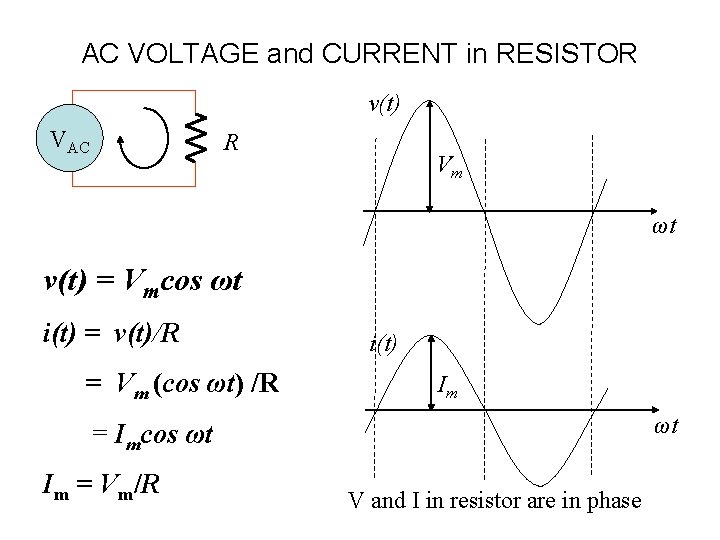
AC VOLTAGE and CURRENT in RESISTOR v(t) VAC R Vm ωt v(t) = Vmcos ωt i(t) = v(t)/R = Vm (cos ωt) /R i(t) Im ωt = Imcos ωt Im = Vm/R V and I in resistor are in phase
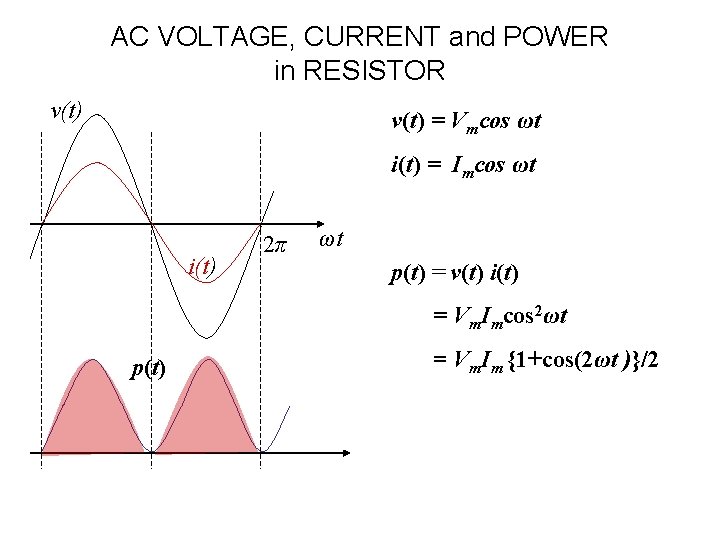
AC VOLTAGE, CURRENT and POWER in RESISTOR v(t) = Vmcos ωt i(t) = Imcos ωt i(t) 2π ωt p(t) = v(t) i(t) = Vm. Imcos 2ωt p(t) = Vm. Im {1+cos(2ωt )}/2
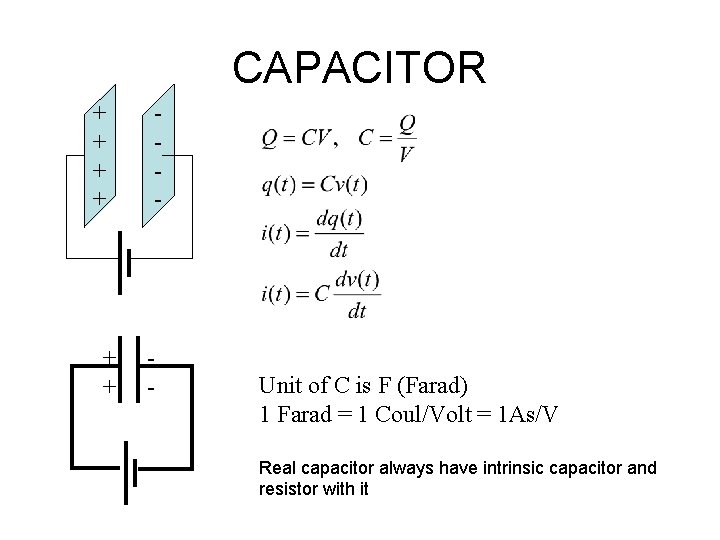
CAPACITOR + + + - - Unit of C is F (Farad) 1 Farad = 1 Coul/Volt = 1 As/V Real capacitor always have intrinsic capacitor and resistor with it
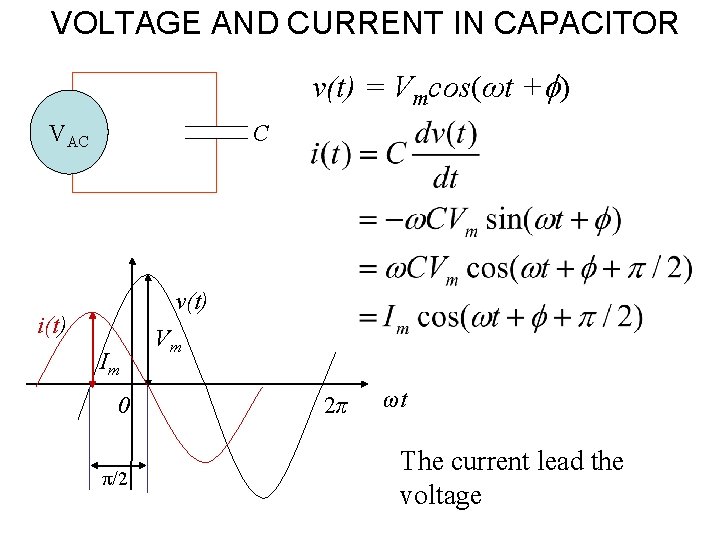
VOLTAGE AND CURRENT IN CAPACITOR v(t) = Vmcos(ωt + ) VAC C v(t) i(t) Im 0 π/2 Vm 2π ωt The current lead the voltage
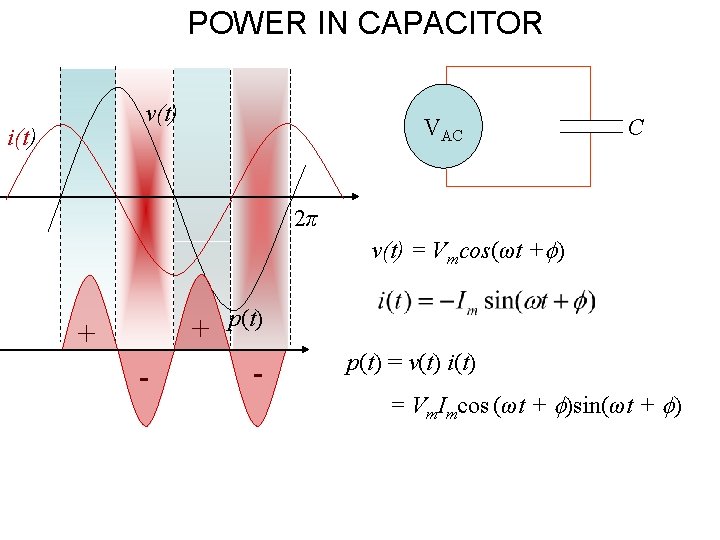
POWER IN CAPACITOR v(t) i(t) VAC C 2π v(t) = Vmcos(ωt + ) + + - p(t) = v(t) i(t) = Vm. Imcos (ωt + )sin(ωt + )
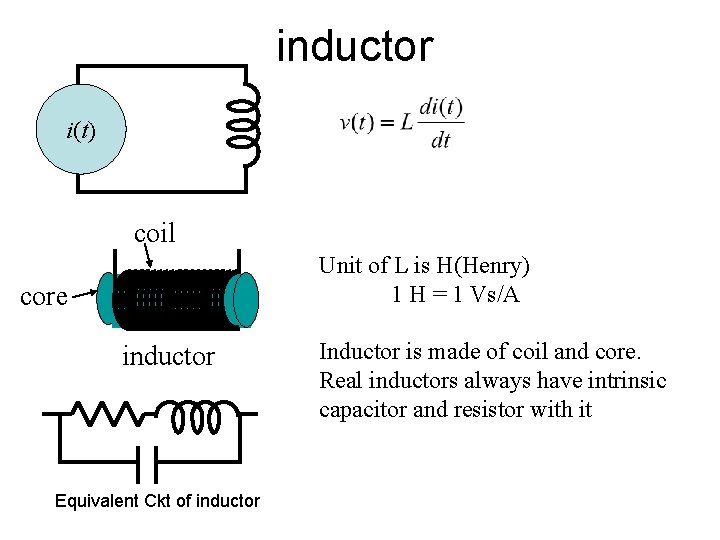
inductor i(t) coil Unit of L is H(Henry) 1 H = 1 Vs/A core inductor Equivalent Ckt of inductor Inductor is made of coil and core. Real inductors always have intrinsic capacitor and resistor with it
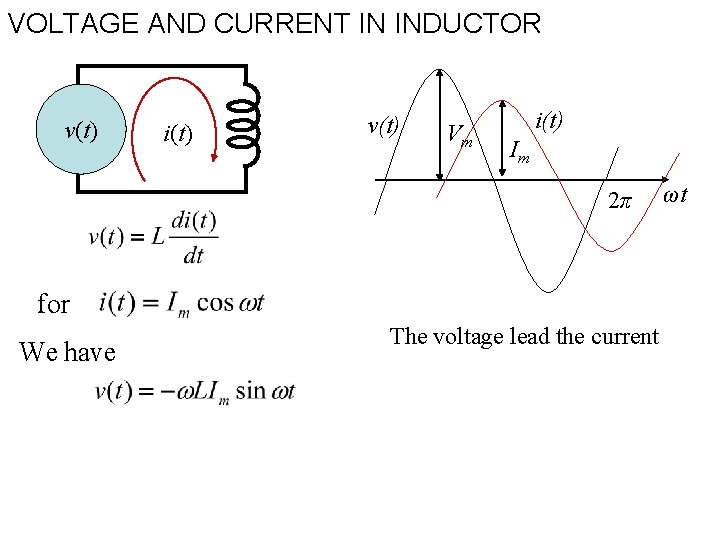
VOLTAGE AND CURRENT IN INDUCTOR v(t) i(t) v(t) Vm i(t) Im 2π for We have The voltage lead the current ωt
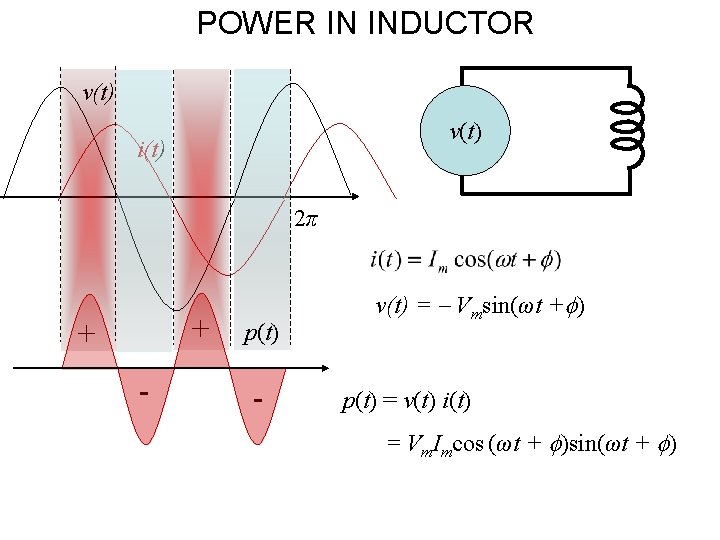
POWER IN INDUCTOR v(t) i(t) 2π + + - p(t) - v(t) = Vmsin(ωt + ) p(t) = v(t) i(t) = Vm. Imcos (ωt + )sin(ωt + )
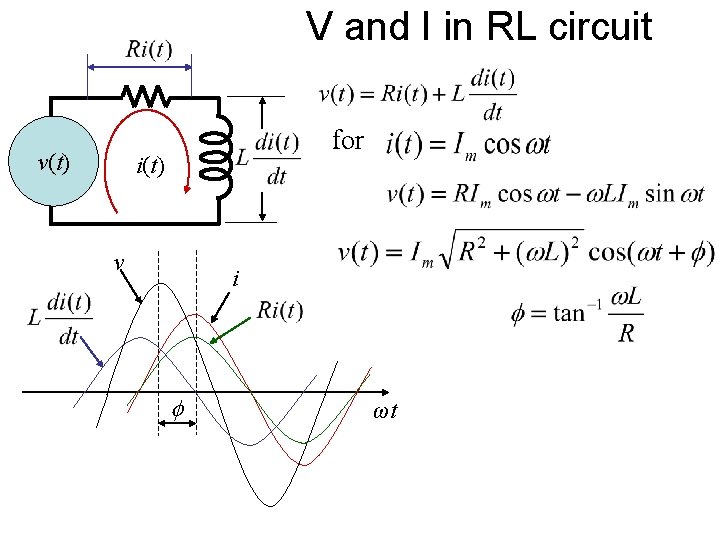
V and I in RL circuit v(t) for i(t) v i ωt
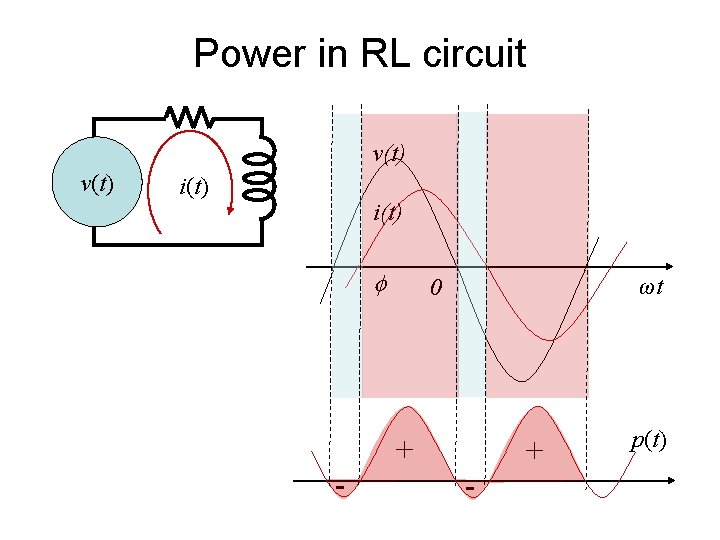
Power in RL circuit v(t) i(t) - ωt 0 + + - p(t)
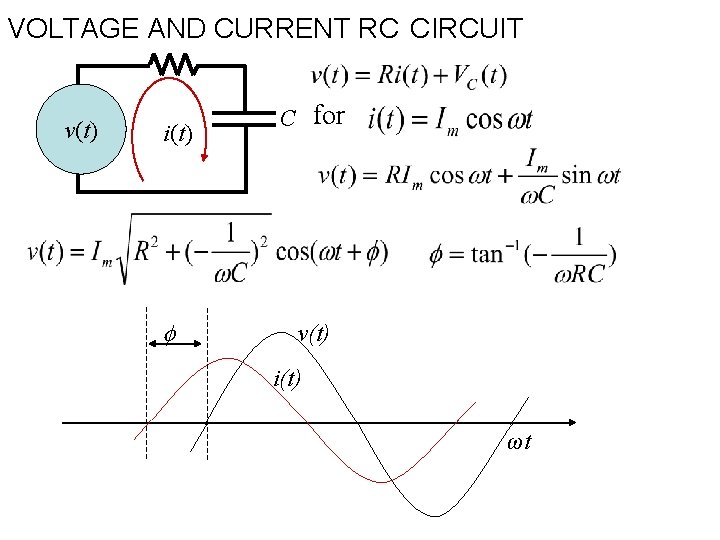
VOLTAGE AND CURRENT RC CIRCUIT v(t) i(t) C for v(t) i(t) ωt
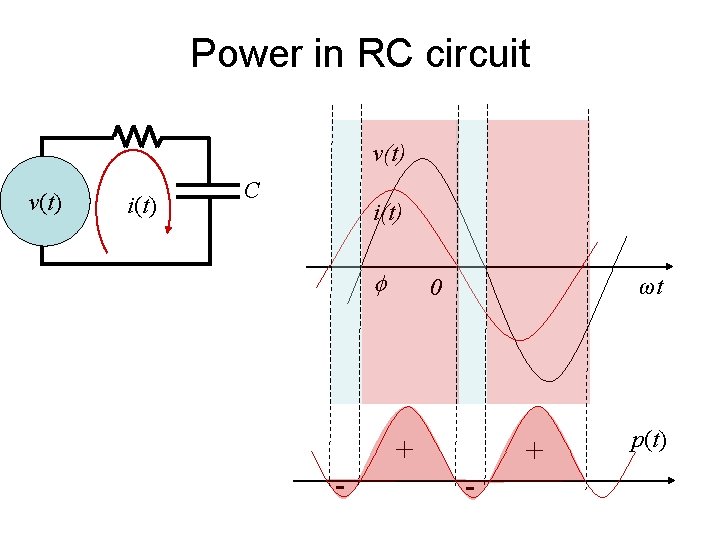
Power in RC circuit v(t) i(t) C i(t) - ωt 0 + + - p(t)
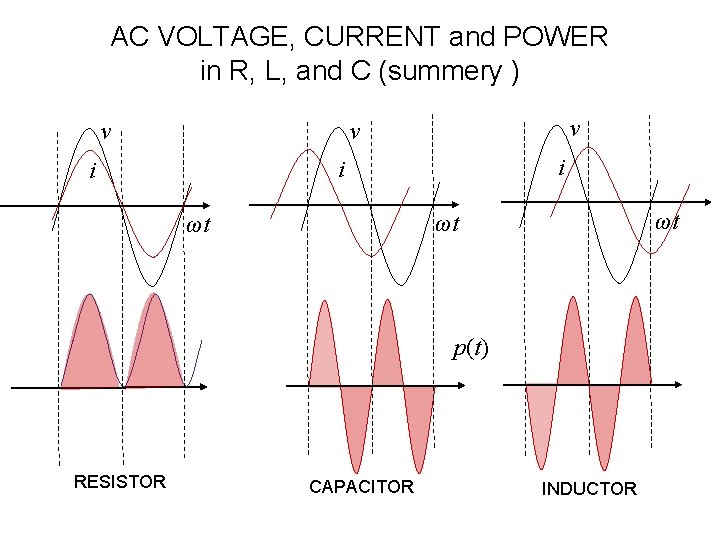
AC VOLTAGE, CURRENT and POWER in R, L, and C (summery ) v v v i i i ωt ωt ωt p(t) RESISTOR CAPACITOR INDUCTOR
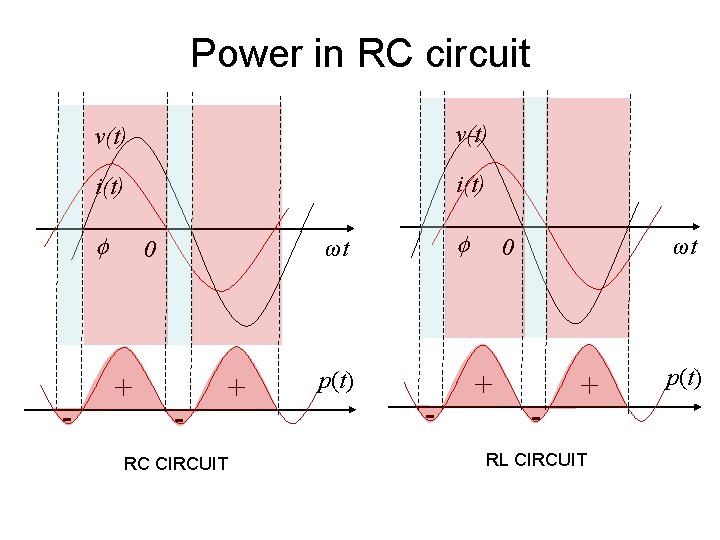
Power in RC circuit v(t) i(t) - + ωt 0 - + RC CIRCUIT p(t) - ωt 0 + - + RL CIRCUIT p(t)
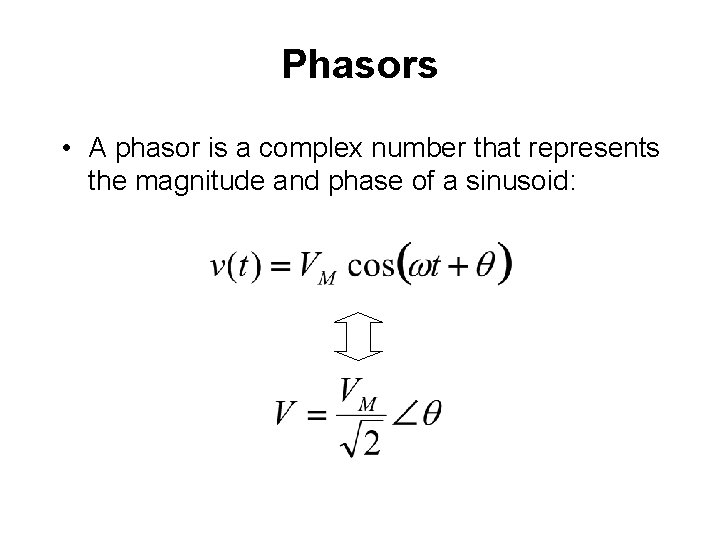
Phasors • A phasor is a complex number that represents the magnitude and phase of a sinusoid:
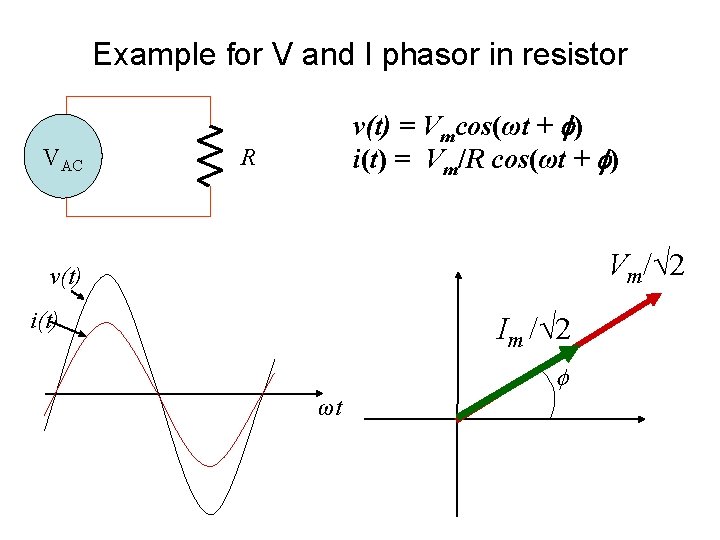
Example for V and I phasor in resistor VAC v(t) = Vmcos(ωt + ) i(t) = Vm/R cos(ωt + ) R Vm/√ 2 v(t) i(t) Im /√ 2 ωt
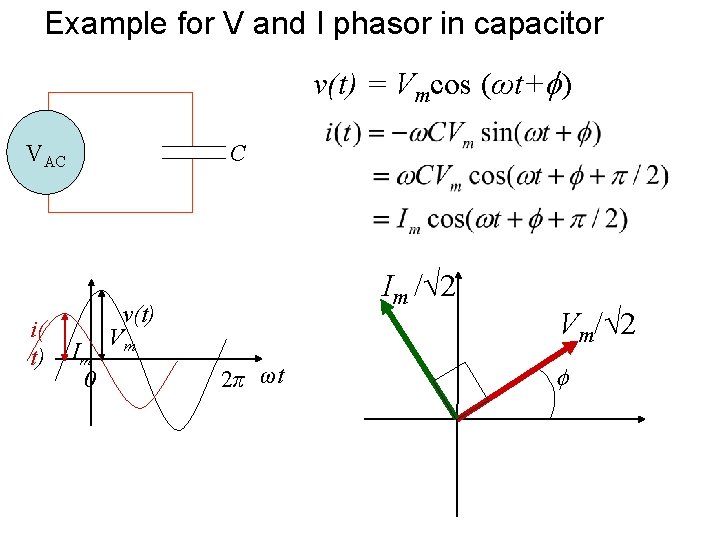
Example for V and I phasor in capacitor v(t) = Vmcos (ωt+ ) VAC i( t) C Im 0 Im /√ 2 v(t) Vm 2π ωt Vm/√ 2
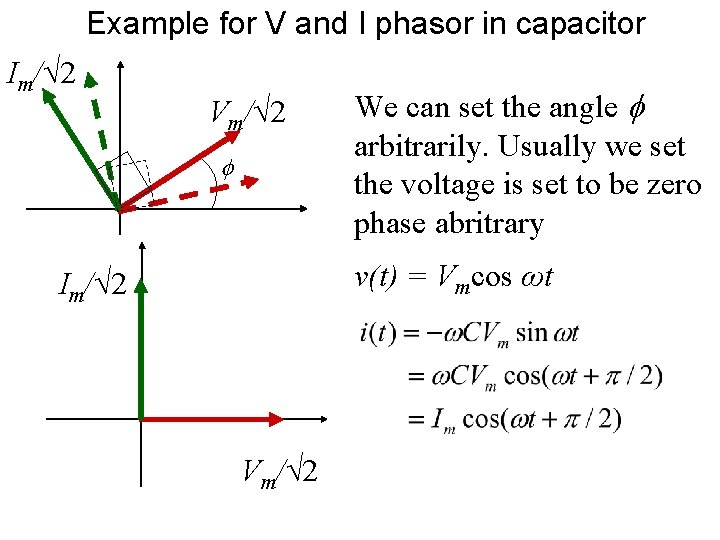
Example for V and I phasor in capacitor Im/√ 2 Vm/√ 2 We can set the angle arbitrarily. Usually we set the voltage is set to be zero phase abritrary v(t) = Vmcos ωt Im/√ 2 Vm/√ 2
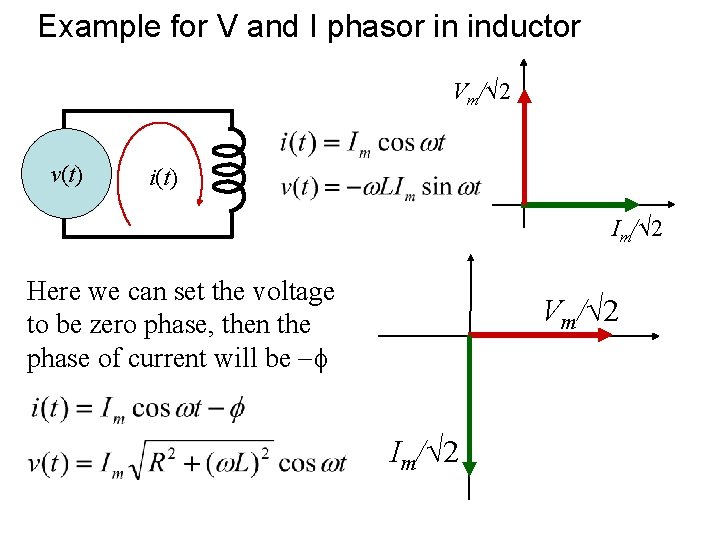
Example for V and I phasor in inductor Vm/√ 2 v(t) i(t) Im/√ 2 Here we can set the voltage to be zero phase, then the phase of current will be Vm/√ 2 Im/√ 2
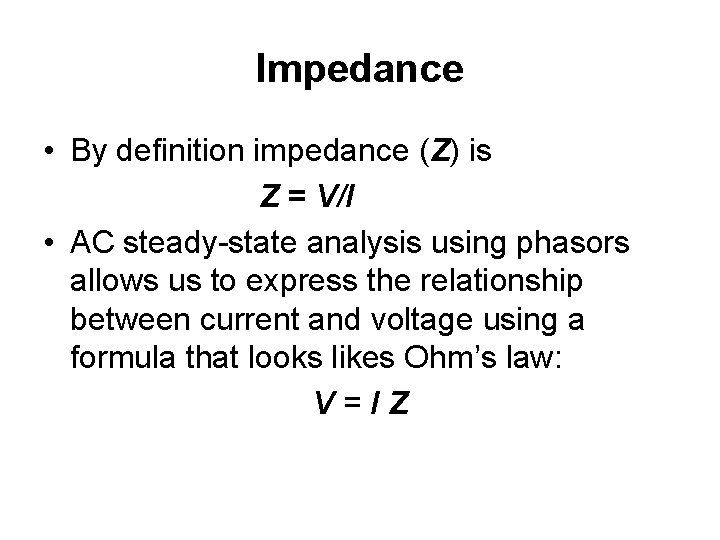
Impedance • By definition impedance (Z) is Z = V/I • AC steady-state analysis using phasors allows us to express the relationship between current and voltage using a formula that looks likes Ohm’s law: V=IZ
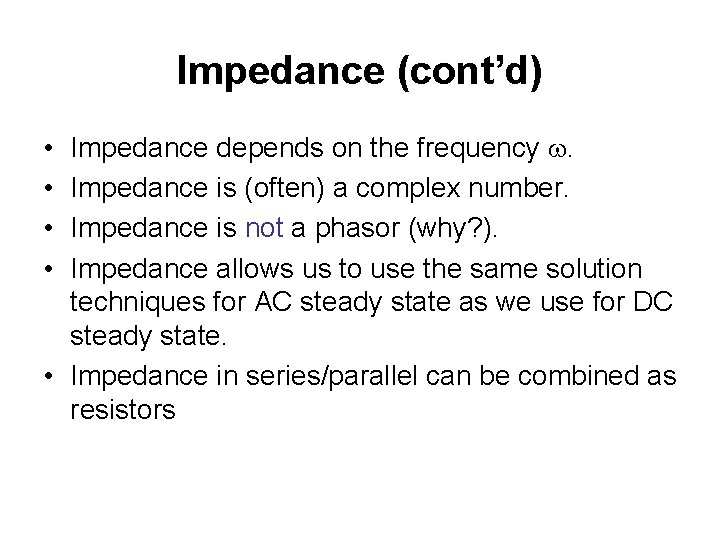
Impedance (cont’d) Impedance depends on the frequency w. Impedance is (often) a complex number. Impedance is not a phasor (why? ). Impedance allows us to use the same solution techniques for AC steady state as we use for DC steady state. • Impedance in series/parallel can be combined as resistors • •
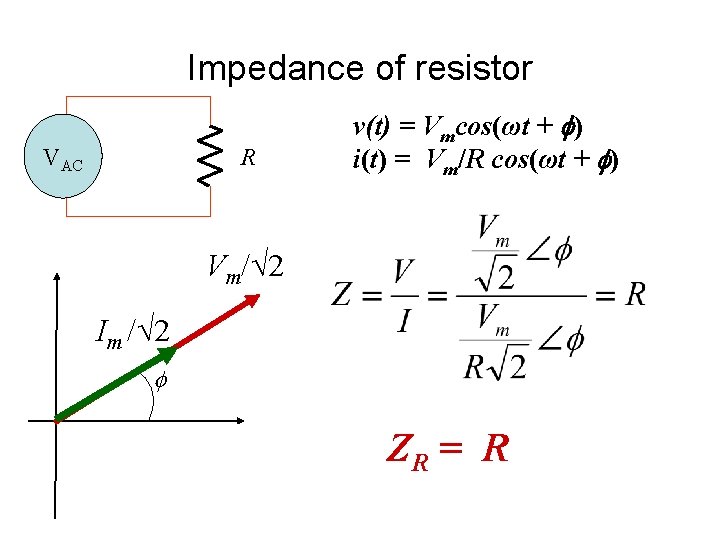
Impedance of resistor VAC R v(t) = Vmcos(ωt + ) i(t) = Vm/R cos(ωt + ) Vm/√ 2 Im /√ 2 ZR = R
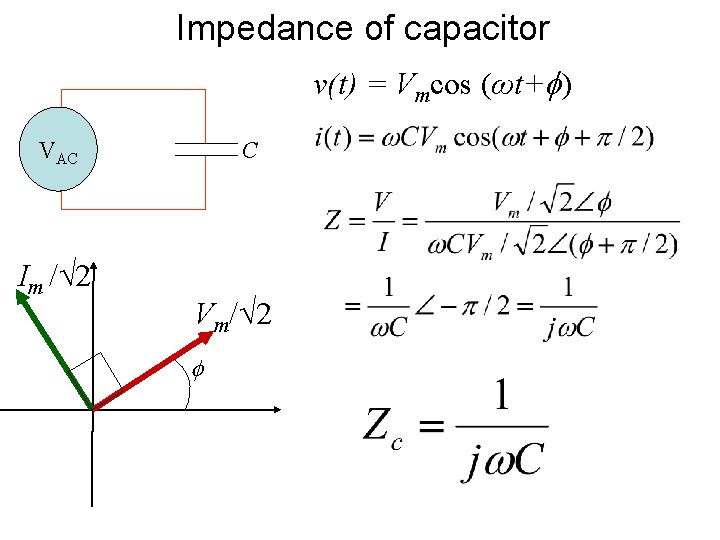
Impedance of capacitor v(t) = Vmcos (ωt+ ) VAC Im /√ 2 C Vm/√ 2
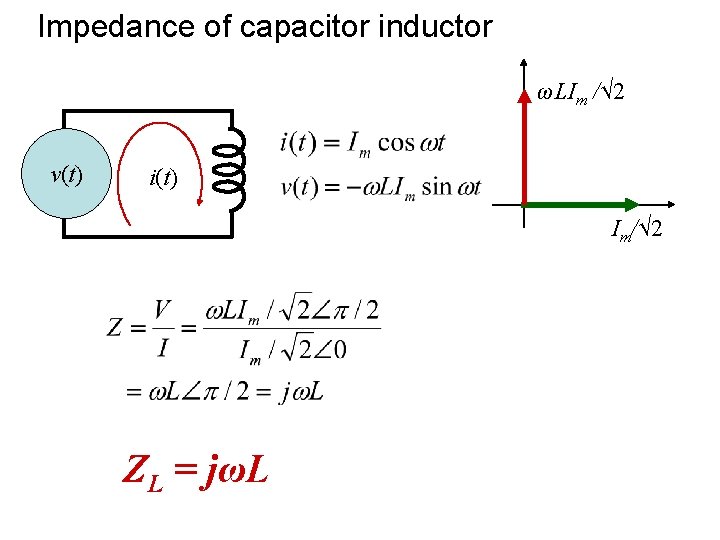
Impedance of capacitor inductor ωLIm /√ 2 v(t) i(t) Im/√ 2 ZL = jωL
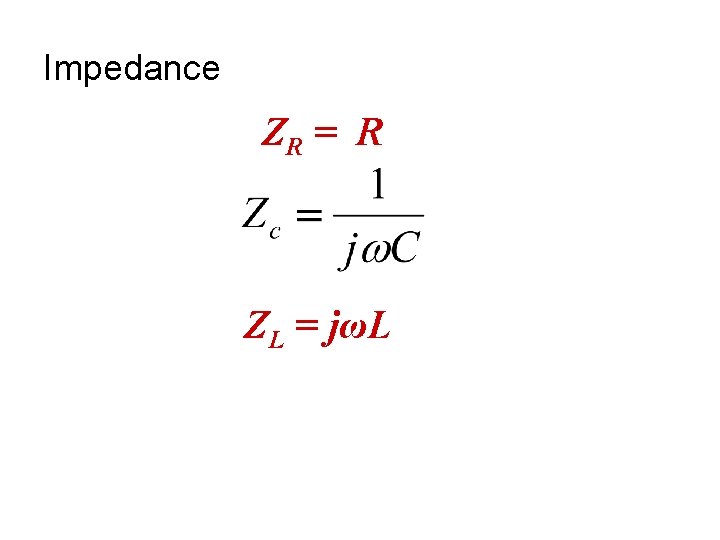
Impedance ZR = R ZL = jωL
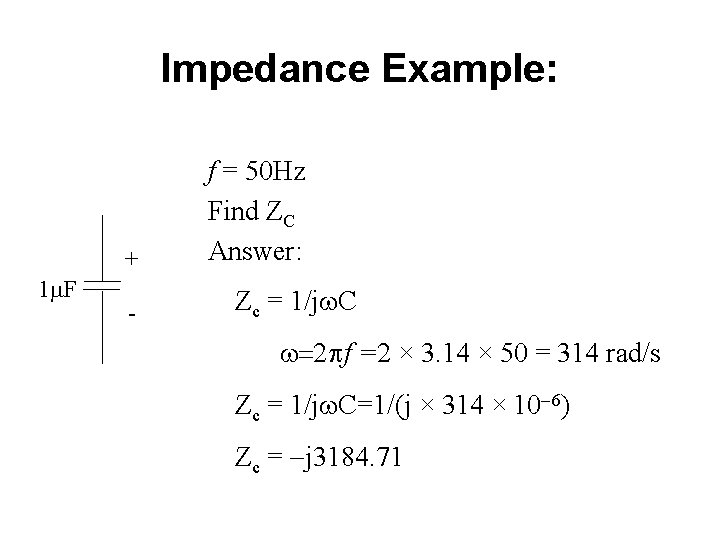
Impedance Example: + 1 m. F - f = 50 Hz Find ZC Answer: Zc = 1/jw. C w=2 pf =2 × 3. 14 × 50 = 314 rad/s Zc = 1/jw. C=1/(j × 314 × 10 6) Zc = j 3184. 71
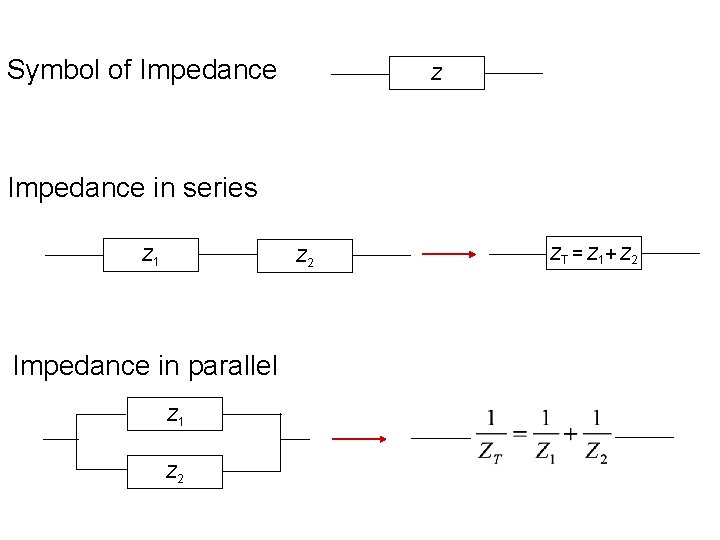
Symbol of Impedance Z Impedance in series Z 1 Z 2 Impedance in parallel Z 1 Z 2 ZT = Z 1 + Z 2
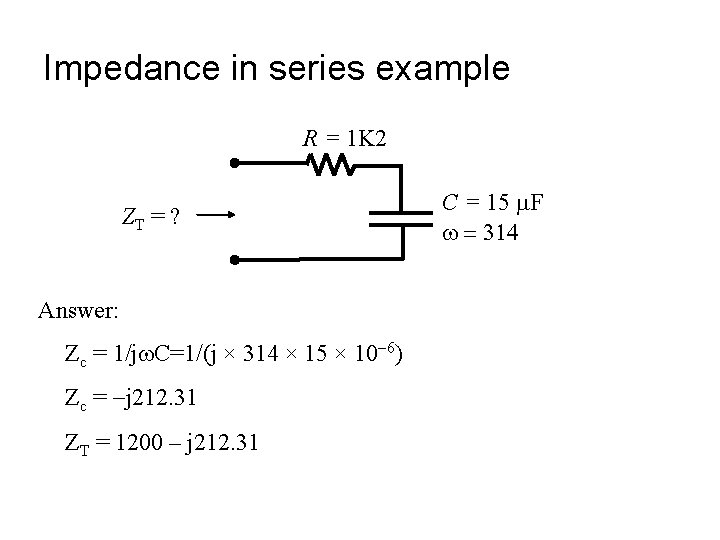
Impedance in series example R = 1 K 2 ZT = ? Answer: Zc = 1/jw. C=1/(j × 314 × 15 × 10 6) Zc = j 212. 31 ZT = 1200 – j 212. 31 C = 15 m. F w = 314
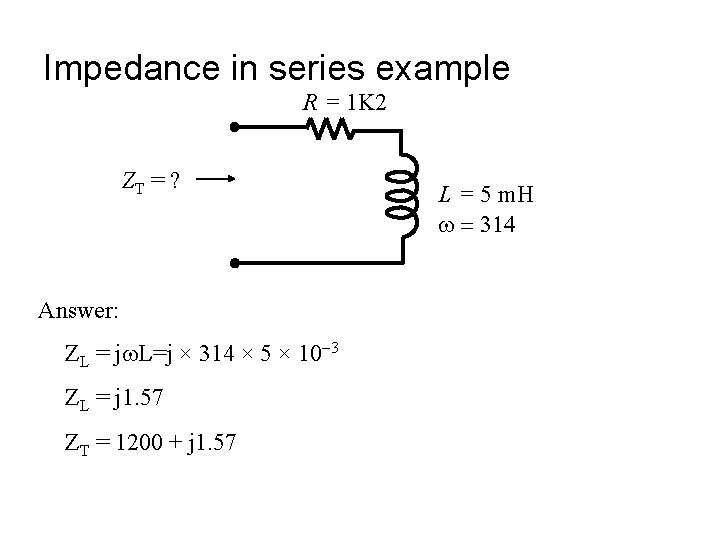
Impedance in series example R = 1 K 2 ZT = ? Answer: ZL = jw. L=j × 314 × 5 × 10 3 ZL = j 1. 57 ZT = 1200 + j 1. 57 L = 5 m. H w = 314
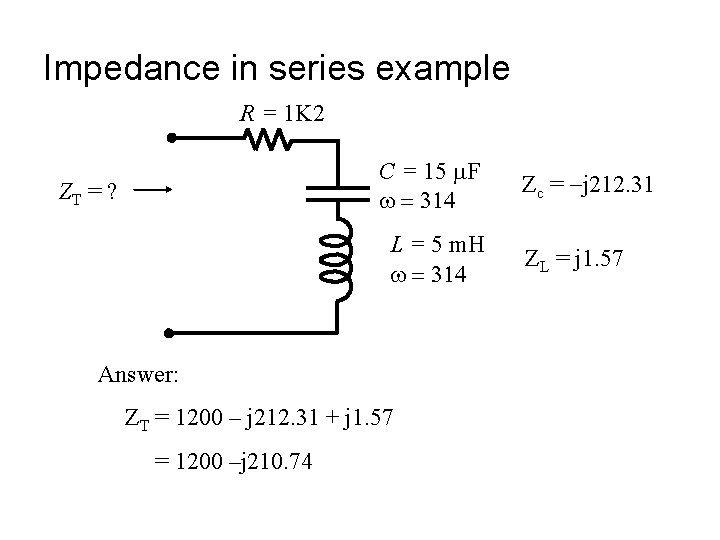
Impedance in series example R = 1 K 2 C = 15 m. F w = 314 ZT = ? L = 5 m. H w = 314 Answer: ZT = 1200 – j 212. 31 + j 1. 57 = 1200 –j 210. 74 Zc = j 212. 31 ZL = j 1. 57
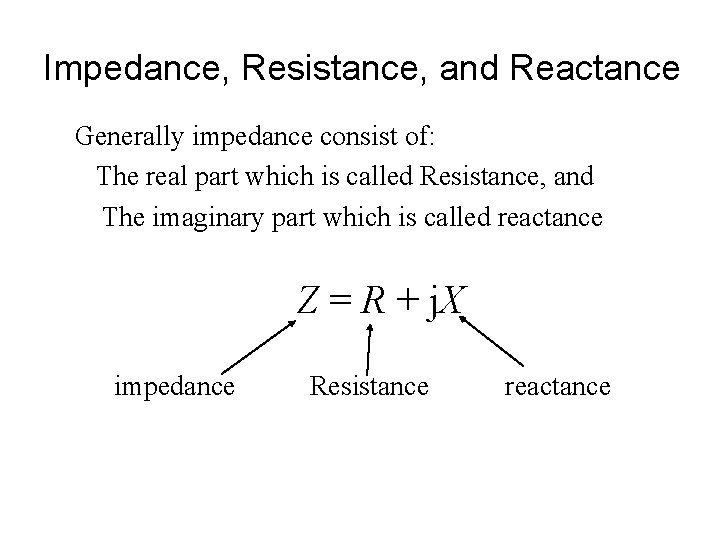
Impedance, Resistance, and Reactance Generally impedance consist of: The real part which is called Resistance, and The imaginary part which is called reactance Z = R + j. X impedance Resistance reactance
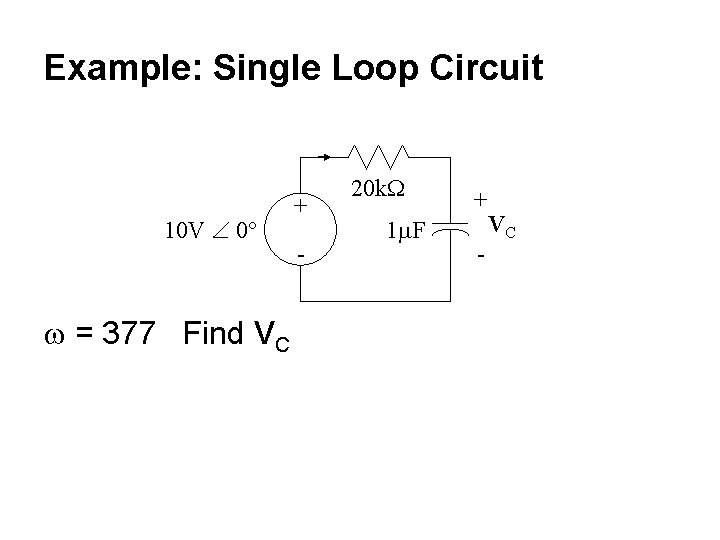
Example: Single Loop Circuit 10 V 0 w = 377 Find VC + - 20 k. W 1 m. F + - VC
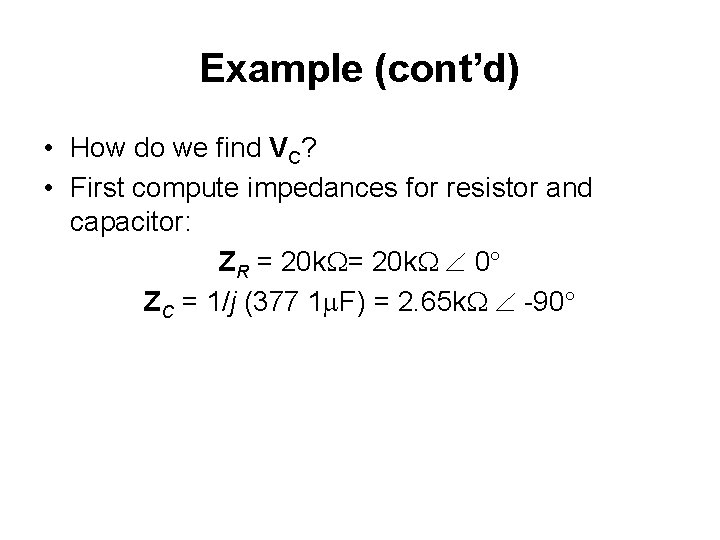
Example (cont’d) • How do we find VC? • First compute impedances for resistor and capacitor: ZR = 20 k. W 0 ZC = 1/j (377 1 m. F) = 2. 65 k. W -90
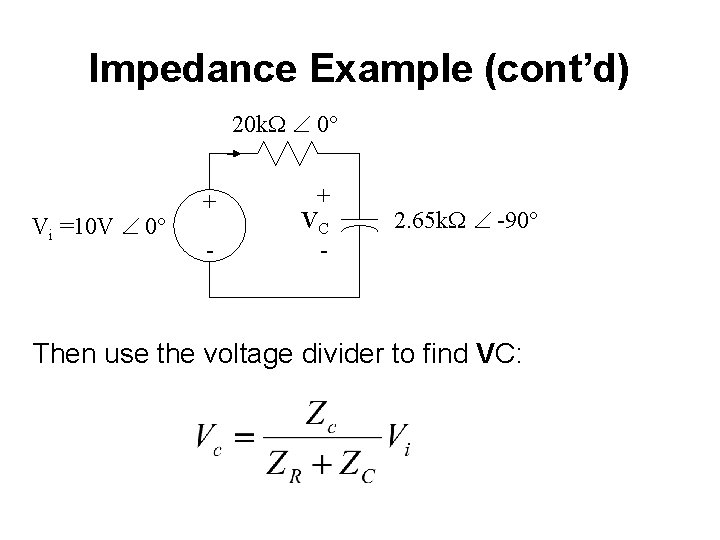
Impedance Example (cont’d) 20 k. W 0 Vi =10 V 0 + - + VC - 2. 65 k. W -90 Then use the voltage divider to find VC:
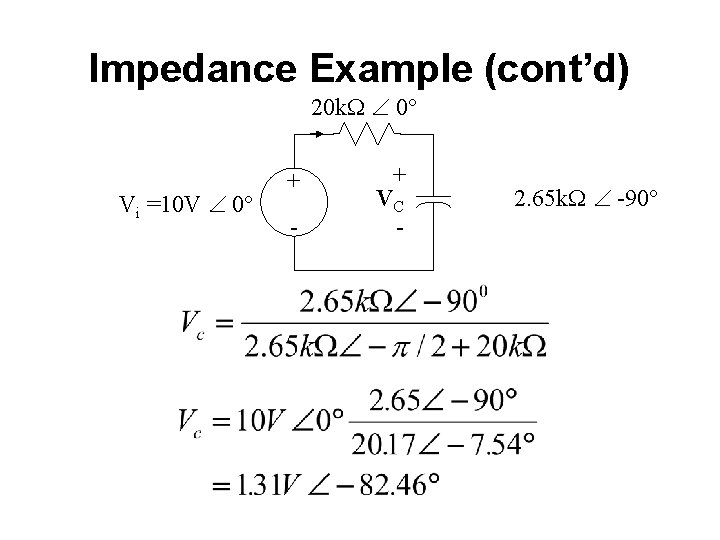
Impedance Example (cont’d) 20 k. W 0 Vi =10 V 0 + - + VC - 2. 65 k. W -90
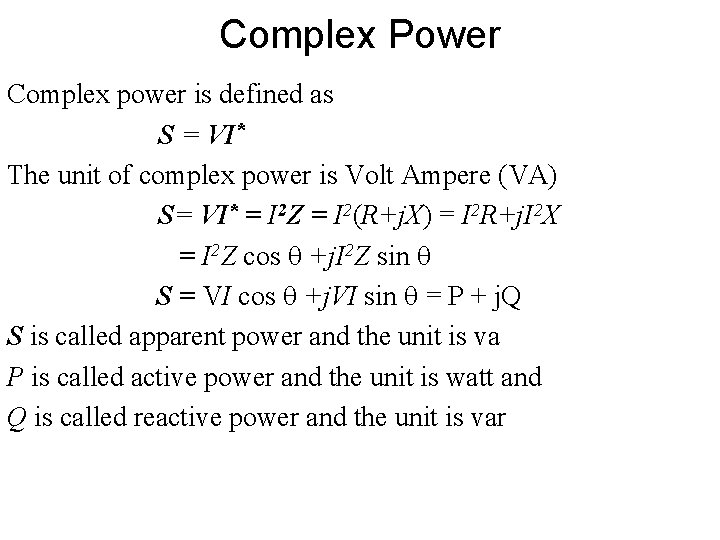
Complex Power Complex power is defined as S = VI* The unit of complex power is Volt Ampere (VA) S= VI* = I 2 Z = I 2(R+j. X) = I 2 R+j. I 2 X = I 2 Z cos +j. I 2 Z sin S = VI cos +j. VI sin = P + j. Q S is called apparent power and the unit is va P is called active power and the unit is watt and Q is called reactive power and the unit is var
SIGNAL CONDITIONER • Signals from sensors do not usually have suitable characteristics for display, recording, transmission, or further processing. • They may lack the amplitude, power, level, or bandwidth required, or they may carry superimposed interference that masks the desired information.
SIGNAL CONDITIONER • Signal conditioners, including amplifiers, adapt sensor signals to the requirements of the receiver (circuit or equipment) to which they are to be connected. • The functions to be performed by the signal conditioner derive from the nature of both the signal and the receiver. Commonly, the receiver requires a single-ended, low-frequency (dc) voltage with low output impedance and amplitude range close to its power-supply voltage(s).
SIGNAL CONDITIONER • A typical receiver here is an analog-to-digital converter (ADC). • Signals from sensors can be analog or digital. Digital signals come from position encoders, switches, or oscillator-based sensors connected to frequency counters. • The amplitude for digital signals must be compatible with logic levels for the digital receiver, and their edges must be fast enough to prevent any false triggering. • Large voltages can be attenuated by a voltage divider and slow edges can be accelerated by a Schmitt trigger.
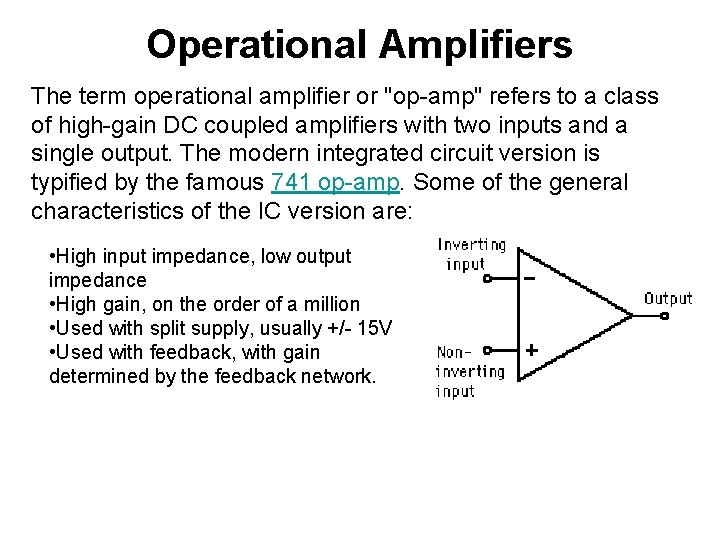
Operational Amplifiers The term operational amplifier or "op-amp" refers to a class of high-gain DC coupled amplifiers with two inputs and a single output. The modern integrated circuit version is typified by the famous 741 op-amp. Some of the general characteristics of the IC version are: • High input impedance, low output impedance • High gain, on the order of a million • Used with split supply, usually +/- 15 V • Used with feedback, with gain determined by the feedback network.
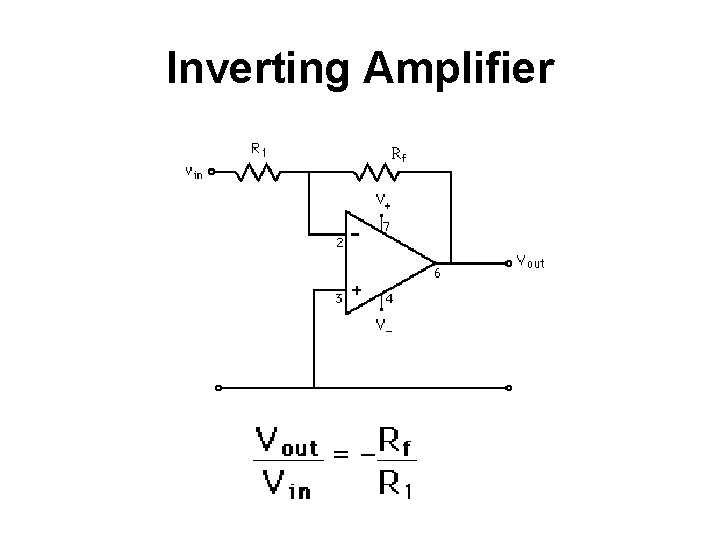
Inverting Amplifier
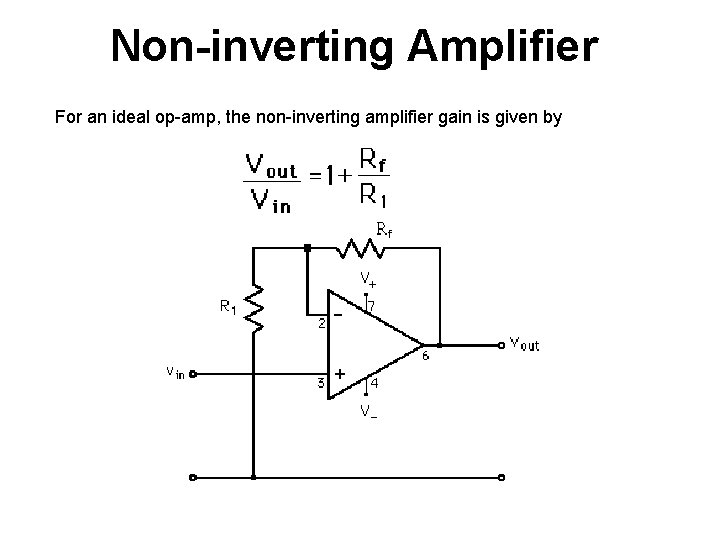
Non-inverting Amplifier For an ideal op-amp, the non-inverting amplifier gain is given by
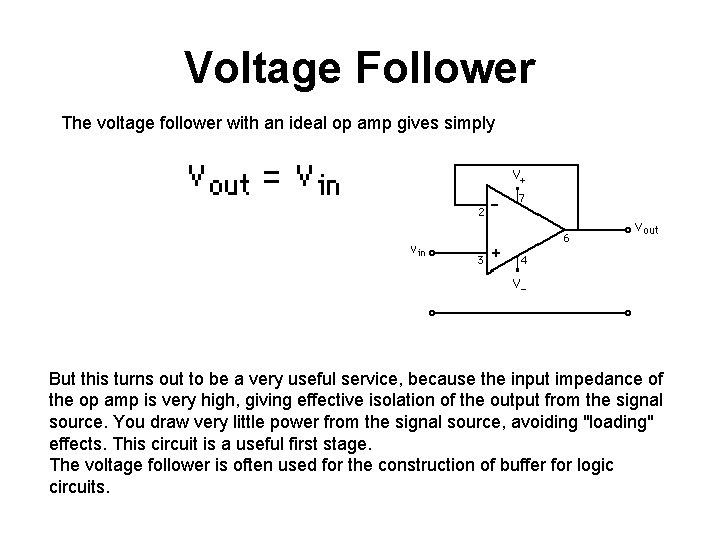
Voltage Follower The voltage follower with an ideal op amp gives simply But this turns out to be a very useful service, because the input impedance of the op amp is very high, giving effective isolation of the output from the signal source. You draw very little power from the signal source, avoiding "loading" effects. This circuit is a useful first stage. The voltage follower is often used for the construction of buffer for logic circuits.
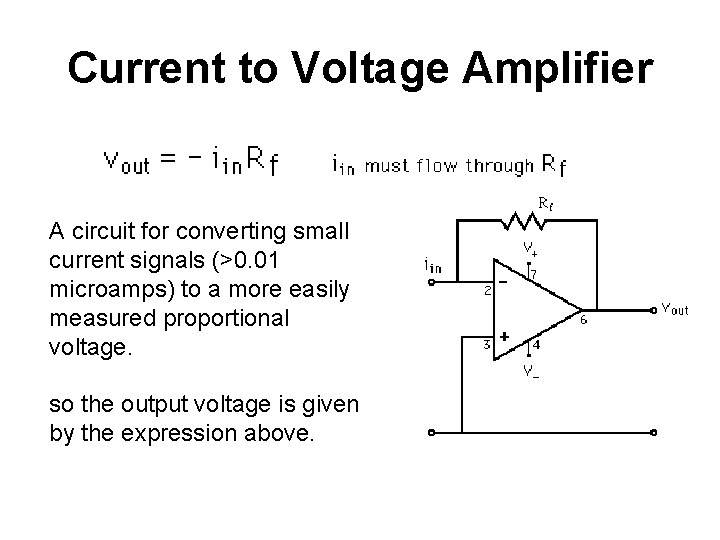
Current to Voltage Amplifier A circuit for converting small current signals (>0. 01 microamps) to a more easily measured proportional voltage. so the output voltage is given by the expression above.
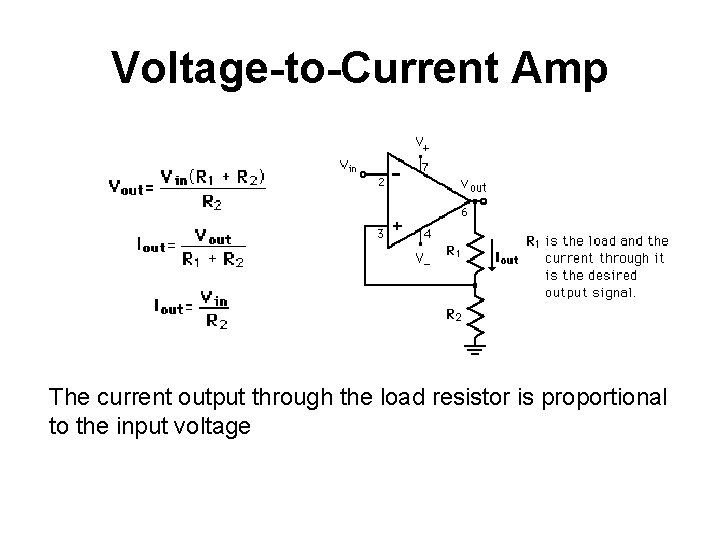
Voltage-to-Current Amp The current output through the load resistor is proportional to the input voltage
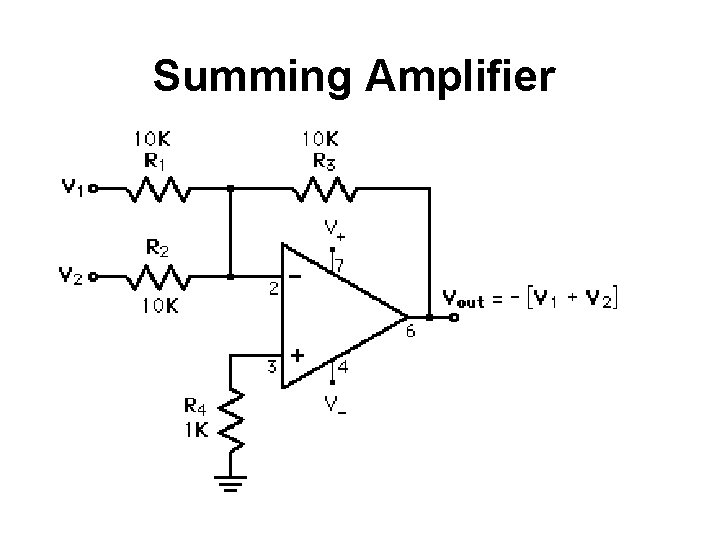
Summing Amplifier

Integrator
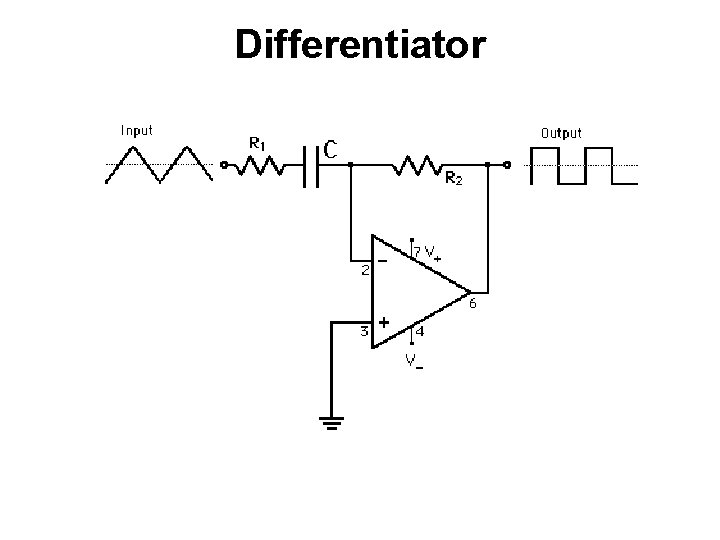
Differentiator
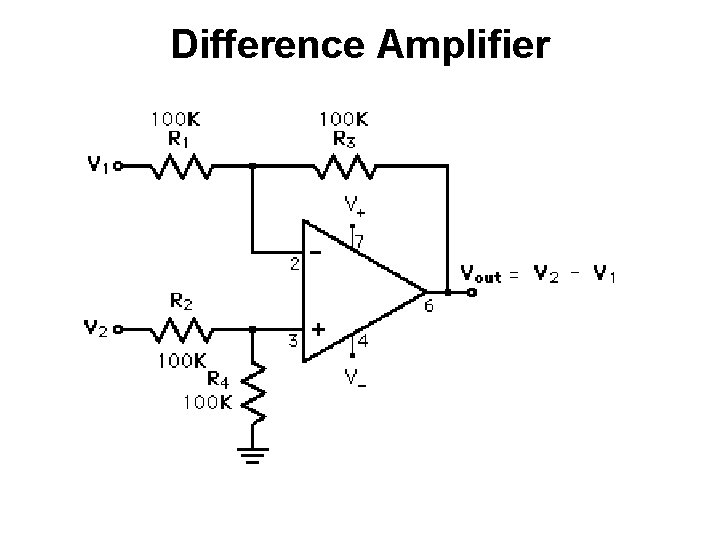
Difference Amplifier
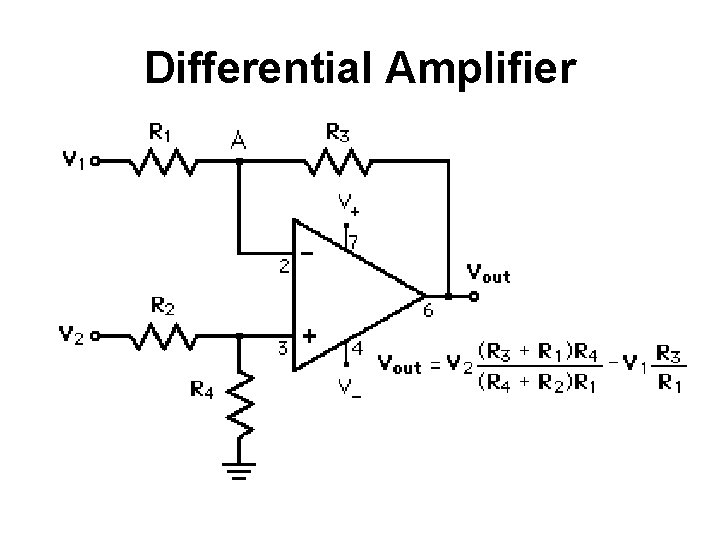
Differential Amplifier
- Slides: 56