
Basic Hydrology Water Quality Sediment production and transport
Basic Hydrology Water Quality: Sediment production and transport
Sediment in streams u The significance of sediment in streams has two aspects – the water quality aspect is related to suspended sediment • unwanted suspended sediment can cause domestic water quality problems, and can cause physical damage to fish – supply and movement of coarse sediment in streams is a channel morphology issue • excessive coarse sediment in streams can adversely affect fish habitat and fill in water control structures
Sediment movement in streams u Sediment movement in stream channels can be categorized by grain size or by the process that transports it – suspended sediment consists of fine particles of silt and clay that are carried by the water column • suspended sediment movement is independent of flow rate – wash load is a term that refers to sediment that is carried by the water column, that has grain size distribution smaller than the channel bed
– saltating bed load • consists of fine to medium sand • movement is dependent on the velocity of flow: at low flow it may not move, but at high flow it may bounce high up into the water column – behaviour may be similar to suspended sediment for fine sand at high flow – bed load consists of coarse sand, gravel and larger sized particles that are transported by rolling along the channel bed. • bed load transport is also dependent on flow rate • there is a threshold flow velocity needed to get it moving
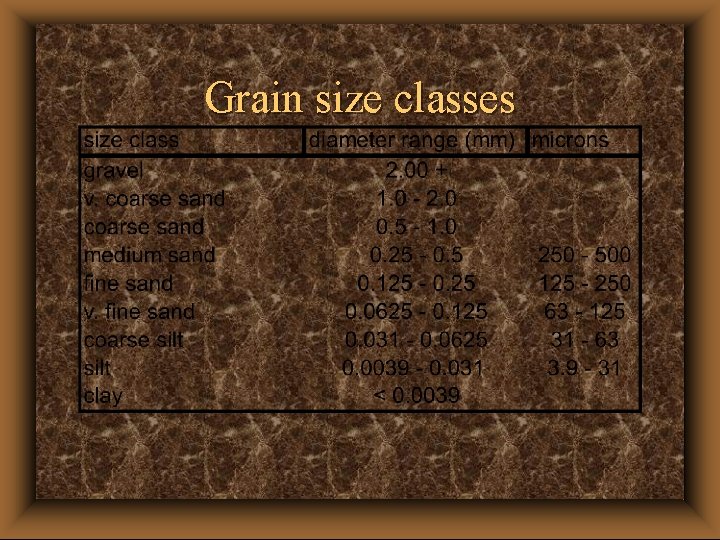
Grain size classes
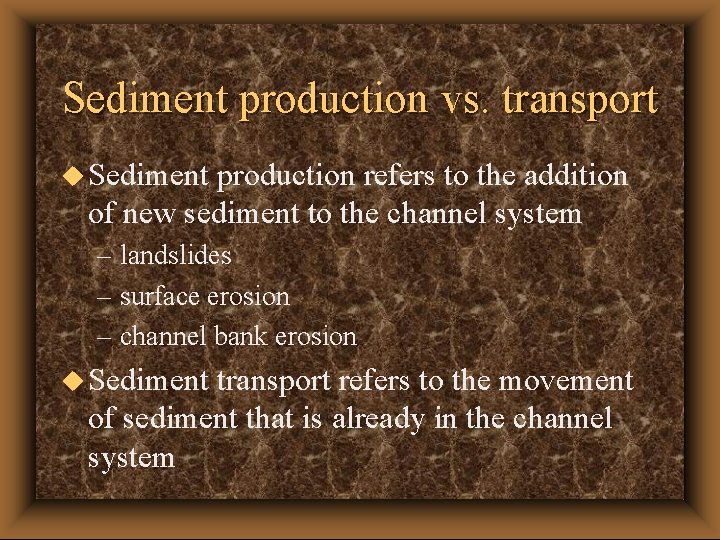
Sediment production vs. transport u Sediment production refers to the addition of new sediment to the channel system – landslides – surface erosion – channel bank erosion u Sediment transport refers to the movement of sediment that is already in the channel system
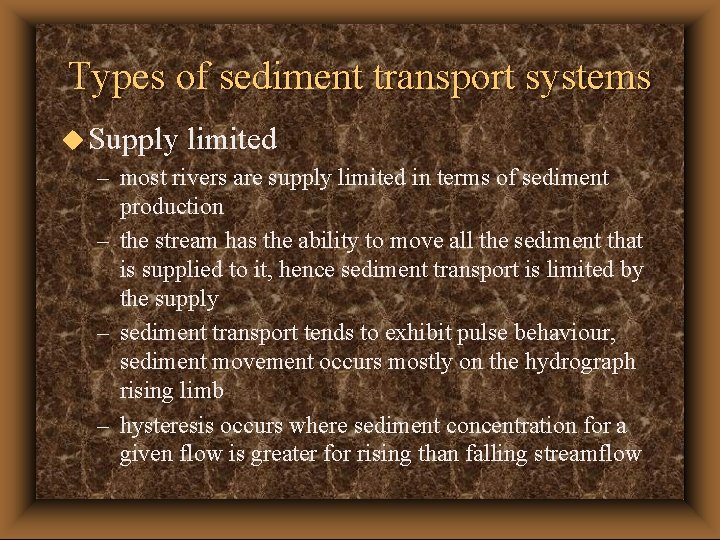
Types of sediment transport systems u Supply limited – most rivers are supply limited in terms of sediment production – the stream has the ability to move all the sediment that is supplied to it, hence sediment transport is limited by the supply – sediment transport tends to exhibit pulse behaviour, sediment movement occurs mostly on the hydrograph rising limb – hysteresis occurs where sediment concentration for a given flow is greater for rising than falling streamflow
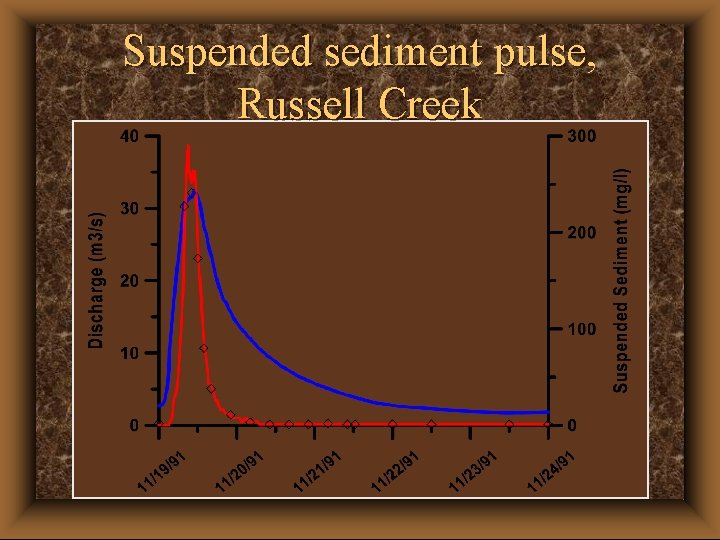
Suspended sediment pulse, Russell Creek
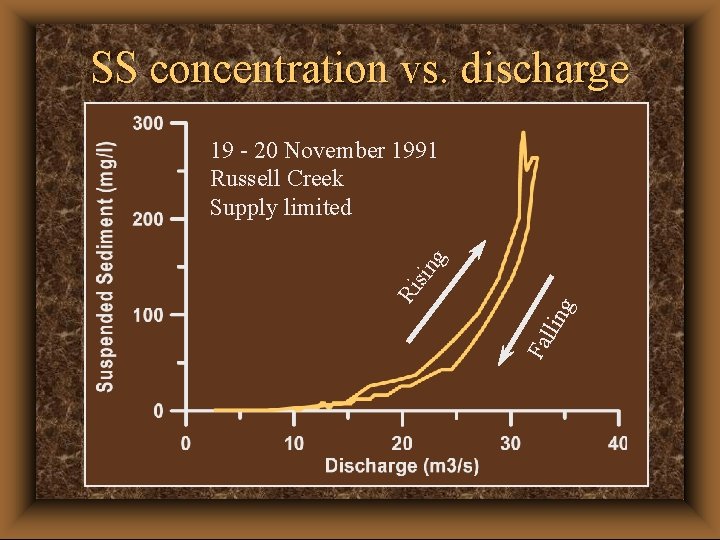
SS concentration vs. discharge g Fa llin Ri sin g 19 - 20 November 1991 Russell Creek Supply limited
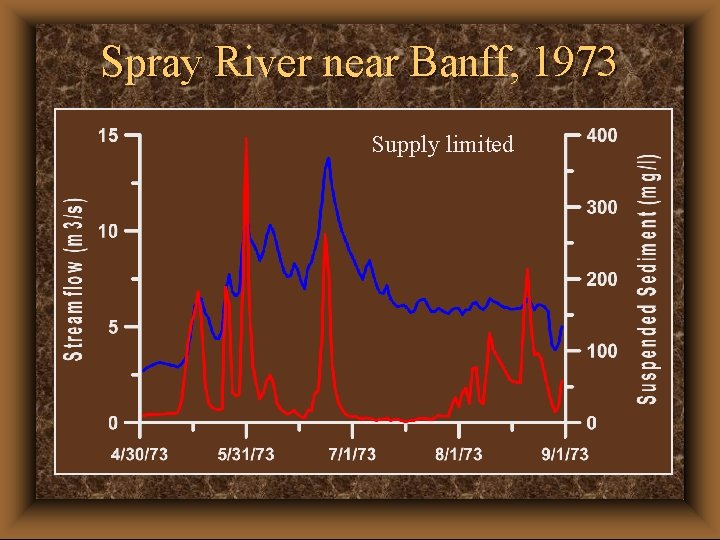
Spray River near Banff, 1973 Supply limited
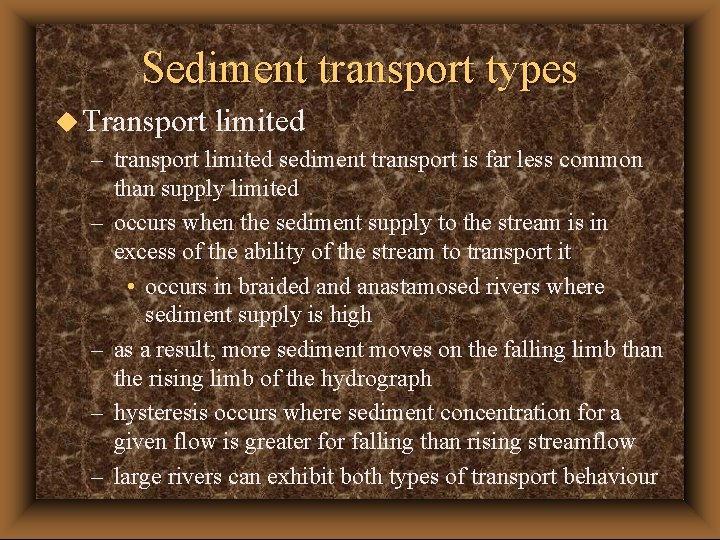
Sediment transport types u Transport limited – transport limited sediment transport is far less common than supply limited – occurs when the sediment supply to the stream is in excess of the ability of the stream to transport it • occurs in braided anastamosed rivers where sediment supply is high – as a result, more sediment moves on the falling limb than the rising limb of the hydrograph – hysteresis occurs where sediment concentration for a given flow is greater for falling than rising streamflow – large rivers can exhibit both types of transport behaviour
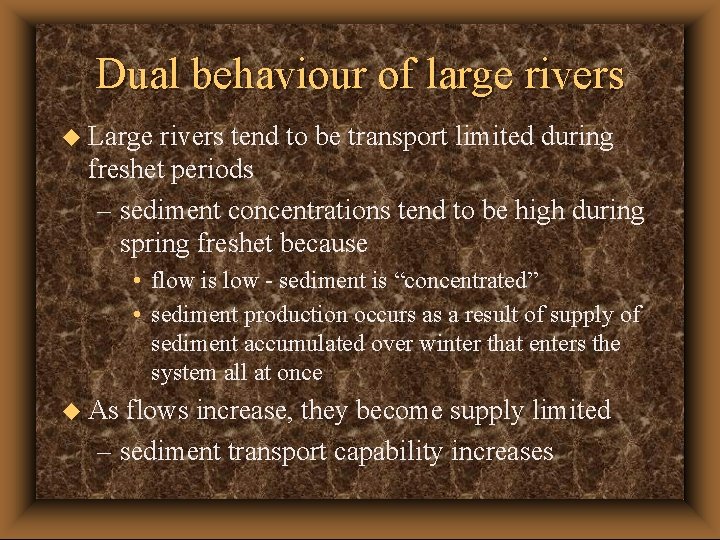
Dual behaviour of large rivers u Large rivers tend to be transport limited during freshet periods – sediment concentrations tend to be high during spring freshet because • flow is low - sediment is “concentrated” • sediment production occurs as a result of supply of sediment accumulated over winter that enters the system all at once u As flows increase, they become supply limited – sediment transport capability increases
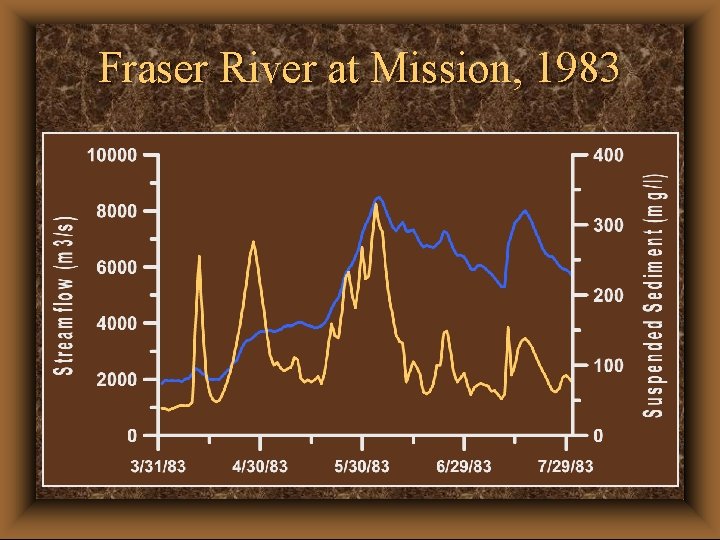
Fraser River at Mission, 1983
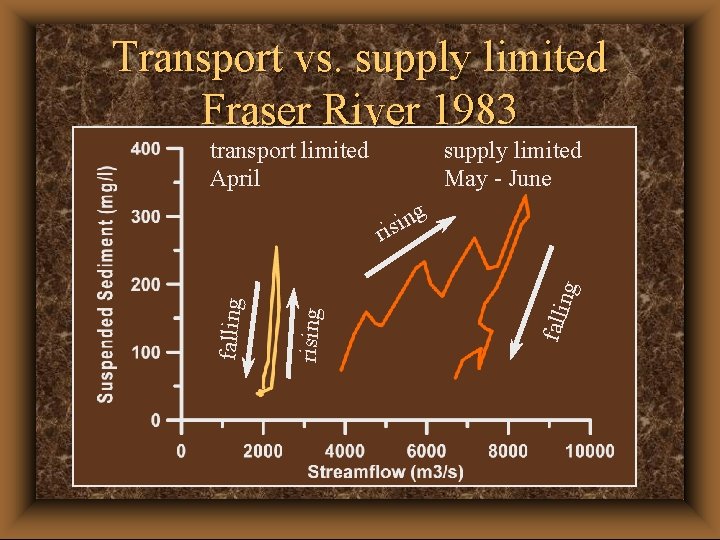
Transport vs. supply limited Fraser River 1983 transport limited April supply limited May - June g ng falli rising falling in s i r
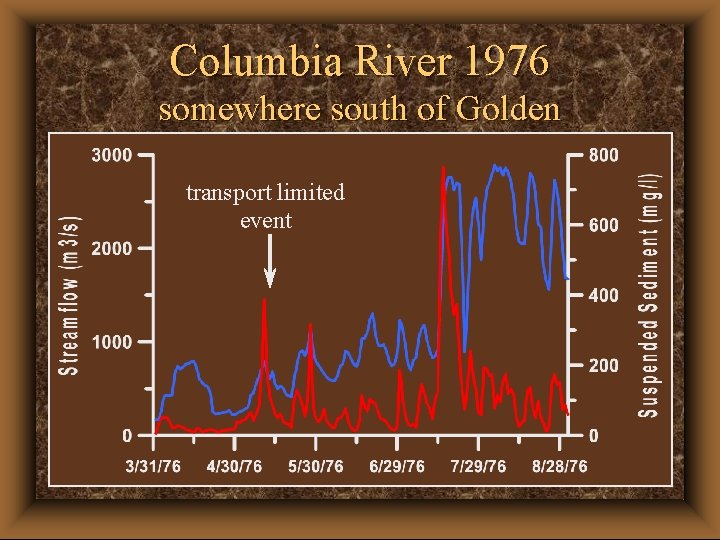
Columbia River 1976 somewhere south of Golden transport limited event
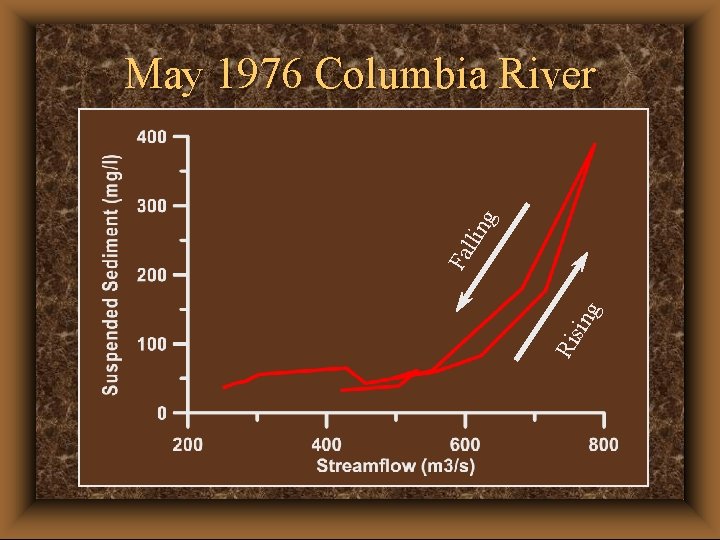
Ris ing Fa llin g May 1976 Columbia River
Measurement of suspended sed. u Direct method: sample analysis – a sample of stream water is collected using a manual DH 48 depth integrated sampler or an automatic sampler such as ISCO 3700 – the sample is filtered through a 2 mm filter to determine sediment concentration in mg/l u Indirect method: turbidity is measured and interpreted as SS conc. by field and lab calibration
Sediment production processes u rain splash erosion – sheet wash erosion - surface runoff u freeze-thaw erosion – expansion and contraction of erodible rock surfaces – frost expansion – needle ice development u animal movement u ravelling of loose sediment surfaces u undercutting and slumping of loose surfaces u mass wasting
Factors controlling sediment production u Cause of runoff – rainfall produces more sediment than an equivalent volume of snowmelt • rain erosion on exposed sediment sources vs. water yield from snowpack that blankets the exposed sed. • rainfall produces larger peaks than streamflow, hence greater sediment transport and channel scour u Size of storm – larger storms generally produce more sediment • larger yield, and greater peak concentration
Controlling factors u Watershed morphology – lithology: softer more erodible bedrock (e. g. , basalt - Catherine Cr. ) produces more sediment than harder more resistant bedrock (e. g. , granite - Russell Creek) – type and connectivity of sediment sources • debris flow deposits are big producers • hillside sediment sources – landslide scars, road cuts – slope stability
Controlling factors u Land use, e. g. logging and related activities – related to other factors such as slope stability and surface erosion from road surfaces and cut and fill slopes • increase in mass wasting processes following logging • yarding disturbance – potential increase in streamflow after logging • increase in sediment transport capability • increase in stream channel and bank erosion
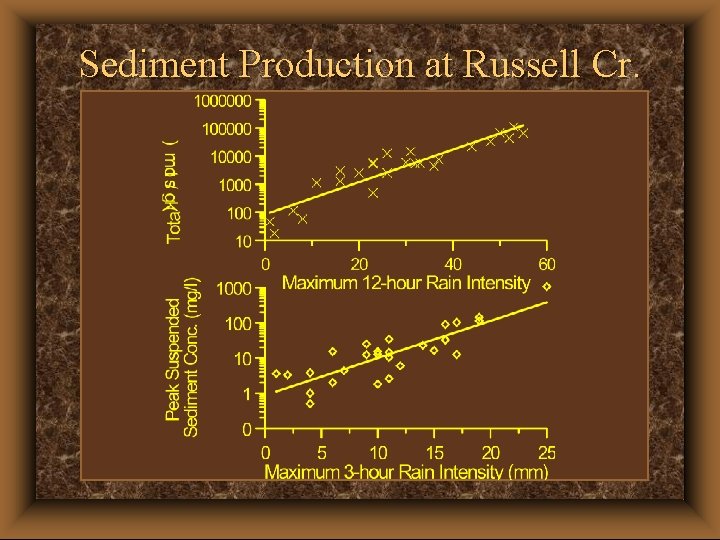
Sediment Production at Russell Cr.
How does logging affect sediment production? u Studies show that increased sediment after logging is related to logging roads – surface erosion from road surfaces – road related landslides u Open slope failures increase after logging u If soil disturbance is minimized, clear-cuts are not sediment sources – burning – ground skidding
- Slides: 23