
Basic Graphic Novels Vocabulary Essential Questions for this
Basic Graphic Novels Vocabulary
Essential Questions for this unit • How do graphic novels create meaning differently from traditional literature? • How can graphic novels use simple images to convey complex ideas?
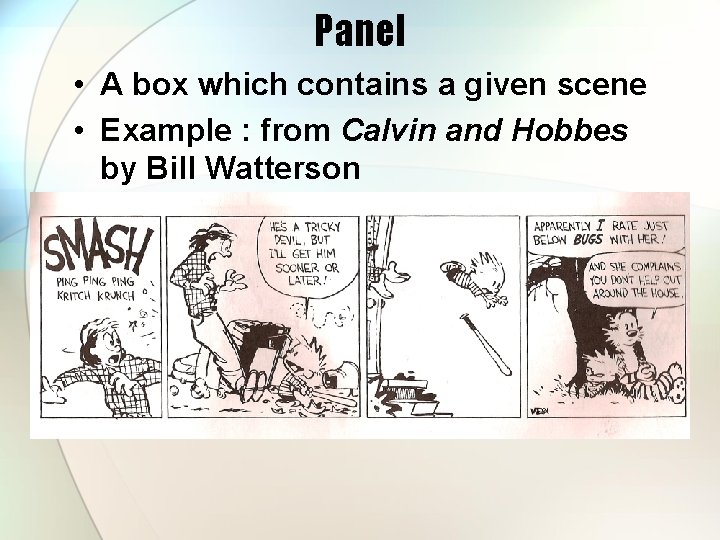
Panel • A box which contains a given scene • Example : from Calvin and Hobbes by Bill Watterson
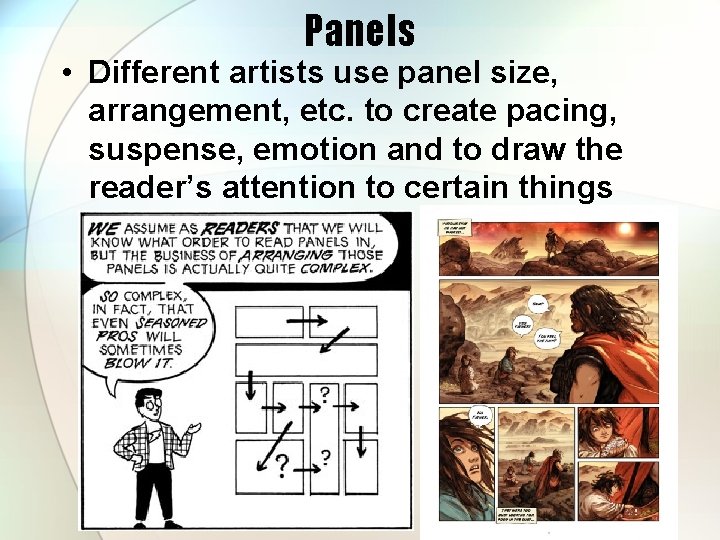
Panels • Different artists use panel size, arrangement, etc. to create pacing, suspense, emotion and to draw the reader’s attention to certain things

Panels • Panels offer a different experience than simply reading text: • The spatial arrangement allows an immediate juxtaposition of the present and the past • Unlike other visual media, transitions are instantaneous and direct, but the exact timing of the reader’s experience is different for each person
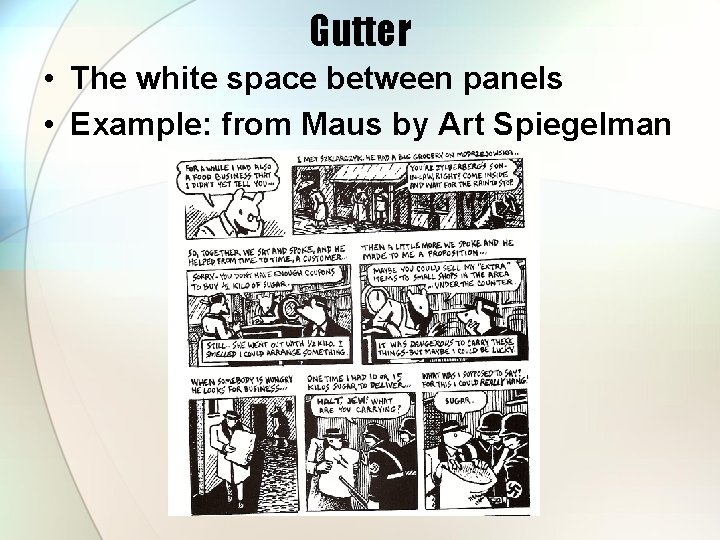
Gutter • The white space between panels • Example: from Maus by Art Spiegelman
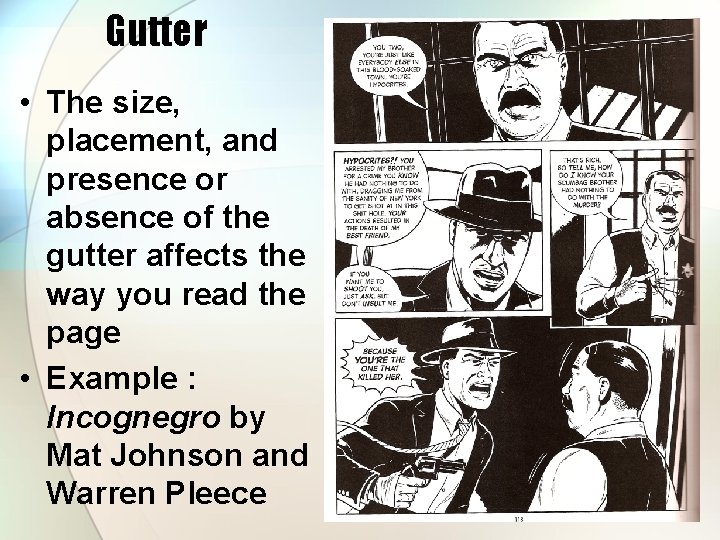
Gutter • The size, placement, and presence or absence of the gutter affects the way you read the page • Example : Incognegro by Mat Johnson and Warren Pleece
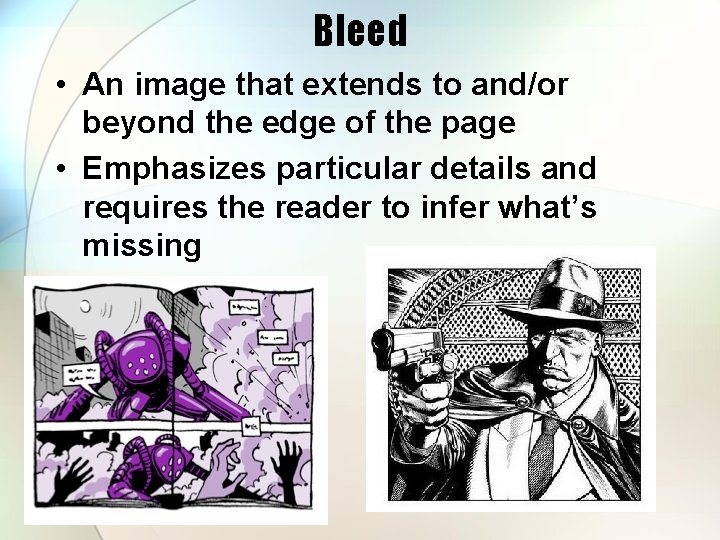
Bleed • An image that extends to and/or beyond the edge of the page • Emphasizes particular details and requires the reader to infer what’s missing
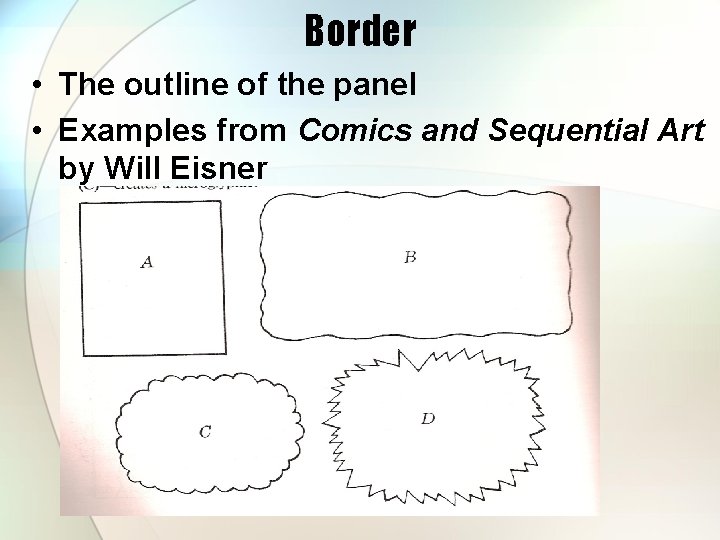
Border • The outline of the panel • Examples from Comics and Sequential Art by Will Eisner
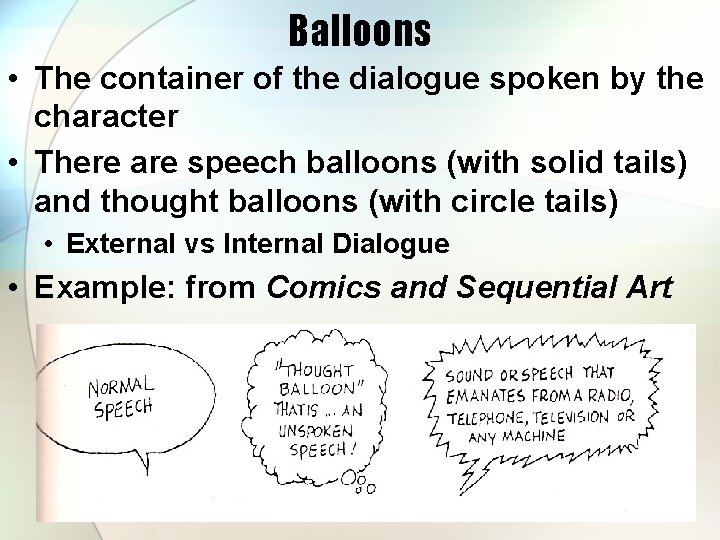
Balloons • The container of the dialogue spoken by the character • There are speech balloons (with solid tails) and thought balloons (with circle tails) • External vs Internal Dialogue • Example: from Comics and Sequential Art
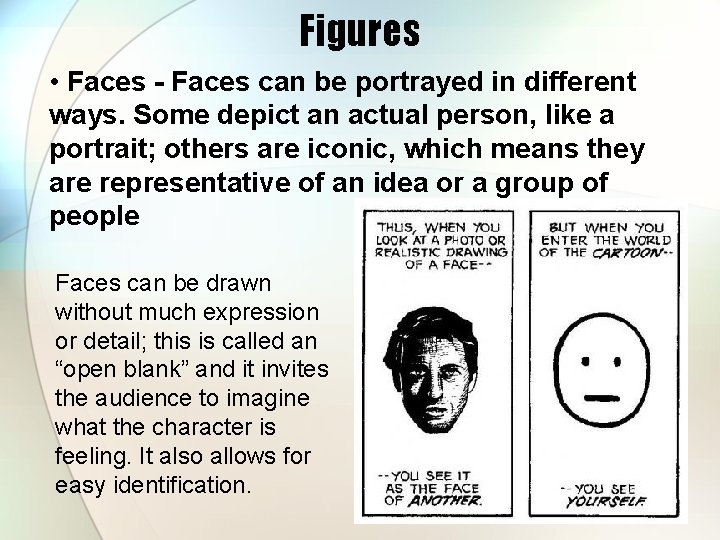
Figures • Faces - Faces can be portrayed in different ways. Some depict an actual person, like a portrait; others are iconic, which means they are representative of an idea or a group of people Faces can be drawn without much expression or detail; this is called an “open blank” and it invites the audience to imagine what the character is feeling. It also allows for easy identification.
Figures (Cont. ) • Hands/Feet: The positioning of hands and feet can be used to express what is happening in the story. • Hands that are raised with palms out suggest surprise • The wringing of hands suggests submissiveness or discomfort • Hands over the mouth depict fear, shame, or shyness • Turned in feet may denote embarrassment • Feet with motion strokes can create the sense of panic, urgency, or speed
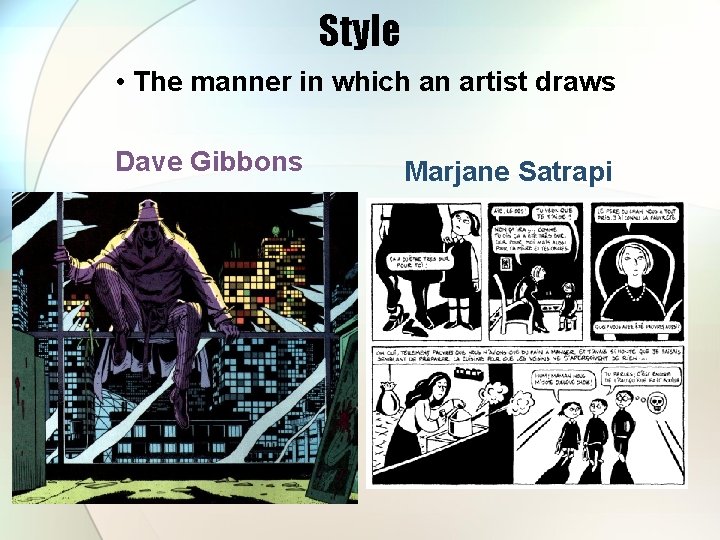
Style • The manner in which an artist draws Dave Gibbons Marjane Satrapi
Who creates comics? • Writer: the person who writes the story and dialogue • Penciller: draws the comic book in pencil • Inker: goes over the pencil drawings in black ink • Colorist: adds color to black and white line art. Most colorists today use digital media • Letterer: is responsible for all the letters in a comic book; titles, captions, credits, letters in speech balloons, etc. Using different fonts creates a different feel for the title or different characters • Editor: oversees the whole process and assigns the different jobs
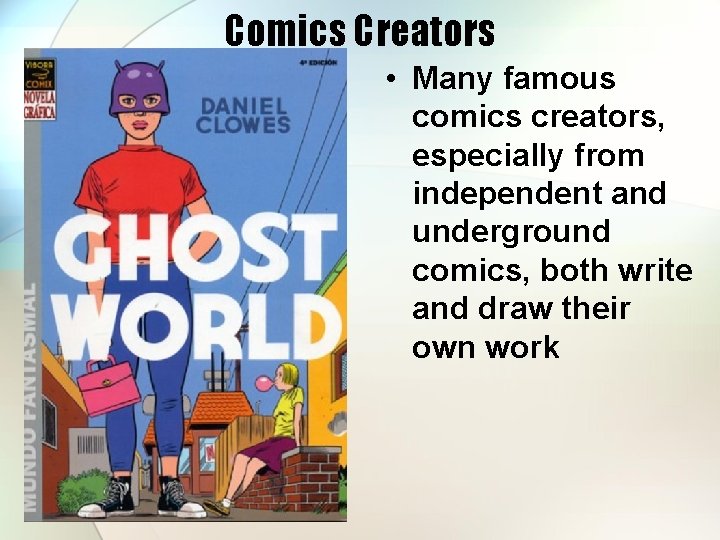
Comics Creators • Many famous comics creators, especially from independent and underground comics, both write and draw their own work
- Slides: 15