
BASIC GI RADIOLOGY THE FLAT PLATE Michael Maristany
BASIC GI RADIOLOGY THE “FLAT” PLATE Michael Maristany, MD Janis Letourneau, MD After: Robert S. Perret, MD
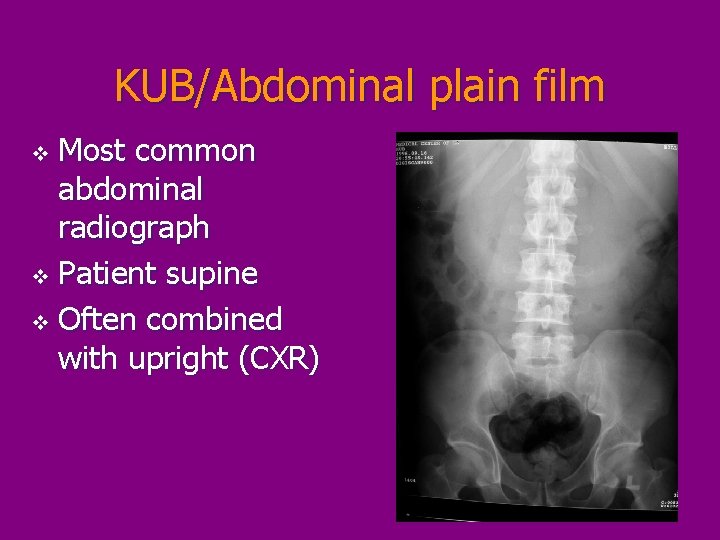
KUB/Abdominal plain film Most common abdominal radiograph v Patient supine v Often combined with upright (CXR) v

KUB
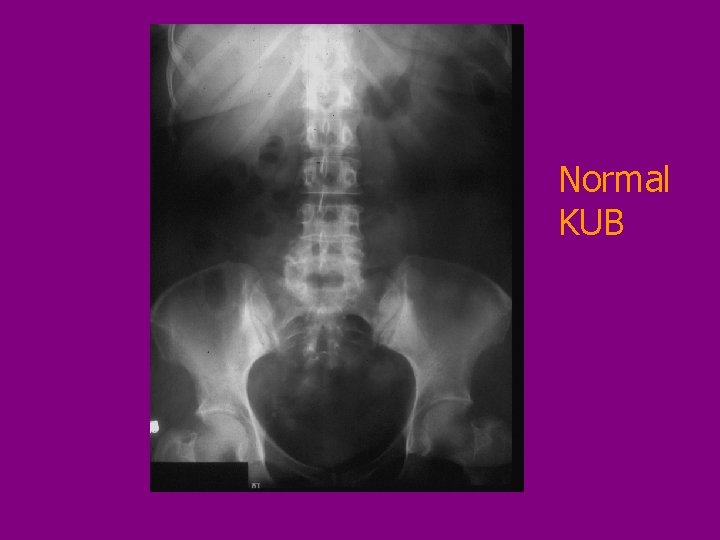
Normal KUB
KUB v. K kidney v U ureter v B bladder v Term KUB indicates that the kidneys, ureters, and bladder are on the film v But these organs are not necessarily seen on the image

K K u u B KUB – Backwards
KUB Paradoxically, organ system of greatest interest is often GI tract v Small bowel situated centrally v Large bowel located on periphery v
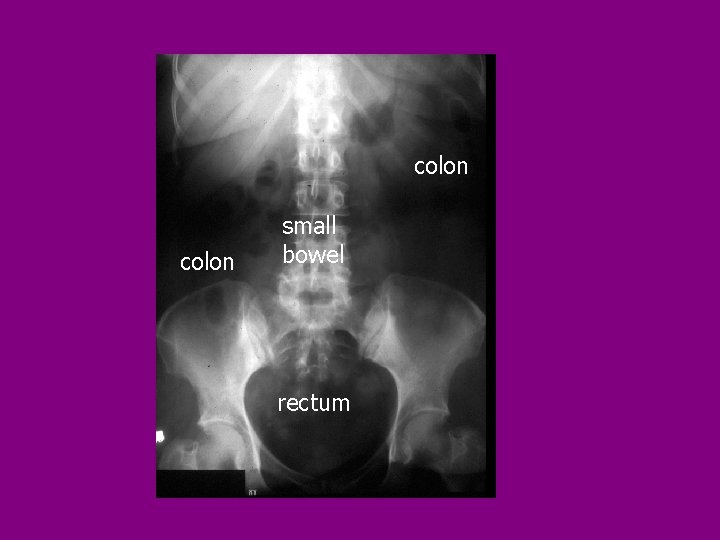
colon small bowel rectum
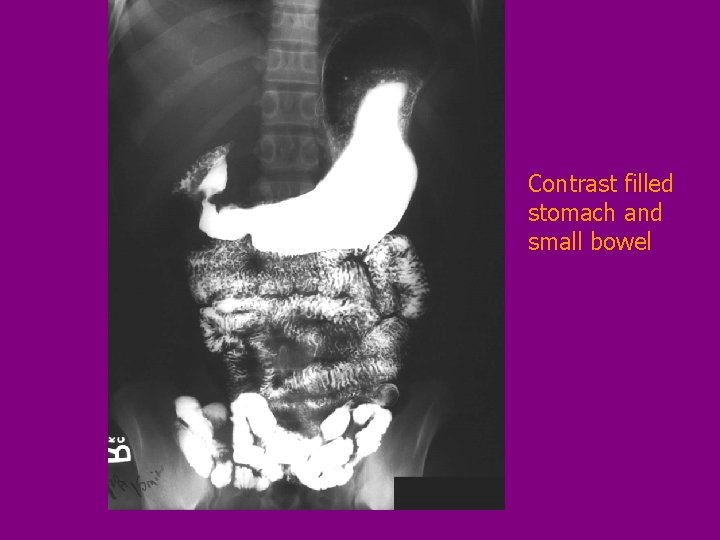
Contrast filled stomach and small bowel
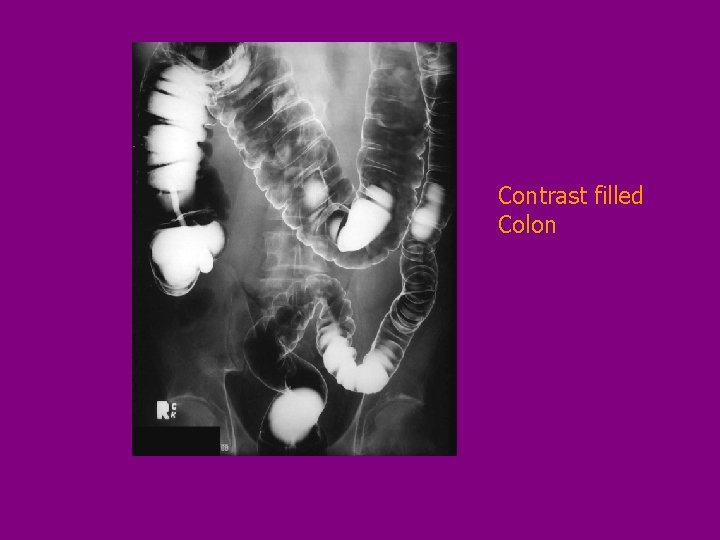
Contrast filled Colon
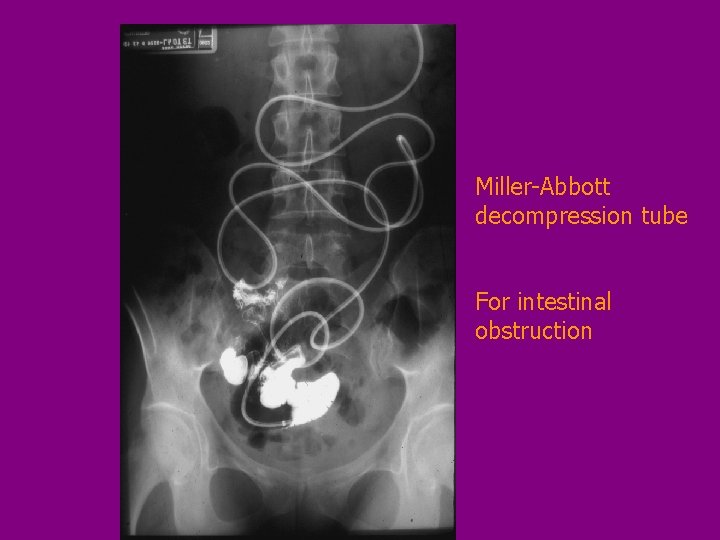
Miller-Abbott decompression tube For intestinal obstruction
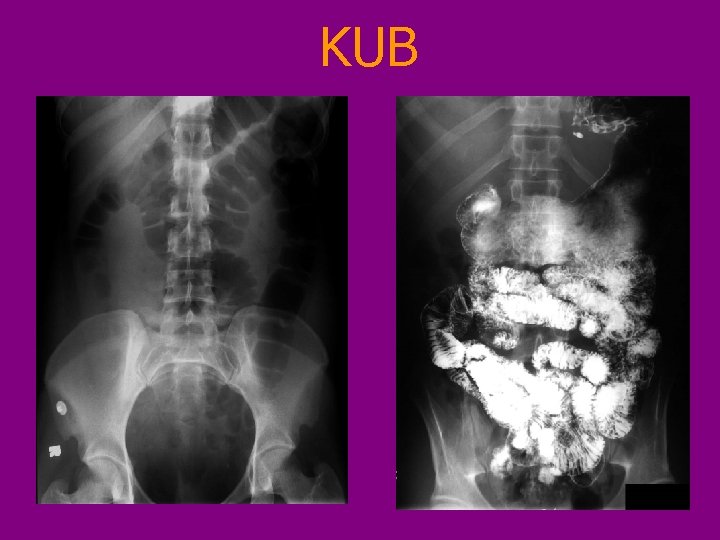
KUB
KUB’s Why order them, anyway? v > 85% (for pain, colic, nausea, etc) v KUB will be non-contributory or normal

Why can KUB be useful? Bowel gas pattern characterization v Detection of free air v Abnormal calcifications v Detection of organomegaly v Discovery of abdominal masses v Evaluation of bony structures v Surgical / other medically relevant history v
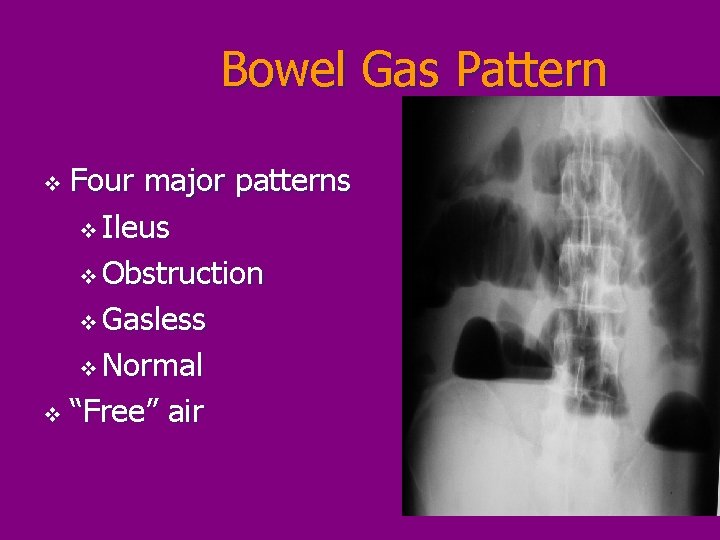
Bowel Gas Pattern Four major patterns v Ileus v Obstruction v Gasless v Normal v “Free” air v
Abnormal Bowel Gas Pattern: Small Bowel Obstruction v Dilated loops of bowel v SBO – (small bowel obstruction) v Adhesions v Less likely inflammatory/neoplastic v Colonic obstruction v More often of malignant etiology v
Small Bowel Obstruction Dilated loops of small bowel (>3 cm) KUB v With air/fluid levels on upright view v Stair-step pattern to air/fluid levels v Gasless colon v

Normal Abnormal
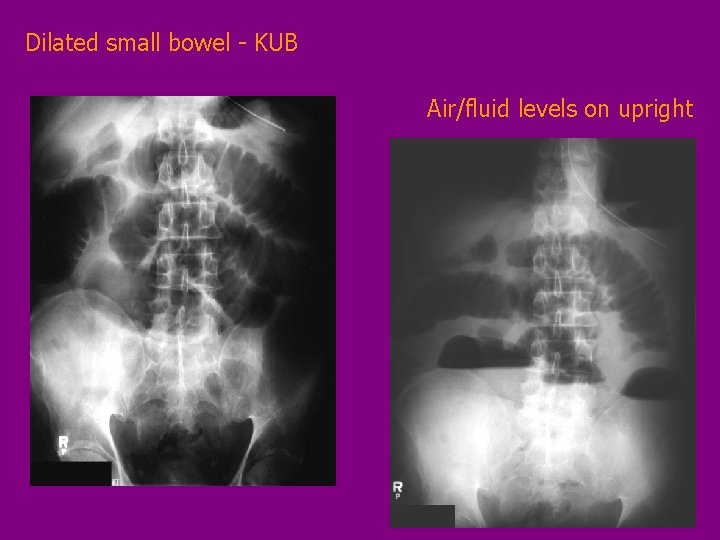
Dilated small bowel - KUB Air/fluid levels on upright
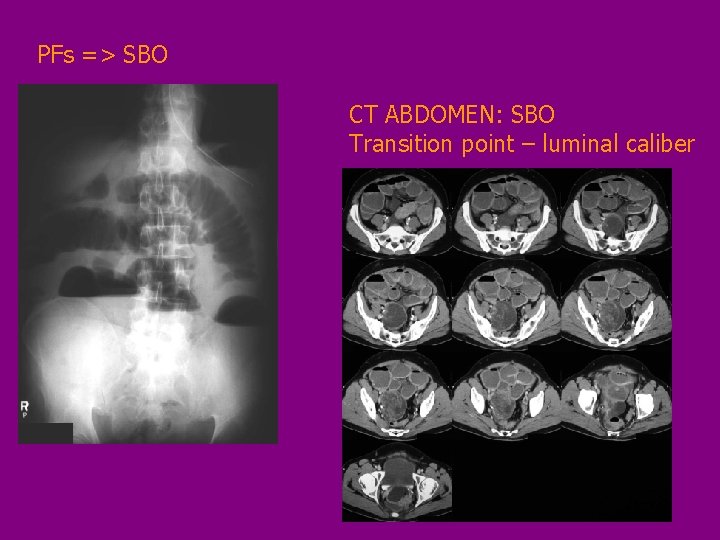
PFs => SBO CT ABDOMEN: SBO Transition point – luminal caliber

Normal KUB
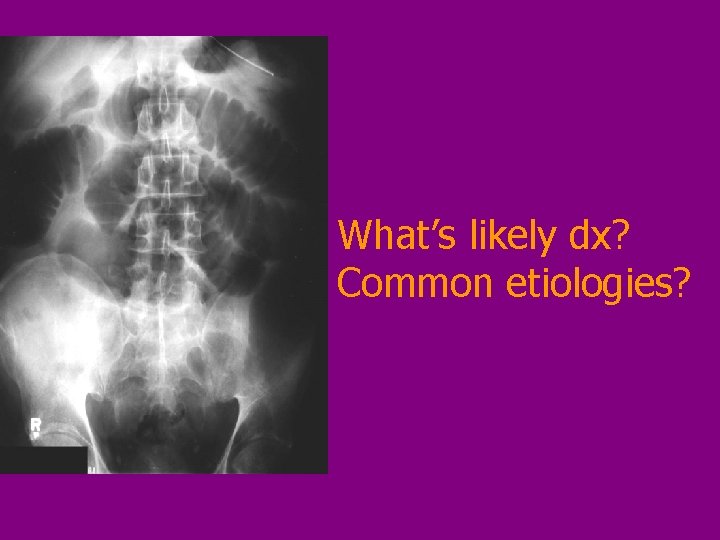
What’s likely dx? Common etiologies?
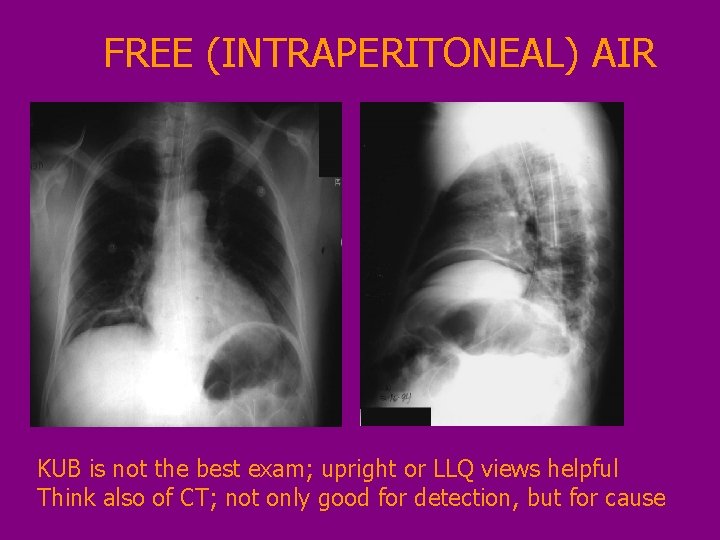
FREE (INTRAPERITONEAL) AIR KUB is not the best exam; upright or LLQ views helpful Think also of CT; not only good for detection, but for cause
KUB – Abnormal Ca++ Calcifications v Gallstones v Kidney stones v Vascular v Masses with calcifications (myoma, AAA) v Gallstones v 20% < will be calcified v Kidney stones v >75% will be calcified v
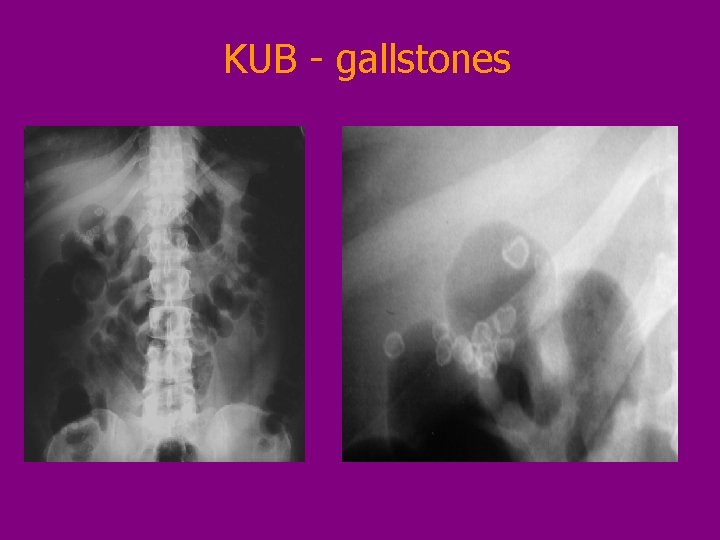
KUB - gallstones
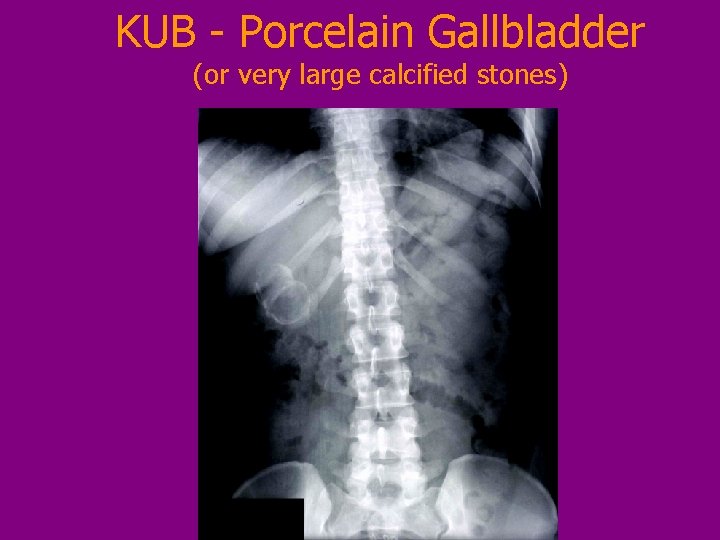
KUB - Porcelain Gallbladder (or very large calcified stones)
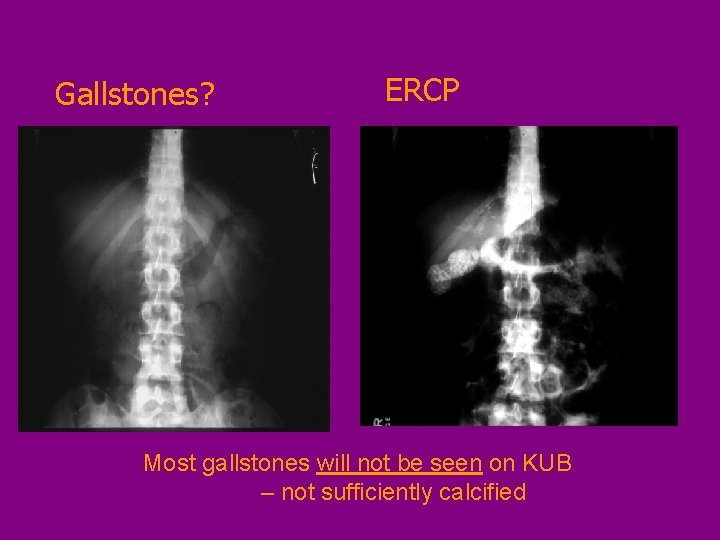
Gallstones? ERCP Most gallstones will not be seen on KUB – not sufficiently calcified
KUB - kidney stones Kidney stones will often be visualized v Related to extent of calcification v Detection limit 1 -2 mm v Overlying intestinal gas limiting v Obesity limiting v
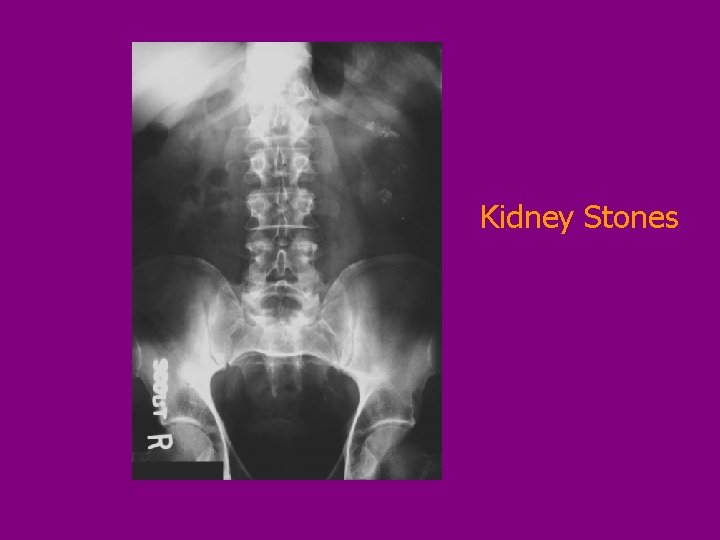
Kidney Stones
Other Calcified Abnormalities v v v Uterine myomas Pancreatic ductal calcifications Vascular calcification Appendicolith Neoplasms v sarcoma, testicular cancer, neuroblastoma Old hematomas
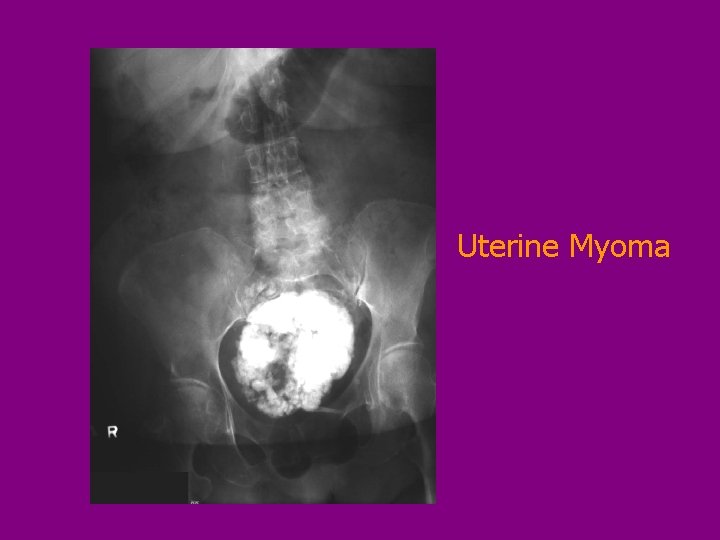
Uterine Myoma
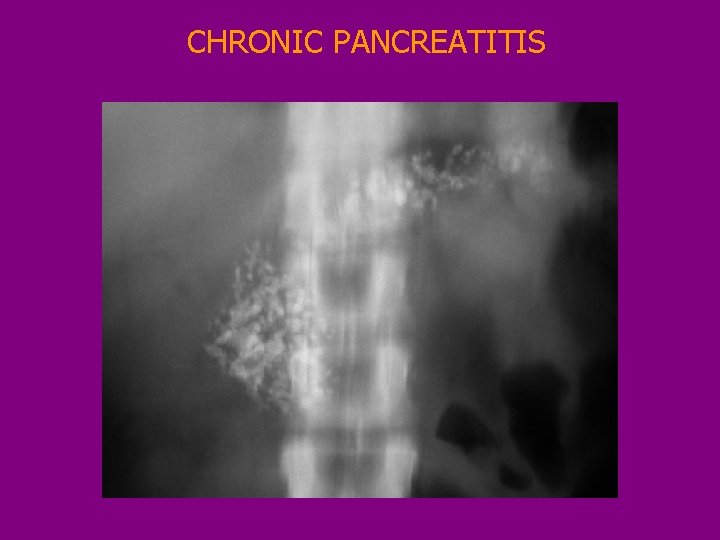
CHRONIC PANCREATITIS
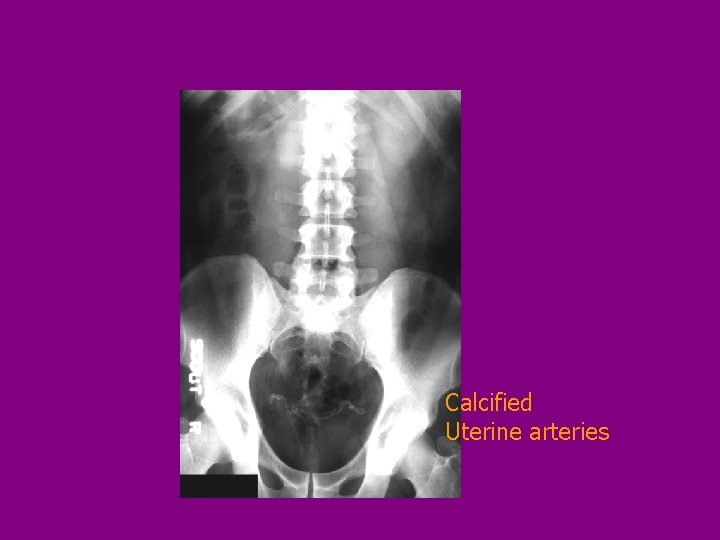
Calcified Uterine arteries
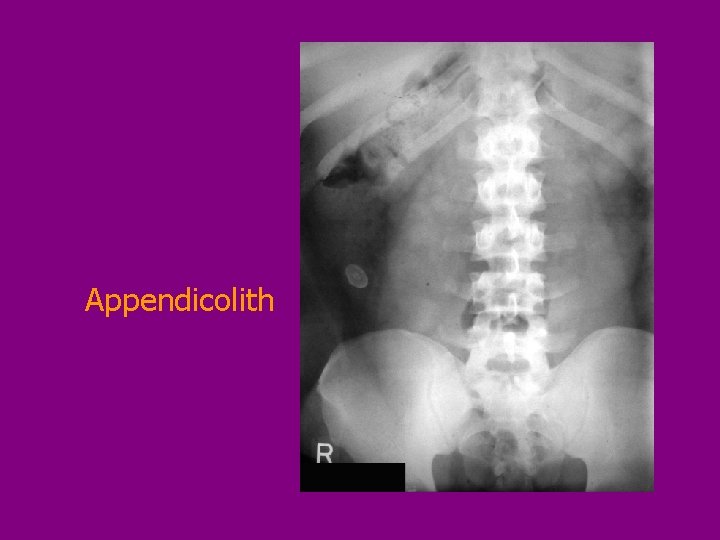
Appendicolith
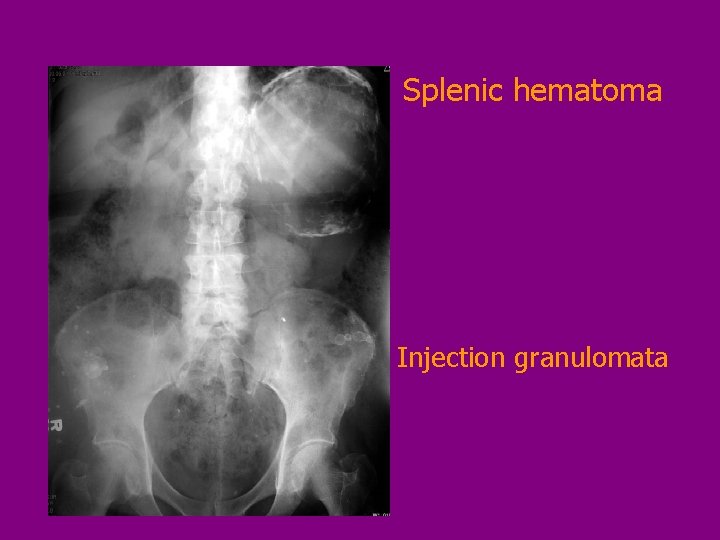
Splenic hematoma Injection granulomata
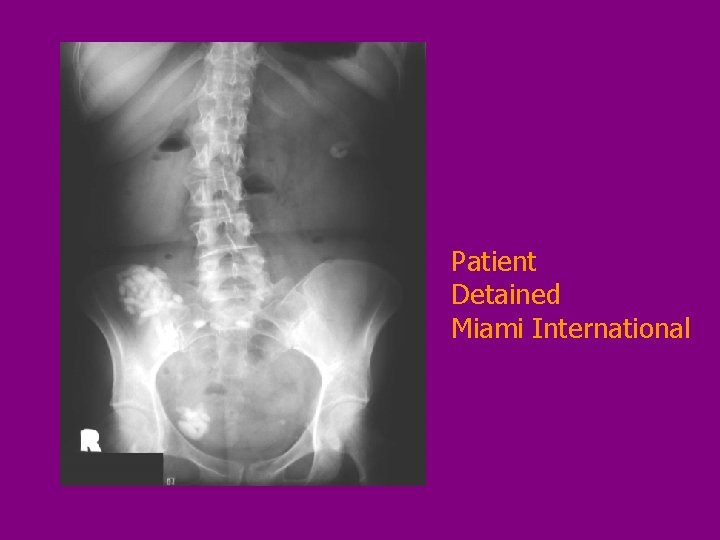
Patient Detained Miami International
Non-calcified mass or mass effect Major limitation of plain films v Organomegaly (multifocal dz vs diffuse) v Neoplasm, abscess, hematoma v Free peritoneal fluid (distribution of SB) v Difficult to differentiate v Relatively homogeneous v Soft tissue density v Merit of CT and MRI v
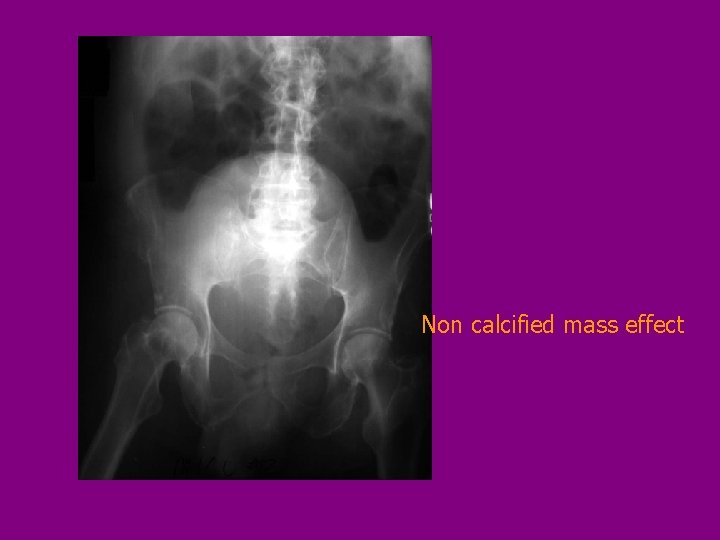
Non calcified mass effect
OTHER GI IMAGING MODALITIES Esophagram v Upper GI Series v Small Bowel Follow-Through v Barium Enema (or Contrast Enema) v CT and CT Colonography v ERCP v MRCP v US v
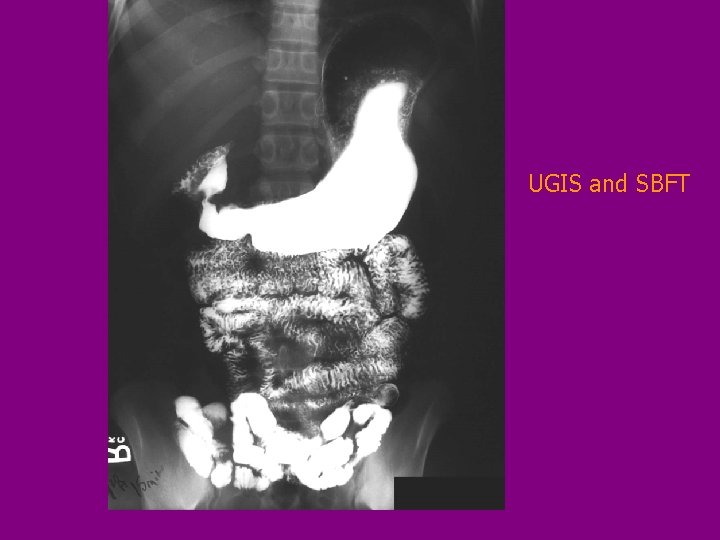
UGIS and SBFT
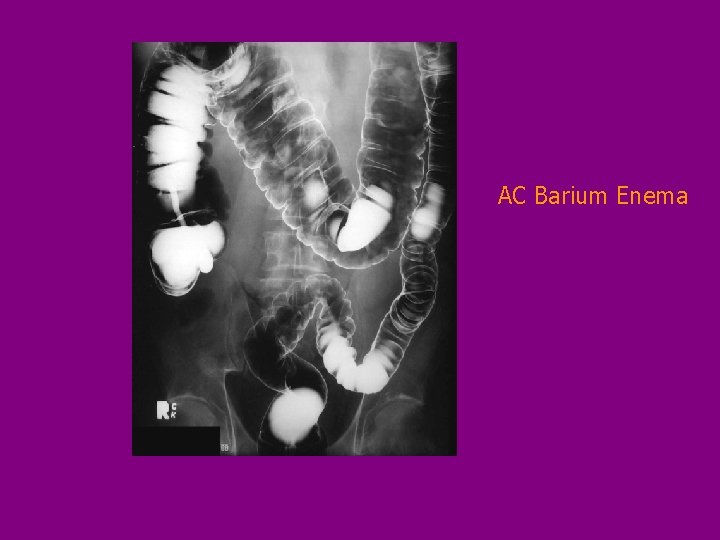
AC Barium Enema
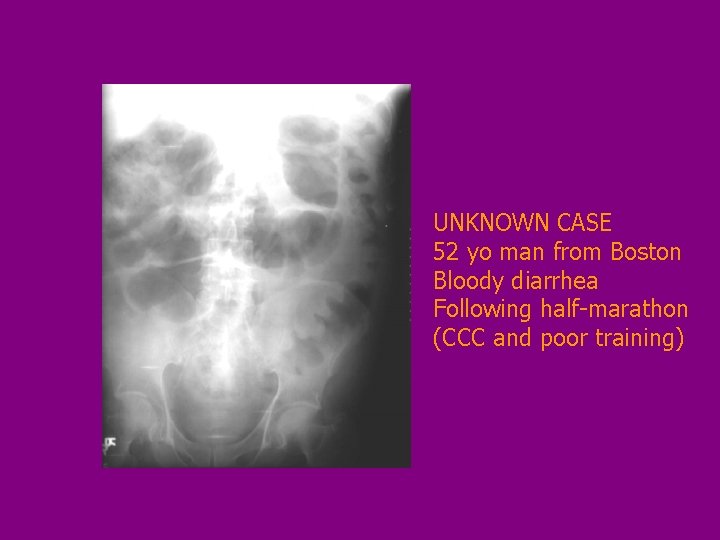
UNKNOWN CASE 52 yo man from Boston Bloody diarrhea Following half-marathon (CCC and poor training)
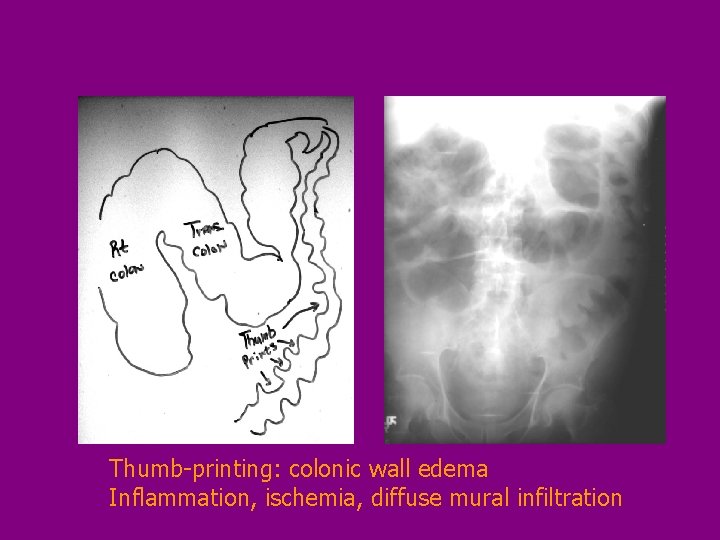
Thumb-printing: colonic wall edema Inflammation, ischemia, diffuse mural infiltration
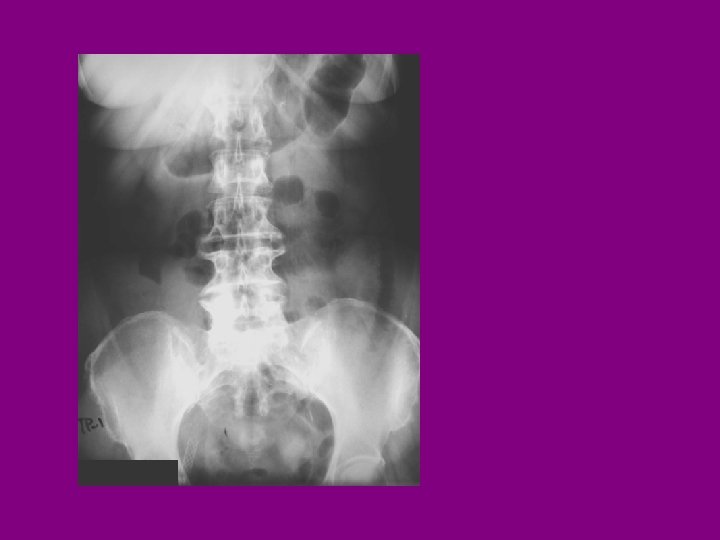
CONSIDERATIONS UNKNOWN (REAL) CASES Patient age and gender v Clinical symptoms v Underlying diseases v Including psychiatric (case of gym sock) v Need for additional views (one at least) v Localize mass or foreign body v Deductive reasoning………. v
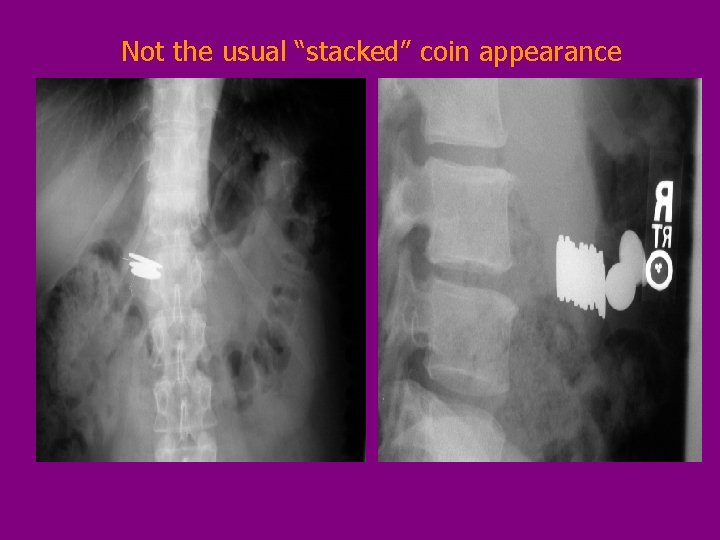
Not the usual “stacked” coin appearance
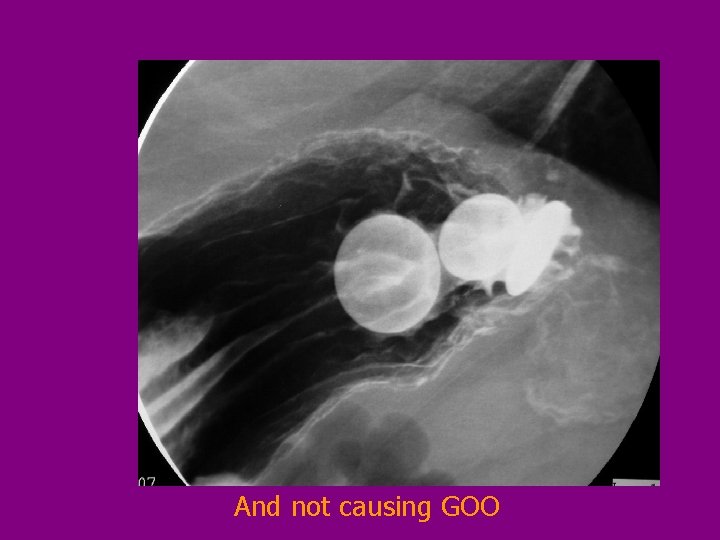
And not causing GOO
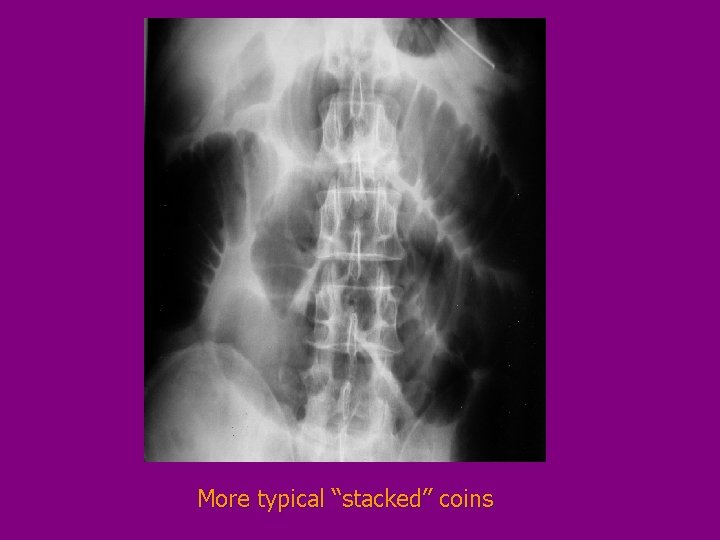
More typical “stacked” coins
- Slides: 48