
Basic Geography Maps How do the tools of
Basic Geography & Maps
How do the tools of geography help us understand our world? • Maps are visual representations of geographic information that help us understand a place or region.
Types of Thematic Maps • • Population density Product Natural Resources Language Climate Physical Political
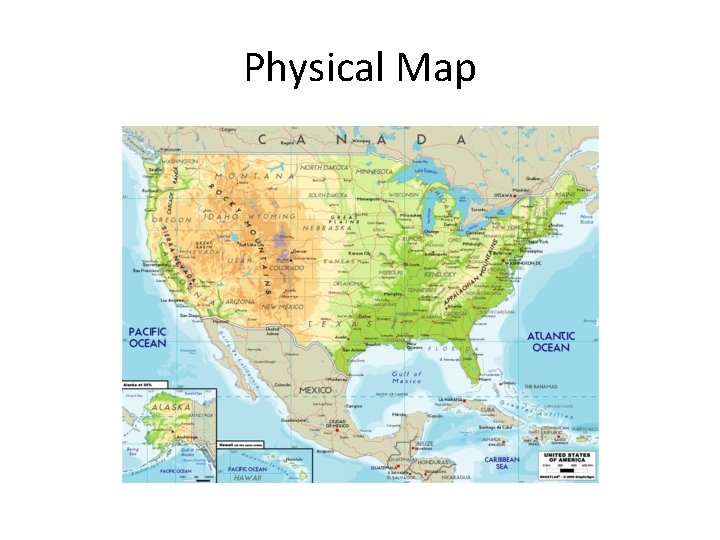
Physical Map
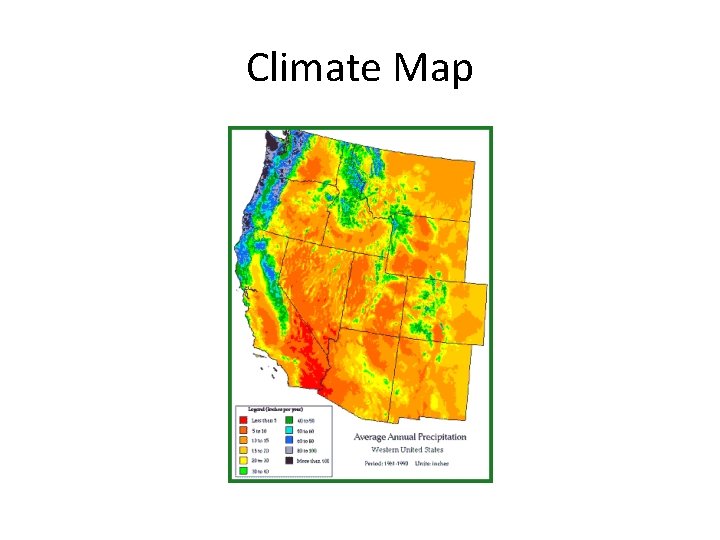
Climate Map
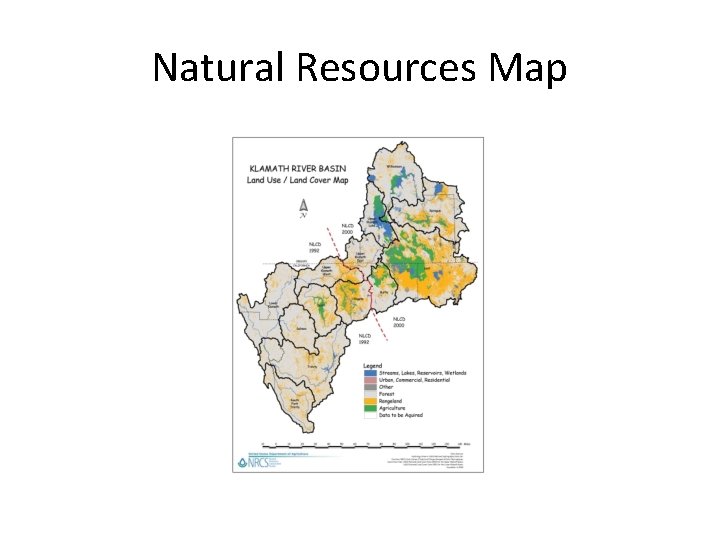
Natural Resources Map
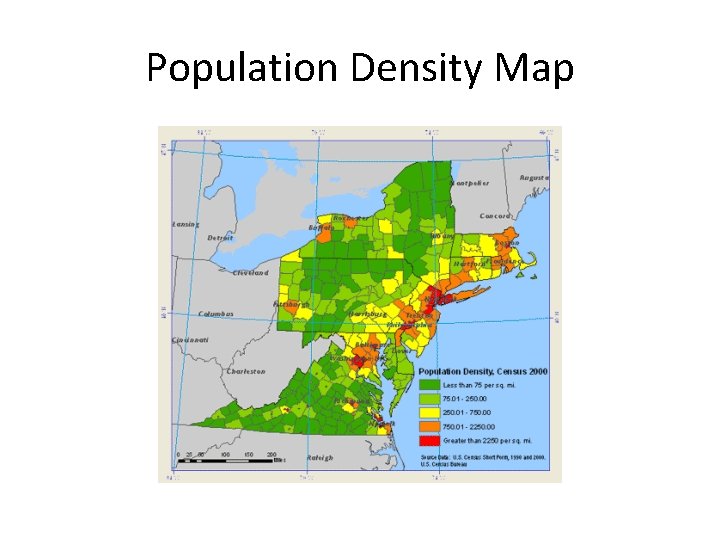
Population Density Map
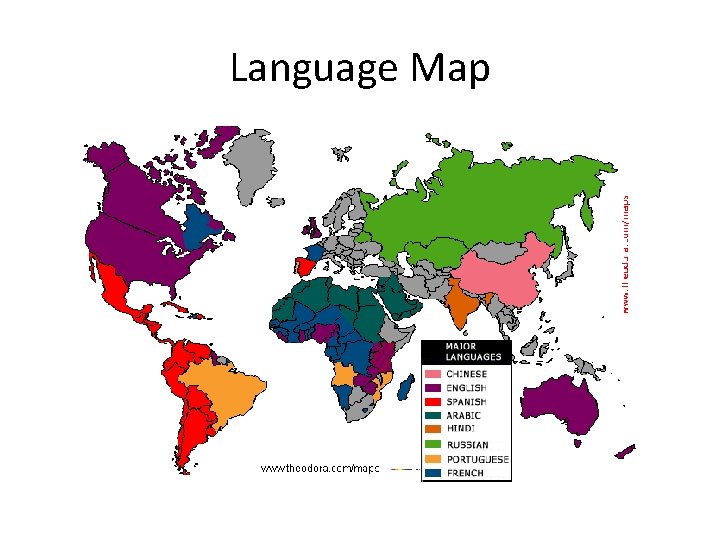
Language Map
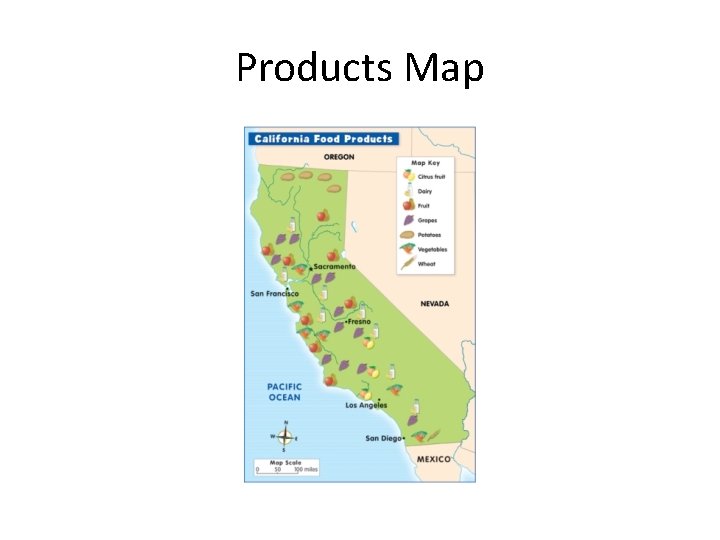
Products Map
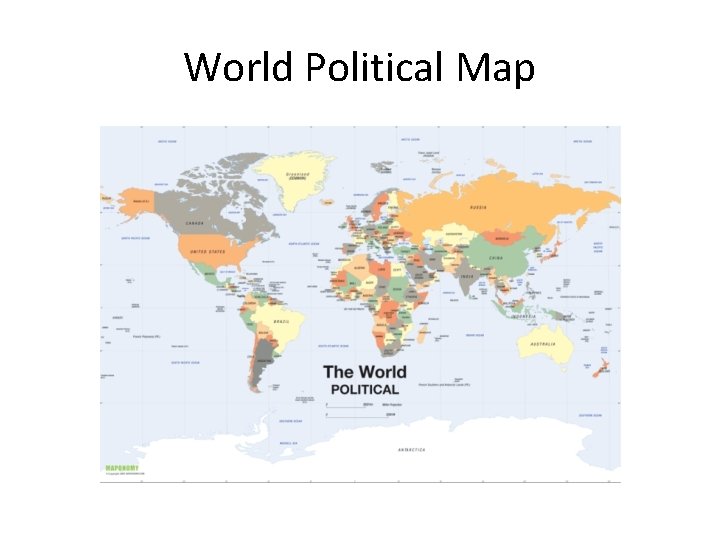
World Political Map
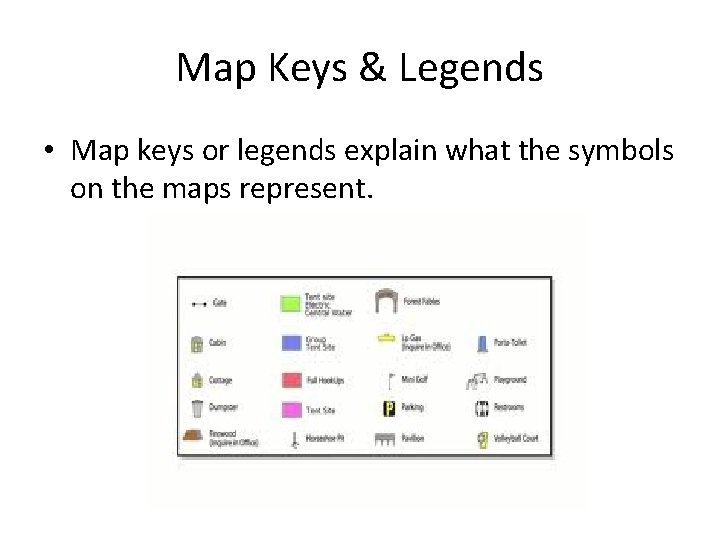
Map Keys & Legends • Map keys or legends explain what the symbols on the maps represent.
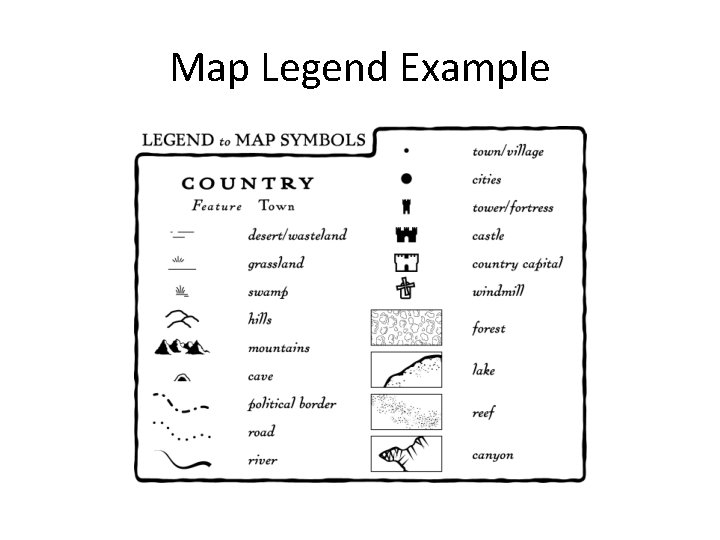
Map Legend Example
Standard ways that maps show information • • • Symbols Color Lines Boundaries Contours Scale
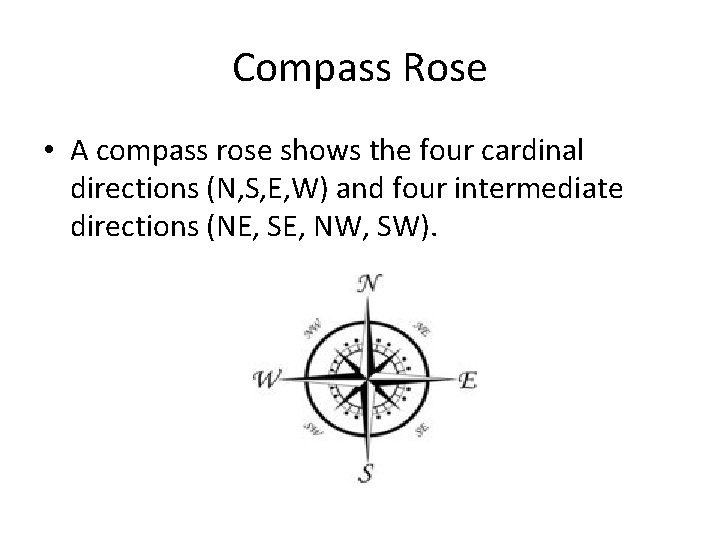
Compass Rose • A compass rose shows the four cardinal directions (N, S, E, W) and four intermediate directions (NE, SE, NW, SW).
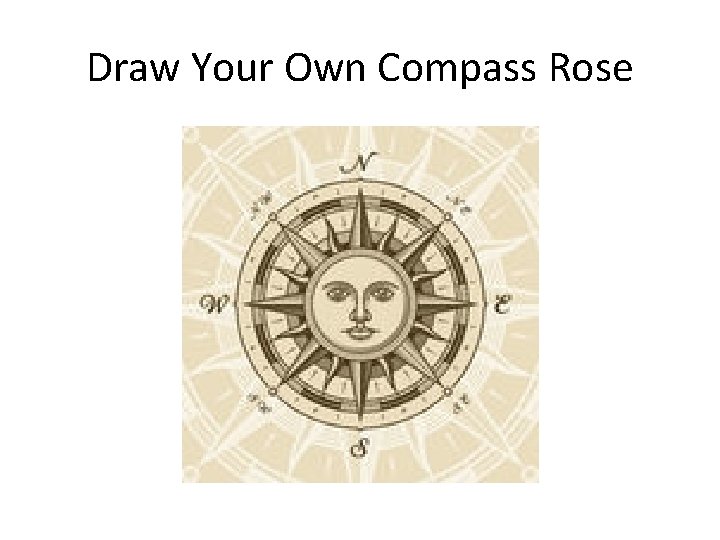
Draw Your Own Compass Rose
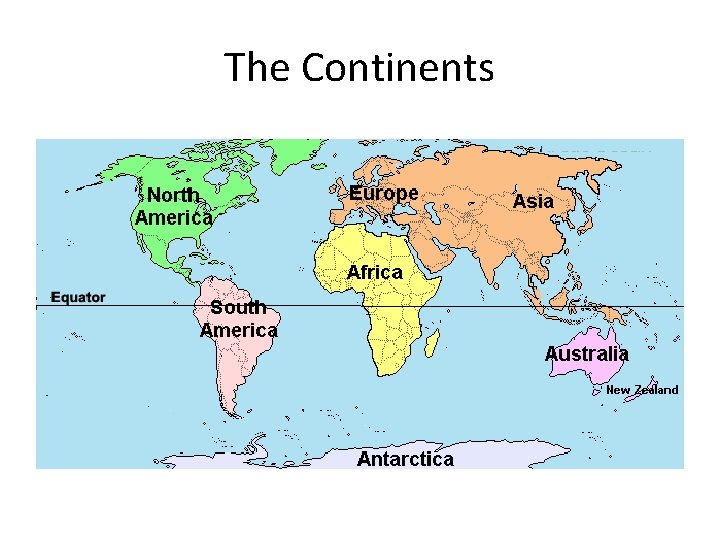
The Continents
The Continents Are: • • North America South America Africa Asia Australia Antarctica Europe
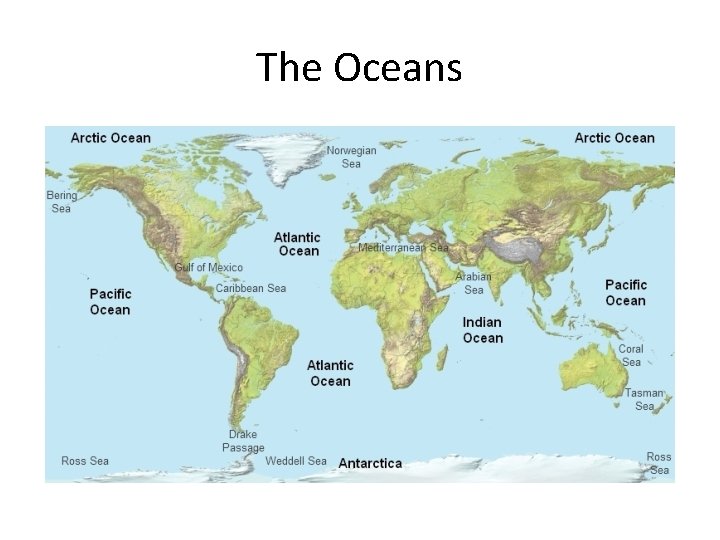
The Oceans
The Oceans Are: • • • Atlantic Pacific Indian Arctic Southern
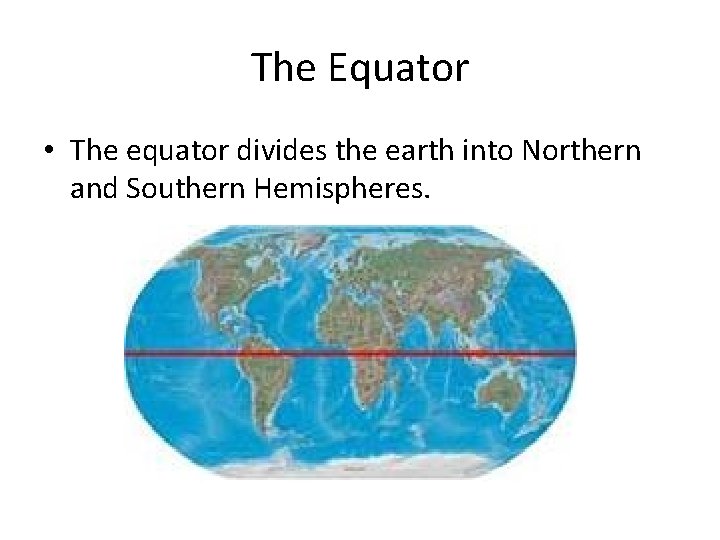
The Equator • The equator divides the earth into Northern and Southern Hemispheres.
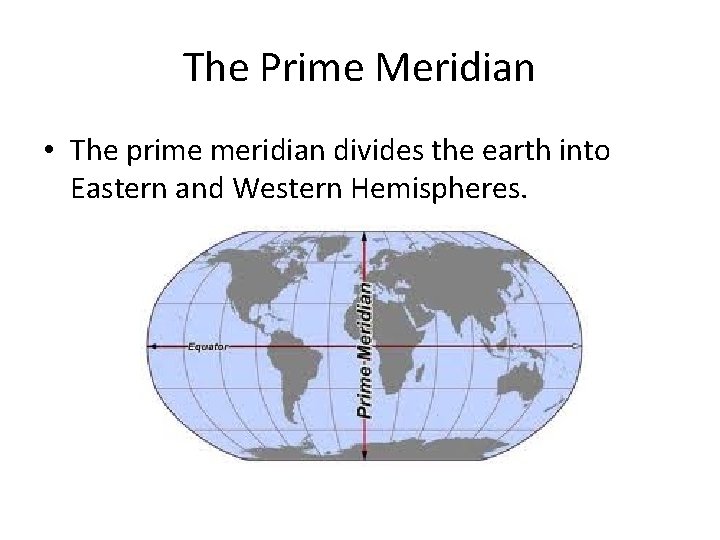
The Prime Meridian • The prime meridian divides the earth into Eastern and Western Hemispheres.
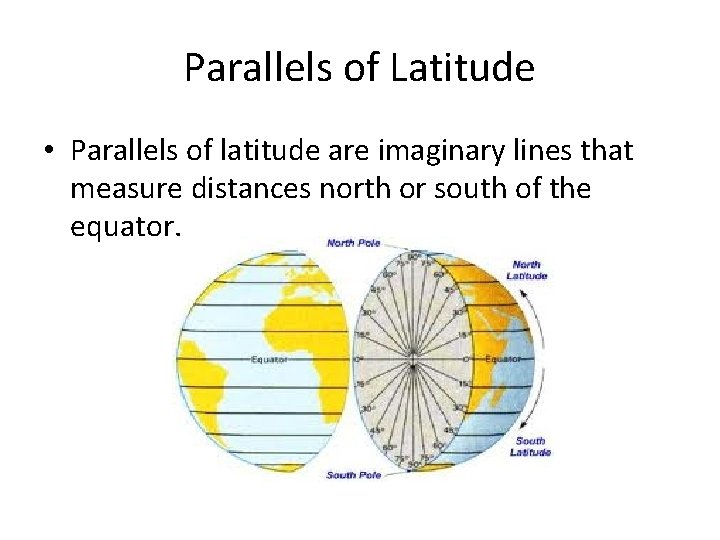
Parallels of Latitude • Parallels of latitude are imaginary lines that measure distances north or south of the equator.
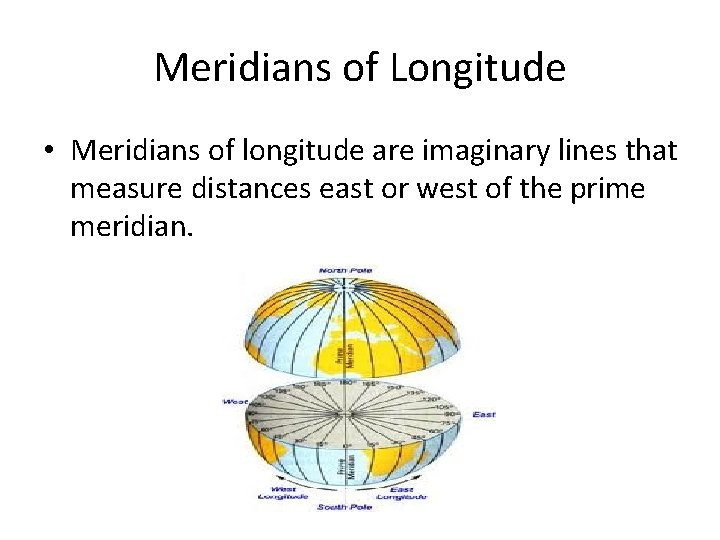
Meridians of Longitude • Meridians of longitude are imaginary lines that measure distances east or west of the prime meridian.
Global Positioning System (GPS) The GPS system is made up of three parts: • satellites orbiting the earth; • stations that control and monitor the signals on Earth; • GPS receivers owned by users
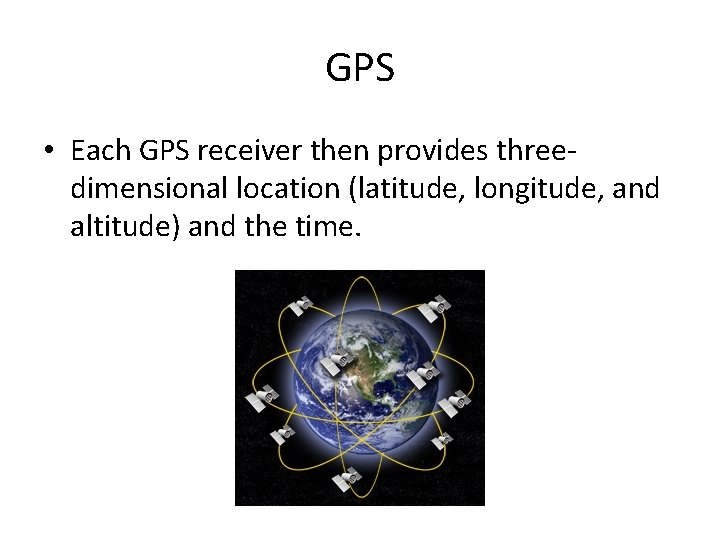
GPS • Each GPS receiver then provides threedimensional location (latitude, longitude, and altitude) and the time.
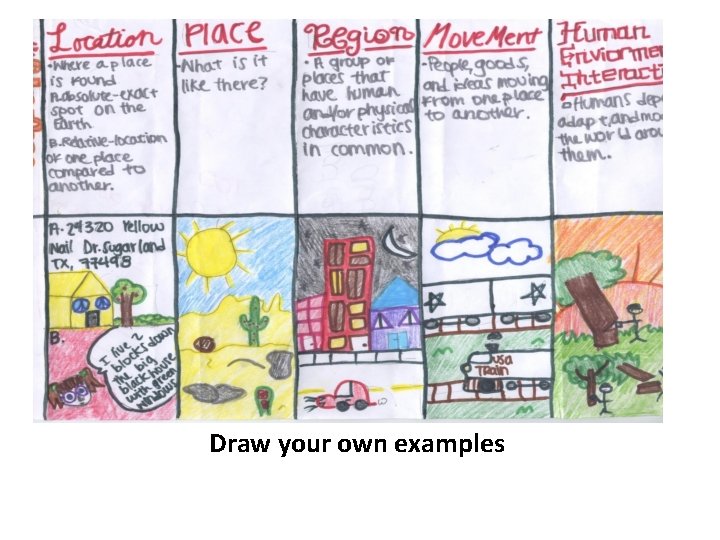
1. Location (Where is It? ) • Absolute: A location can be absolute (specific) as in coordinates of a map using longitude and latitude • Relative: A location can be relative - examples: next door, nearby, a short drive, down the road a ways. Or, it can be in the same general location as another location - example: next to the post office.
2. Place • A place is an area that is defined by everything in it. All places have features that give them personality and distinguish them from other places. • If you refer to your school as a place, then that place would include walls, windows, gym, cafeteria, classrooms, people, clothing, books, maps, mops, brooms, hallways, mice (if you have them) and everything else in the school, including the languages spoken.
3. Region • A region is an area that is defined by certain similar characteristics. Those unifying or similar characteristics can be physical, natural, human, or cultural.
4. Movement • Movement refers to the way people, products, information and ideas move from one place to another. This can be local such as how did you get to school today, or it can be global such as how did humans get to North America?
5. Human-Environment Interaction • Human-environment interaction looks at the relationships between people and their environment; how people adapt to the environment and how they change it.
Human-Environment (continued) • How do people depend on the environment? (Example: In ancient times, the annual flooding of the Nile River produced good soil for growing crops. ) • How do people adapt to the environment? (Example: The ancient Egyptians rebuilt their homes each year, after the annual flooding. As time went on, they built their homes above the flood plain. ) • How do people modify the environment? (Example: The ancient Egyptians built irrigation ditches to help water the crops. In modern times, Egypt built a dam to control the flood waters of the Nile River. )
Draw your own examples
What are some of the unique physical features of each continent?
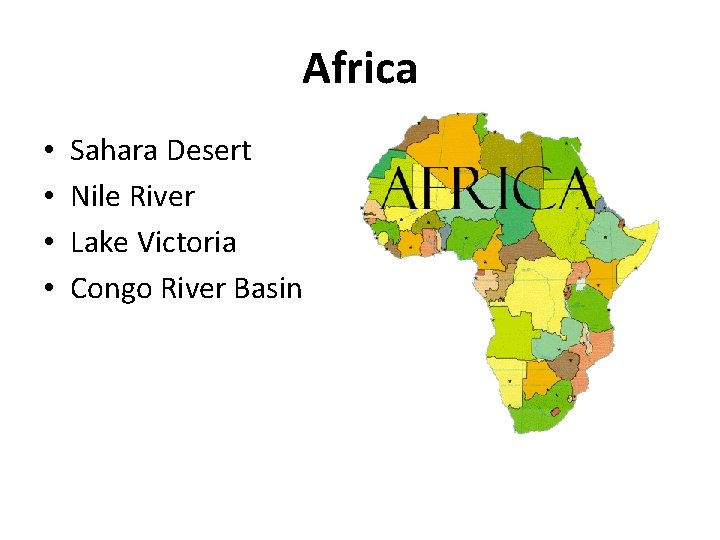
Africa • • Sahara Desert Nile River Lake Victoria Congo River Basin
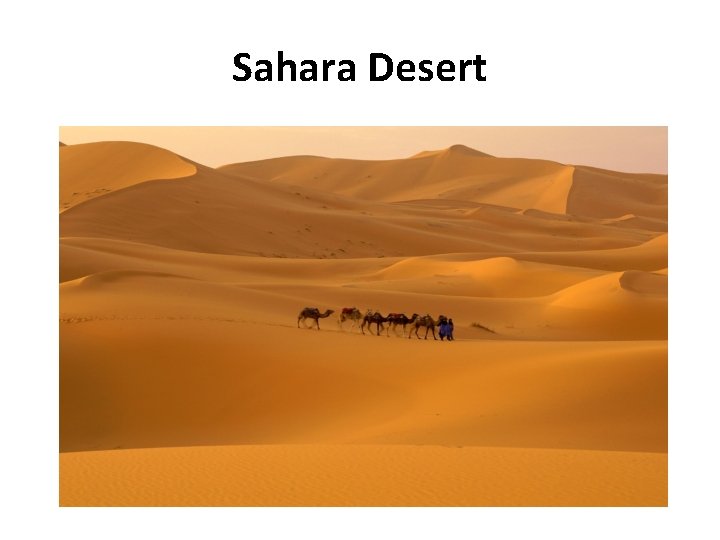
Sahara Desert
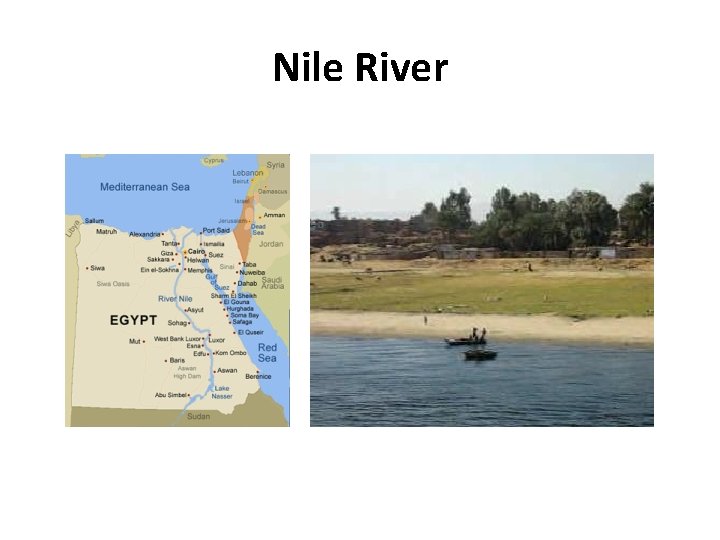
Nile River
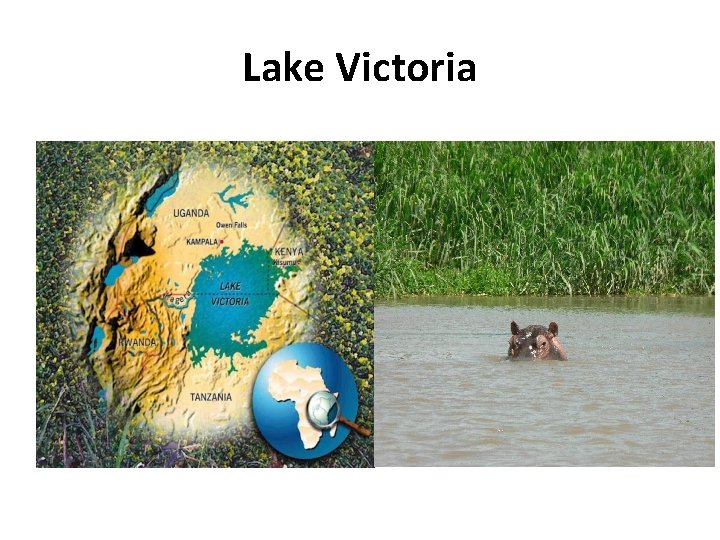
Lake Victoria
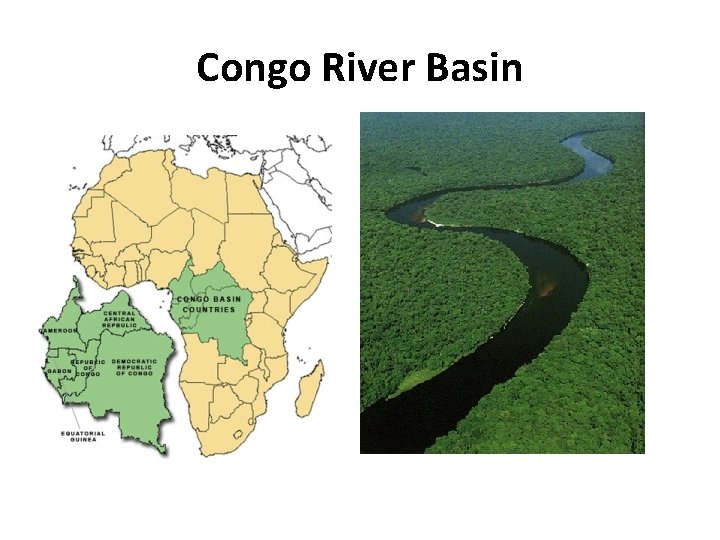
Congo River Basin
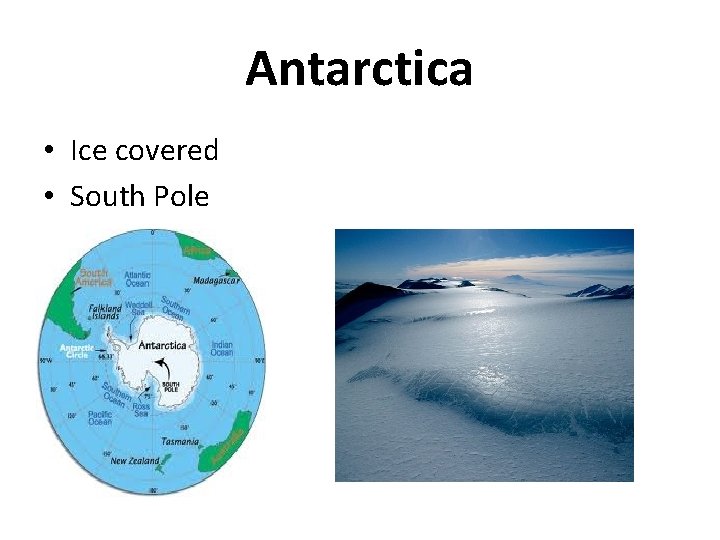
Antarctica • Ice covered • South Pole
Asia • Largest continent • Arabian Peninsula • Himalayas • Siberia • Gobi Desert
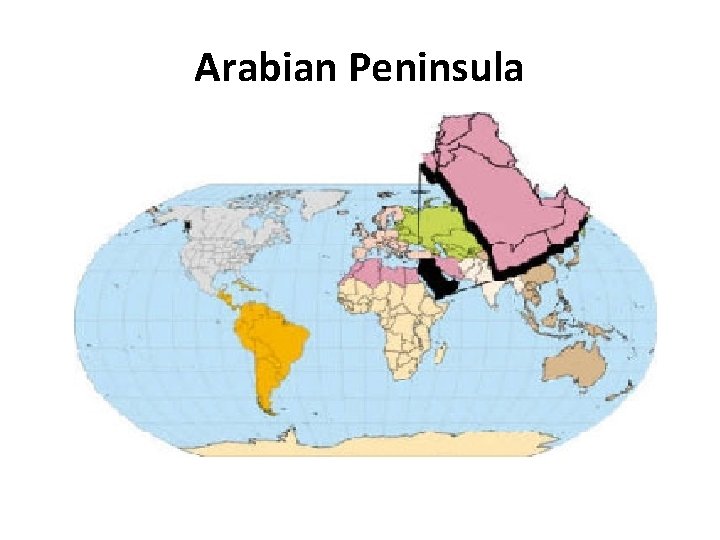
Arabian Peninsula
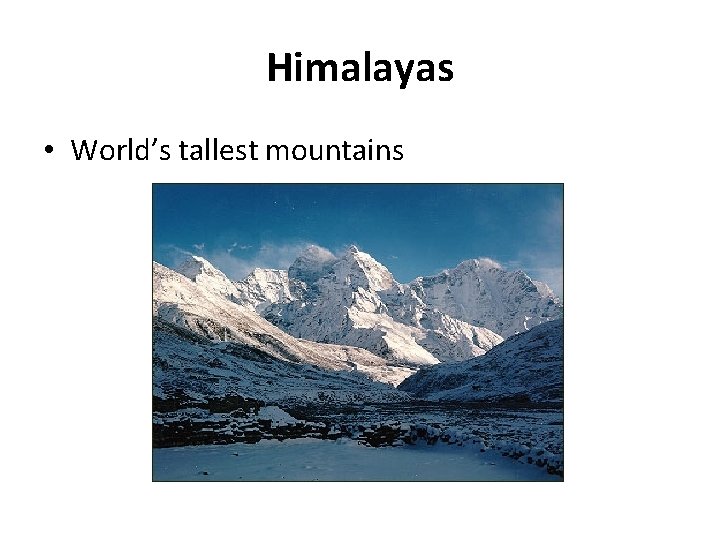
Himalayas • World’s tallest mountains
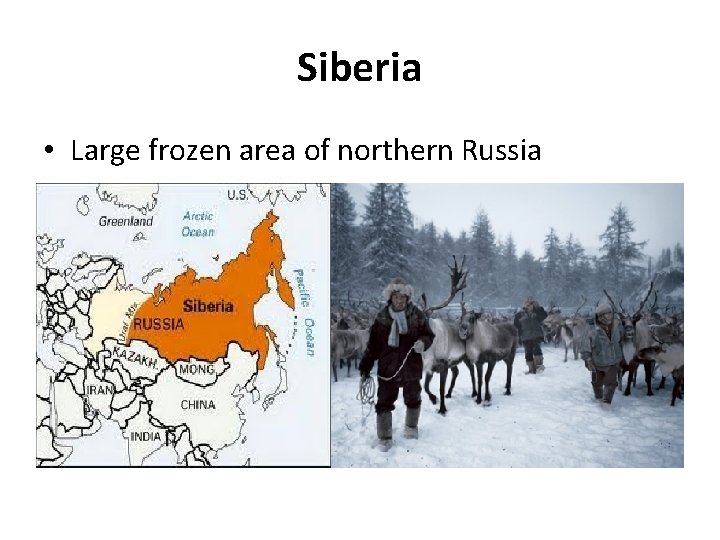
Siberia • Large frozen area of northern Russia
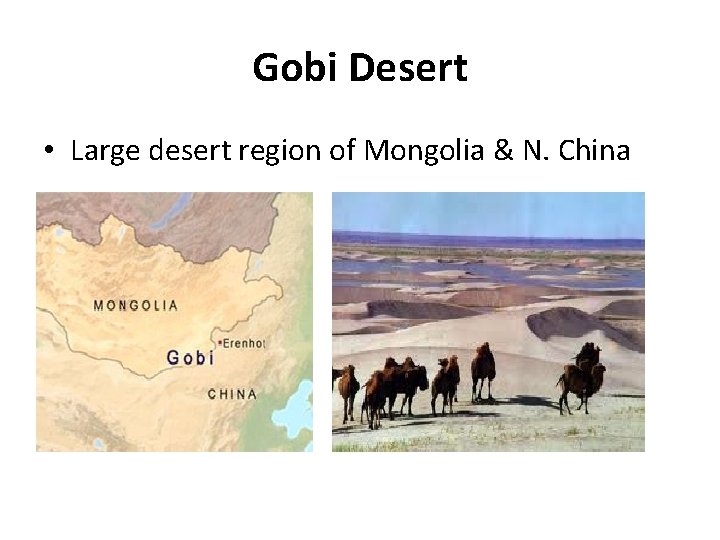
Gobi Desert • Large desert region of Mongolia & N. China
Australia • Outback • Great Barrier Reef
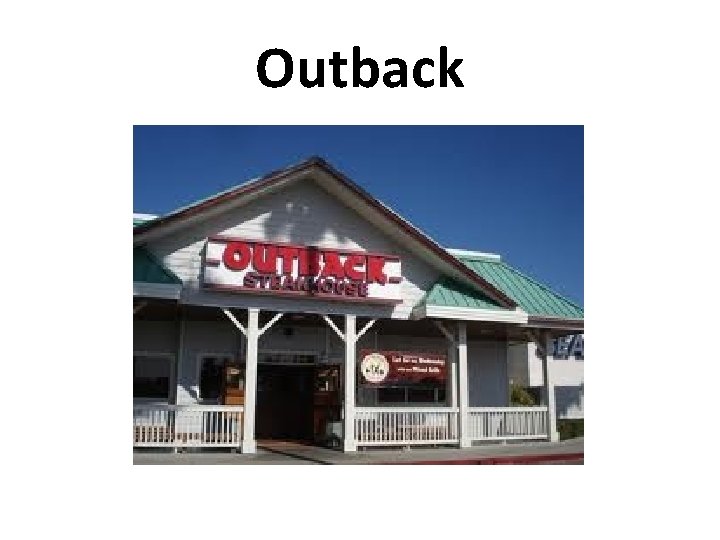
Outback
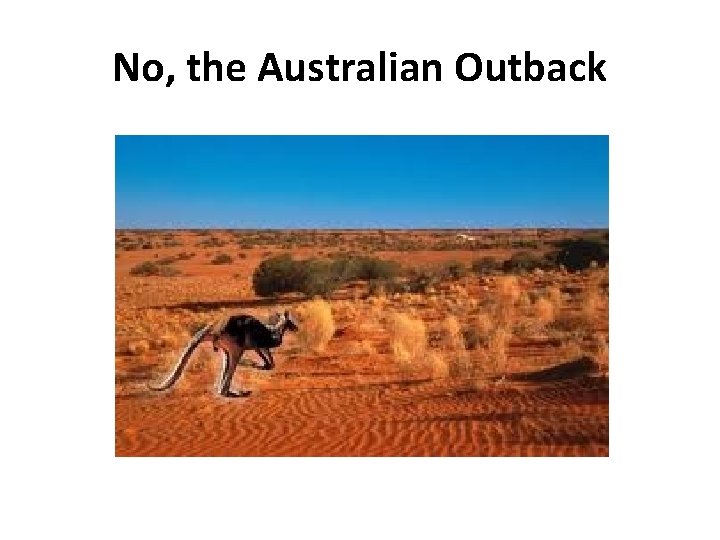
No, the Australian Outback
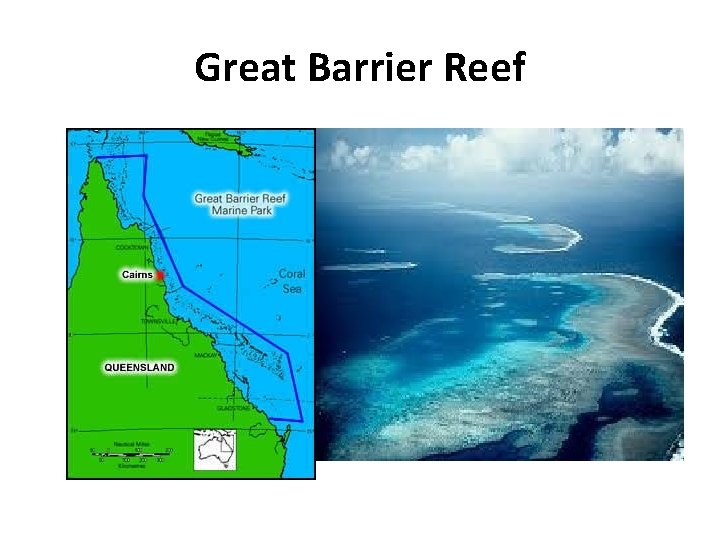
Great Barrier Reef
Europe • Separated from Asia by Ural Mountains • Alps • Peninsulas – Italy, Greece, Iberian (Spain & Portugal), Scandinavia
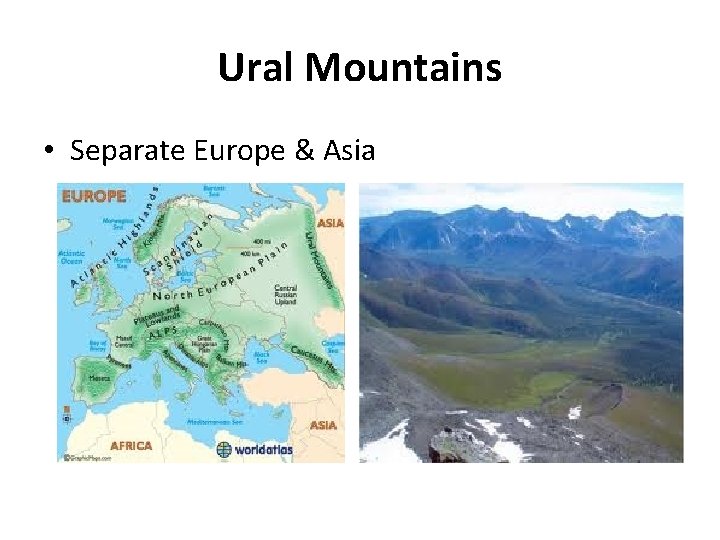
Ural Mountains • Separate Europe & Asia
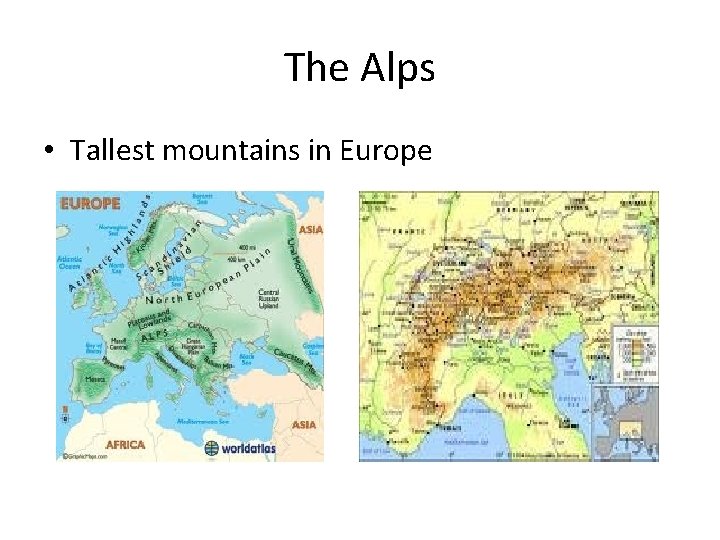
The Alps • Tallest mountains in Europe
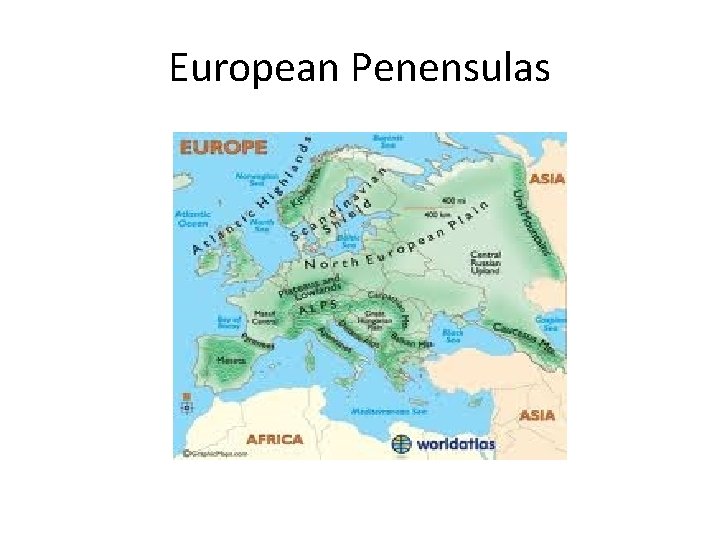
European Penensulas
South America • Amazon River Basin • Andes Mountains
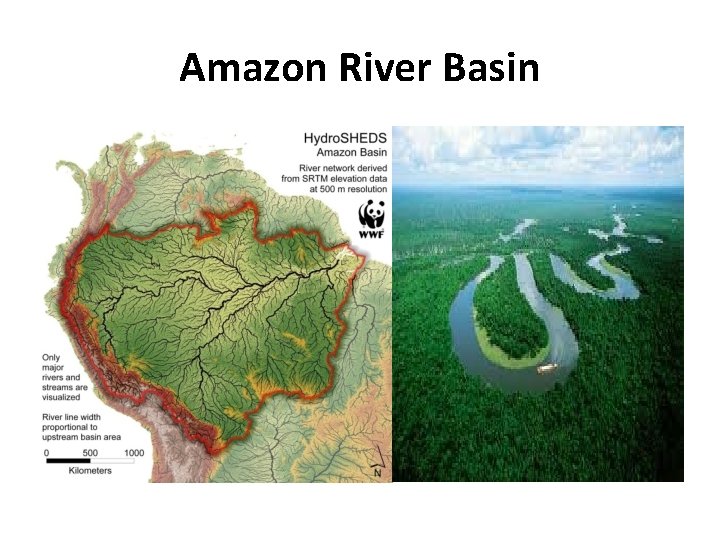
Amazon River Basin
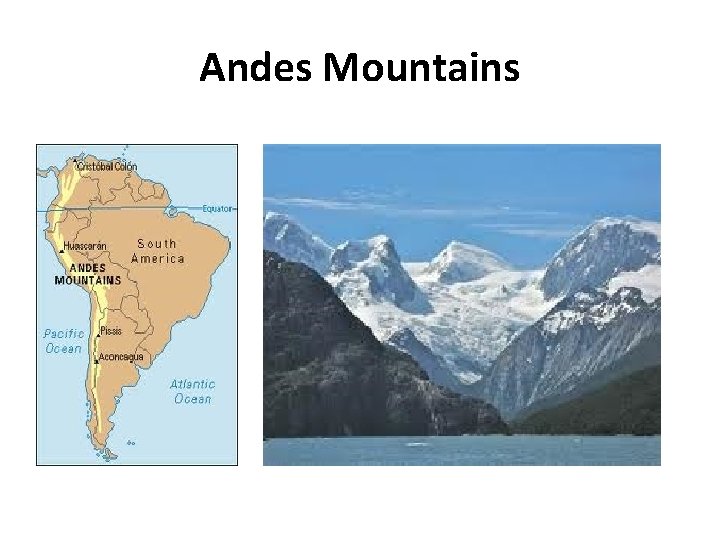
Andes Mountains
North America • We will study in depth all areas of North America except: • Greenland
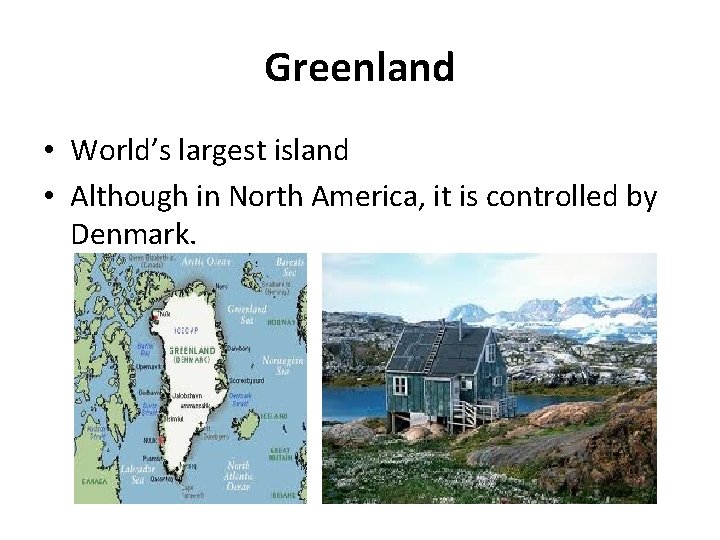
Greenland • World’s largest island • Although in North America, it is controlled by Denmark.
- Slides: 58