
Basic First Aid for Medical Emergencies Session Objectives
Basic First Aid for Medical Emergencies
Session Objectives Recognize the benefits of obtaining first-aid and CPR certification Identify proper procedures for a variety of medical emergencies Assist in administering first aid when a co-worker is injured Do no further harm © Business & Legal Reports, Inc. 1110
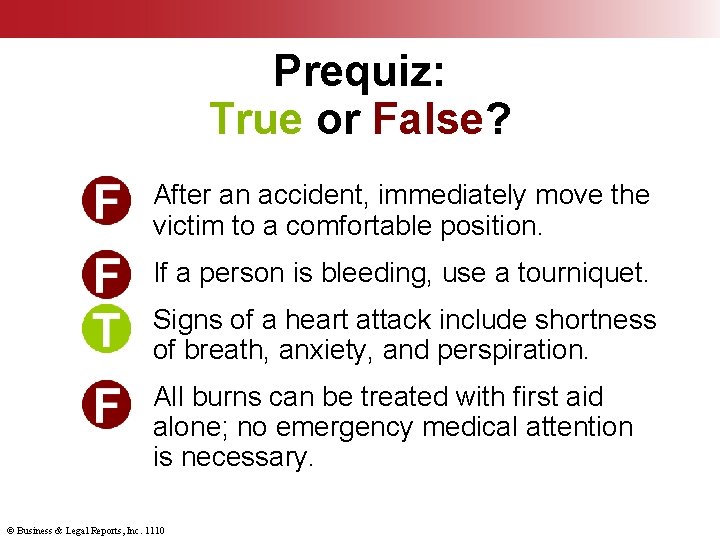
Prequiz: True or False? After an accident, immediately move the victim to a comfortable position. If a person is bleeding, use a tourniquet. Signs of a heart attack include shortness of breath, anxiety, and perspiration. All burns can be treated with first aid alone; no emergency medical attention is necessary. © Business & Legal Reports, Inc. 1110
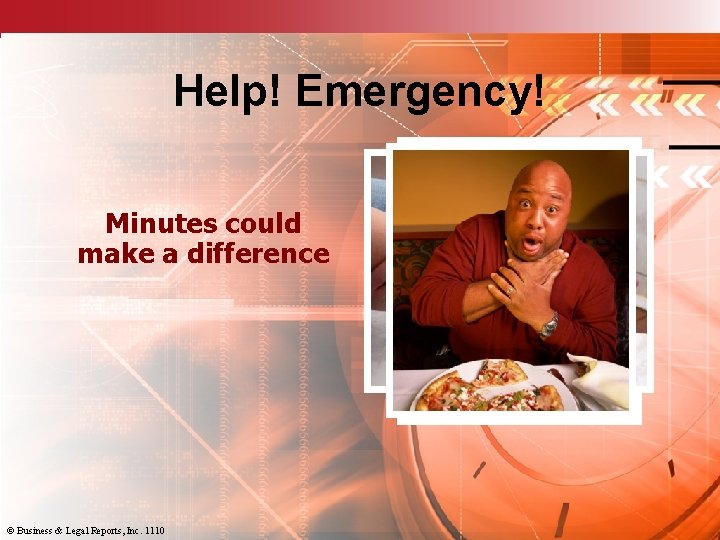
Help! Emergency! Minutes could make a difference © Business & Legal Reports, Inc. 1110
Four Basic Rules Bring the victim 1. 2. Call forhelptoimmediately 4. 3. Do no further harm Check the ABCs © Business & Legal Reports, Inc. 1110

Assess the Scene Evaluate the scene Assess safety Prioritize care Check for medical alert tags Do head-to-toe check Move only if necessary © Business & Legal Reports, Inc. 1110
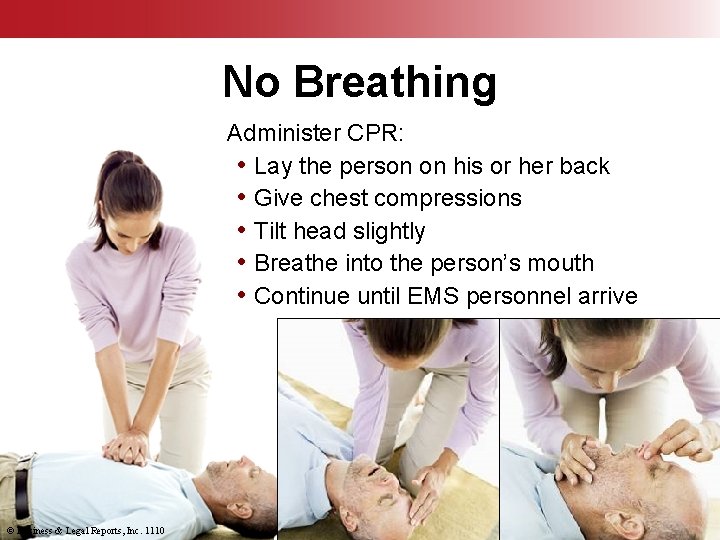
No Breathing Administer CPR: • Lay the person on his or her back • Give chest compressions • Tilt head slightly • Breathe into the person’s mouth • Continue until EMS personnel arrive © Business & Legal Reports, Inc. 1110
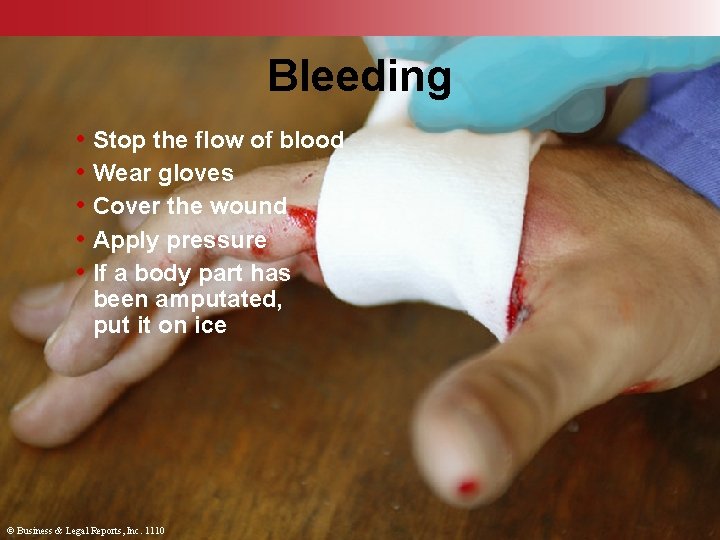
Bleeding • Stop the flow of blood • Wear gloves • Cover the wound • Apply pressure • If a body part has been amputated, put it on ice © Business & Legal Reports, Inc. 1110
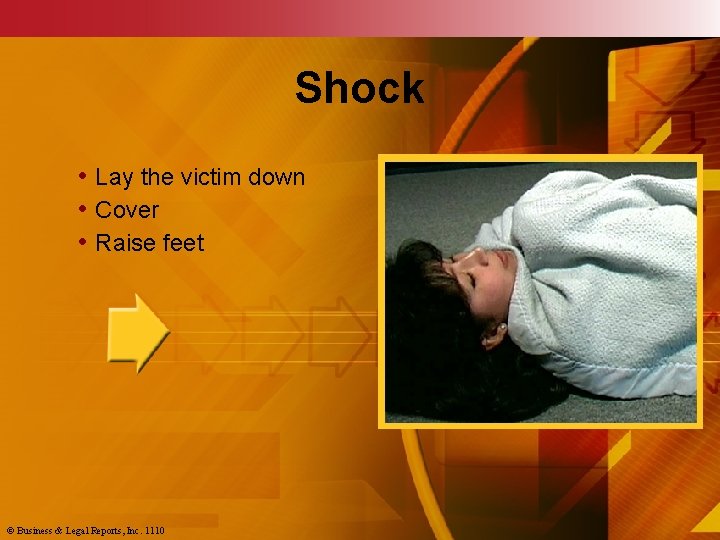
Shock • Lay the victim down • Cover • Raise feet © Business & Legal Reports, Inc. 1110
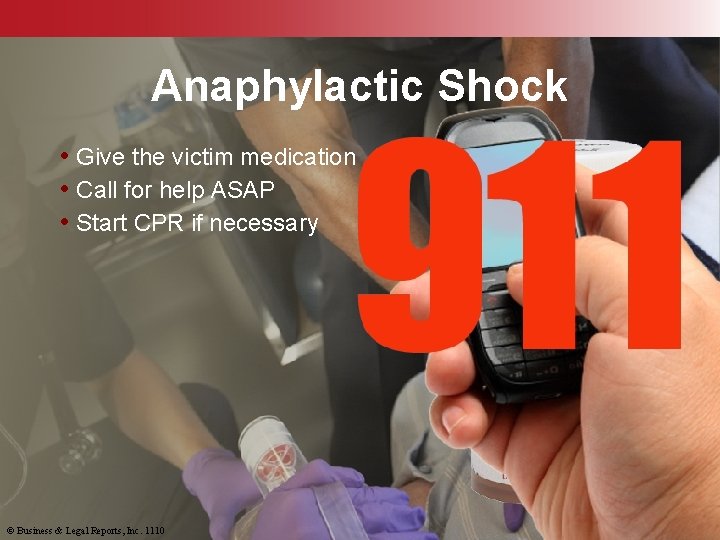
Anaphylactic Shock • Give the victim medication • Call for help ASAP • Start CPR if necessary © Business & Legal Reports, Inc. 1110
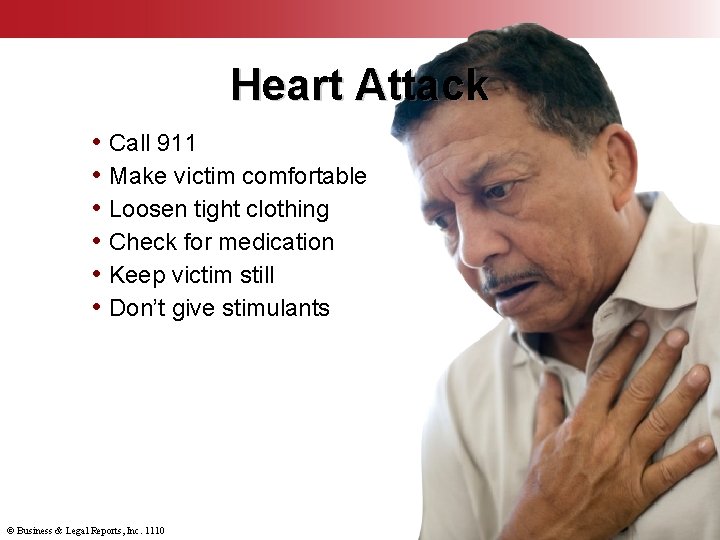
Heart Attack • Call 911 • Make victim comfortable • Loosen tight clothing • Check for medication • Keep victim still • Don’t give stimulants © Business & Legal Reports, Inc. 1110
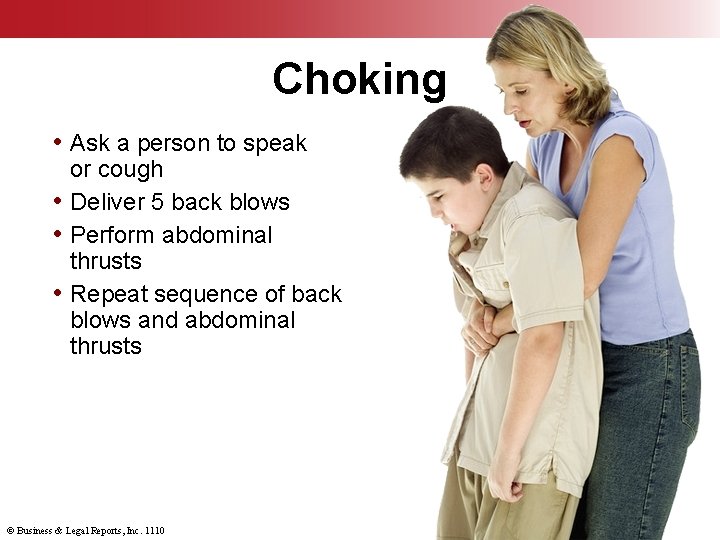
Choking • Ask a person to speak or cough • Deliver 5 back blows • Perform abdominal thrusts • Repeat sequence of back blows and abdominal thrusts © Business & Legal Reports, Inc. 1110
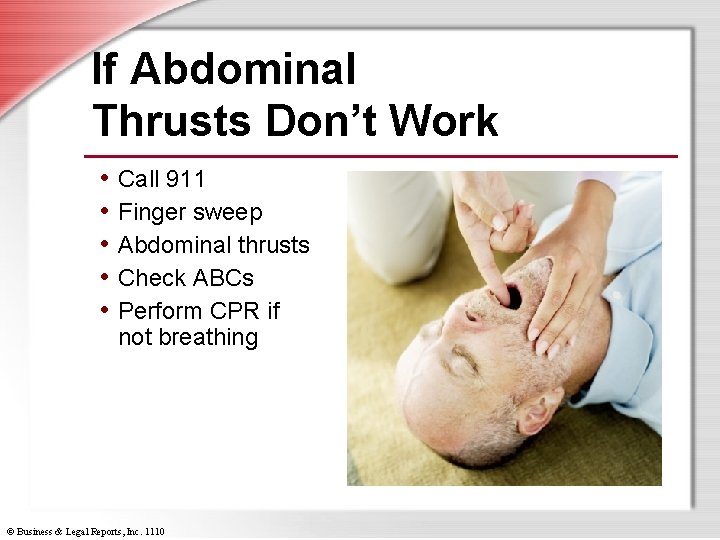
If Abdominal Thrusts Don’t Work • Call 911 • Finger sweep • Abdominal thrusts • Check ABCs • Perform CPR if not breathing © Business & Legal Reports, Inc. 1110
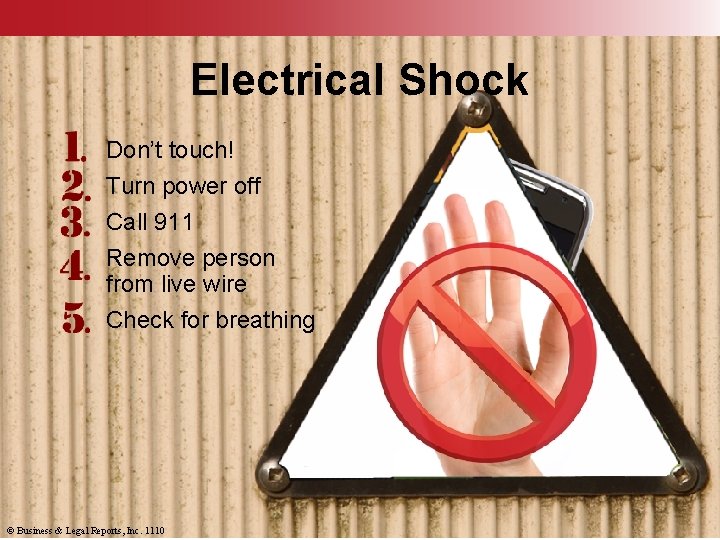
Electrical Shock Don’t touch! Turn power off Call 911 Remove person from live wire Check for breathing © Business & Legal Reports, Inc. 1110
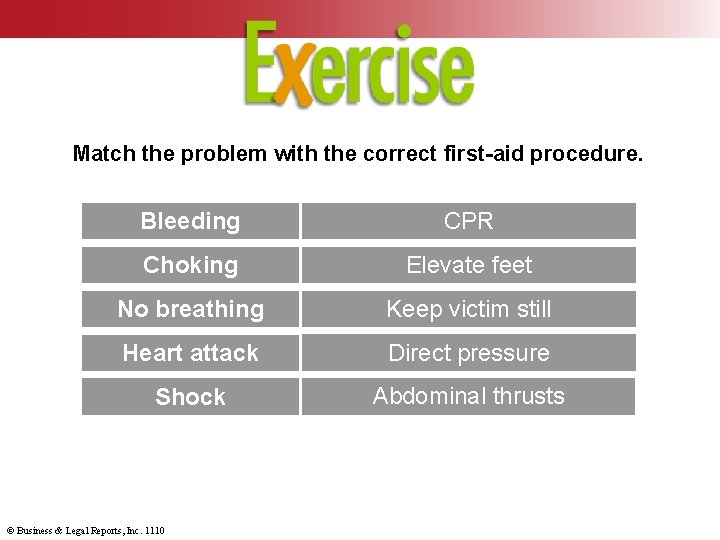
Match the problem with the correct first-aid procedure. Bleeding CPR Choking Elevate feet No breathing Keep victim still Heart attack Direct pressure Shock Abdominal thrusts Sweeten deal © Business & Legal Reports, Inc. 1110
Review Do you understand first-aid procedures for: • No breathing? • Bleeding? • Shock? • Heart attack? • Choking? • Electrical shock? © Business & Legal Reports, Inc. 1110
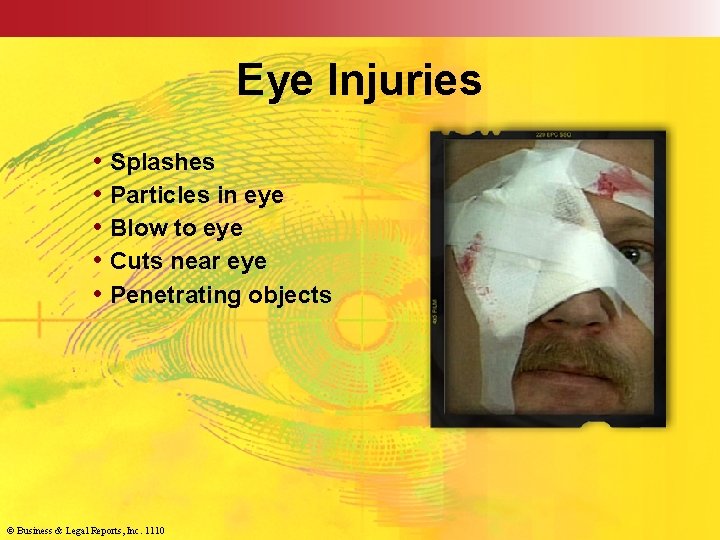
Eye Injuries • Splashes • Particles in eye • Blow to eye • Cuts near eye • Penetrating objects © Business & Legal Reports, Inc. 1110
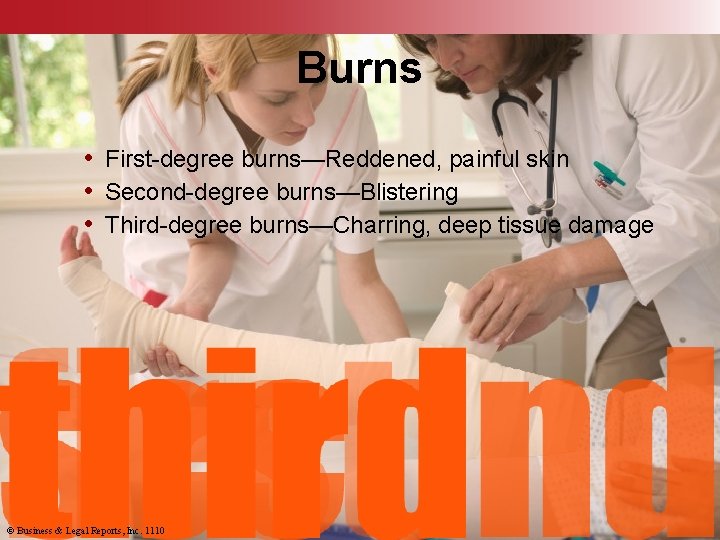
Burns • First-degree burns—Reddened, painful skin • Second-degree burns—Blistering • Third-degree burns—Charring, deep tissue damage © Business & Legal Reports, Inc. 1110
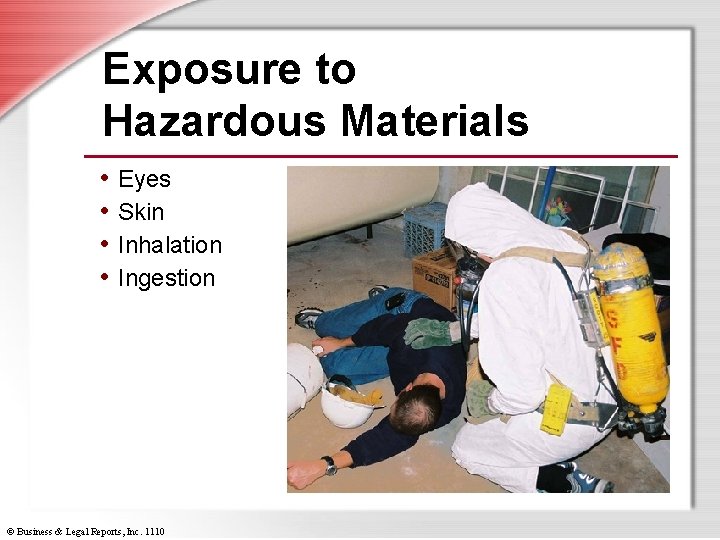
Exposure to Hazardous Materials • Eyes • Skin • Inhalation • Ingestion © Business & Legal Reports, Inc. 1110
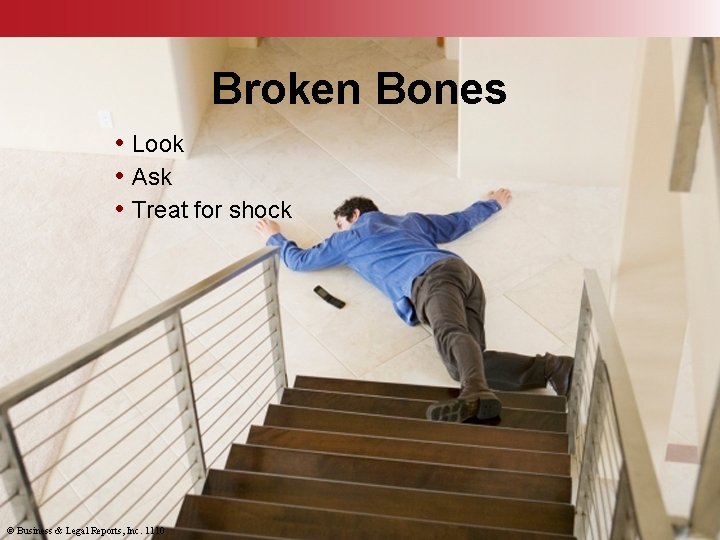
Broken Bones • Look • Ask • Treat for shock © Business & Legal Reports, Inc. 1110
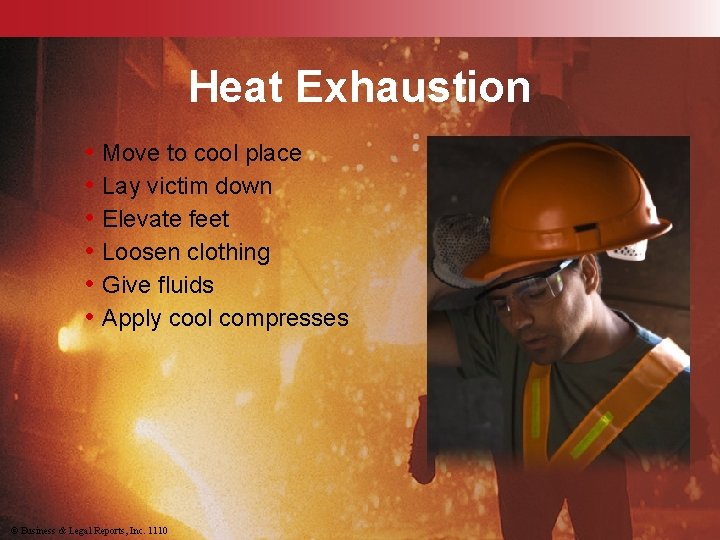
Heat Exhaustion • Move to cool place • Lay victim down • Elevate feet • Loosen clothing • Give fluids • Apply cool compresses ©©Business&&Legal. Reports, Inc. 1110
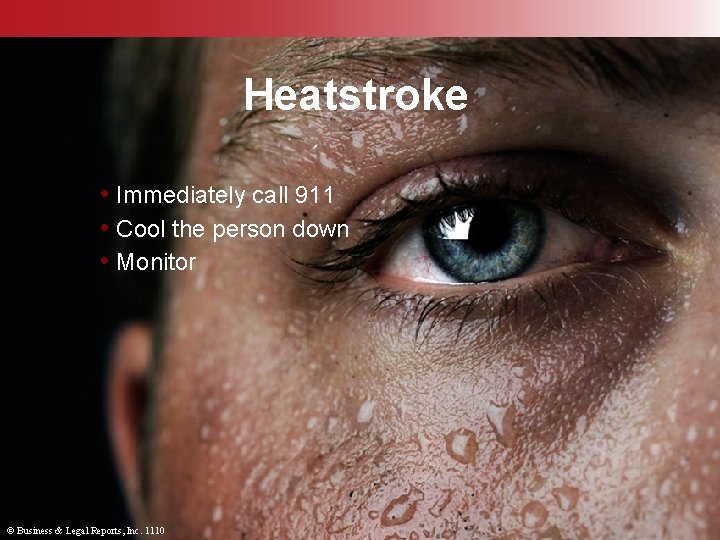
Heatstroke • Immediately call 911 • Cool the person down • Monitor © Business & Legal Reports, Inc. 1110
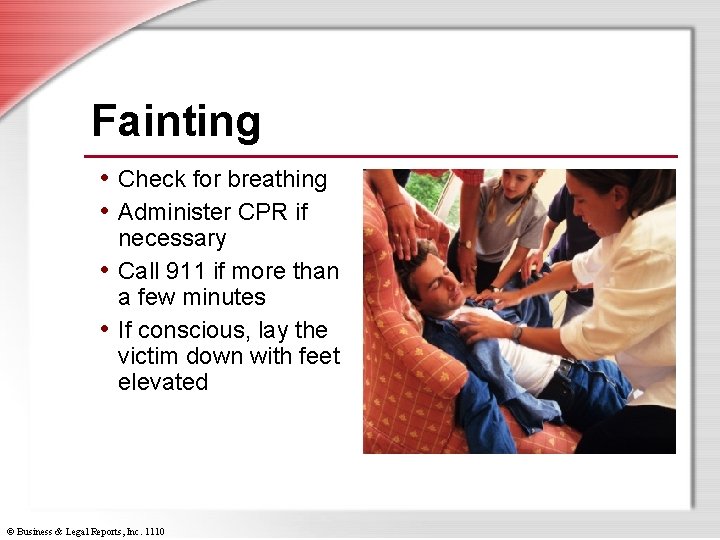
Fainting • Check for breathing • Administer CPR if necessary • Call 911 if more than a few minutes • If conscious, lay the victim down with feet elevated © Business & Legal Reports, Inc. 1110
Epileptic Seizures • Remove victim from • • hazards Check for breathing Nothing in the mouth Keep comfortable Call 911 if medical assistance is needed © Business & Legal Reports, Inc. 1110
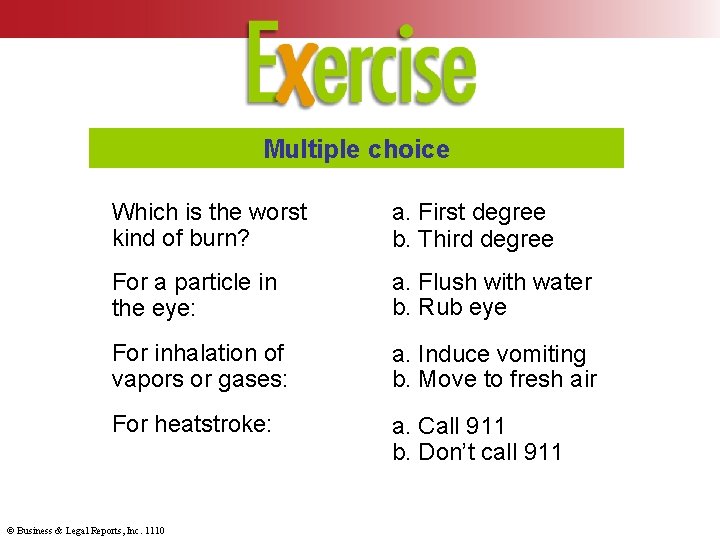
Multiple choice Which is the worst kind of burn? a. First degree b. Third degree For a particle in the eye: a. Flush with water b. Rub eye For inhalation of vapors or gases: a. Induce vomiting b. Move to fresh air For heatstroke: a. Call 911 b. Don’t call 911 © Business & Legal Reports, Inc. 1110
Review Do you understand first-aid procedures for: • Eye injuries? • Burns? • Exposure to hazardous materials? • Broken bones? • Heat exhaustion and heatstroke? • Fainting? • Epileptic seizures? © Business & Legal Reports, Inc. 1110
Key Points to Remember Medical emergencies can happen anytime. Act quickly, calmly, and correctly. Consider being certified in first aid and CPR. © Business & Legal Reports, Inc. 1110
- Slides: 27