
BASIC FIRE FIGHTING TRAINING DEPARTMENT OF SAFETY SECURITY
BASIC FIRE FIGHTING TRAINING DEPARTMENT OF SAFETY & SECURITY WELCOMES YOU Date: 16. 09. 2016 Place: SIMS Seminar Hall
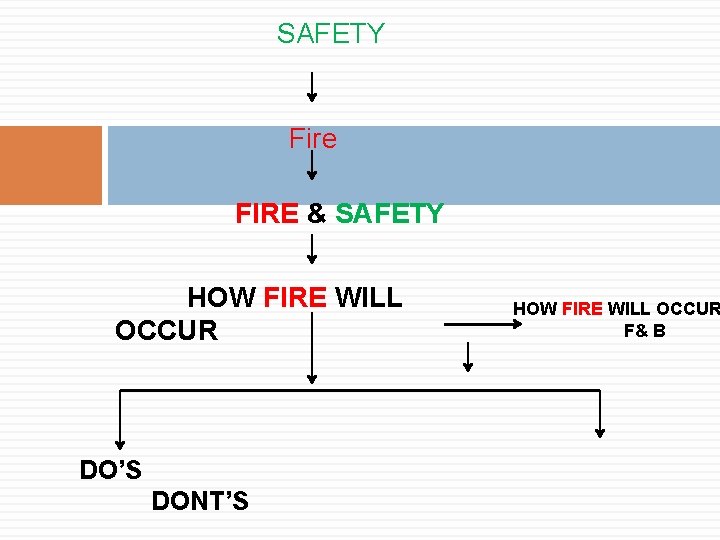
SAFETY Fire FIRE & SAFETY HOW FIRE WILL OCCUR DO’S DONT’S HOW FIRE WILL OCCUR F& B

FIRE FIGHTING EQUIPMENTS Water Type Fire Extinguisher & Types CO 2 Type DCP Type Foam Type Fire Blanket Fire Hydrant & Types Yard Hydrant Internal Hydrant Fire Escape Hydrant
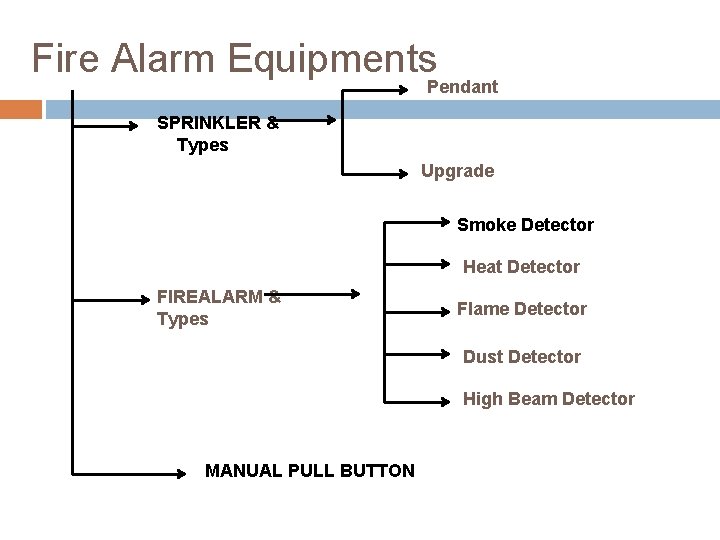
Fire Alarm Equipments Pendant SPRINKLER & Types Upgrade Smoke Detector Heat Detector FIREALARM & Types Flame Detector Dust Detector High Beam Detector MANUAL PULL BUTTON
What is safety. . ? The condition of being protected from or unlikely to cause danger, risk, or injury. Industrial safety is defined as policies and protections put in place to ensure plant and factory worker protection from hazards that could cause injury.
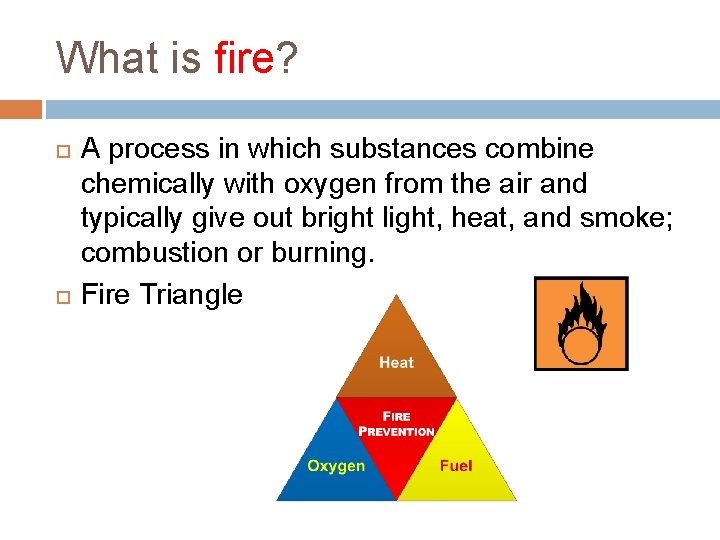
What is fire? A process in which substances combine chemically with oxygen from the air and typically give out bright light, heat, and smoke; combustion or burning. Fire Triangle
What Is Fire and Safety? Fire safety is the set of practices intended to reduce the destruction caused by fire. Fire safety measures include those that are intended to prevent ignition of an uncontrolled fire, and those that are used to limit the development and effects of a fire after it starts. A fire hazard may include a situation that increases the likelihood of a fire or may impede escape in the event a fire occurs.
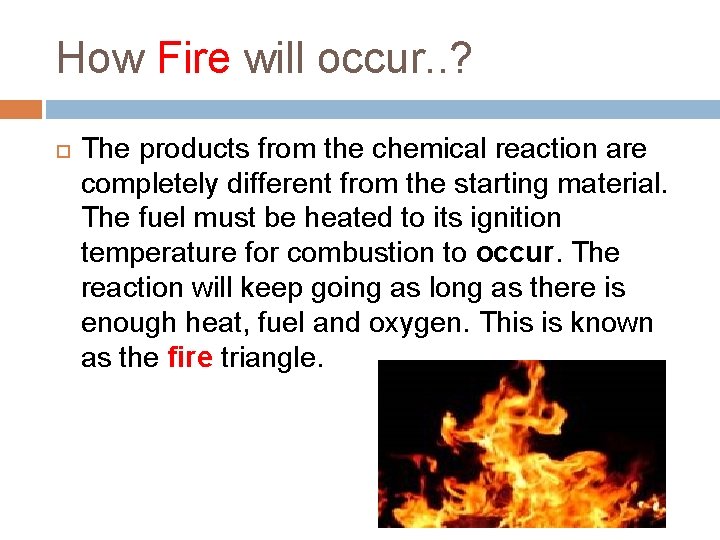
How Fire will occur. . ? The products from the chemical reaction are completely different from the starting material. The fuel must be heated to its ignition temperature for combustion to occur. The reaction will keep going as long as there is enough heat, fuel and oxygen. This is known as the fire triangle.
How fire occur in F&B and Housekeeping department Gas Leakages Unwanted smoking near gas. Hose pipe damage. Less Ventilation. Unclean areas Electrical damages i. e ( Microwave oven, Fridge)
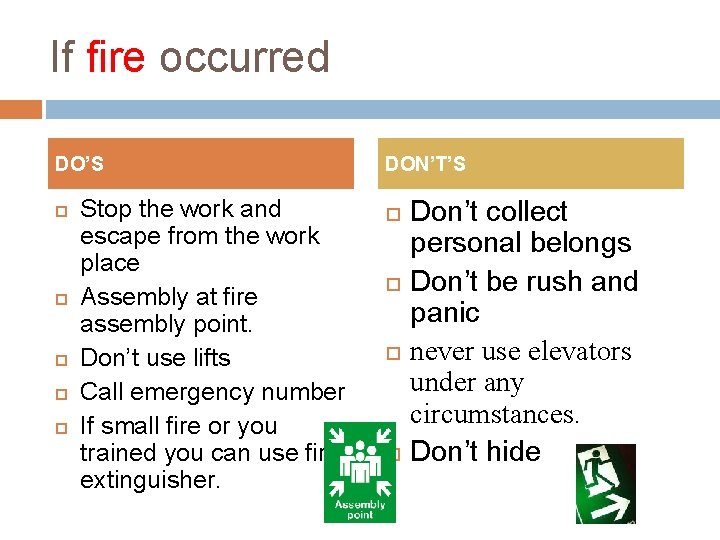
If fire occurred DO’S Stop the work and escape from the work place Assembly at fire assembly point. Don’t use lifts Call emergency number If small fire or you trained you can use fire extinguisher. DON’T’S Don’t collect personal belongs Don’t be rush and panic never use elevators under any circumstances. Don’t hide
How to Control the fire? Fire control is the practice of reducing the heat output of a fire, reducing the area over which the fire exists, or suppressing or extinguishing the fire by depriving it of fuel, oxygen, or heat (see fire triangle).

Fire Control This diagram gives an overview of fire prevention for workplaces
EVERY ONE MUST KNOW WHAT IS FIRE ? • THE COMMON CAUSES OF FIRE, • WHAT TO DO INCASE OF FIRE, • HOW TO CALL FIRE BRIGADE, • WHAT TO DO WHEN FIRE BRIGADE ARRIVALS. • THE NEAREST FIRE ALARM (IF PROVIDED), • HOW TO OPERATE FIRE ALARM, • THE NEAREST “MEANS OF ESCAPE”, • THE NEAREST FIRE EXTINGUISHERS, • HOW TO OPERATE AN EXTINGUISHER •
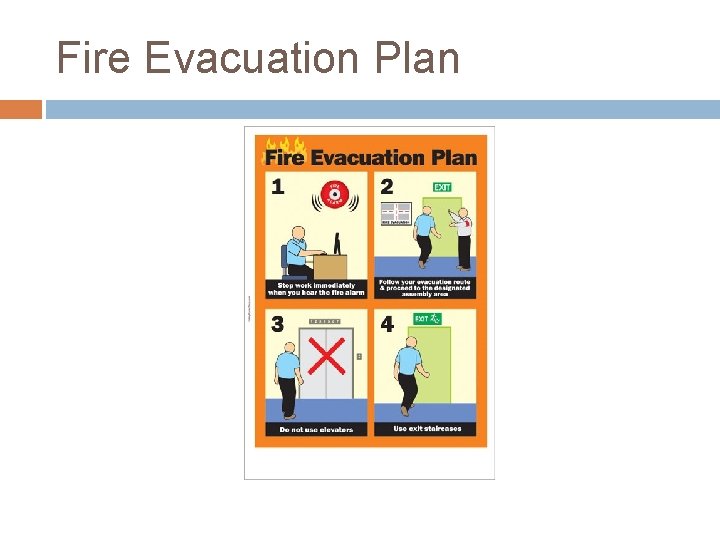
Fire Evacuation Plan
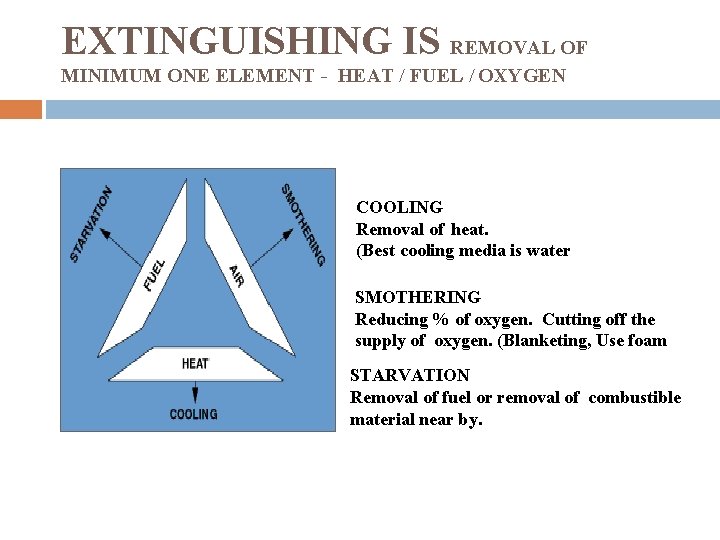
EXTINGUISHING IS REMOVAL OF MINIMUM ONE ELEMENT - HEAT / FUEL / OXYGEN COOLING Removal of heat. (Best cooling media is water SMOTHERING Reducing % of oxygen. Cutting off the supply of oxygen. (Blanketing, Use foam STARVATION Removal of fuel or removal of combustible material near by.
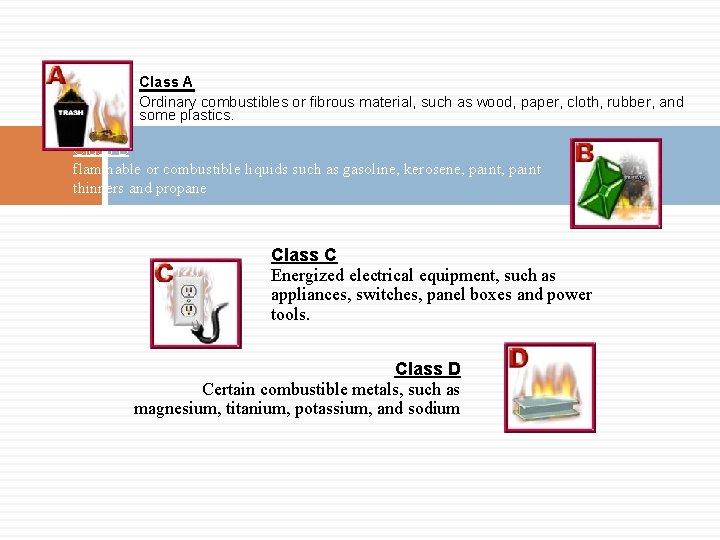
Class A Ordinary combustibles or fibrous material, such as wood, paper, cloth, rubber, and some plastics. Class B flammable or combustible liquids such as gasoline, kerosene, paint thinners and propane Class C Energized electrical equipment, such as appliances, switches, panel boxes and power tools. Class D Certain combustible metals, such as magnesium, titanium, potassium, and sodium
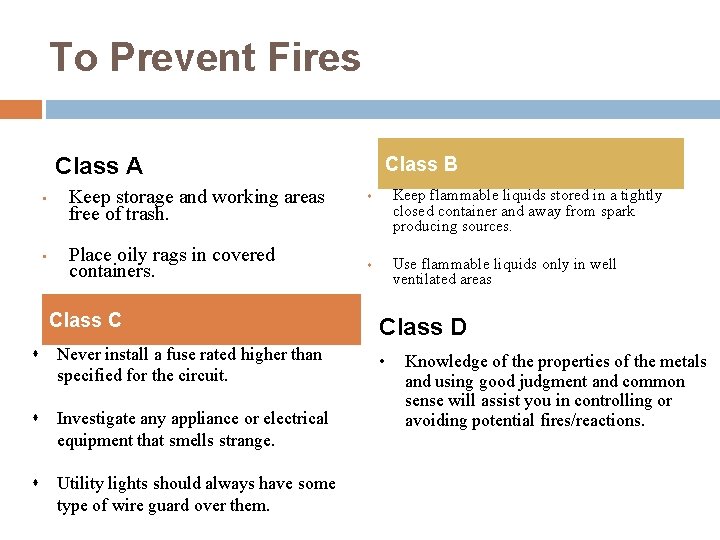
To Prevent Fires Class A • Keep storage and working areas free of trash. • Place oily rags in covered containers. Class C s Never install a fuse rated higher than specified for the circuit. s Investigate any appliance or electrical equipment that smells strange. s Utility lights should always have some type of wire guard over them. Class B Keep flammable liquids stored in a tightly closed container and away from spark producing sources. s Use flammable liquids only in well ventilated areas s Class D • Knowledge of the properties of the metals and using good judgment and common sense will assist you in controlling or avoiding potential fires/reactions.
Fire Prevention Do not block fire exits, call points or extinguishers Do not wedge fire doors open Ensure good housekeeping Report any bad practice or risks immediately to your line manager and safety Manager.
What is PPE? Personal protective equipment (PPE) It is refers to protective clothing, helmets, goggles, or other garments or equipment designed to protect the wearer's body from injury or infection. The hazards addressed by protective equipment include physical, electrical, heat, chemicals, biohazards, and airborne particulate matter.
On Your Return to Your Workplace Today Ensure that you know; The escape routes Emergency exit doors and how to open them Location and types of fire fighting equipment Locations of call points Any specific fire procedures including the assembly points Who are your Reporting authorities/Safety Managers Whom to report to with any defects or bad practices
EMERGENCY CONTACT NUMBER Fire Control - 101, 112 Ambulance – 108, 102 Police Station – 100 Fire Station CMBT – 044 -24792610
As a member of staff at the Hospital you have a responsibility for fire safety. Make sure you know What the fire alarm sound like in your building The Escape routes within your building If you discover a fire, how to raise the alarm What to do if you hear the fire alarm Who to call if a fire starts How to open final exit doors Why is it important to go to the assembly area? Why fire doors should remain closed at all times? Why are fire extinguishers provided?
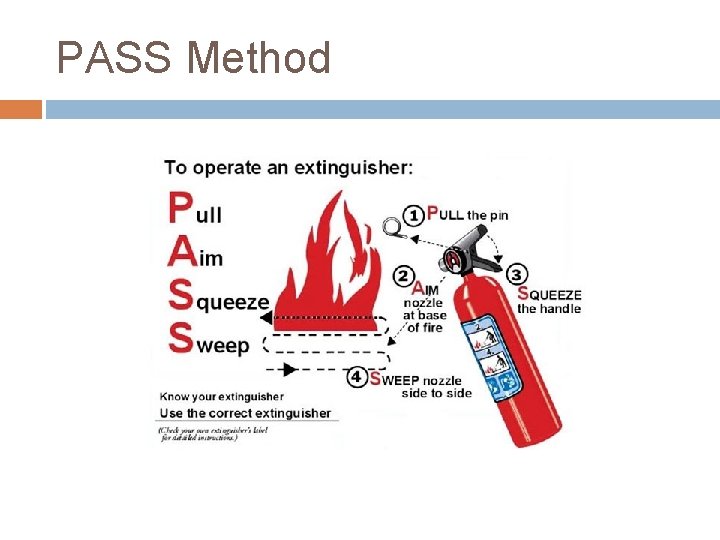
PASS Method

R-A-C-E Method
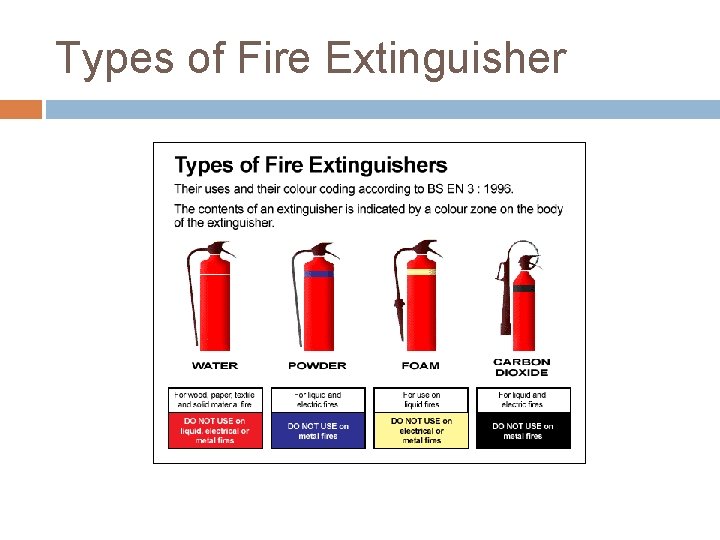
Types of Fire Extinguisher
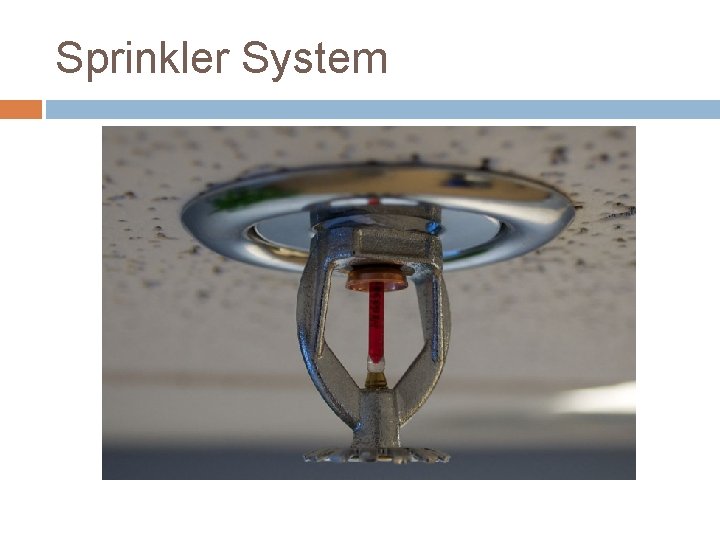
Sprinkler System
Sprinkler System A glass bulb type sprinkler head will spray water into the room if sufficient heat reaches the bulb and causes it to shatter. Sprinkler heads operate individually. Note the red liquid alcohol in the glass bulb. When one or more of the automatic sprinkler heads is triggered, it opens allowing the air in the piping to vent from that sprinkler. Each sprinkler operates independently, as its temperature rises above its triggering threshold. As the air pressure in the piping drops, the pressure differential across the dry pipe valve changes, allowing water to enter the piping system.
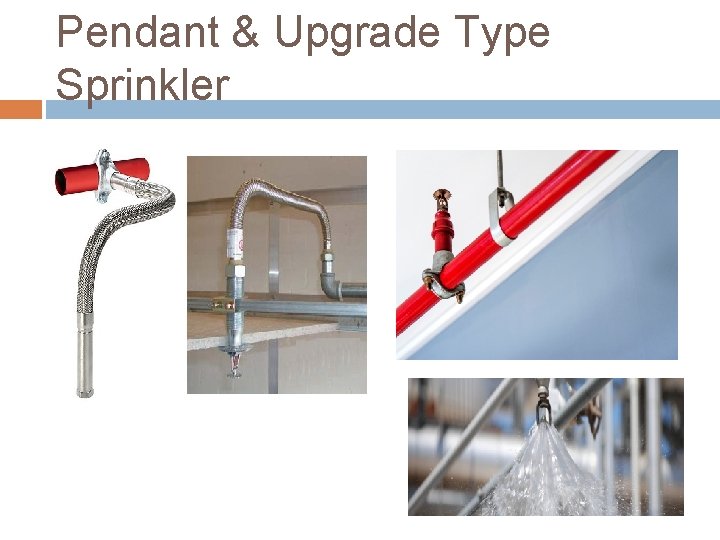
Pendant & Upgrade Type Sprinkler
Hydrant System A fire hydrant is a connection point by which fire fighters can tap into a water supply. It is a component of active fire protection. Fire hydrant pump systems (also known as fire pumps, hydrant boosters, fire water pumps) are high pressure water pumps designed to increase the fire fighting capacity of a building by boosting the pressure in the hydrant service when mains is not enough, or when tank fed.
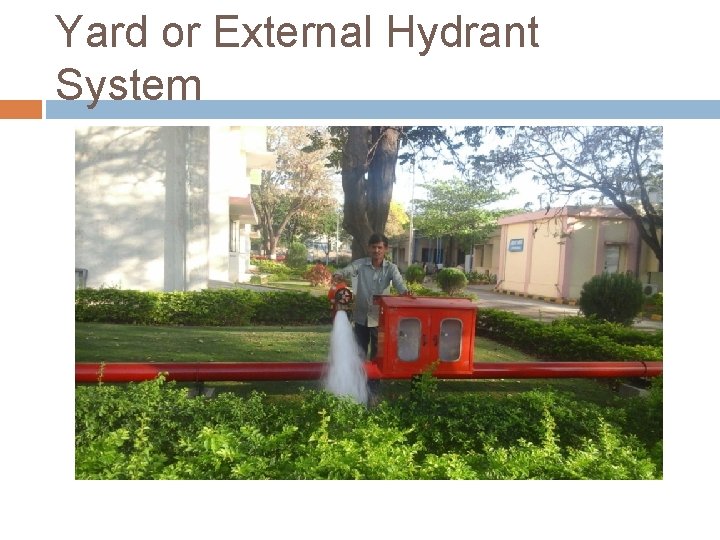
Yard or External Hydrant System
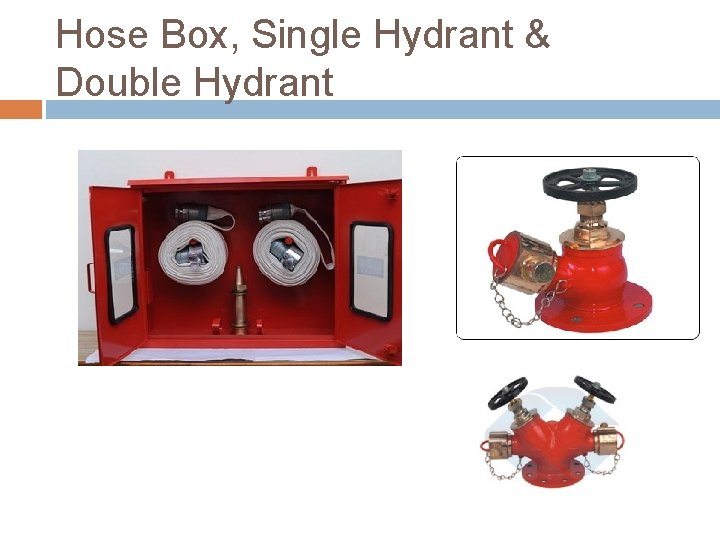
Hose Box, Single Hydrant & Double Hydrant
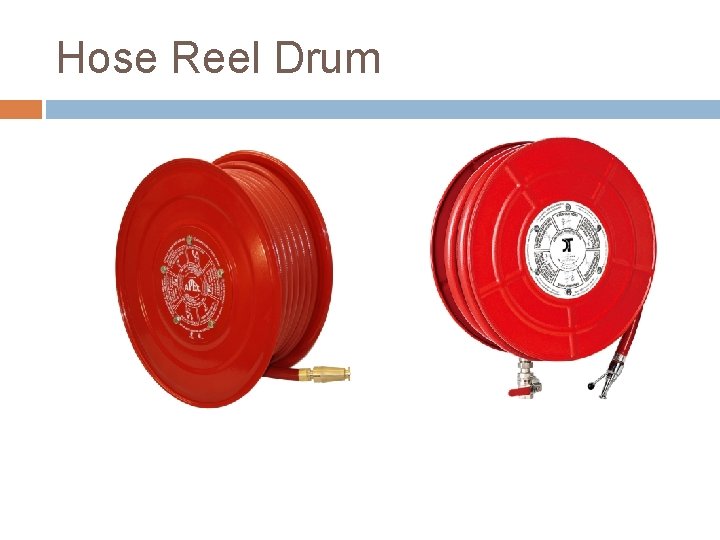
Hose Reel Drum
Hose Reel Drum A fire hose is a high-pressure hose that carries water or other fire retardant (such as foam) to a fire to extinguish it. Outdoors, it attaches either to a fire engine or a fire hydrant. Indoors, it can permanently attach to a building's standpipe or plumbing system.
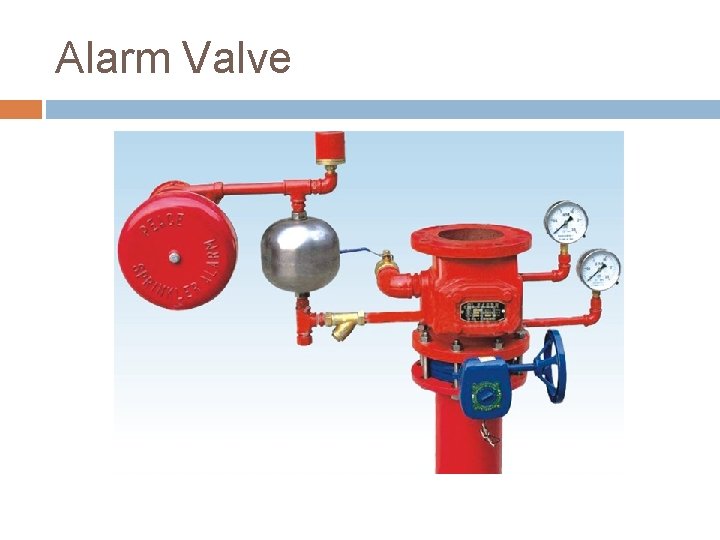
Alarm Valve
Alarm Valve The alarm check valve is a water flow alarm device designed for vertical installation in the main supply to a wet pipe sprinkler system. When a flow of water from the system equals or exceeds that of a single sprinkler, the valve is to actuate a fire alarm.
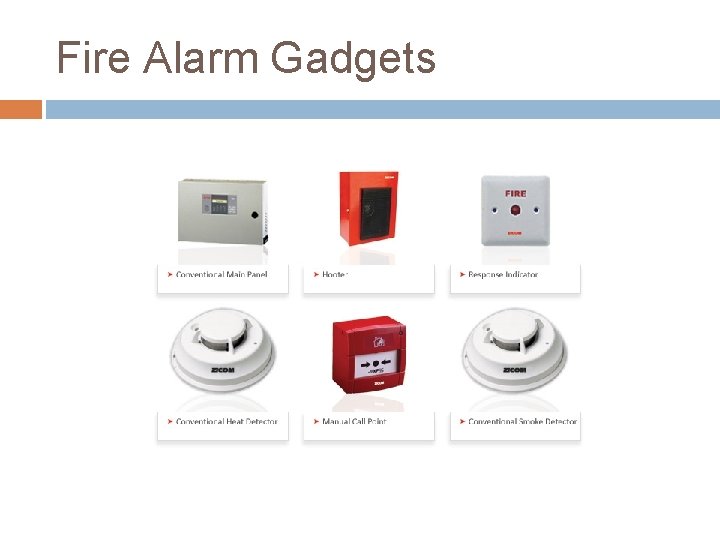
Fire Alarm Gadgets
Fire Alarm System A fire alarm system is number of devices working together to detect and warn people through visual and audio appliances when smoke, fire, carbon monoxide or other emergencies are present. These alarms may be activated from smoke detectors, and heat detectors.
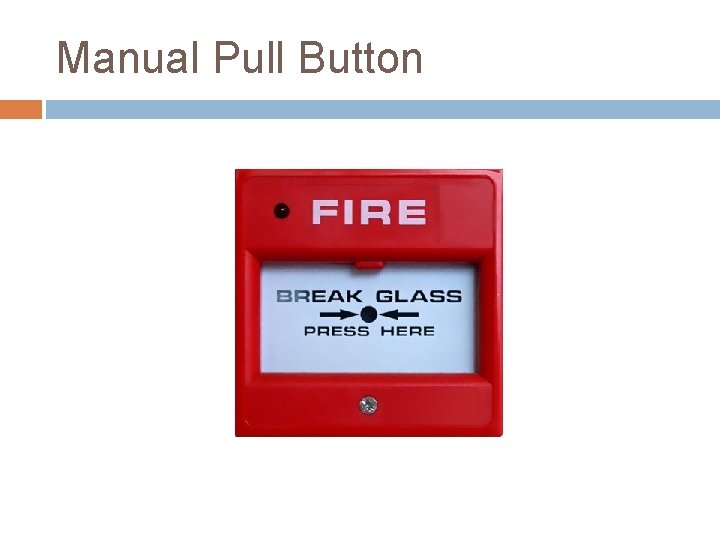
Manual Pull Button
Manual Pull Button Speaker strobes which sound an alarm, followed by a voice evacuation message which warn people inside the building not to use the elevators. They may also be activated via manual fire alarm activation devices such as manual call points or pull stations.
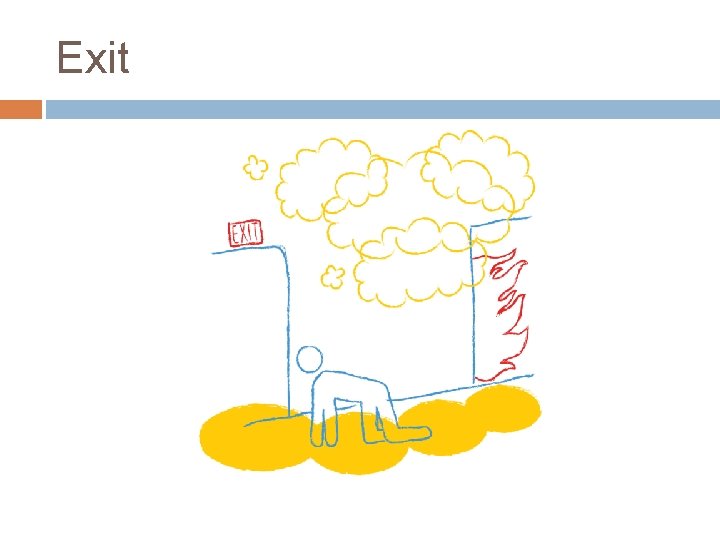
Exit
Extinguishing a person engulfed in flames If a person's clothing is on fire, he/she must not be allowed to run, as this will fan the flames and cause a more serious burn. Remember! STOP, DROP and ROLL. Roll the person on the floor if necessary. Wrap him/her in a fire blanket, coat or whatever is available to smother the flames. Put the person under a shower or use an extinguisher, or whatever is available to smother the flames. After calling the emergency numbers, place clean, wet, ice-packed cloths on small burned areas. Wrap the person warmly to avoid shock, and secure medical assistance
YOUR SAFETY COMES FIRST ANY QUESTIONS THANK YOU. . . !!!
- Slides: 42