
Basic Electrical Theory ELPT 1311 Chapter 2 Basic
Basic Electrical Theory ELPT 1311 Chapter 2 Basic Electrical Concepts

Basic Electrical Concepts • Outline o Matter, Elements and Atoms o Electrical Charge o Current o Voltage o Resistance o Conductors, Insulators, and Semiconductors
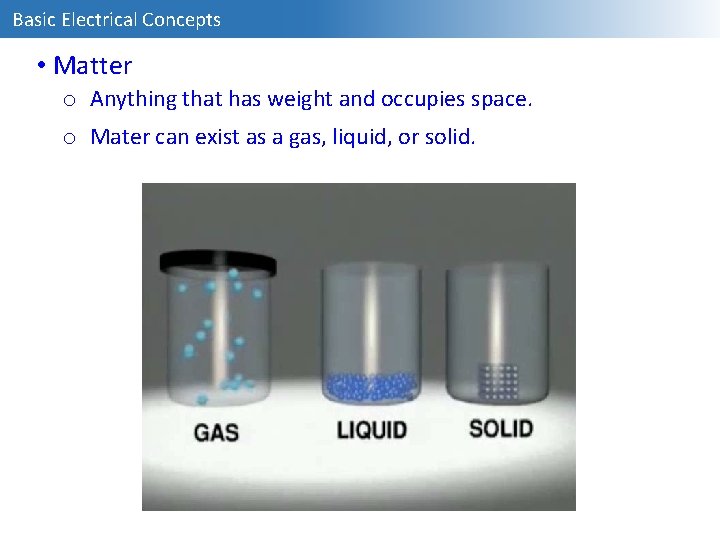
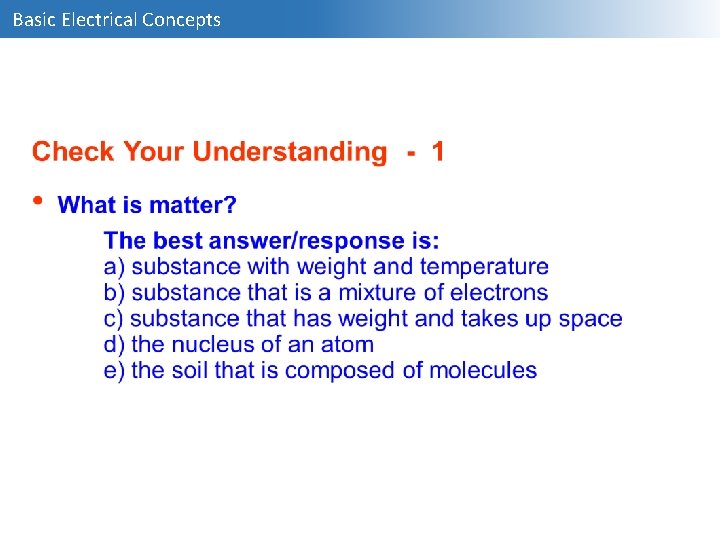
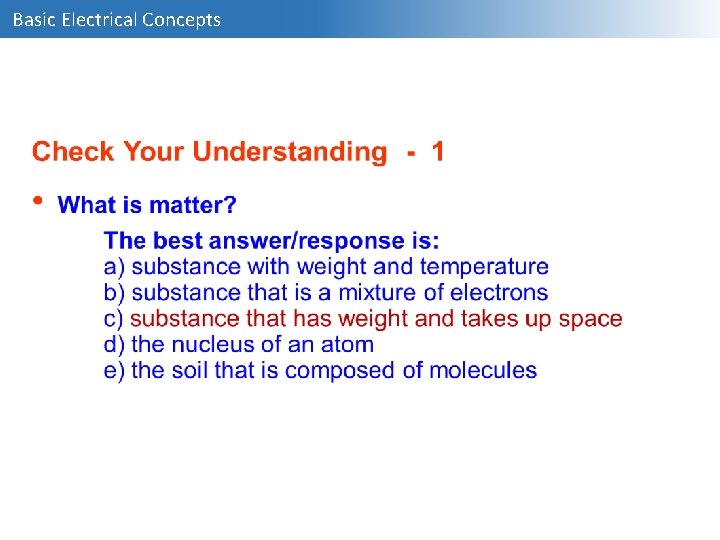
Basic Electrical Concepts • Matter o Anything that has weight and occupies space. o Mater can exist as a gas, liquid, or solid.
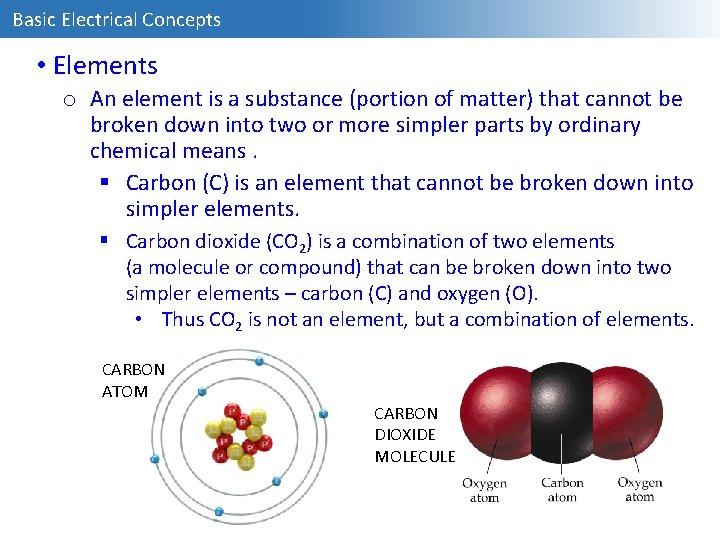
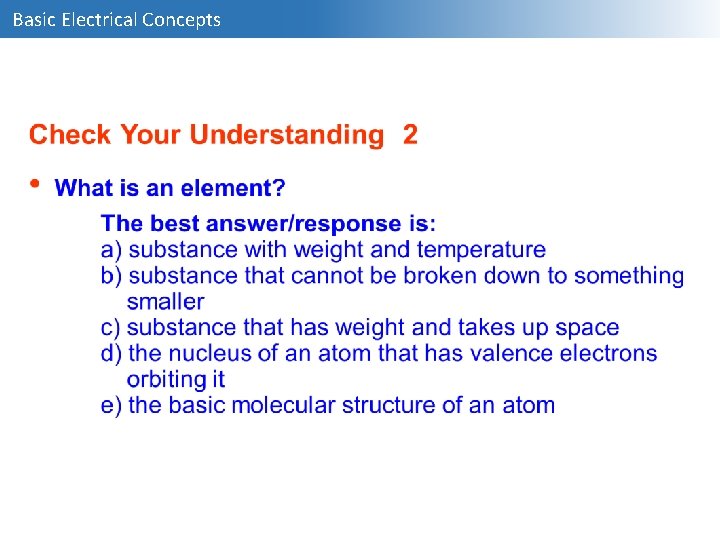
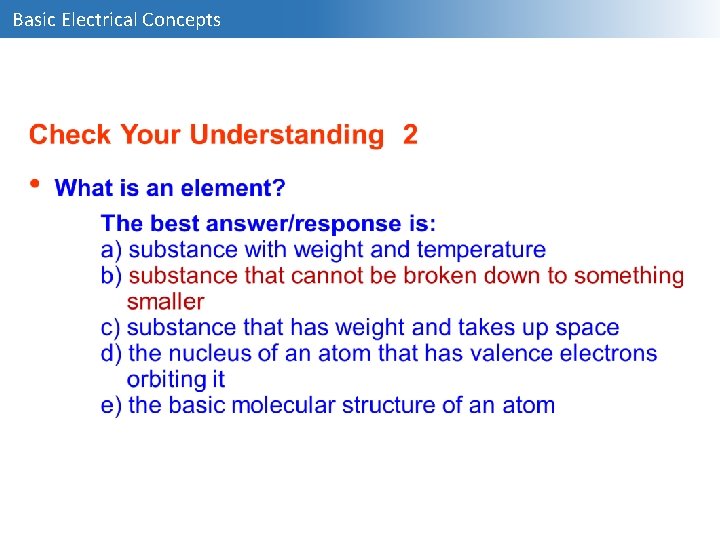
Basic Electrical Concepts • Elements o An element is a substance (portion of matter) that cannot be broken down into two or more simpler parts by ordinary chemical means. § Carbon (C) is an element that cannot be broken down into simpler elements. § Carbon dioxide (CO 2) is a combination of two elements (a molecule or compound) that can be broken down into two simpler elements – carbon (C) and oxygen (O). • Thus CO 2 is not an element, but a combination of elements. CARBON ATOM CARBON DIOXIDE MOLECULE

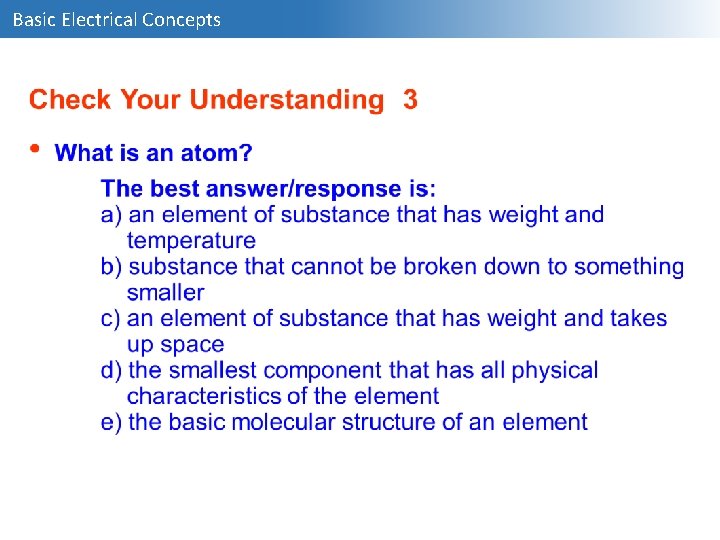
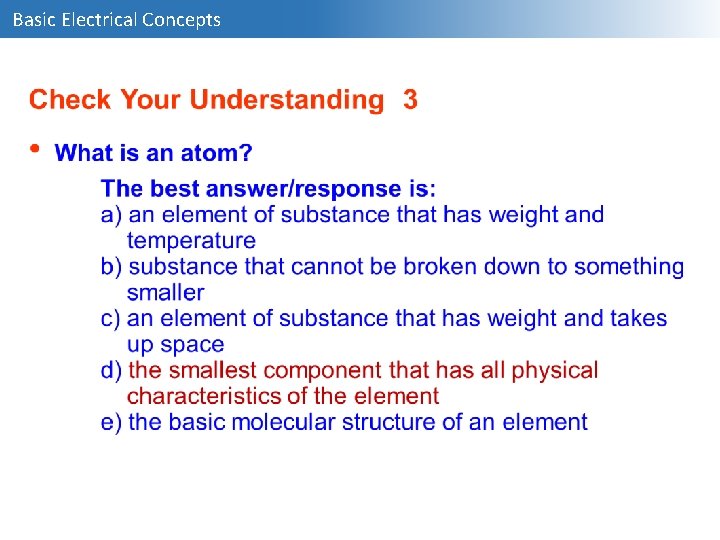
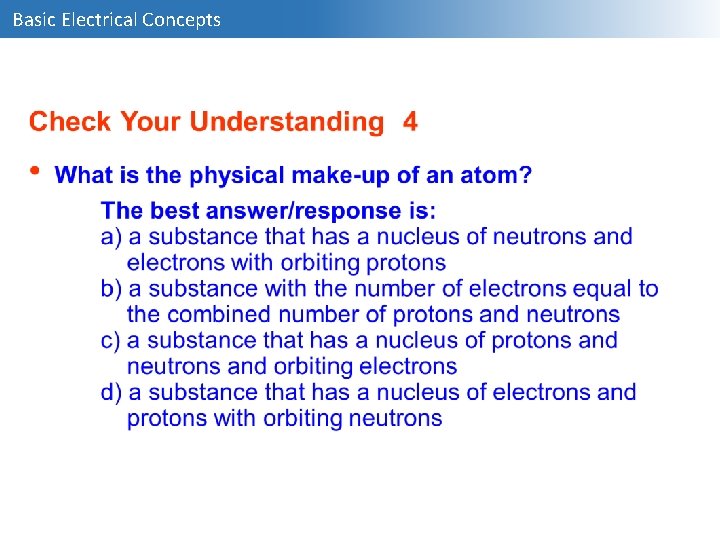
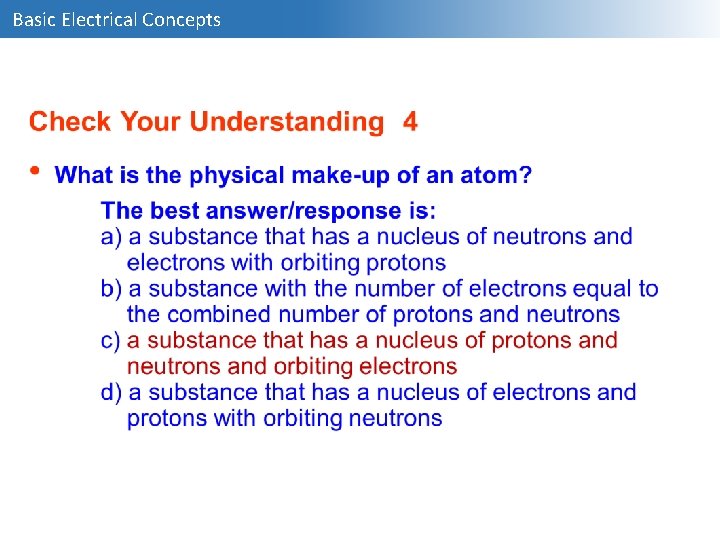
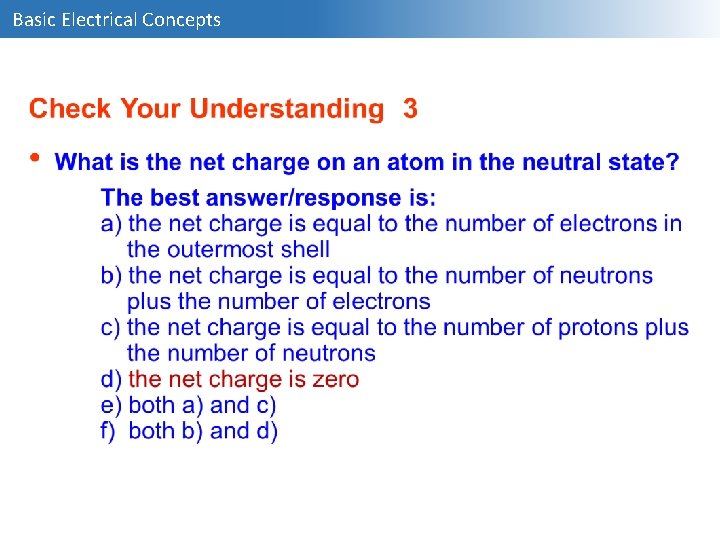
Basic Electrical Concepts • Atoms o An atom is the smallest particle of an element that retains all the physical characteristics of the element. o The basic atom has three components. § Protons - positive charged particles § Neutrons - neutral charge § Electrons - negatively charged particles HELIUM o The central portion of an atom is called the nucleus and contains protons and neutrons. o The electrons orbit the nucleus in rings or shells. o The number of protons and electrons and neutrons varies from atom to atom, but in a balanced condition (or neutral state), each atom has the same number of protons and electrons.
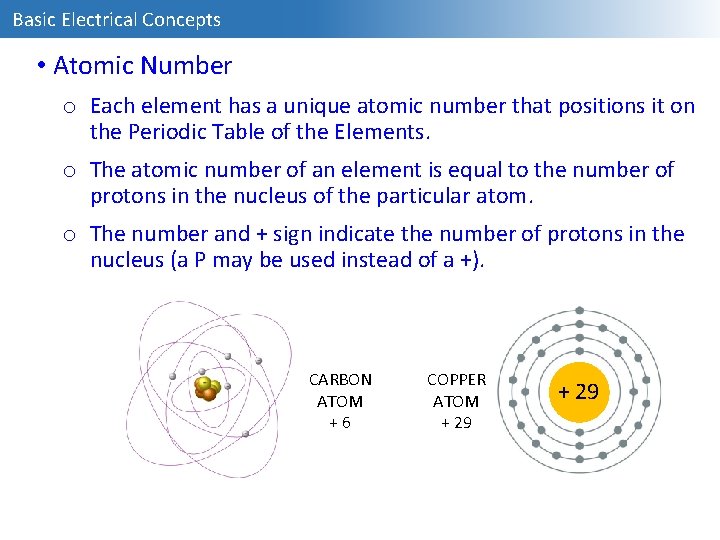
Basic Electrical Concepts • Atomic Number o Each element has a unique atomic number that positions it on the Periodic Table of the Elements. o The atomic number of an element is equal to the number of protons in the nucleus of the particular atom. o The number and + sign indicate the number of protons in the nucleus (a P may be used instead of a +). CARBON ATOM +6 COPPER ATOM + 29
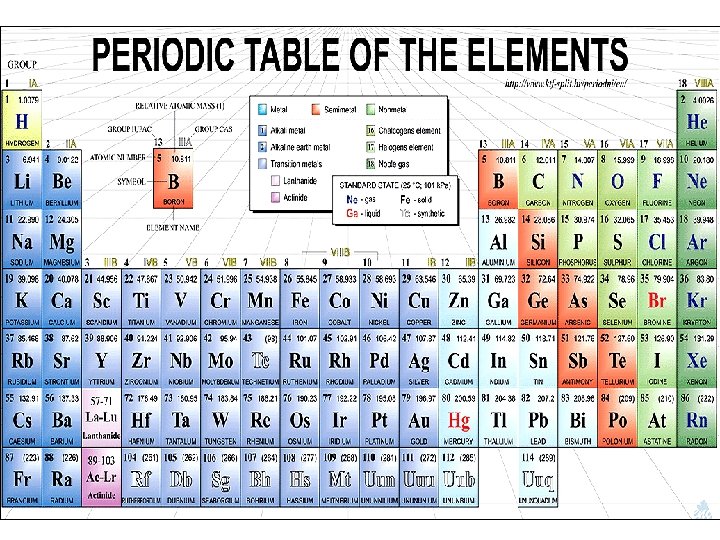

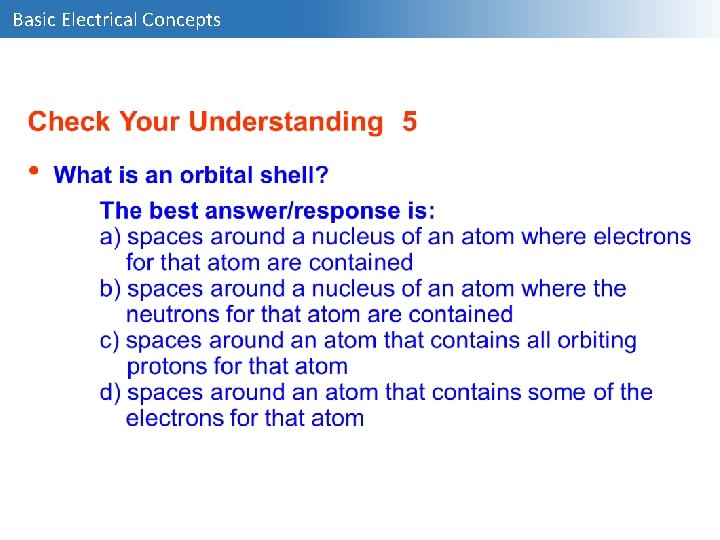
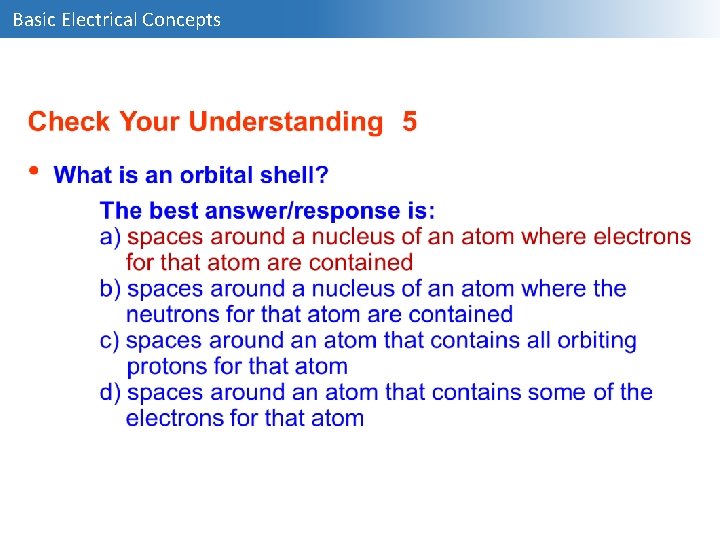
Basic Electrical Concepts • Orbital Shells o Electrons circle the nucleus of an atom in orbital paths that are referred to as shells. o Principal shells from the nearest to the nucleus to the furthest from the nucleus are identified by the letters and (numbers) k (1), L (2), M (3), and N (4). o Each shell up through the N shell has a maximum number of electron that the shells can hold which is determined by the mathematical relationship: 2 n 2 (where n is the shell #) o The maximum number of electrons in the M shell is: 2 n 2 = 2(3)2 = 18
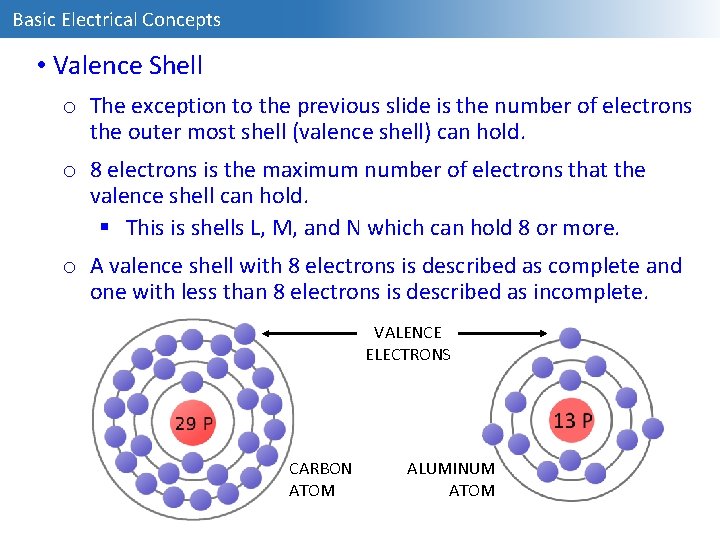
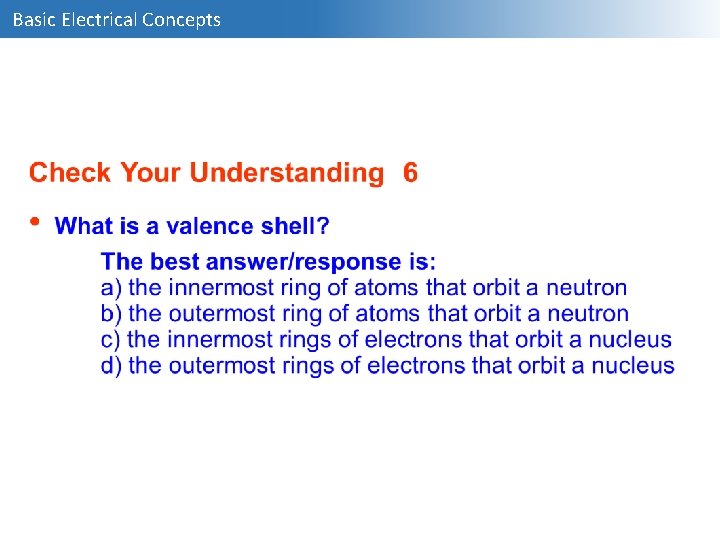
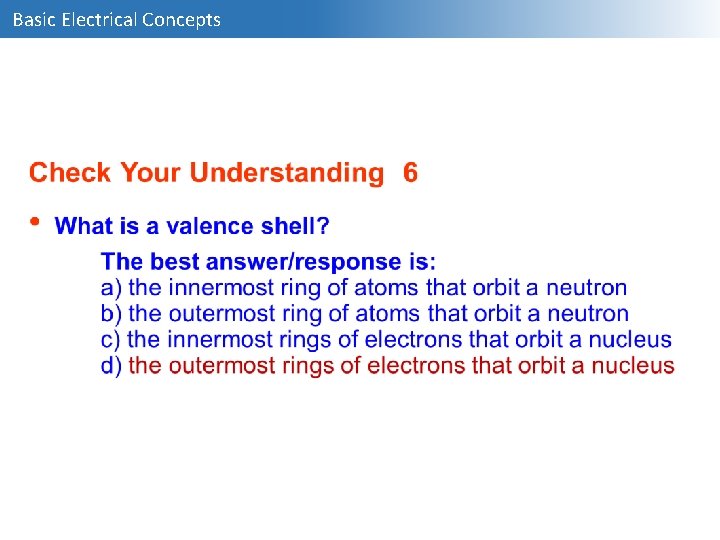
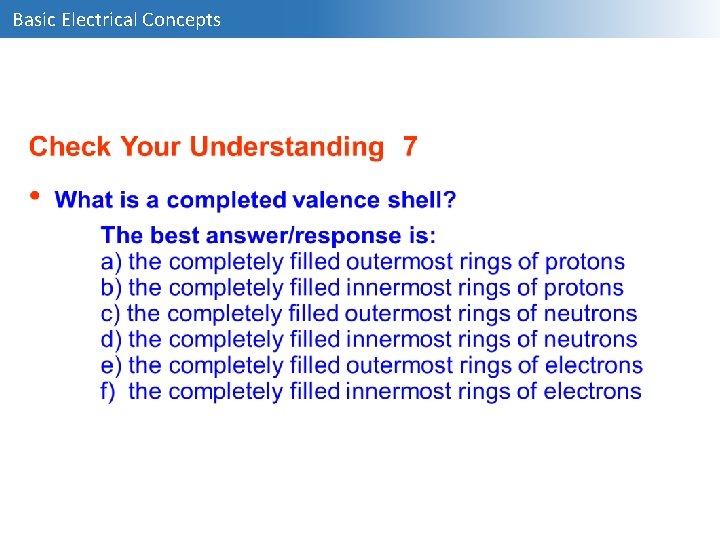
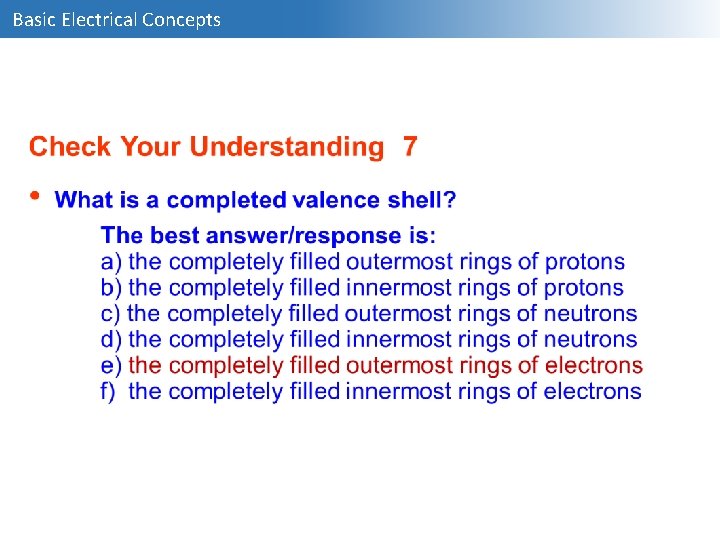
Basic Electrical Concepts • Valence Shell o The exception to the previous slide is the number of electrons the outer most shell (valence shell) can hold. o 8 electrons is the maximum number of electrons that the valence shell can hold. § This is shells L, M, and N which can hold 8 or more. o A valence shell with 8 electrons is described as complete and one with less than 8 electrons is described as incomplete. VALENCE ELECTRONS CARBON ATOM ALUMINUM ATOM
Basic Electrical Concepts
Basic Electrical Concepts
Basic Electrical Concepts
Basic Electrical Concepts
Basic Electrical Concepts
Basic Electrical Concepts
Basic Electrical Concepts
Basic Electrical Concepts
Basic Electrical Concepts
Basic Electrical Concepts
Basic Electrical Concepts
Basic Electrical Concepts
Basic Electrical Concepts
Basic Electrical Concepts
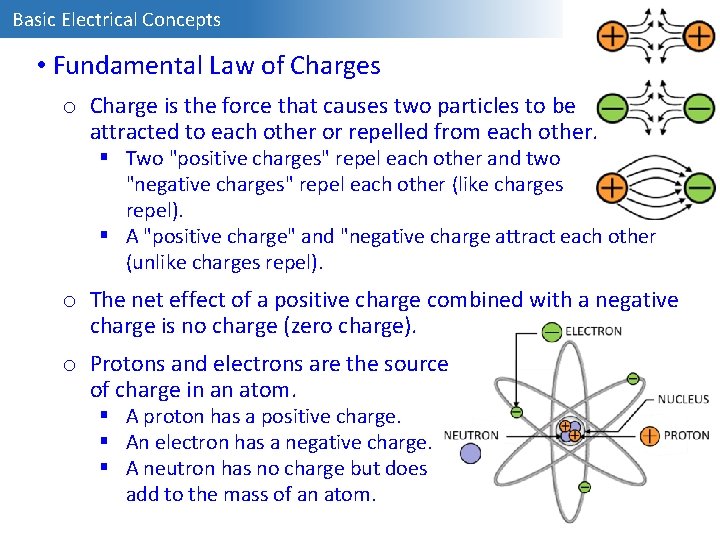
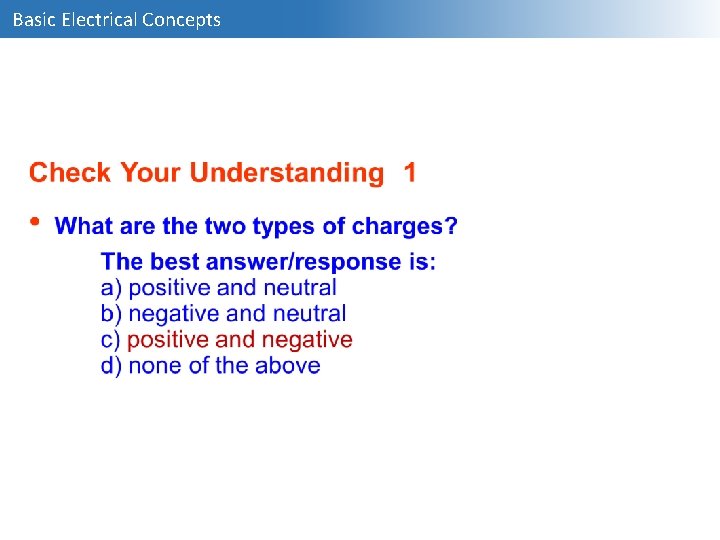
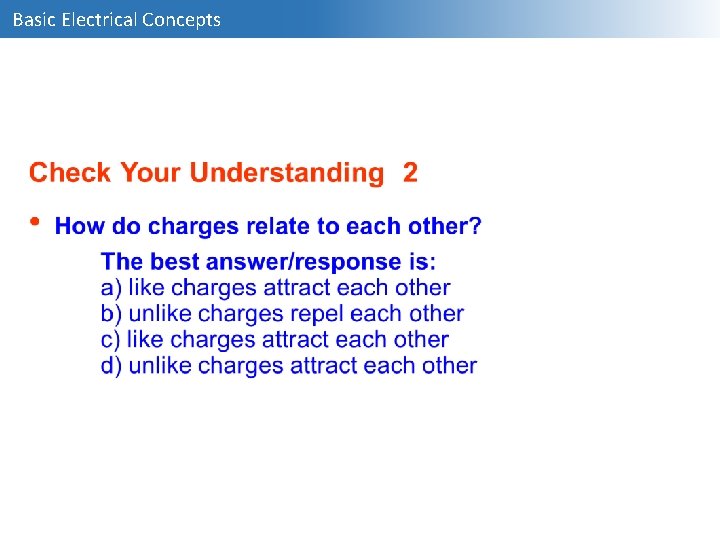
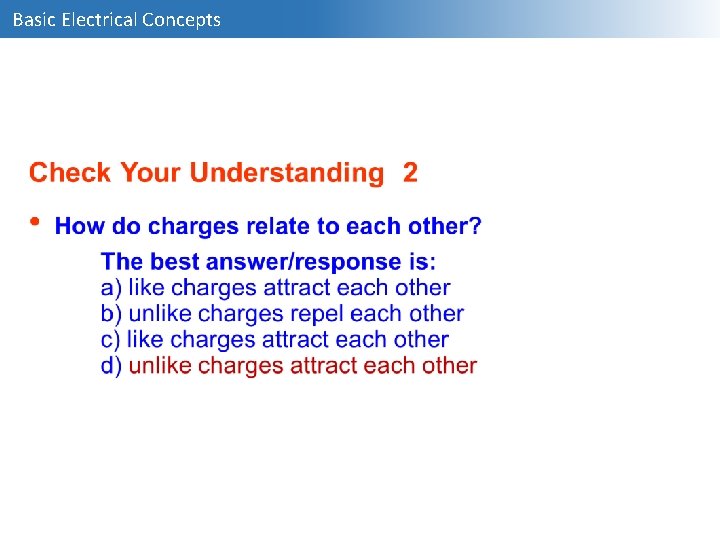
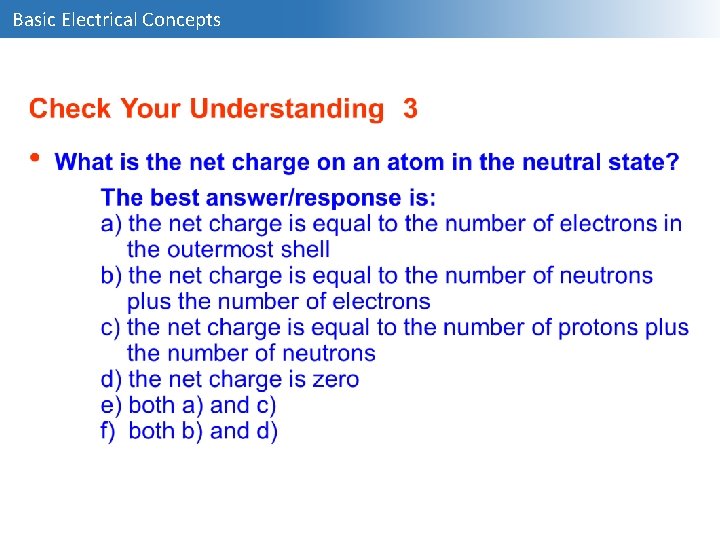
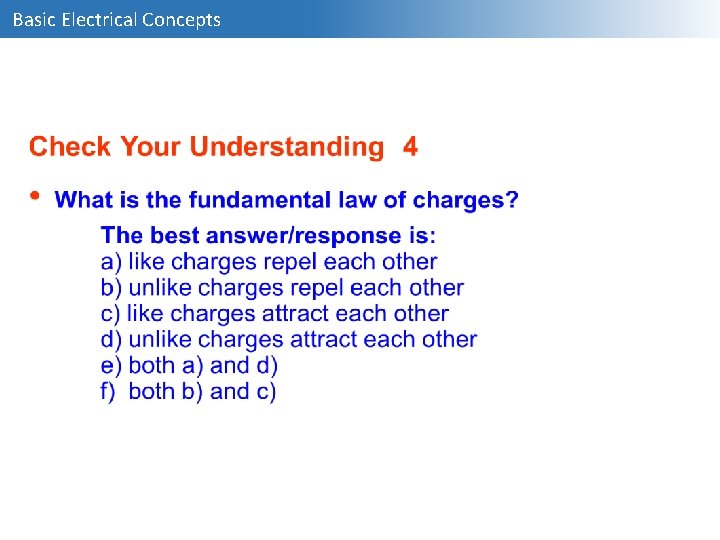
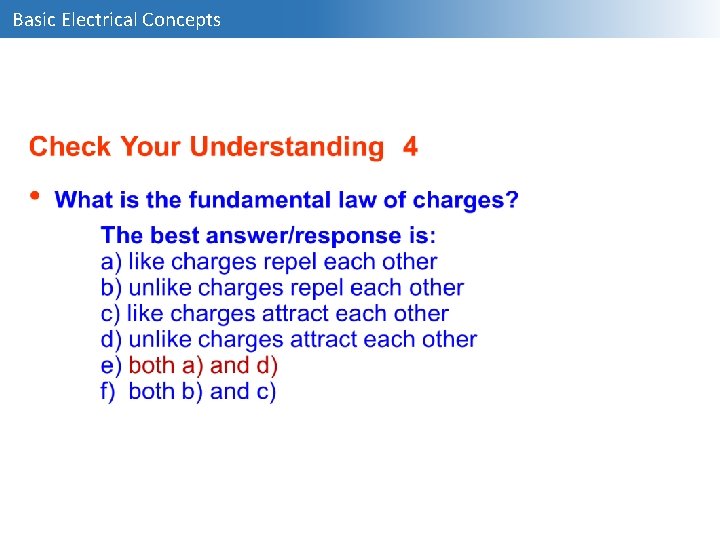
Basic Electrical Concepts • Fundamental Law of Charges o Charge is the force that causes two particles to be attracted to each other or repelled from each other. § Two "positive charges" repel each other and two "negative charges" repel each other (like charges repel). § A "positive charge" and "negative charge attract each other (unlike charges repel). o The net effect of a positive charge combined with a negative charge is no charge (zero charge). o Protons and electrons are the source of charge in an atom. § A proton has a positive charge. § An electron has a negative charge. § A neutron has no charge but does add to the mass of an atom.
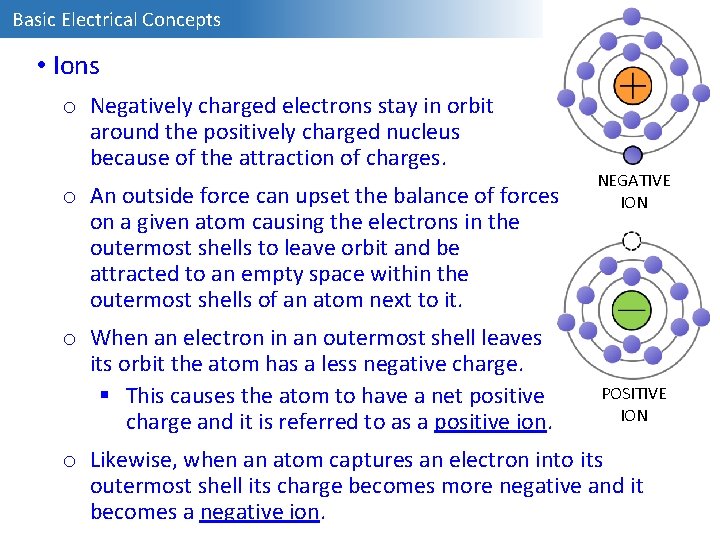
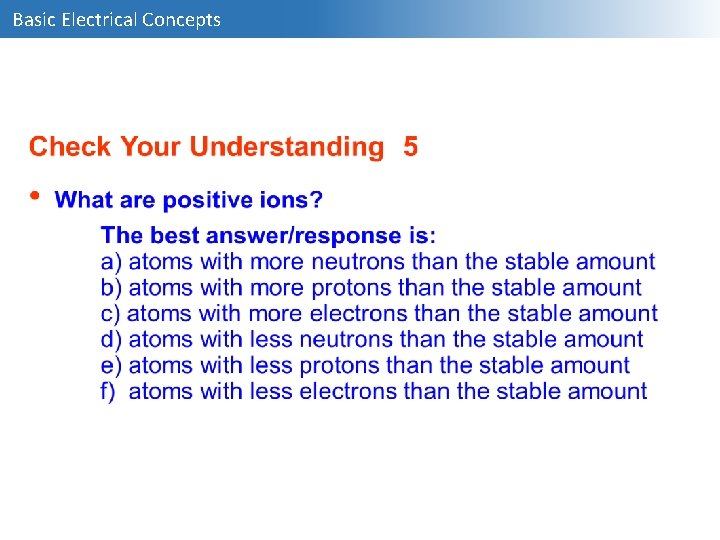
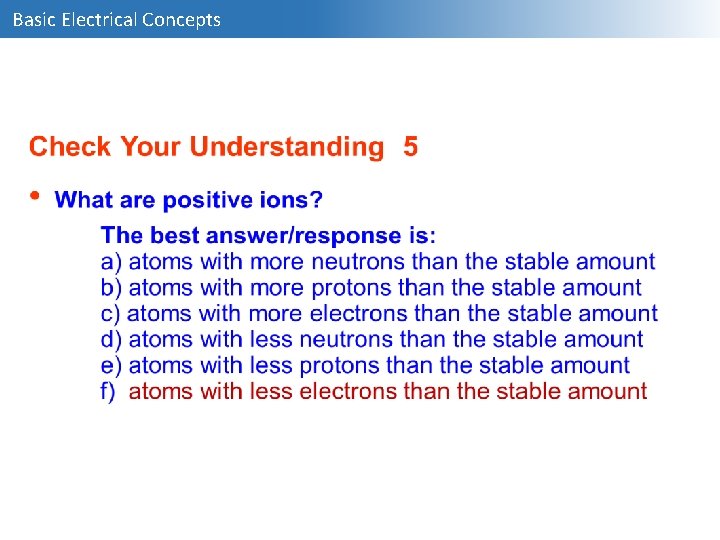
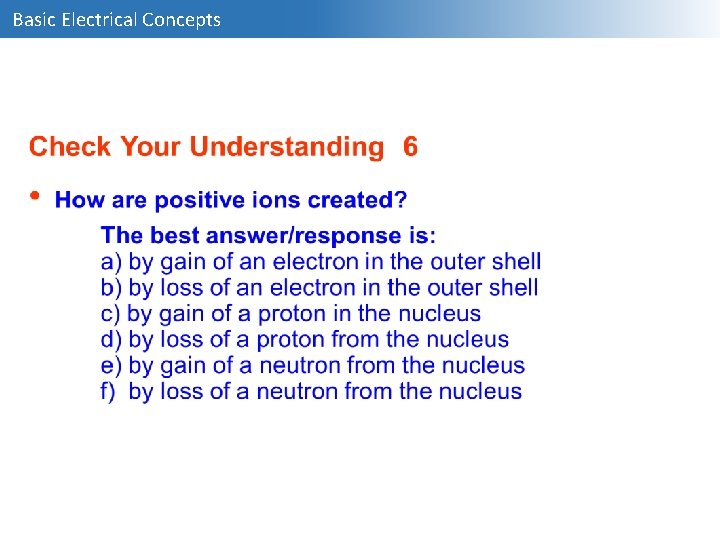
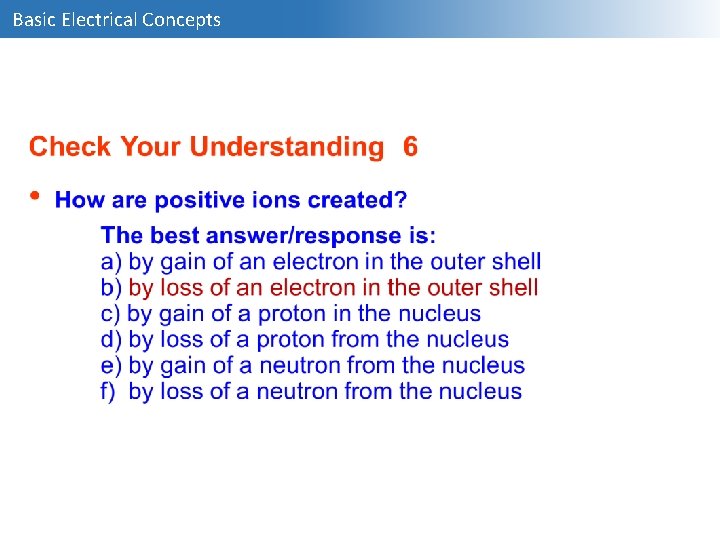
Basic Electrical Concepts • Ions o Negatively charged electrons stay in orbit around the positively charged nucleus because of the attraction of charges. o An outside force can upset the balance of forces on a given atom causing the electrons in the outermost shells to leave orbit and be attracted to an empty space within the outermost shells of an atom next to it. o When an electron in an outermost shell leaves its orbit the atom has a less negative charge. § This causes the atom to have a net positive charge and it is referred to as a positive ion. NEGATIVE ION POSITIVE ION o Likewise, when an atom captures an electron into its outermost shell its charge becomes more negative and it becomes a negative ion.
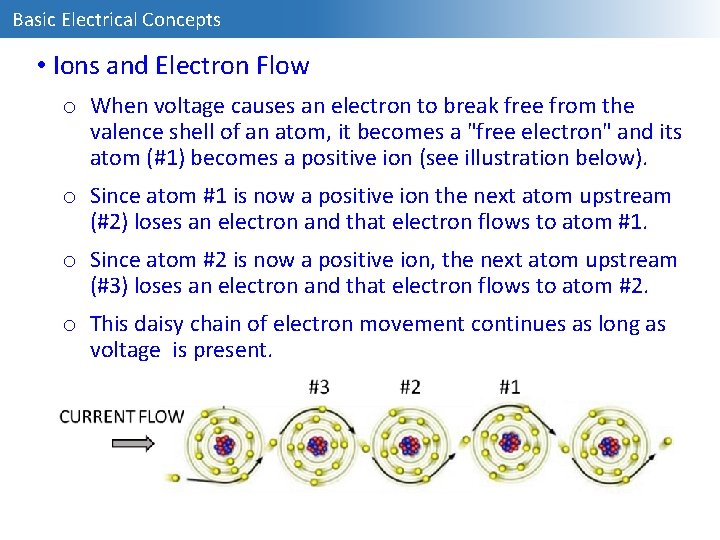
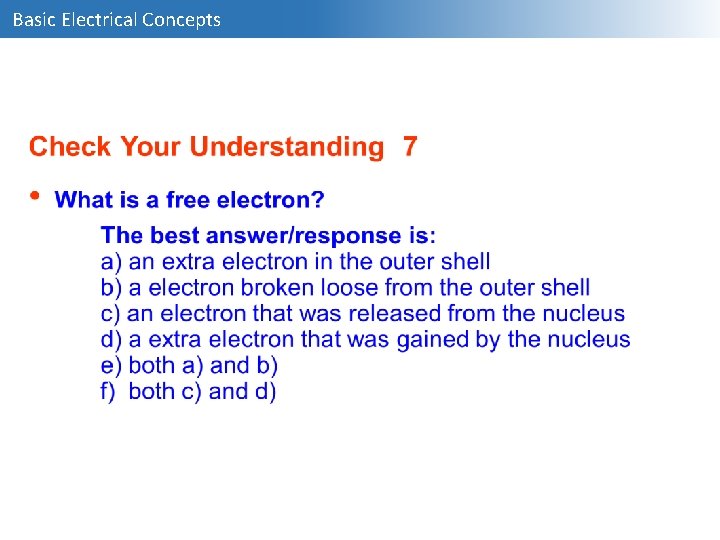
Basic Electrical Concepts • Ions and Electron Flow o When voltage causes an electron to break free from the valence shell of an atom, it becomes a "free electron" and its atom (#1) becomes a positive ion (see illustration below). o Since atom #1 is now a positive ion the next atom upstream (#2) loses an electron and that electron flows to atom #1. o Since atom #2 is now a positive ion, the next atom upstream (#3) loses an electron and that electron flows to atom #2. o This daisy chain of electron movement continues as long as voltage is present.
Basic Electrical Concepts
Basic Electrical Concepts
Basic Electrical Concepts
Basic Electrical Concepts
Basic Electrical Concepts
Basic Electrical Concepts
Basic Electrical Concepts
Basic Electrical Concepts
Basic Electrical Concepts
Basic Electrical Concepts
Basic Electrical Concepts
Basic Electrical Concepts
Basic Electrical Concepts
Basic Electrical Concepts
Basic Electrical Concepts
Basic Electrical Concepts
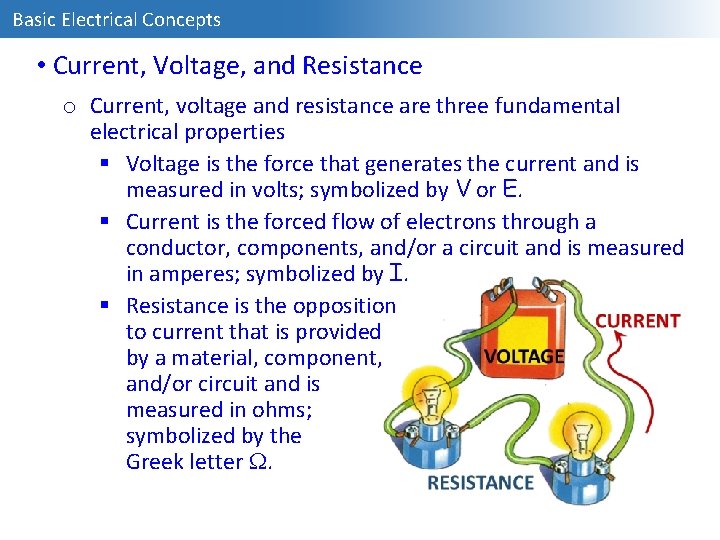
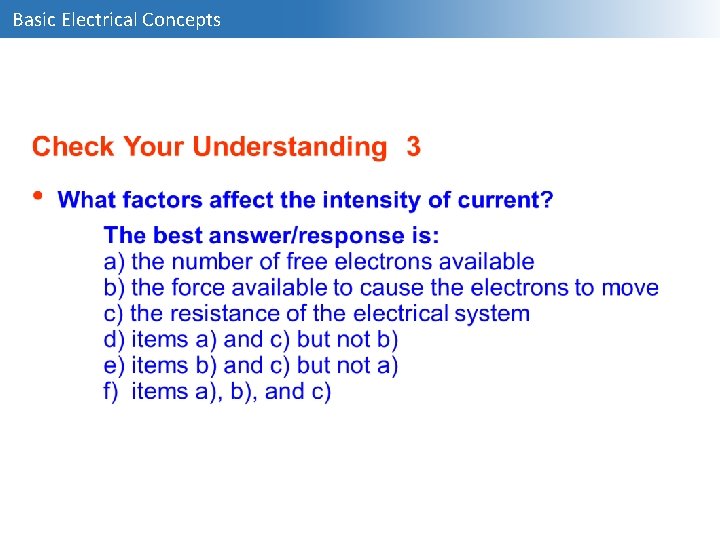
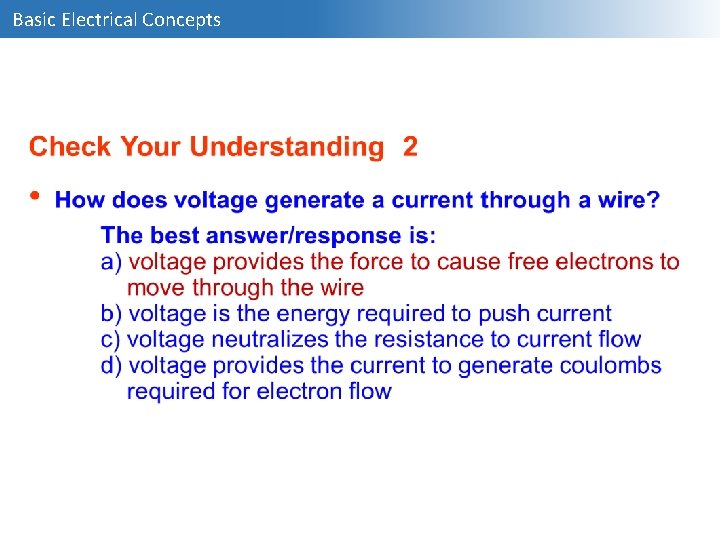
Basic Electrical Concepts • Current, Voltage, and Resistance o Current, voltage and resistance are three fundamental electrical properties § Voltage is the force that generates the current and is measured in volts; symbolized by V or E. § Current is the forced flow of electrons through a conductor, components, and/or a circuit and is measured in amperes; symbolized by I. § Resistance is the opposition to current that is provided by a material, component, and/or circuit and is measured in ohms; symbolized by the Greek letter .
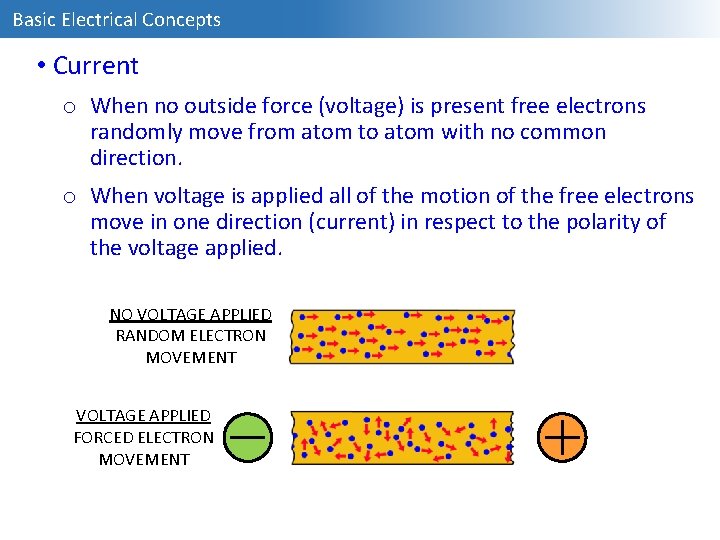
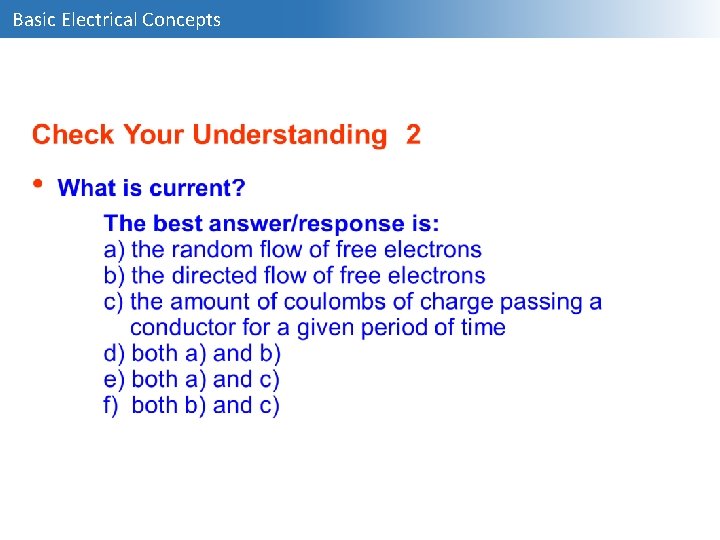
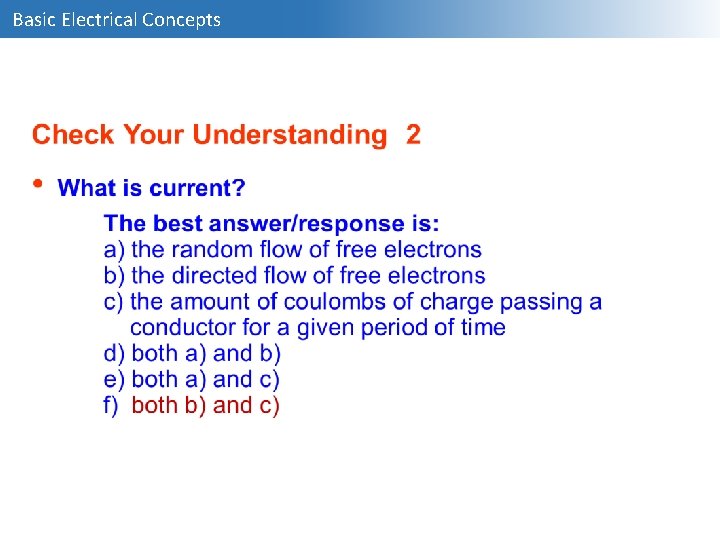
Basic Electrical Concepts • Current o When no outside force (voltage) is present free electrons randomly move from atom to atom with no common direction. o When voltage is applied all of the motion of the free electrons move in one direction (current) in respect to the polarity of the voltage applied. NO VOLTAGE APPLIED RANDOM ELECTRON MOVEMENT VOLTAGE APPLIED FORCED ELECTRON MOVEMENT
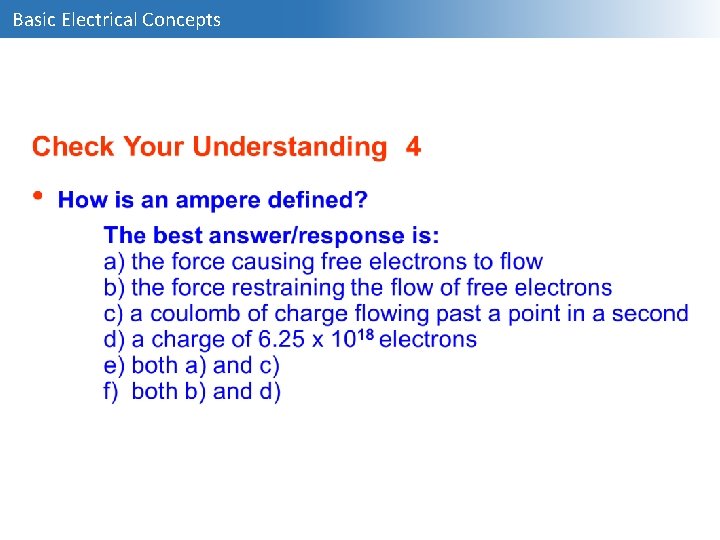
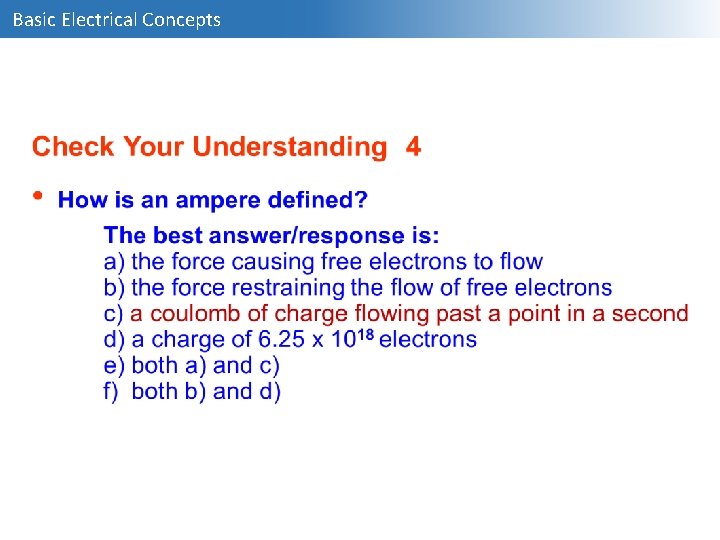
Basic Electrical Concepts • Coulombs and Amperes o Because there is such a large number of electrons in current flow the unit of "charge" is used to describe it. o The number of electrons used to measure 1 charge is: 6. 25 x 1018 electrons o This amount of charge is called one "coulomb" (C). o One ampere is equal to one coulomb of electrical charge passing a point in one second. 1 C = 6. 25 x 1018 electrons per second 1 Coulomb = 6, 250, 000, 000 electrons per second
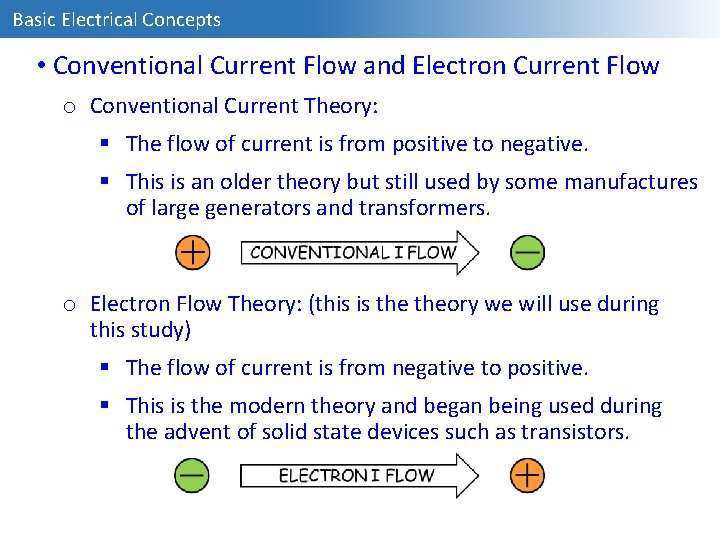
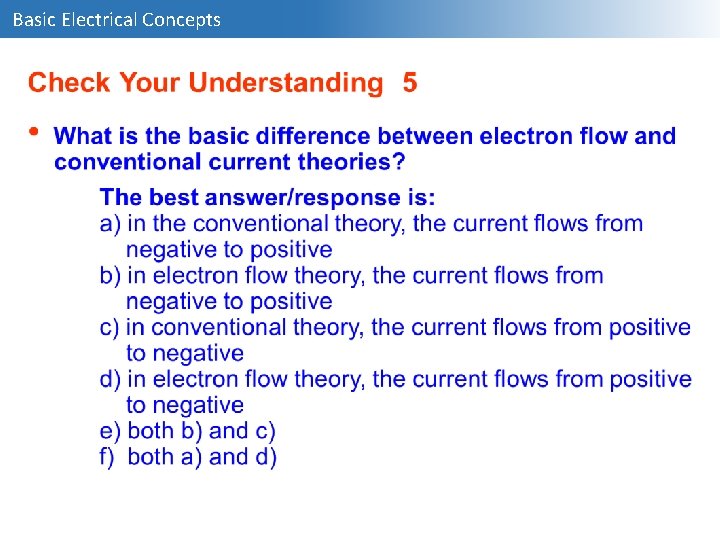
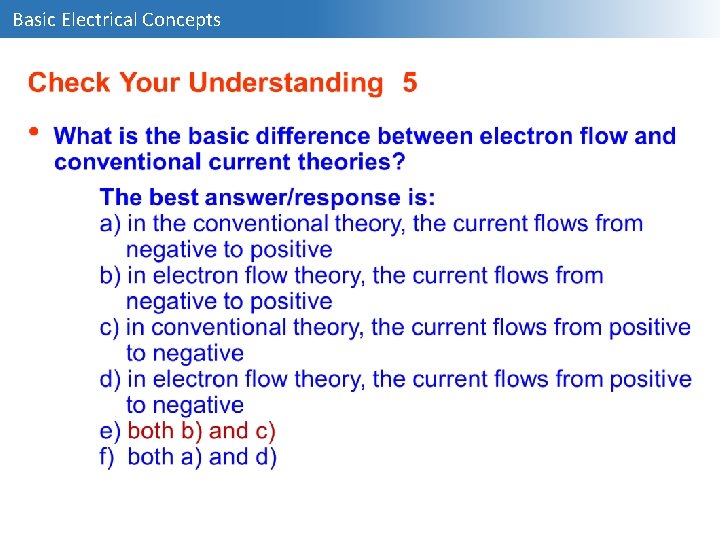
Basic Electrical Concepts • Conventional Current Flow and Electron Current Flow o Conventional Current Theory: § The flow of current is from positive to negative. § This is an older theory but still used by some manufactures of large generators and transformers. o Electron Flow Theory: (this is theory we will use during this study) § The flow of current is from negative to positive. § This is the modern theory and began being used during the advent of solid state devices such as transistors.
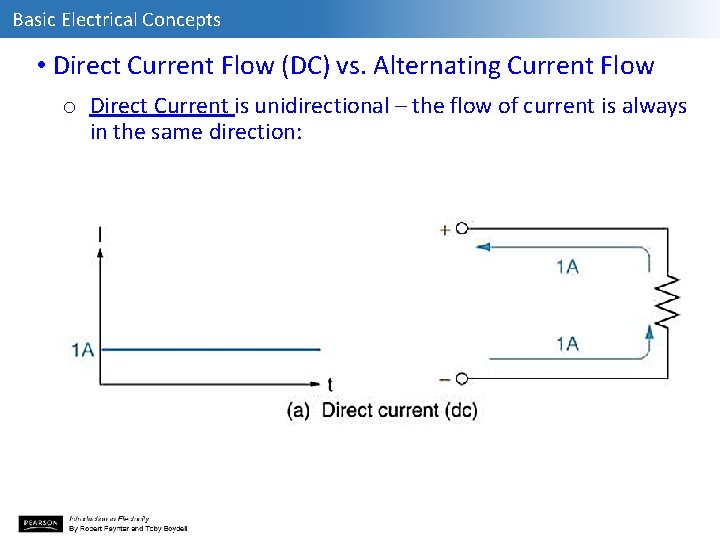
Basic Electrical Concepts • Direct Current Flow (DC) vs. Alternating Current Flow o Direct Current is unidirectional – the flow of current is always in the same direction:
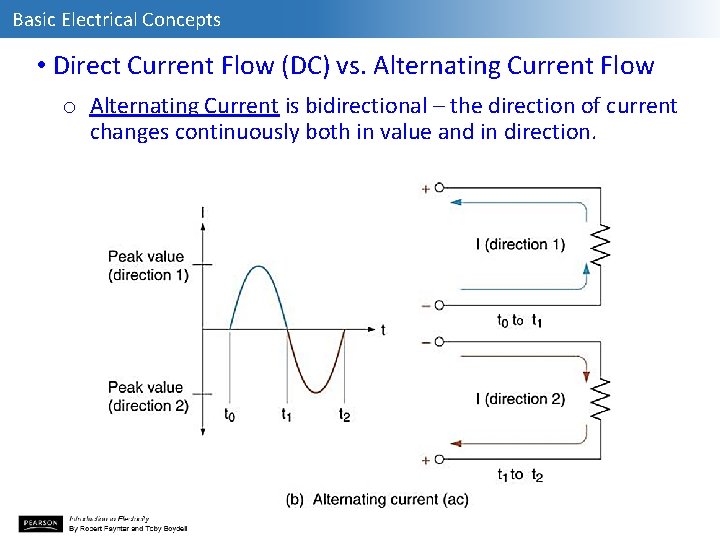
Basic Electrical Concepts • Direct Current Flow (DC) vs. Alternating Current Flow o Alternating Current is bidirectional – the direction of current changes continuously both in value and in direction.
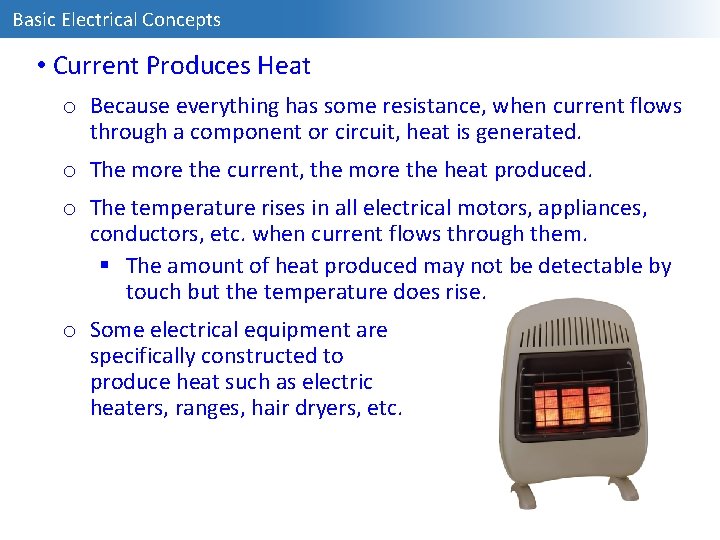
Basic Electrical Concepts • Current Produces Heat o Because everything has some resistance, when current flows through a component or circuit, heat is generated. o The more the current, the more the heat produced. o The temperature rises in all electrical motors, appliances, conductors, etc. when current flows through them. § The amount of heat produced may not be detectable by touch but the temperature does rise. o Some electrical equipment are specifically constructed to produce heat such as electric heaters, ranges, hair dryers, etc.
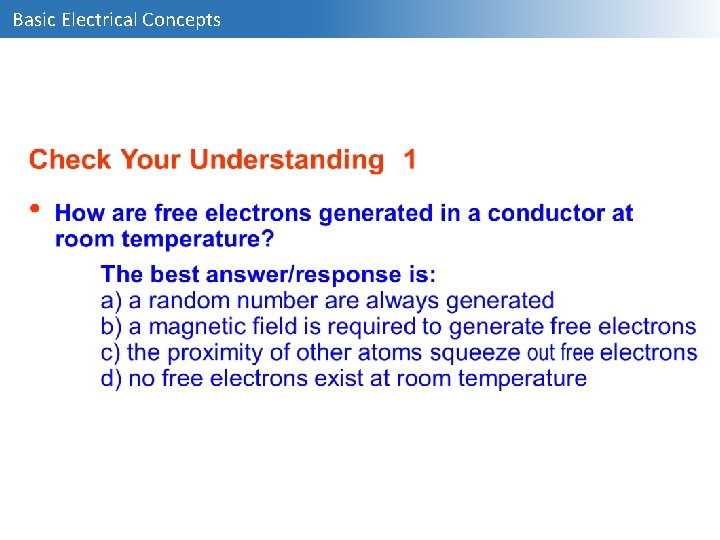
Basic Electrical Concepts
Basic Electrical Concepts
Basic Electrical Concepts
Basic Electrical Concepts
Basic Electrical Concepts

Basic Electrical Concepts
Basic Electrical Concepts
Basic Electrical Concepts
Basic Electrical Concepts
Basic Electrical Concepts
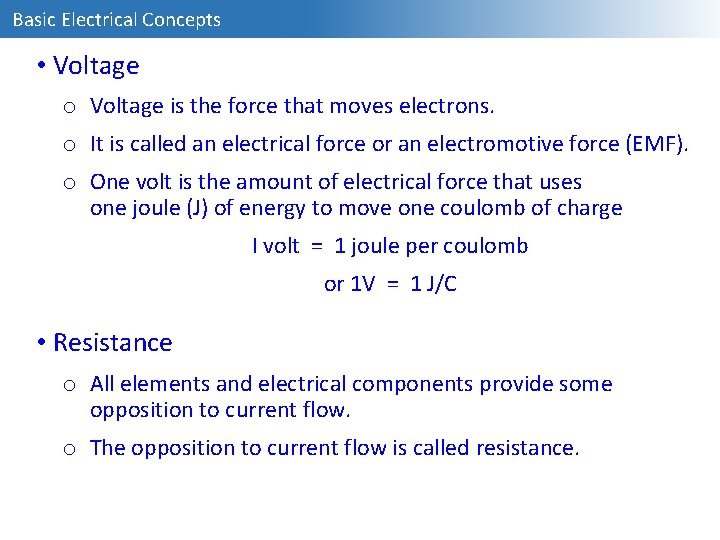
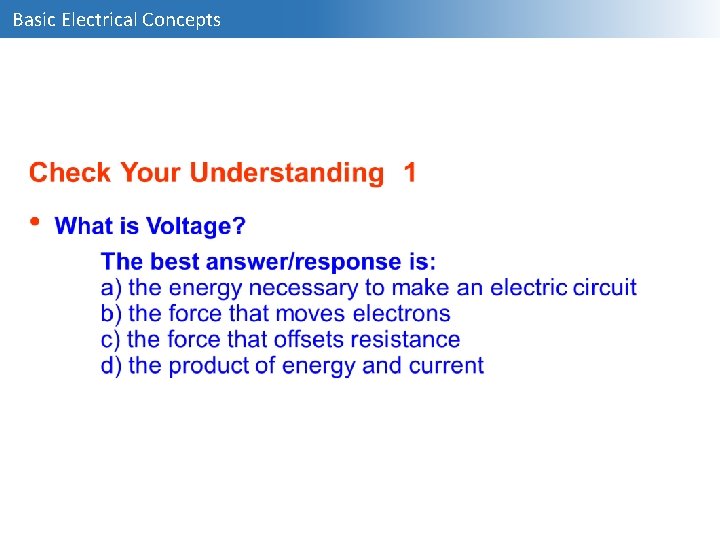
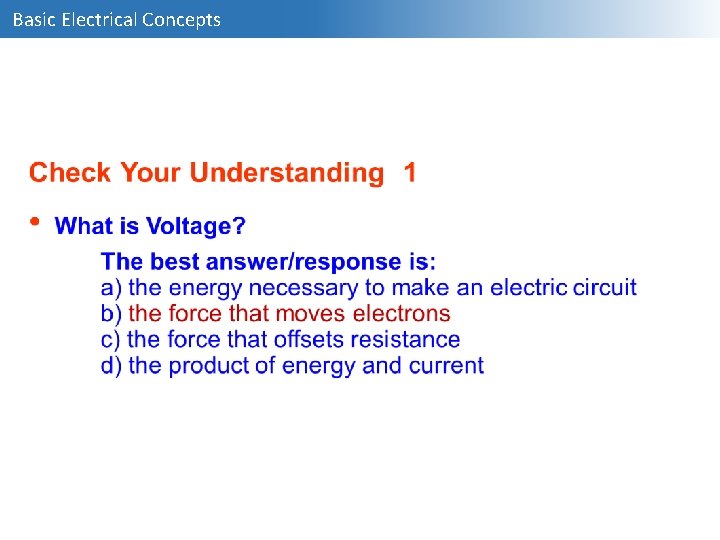
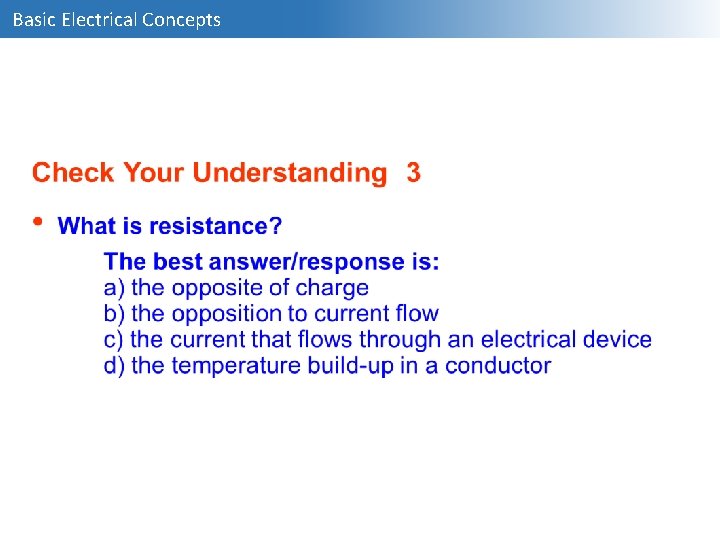
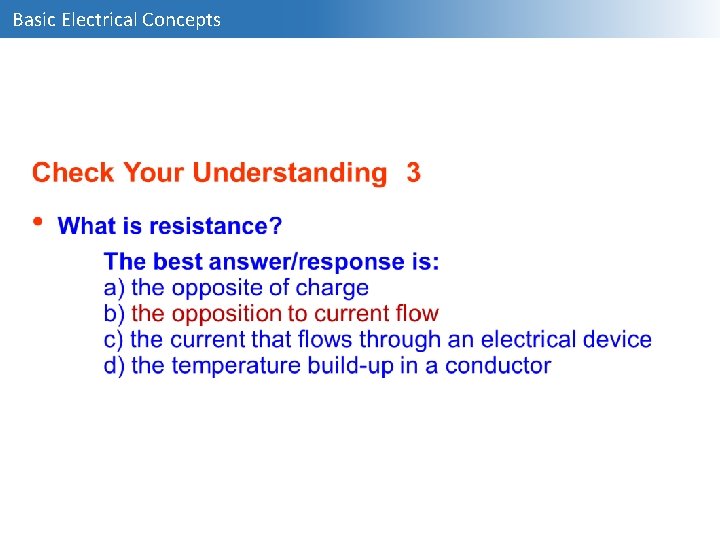
Basic Electrical Concepts • Voltage o Voltage is the force that moves electrons. o It is called an electrical force or an electromotive force (EMF). o One volt is the amount of electrical force that uses one joule (J) of energy to move one coulomb of charge I volt = 1 joule per coulomb or 1 V = 1 J/C • Resistance o All elements and electrical components provide some opposition to current flow. o The opposition to current flow is called resistance.
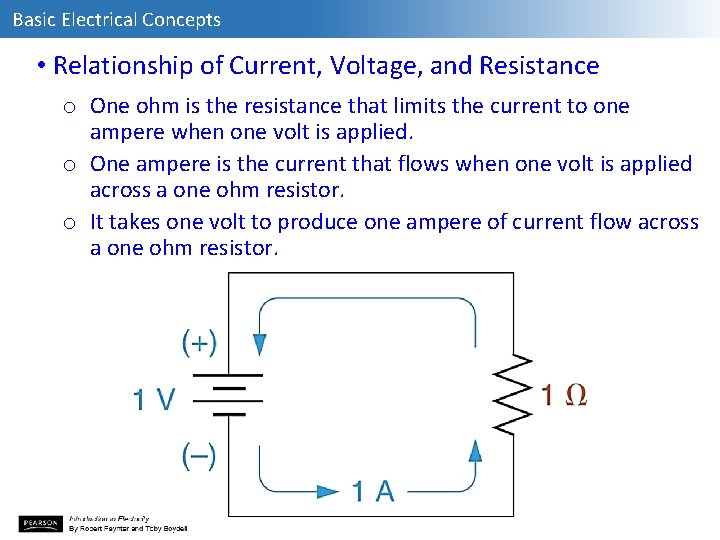
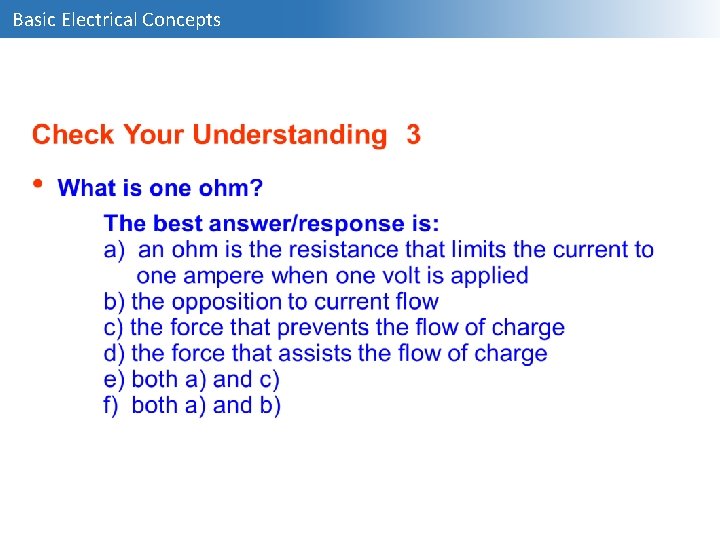
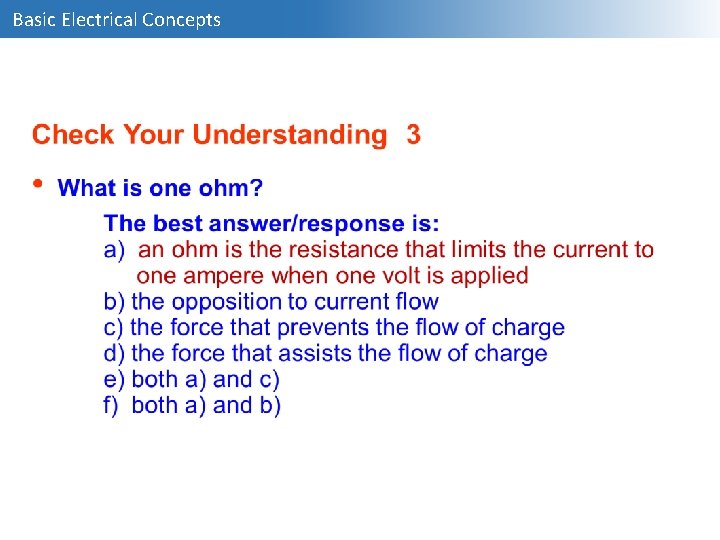
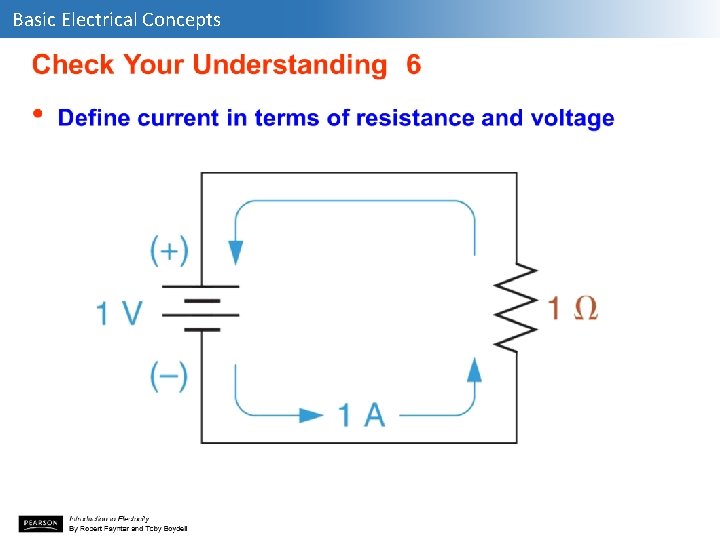
Basic Electrical Concepts • Relationship of Current, Voltage, and Resistance o One ohm is the resistance that limits the current to one ampere when one volt is applied. o One ampere is the current that flows when one volt is applied across a one ohm resistor. o It takes one volt to produce one ampere of current flow across a one ohm resistor.
Basic Electrical Concepts
Basic Electrical Concepts

Basic Electrical Concepts
Basic Electrical Concepts
Basic Electrical Concepts
Basic Electrical Concepts
Basic Electrical Concepts
Basic Electrical Concepts

Basic Electrical Concepts
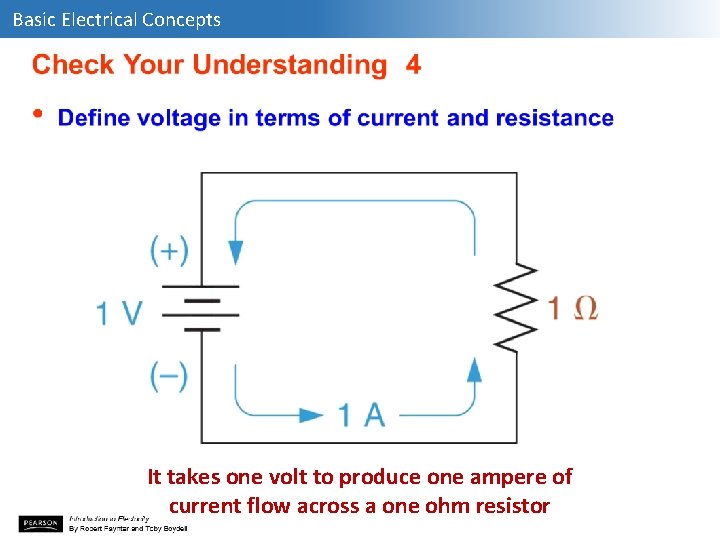
Basic Electrical Concepts It takes one volt to produce one ampere of current flow across a one ohm resistor
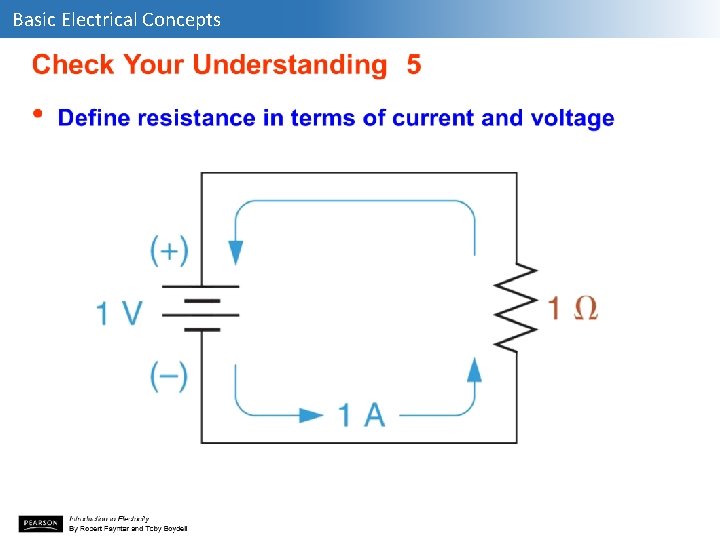
Basic Electrical Concepts
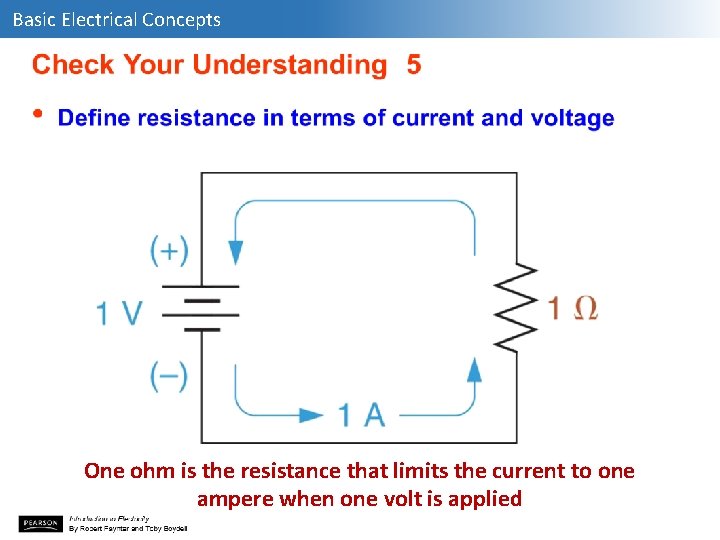
Basic Electrical Concepts One ohm is the resistance that limits the current to one ampere when one volt is applied
Basic Electrical Concepts
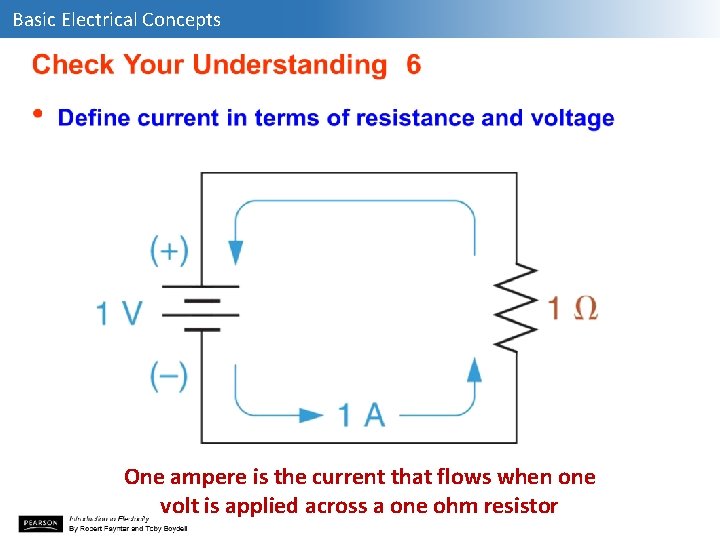
Basic Electrical Concepts One ampere is the current that flows when one volt is applied across a one ohm resistor
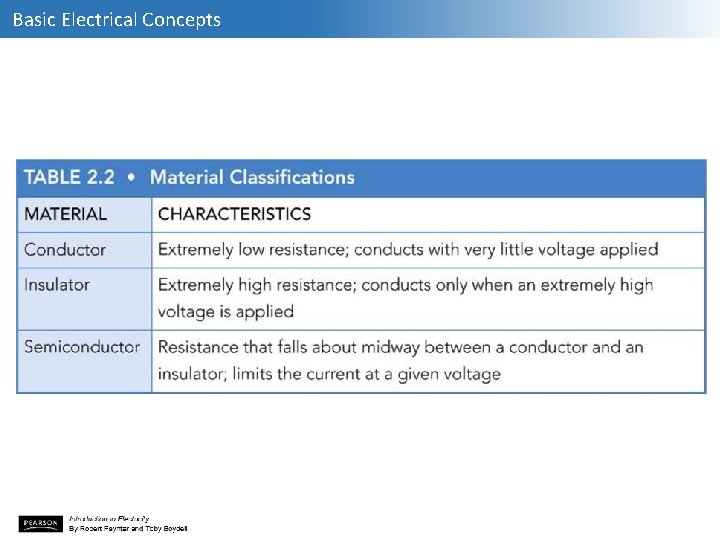
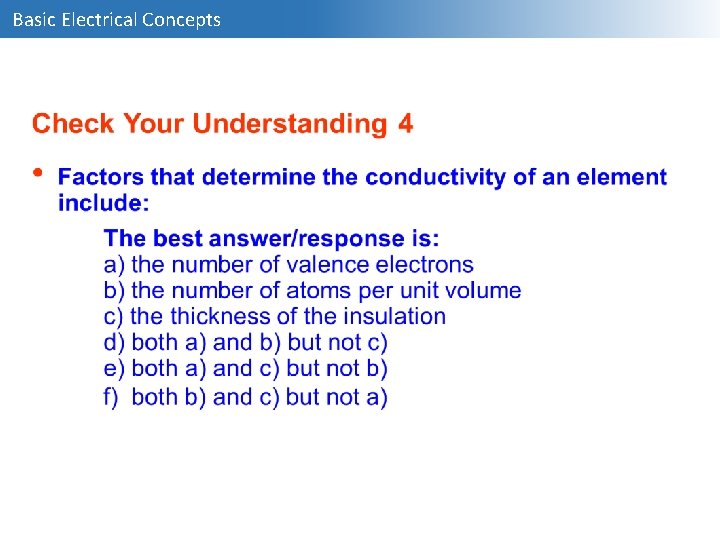
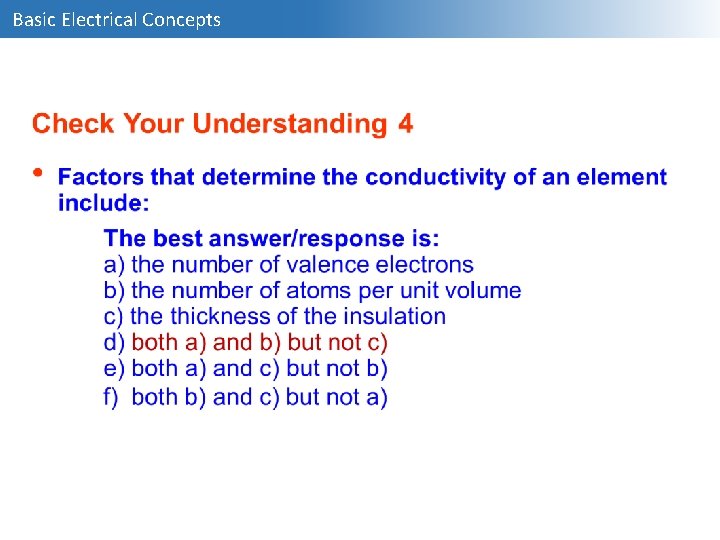
Basic Electrical Concepts • Conductors o Conductors are made of a material that readily allows current to flow (conducts), that is they have very low resistance. o Copper is the most common conductor and aluminum is used for high voltage transmission lines because of its relative lower cost and light weight. o Conductivity is a measure of the current carrying ability of a conductor; measured in ohms/cm. § The higher the conductivity the better it conducts. o Conductivity is determined by: § The number of valence shell electrons; elements with fewer valance electrons have better conductivity. § The number of atoms per unit volume; elements with a greater density of atoms can generate more free electrons.
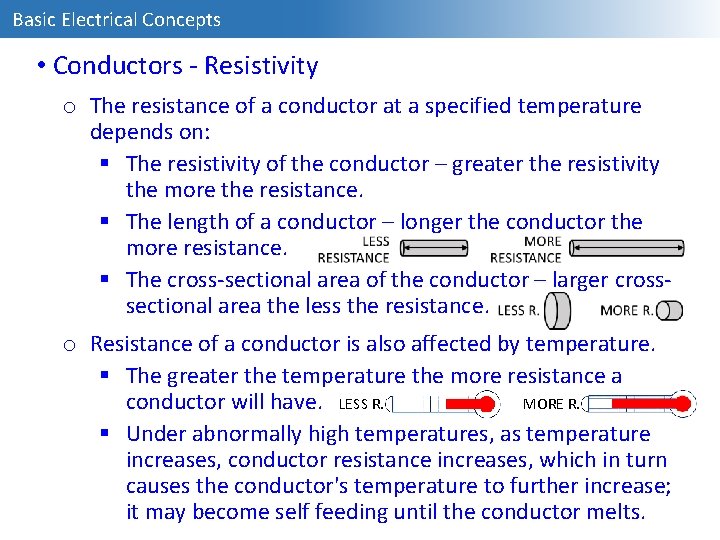
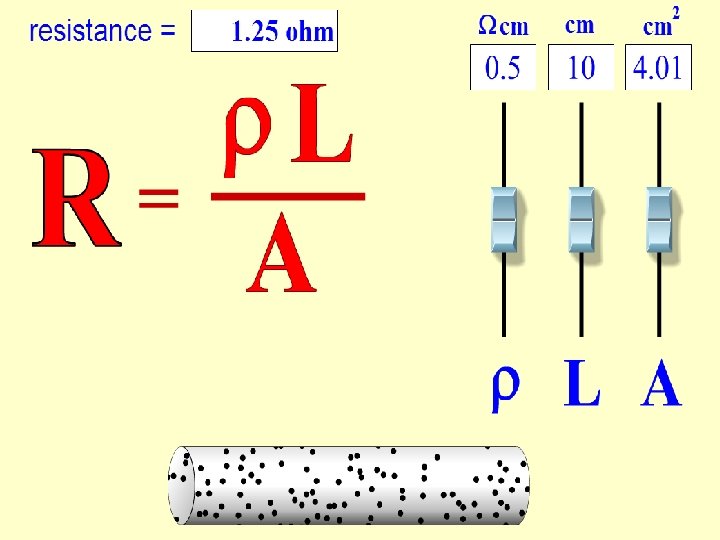
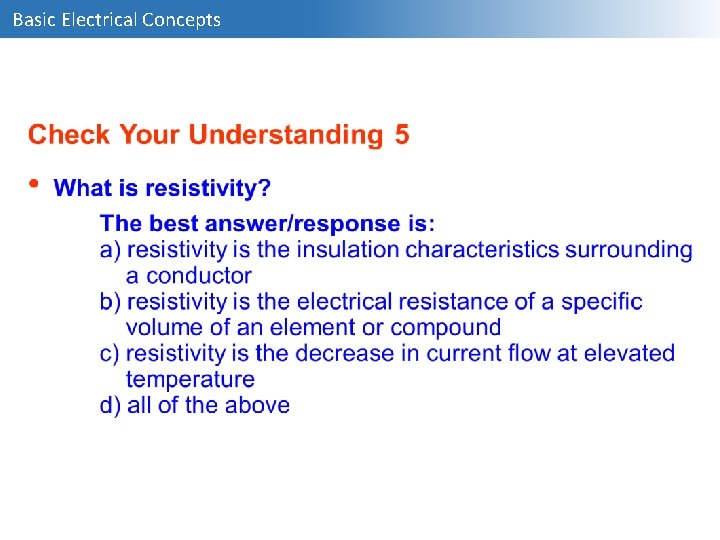
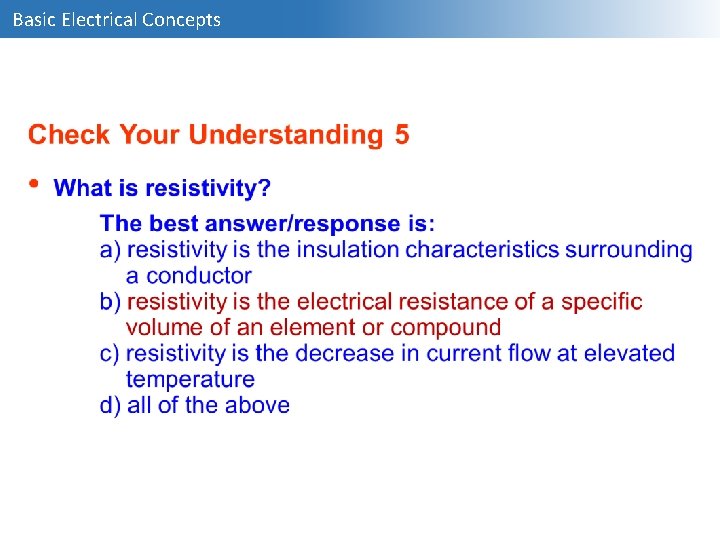
Basic Electrical Concepts • Conductors - Resistivity o The resistance of a conductor at a specified temperature depends on: § The resistivity of the conductor – greater the resistivity the more the resistance. § The length of a conductor – longer the conductor the more resistance. § The cross-sectional area of the conductor – larger crosssectional area the less the resistance. o Resistance of a conductor is also affected by temperature. § The greater the temperature the more resistance a MORE R. conductor will have. LESS R. § Under abnormally high temperatures, as temperature increases, conductor resistance increases, which in turn causes the conductor's temperature to further increase; it may become self feeding until the conductor melts.
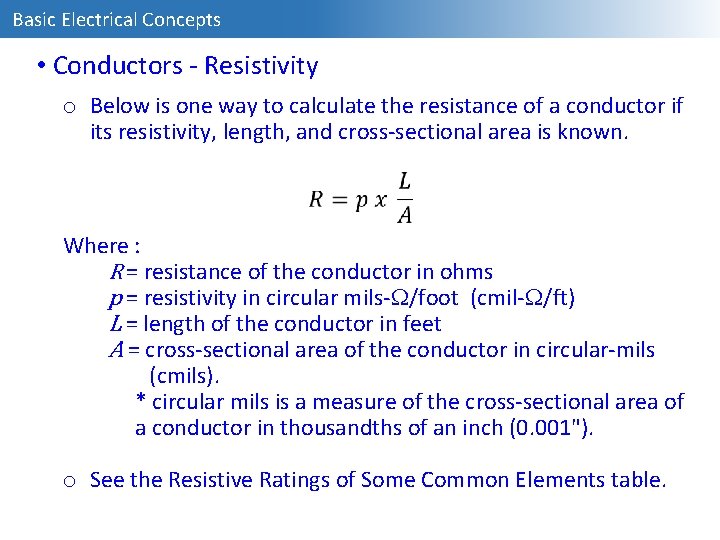
Basic Electrical Concepts • Conductors - Resistivity o Below is one way to calculate the resistance of a conductor if its resistivity, length, and cross-sectional area is known. Where : R = resistance of the conductor in ohms p = resistivity in circular mils- /foot (cmil- /ft) L = length of the conductor in feet A = cross-sectional area of the conductor in circular-mils (cmils). * circular mils is a measure of the cross-sectional area of a conductor in thousandths of an inch (0. 001"). o See the Resistive Ratings of Some Common Elements table.
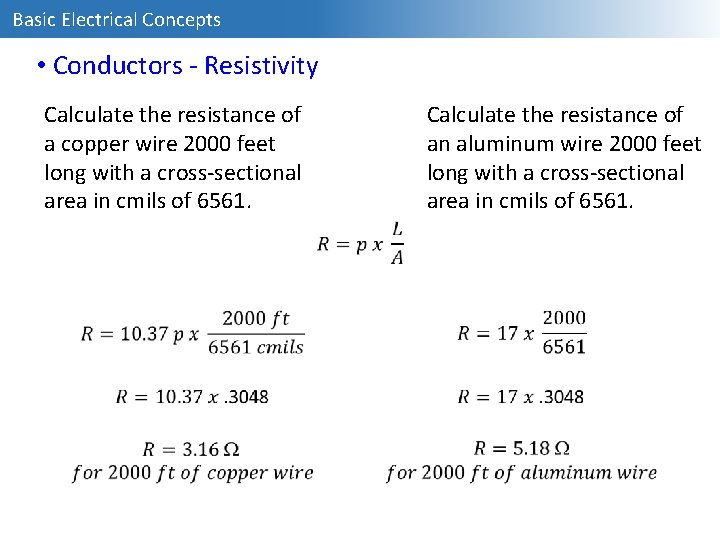
Basic Electrical Concepts • Conductors - Resistivity Calculate the resistance of a copper wire 2000 feet long with a cross-sectional area in cmils of 6561. Calculate the resistance of an aluminum wire 2000 feet long with a cross-sectional area in cmils of 6561.
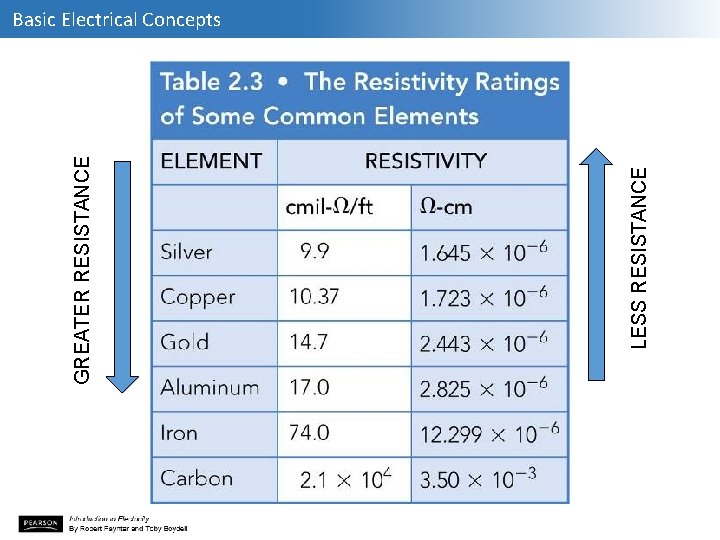
LESS RESISTANCE GREATER RESISTANCE Basic Electrical Concepts
Basic Electrical Concepts
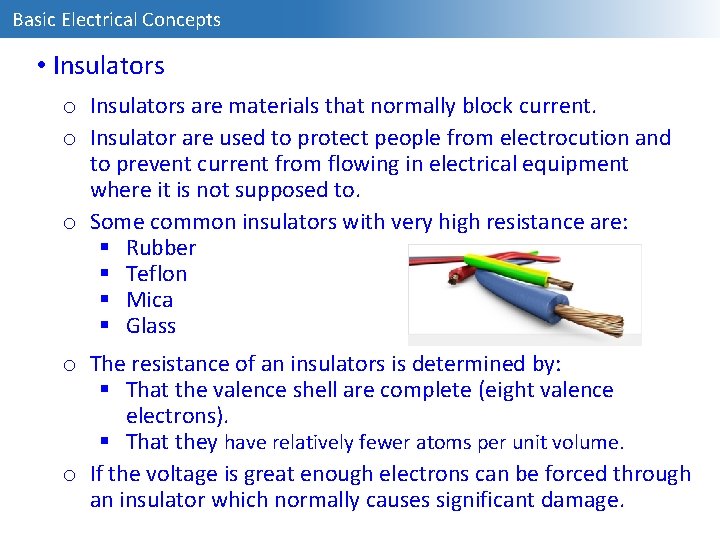
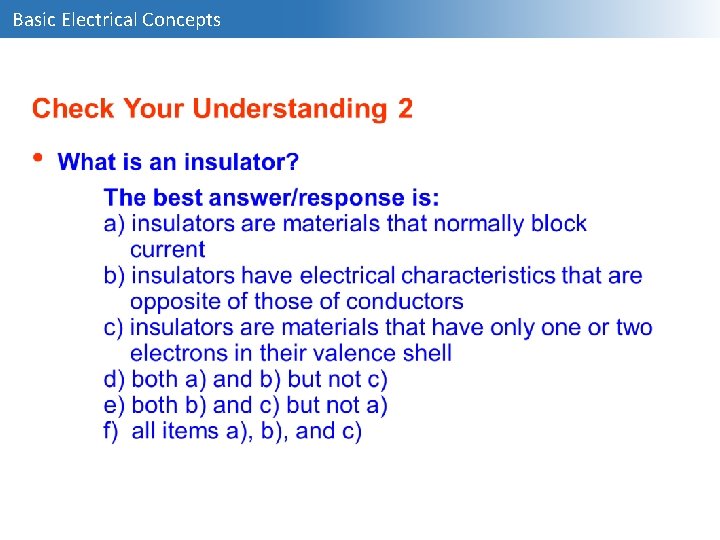
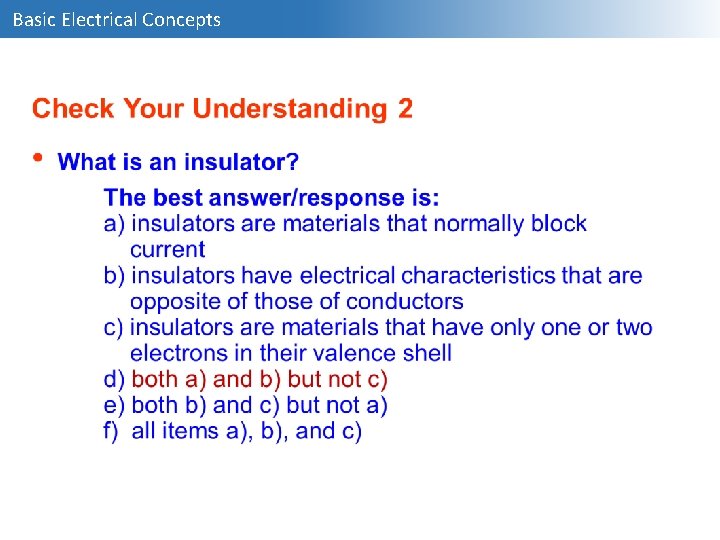
Basic Electrical Concepts • Insulators o Insulators are materials that normally block current. o Insulator are used to protect people from electrocution and to prevent current from flowing in electrical equipment where it is not supposed to. o Some common insulators with very high resistance are: § Rubber § Teflon § Mica § Glass o The resistance of an insulators is determined by: § That the valence shell are complete (eight valence electrons). § That they have relatively fewer atoms per unit volume. o If the voltage is great enough electrons can be forced through an insulator which normally causes significant damage.
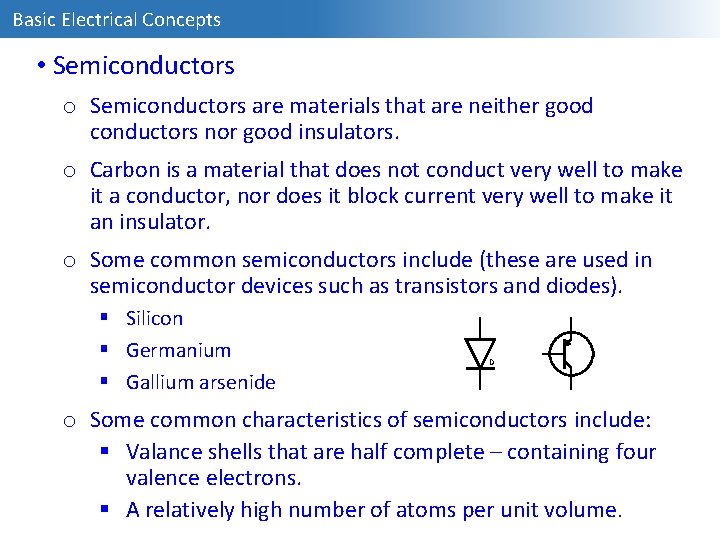
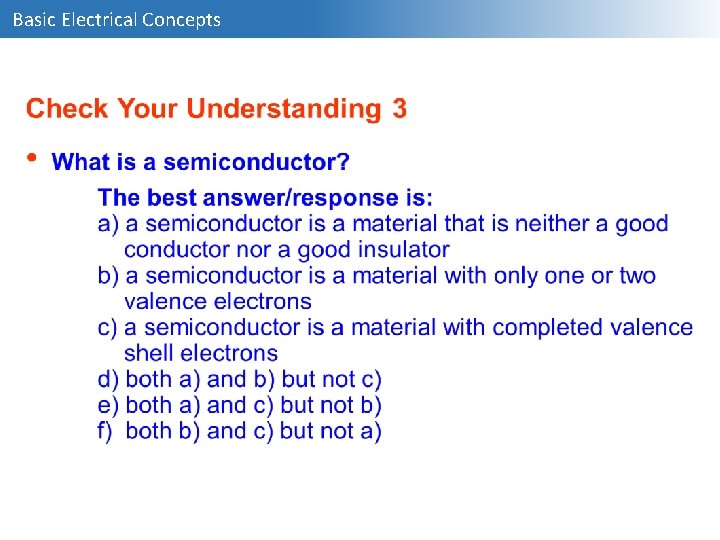
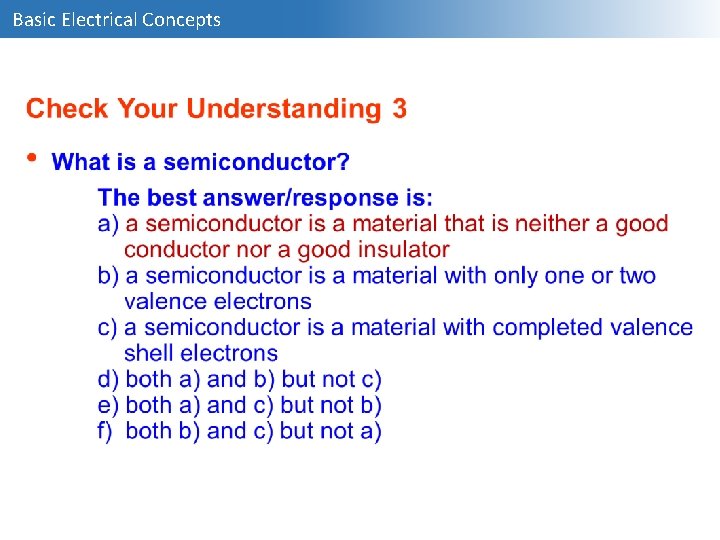
Basic Electrical Concepts • Semiconductors o Semiconductors are materials that are neither good conductors nor good insulators. o Carbon is a material that does not conduct very well to make it a conductor, nor does it block current very well to make it an insulator. o Some common semiconductors include (these are used in semiconductor devices such as transistors and diodes). § Silicon § Germanium § Gallium arsenide D o Some common characteristics of semiconductors include: § Valance shells that are half complete – containing four valence electrons. § A relatively high number of atoms per unit volume.
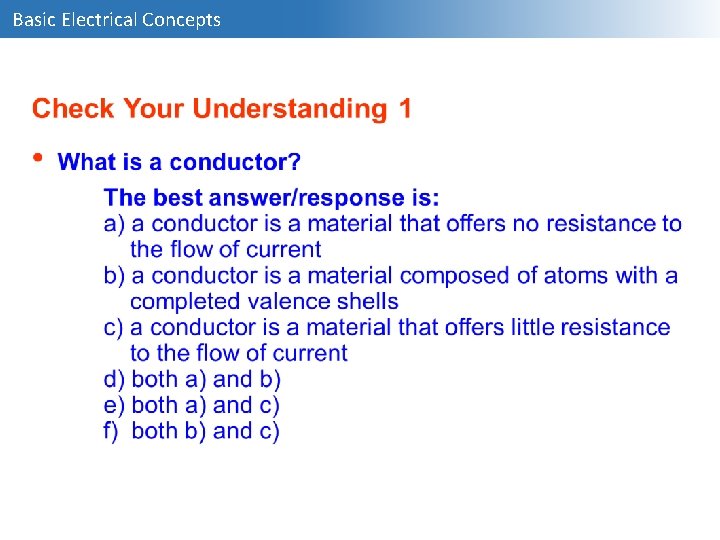
Basic Electrical Concepts
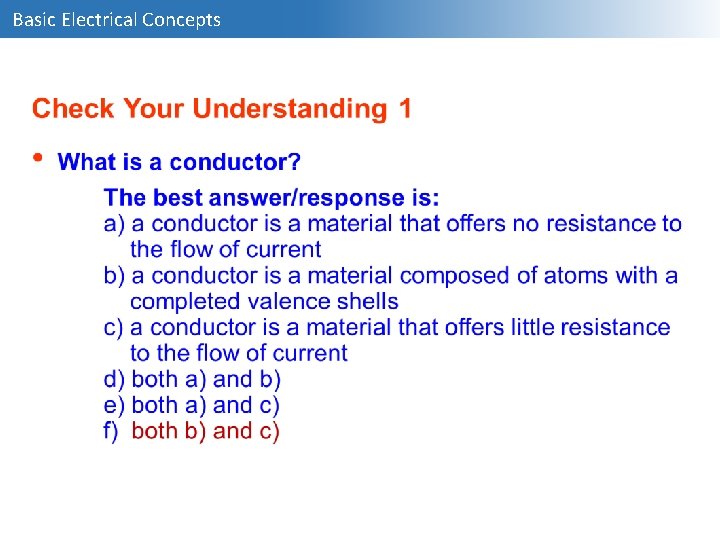
Basic Electrical Concepts
Basic Electrical Concepts
Basic Electrical Concepts
Basic Electrical Concepts
Basic Electrical Concepts
Basic Electrical Concepts
Basic Electrical Concepts
Basic Electrical Concepts
Basic Electrical Concepts
Basic Electrical Concepts Assignment – Read Chapter 3
- Slides: 95