
Basic Electrical Measurements Matthew Spencer E 80 Lecture
Basic Electrical Measurements Matthew Spencer E 80 Lecture 4 2016 -01 -27 Many thanks to Prof. Lee for her excellent work on the lecture figures
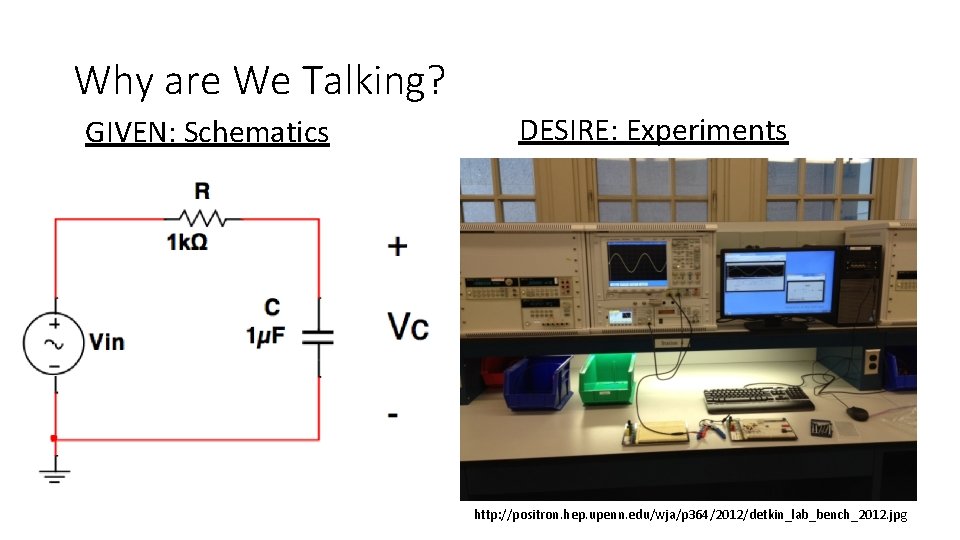
Why are We Talking? GIVEN: Schematics DESIRE: Experiments http: //positron. hep. upenn. edu/wja/p 364/2012/detkin_lab_bench_2012. jpg
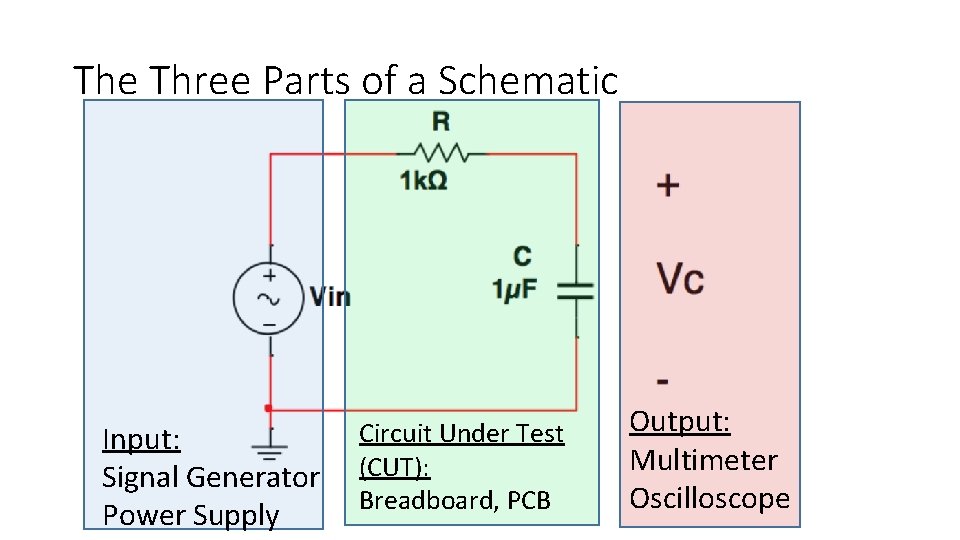
The Three Parts of a Schematic Input: Signal Generator Power Supply Circuit Under Test (CUT): Breadboard, PCB Output: Multimeter Oscilloscope
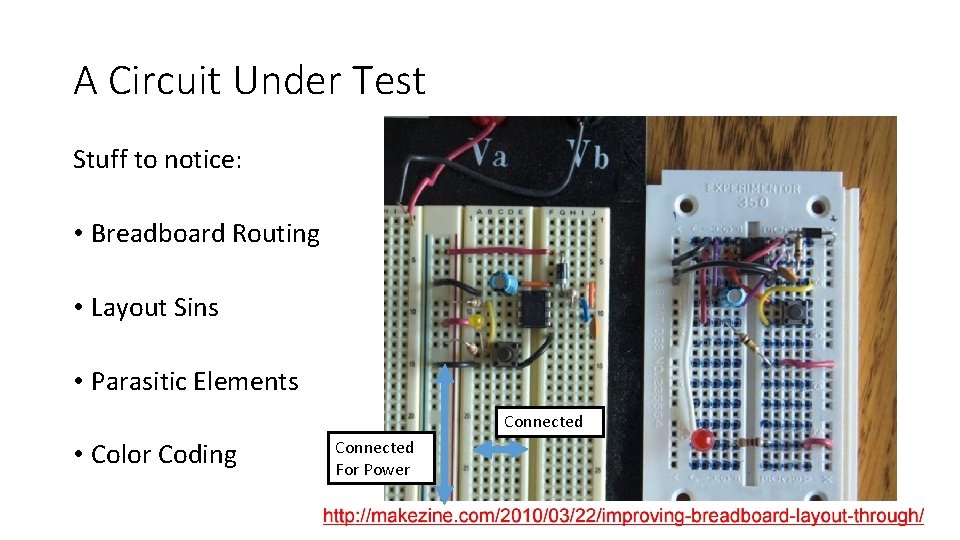
A Circuit Under Test Stuff to notice: • Breadboard Routing • Layout Sins • Parasitic Elements Connected • Color Coding Connected For Power

Multimeter Don’t forget this
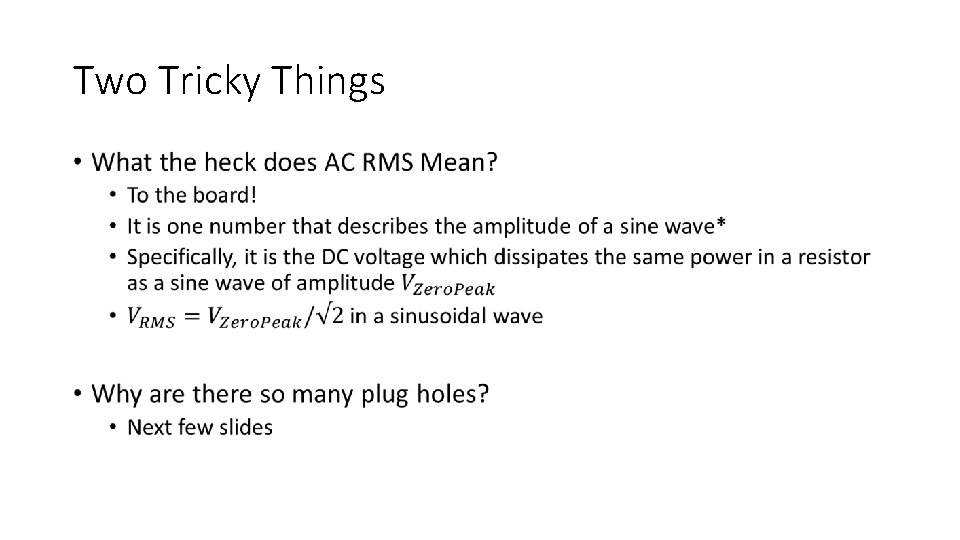
Two Tricky Things •

Let’s Do a Current Measurement • Put multimeter in series • Current flows through it • Multimeter must look like a wire to be non-invasive R
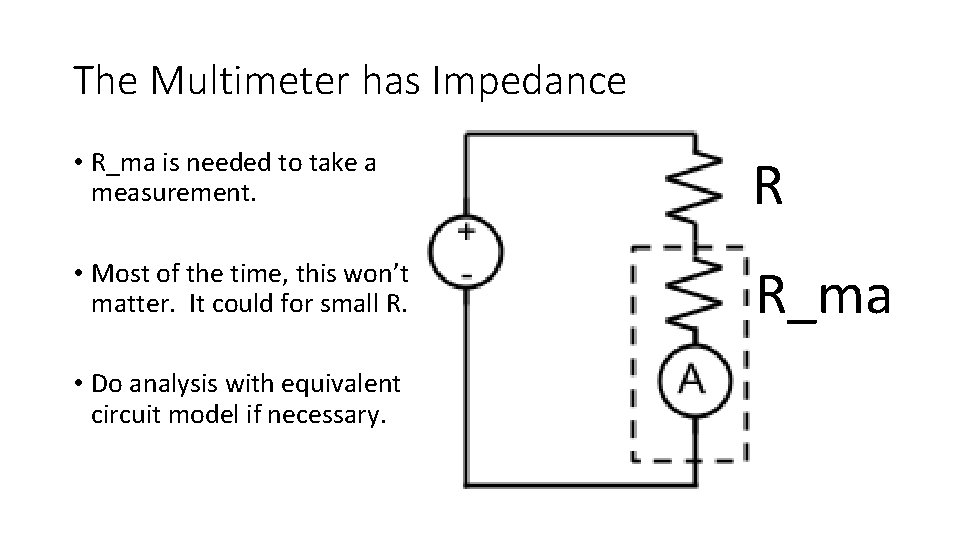
The Multimeter has Impedance • R_ma is needed to take a measurement. R • Most of the time, this won’t matter. It could for small R. R_ma • Do analysis with equivalent circuit model if necessary.
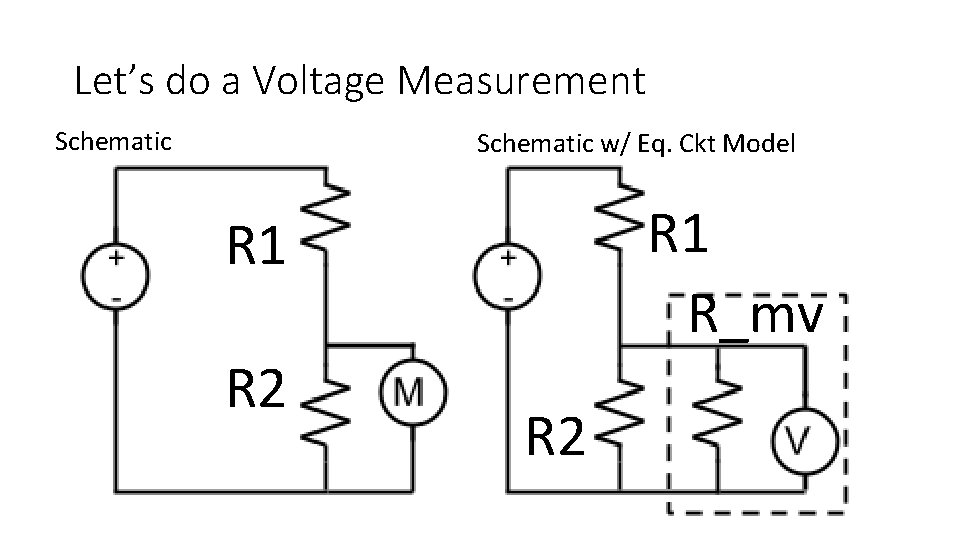
Let’s do a Voltage Measurement Schematic w/ Eq. Ckt Model R 1 R_mv R 1 R 2
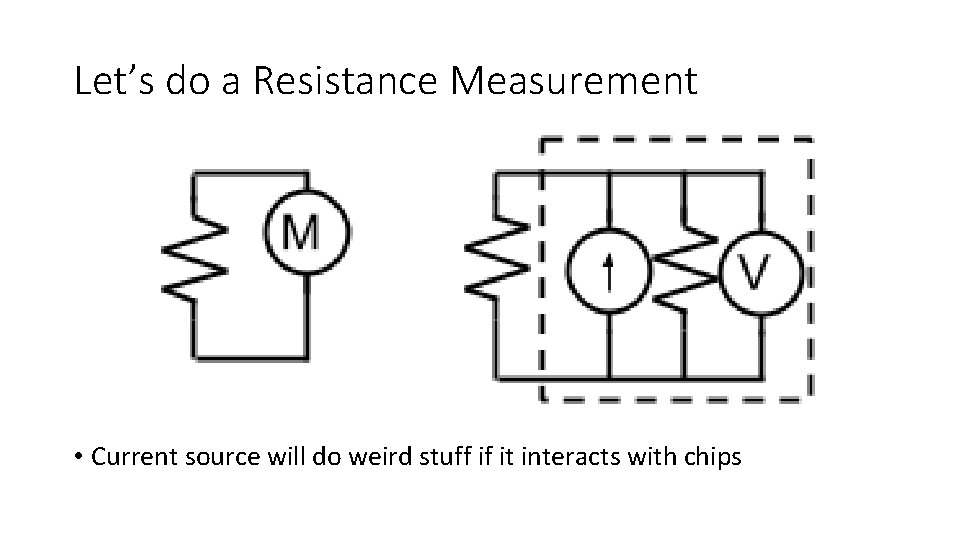
Let’s do a Resistance Measurement • Current source will do weird stuff if it interacts with chips
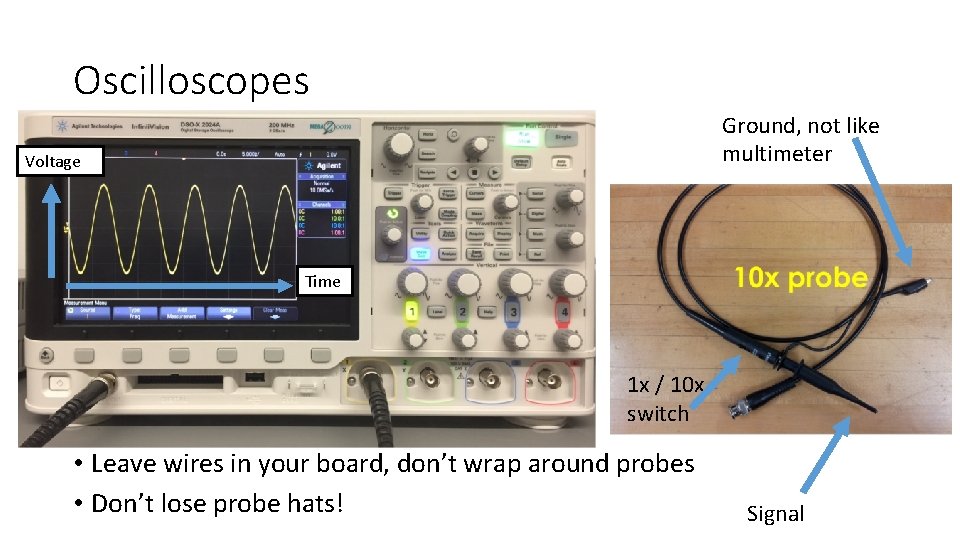
Oscilloscopes Ground, not like multimeter Voltage Time 1 x / 10 x switch • Leave wires in your board, don’t wrap around probes • Don’t lose probe hats! Signal
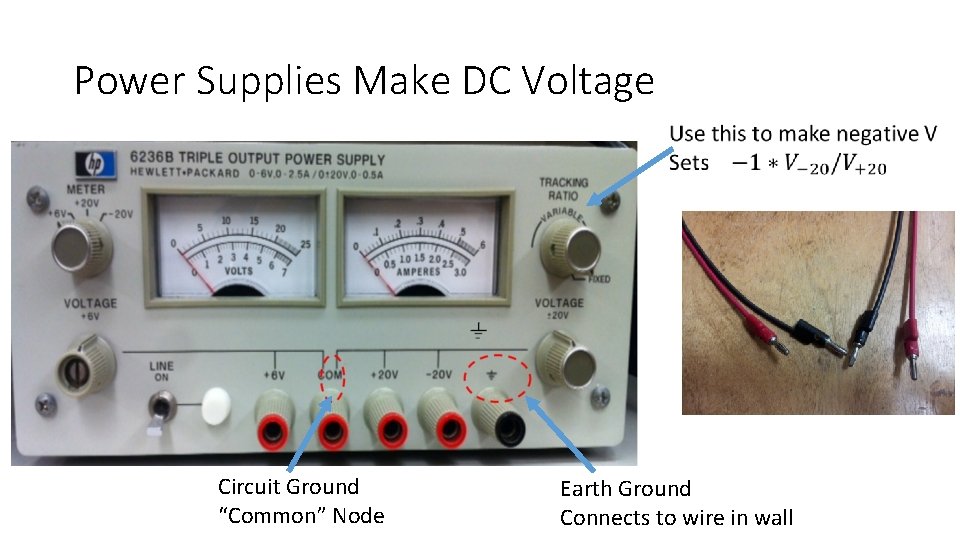
Power Supplies Make DC Voltage Circuit Ground “Common” Node Earth Ground Connects to wire in wall
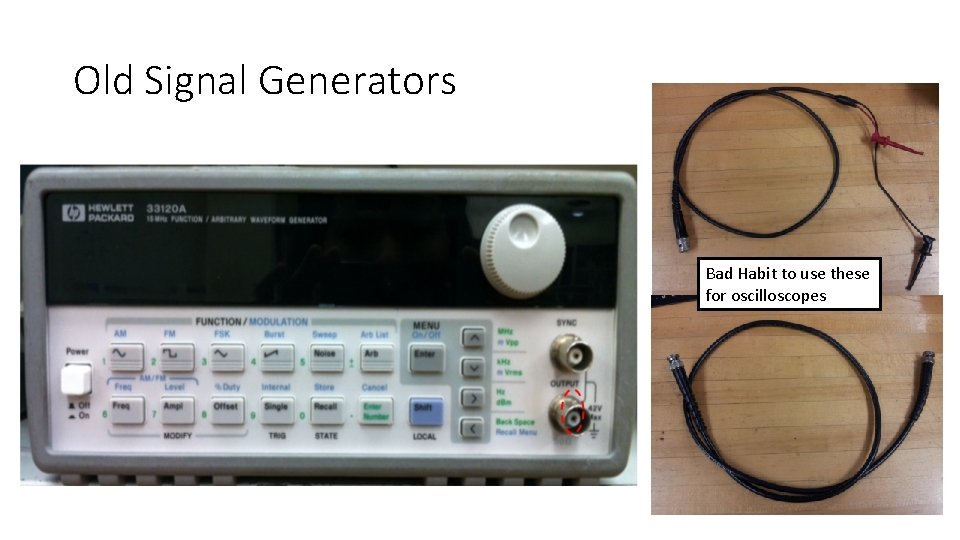
Old Signal Generators Bad Habit to use these for oscilloscopes

New Signal Generators
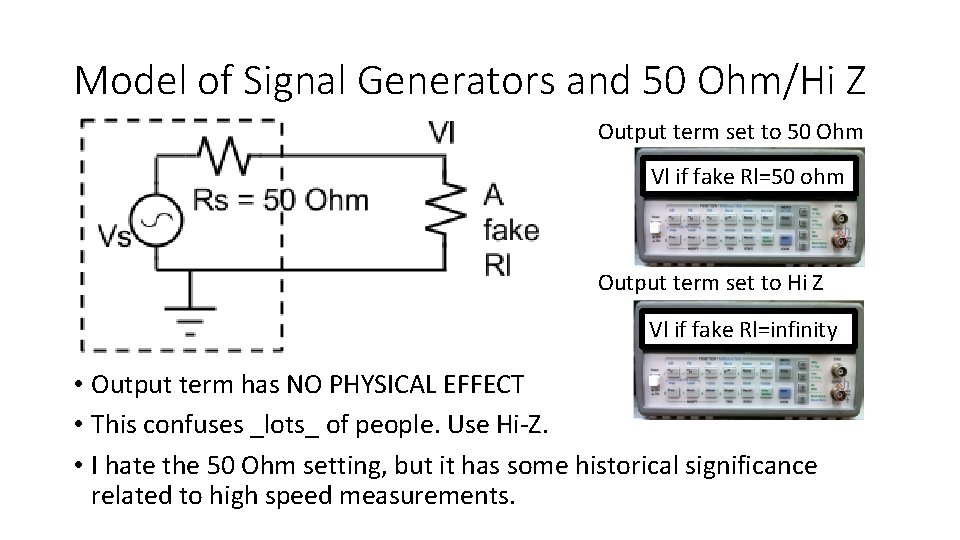
Model of Signal Generators and 50 Ohm/Hi Z Output term set to 50 Ohm Vl if fake Rl=50 ohm Output term set to Hi Z Vl if fake Rl=infinity • Output term has NO PHYSICAL EFFECT • This confuses _lots_ of people. Use Hi-Z. • I hate the 50 Ohm setting, but it has some historical significance related to high speed measurements.
- Slides: 15