
Basic Electrical Circuit Materials Colts Neck High School

Basic Electrical Circuit Materials Colts Neck High School Applied Technology
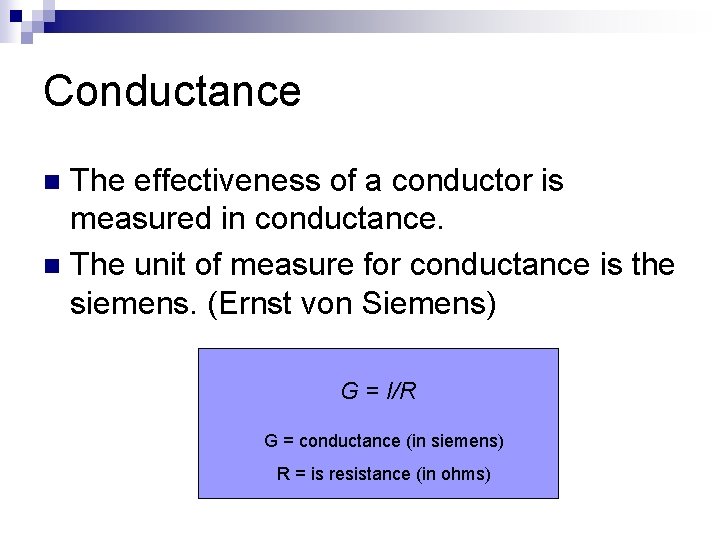
Conductance The effectiveness of a conductor is measured in conductance. n The unit of measure for conductance is the siemens. (Ernst von Siemens) n G = I/R G = conductance (in siemens) R = is resistance (in ohms)
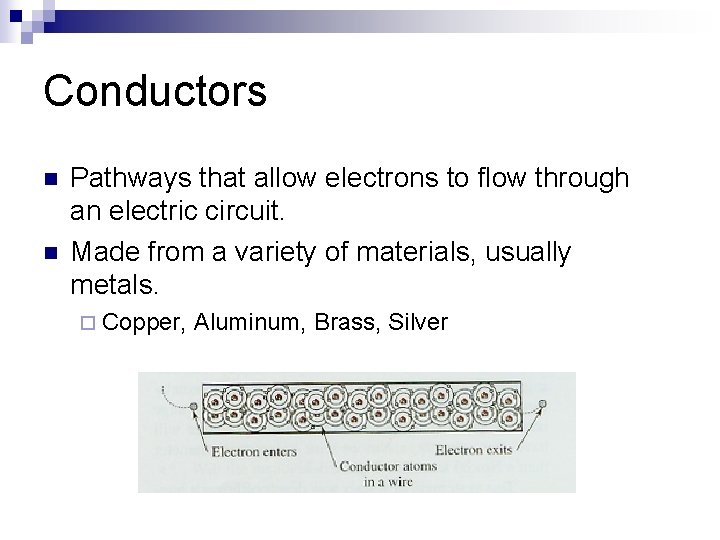
Conductors n n Pathways that allow electrons to flow through an electric circuit. Made from a variety of materials, usually metals. ¨ Copper, Aluminum, Brass, Silver
Conductor Size n Circular conductors are sized by the American Wire Gauge System. ¨ The larger the gauge number, the smaller the cross-sectional area n Circular Mils ¨A mil is equal to 1/1000 th of an inch ¨ A circular mil is equal to the diameter of a round conductor squared (D 2)
Conductor Insulation n Insulators – materials with few free electrons, thus poor conductors of electrons. n Insulation – protective coating surrounding a conductor that prevents contact with other conductors and people.
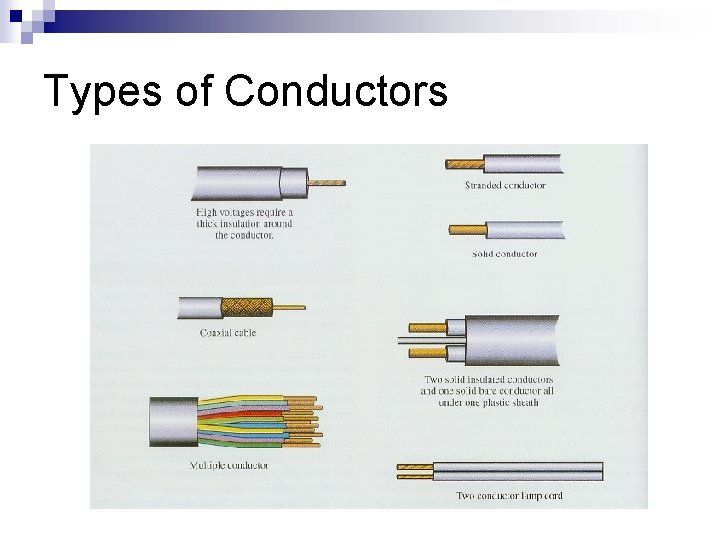
Types of Conductors
Conductor Resistance n Cross-sectional area of a conductor ¨ The larger the surface area or diameter of a conductor, the lower the resistance. n Type of material ¨ Different n Length of conductor ¨ The n materials have different resistance values. longer the conductor, the greater the resistance. Temperature of material ¨ Resistance of a material rises with the rising temperature.
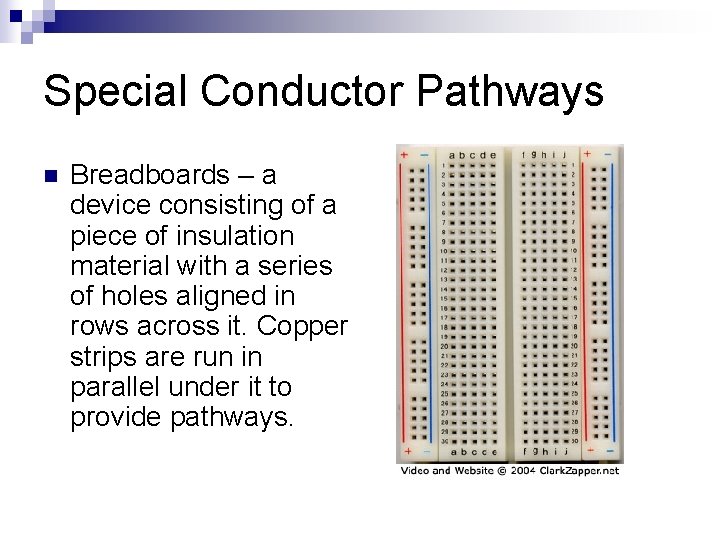
Special Conductor Pathways n Breadboards – a device consisting of a piece of insulation material with a series of holes aligned in rows across it. Copper strips are run in parallel under it to provide pathways.
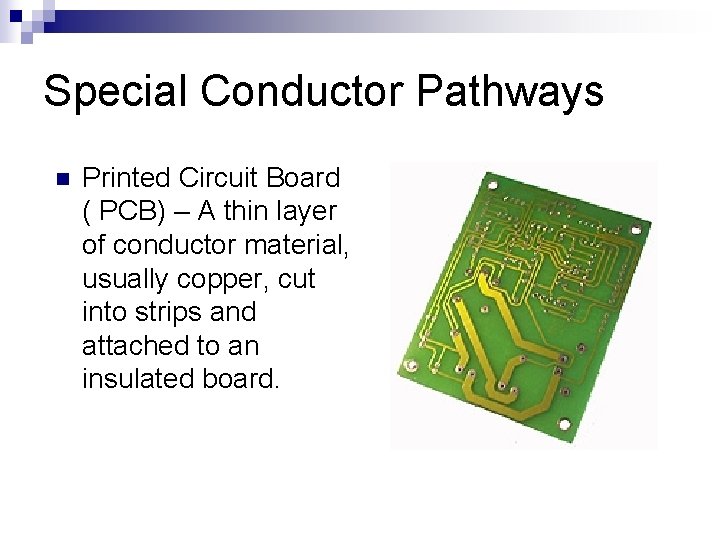
Special Conductor Pathways n Printed Circuit Board ( PCB) – A thin layer of conductor material, usually copper, cut into strips and attached to an insulated board.
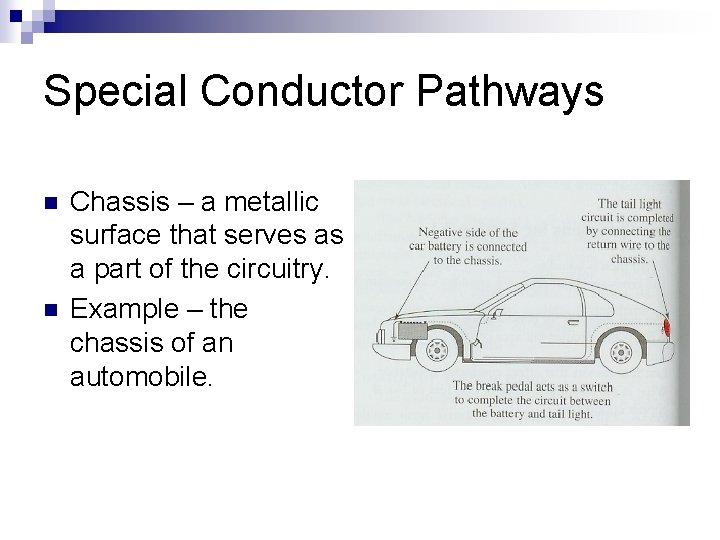
Special Conductor Pathways n n Chassis – a metallic surface that serves as a part of the circuitry. Example – the chassis of an automobile.
Common Circuit Devices n Common circuit devices provide for a means of controlling the flow of electrons in an electronic or electric circuit. They also provide for safe operation. These include: ¨ Switches ¨ Connectors ¨ Circuit Protection Devices
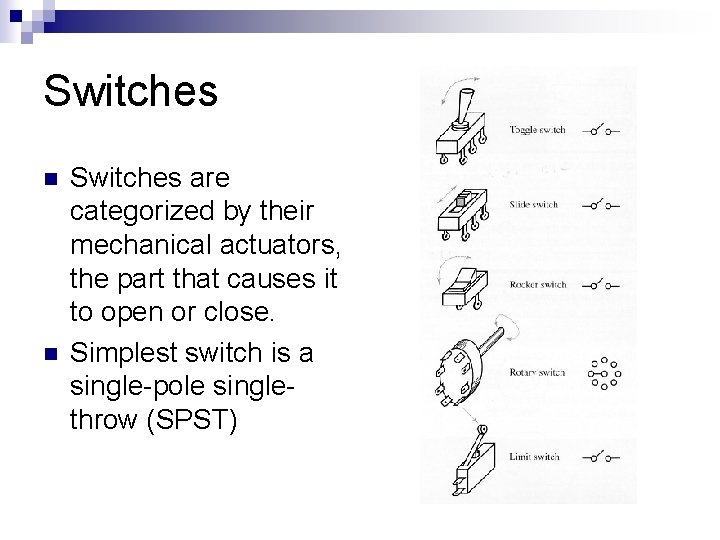
Switches n n Switches are categorized by their mechanical actuators, the part that causes it to open or close. Simplest switch is a single-pole singlethrow (SPST)
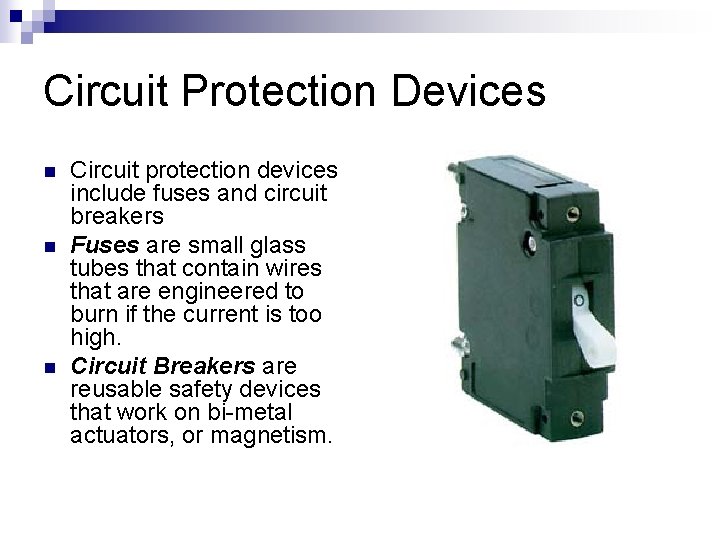
Circuit Protection Devices n n n Circuit protection devices include fuses and circuit breakers Fuses are small glass tubes that contain wires that are engineered to burn if the current is too high. Circuit Breakers are reusable safety devices that work on bi-metal actuators, or magnetism.
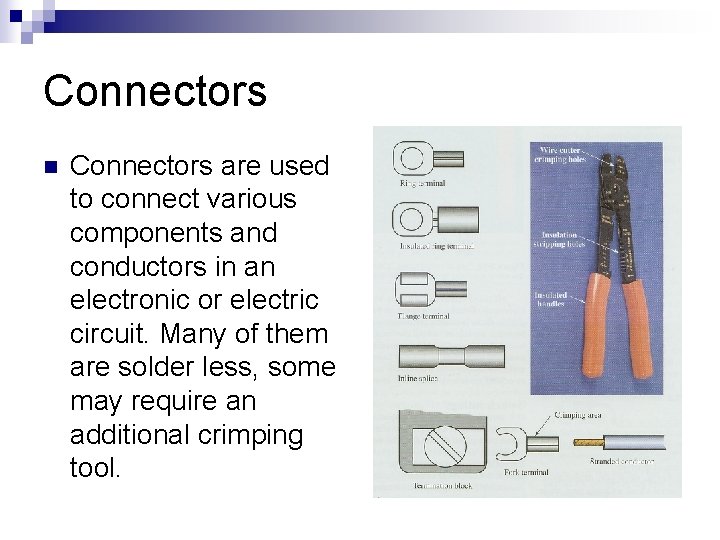
Connectors n Connectors are used to connect various components and conductors in an electronic or electric circuit. Many of them are solder less, some may require an additional crimping tool.
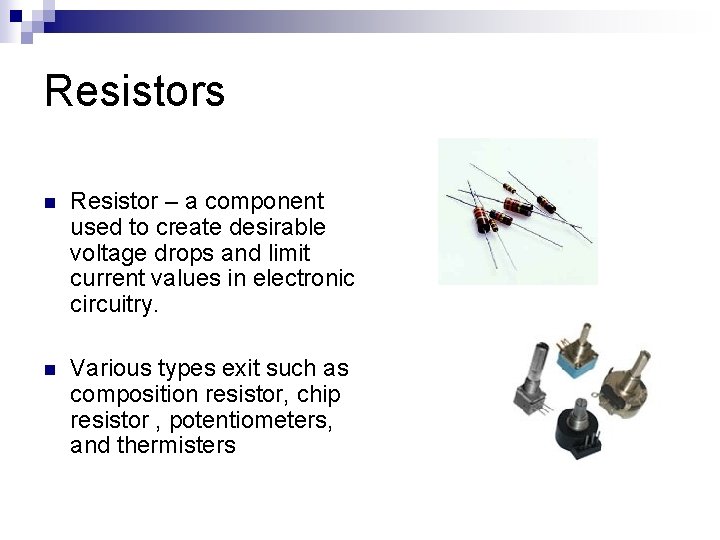
Resistors n Resistor – a component used to create desirable voltage drops and limit current values in electronic circuitry. n Various types exit such as composition resistor, chip resistor , potentiometers, and thermisters
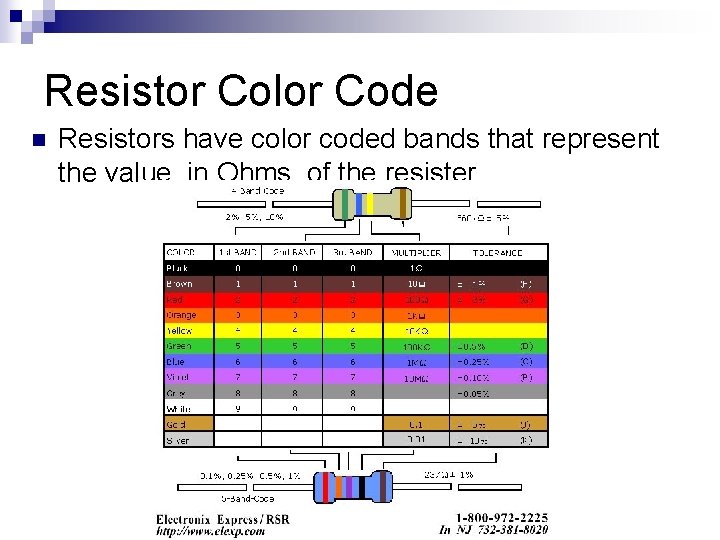
Resistor Color Code n Resistors have color coded bands that represent the value, in Ohms, of the resister.
- Slides: 16