
Basic Education Sector Transformation BEST RPMS Reorientation Workshop
Basic Education Sector Transformation (BEST) RPMS Re-orientation Workshop Performance Feedback BEST is supported by the Australian Government 1

BUREAU OF HUMAN RESOURCE AND ORGANIZATION DEVELOPMENT
Objectives At the end of the workshop, the participants will be able to: 1. Describe the RPMS cycle 2. Develop written performance objectives and indicators according to RPMS guidelines 3. Define development needs of staff based on results of performance evaluation and craft appropriate written development plans 4. Describe the process of giving effective performance feedback

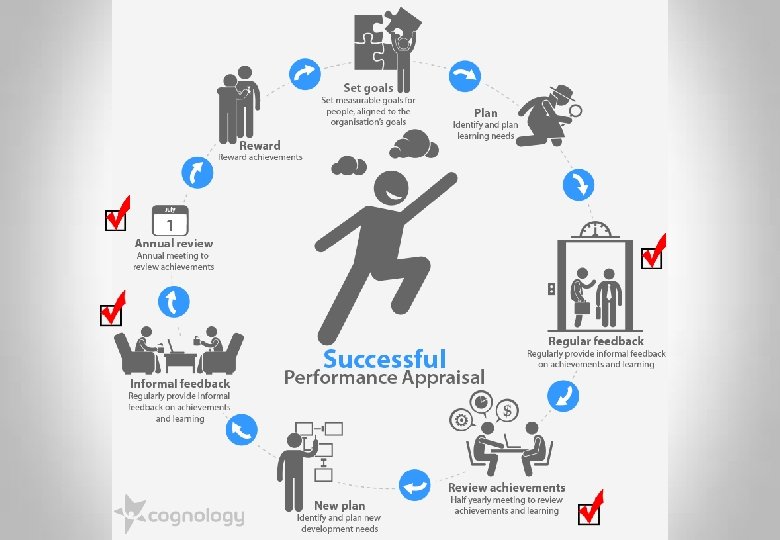
4 RPMS PHASES I. Performance Planning & Commitment IV. Performance Rewarding and Development Planning II. Performance Monitoring & Coaching III. Performance Review & Evaluation The Dep. Ed RPMS is aligned with the CSC SPMS that has 4 Phases.

LET’S STOP AND TALK AWHILE
Giving Effective Performance Feedback
What is Performance Feedback the on-going process between employee and manager where information is exchanged concerning the performance expected and the performance exhibited. Source: Indiana University Human Resources

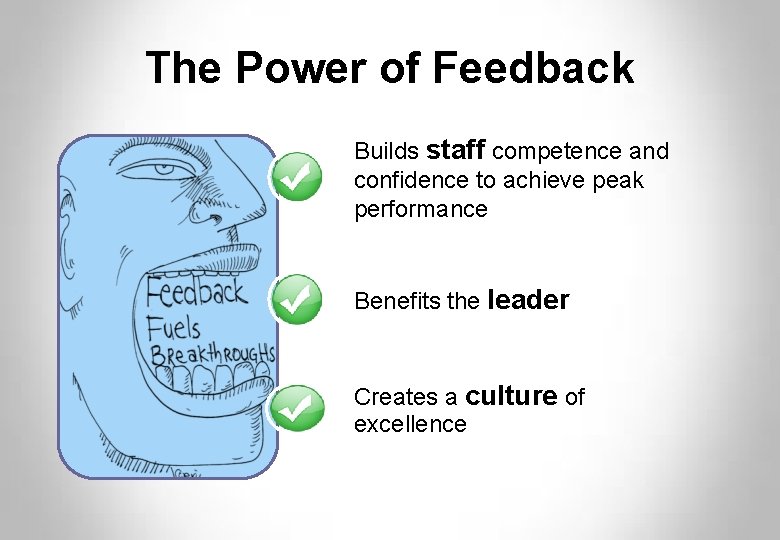
The Power of Feedback Builds staff competence and confidence to achieve peak performance Benefits the leader Creates a culture of excellence
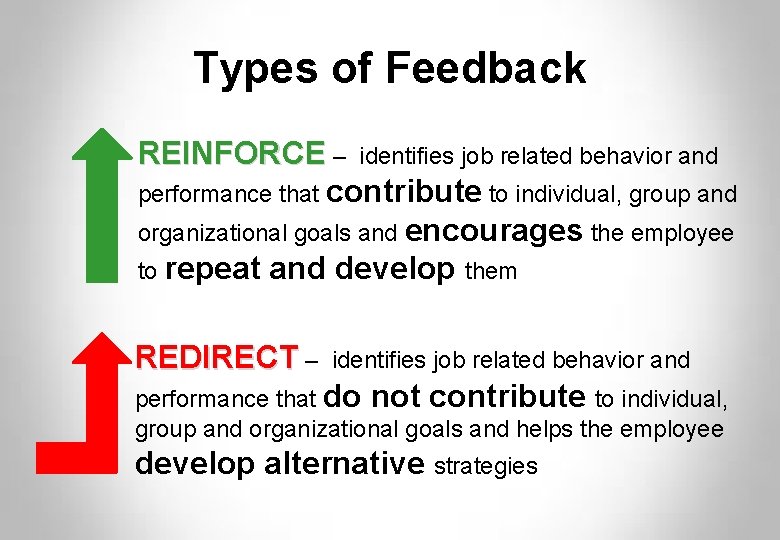
Types of Feedback REINFORCE – identifies job related behavior and performance that contribute to individual, group and organizational goals and encourages the employee to repeat and develop them REDIRECT – identifies job related behavior and performance that do not contribute to individual, group and organizational goals and helps the employee develop alternative strategies
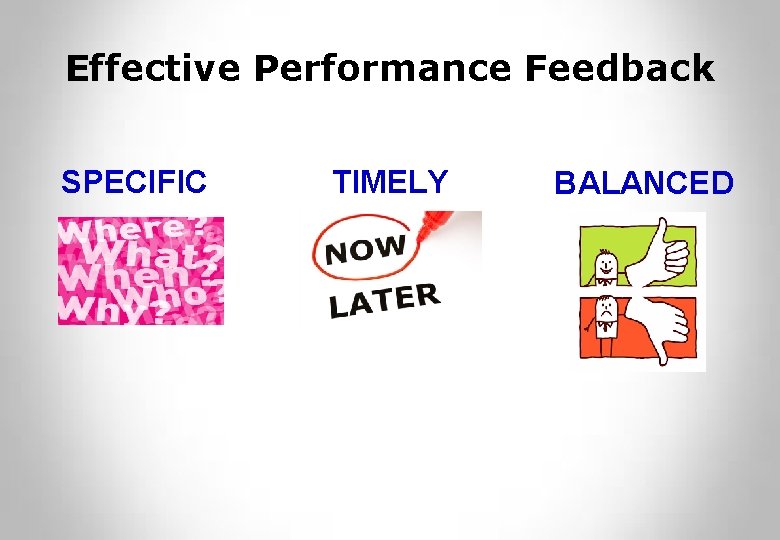
Effective Performance Feedback SPECIFIC TIMELY BALANCED
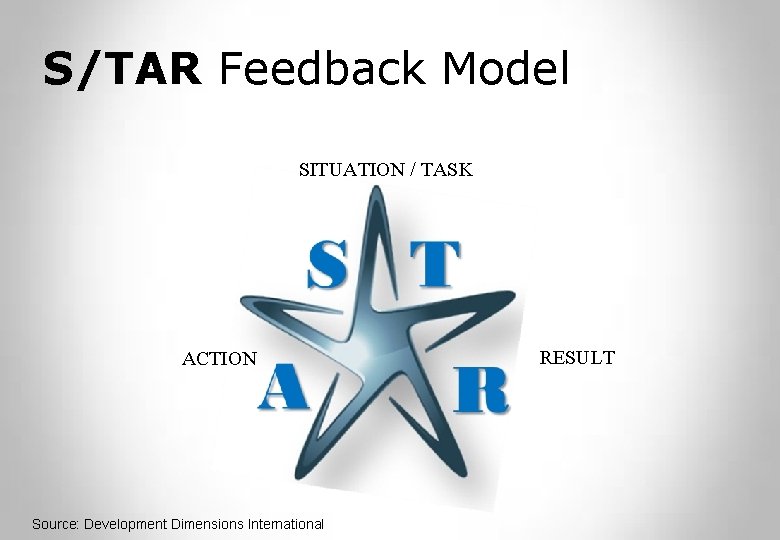
S/TAR Feedback Model SITUATION / TASK ACTION Source: Development Dimensions International RESULT
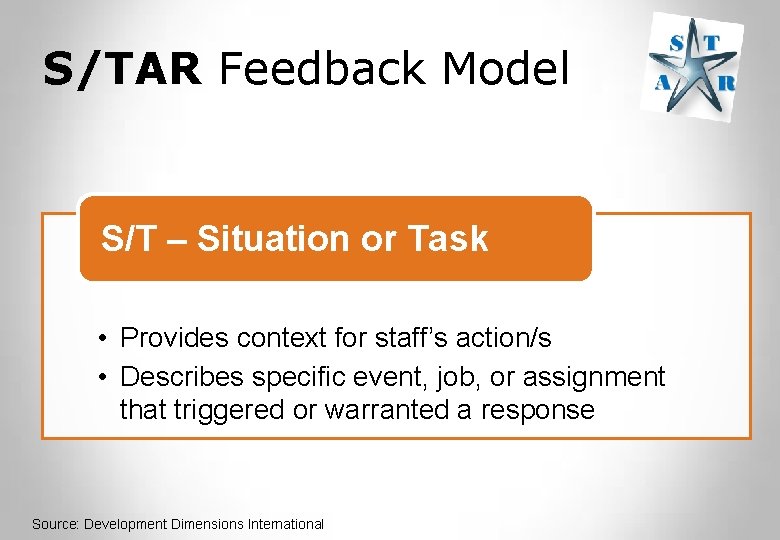
S/TAR Feedback Model S/T – Situation or Task • Provides context for staff’s action/s • Describes specific event, job, or assignment that triggered or warranted a response Source: Development Dimensions International
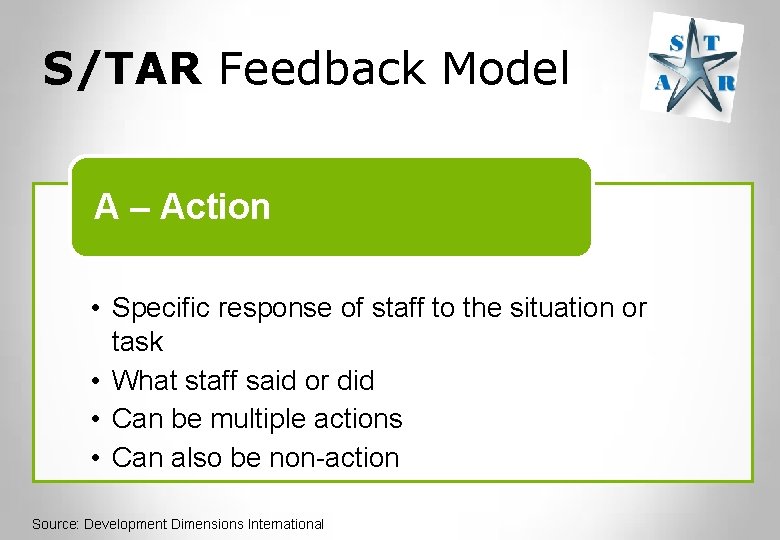
S/TAR Feedback Model A – Action • Specific response of staff to the situation or task • What staff said or did • Can be multiple actions • Can also be non-action Source: Development Dimensions International
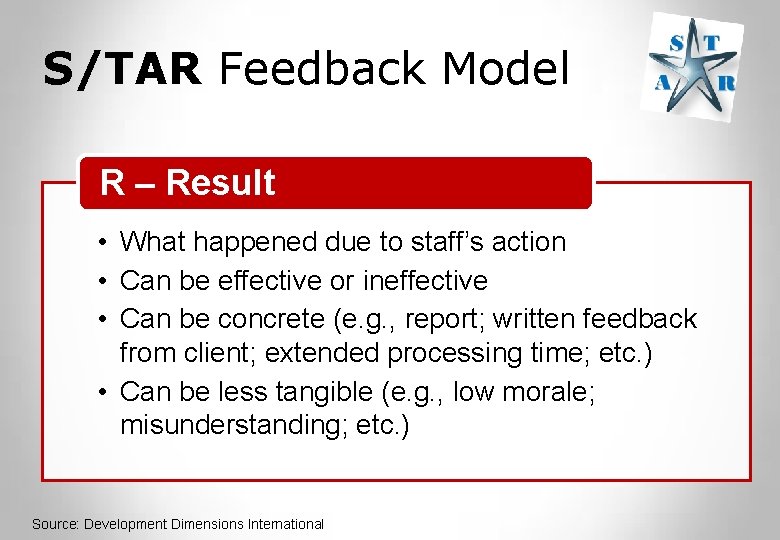
S/TAR Feedback Model R – Result • What happened due to staff’s action • Can be effective or ineffective • Can be concrete (e. g. , report; written feedback from client; extended processing time; etc. ) • Can be less tangible (e. g. , low morale; misunderstanding; etc. ) Source: Development Dimensions International
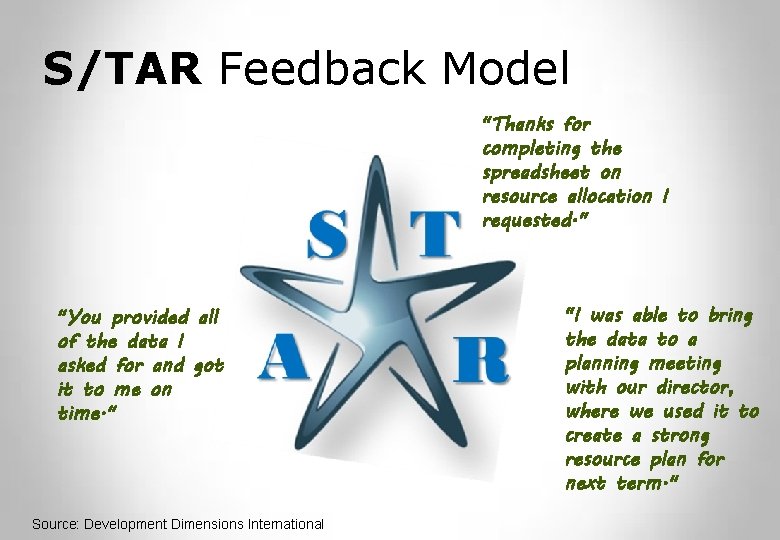
S/TAR Feedback Model "Thanks for completing the spreadsheet on resource allocation I requested. " "You provided all of the data I asked for and got it to me on time. " Source: Development Dimensions International "I was able to bring the data to a planning meeting with our director, where we used it to create a strong resource plan for next term. "
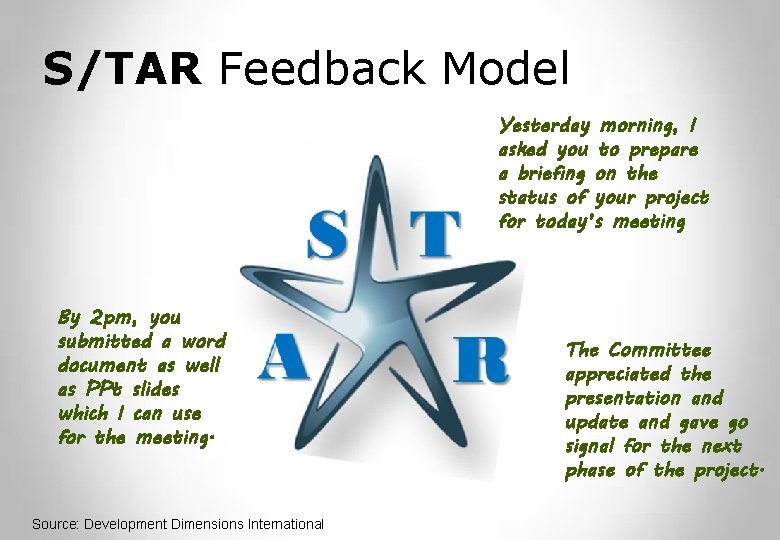
S/TAR Feedback Model Yesterday morning, I asked you to prepare a briefing on the status of your project for today’s meeting By 2 pm, you submitted a word document as well as PPt slides which I can use for the meeting. Source: Development Dimensions International The Committee appreciated the presentation and update and gave go signal for the next phase of the project.
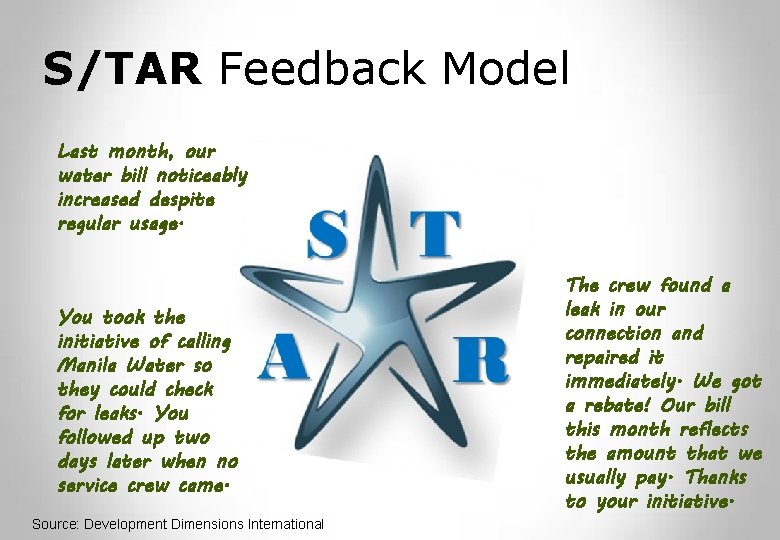
S/TAR Feedback Model Last month, our water bill noticeably increased despite regular usage. You took the initiative of calling Manila Water so they could check for leaks. You followed up two days later when no service crew came. Source: Development Dimensions International The crew found a leak in our connection and repaired it immediately. We got a rebate! Our bill this month reflects the amount that we usually pay. Thanks to your initiative.
S/TAR Feedback Model • Helps you focus staff’s attention on behaviors that got them to their current level of performance • Can be used to reinforce staff’s good performance as well as to facilitate improvement in staff’s performance • Can be used to give feedback verbally or in writing
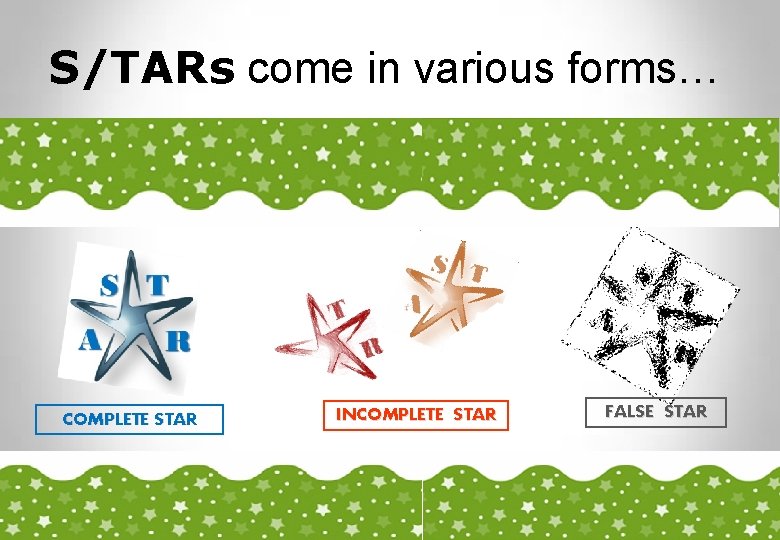
S/TARs come in various forms… COMPLETE STAR Source: Development Dimensions International INCOMPLETE STAR FALSE STAR
Complete S/TAR n Complete behavioural story n All elements present
Incomplete S/TAR R “The health and wellness program was a huge success. ” S A “Given the recent security incident, I was able to coach my team to prepare for possible emergency situations. ” T A “I interviewed several parents to get their feedback about the proposal. ”
False S/TAR Vague or General “I usually had no problems with our community partners. ” Opinion or Belief “I believe the program was effective. ” Future Oriented or Theoretical “The standards will be observed in the rollout. ”
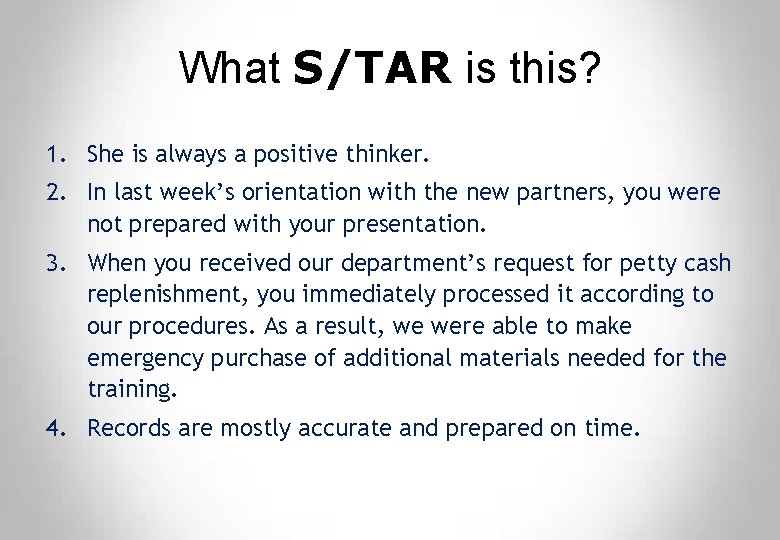
What S/TAR is this? 1. She is always a positive thinker. 2. In last week’s orientation with the new partners, you were not prepared with your presentation. 3. When you received our department’s request for petty cash replenishment, you immediately processed it according to our procedures. As a result, we were able to make emergency purchase of additional materials needed for the training. 4. Records are mostly accurate and prepared on time.
S/TAR Feedback Model Source: Development Dimensions International
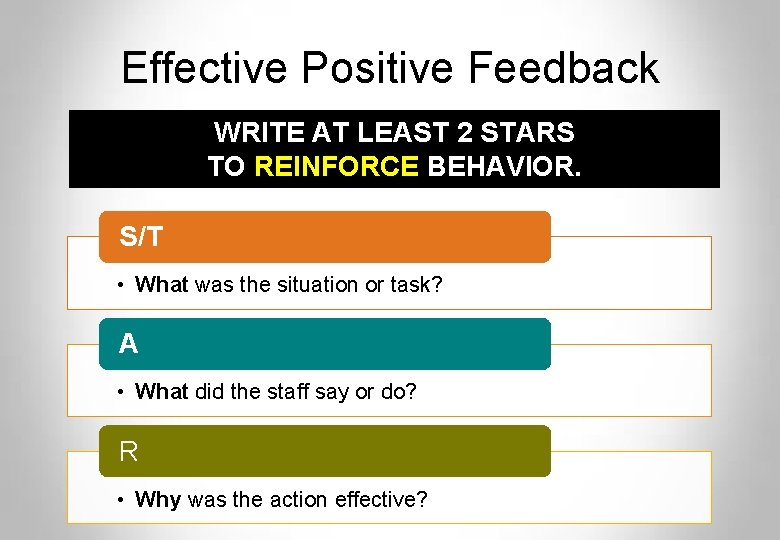
Effective Positive Feedback WRITE AT LEAST 2 STARS TO REINFORCE BEHAVIOR. S/T • What was the situation or task? A • What did the staff say or do? R • Why was the action effective?
But what about Developmental or Performance Improvement Feedback? How do we REDIRECT?
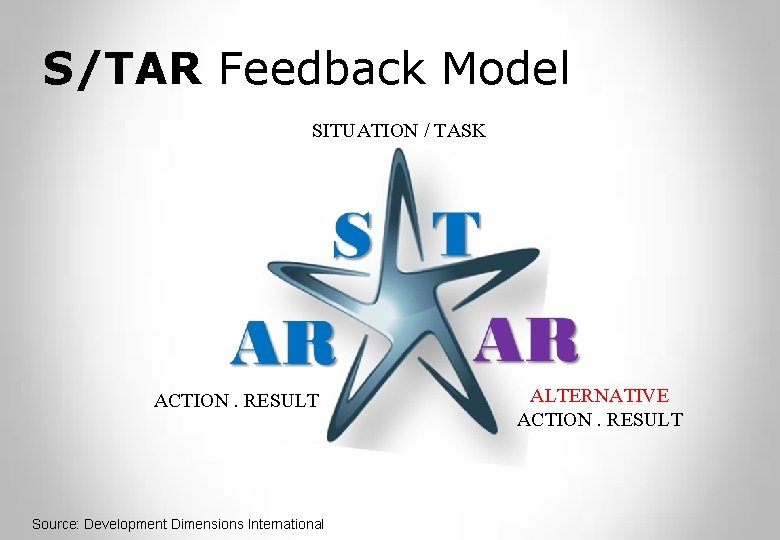
S/TAR Feedback Model SITUATION / TASK ACTION. RESULT Source: Development Dimensions International ALTERNATIVE ACTION. RESULT
S/TAR-AR Feedback Model Alternative Action • What could be done differently next time Source: Development Dimensions International
S/TAR-AR Feedback Model Alternative Result • What could be the probable result or impact of the alternative action Source: Development Dimensions International
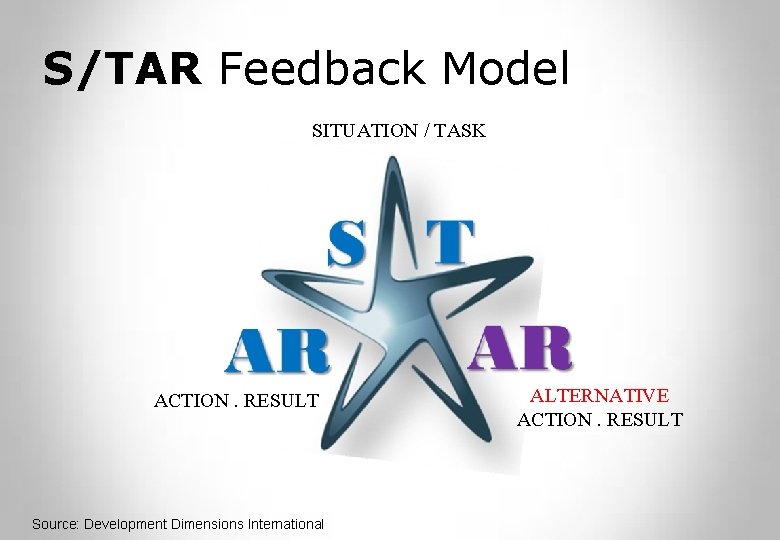
S/TAR Feedback Model SITUATION / TASK ACTION. RESULT Source: Development Dimensions International ALTERNATIVE ACTION. RESULT
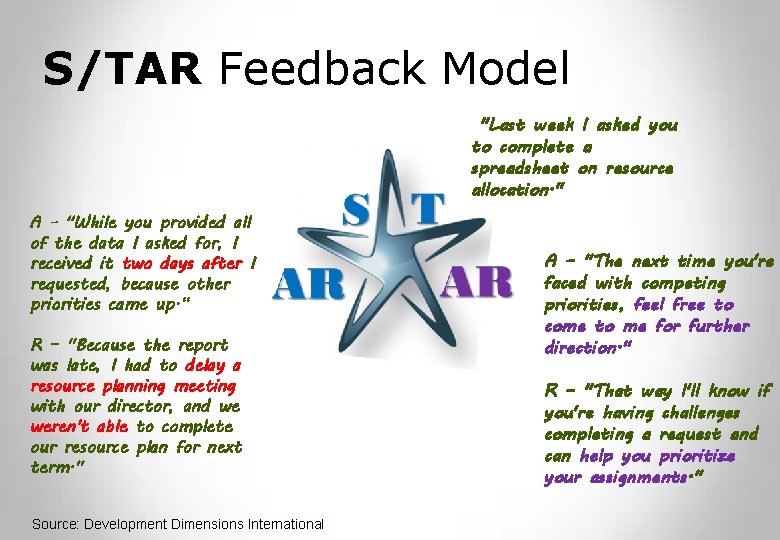
S/TAR Feedback Model "Last week I asked you to complete a spreadsheet on resource allocation. " A - "While you provided all of the data I asked for, I received it two days after I requested, because other priorities came up. “ R – "Because the report was late, I had to delay a resource planning meeting with our director, and we weren't able to complete our resource plan for next term. " Source: Development Dimensions International A – "The next time you're faced with competing priorities, feel free to come to me for further direction. " R – "That way I'll know if you're having challenges completing a request and can help you prioritize your assignments. "
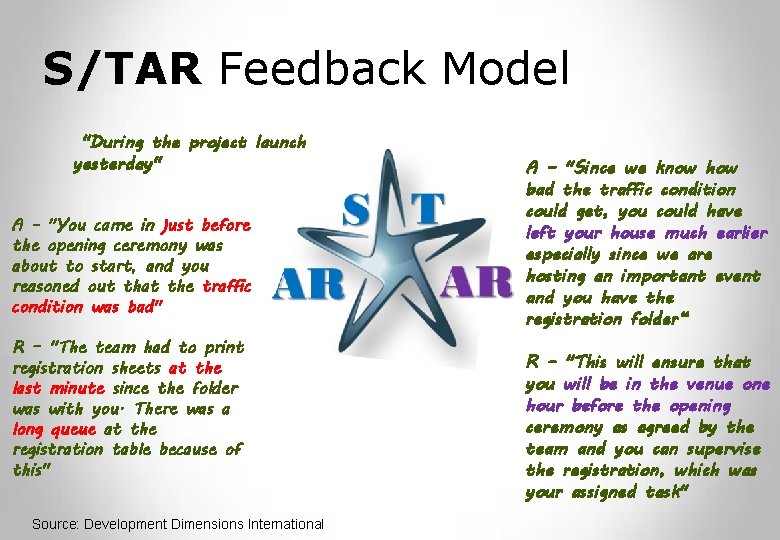
S/TAR Feedback Model "During the project launch yesterday" A - "You came in just before the opening ceremony was about to start, and you reasoned out that the traffic condition was bad" R – "The team had to print registration sheets at the last minute since the folder was with you. There was a long queue at the registration table because of this" Source: Development Dimensions International A – "Since we know how bad the traffic condition could get, you could have left your house much earlier especially since we are hosting an important event and you have the registration folder“ R – "This will ensure that you will be in the venue one hour before the opening ceremony as agreed by the team and you can supervise the registration, which was your assigned task"
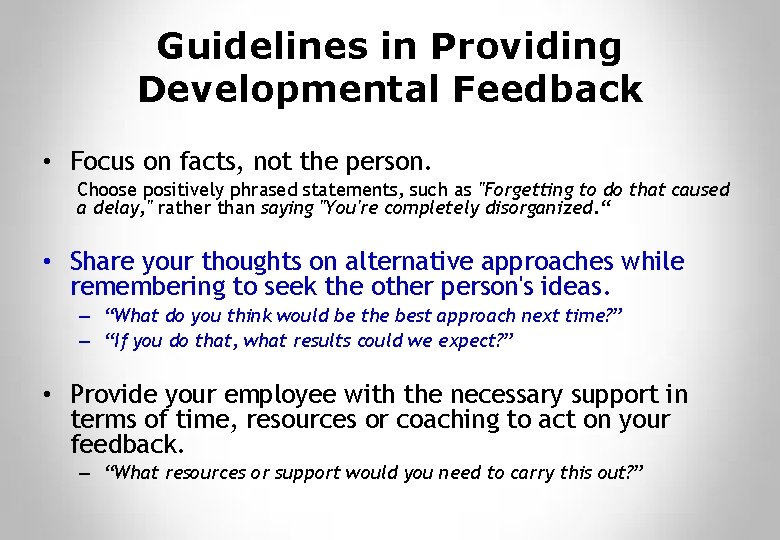
Guidelines in Providing Developmental Feedback • Focus on facts, not the person. Choose positively phrased statements, such as "Forgetting to do that caused a delay, " rather than saying "You're completely disorganized. “ • Share your thoughts on alternative approaches while remembering to seek the other person's ideas. – “What do you think would be the best approach next time? ” – “If you do that, what results could we expect? ” • Provide your employee with the necessary support in terms of time, resources or coaching to act on your feedback. – “What resources or support would you need to carry this out? ”
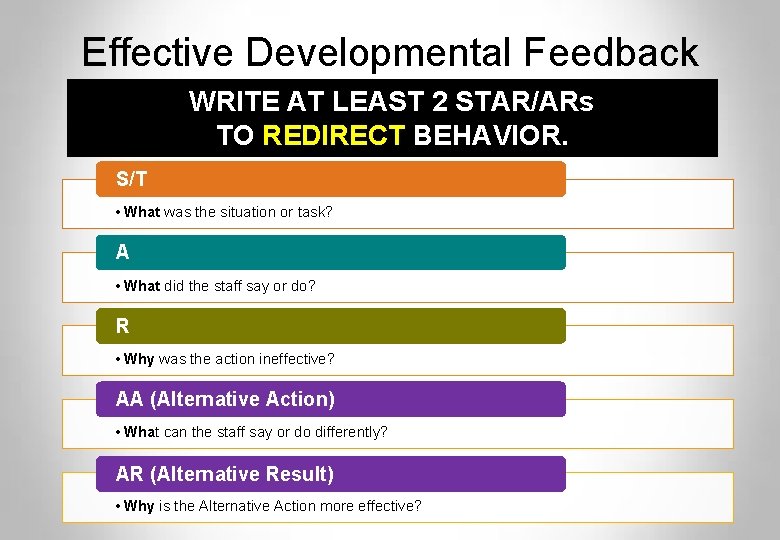
Effective Developmental Feedback WRITE AT LEAST 2 STAR/ARs TO REDIRECT BEHAVIOR. S/T • What was the situation or task? A • What did the staff say or do? R • Why was the action ineffective? AA (Alternative Action) • What can the staff say or do differently? AR (Alternative Result) • Why is the Alternative Action more effective?
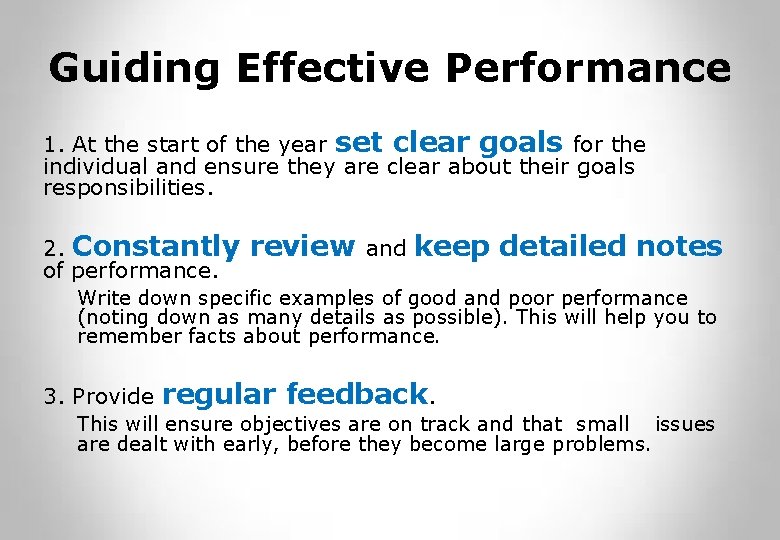
Guiding Effective Performance 1. At the start of the year set clear goals for the individual and ensure they are clear about their goals responsibilities. 2. Constantly of performance. review and keep detailed notes Write down specific examples of good and poor performance (noting down as many details as possible). This will help you to remember facts about performance. 3. Provide regular feedback. This will ensure objectives are on track and that small issues are dealt with early, before they become large problems.
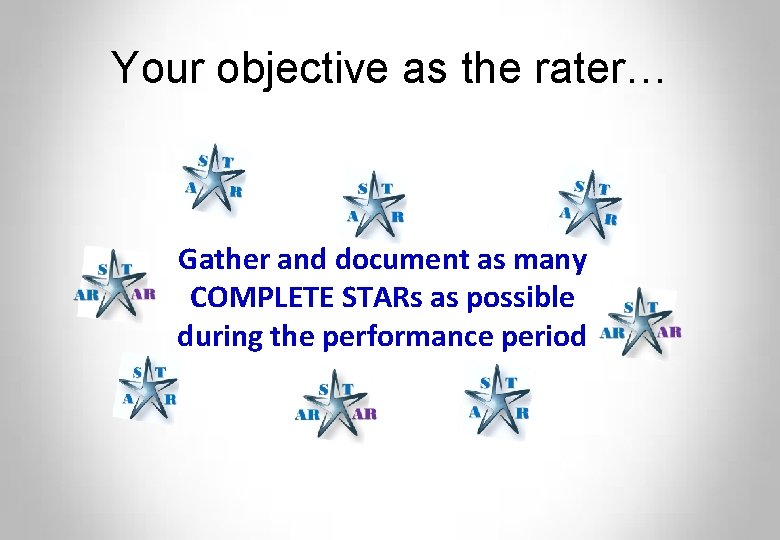
Your objective as the rater… Gather and document as many COMPLETE STARs as possible during the performance period
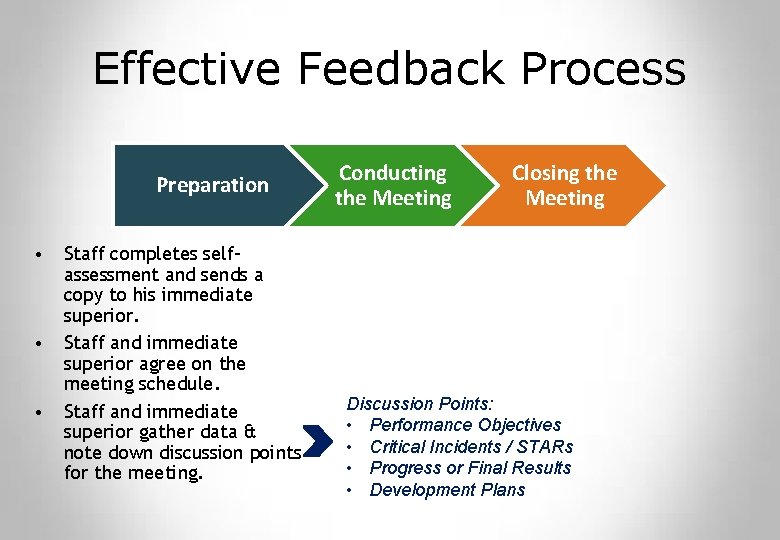
Effective Feedback Process Preparation • • • Staff completes selfassessment and sends a copy to his immediate superior. Staff and immediate superior agree on the meeting schedule. Staff and immediate superior gather data & note down discussion points for the meeting. Conducting the Meeting Closing the Meeting Discussion Points: • Performance Objectives • Critical Incidents / STARs • Progress or Final Results • Development Plans
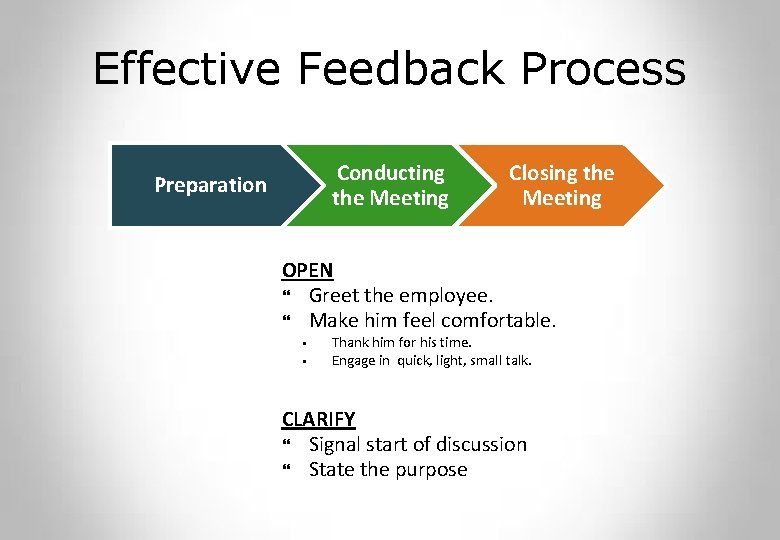
Effective Feedback Process Conducting the Meeting Preparation Closing the Meeting OPEN Greet the employee. Make him feel comfortable. • • Thank him for his time. Engage in quick, light, small talk. CLARIFY Signal start of discussion State the purpose
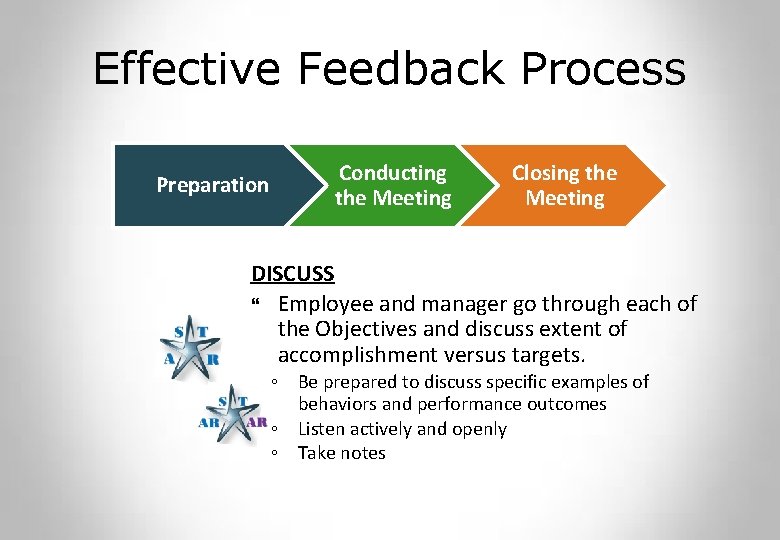
Effective Feedback Process Preparation Conducting the Meeting Closing the Meeting DISCUSS Employee and manager go through each of the Objectives and discuss extent of accomplishment versus targets. ◦ Be prepared to discuss specific examples of behaviors and performance outcomes ◦ Listen actively and openly ◦ Take notes
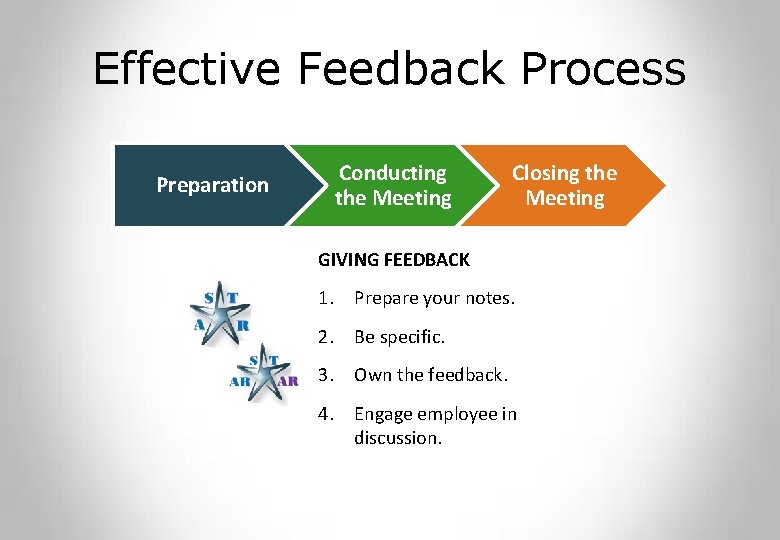
Effective Feedback Process Preparation Conducting the Meeting Closing the Meeting GIVING FEEDBACK 1. Prepare your notes. 2. Be specific. 3. Own the feedback. 4. Engage employee in discussion.
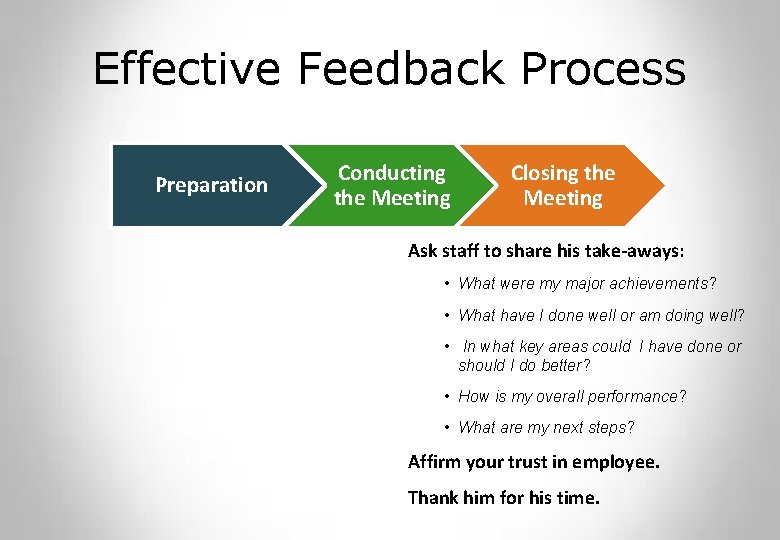
Effective Feedback Process Preparation Conducting the Meeting Closing the Meeting Ask staff to share his take-aways: • What were my major achievements? • What have I done well or am doing well? • In what key areas could I have done or should I do better? • How is my overall performance? • What are my next steps? Affirm your trust in employee. Thank him for his time.
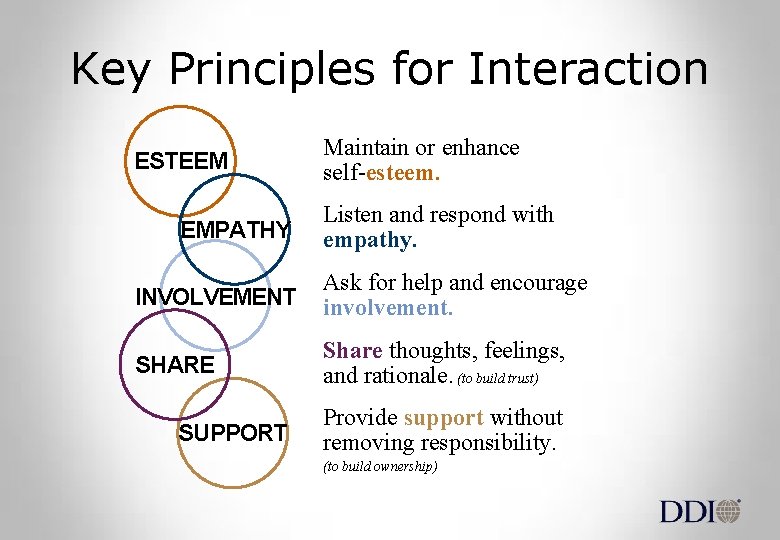
Key Principles for Interaction ESTEEM EMPATHY Maintain or enhance self-esteem. Listen and respond with empathy. INVOLVEMENT Ask for help and encourage involvement. SHARE Share thoughts, feelings, and rationale. (to build trust) SUPPORT Provide support without removing responsibility. (to build ownership)
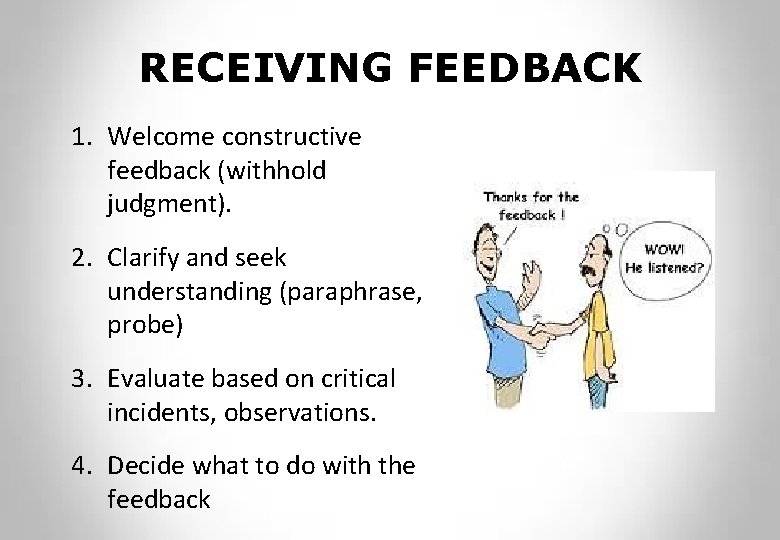
RECEIVING FEEDBACK 1. Welcome constructive feedback (withhold judgment). 2. Clarify and seek understanding (paraphrase, probe) 3. Evaluate based on critical incidents, observations. 4. Decide what to do with the feedback
Role Play Observing the Effective Feedback Process: OPEN > CLARIFY > DISCUSS > CLOSE Use of Key Principles: Esteem. Empathy. Involvement. Share. Support Round 1 A: Give a STAR feedback to your partner. B: Respond appropriately. Round 2 B: Give a STAR-AR feedback to your partner. A: Respond appropriately.
“It is an immutable law in business that words are words, explanations are explanations, promises are promises… but only performance is reality. ” Harold S. Geneen President and CEO International Telephone and Telegraph Association
- Slides: 47