
BASIC COSTUMES How to design and make your
BASIC COSTUMES How to design and make your own costumes and props
PART ONE: COSTUMES Whether you just want to up your Halloween game for next year, or you’re interested in cosplay, knowing how to work with, and even make your own patterns, can be extremely useful. But don’t worry! If you think creatively, your sewing skills don’t necessarily need to be very advanced.
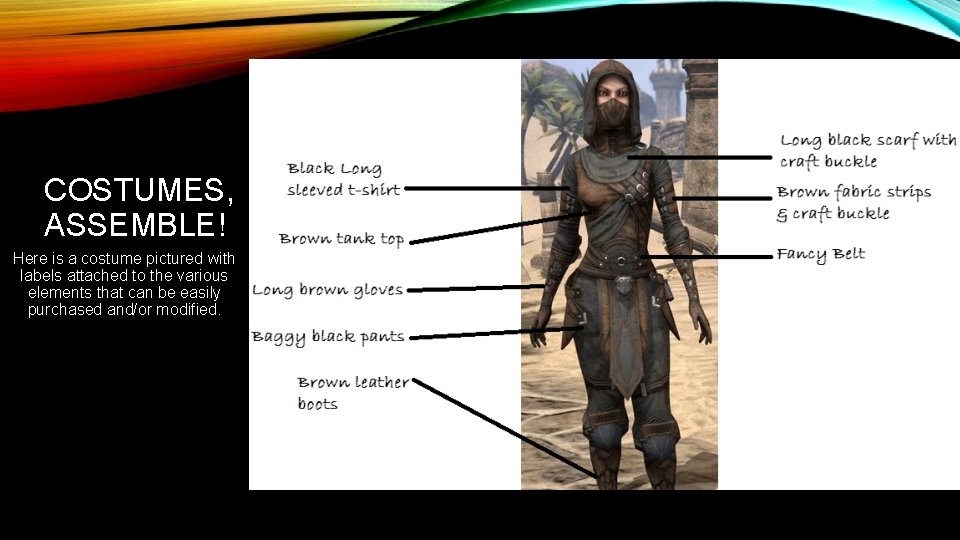
COSTUMES, ASSEMBLE! Here is a costume pictured with labels attached to the various elements that can be easily purchased and/or modified.
MAKING YOUR OWN PATTERNS Sewing companies are catching up with the idea of patterns based on pop-culture characters, but sometimes you may not be able to find exactly what you want, or you may want to improvise. You can do this one of several ways.
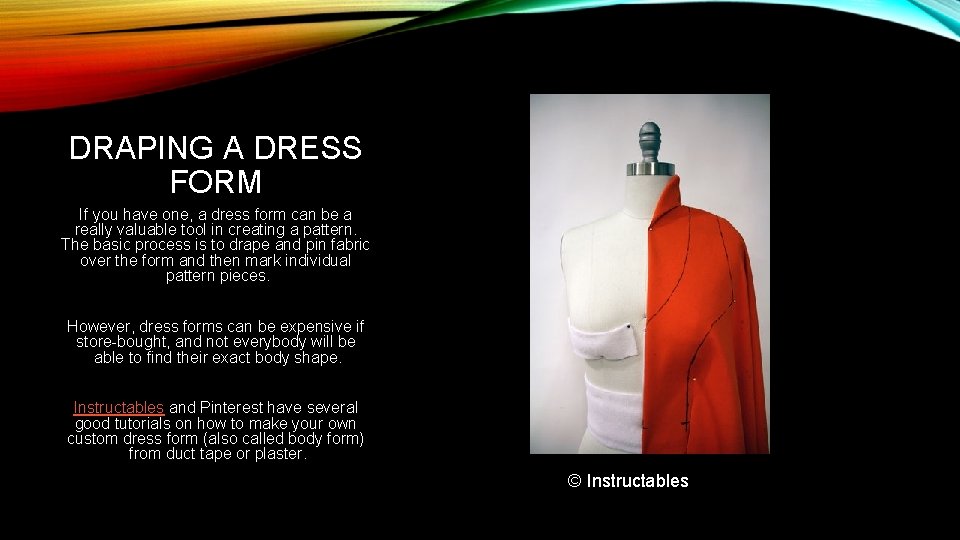
DRAPING A DRESS FORM If you have one, a dress form can be a really valuable tool in creating a pattern. The basic process is to drape and pin fabric over the form and then mark individual pattern pieces. However, dress forms can be expensive if store-bought, and not everybody will be able to find their exact body shape. Instructables and Pinterest have several good tutorials on how to make your own custom dress form (also called body form) from duct tape or plaster. © Instructables
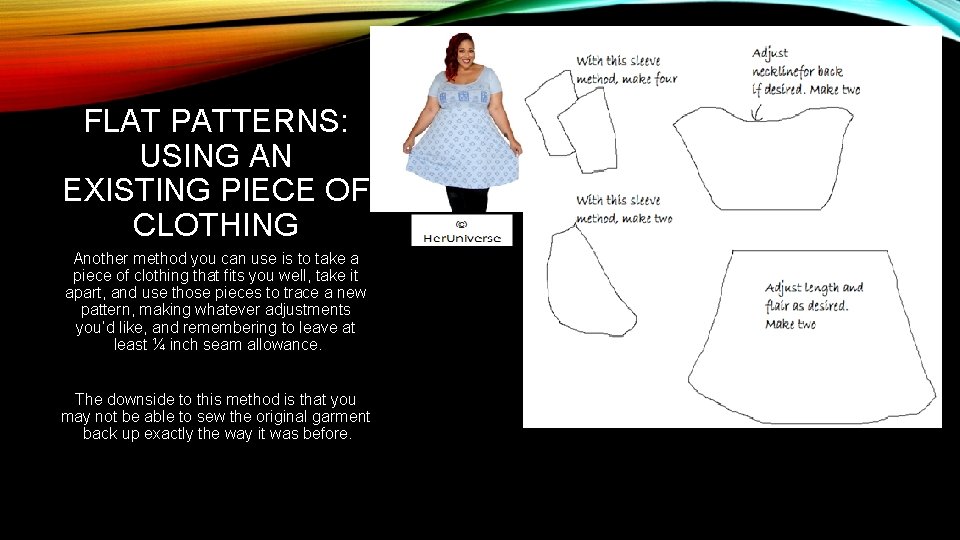
FLAT PATTERNS: USING AN EXISTING PIECE OF CLOTHING Another method you can use is to take a piece of clothing that fits you well, take it apart, and use those pieces to trace a new pattern, making whatever adjustments you’d like, and remembering to leave at least ¼ inch seam allowance. The downside to this method is that you may not be able to sew the original garment back up exactly the way it was before.
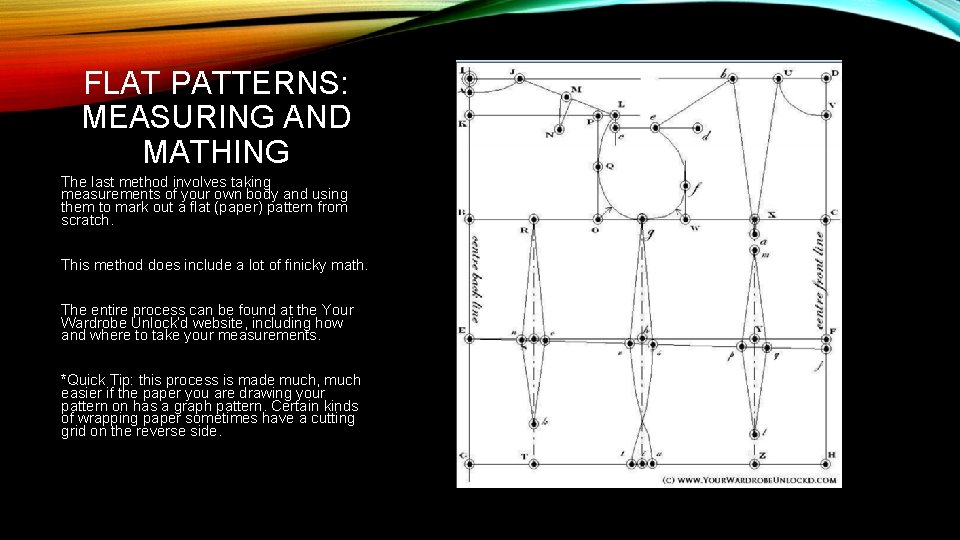
FLAT PATTERNS: MEASURING AND MATHING The last method involves taking measurements of your own body and using them to mark out a flat (paper) pattern from scratch. This method does include a lot of finicky math. The entire process can be found at the Your Wardrobe Unlock’d website, including how and where to take your measurements. *Quick Tip: this process is made much, much easier if the paper you are drawing your pattern on has a graph pattern. Certain kinds of wrapping paper sometimes have a cutting grid on the reverse side.
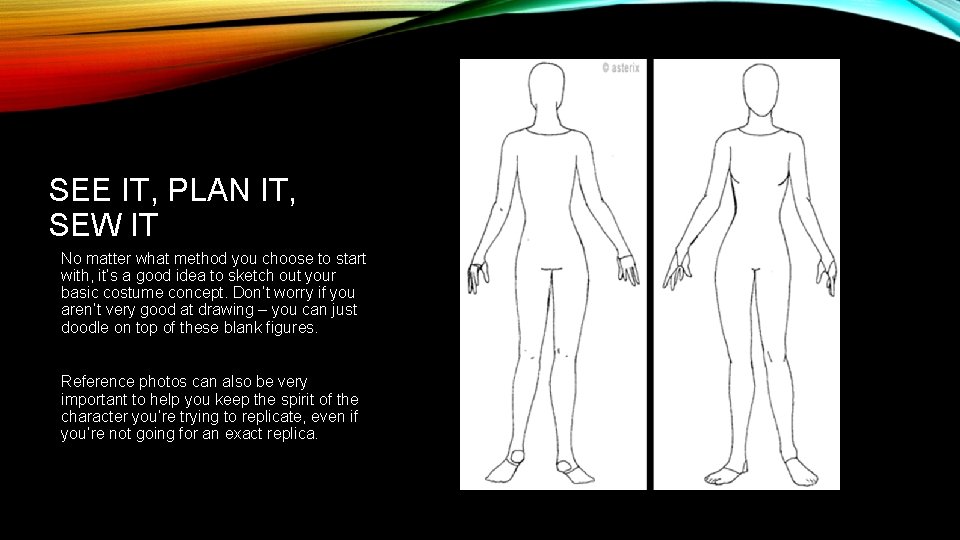
SEE IT, PLAN IT, SEW IT No matter what method you choose to start with, it’s a good idea to sketch out your basic costume concept. Don’t worry if you aren’t very good at drawing – you can just doodle on top of these blank figures. Reference photos can also be very important to help you keep the spirit of the character you’re trying to replicate, even if you’re not going for an exact replica.
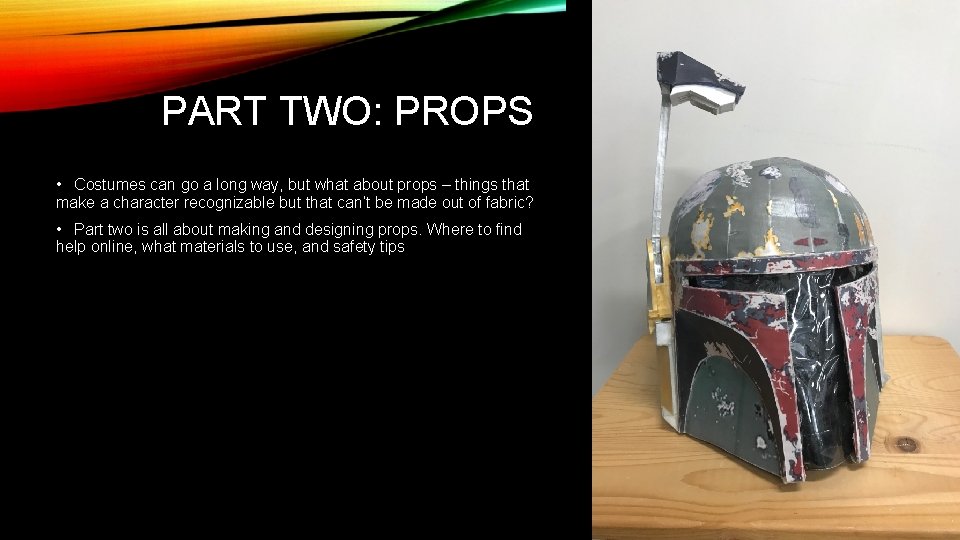
PART TWO: PROPS • Costumes can go a long way, but what about props – things that make a character recognizable but that can’t be made out of fabric? • Part two is all about making and designing props. Where to find help online, what materials to use, and safety tips
TYPES OF MATERIALS • Kydex • PVC (polyvinyl chloride) • ABS • Styrene • Fiberglass • Metal • Worbla • Cardboard and Glue (Elmer’s glue or Hot Glue) • Fiberglassed/Resin Paperboard • Sintra or Closed Cell PVC • Plastic • EVA Foam
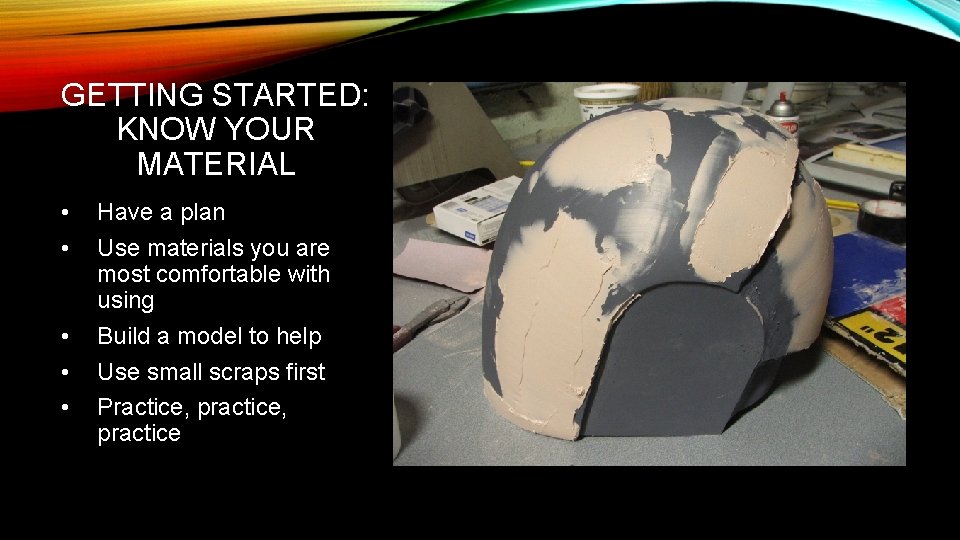
GETTING STARTED: KNOW YOUR MATERIAL • • • Have a plan Use materials you are most comfortable with using Build a model to help Use small scraps first Practice, practice
SAFETY FIRST • • Always use protective equipment Protect your work area Work in well ventilated areas Know how to safely operate the tools you are using
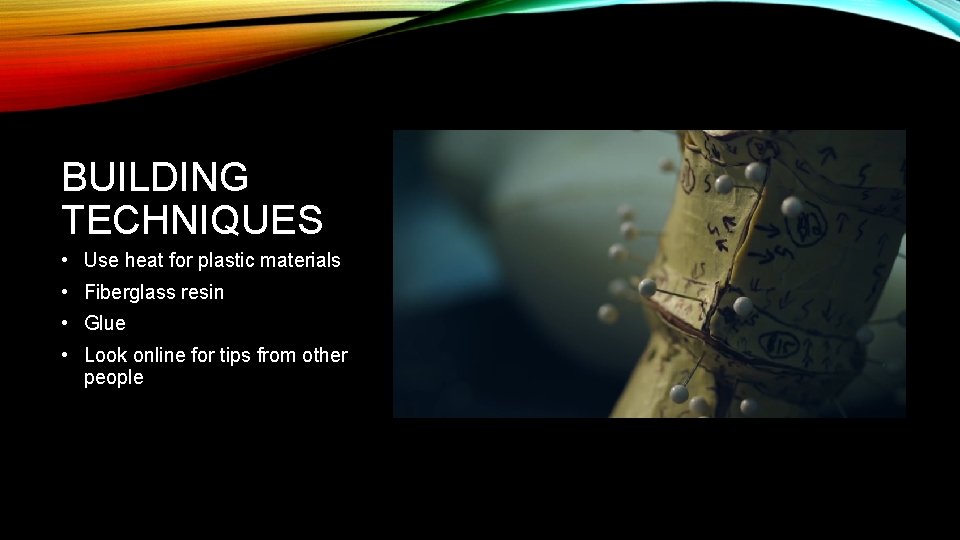
BUILDING TECHNIQUES • Use heat for plastic materials • Fiberglass resin • Glue • Look online for tips from other people
ONLINE RESOURCES FOR BUILDING YOUR PROPS Google what you’re building. You never know, someone else may have done it and posted tips or guides – maybe even a tutorial – online. • Mandalorian Mercs Costume Club • The Dented Helmet • 501 st Legion
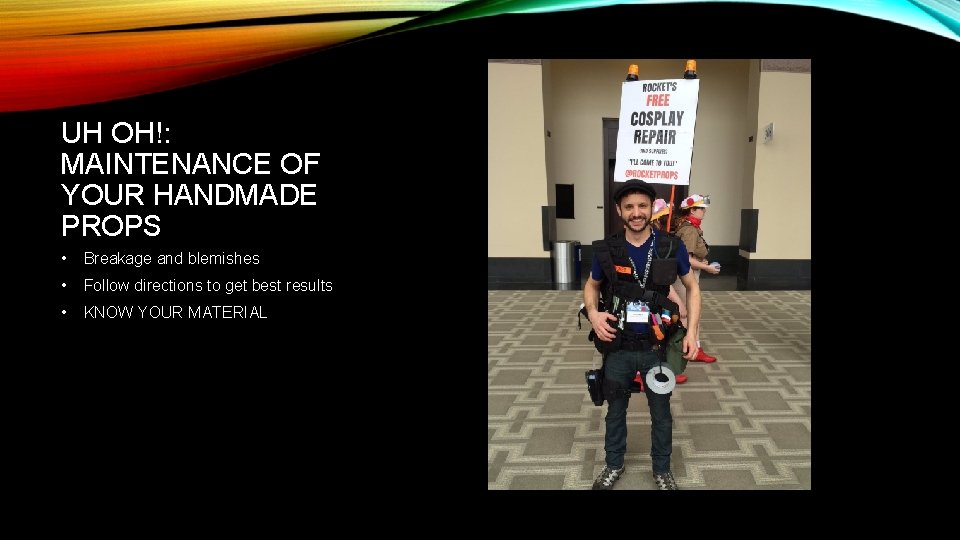
UH OH!: MAINTENANCE OF YOUR HANDMADE PROPS • Breakage and blemishes • Follow directions to get best results • KNOW YOUR MATERIAL
- Slides: 15