
Basic Concepts of Medical Anthropology Sjaak van der
Basic Concepts of Medical Anthropology Sjaak van der Geest Medical Anthropology University of Amsterdam
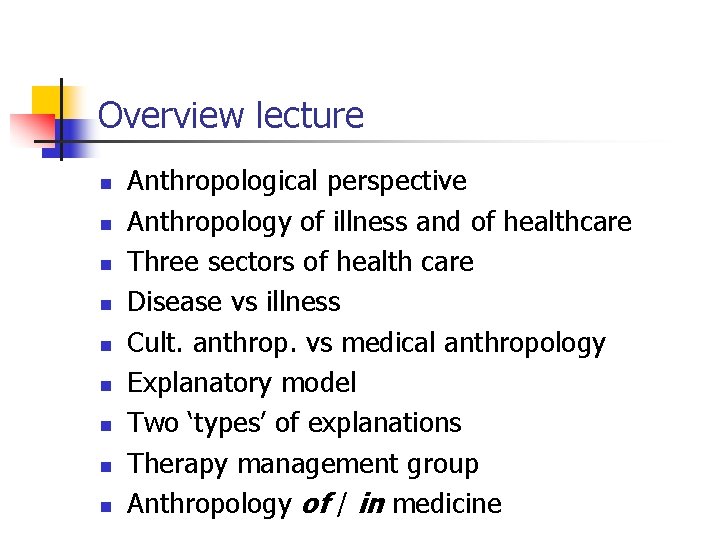
Overview lecture n n n n n Anthropological perspective Anthropology of illness and of healthcare Three sectors of health care Disease vs illness Cult. anthrop. vs medical anthropology Explanatory model Two ‘types’ of explanations Therapy management group Anthropology of / in medicine
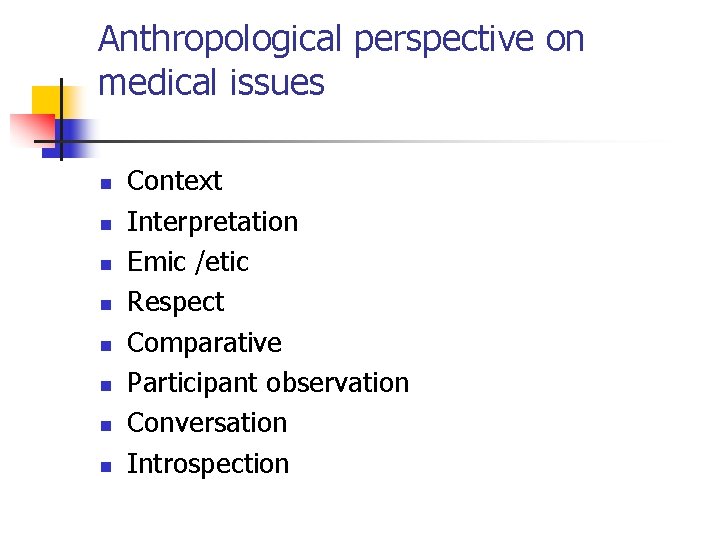
Anthropological perspective on medical issues n n n n Context Interpretation Emic /etic Respect Comparative Participant observation Conversation Introspection
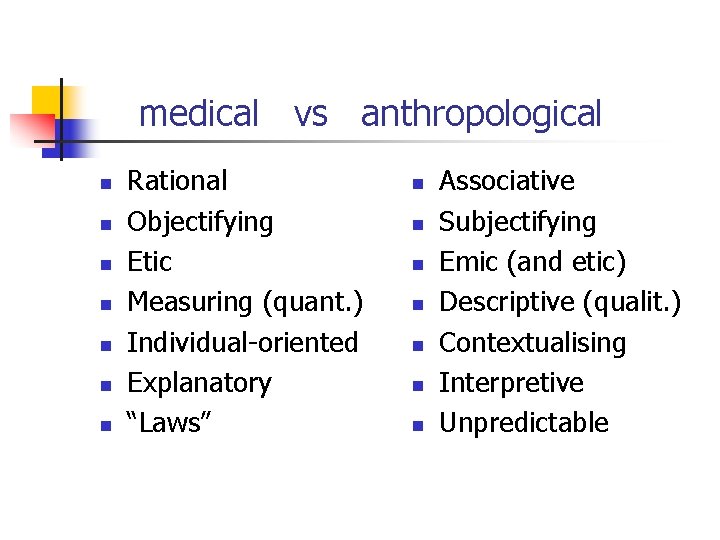
medical vs anthropological n n n n Rational Objectifying Etic Measuring (quant. ) Individual-oriented Explanatory “Laws” n n n n Associative Subjectifying Emic (and etic) Descriptive (qualit. ) Contextualising Interpretive Unpredictable
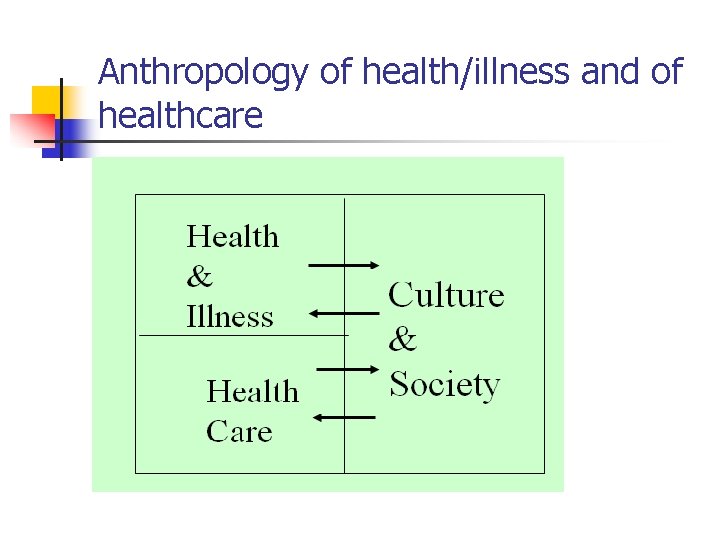
Anthropology of health/illness and of healthcare
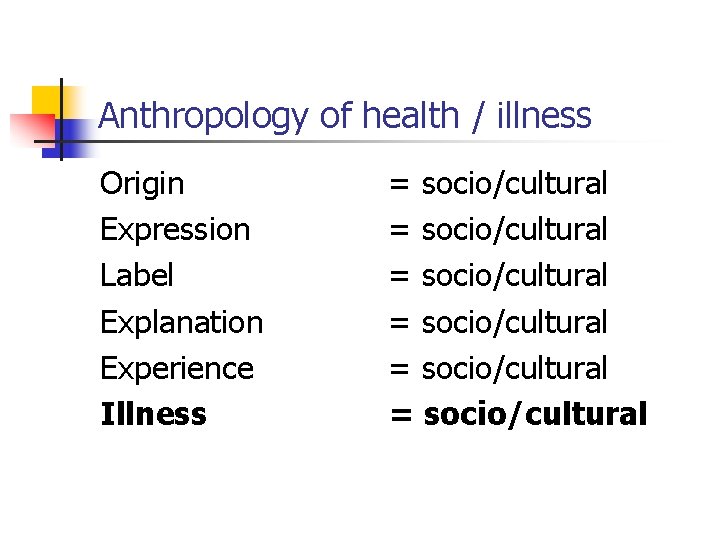
Anthropology of health / illness Origin Expression Label Explanation Experience Illness = socio/cultural = socio/cultural
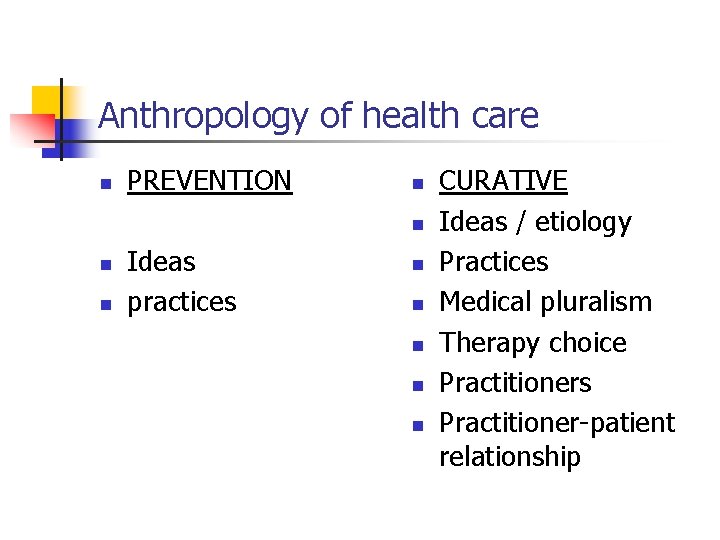
Anthropology of health care n PREVENTION n n Ideas practices n n n CURATIVE Ideas / etiology Practices Medical pluralism Therapy choice Practitioners Practitioner-patient relationship
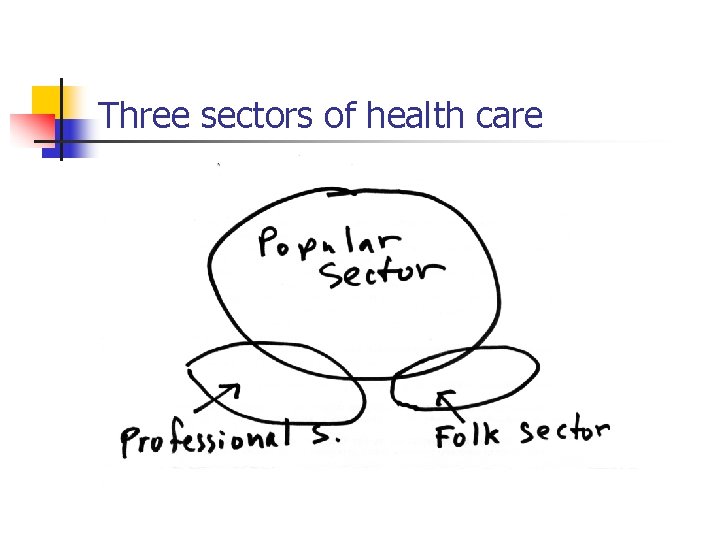
Three sectors of health care
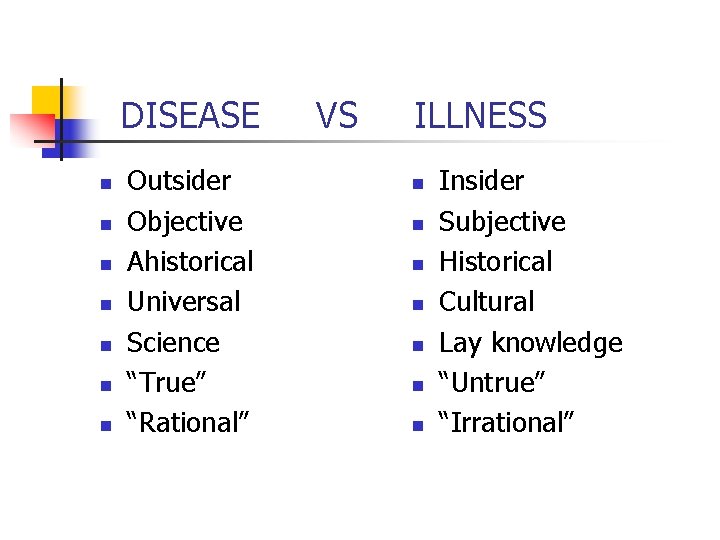
DISEASE n n n n Outsider Objective Ahistorical Universal Science “True” “Rational” VS ILLNESS n n n n Insider Subjective Historical Cultural Lay knowledge “Untrue” “Irrational”
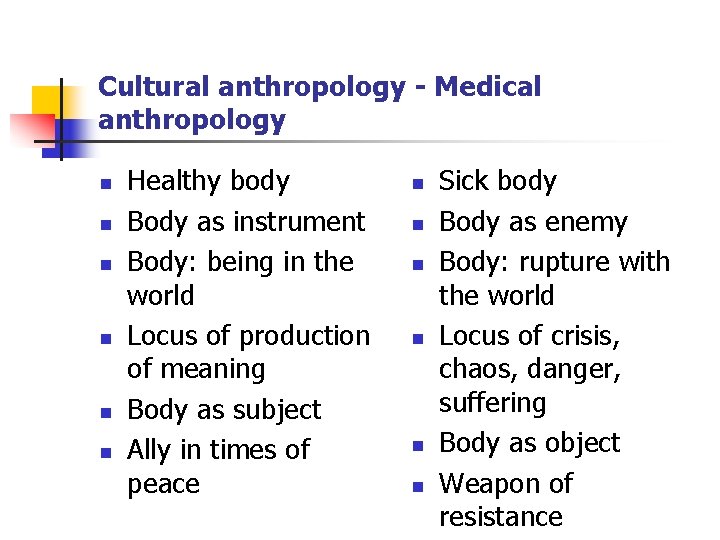
Cultural anthropology - Medical anthropology n n n Healthy body Body as instrument Body: being in the world Locus of production of meaning Body as subject Ally in times of peace n n n Sick body Body as enemy Body: rupture with the world Locus of crisis, chaos, danger, suffering Body as object Weapon of resistance
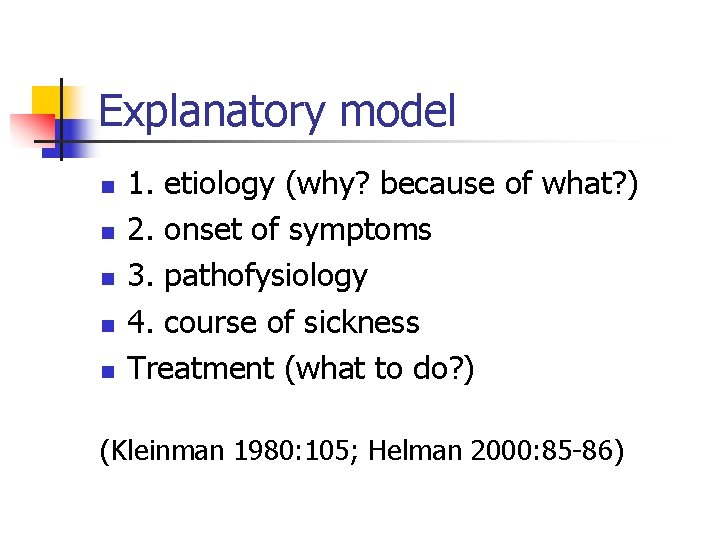
Explanatory model n n n 1. etiology (why? because of what? ) 2. onset of symptoms 3. pathofysiology 4. course of sickness Treatment (what to do? ) (Kleinman 1980: 105; Helman 2000: 85 -86)
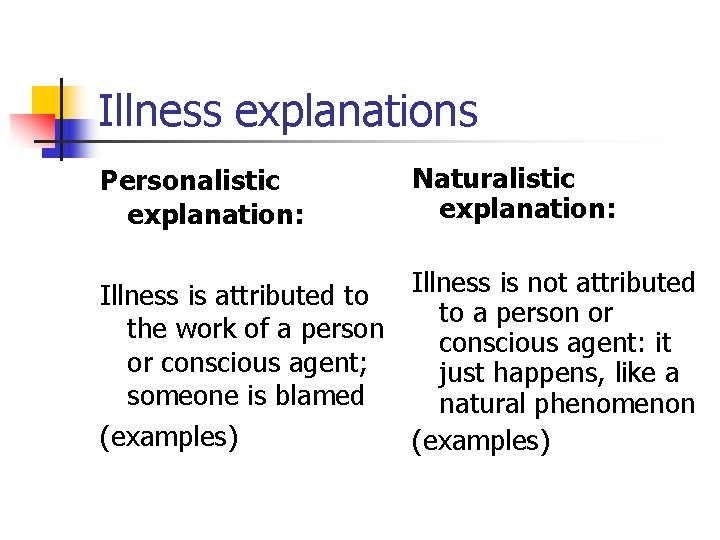
Illness explanations Personalistic explanation: Naturalistic explanation: Illness is attributed to the work of a person or conscious agent; someone is blamed (examples) Illness is not attributed to a person or conscious agent: it just happens, like a natural phenomenon (examples)
Illness explanations are not just cultural; they can also have a (hidden) social or political meaning n n Personalistic …. . Naturalistic …. .
Personalistic explanation n n Is it satisfactory? When? For whom? Does it provide a starting point for action?
Naturalistic explanation n n Is it satisfactory? When? For whom? Does it provide a starting point for action?
Illness explanations express social and other interests of those who produce them (personalistic or naturalistic) n n Patient: Environment: Doctor: Anthropologist:
Personalistic and naturalistic: n n n Personalistic is not a more “primitive” view of illness causes than naturalistic. Personalistic is not more “cultural” and less “scientific” than naturalistic. Personalistic and naturalistic views do not exclude one another: they often occur together.

Therapy management group
Anthropology of / in medicine n n n Anthropology of medicine: outside perspective / theoretical / critical… Anthropology in medicine: ‘embedded’, applied, ‘useful’… Cannot be separated however
- Slides: 19