
Basic concepts of map projections Lecture 04 Map

Basic concepts of map projections Lecture 04
Map projections: basic concepts Types of map projections Curvlinear coordinate systems Scales of map projections Tissot’s indicatrix and principal axes Properties of map projections
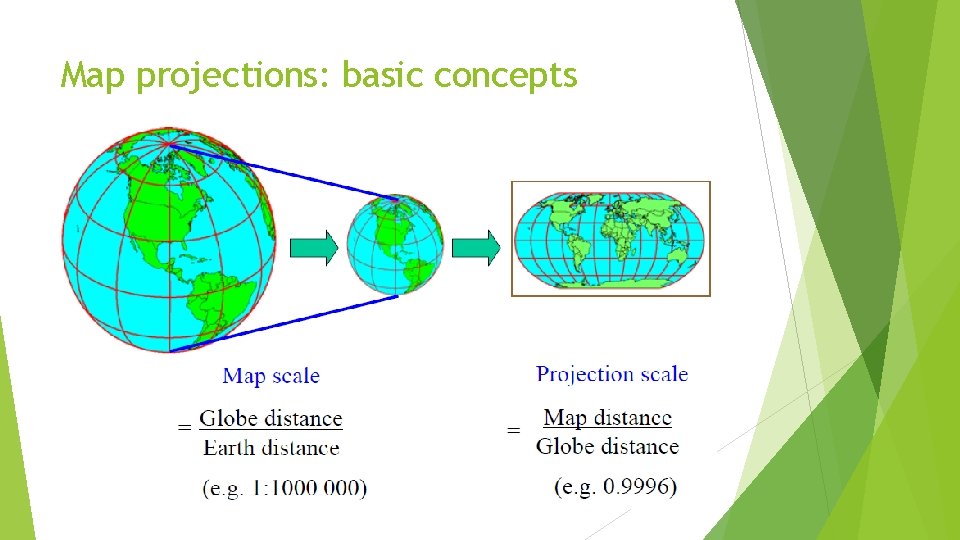
Map projections: basic concepts
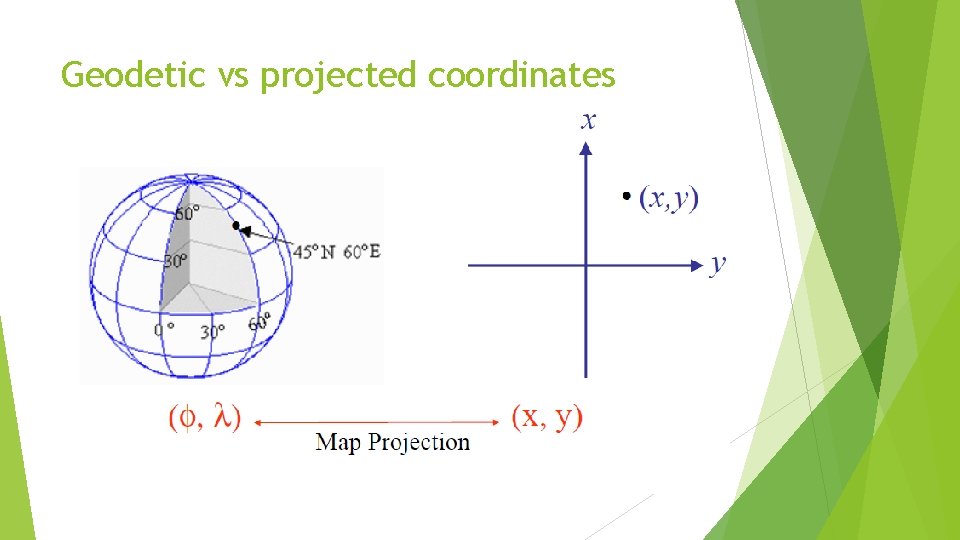
Geodetic vs projected coordinates
Classification of map projections Different Relation projection surfaces of projection surfaces to earth surface of axis/normal of the projection surface to the earth’s polar axis
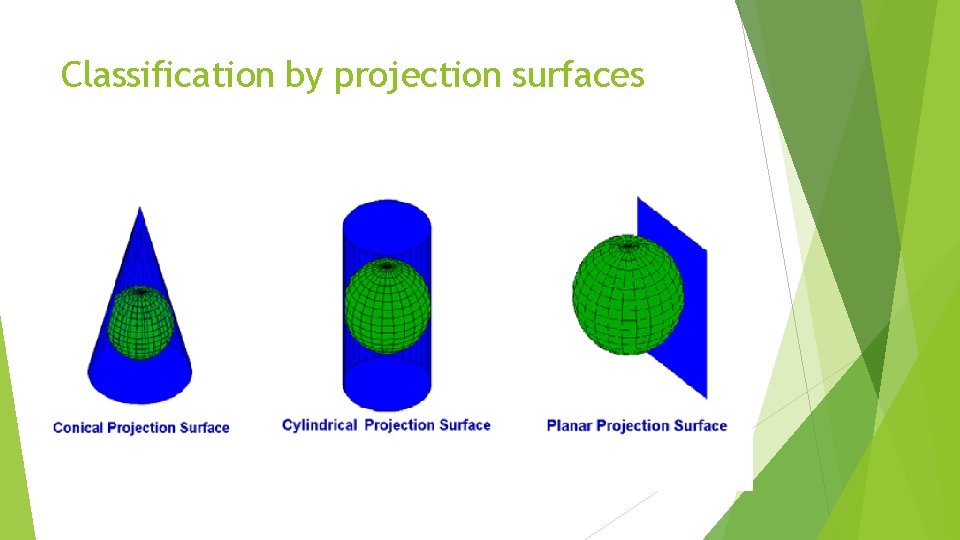
Classification by projection surfaces
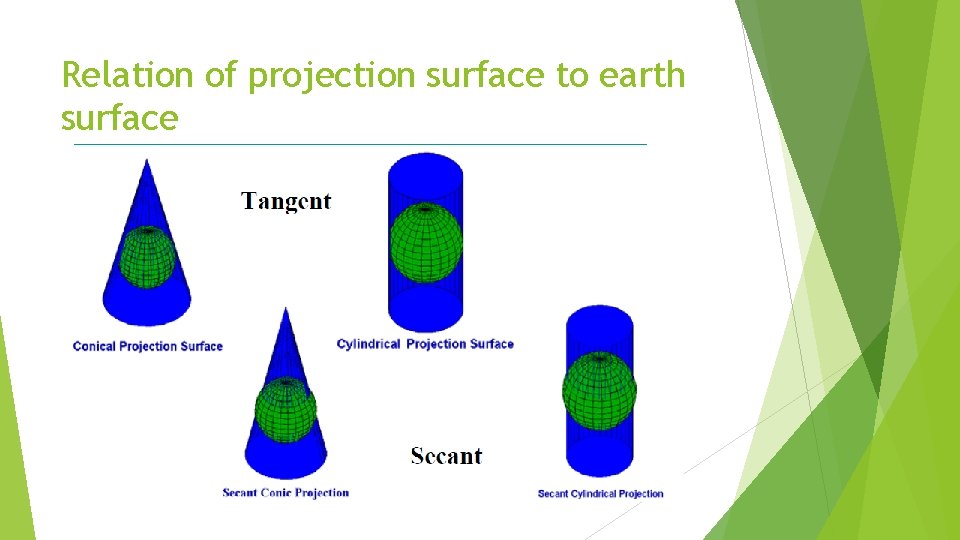
Relation of projection surface to earth surface
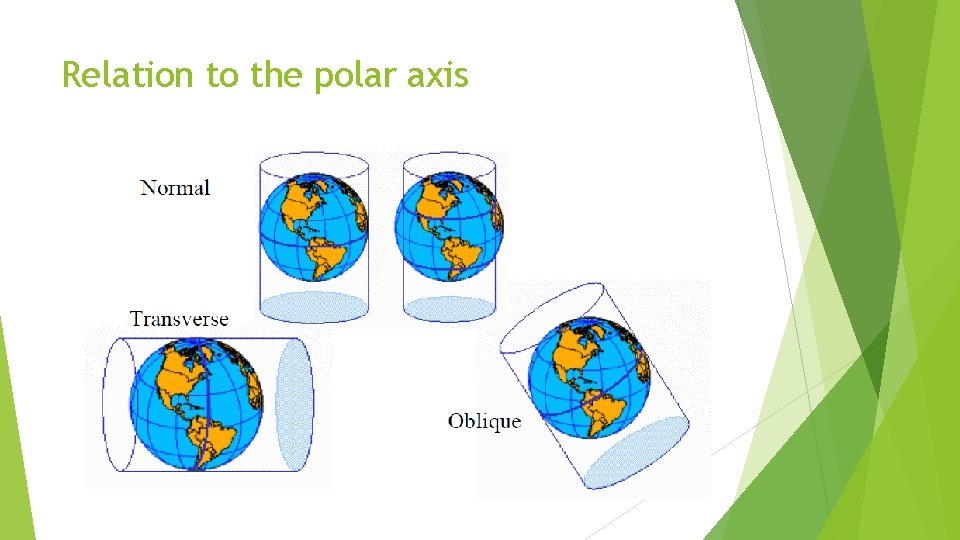
Relation to the polar axis
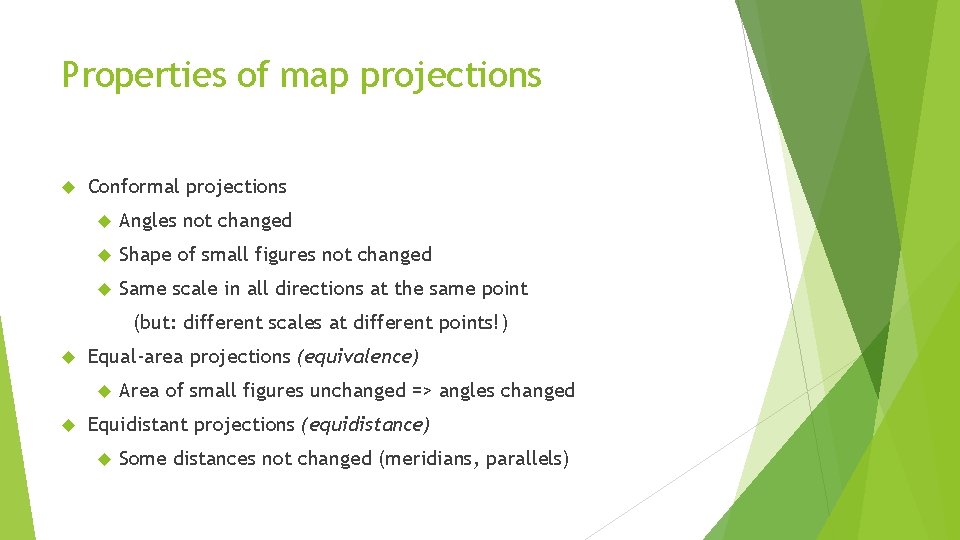
Properties of map projections Conformal projections Angles not changed Shape of small figures not changed Same scale in all directions at the same point (but: different scales at different points!) Equal-area projections (equivalence) Area of small figures unchanged => angles changed Equidistant projections (equidistance) Some distances not changed (meridians, parallels)
Types of Projections Conic (Albers Equal Area, Lambert Conformal Conic) good for East-West land areas Cylindrical (Transverse Mercator) - good for North-South land areas Azimuthal (Lambert Azimuthal Equal Area) - good for polar/global views
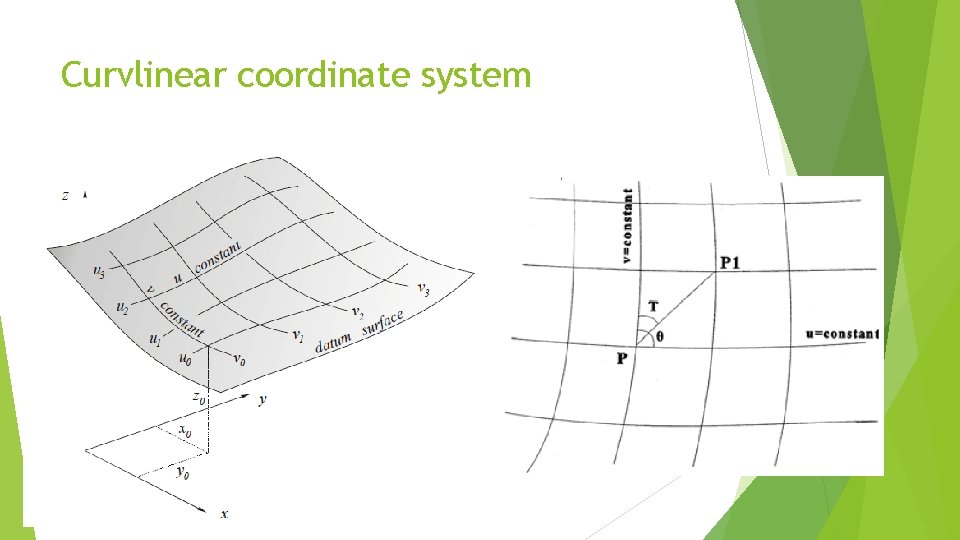
Curvlinear coordinate system
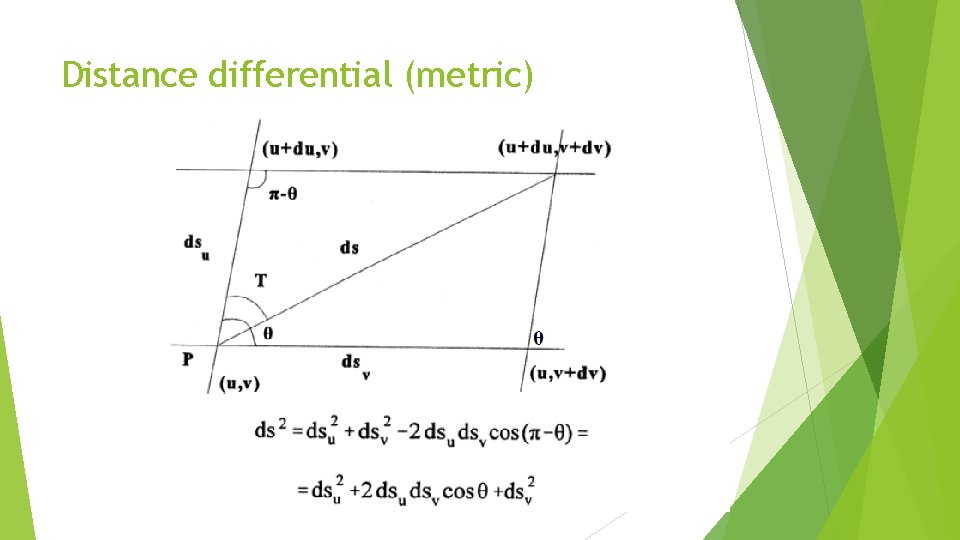
Distance differential (metric)
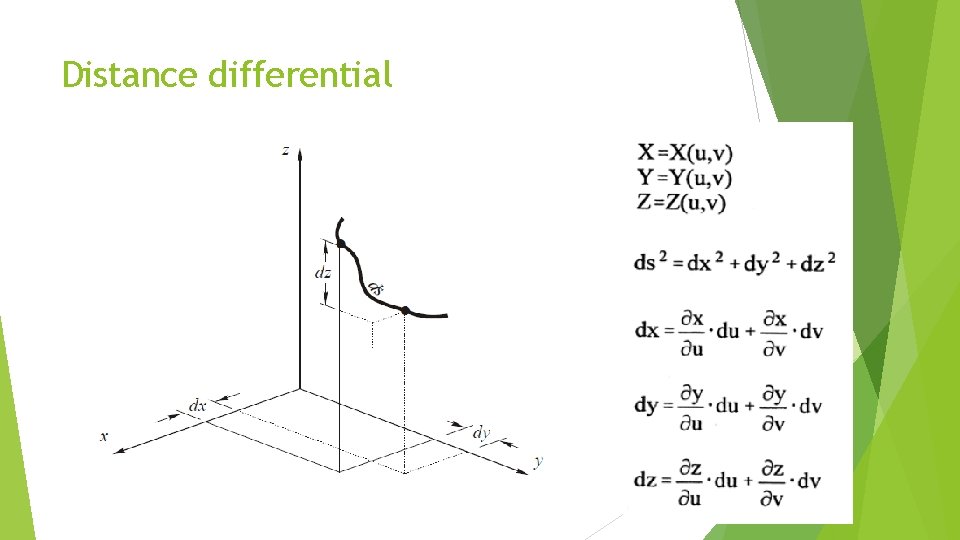
Distance differential
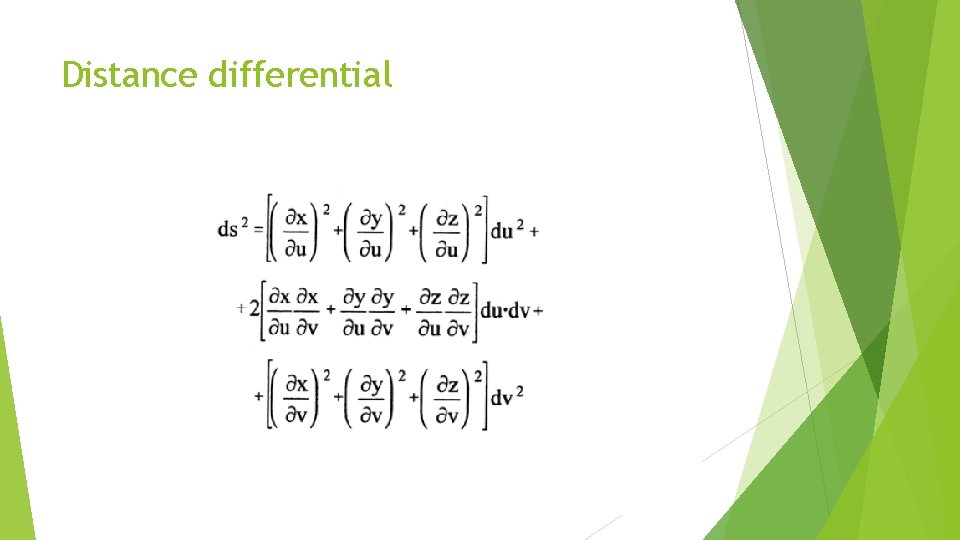
Distance differential
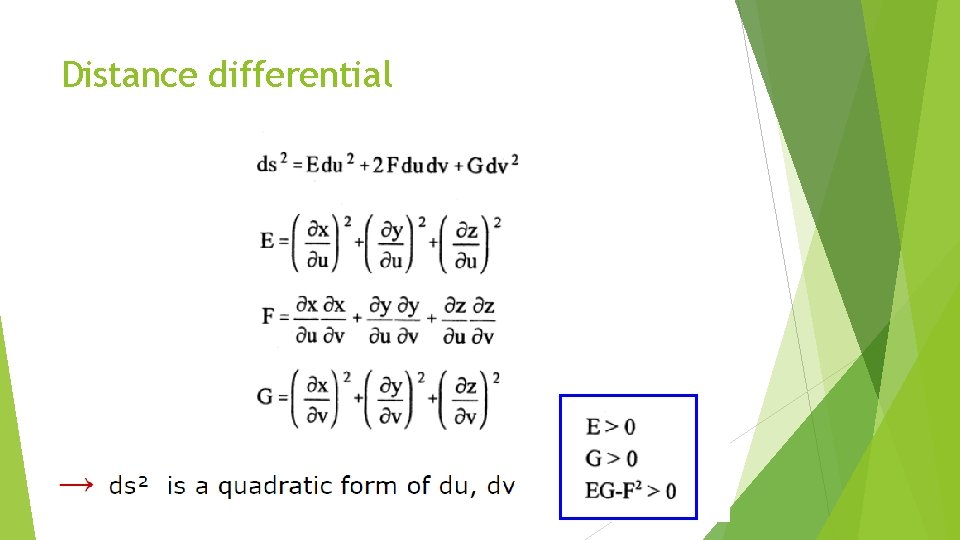
Distance differential
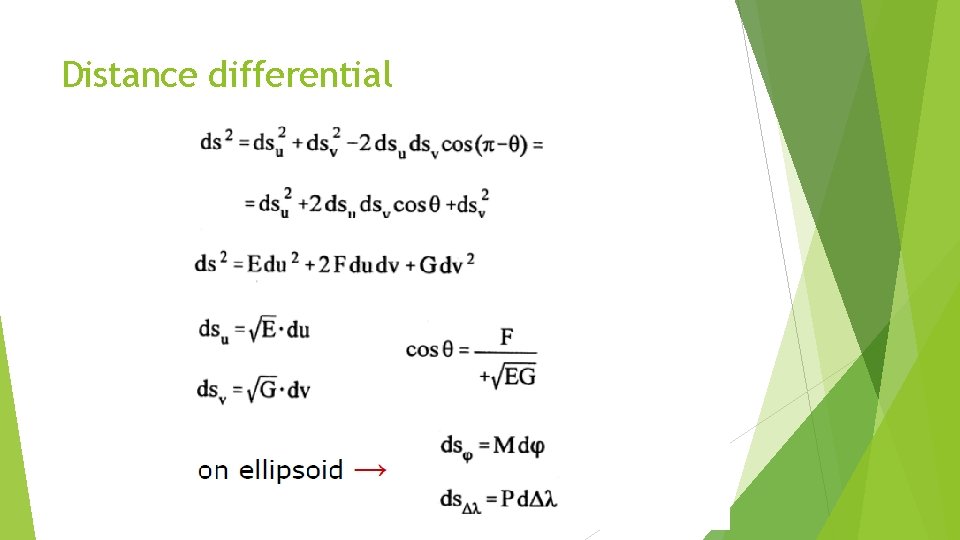
Distance differential
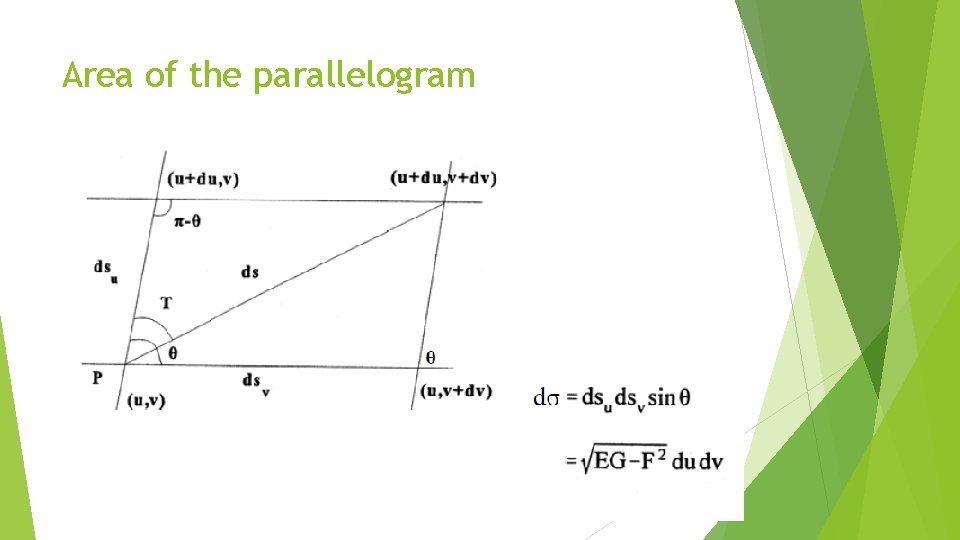
Area of the parallelogram
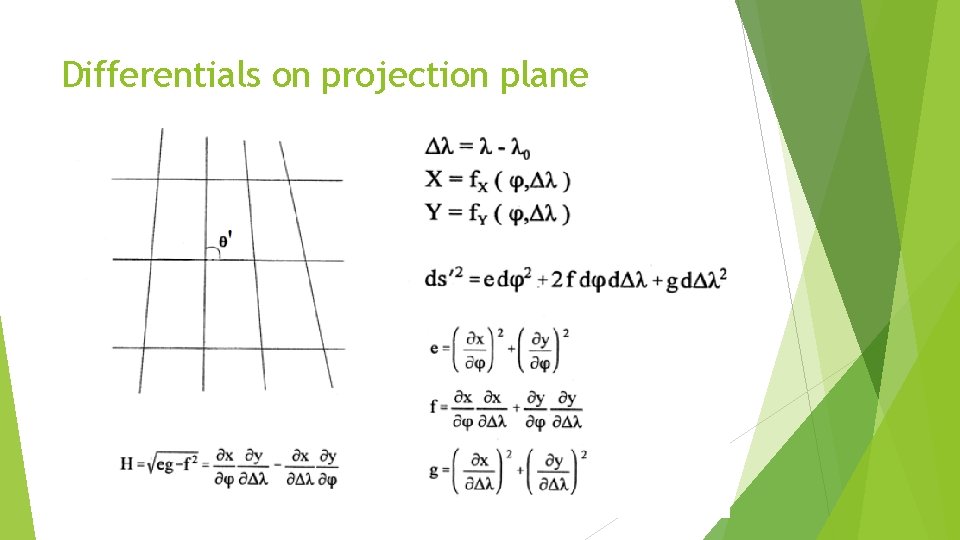
Differentials on projection plane
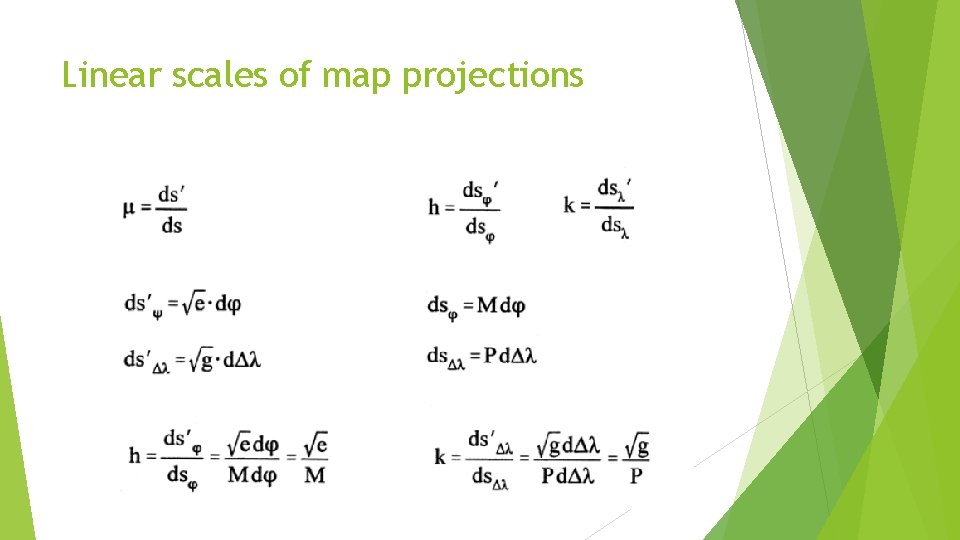
Linear scales of map projections
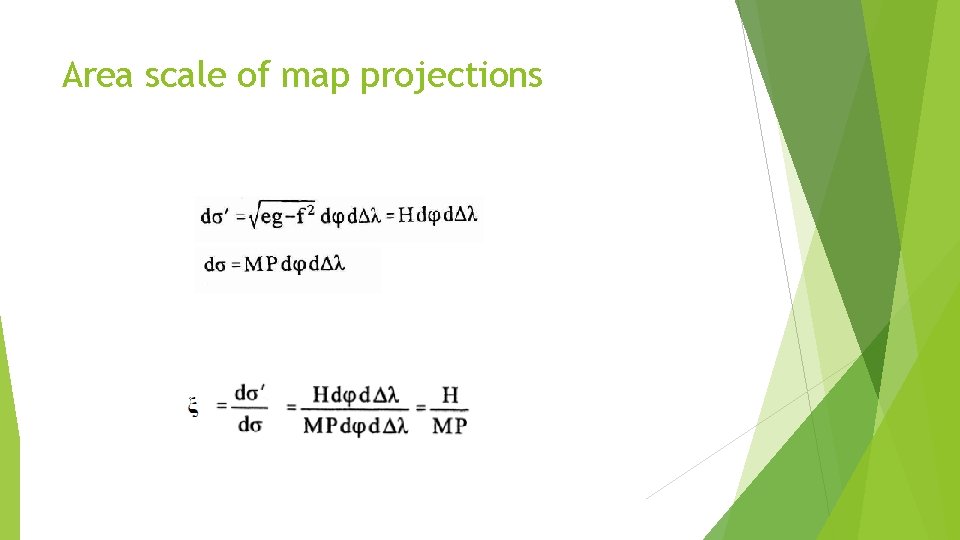
Area scale of map projections
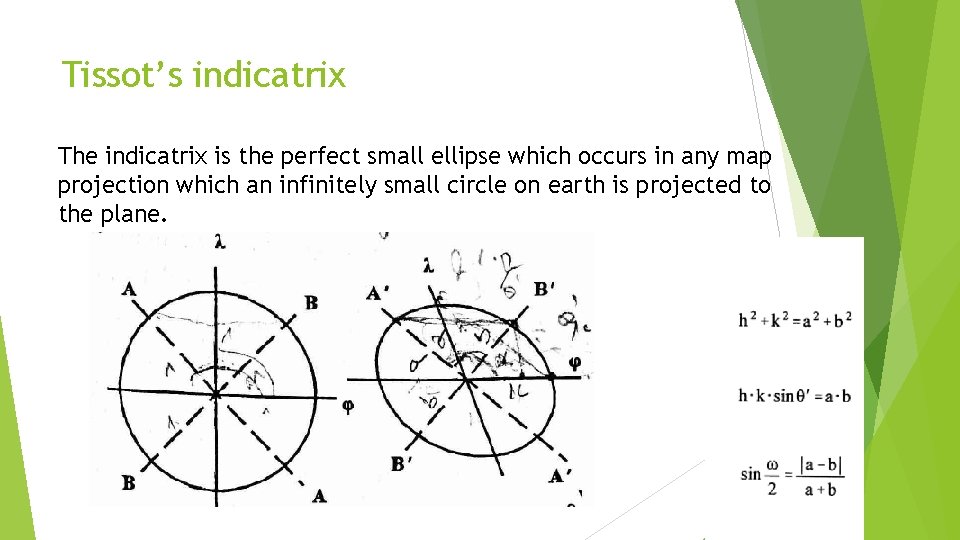
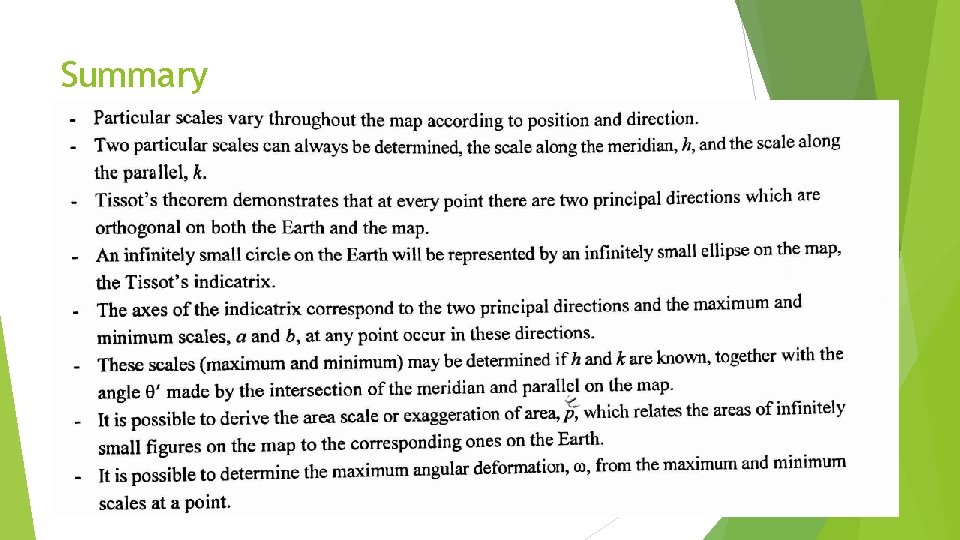
Tissot’s indicatrix The indicatrix is the perfect small ellipse which occurs in any map projection which an infinitely small circle on earth is projected to the plane.
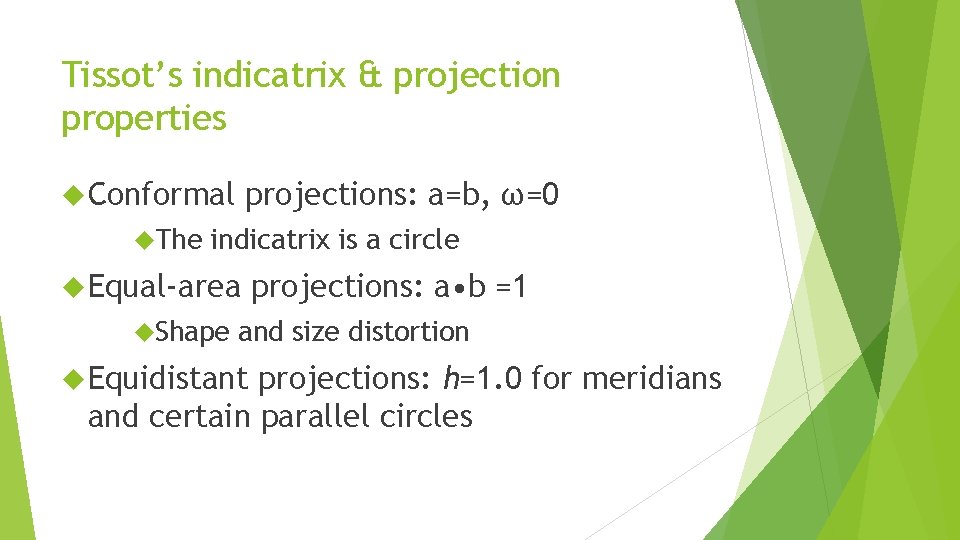
Tissot’s indicatrix & projection properties Conformal The projections: a=b, ω=0 indicatrix is a circle Equal-area Shape projections: a • b =1 and size distortion Equidistant projections: h=1. 0 for meridians and certain parallel circles
Summary
- Slides: 27