
Basic Concepts of Genes Presented by Dr Abdul
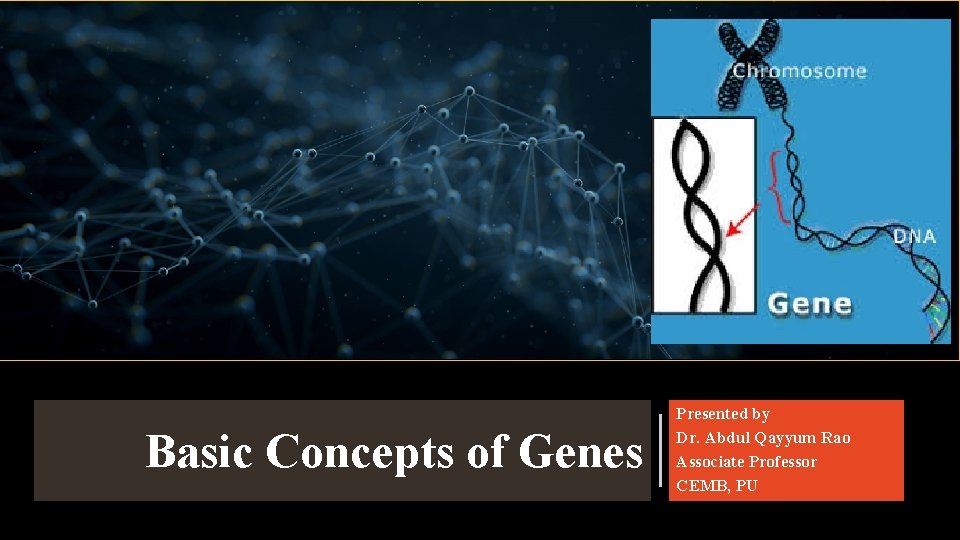
Basic Concepts of Genes Presented by Dr. Abdul Qayyum Rao Associate Professor CEMB, PU
Introduction History Classical concept of genes Modern concept of genes Outlines Human Genome Project Types of genes Functions of genes Salient features
History • The concept of gene was given by Sutton 1902 • The word “gene” was coined by W. Johansen in 1909 • E R Garrod proposed one gene-one product hypothesis in 1909 • T H Morgan proposed the gene theory in 1911 • G W Beadle and E L Tatum proposed one geneone enzyme hypothesis in 1948 • Yanofsky proposed one gene- one polypeptide hypothesis 1960 • The first structure of gene was proposed by Seymour Benzere in 1962
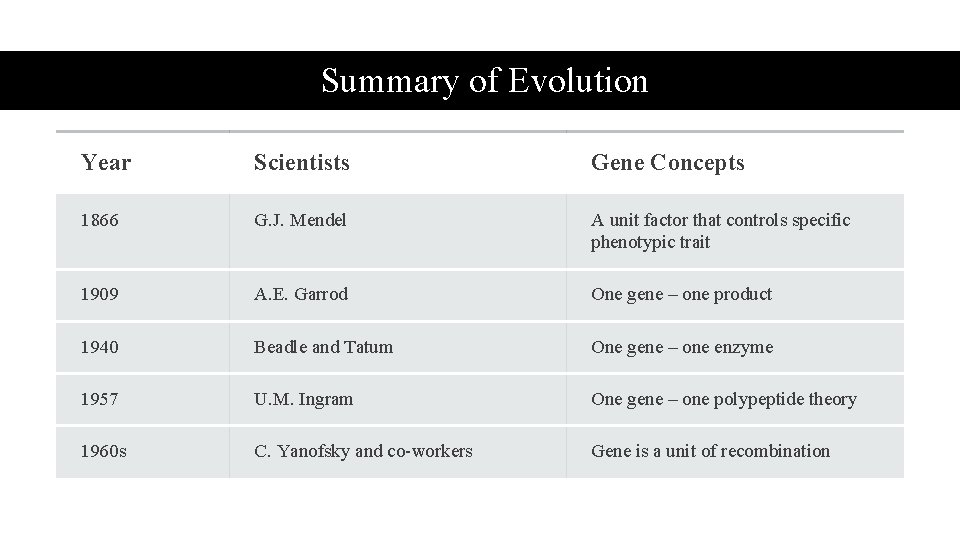
Summary of Evolution Year Scientists Gene Concepts 1866 G. J. Mendel A unit factor that controls specific phenotypic trait 1909 A. E. Garrod One gene – one product 1940 Beadle and Tatum One gene – one enzyme 1957 U. M. Ingram One gene – one polypeptide theory 1960 s C. Yanofsky and co-workers Gene is a unit of recombination
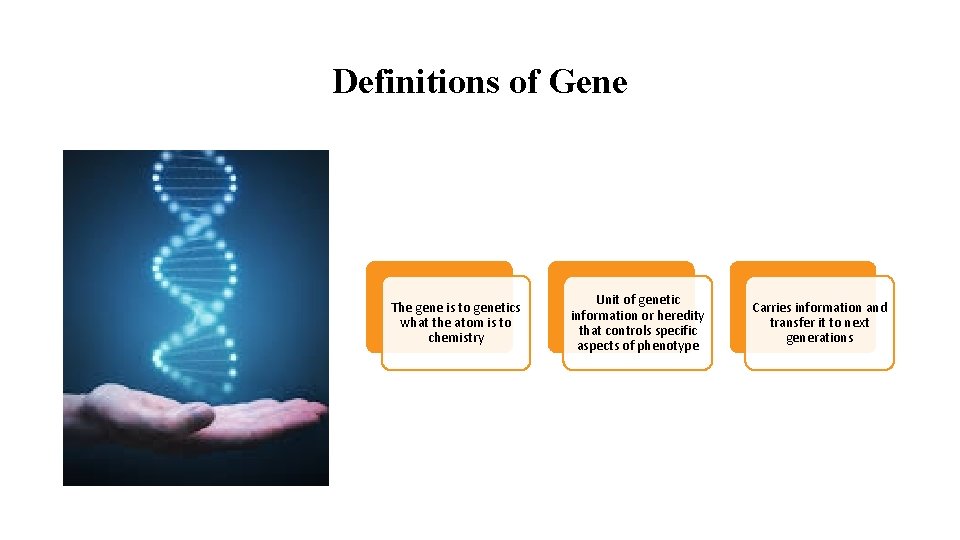
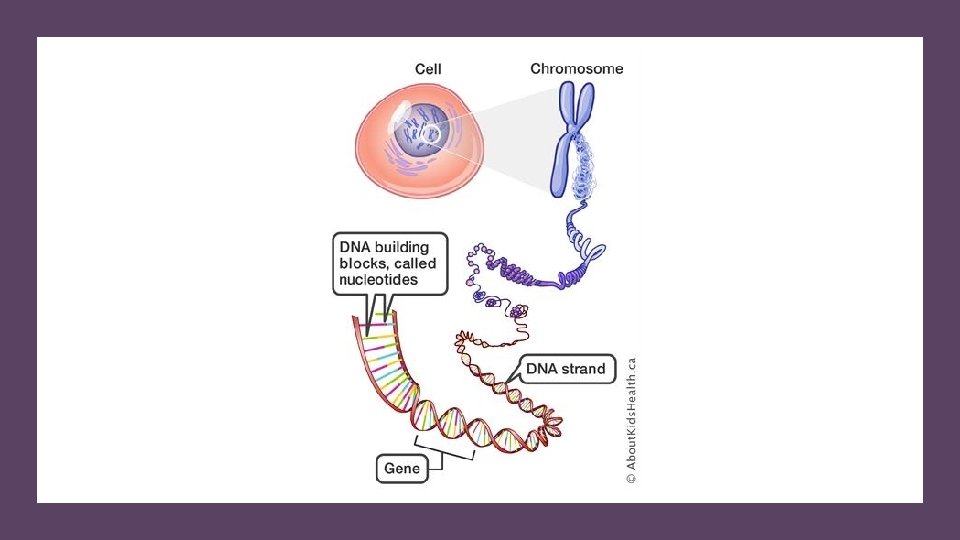
Definitions of Gene The gene is to genetics what the atom is to chemistry Unit of genetic information or heredity that controls specific aspects of phenotype Carries information and transfer it to next generations
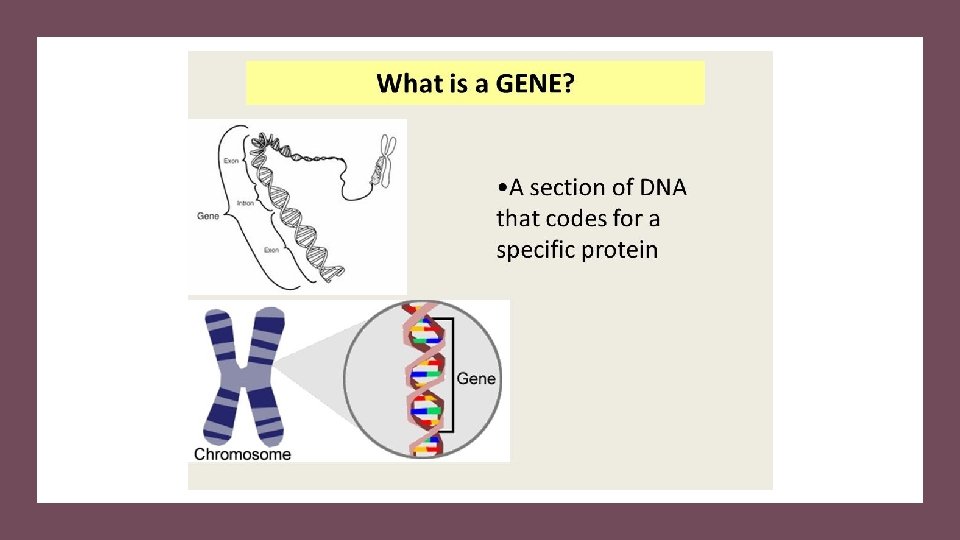
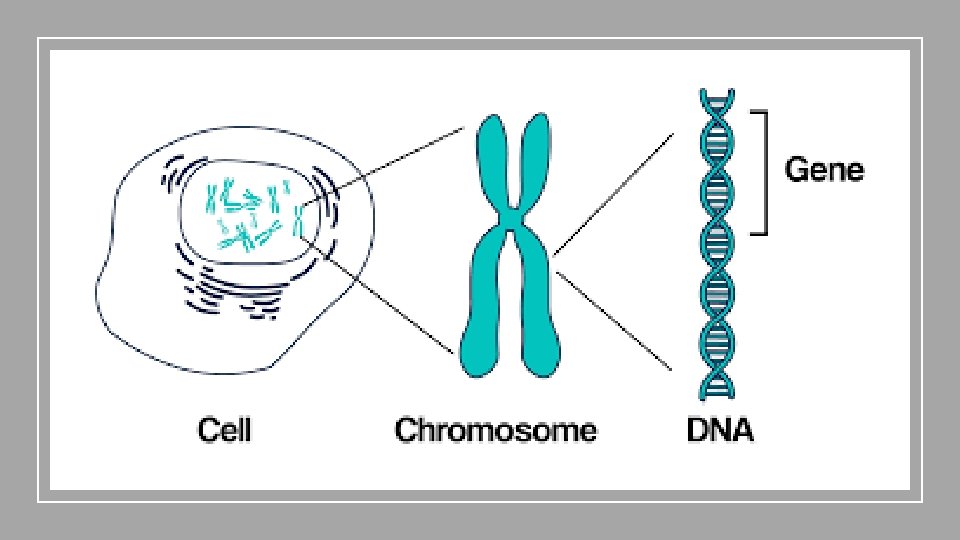
Gene Theory T. M Morgan proposed the gene theory which states that: Chromosomes are bearer of hereditary units and each chromosome carries hundreds or thousands of genes The genes are arranged on the chromosomes in the linear order and on the special regions called locus
Classical concept of Gene • Gene is a unit of following: • Function (one gene specifies one character only) • Recombination • Mutation • Introduced by Sutton in 1902 and elaborated by Morgan in 1913 • Features outlined by Bridge (1923), Muller (1927) and other scientists are as follows: • Discrete particles inherited in mendelian fashion • Occupies a definite locus in chromosome • Responsible for expression of specific phenotypic character
Classical concept of Gene • Several genes are located on each chromosome as the no of genes are greater than no of chromosomes • Arrangement in a single linear order like beads on a string • If position changes the character of gene changes • May exist in several alternate forms called alleles
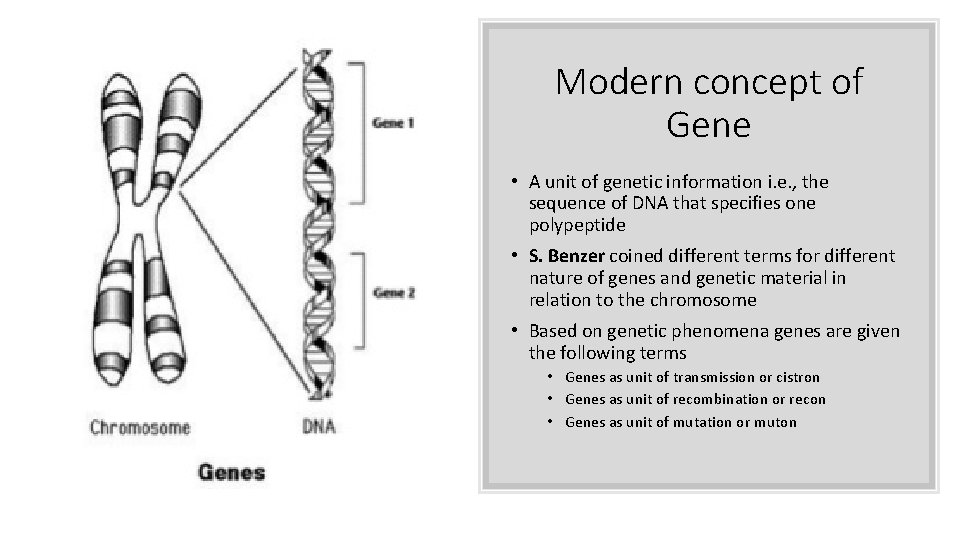
Modern concept of Gene • A unit of genetic information i. e. , the sequence of DNA that specifies one polypeptide • S. Benzer coined different terms for different nature of genes and genetic material in relation to the chromosome • Based on genetic phenomena genes are given the following terms • Genes as unit of transmission or cistron • Genes as unit of recombination or recon • Genes as unit of mutation or muton
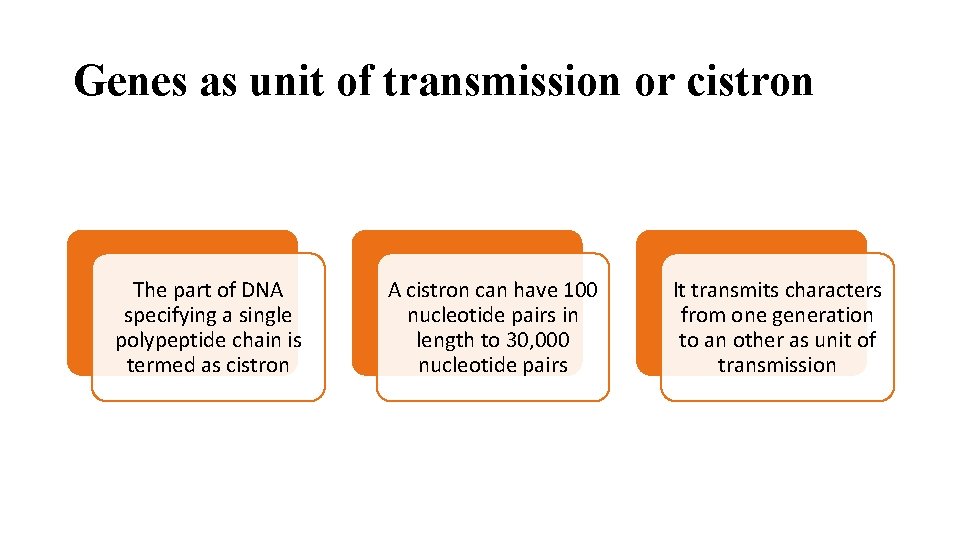
Genes as unit of transmission or cistron The part of DNA specifying a single polypeptide chain is termed as cistron A cistron can have 100 nucleotide pairs in length to 30, 000 nucleotide pairs It transmits characters from one generation to an other as unit of transmission
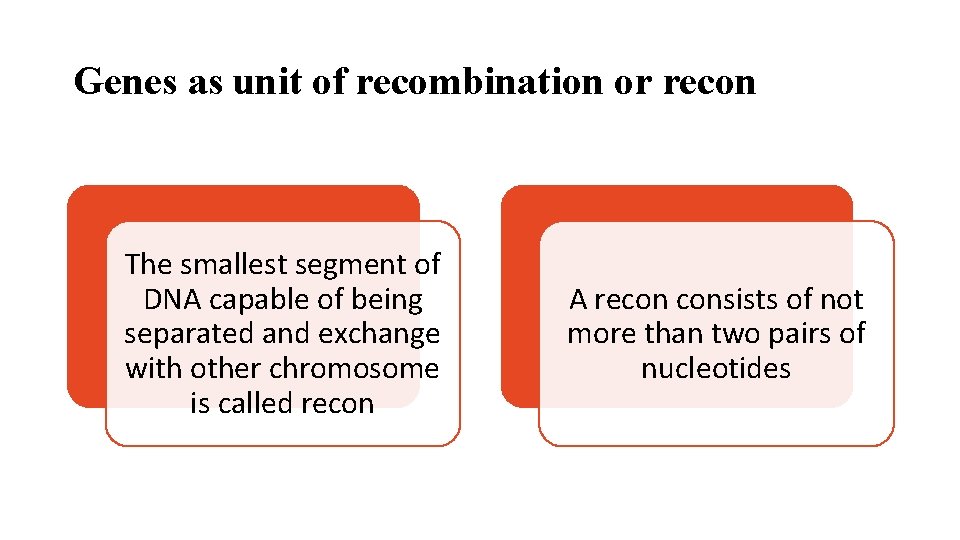
Genes as unit of recombination or recon The smallest segment of DNA capable of being separated and exchange with other chromosome is called recon A recon consists of not more than two pairs of nucleotides
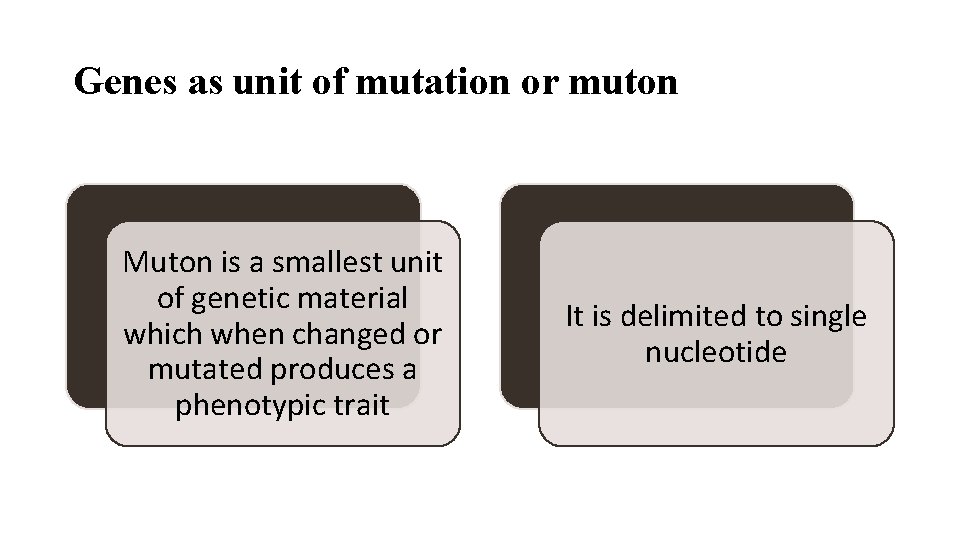
Genes as unit of mutation or muton Muton is a smallest unit of genetic material which when changed or mutated produces a phenotypic trait It is delimited to single nucleotide
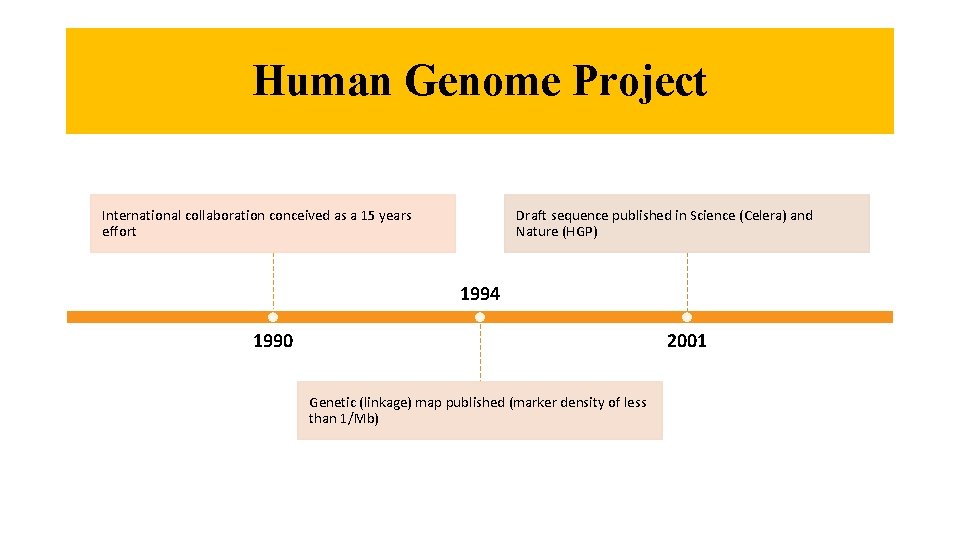
Human Genome Project International collaboration conceived as a 15 years effort Draft sequence published in Science (Celera) and Nature (HGP) 1994 1990 2001 Genetic (linkage) map published (marker density of less than 1/Mb)
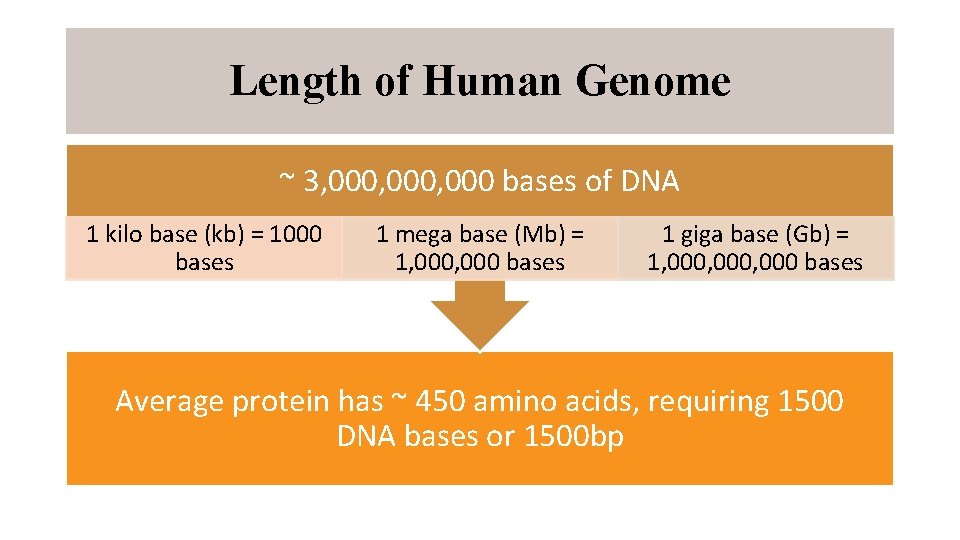
Length of Human Genome ~ 3, 000, 000 bases of DNA 1 kilo base (kb) = 1000 bases 1 mega base (Mb) = 1, 000 bases 1 giga base (Gb) = 1, 000, 000 bases Average protein has ~ 450 amino acids, requiring 1500 DNA bases or 1500 bp
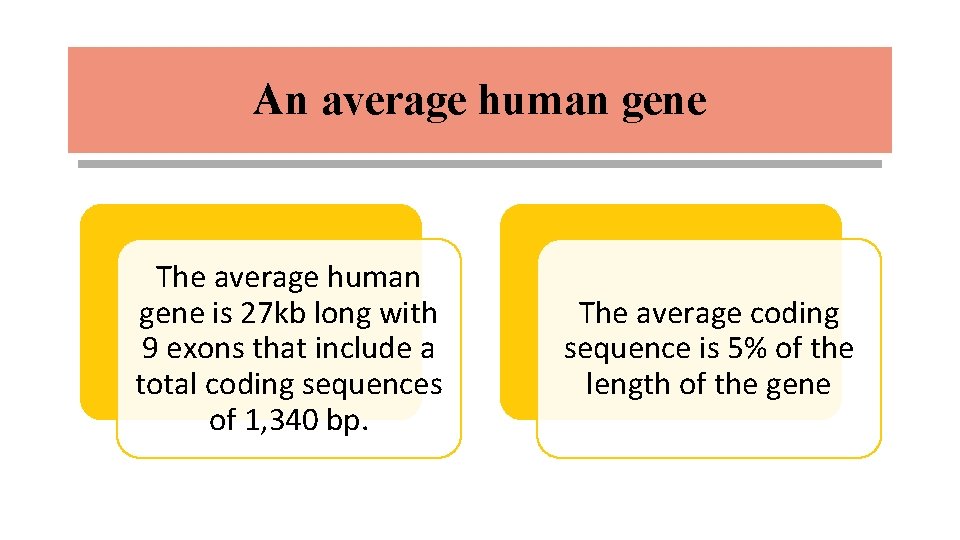
An average human gene The average human gene is 27 kb long with 9 exons that include a total coding sequences of 1, 340 bp. The average coding sequence is 5% of the length of the gene
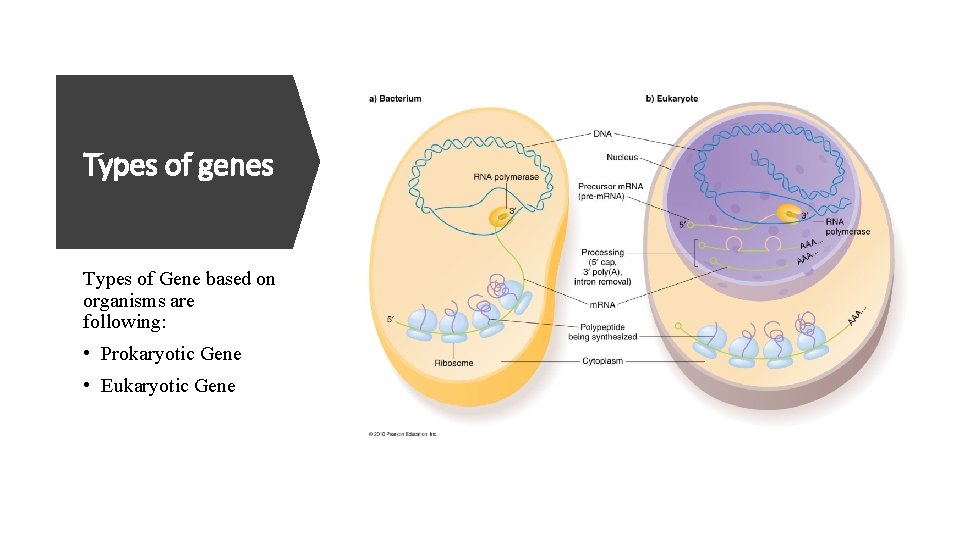
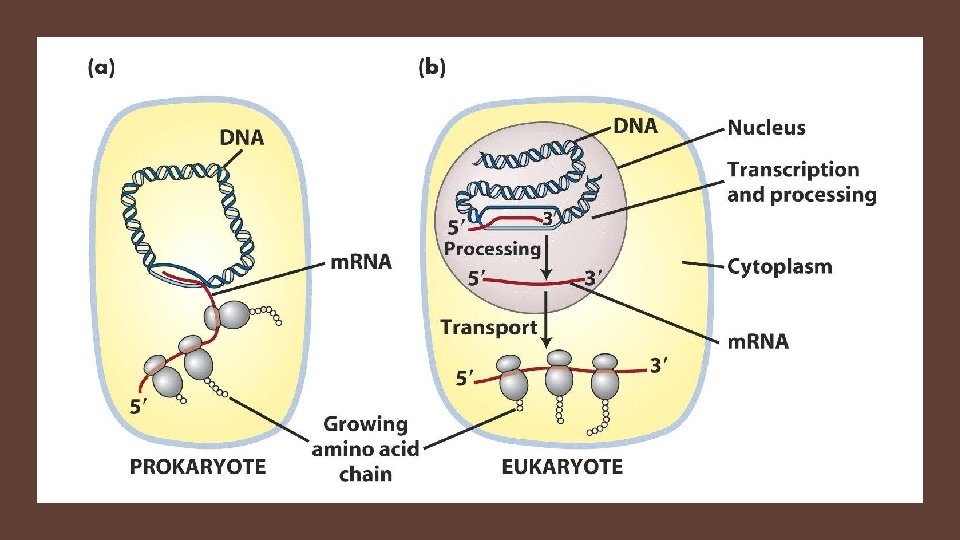
Types of genes Types of Gene based on organisms are following: • Prokaryotic Gene • Eukaryotic Gene
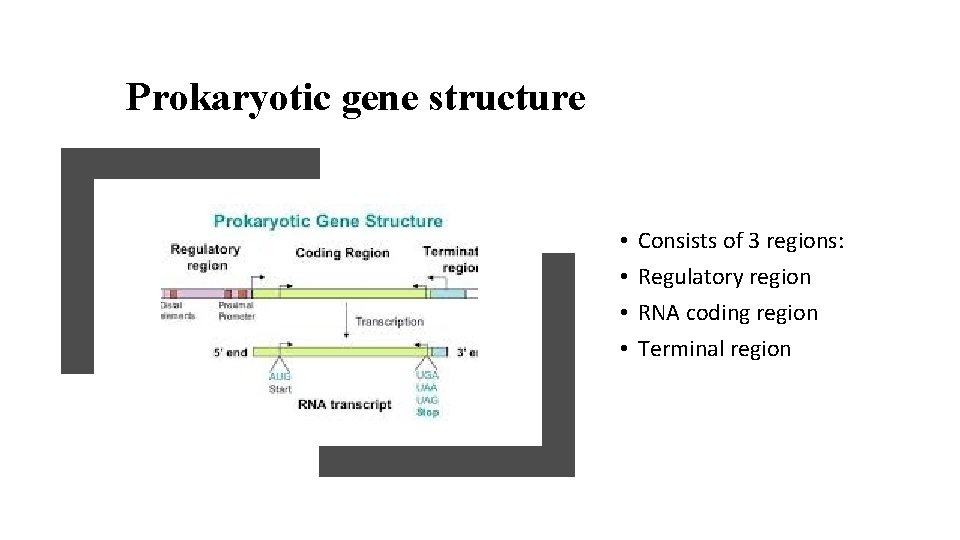
Prokaryotic gene structure • • Consists of 3 regions: Regulatory region RNA coding region Terminal region
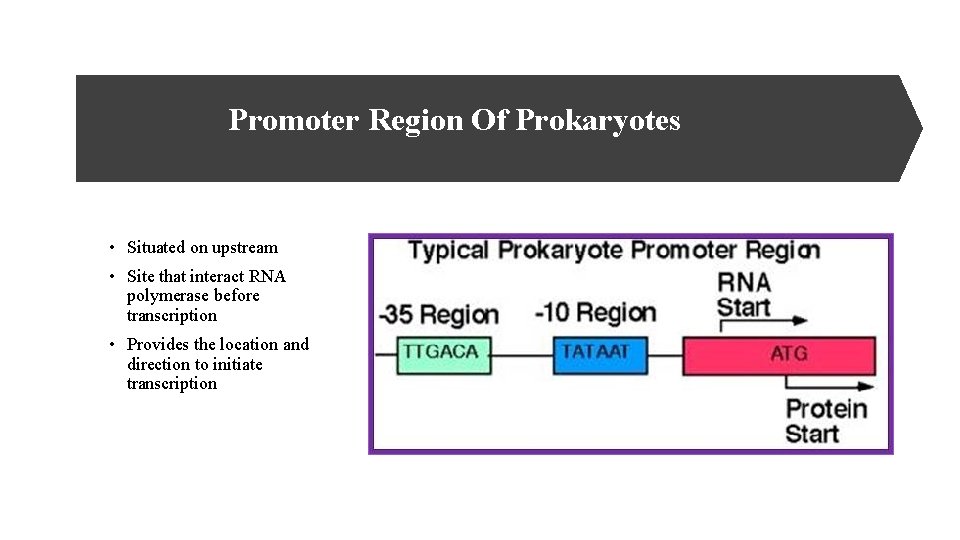
Promoter Region Of Prokaryotes • Situated on upstream • Site that interact RNA polymerase before transcription • Provides the location and direction to initiate transcription
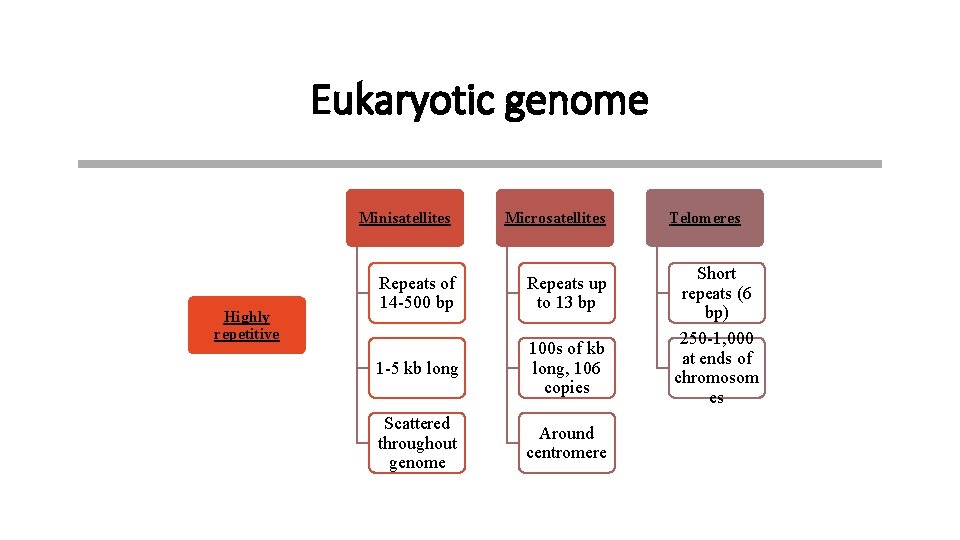
Eukaryotic genome Highly repetitive Minisatellites Microsatellites Repeats of 14 -500 bp Repeats up to 13 bp 1 -5 kb long 100 s of kb long, 106 copies Scattered throughout genome Around centromere Telomeres Short repeats (6 bp) 250 -1, 000 at ends of chromosom es
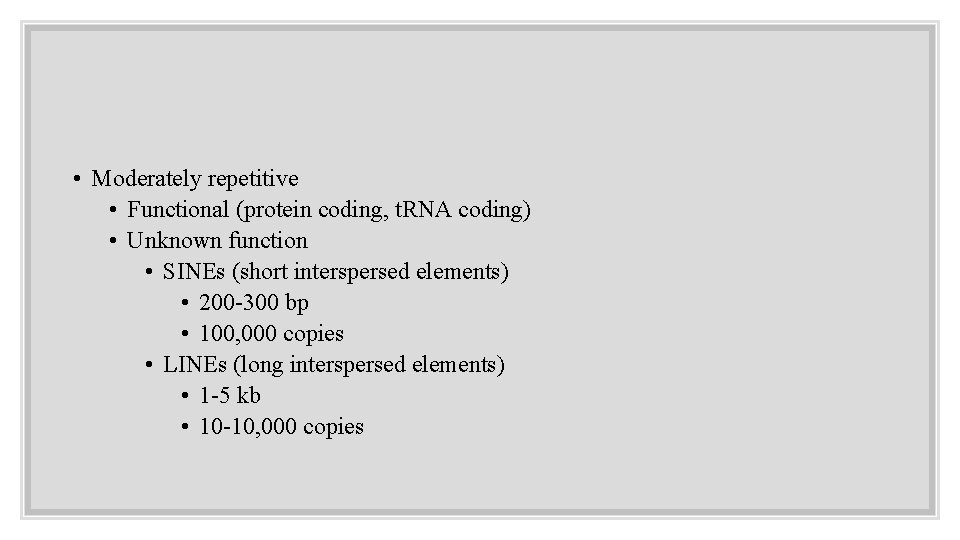
• Moderately repetitive • Functional (protein coding, t. RNA coding) • Unknown function • SINEs (short interspersed elements) • 200 -300 bp • 100, 000 copies • LINEs (long interspersed elements) • 1 -5 kb • 10 -10, 000 copies
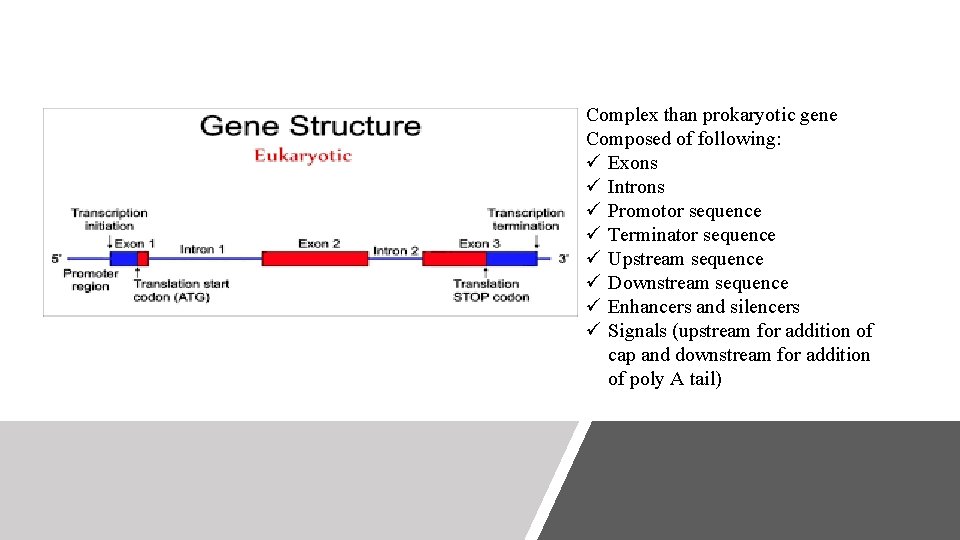
Complex than prokaryotic gene Composed of following: ü Exons ü Introns ü Promotor sequence ü Terminator sequence ü Upstream sequence ü Downstream sequence ü Enhancers and silencers ü Signals (upstream for addition of cap and downstream for addition of poly A tail)
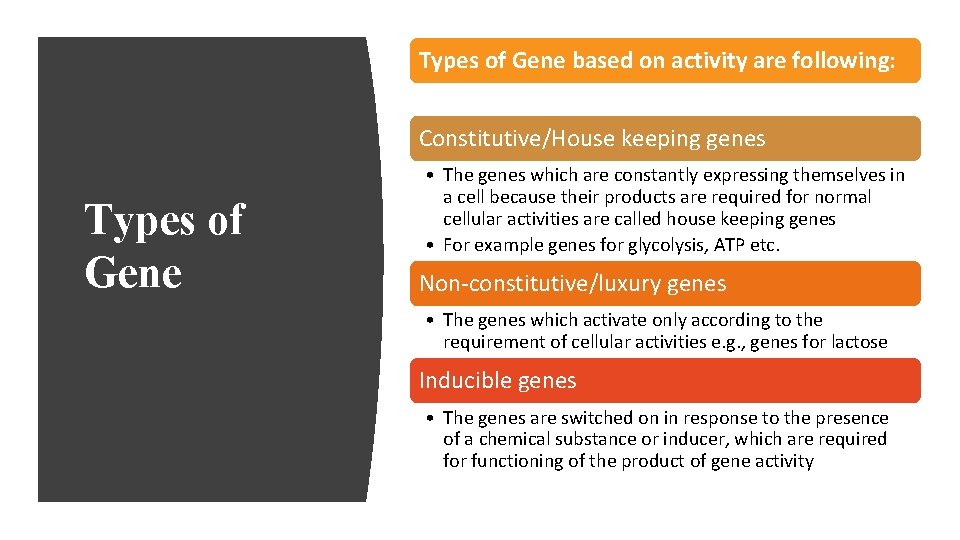
Types of Gene based on activity are following: Constitutive/House keeping genes Types of Gene • The genes which are constantly expressing themselves in a cell because their products are required for normal cellular activities are called house keeping genes • For example genes for glycolysis, ATP etc. Non-constitutive/luxury genes • The genes which activate only according to the requirement of cellular activities e. g. , genes for lactose Inducible genes • The genes are switched on in response to the presence of a chemical substance or inducer, which are required for functioning of the product of gene activity
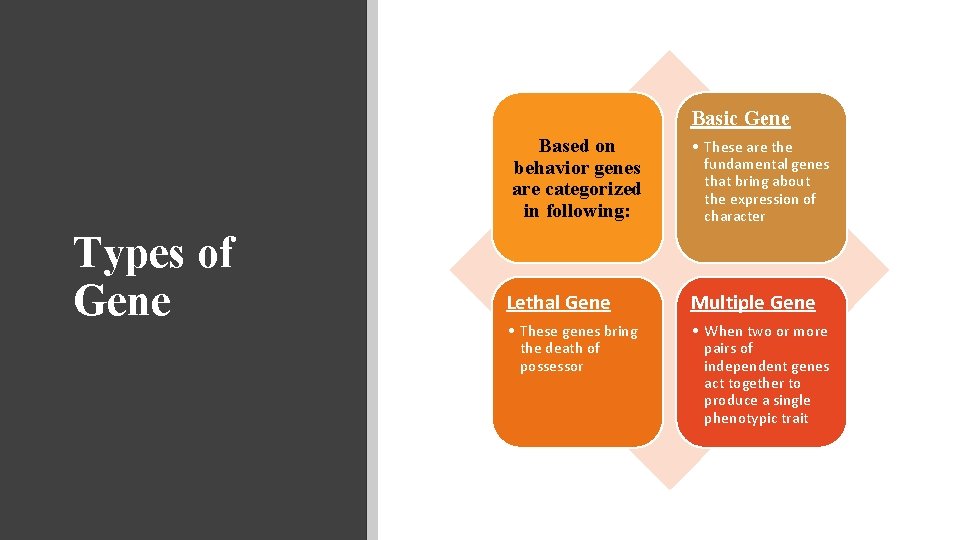
Basic Gene Based on behavior genes are categorized in following: Types of Gene • These are the fundamental genes that bring about the expression of character Lethal Gene Multiple Gene • These genes bring the death of possessor • When two or more pairs of independent genes act together to produce a single phenotypic trait
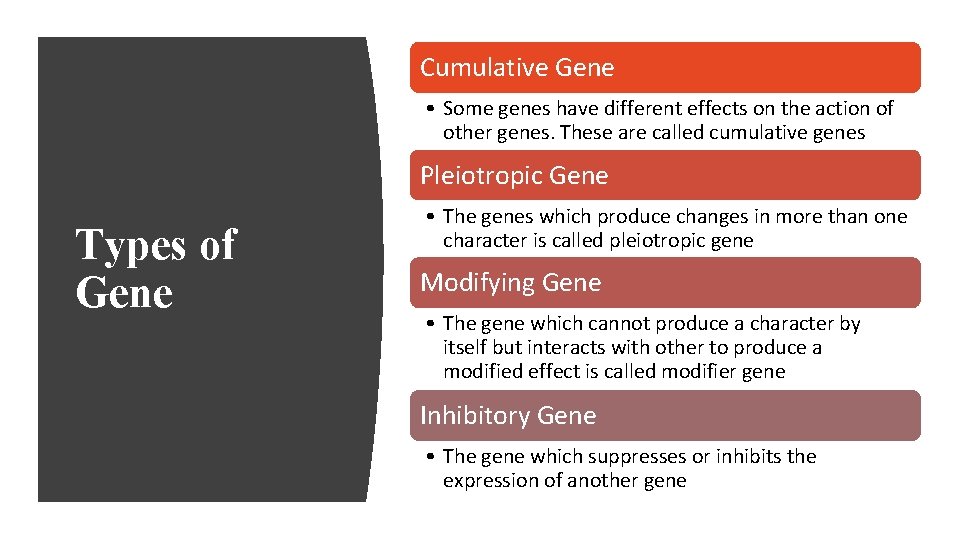
Cumulative Gene • Some genes have different effects on the action of other genes. These are called cumulative genes Pleiotropic Gene Types of Gene • The genes which produce changes in more than one character is called pleiotropic gene Modifying Gene • The gene which cannot produce a character by itself but interacts with other to produce a modified effect is called modifier gene Inhibitory Gene • The gene which suppresses or inhibits the expression of another gene
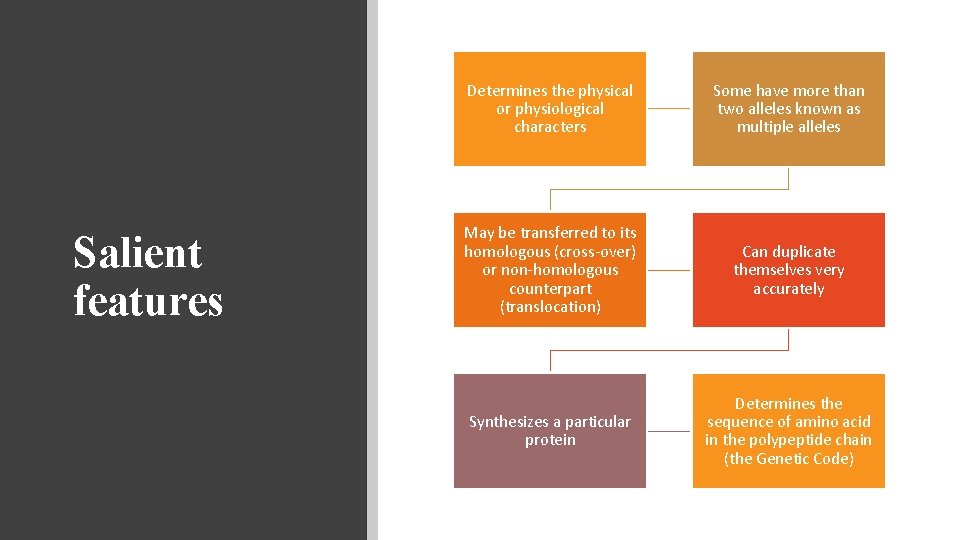
Salient features Determines the physical or physiological characters Some have more than two alleles known as multiple alleles May be transferred to its homologous (cross-over) or non-homologous counterpart (translocation) Can duplicate themselves very accurately Synthesizes a particular protein Determines the sequence of amino acid in the polypeptide chain (the Genetic Code)
Control the morphology or phenotype of an individual Control the structure and metabolism of body Functions of Genes Replication of genes is essential for cell division Genes carry the hereditary information from one generation to next Reshuffling of genes at time of sexual reproduction produces variations
- Slides: 31