
Basic concepts Measurement is the operation of determining

Basic concepts • Measurement is the operation of determining the value of a quantity. • Measurement/instrumentation system is the means used to carry out a measurement.
发展方向 • 智能化(Intelligent or smart instrument) • 数字化(Digital system) • 微型化(Miniaturized system or micro-system ) • 多功能化(multifunctional) • 网络化(Networked or virtual instrument)
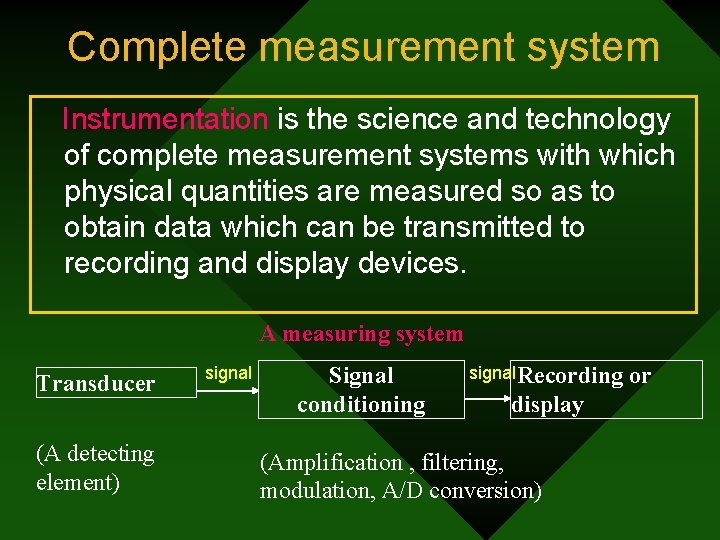
Complete measurement system Instrumentation is the science and technology of complete measurement systems with which physical quantities are measured so as to obtain data which can be transmitted to recording and display devices. A measuring system Transducer (A detecting element) signal Signal conditioning signal. Recording display (Amplification , filtering, modulation, A/D conversion) or
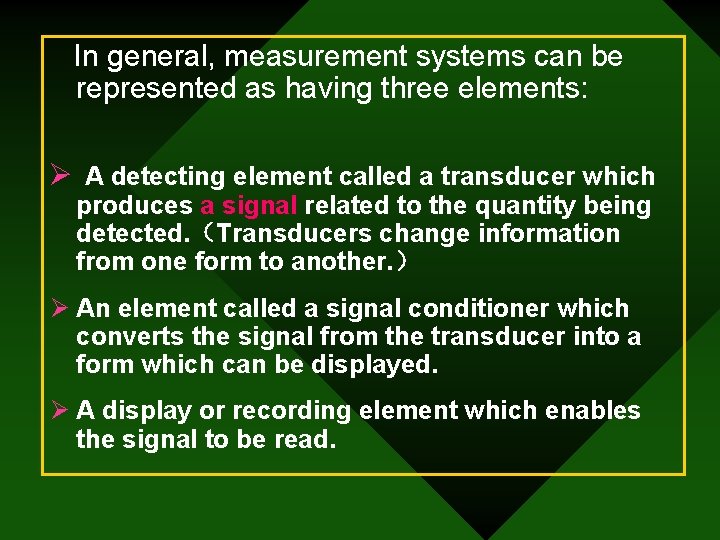
In general, measurement systems can be represented as having three elements: Ø A detecting element called a transducer which produces a signal related to the quantity being detected. (Transducers change information from one form to another. ) Ø An element called a signal conditioner which converts the signal from the transducer into a form which can be displayed. Ø A display or recording element which enables the signal to be read.
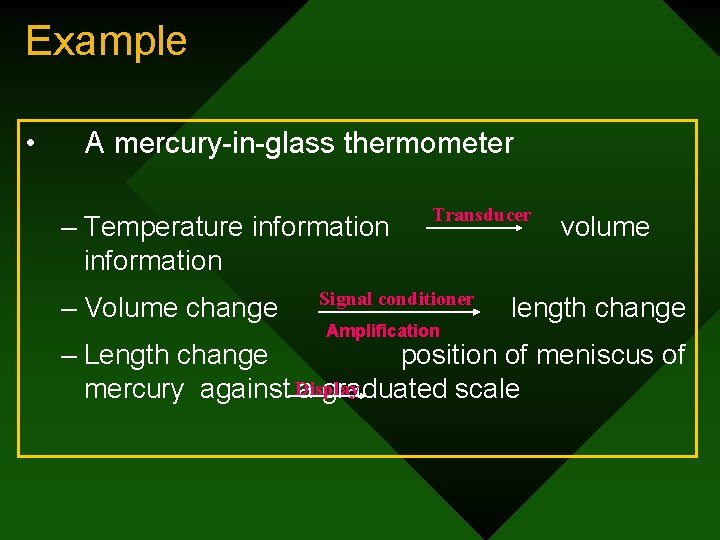
Example • A mercury-in-glass thermometer – Temperature information – Volume change Transducer Signal conditioner Amplification volume length change – Length change position of meniscus of mercury against Display a graduated scale
Performance of measuring systems • Static characteristics: Define the performance criteria for the measurement of quantities that remain constant or vary quite slowly. • Dynamic characteristics: Concern the relationship between the system input and output when the measurand is varying rapidly.
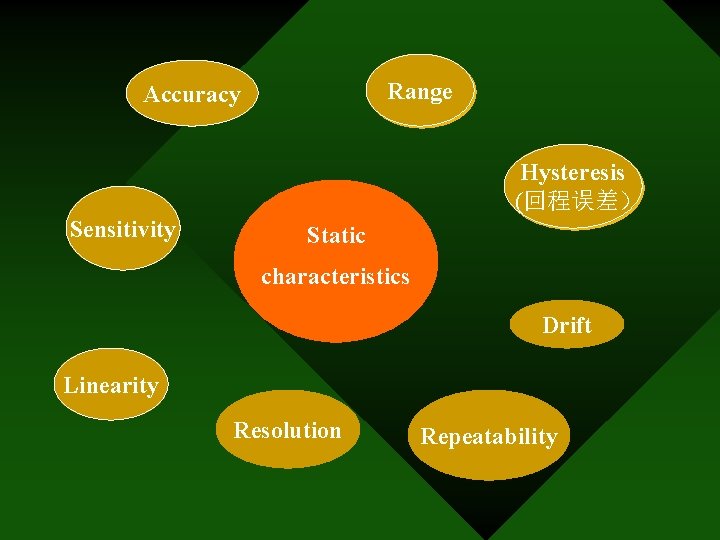
Range Accuracy Hysteresis (回程误差) Sensitivity Static characteristics Drift Linearity Resolution Repeatability
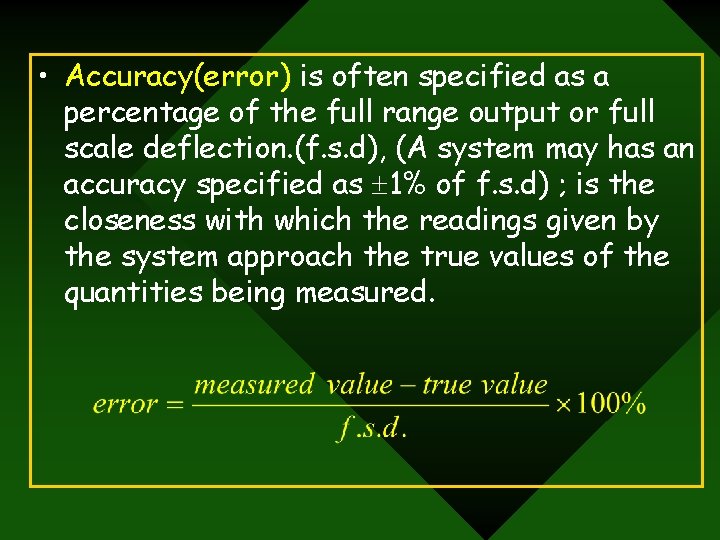
• Accuracy(error) is often specified as a percentage of the full range output or full scale deflection. (f. s. d), (A system may has an accuracy specified as 1% of f. s. d) ; is the closeness with which the readings given by the system approach the true values of the quantities being measured.
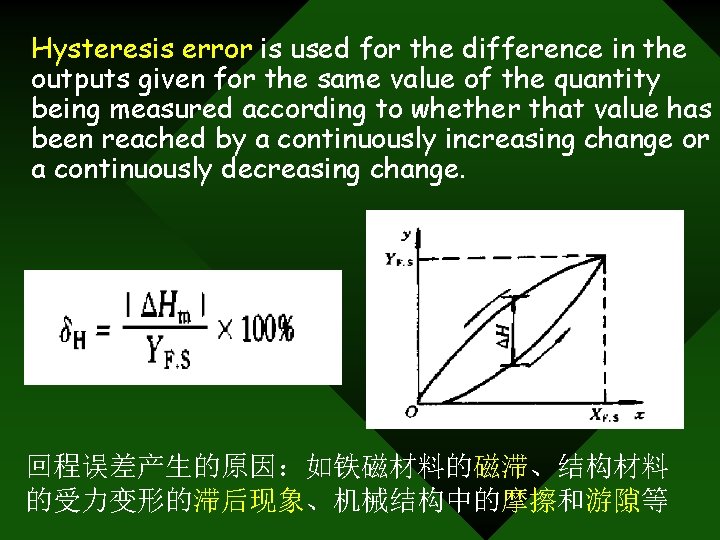
Hysteresis error is used for the difference in the outputs given for the same value of the quantity being measured according to whether that value has been reached by a continuously increasing change or a continuously decreasing change. 回程误差产生的原因:如铁磁材料的磁滞、结构材料 的受力变形的滞后现象、机械结构中的摩擦和游隙等
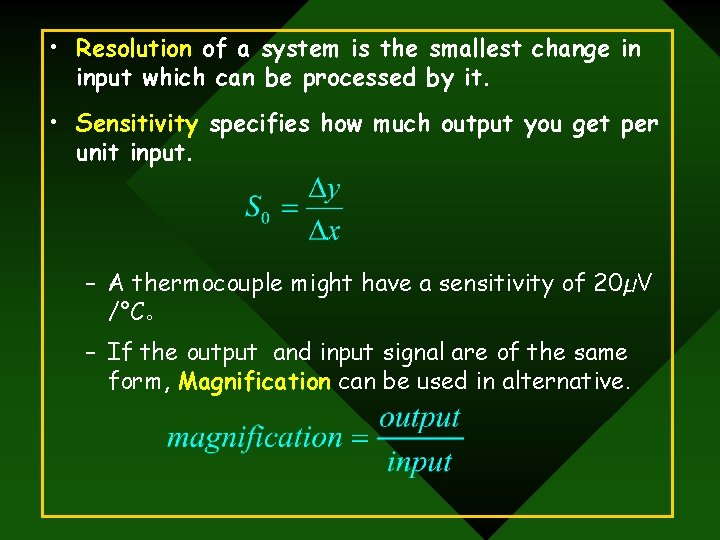
• Resolution of a system is the smallest change in input which can be processed by it. • Sensitivity specifies how much output you get per unit input. – A thermocouple might have a sensitivity of 20µV /°C。 – If the output and input signal are of the same form, Magnification can be used in alternative.
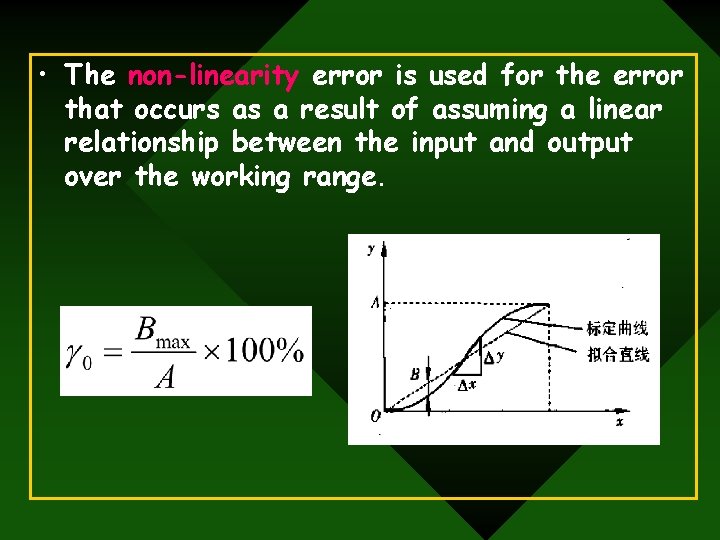
• The non-linearity error is used for the error that occurs as a result of assuming a linear relationship between the input and output over the working range.
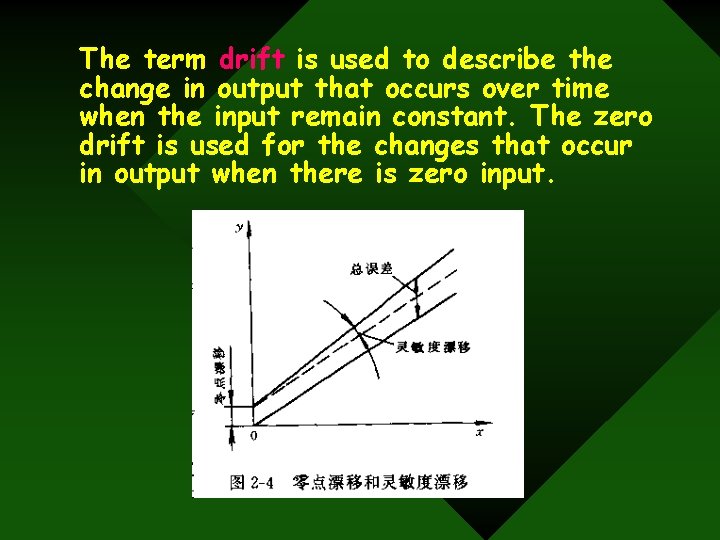
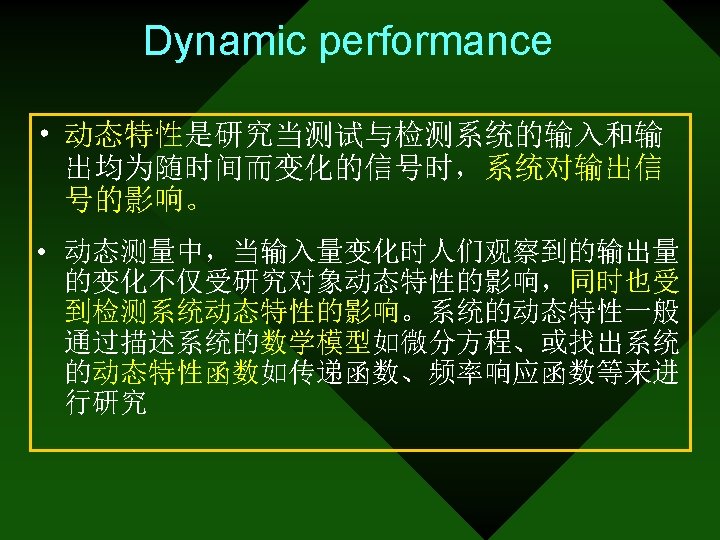
The term drift is used to describe the change in output that occurs over time when the input remain constant. The zero drift is used for the changes that occur in output when there is zero input.
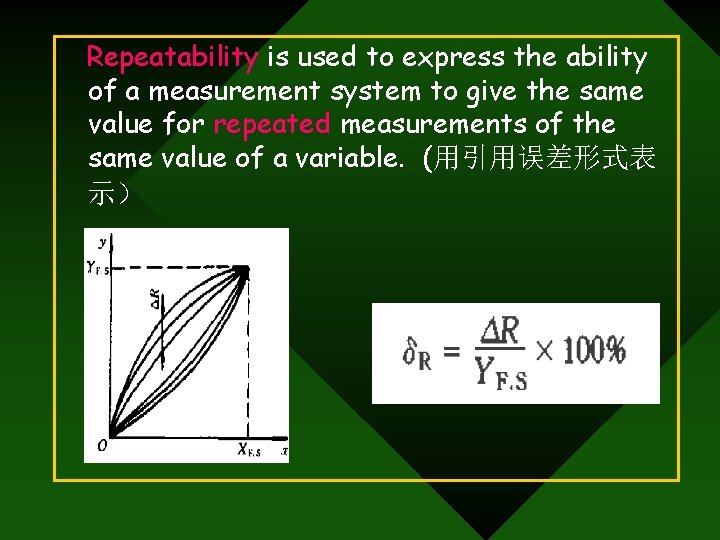
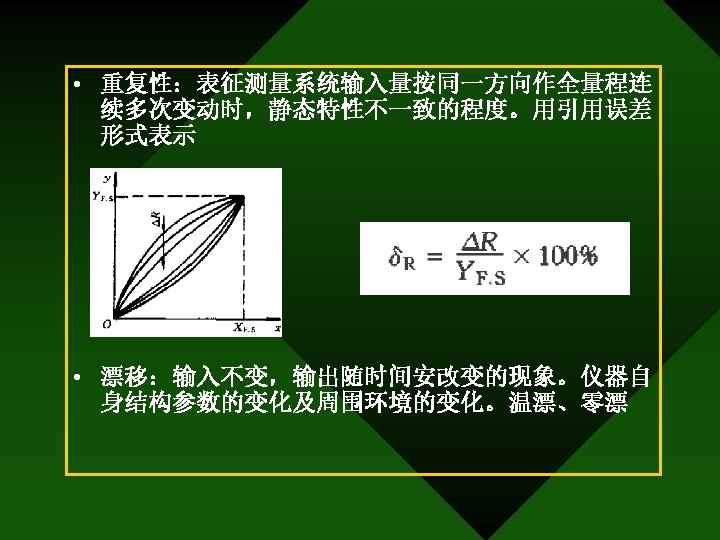
Repeatability is used to express the ability of a measurement system to give the same value for repeated measurements of the same value of a variable. (用引用误差形式表 示)


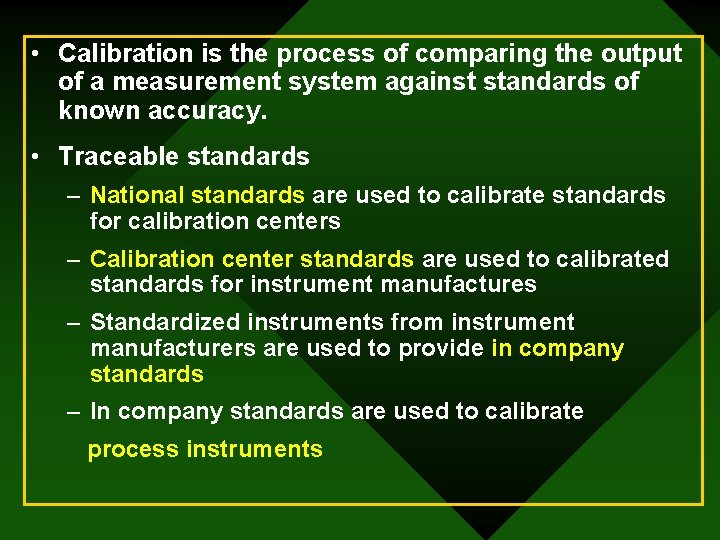
• Calibration is the process of comparing the output of a measurement system against standards of known accuracy. • Traceable standards – National standards are used to calibrate standards for calibration centers – Calibration center standards are used to calibrated standards for instrument manufactures – Standardized instruments from instrument manufacturers are used to provide in company standards – In company standards are used to calibrate process instruments
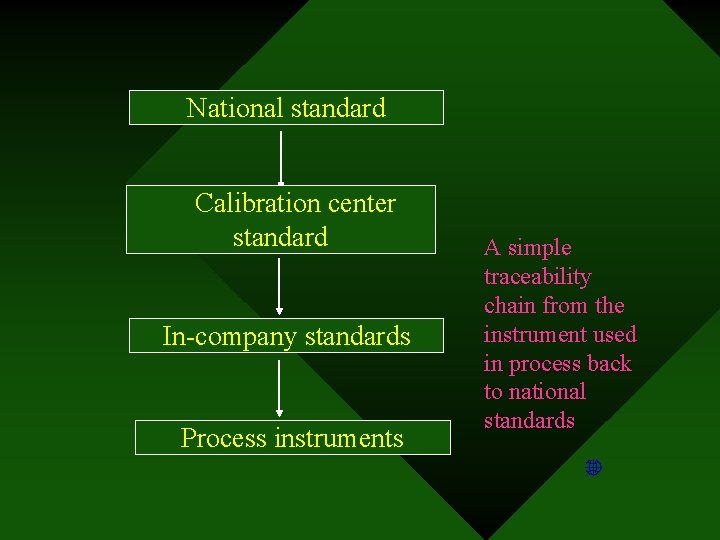
National standard Calibration center standard In-company standards Process instruments A simple traceability chain from the instrument used in process back to national standards
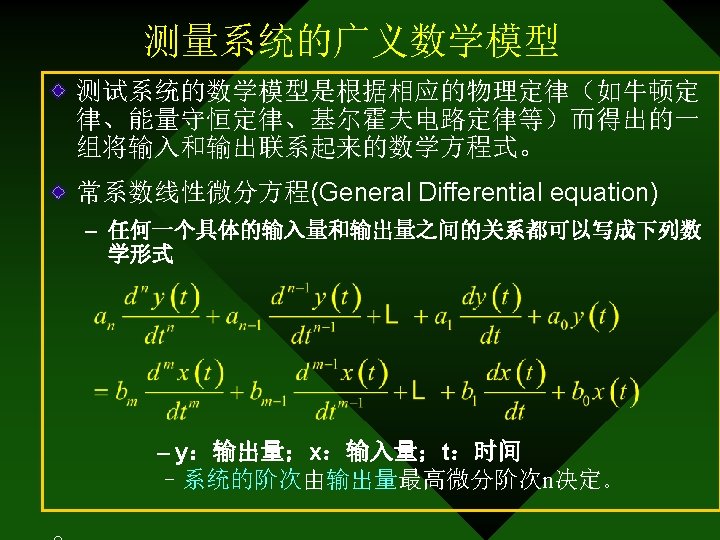
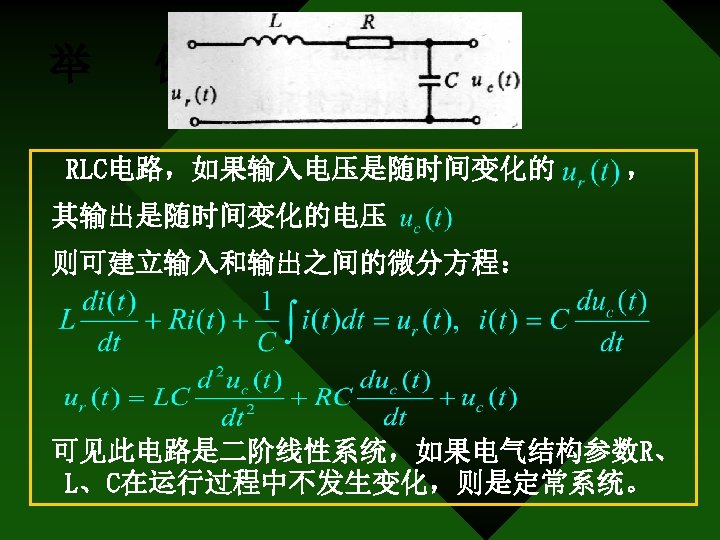
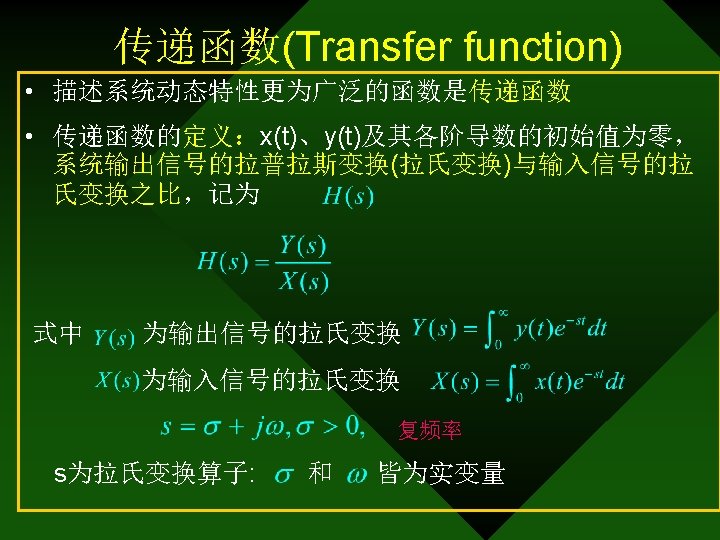
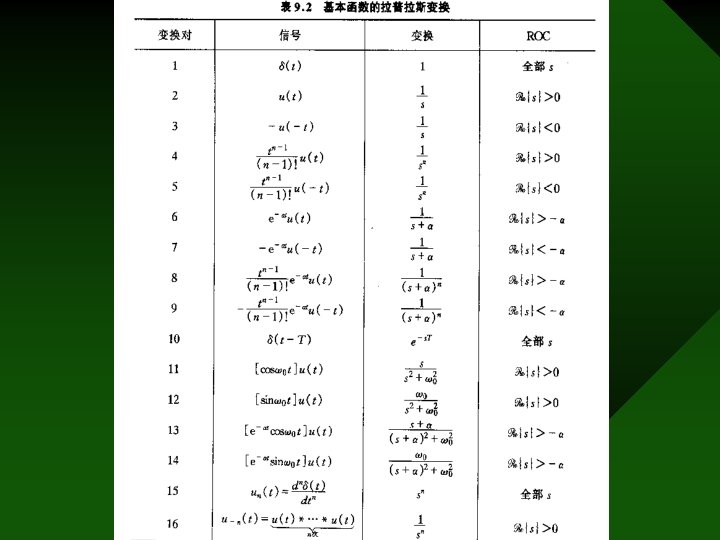
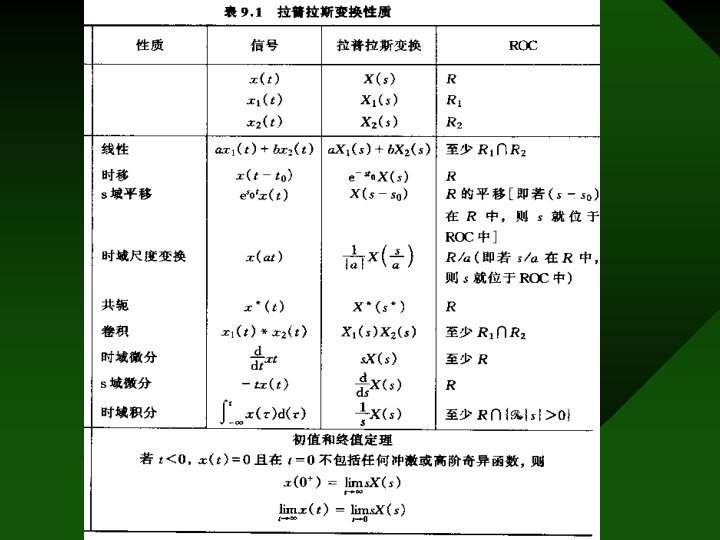
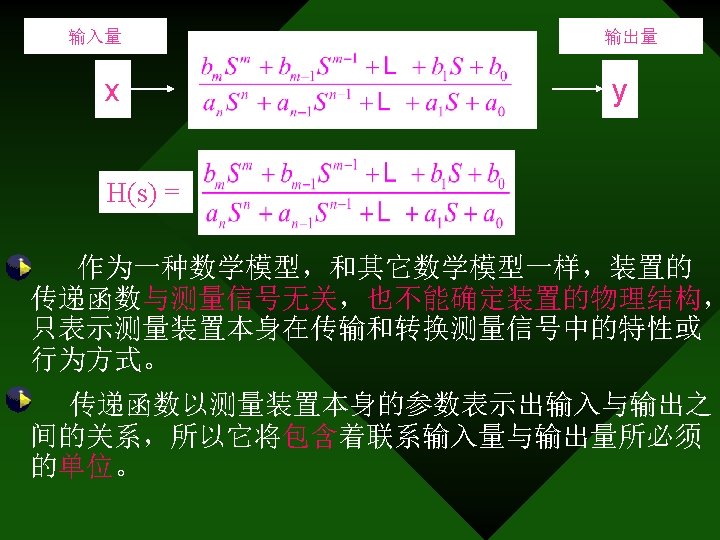
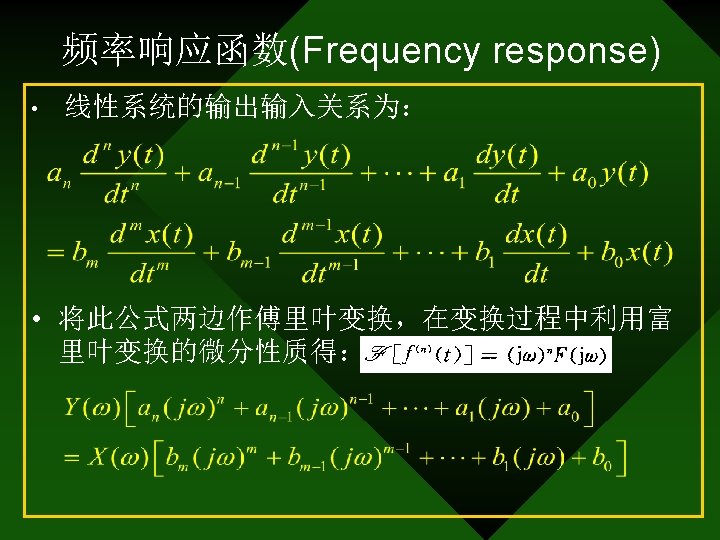
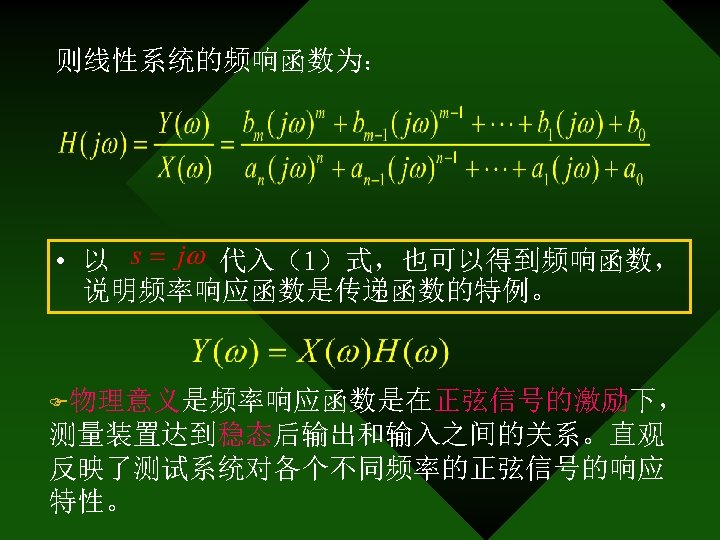
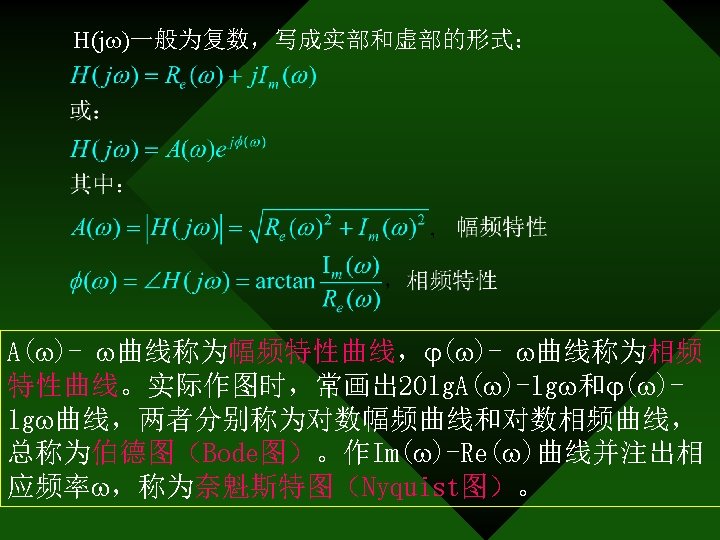
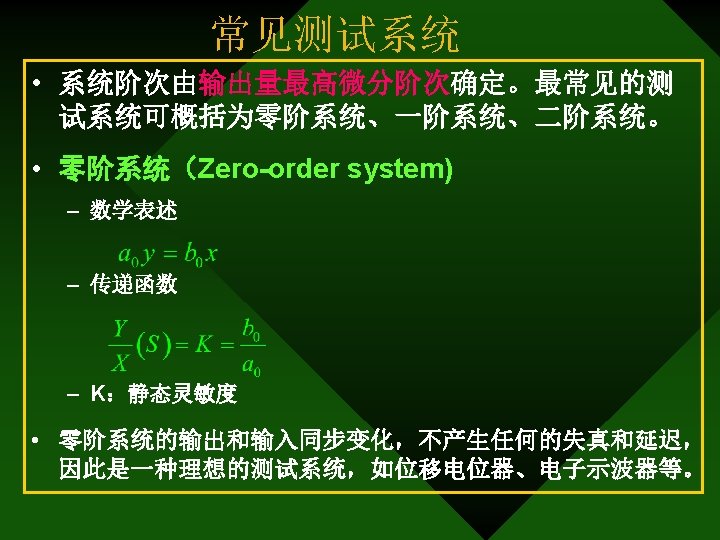
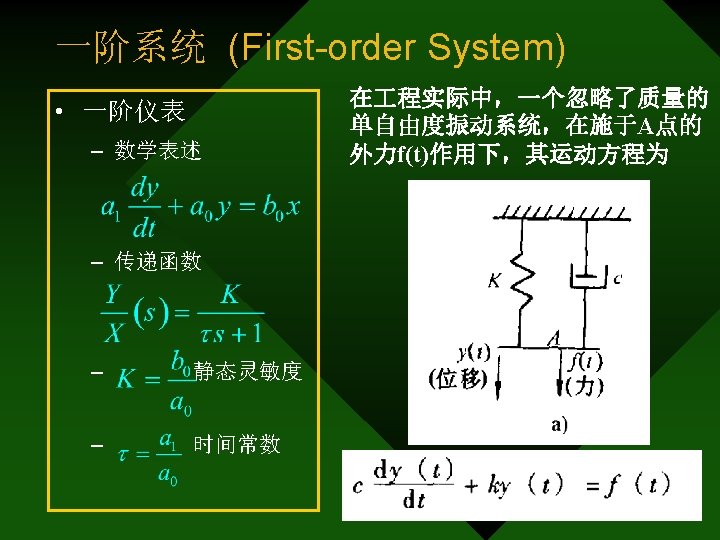
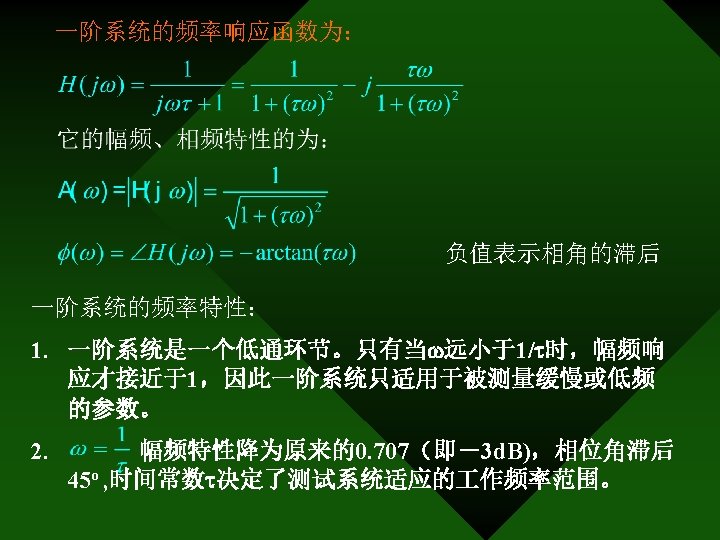
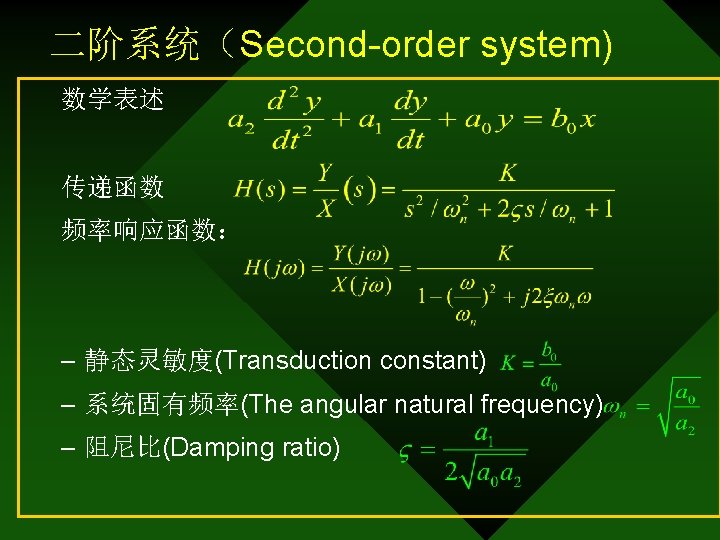
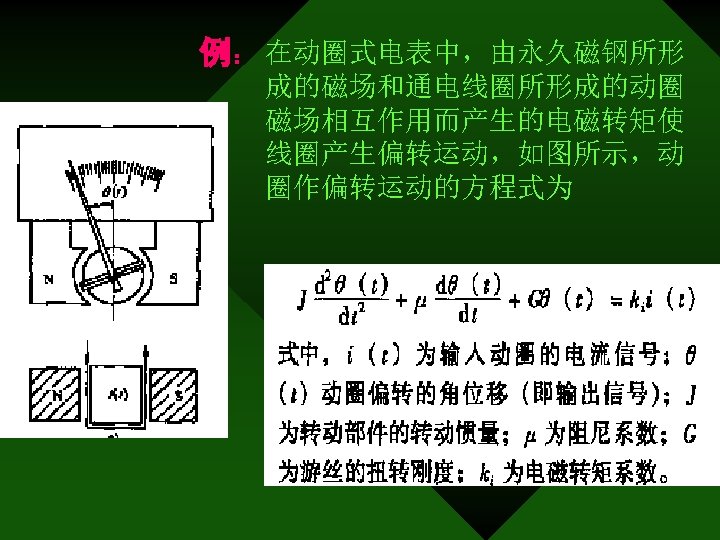
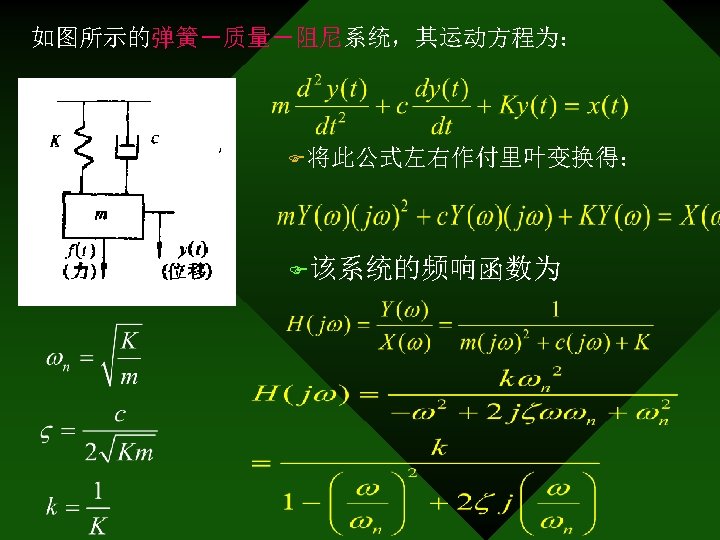
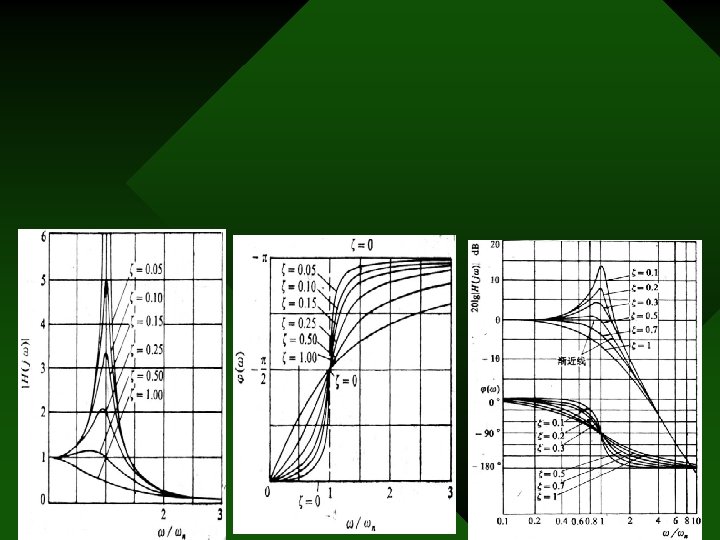
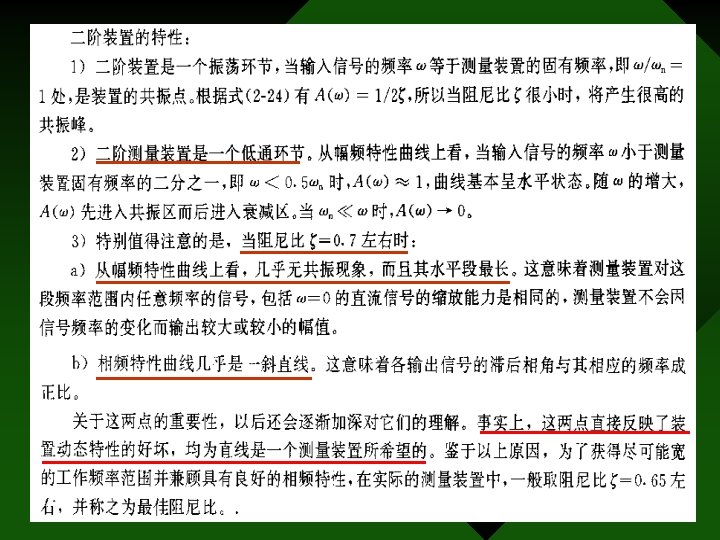
二阶系统(Second-order system) 数学表述 传递函数 频率响应函数: – 静态灵敏度(Transduction constant) – 系统固有频率(The angular natural frequency) – 阻尼比(Damping ratio)
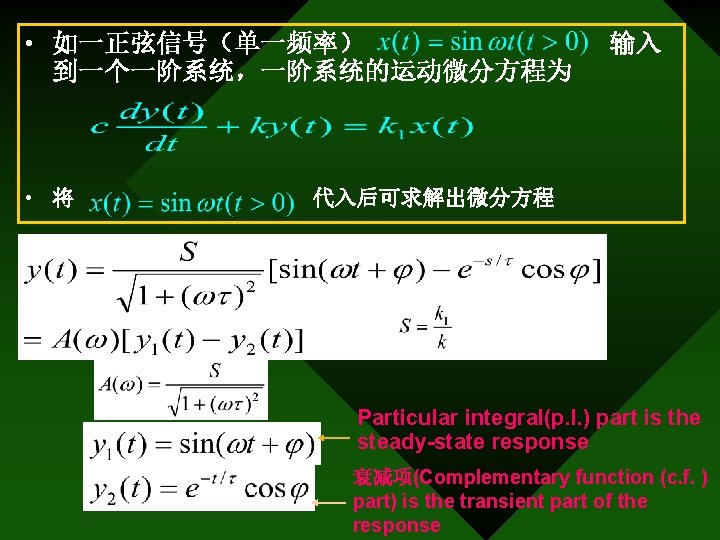
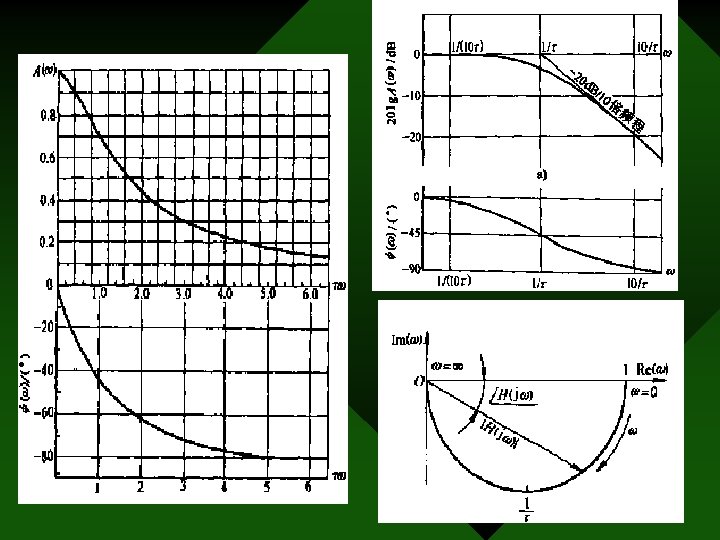
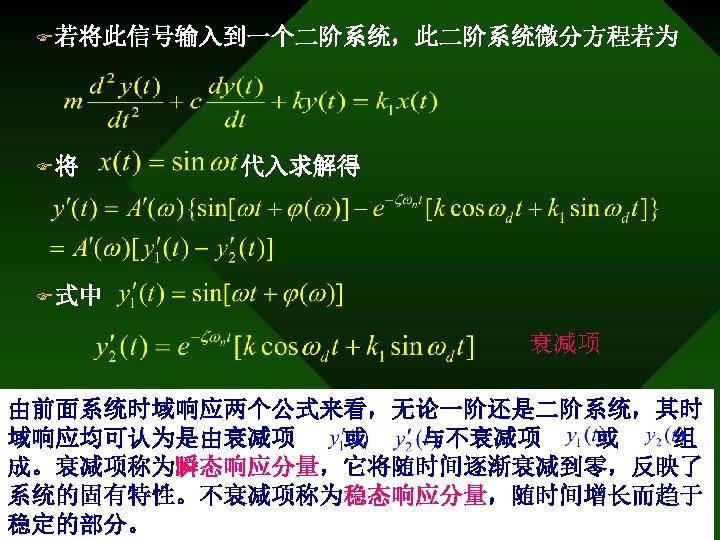
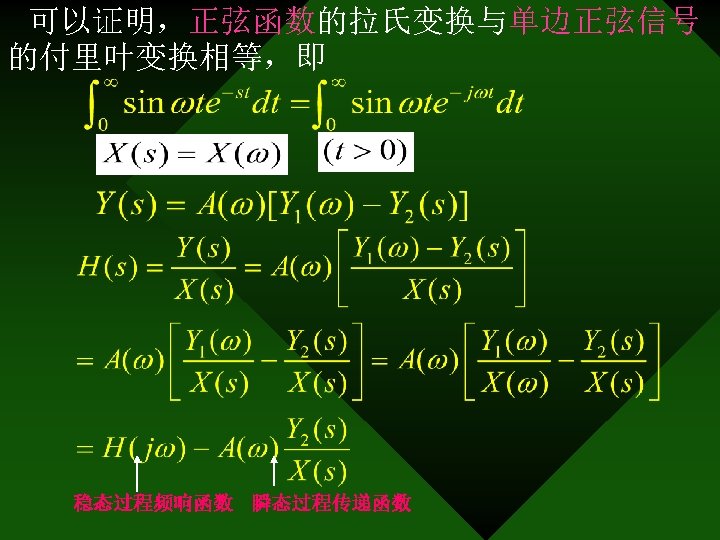
• 如一正弦信号(单一频率) 到一个一阶系统,一阶系统的运动微分方程为 • 将 输入 代入后可求解出微分方程 Particular integral(p. I. ) part is the steady-state response 衰减项(Complementary function (c. f. ) part) is the transient part of the response
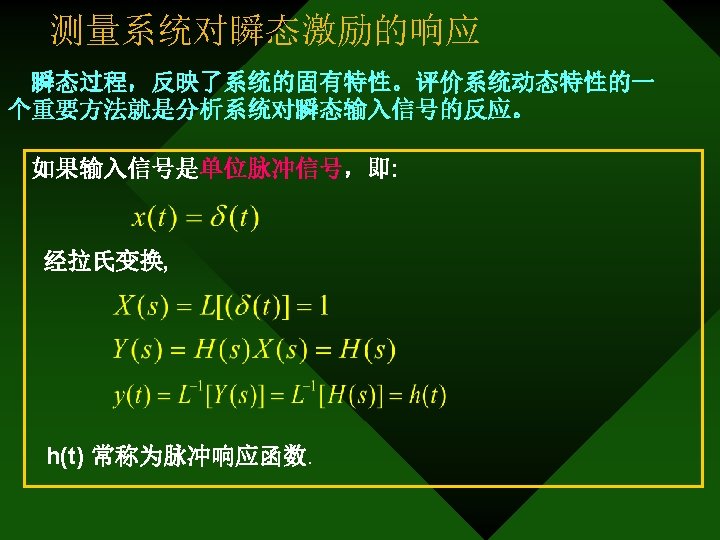
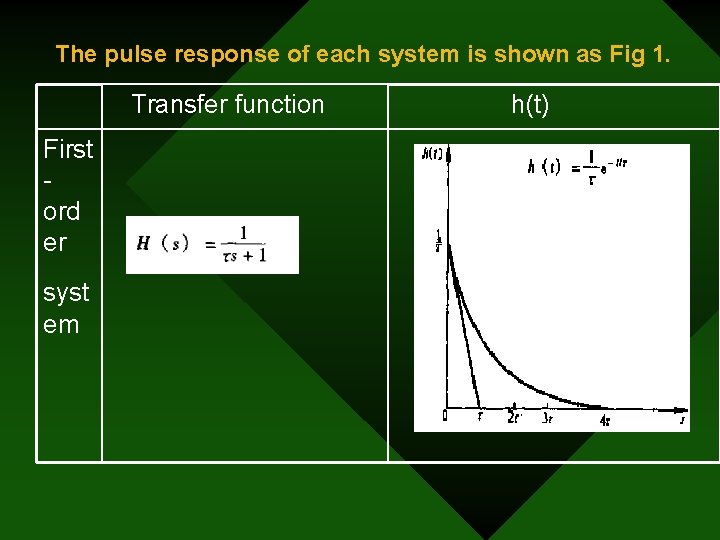
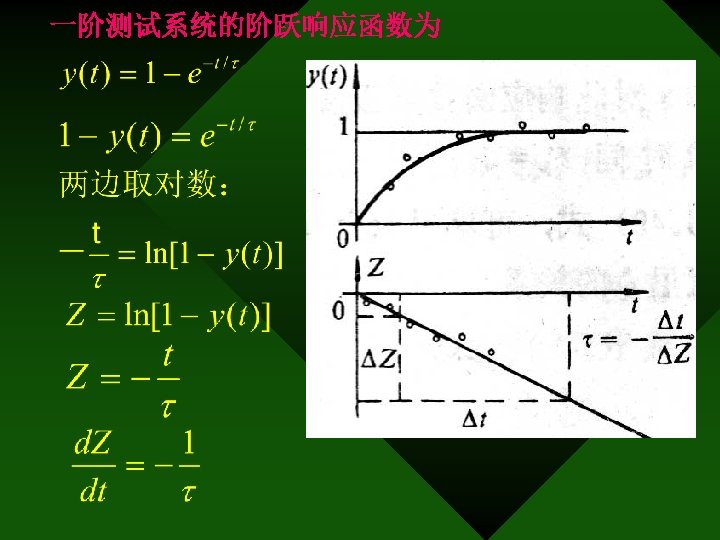
The pulse response of each system is shown as Fig 1. Transfer function First ord er syst em h(t)
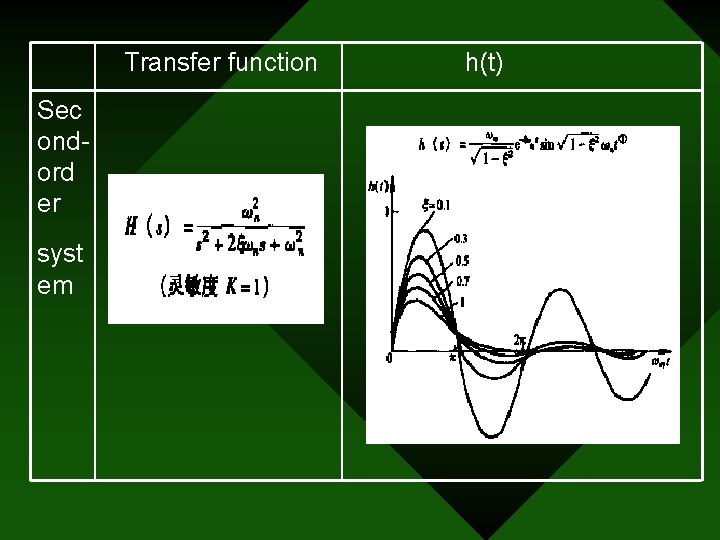
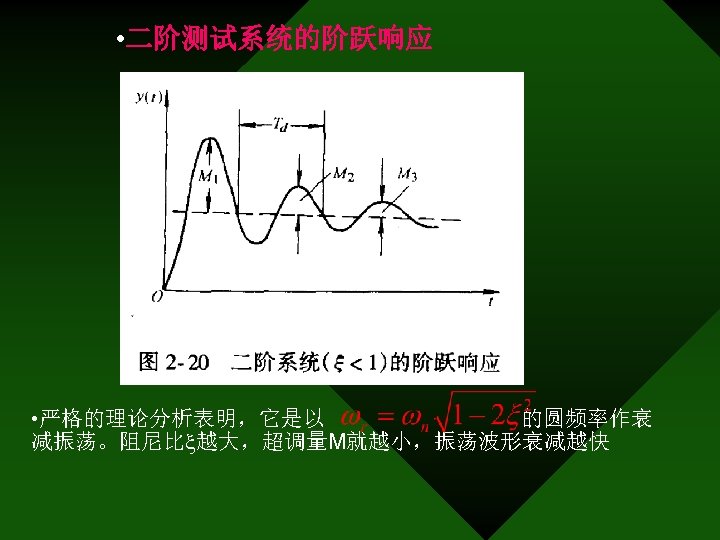
Transfer function Sec ondord er syst em h(t)
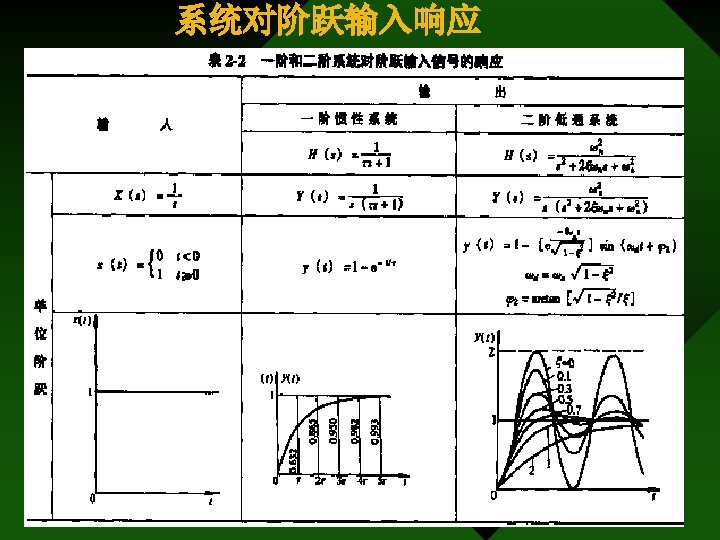
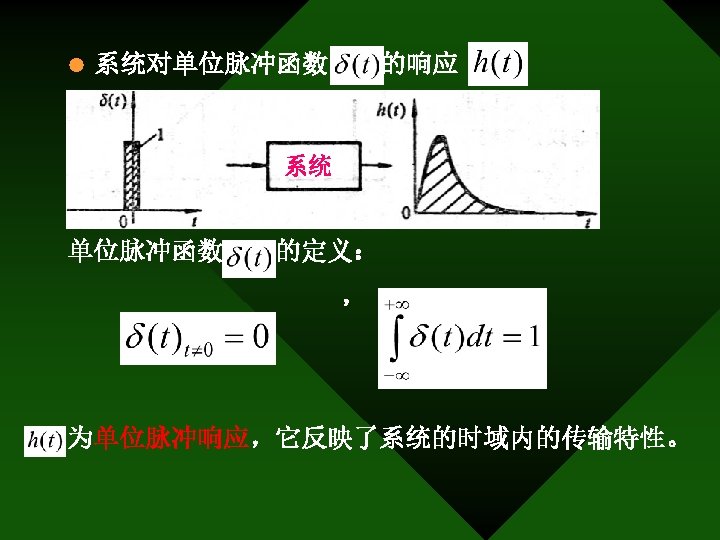
- Slides: 68