
Basic Concepts in World History Difference Between Notes
Basic Concepts in World History
Difference Between Notes “As written” and “Short-Hand Notes” • Example sentence: • The United States of America was founded in 1776, under the direction of various political figures, such as George Washington, Thomas Jefferson, and Samuel Adams
Difference Between Notes “As written” and “Short-Hand Notes” • “Short-Hand” Notes example: United States of America = Founded 1776 by George Washington, Thomas Jefferson, and Sam Adams • Create your own NOW

Difference Between Notes “As written” and “Short-Hand Notes” • When writing “shorthand, ” EXCLUDE: - pronouns (who, you, me, he) - prepositions (at, as, for, with, etc. ) - other words that are not necessary for successful sentence FRAGMENTS

Difference Between Notes “As written” and “Short-Hand Notes” • However, INCLUDE IMPORTANT words such as: - subject of the sentence - word relative to the subject of the sentence - vocabulary term - any other term YOU consider to be important - you can also CAPITALIZE or underline specific terms you consider to be important
Difference Between Notes “As written” and “Short-Hand Notes” • YOUR NOTES can be written however YOU see fit • Only YOU need to understand YOUR notes
Timeline Information • B. C. = term used to label years in the Gregorian, or Western, calender that occurred before the birth of Jesus Christ • A. D. = Anno Domini, term used to label years after the birth of Jesus Christ
Timeline Information • B. C. E. = alternate term used to label years that occurred before the year 0, also known as before common era • C. E. = alternate term used to label years that occurred after the year 0, also known as common era
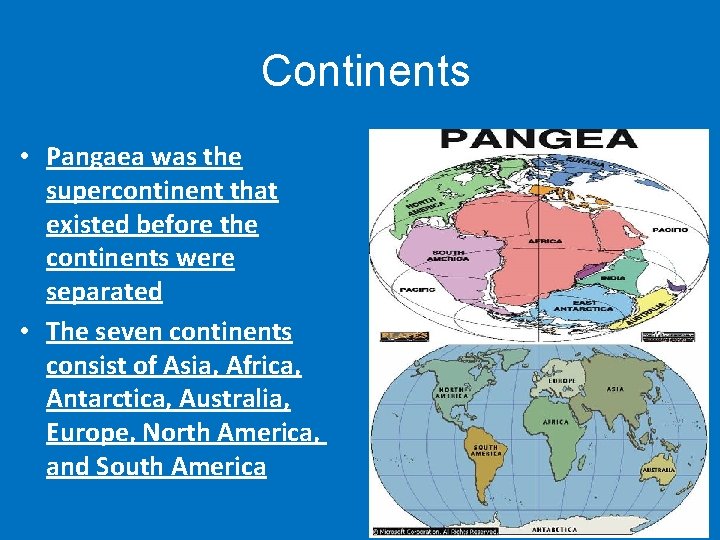
Continents • Pangaea was the supercontinent that existed before the continents were separated • The seven continents consist of Asia, Africa, Antarctica, Australia, Europe, North America, and South America
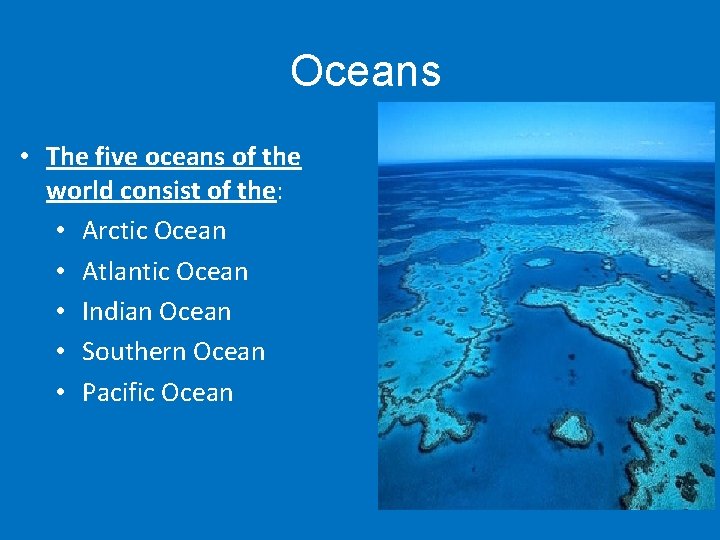
Oceans • The five oceans of the world consist of the: • Arctic Ocean • Atlantic Ocean • Indian Ocean • Southern Ocean • Pacific Ocean
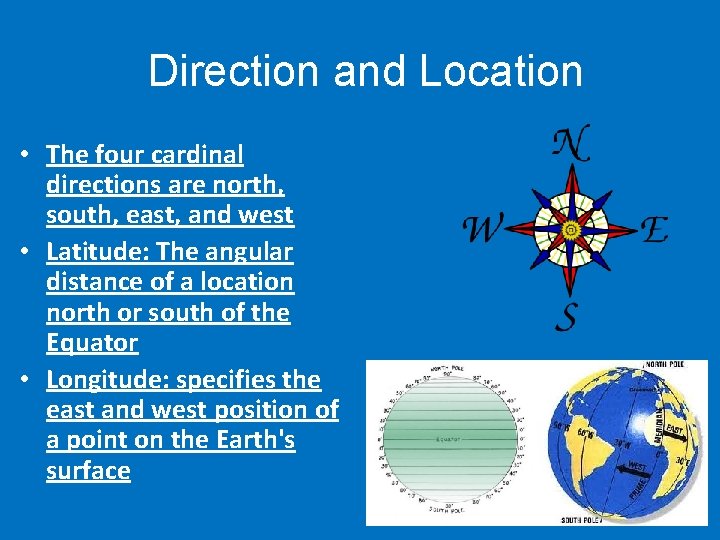
Direction and Location • The four cardinal directions are north, south, east, and west • Latitude: The angular distance of a location north or south of the Equator • Longitude: specifies the east and west position of a point on the Earth's surface
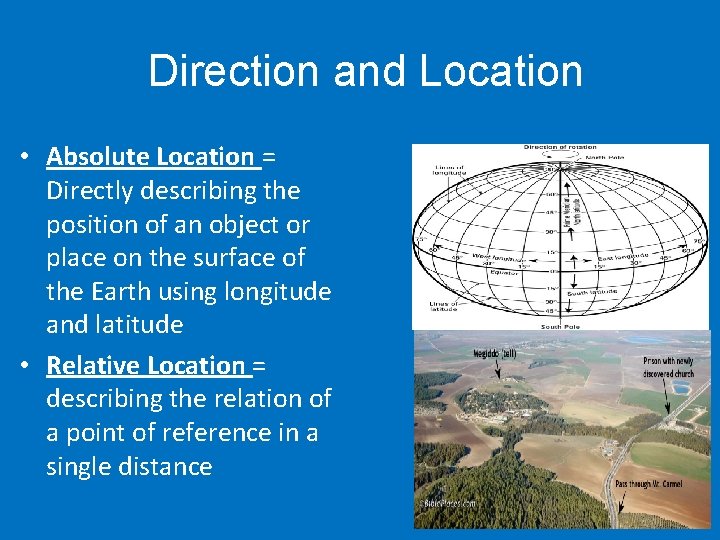
Direction and Location • Absolute Location = Directly describing the position of an object or place on the surface of the Earth using longitude and latitude • Relative Location = describing the relation of a point of reference in a single distance
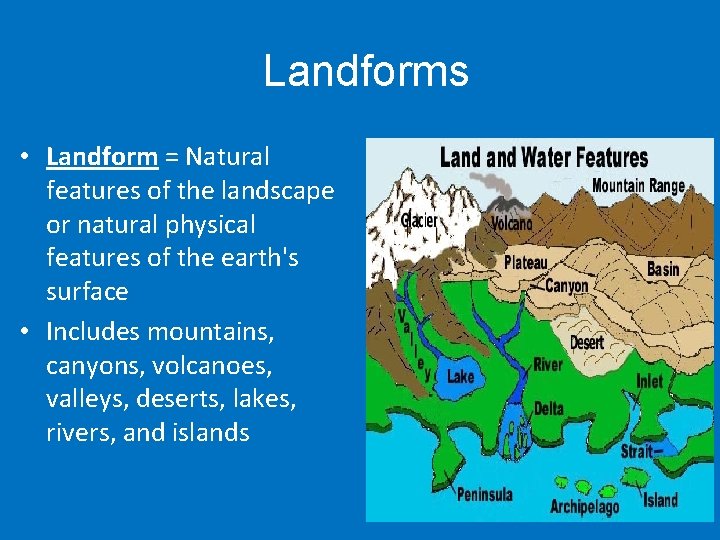
Landforms • Landform = Natural features of the landscape or natural physical features of the earth's surface • Includes mountains, canyons, volcanoes, valleys, deserts, lakes, rivers, and islands
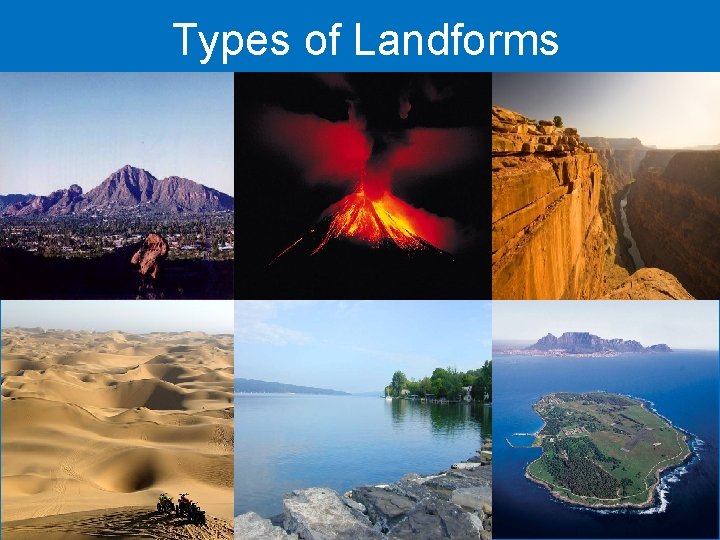
Types of Landforms
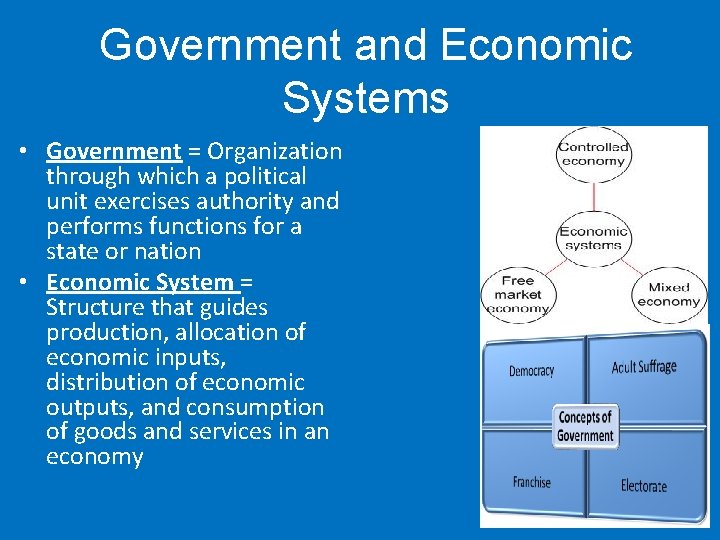
Government and Economic Systems • Government = Organization through which a political unit exercises authority and performs functions for a state or nation • Economic System = Structure that guides production, allocation of economic inputs, distribution of economic outputs, and consumption of goods and services in an economy
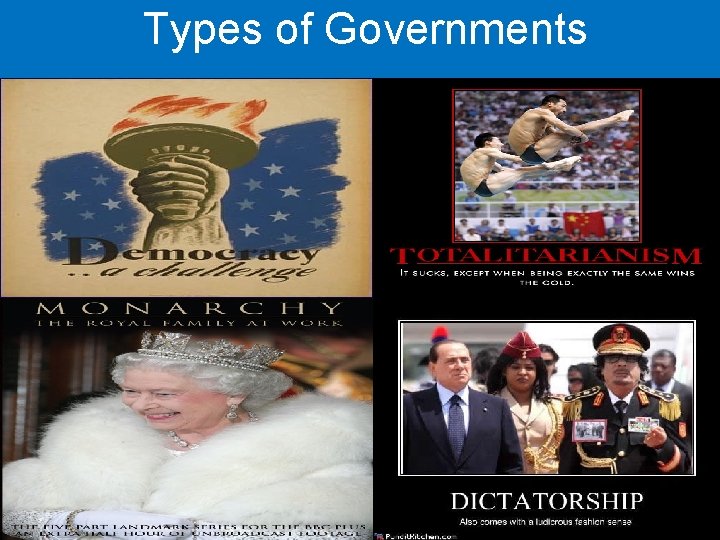
Types of Governments
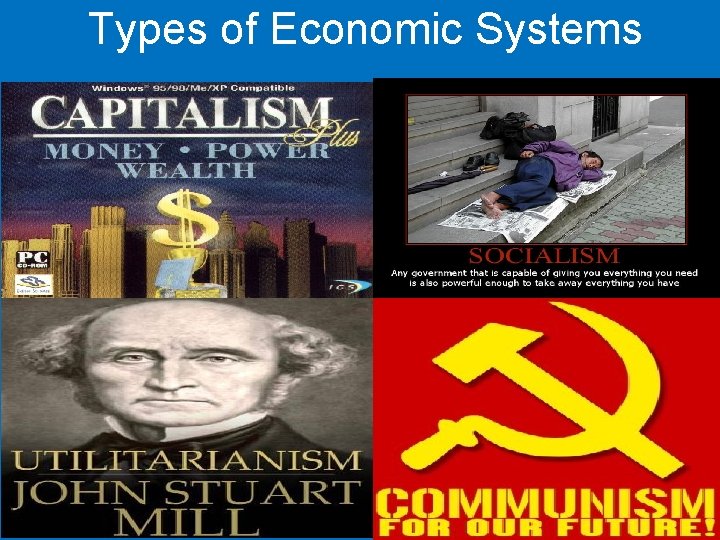
Types of Economic Systems
- Slides: 17