
Basic Concepts Electromagnetic Radiation Two characteristics of electromagnetic

�Basic Concepts
Electromagnetic Radiation Two characteristics of electromagnetic radiation are particularly important for understanding remote sensing. These are the �wavelength and frequency.
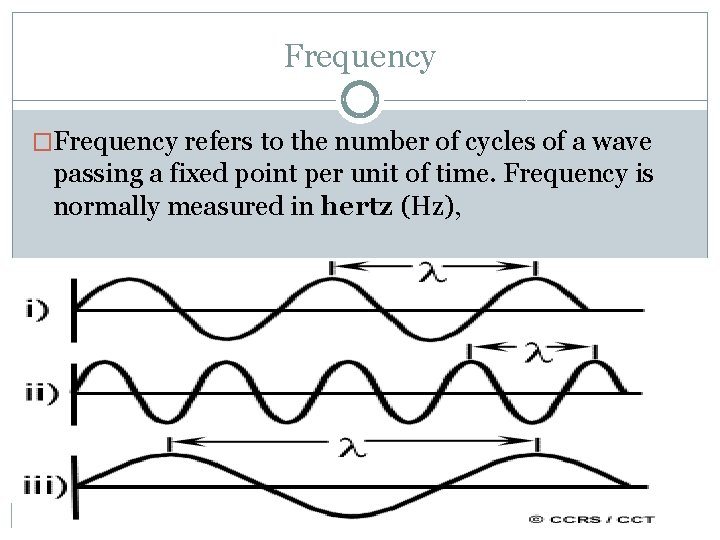
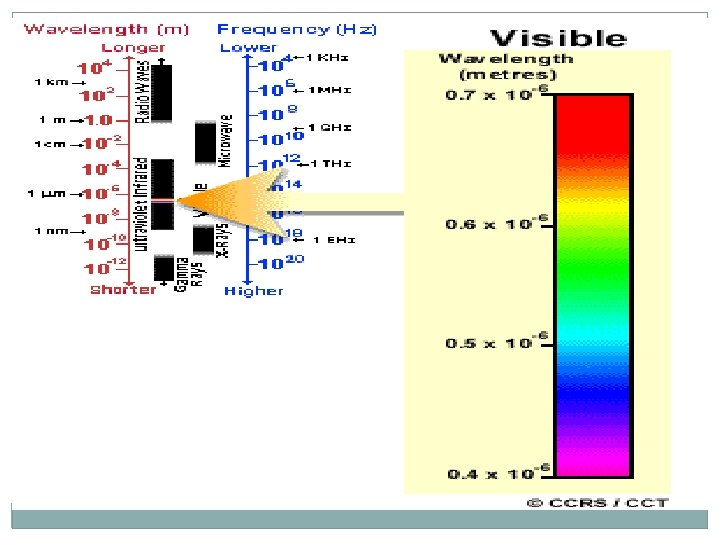
Frequency �Frequency refers to the number of cycles of a wave passing a fixed point per unit of time. Frequency is normally measured in hertz (Hz),
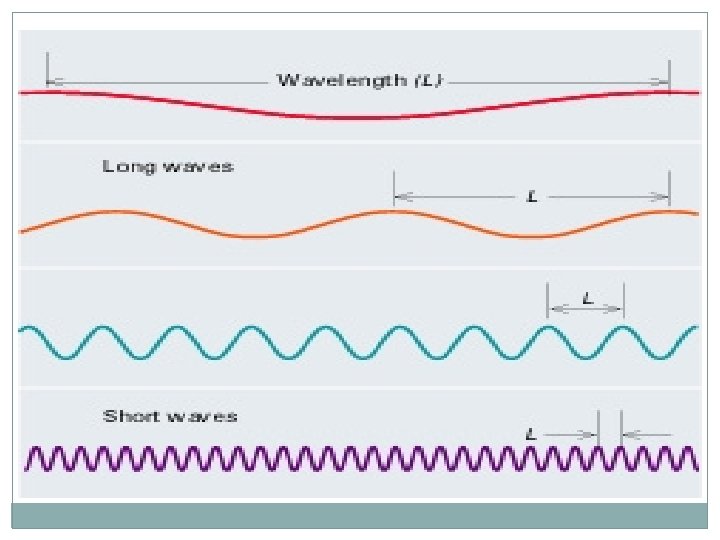

�Frequency, is inversely proportional to wavelength, �The longer the wavelength, the lower the frequency, and vice -versa.
The Electromagnetic Spectrum �The electromagnetic spectrum ranges from the shorter wavelengths (including gamma and x-rays) to the longer wavelengths (including microwaves and broadcast radio waves). There are several regions of the electromagnetic spectrum which are useful for remote sensing.
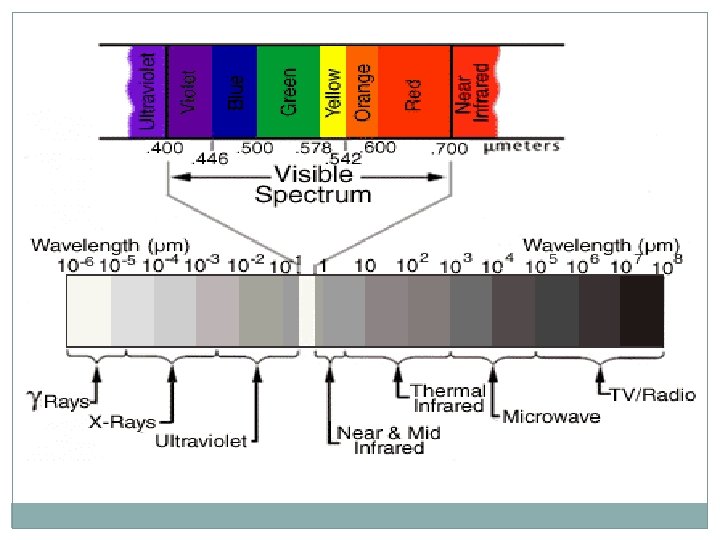
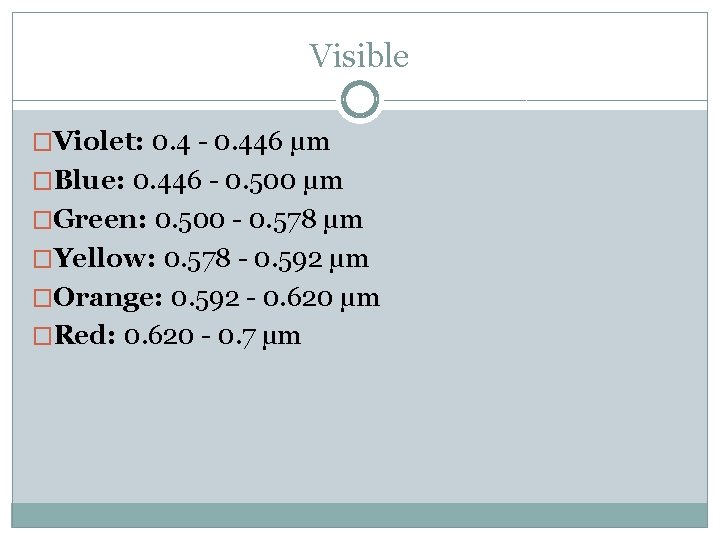
Visible �Violet: 0. 4 - 0. 446 μm �Blue: 0. 446 - 0. 500 μm �Green: 0. 500 - 0. 578 μm �Yellow: 0. 578 - 0. 592 μm �Orange: 0. 592 - 0. 620 μm �Red: 0. 620 - 0. 7 μm
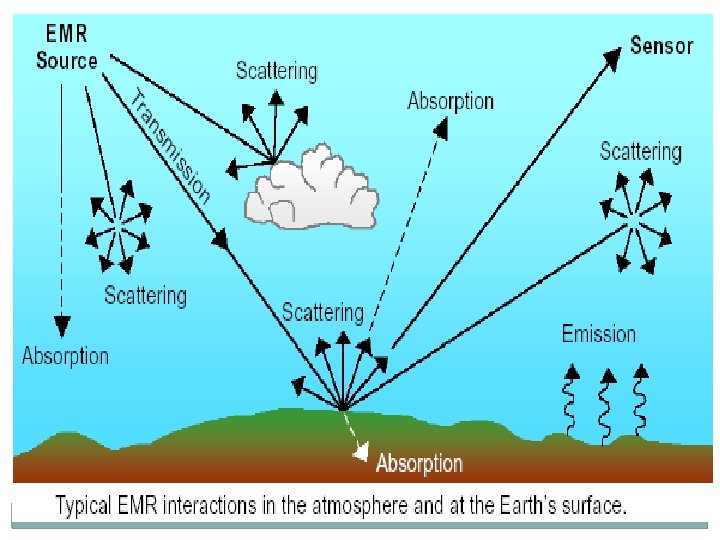
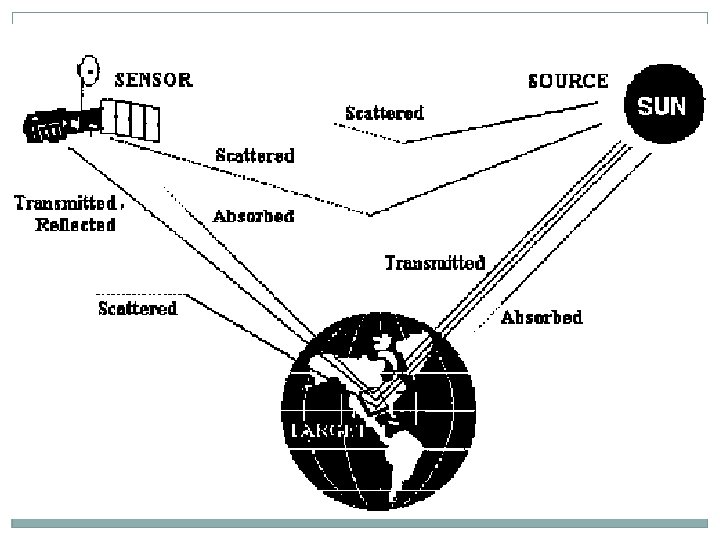
Scattering § Once electromagnetic radiation is generated, it is propagated through the earth's atmosphere almost at the speed of light in a vacuum.

Scattering There are essentially three types of scattering: • Rayleigh, • Mie, and • Non-selective.

Atmospheric Scattering Type of scattering is a function of: • the wavelength of the incident radiant energy, and the size of the gas molecule, dust particle, and/or water vapor droplet encountered.

Rayleigh scattering �Rayleigh scattering occurs when the diameter of the matter (usually air molecules) are many times smaller than the wavelength of the incident electromagnetic radiation.
Rayleigh scattering �Rayleigh scattering is responsible for the blue sky. �Rayleigh scattering is responsible for red sunsets.

Mie scattering �Mie scattering takes place when there are essentially spherical particles present in the atmosphere with diameters approximately equal to the wavelength of radiation being considered.

Non-selective scattering �Non-selective scattering is produced when there are particles in the atmosphere several times the diameter of the radiation being transmitted.

Atmospheric windows �Those areas of the spectrum which are not severely influenced by atmospheric absorption and thus, are useful to remote sensors, are called atmospheric windows.

RADIATION - TARGET INTERACTIONS �Absorption (A) � Transmission (T) � Reflection (R).
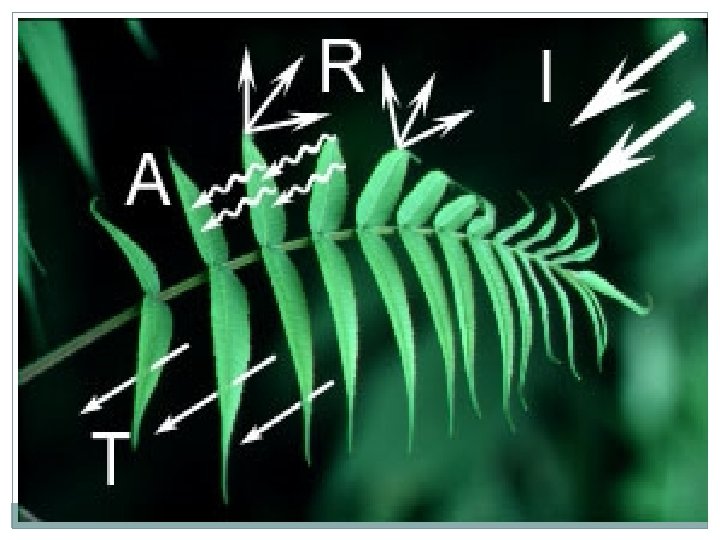
Incident radiation �Incident energy (I) from the source �Absorption (A) occurs when radiation (energy) is absorbed into the target �Transmission (T) occurs when radiation passes through a target �Reflection (R) occurs when radiation "bounces" off the target and is redirected.
Absorption �Absorption is the process by which radiant energy is absorbed and converted into other forms of energy. �the atmosphere does not absorb all of the incident energy but transmits it effectively. Parts of the spectrum that transmit energy effectively are called “atmospheric windows”.
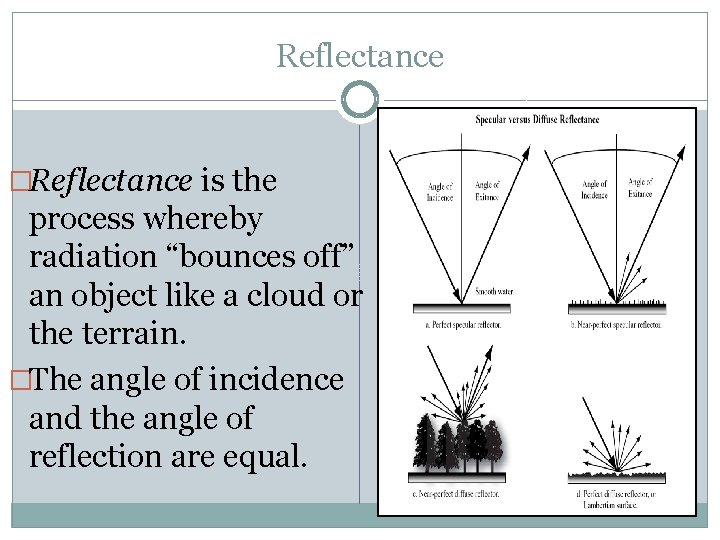
Reflectance �Reflectance is the process whereby radiation “bounces off” an object like a cloud or the terrain. �The angle of incidence and the angle of reflection are equal.
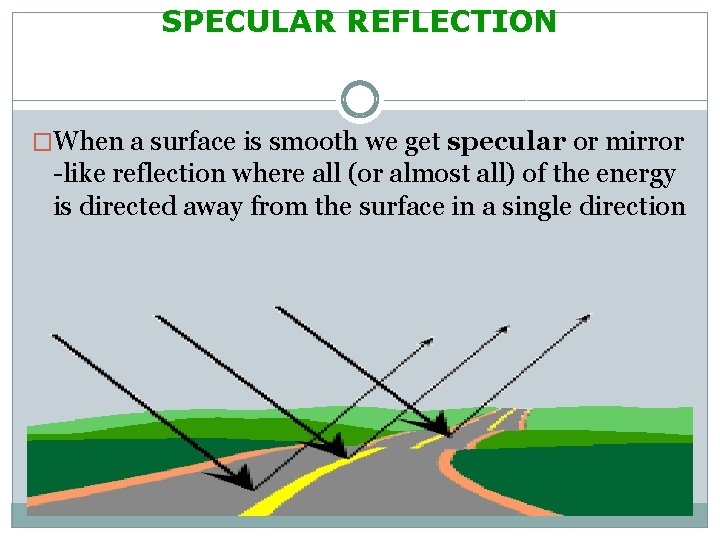
SPECULAR REFLECTION �When a surface is smooth we get specular or mirror -like reflection where all (or almost all) of the energy is directed away from the surface in a single direction
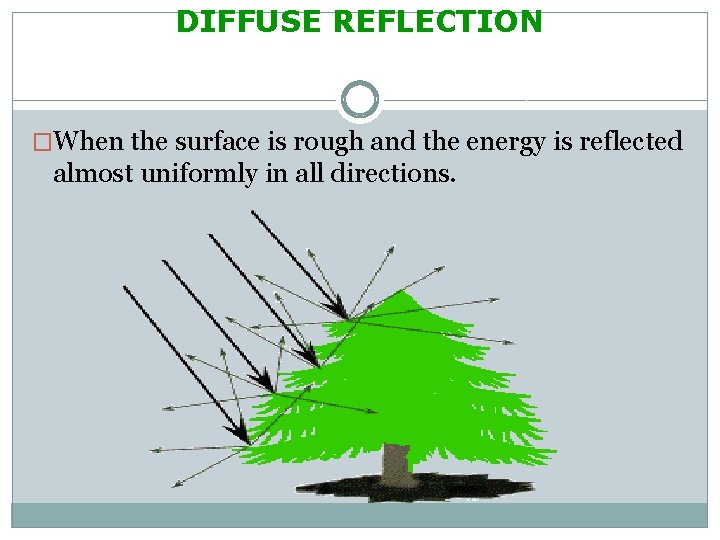
DIFFUSE REFLECTION �When the surface is rough and the energy is reflected almost uniformly in all directions.
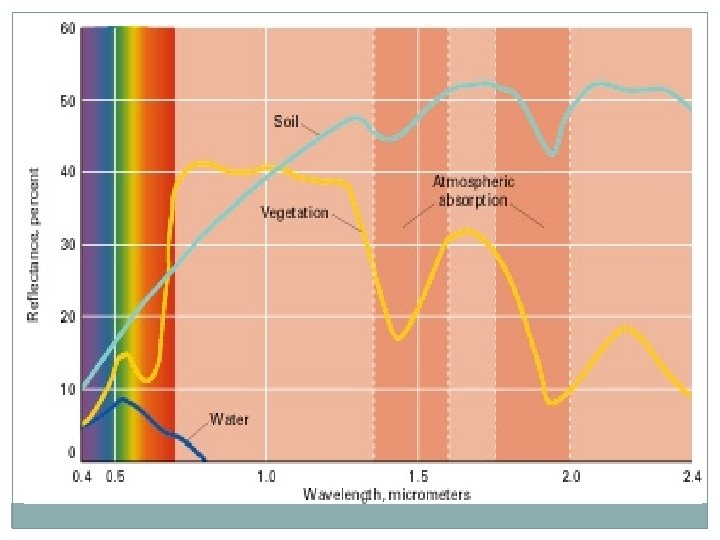
Reflectance Curve
- Slides: 28