
Basic Boy Scouts Scout Law TRUSTWORTHY LOYAL HELPFUL
Basic Boy Scouts
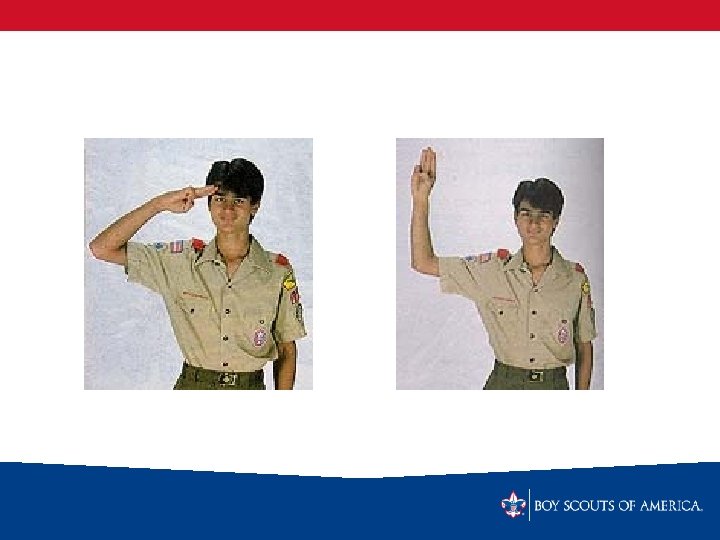

Scout Law
TRUSTWORTHY LOYAL HELPFUL A Scout tells the truth. He keeps his promises. Honesty is part of his code of conduct. People can depend on him. A Scout is true to his family, Scout leaders, friends, school, and nation. A Scout is concerned about other people. He does things willingly for others without pay or reward.
FRIENDLY COURTEOUS A Scout is a friend to all. He is a brother to other Scouts. He seeks to understand others. He respects those with ideas and customs other than his own. A Scout is polite to everyone regardless of age or position. He knows good manners make it easier for people to get along together. KIND A Scout understands there is strength in being gentle. He treats others as he wants to be treated. He does not hurt or kill harmless things without reason.
OBEDIENT CHEERFUL A Scout follows the rules of his family, school, and troop. He obeys the laws of his community and country. If he thinks these rules and laws are unfair, he tries to have them changed in an orderly manner rather than disobey them. A Scout looks for the bright side of things. He cheerfully does tasks that come his way. He tries to make others happy. THRIFTY A Scout works to pay his way and to help others. He saves for unforeseen needs. He protects and conserves natural resources. He carefully uses time and property.
BRAVE A Scout can face danger even if he is afraid. He has the courage to stand for what he thinks is right even if others laugh at or threaten him. CLEAN A Scout keeps his body and mind fit and clean. He goes around with those who believe in living by these same ideals. He helps keep his home and community clean. REVERENT A Scout is reverent toward God. He is faithful in his religious duties. He respects the beliefs of others.

Knots
Knots Weaken Rope They do! Angles, kinks, and knots, stress the fibers unevenly and weaken rope. If this concerns you, you are using rope that's too thin. Some knots in some ropes have been claimed to only weaken a rope to about 80% of its rated strength; other knots weaken a rope to about 50%. For safety, therefore, assume that even brand new rope will perform at no more than 50% of its rated breaking strength. And, if the rope is old, worn, or damaged by sunlight or chemicals - expect considerably less.
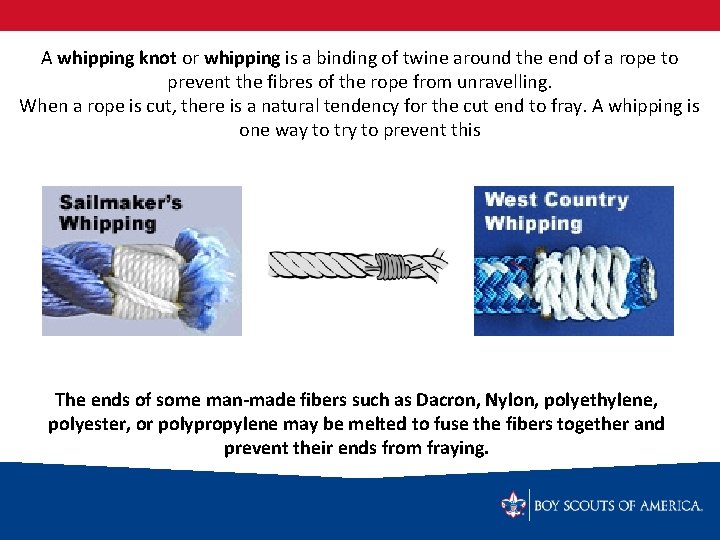
A whipping knot or whipping is a binding of twine around the end of a rope to prevent the fibres of the rope from unravelling. When a rope is cut, there is a natural tendency for the cut end to fray. A whipping is one way to try to prevent this The ends of some man-made fibers such as Dacron, Nylon, polyethylene, polyester, or polypropylene may be melted to fuse the fibers together and prevent their ends from fraying.
SQUARE KNOT
ROUND TURN AND TWO HALF HITCHES
BOWLINE
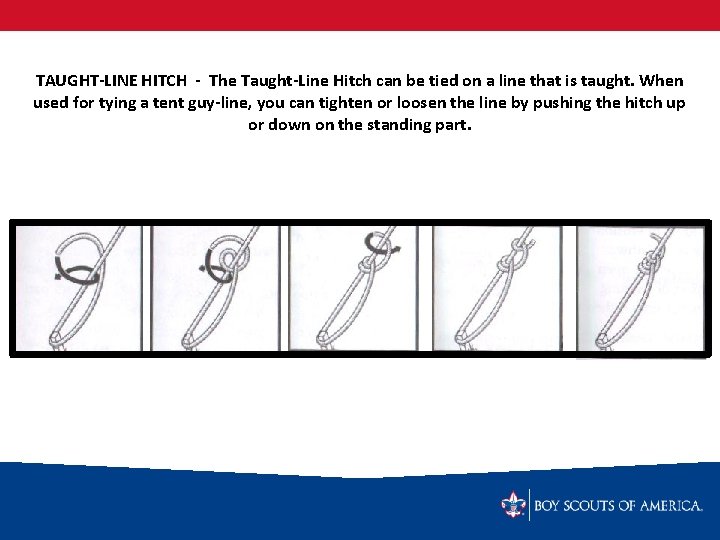
TAUGHT-LINE HITCH - The Taught-Line Hitch can be tied on a line that is taught. When used for tying a tent guy-line, you can tighten or loosen the line by pushing the hitch up or down on the standing part.

Tent set-up
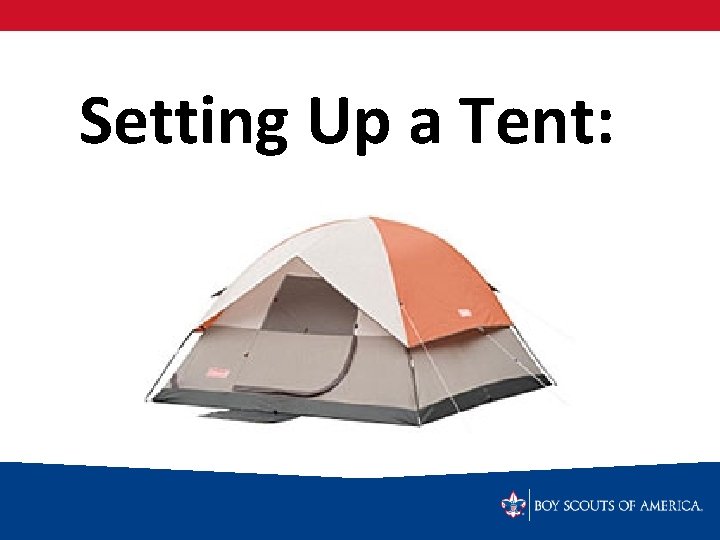
Setting Up a Tent:
1. Find an area that is flat and free of sharp objects. Clear the area of any large sticks, rocks or other debris which could cause a rip or puncture in your tent. 2. Unpack the tent and all of its parts. Sort them into respective groups -- pegs, frame and so on -- for easy assembly. 3. Unfold the tent and lay it in the respective area. Make sure it is facing the direction you desire. 4. Start assembling the frame of the tent. You should end up with two long poles which should be laid across the tent. If possible, recruit a second pair of hands. 5. Run the pole through every slot in the tent fabric, making sure not to miss any. If you miss one, you? ll have to go back, which can be a hassle, depending on how far along you are. 6. Insert one end of the pole into the corner of the tent while your assistant does the same on the side diagonal to you. Repeat steps 5 and 6 for the second pole. At this point, your tent should start taking shape. 7. Take the pegs and hammer them into the ground at each corner of the tent. Pull the tent taught as you place each peg but make sure there is still a little give. Make sure the pegs are secure in the ground and then start moving in your sleeping bags and other camping gear.

Camping
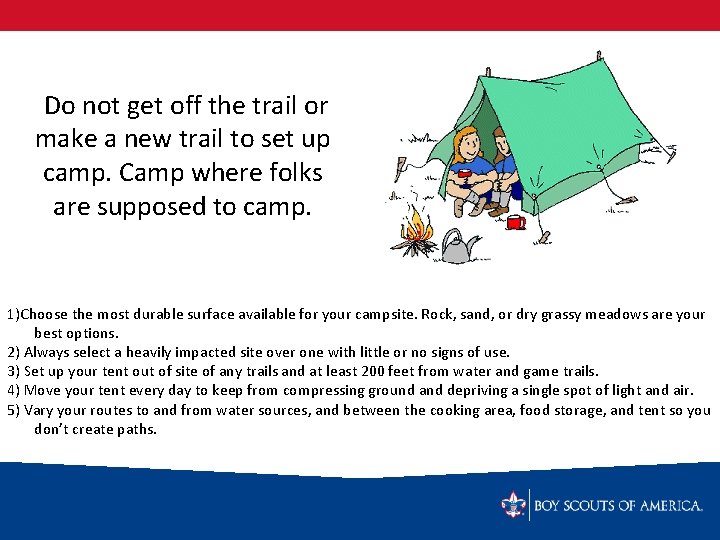
Do not get off the trail or make a new trail to set up camp. Camp where folks are supposed to camp. 1)Choose the most durable surface available for your campsite. Rock, sand, or dry grassy meadows are your best options. 2) Always select a heavily impacted site over one with little or no signs of use. 3) Set up your tent out of site of any trails and at least 200 feet from water and game trails. 4) Move your tent every day to keep from compressing ground and depriving a single spot of light and air. 5) Vary your routes to and from water sources, and between the cooking area, food storage, and tent so you don’t create paths.
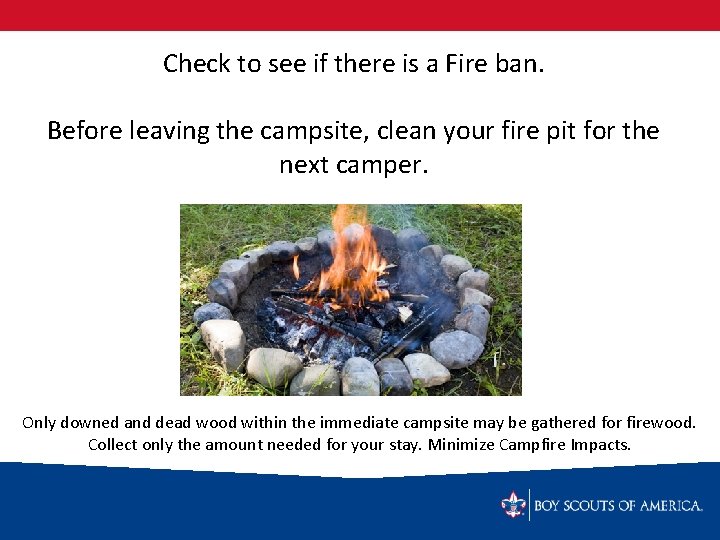
Check to see if there is a Fire ban. Before leaving the campsite, clean your fire pit for the next camper. Only downed and dead wood within the immediate campsite may be gathered for firewood. Collect only the amount needed for your stay. Minimize Campfire Impacts.
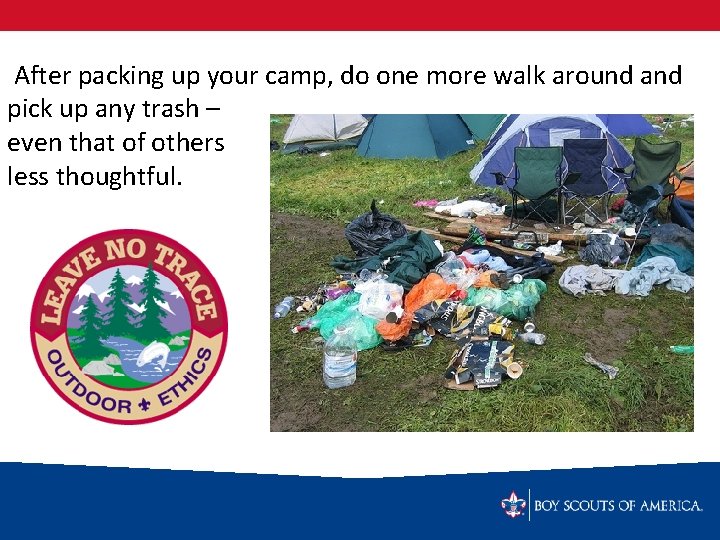
After packing up your camp, do one more walk around and pick up any trash – even that of others less thoughtful.

Tracks
Whether you make it a hobby, or become curious during a walk in the woods, identifying animal tracks is fun and helps you track the wildlife in your area. You can tell what kind of animals have been by and how large they are, just from their prints. Learn how to identify common animals that may be roaming through your backyard or camping area.
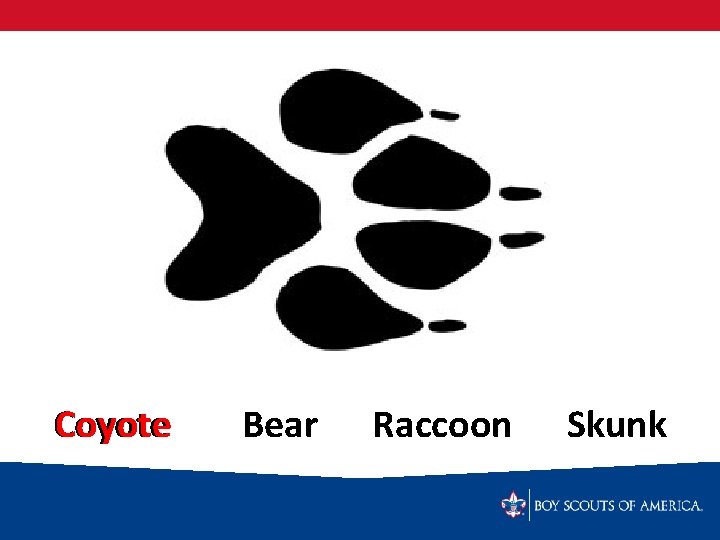
Coyote Bear Raccoon Skunk Coyote
Identifying animal tracks can reveal important information about native wildlife populations and habitat. Additionally, understanding how to read a track can prevent potential dangers, such as a skunk or bear encounter.
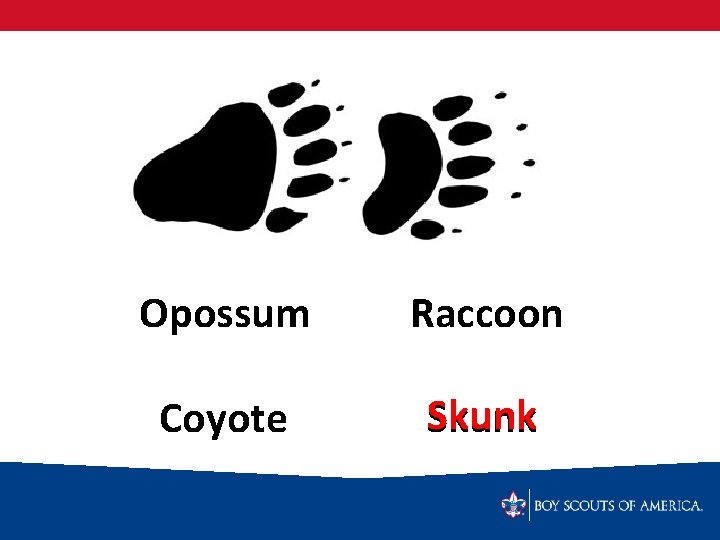
Opossum Raccoon Skunk Coyote Skunk
Bear Should you find suspiciously large animal tracks in an area known as bear habitat (such as the deep woods, open fields and near caves), be careful while prints are identified. Bear encounters--from black to grizzly species--are potentially dangerous. Examine the area, as bears often use the same path of travel and will leave visible claw marks on trees and break sticks or branches. Bears walk flat-flooted, so four prints may be shallow in depth, unless the bear is using the same place of footfall during each pass. Look for claw marks as long as 4 inches to help with identification. Additionally, each foot may reveal five toes (with spaces in between), a large pad (or heel) and occur in a diagonal, back-and-forth or a straight pattern across the ground. Upon first glance, bear tracks may even resemble a human footprint. The stride of the animal tracks can be 18 inches to 5 feet in distance, depending on how quickly the bear is moving. Check the prints with a reputable guidebook to assist in bear species determination.
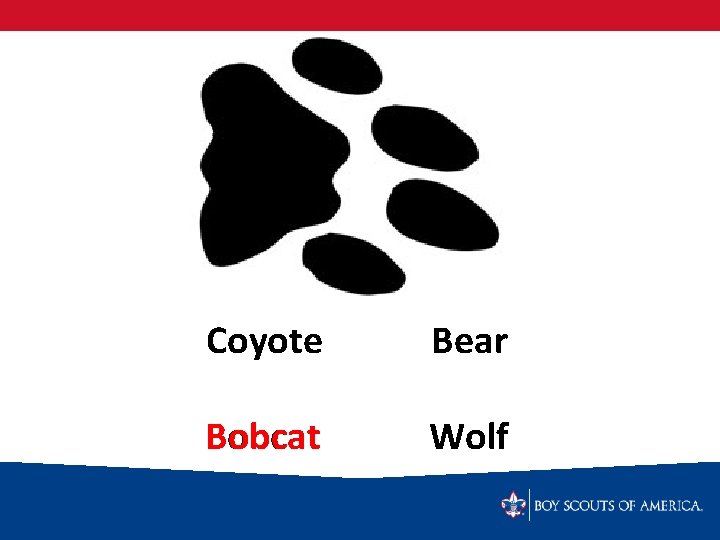
Coyote Bear Bobcat Wolf
All animals need water to survive. This means that one of the best places to find animal tracks is in the soft earth near streams or lakes. Many animals also follow a migratory path or establish a territory for feeding. Their tracks help identify these areas. Fresh snow is also a good canvas for animal footprints. Identifying which animals are leaving the tracks will help determine their purpose in being there, where they live and whether they pose a problem.
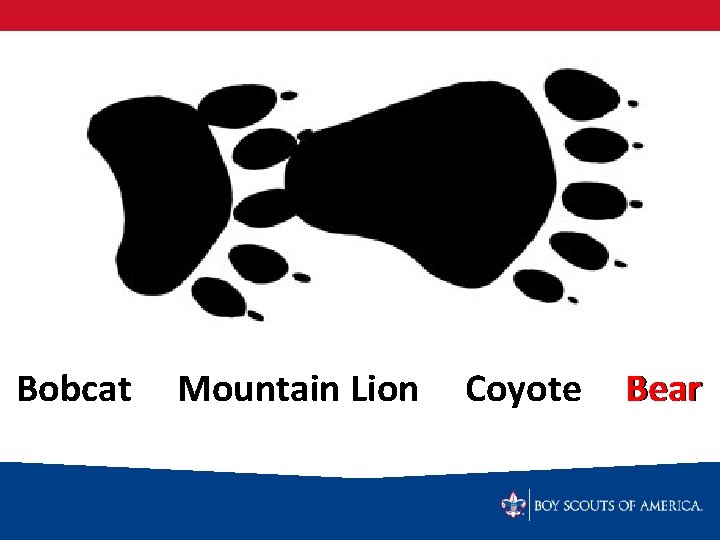
Bobcat Mountain Lion Coyote Bear

Compass
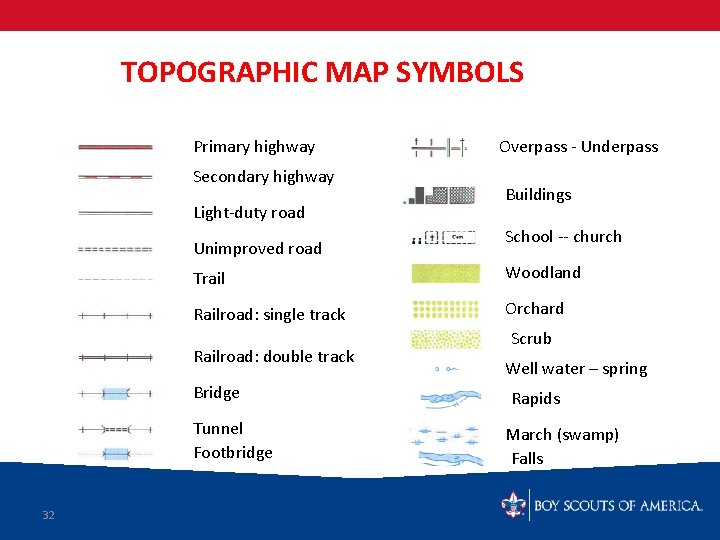
TOPOGRAPHIC MAP SYMBOLS Primary highway Secondary highway Light-duty road Unimproved road Buildings School -- church Trail Woodland Railroad: single track Orchard Railroad: double track Bridge Tunnel Footbridge 32 Overpass - Underpass Scrub Well water – spring Rapids March (swamp) Falls
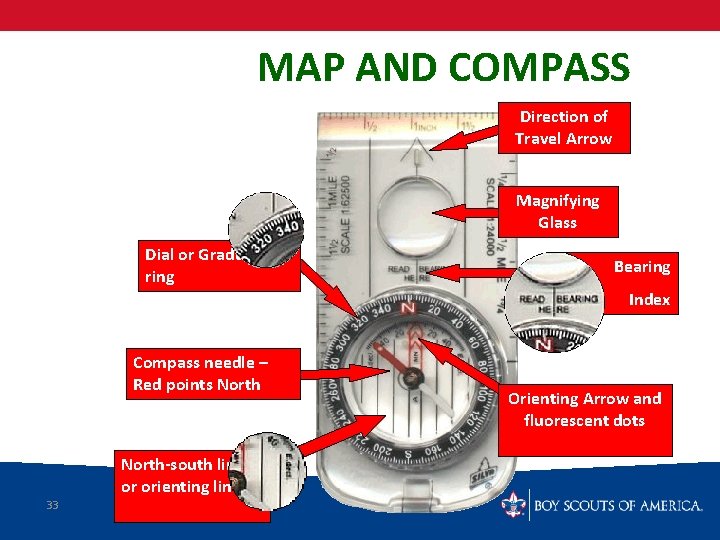
MAP AND COMPASS Direction of Travel Arrow Magnifying Glass Dial or Graduation ring Bearing Index Compass needle – Red points North-south lines or orienting lines 33 Orienting Arrow and fluorescent dots
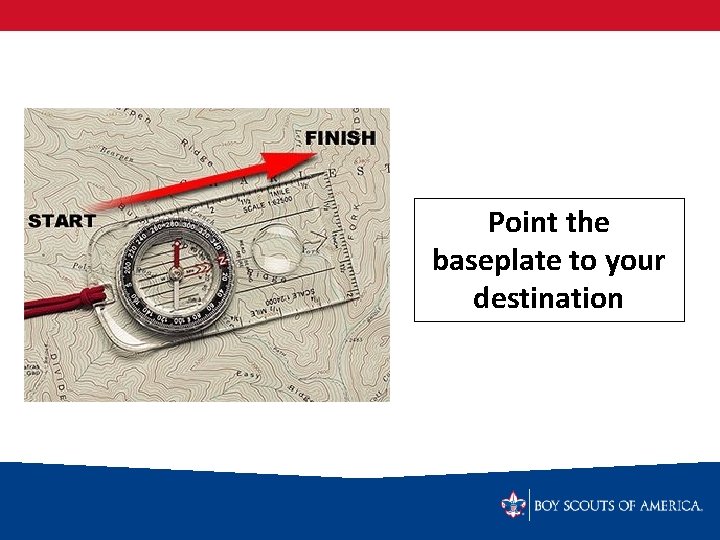
Point the baseplate to your destination
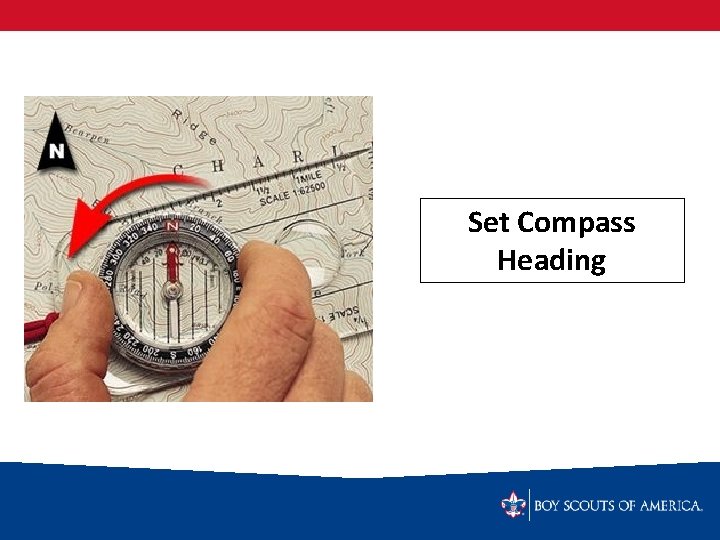
Set Compass Heading
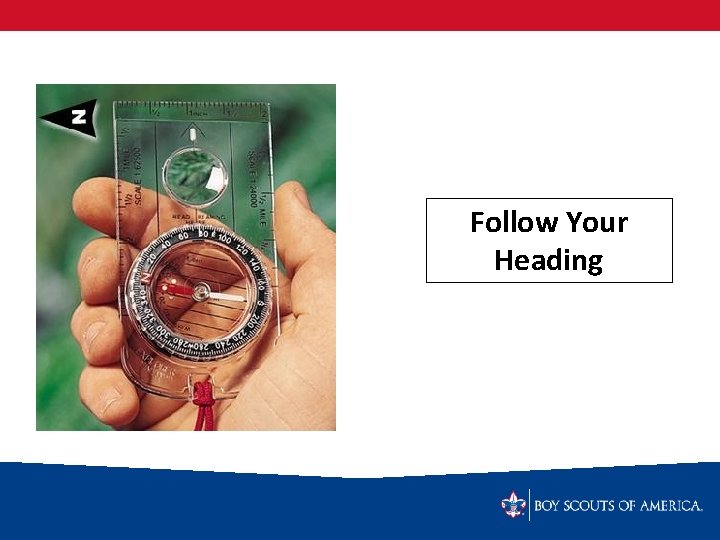
Follow Your Heading

- Slides: 37