
Basic assumptions of the model Example of circuit

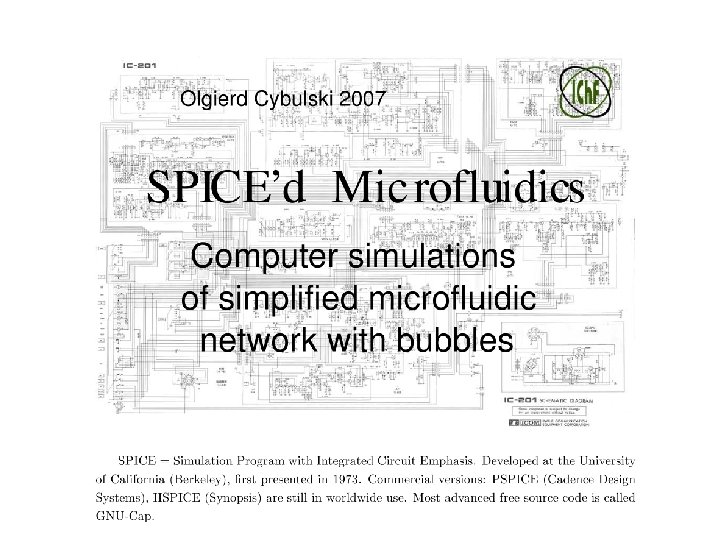

Basic assumptions of the model Example of circuit : • Circuits consist of nodes, channels, pumps and bubble-sources • Channels are 1 -dimensional, nodes are 0 -dimensional, as in a planar graph • Bubbles are point charges of resistance, added to the constant resistance of the channel they occupy • Bubbles flow at the superficial speed of flow • Flow is driven by a pressure drop applied to the inlet and outlet of the system

Stationary flow – single channel
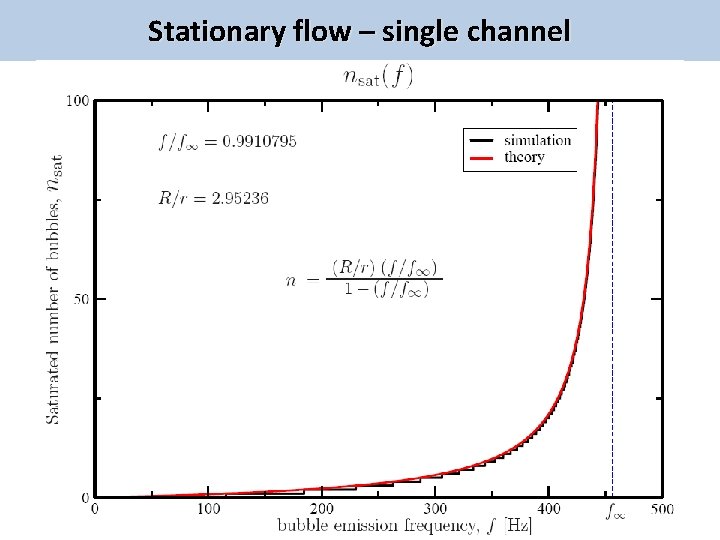
Stationary flow – single channel

Approaching the stationary flow – single channel
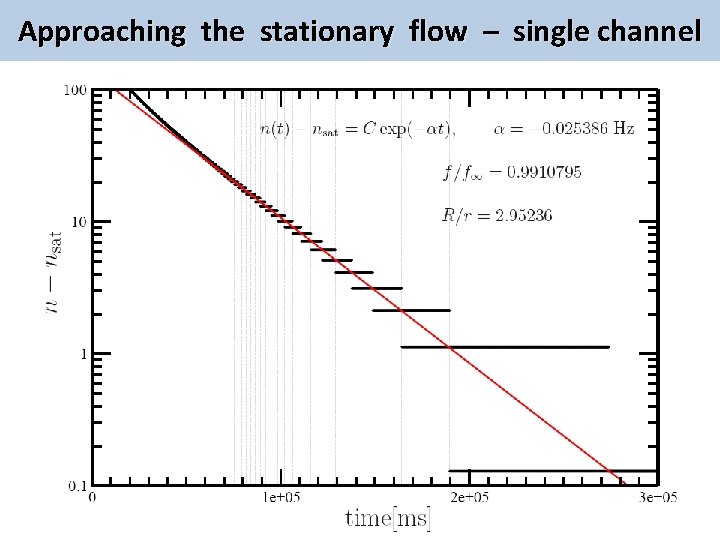
Approaching the stationary flow – single channel

In search of a stationary flow – two channel loop Input Outlet The stationary flow is not unique - different patterns can be repeated !!
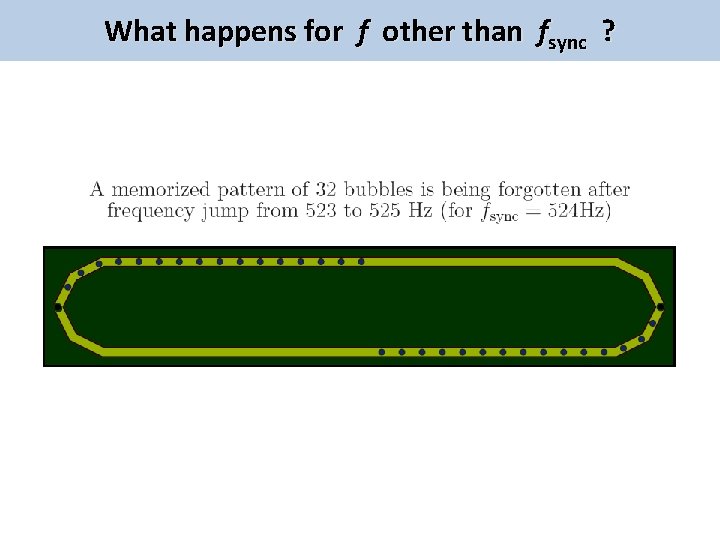
What happens for f other than fsync ?
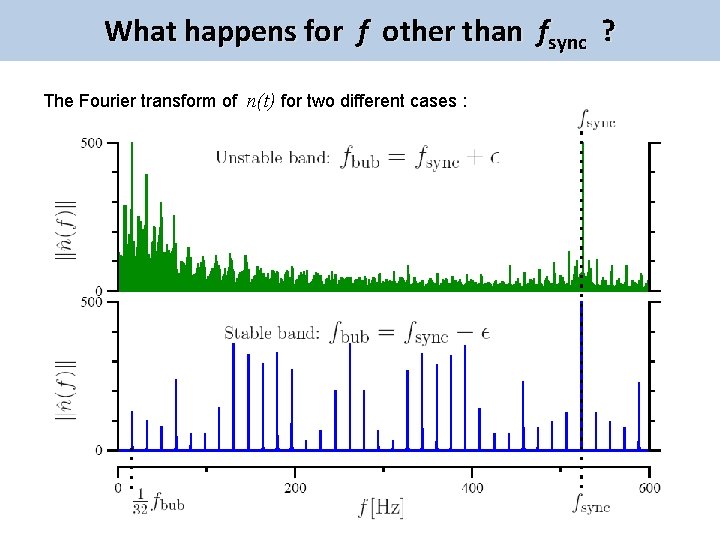
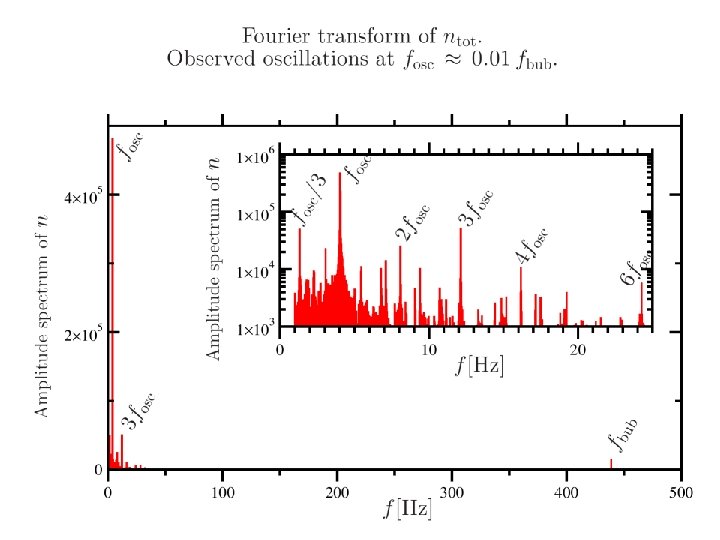
What happens for f other than fsync ? The Fourier transform of n(t) for two different cases :

Regular and chaotic bands for an asymmetric loop (L 1/L 2 = 1. 002)

Regular and chaotic band (magnified fragment)
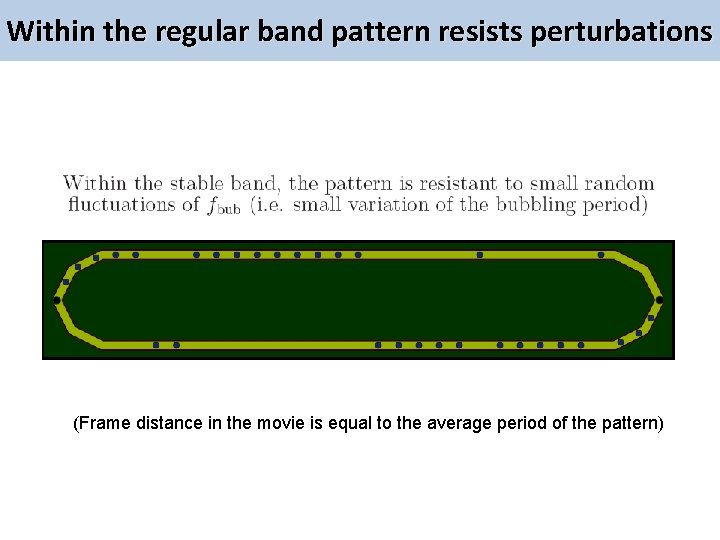
Within the regular band pattern resists perturbations (Frame distance in the movie is equal to the average period of the pattern)
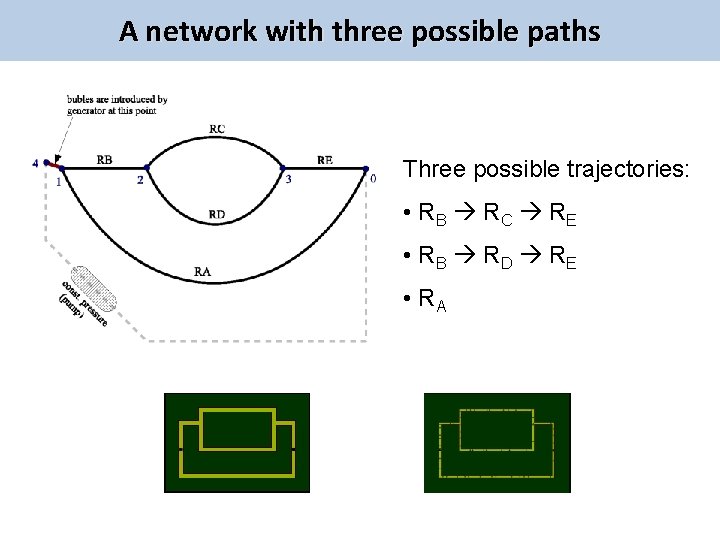
A network with three possible paths Three possible trajectories: • RB R C R E • RB RD RE • RA
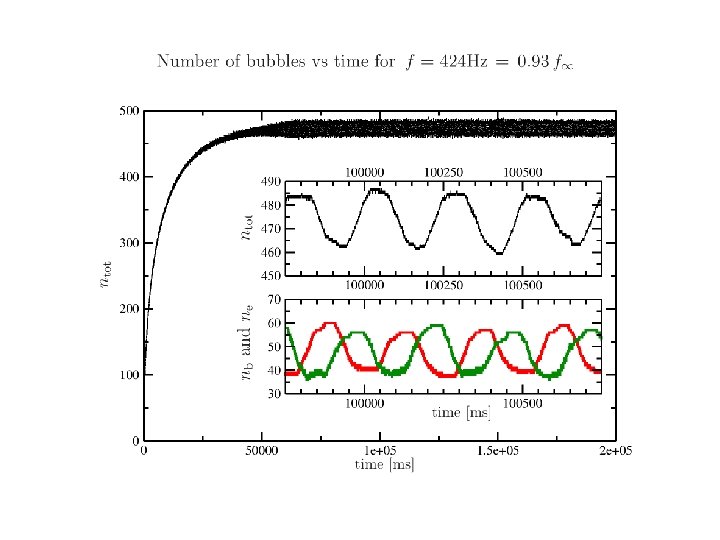
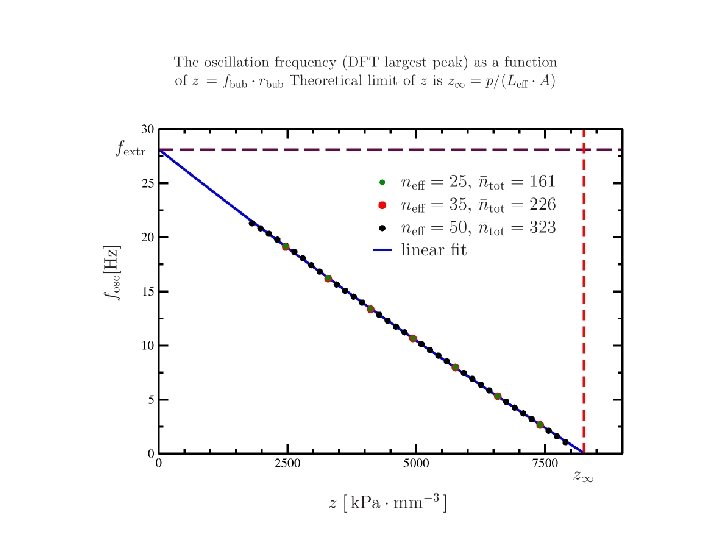
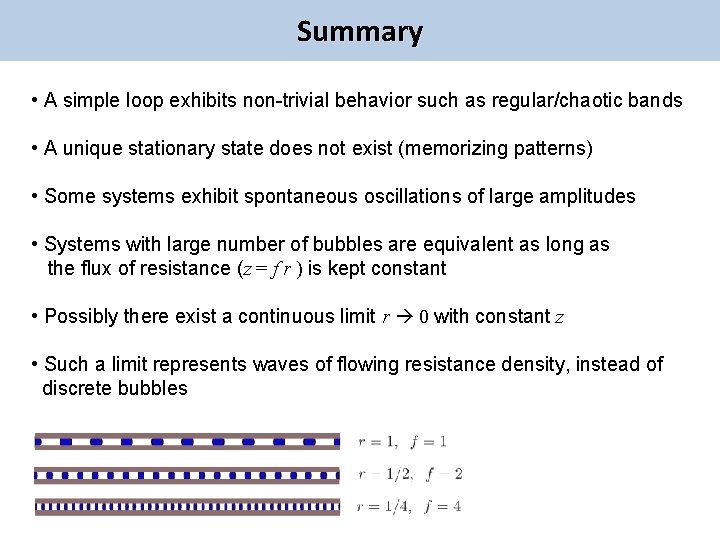
Summary • A simple loop exhibits non-trivial behavior such as regular/chaotic bands • A unique stationary state does not exist (memorizing patterns) • Some systems exhibit spontaneous oscillations of large amplitudes • Systems with large number of bubbles are equivalent as long as the flux of resistance (z = f r ) is kept constant • Possibly there exist a continuous limit r 0 with constant z • Such a limit represents waves of flowing resistance density, instead of discrete bubbles
- Slides: 18