
Basic and Advanced Life Support Version July 2016
Basic and Advanced Life Support Version: July 2016
Learning outcomes This lecture should enable you to: • review the role of resuscitation team • describe the ALS algorithm • discuss the importance of high quality chest compressions with minimal interruption • explain the treatment of shockable and nonshockable rhythms • state the reversible causes of cardiac arrest
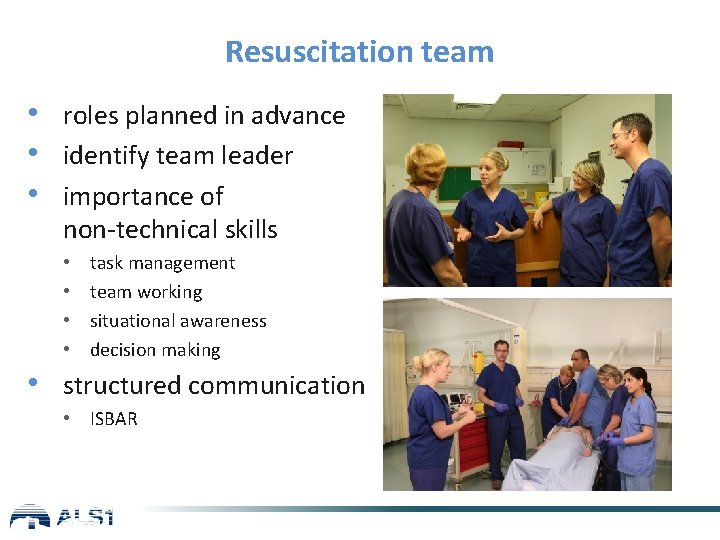
Resuscitation team • roles planned in advance • identify team leader • importance of non-technical skills • • task management team working situational awareness decision making • structured communication • ISBAR
ALS algorithm • ALS 1 providers should use those skills in which they are proficient • if using an AED (or SAED) – switch on and follow the prompts • ensure high quality chest compressions • ensure expert help is coming

Adult ALS algorithm
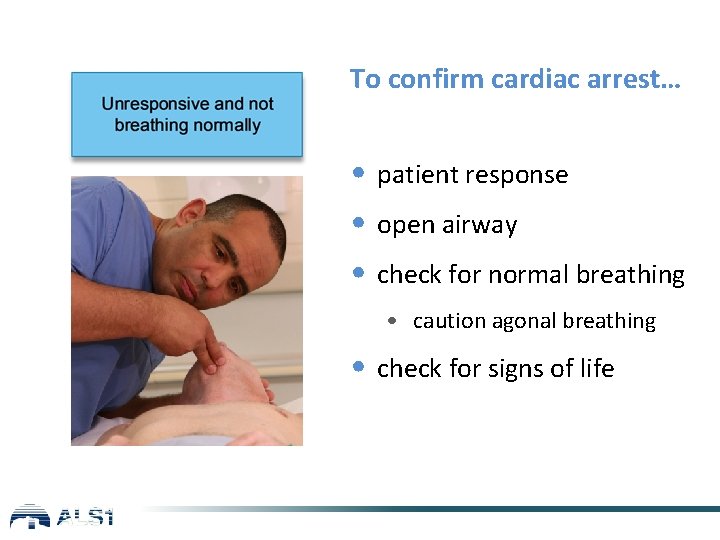
To confirm cardiac arrest… • patient response • open airway • check for normal breathing • caution agonal breathing • check for signs of life
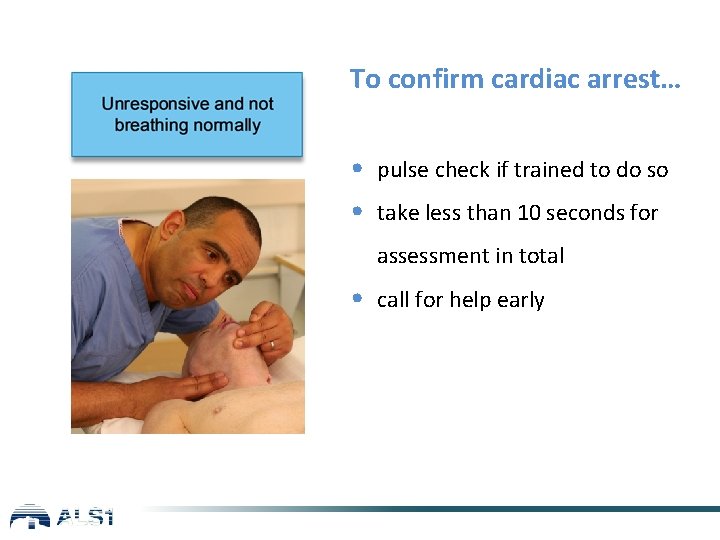
To confirm cardiac arrest… • pulse check if trained to do so • take less than 10 seconds for assessment in total • call for help early
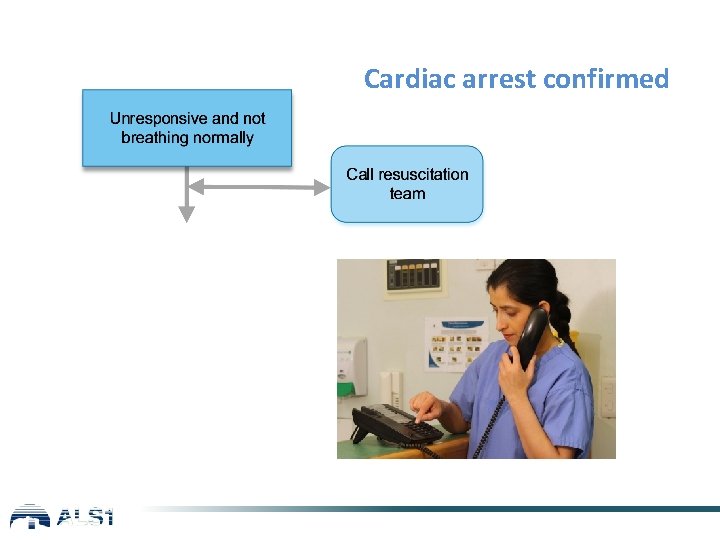
Cardiac arrest confirmed
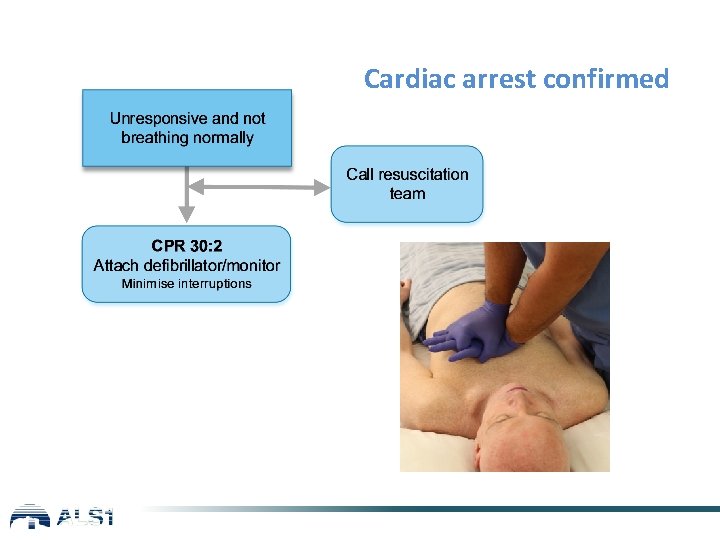
Cardiac arrest confirmed
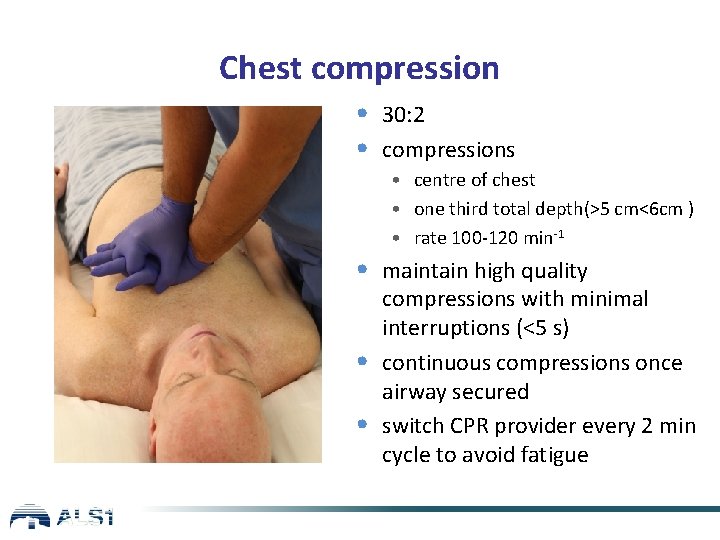
Chest compression • 30: 2 • compressions • centre of chest • one third total depth(>5 cm<6 cm ) • rate 100 -120 min-1 • maintain high quality • • compressions with minimal interruptions (<5 s) continuous compressions once airway secured switch CPR provider every 2 min cycle to avoid fatigue
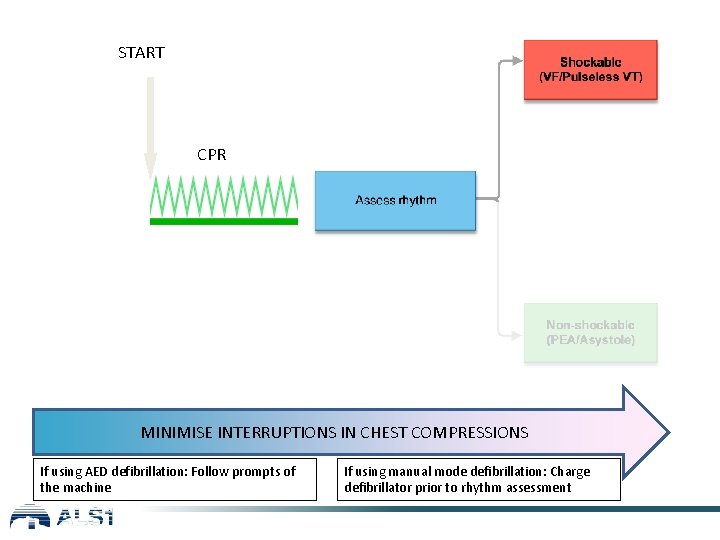
START CPR MINIMISE INTERRUPTIONS IN CHEST COMPRESSIONS If using AED defibrillation: Follow prompts of the machine If using manual mode defibrillation: Charge defibrillator prior to rhythm assessment
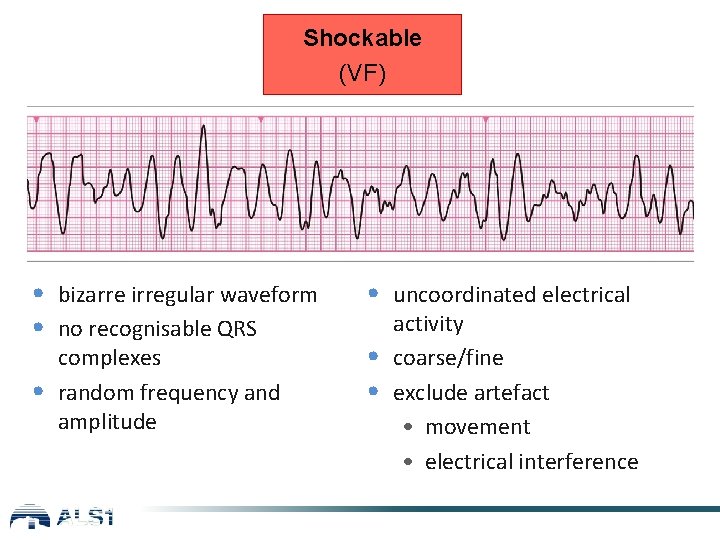
Shockable (VF) • bizarre irregular waveform • no recognisable QRS • complexes random frequency and amplitude • uncoordinated electrical • • activity coarse/fine exclude artefact • movement • electrical interference
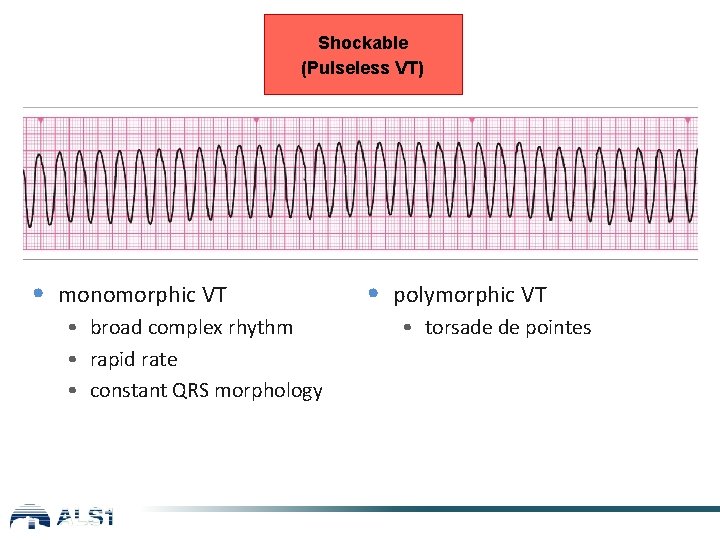
Shockable (Pulseless VT) • monomorphic VT • broad complex rhythm • rapid rate • constant QRS morphology • polymorphic VT • torsade de pointes
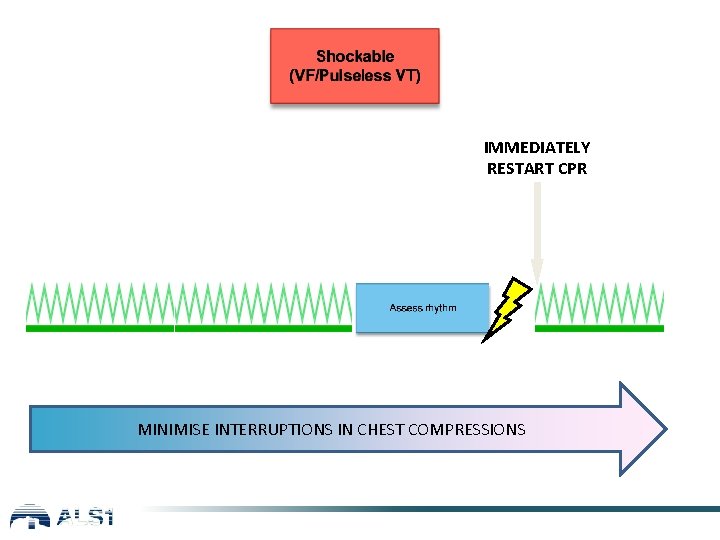
IMMEDIATELY RESTART CPR MINIMISE INTERRUPTIONS IN CHEST COMPRESSIONS
Automated External Defibrillation • if not confident in rhythm recognition use an AED (or an SAED) • start CPR whilst awaiting AED to arrive • switch on and follow AED prompts
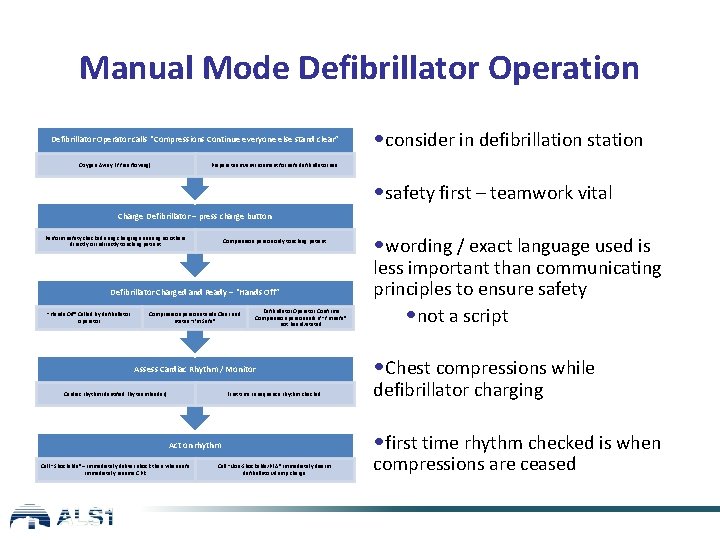
Manual Mode Defibrillator Operation Defibrillator Operator calls “Compressions Continue everyone else stand clear” Oxygen Away (if free flowing) • consider in defibrillation station Prepare team/environment for safe defibrillator use • safety first – teamwork vital Charge Defibrillator – press charge button Perform safety checks during charging ensuring no others directly or indirectly touching patient Compression person only touching patient Defibrillator Charged and Ready – “Hands Off” Called by defibrillator operator Compression person stands Clear and states “I’m Safe” Defibrillator Operator Confirms Compression person safe if “I’m safe” not heard/stated Assess Cardiac Rhythm / Monitor Cardiac rhythm identified (by team leader) First time in sequence rhythm checked Act on rhythm Call “Shockable” – Immediately deliver shock then when safe immediately resume CPR Call “Non-Shockable/PEA” Immediately disarm defibrillator/dump charge • wording / exact language used is less important than communicating principles to ensure safety • not a script • Chest compressions while defibrillator charging • first time rhythm checked is when compressions are ceased
Manual defibrillation energies • vary with manufacturer • check local equipment • if unsure, deliver highest available energy • DO NOT DELAY SHOCK • energy levels for defibrillators on this course…
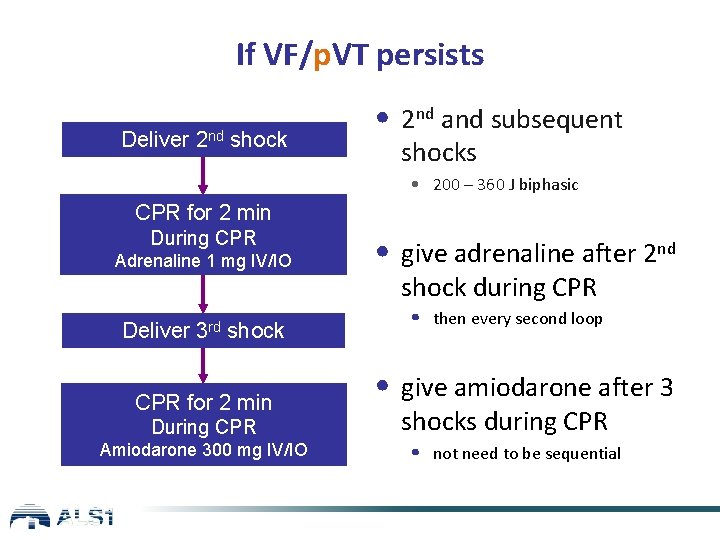
If VF/p. VT persists Deliver 2 nd shock • 2 nd and subsequent shocks • 200 – 360 J biphasic CPR for 2 min During CPR Adrenaline 1 mg IV/IO Deliver 3 rd shock CPR for 2 min During CPR Amiodarone 300 mg IV/IO • give adrenaline after 2 nd shock during CPR • then every second loop • give amiodarone after 3 shocks during CPR • not need to be sequential
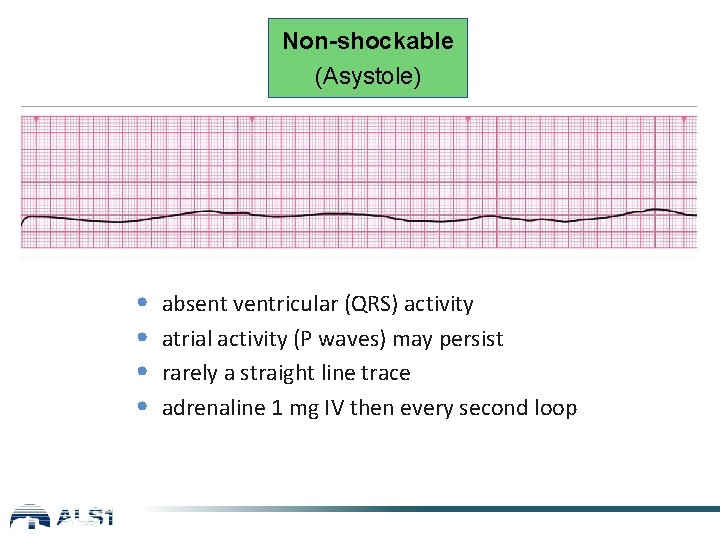
Non-shockable (Asystole) • • absent ventricular (QRS) activity atrial activity (P waves) may persist rarely a straight line trace adrenaline 1 mg IV then every second loop

Non-shockable (PEA) • clinical features of cardiac arrest • ECG normally associated with an output • adrenaline 1 mg IV then every second loop
Airway and ventilation During CPR Airway adjuncts (LMA/ETT) Oxygen Waveform capnography IV/IO access Plan actions before interrupting compressions (e. g. charge manual defibrillator) • secure airway: • supraglottic airway device (e. g. LMA, i-gel) • tracheal tube • do not attempt intubation unless trained and competent to do so • once airway secured, if possible, do not interrupt chest compressions for ventilation • avoid hyperventilation • waveform capnography
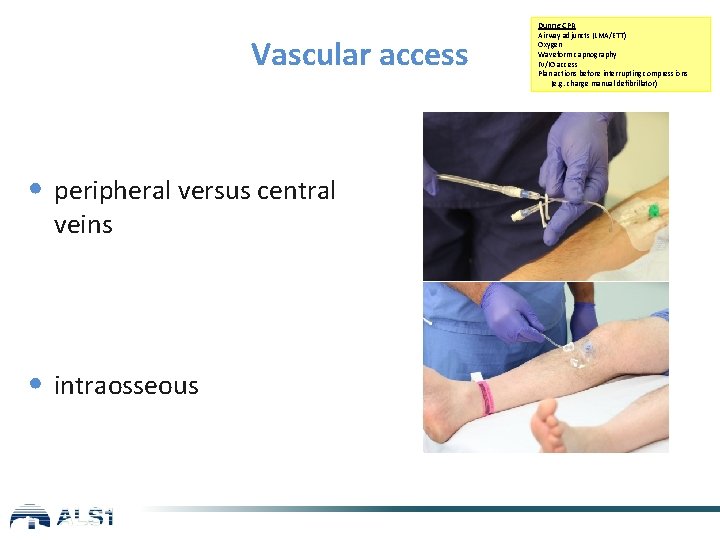
Vascular access • peripheral versus central veins • intraosseous During CPR Airway adjuncts (LMA/ETT) Oxygen Waveform capnography IV/IO access Plan actions before interrupting compressions (e. g. charge manual defibrillator)
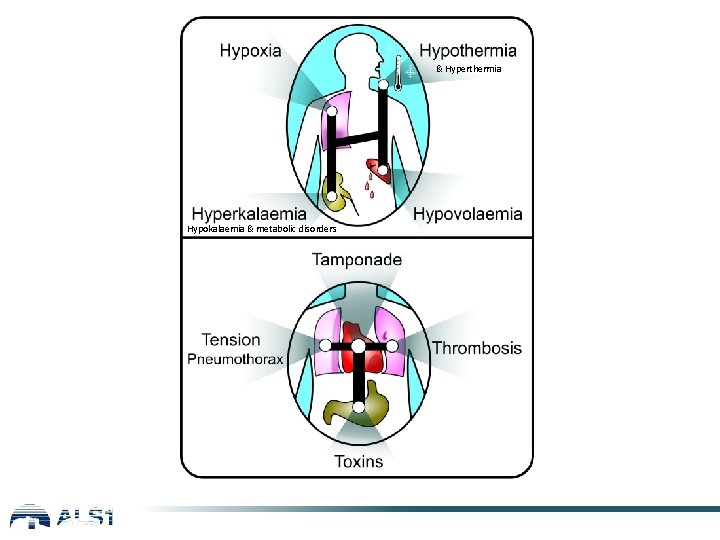
& Hyperthermia Hypokalaemia & metabolic disorders
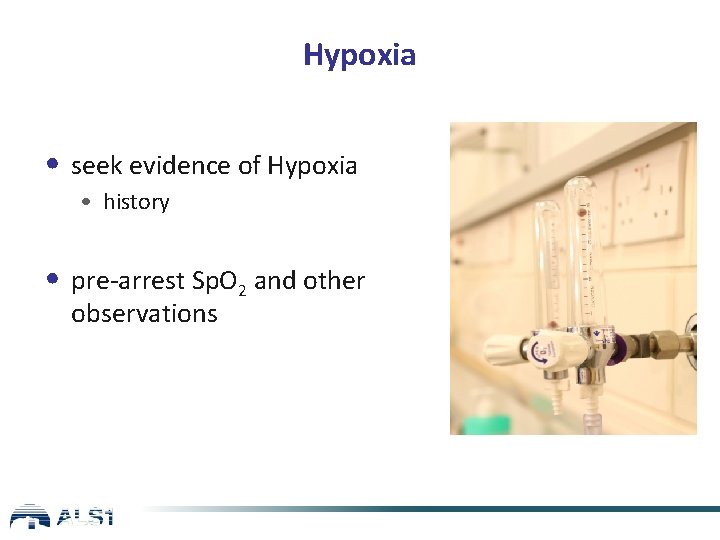
Hypoxia • seek evidence of Hypoxia • history • pre-arrest Sp. O 2 and other observations
Oxygen in Cardiopulmonary Arrest • ensure patent airway • give as much oxygen as possible • No evidence in adults on best Fi. O 2 • Sp. O 2 measurement dependent on perfusion • consider advanced airway • avoid hyperventilation
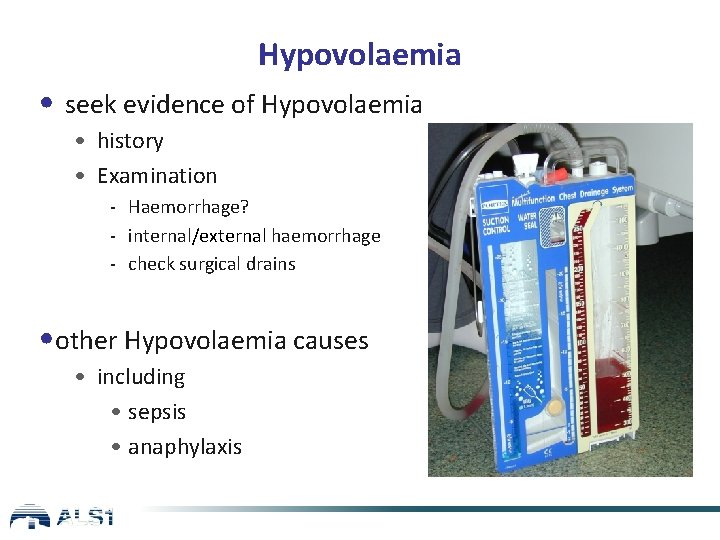
Hypovolaemia • seek evidence of Hypovolaemia • history • Examination - Haemorrhage? - internal/external haemorrhage - check surgical drains • other Hypovolaemia causes • including • sepsis • anaphylaxis
Hypovolaemia • all Hypovolaemia • IV fluids • If haemorrhage • control haemorrhage • give intravenous fluids/blood • Universal donor - Type specific – Cross Matched • restriction to flow (e. g. Thrombus/Tamponade/Pneumothorax) • give IV fluids with otherapeutic measures
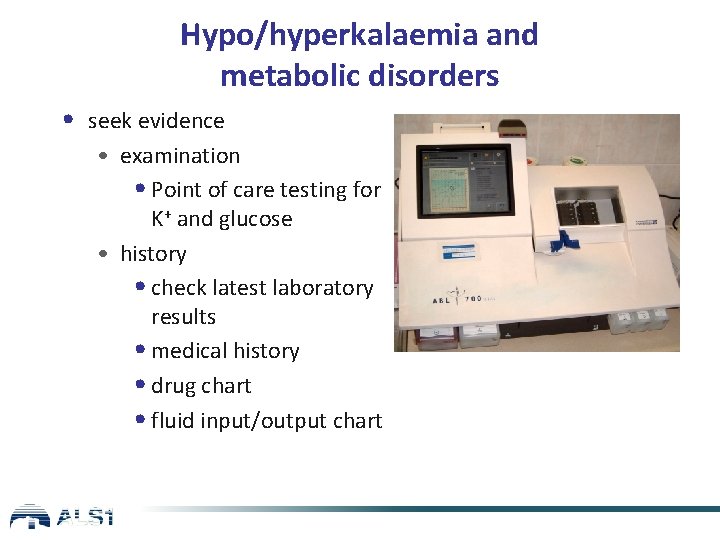
Hypo/hyperkalaemia and metabolic disorders • seek evidence • examination • Point of care testing for K+ and glucose • history • check latest laboratory results • medical history • drug chart • fluid input/output chart
Potassium Disorders • Hyperkalaemia • calcium chloride • calcium gluconate – if chloride unavailable • IV/IO insulin (10 units - short acting) / dextrose (25 g) • consider sodium bicarbonate • IV fluids • Hypokalaemia/ hypomagnesaemia • electrolyte supplementation • KCL 5 mmol bolus and consider 2 g Mg++
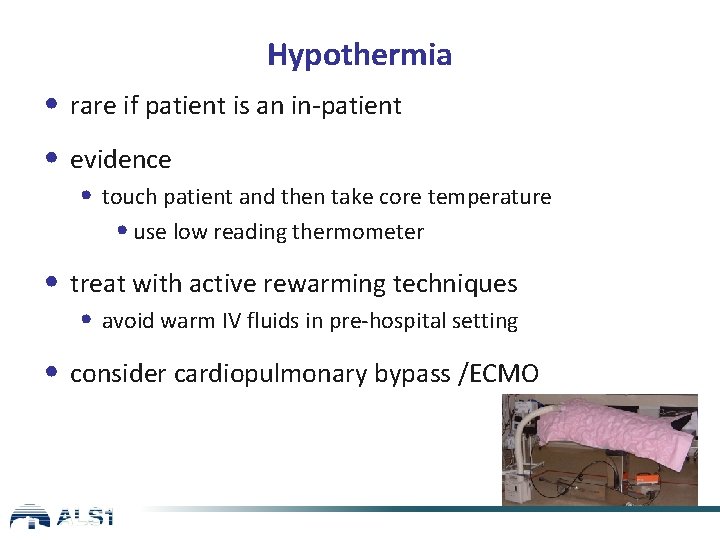
Hypothermia • rare if patient is an in-patient • evidence • touch patient and then take core temperature • use low reading thermometer • treat with active rewarming techniques • avoid warm IV fluids in pre-hospital setting • consider cardiopulmonary bypass /ECMO
Hyperthermia • core temp >40. 6 C • consider cause: • prolonged exercise in hot conditions/dehydration • drug toxicity, MDMA, malignant hyperthermia, thyroid storm • heat stroke can resemble septic shock • rhabdomyolysis, coagulopathy issues
Hyperthermia Treatment • rapid cooling to 39 C (similar techniques to TTM) • large fluid volumes – & correct electrolyte abnormalities/acidosis • no specific medications for heat stroke effective – dantrolene for anaesthetic agent reactions (and some MDMA)
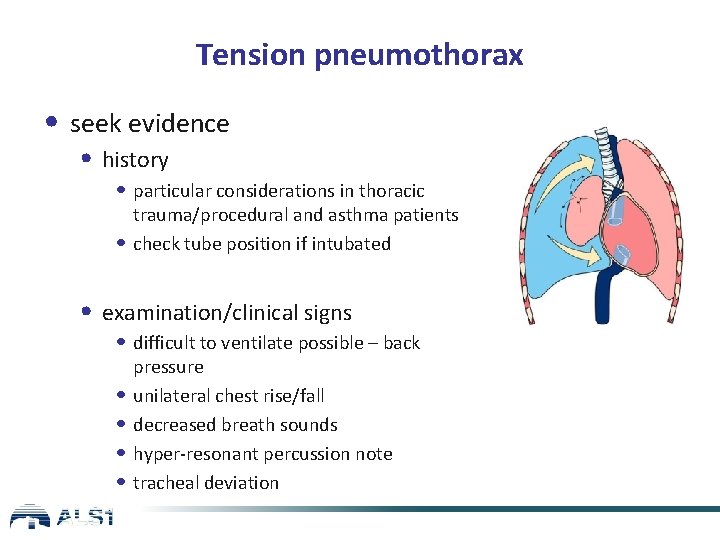
Tension pneumothorax • seek evidence • history • particular considerations in thoracic trauma/procedural and asthma patients • check tube position if intubated • examination/clinical signs • difficult to ventilate possible – back pressure • unilateral chest rise/fall • decreased breath sounds • hyper-resonant percussion note • tracheal deviation
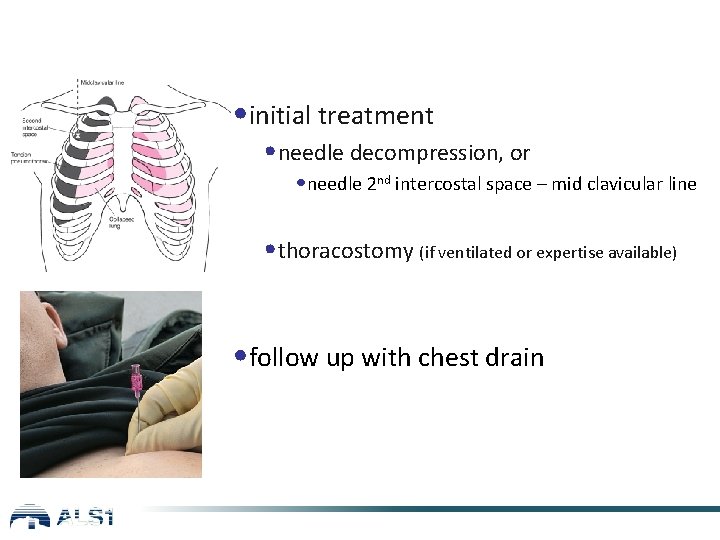
• initial treatment • needle decompression, or • needle 2 nd intercostal space – mid clavicular line • thoracostomy (if ventilated or expertise available) • follow up with chest drain
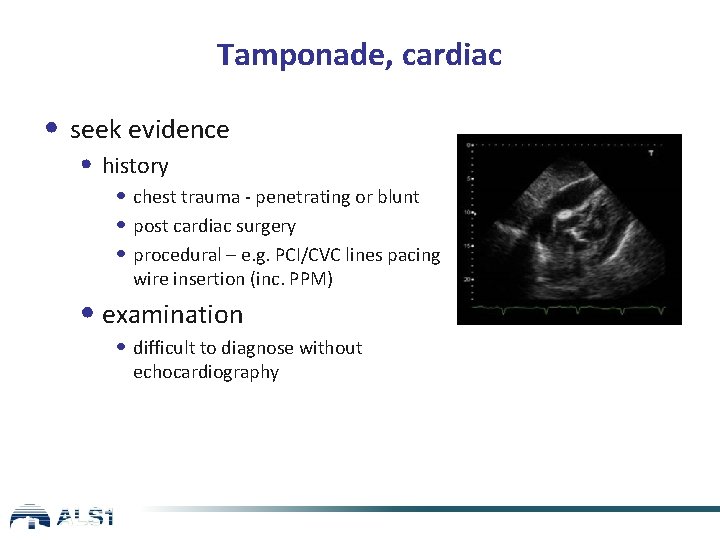
Tamponade, cardiac • seek evidence • history • chest trauma - penetrating or blunt • post cardiac surgery • procedural – e. g. PCI/CVC lines pacing wire insertion (inc. PPM) • examination • difficult to diagnose without echocardiography
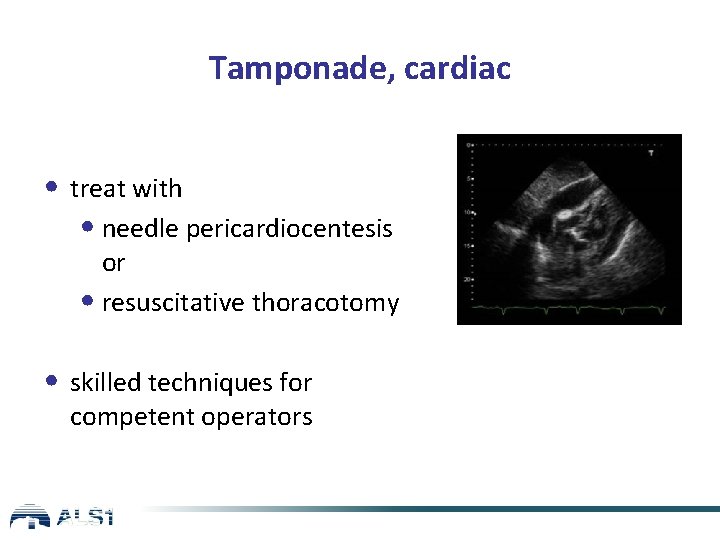
Tamponade, cardiac • treat with • needle pericardiocentesis or • resuscitative thoracotomy • skilled techniques for competent operators
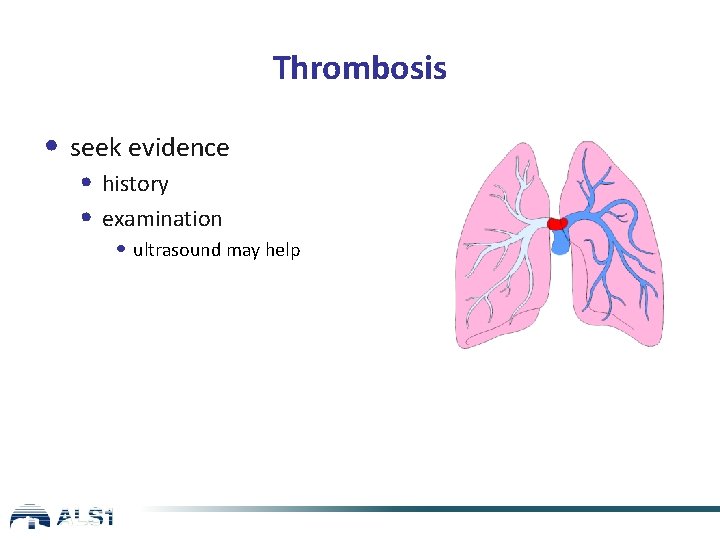
Thrombosis • seek evidence • history • examination • ultrasound may help
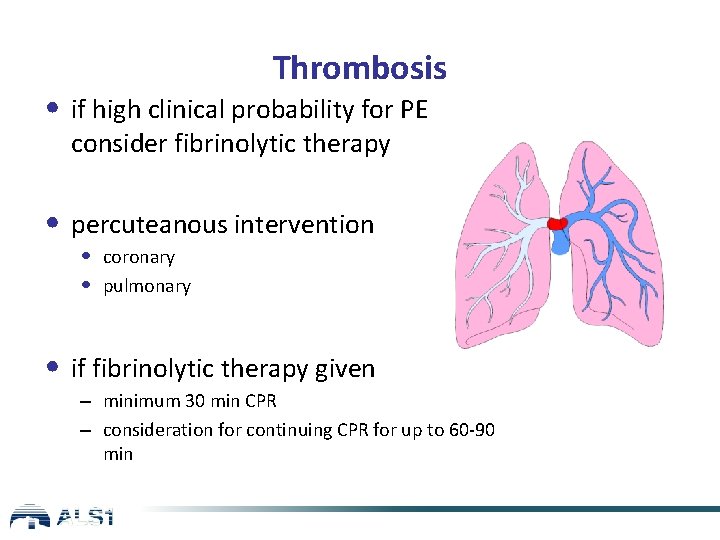
Thrombosis • if high clinical probability for PE consider fibrinolytic therapy • percuteanous intervention • coronary • pulmonary • if fibrinolytic therapy given – minimum 30 min CPR – consideration for continuing CPR for up to 60 -90 min
Toxins • seek evidence • history • review all medication prescription charts • rare unless evidence of deliberate overdose • recreational drug usage complicated by purity / polypharmacy • examination • difficult
Toxins • specific antidotes • evidence during arrest poor
Other considerations during CPR • ultrasound • mechanical chest compression devices if • prolonged CPR • facilitate transport • facilitate safe angiography/radiological intervention • extracorporeal CPR
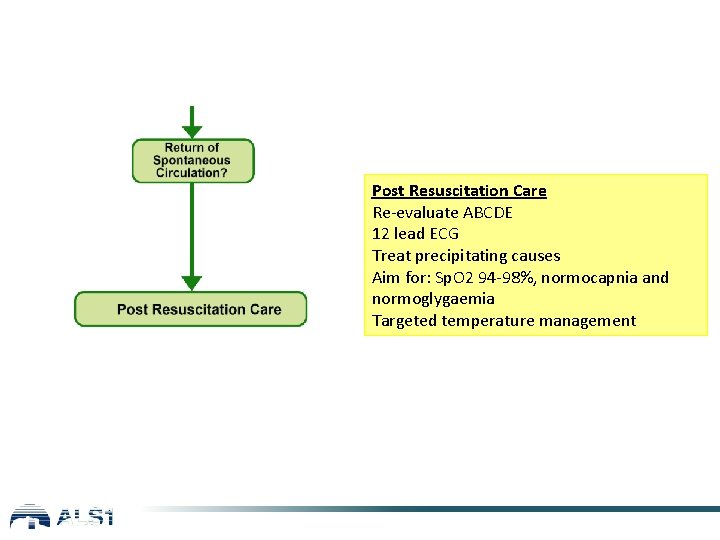
Post Resuscitation Care Re-evaluate ABCDE 12 lead ECG Treat precipitating causes Aim for: Sp. O 2 94 -98%, normocapnia and normoglygaemia Targeted temperature management

Any questions?
Summary • minimise interruptions in high quality chest compressions • use of the ARC ALS algorithm • work within own skill limitations • correct reversible causes of cardiac arrest • role of resuscitation team
Advanced Life Support
- Slides: 45