
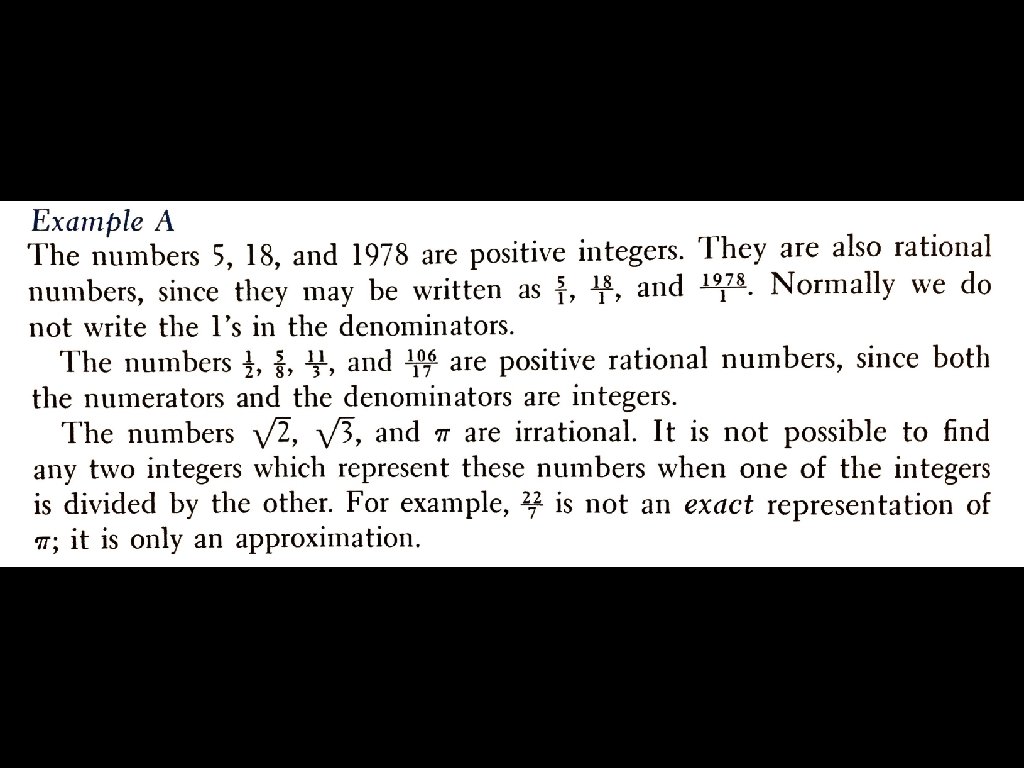
BASIC ALGEBRA Give examples of positive rational integers
BASIC ALGEBRA
Give examples of positive rational integers
Define a positive rational number
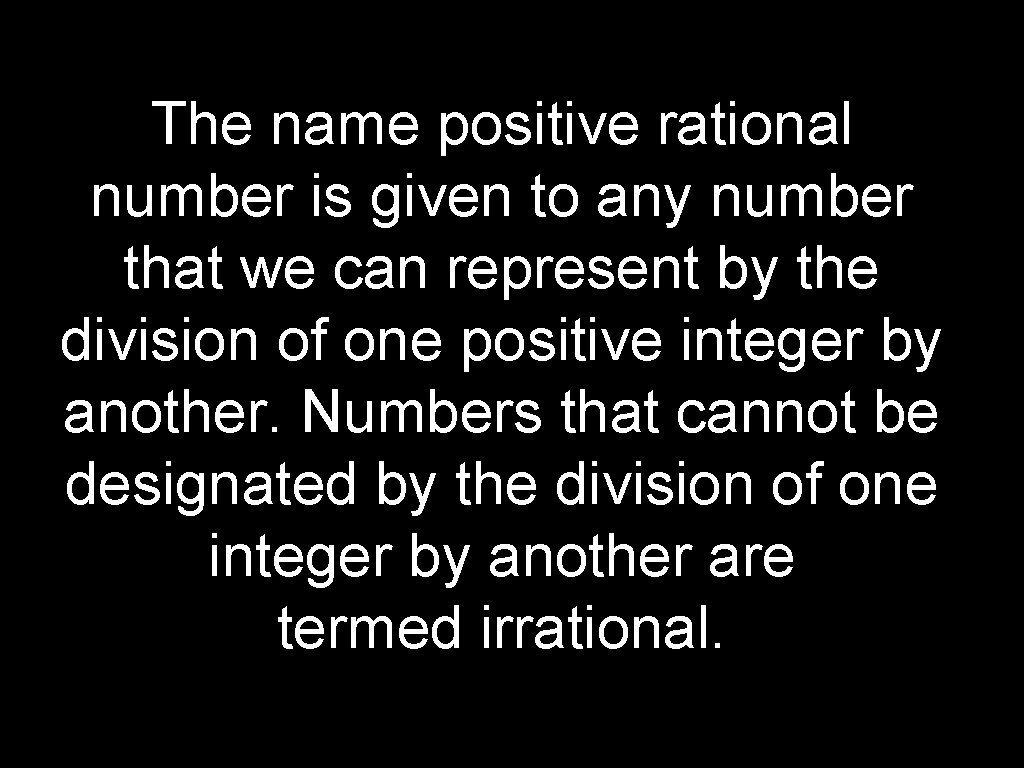
The name positive rational number is given to any number that we can represent by the division of one positive integer by another. Numbers that cannot be designated by the division of one integer by another are termed irrational.

Give examples of negative integers
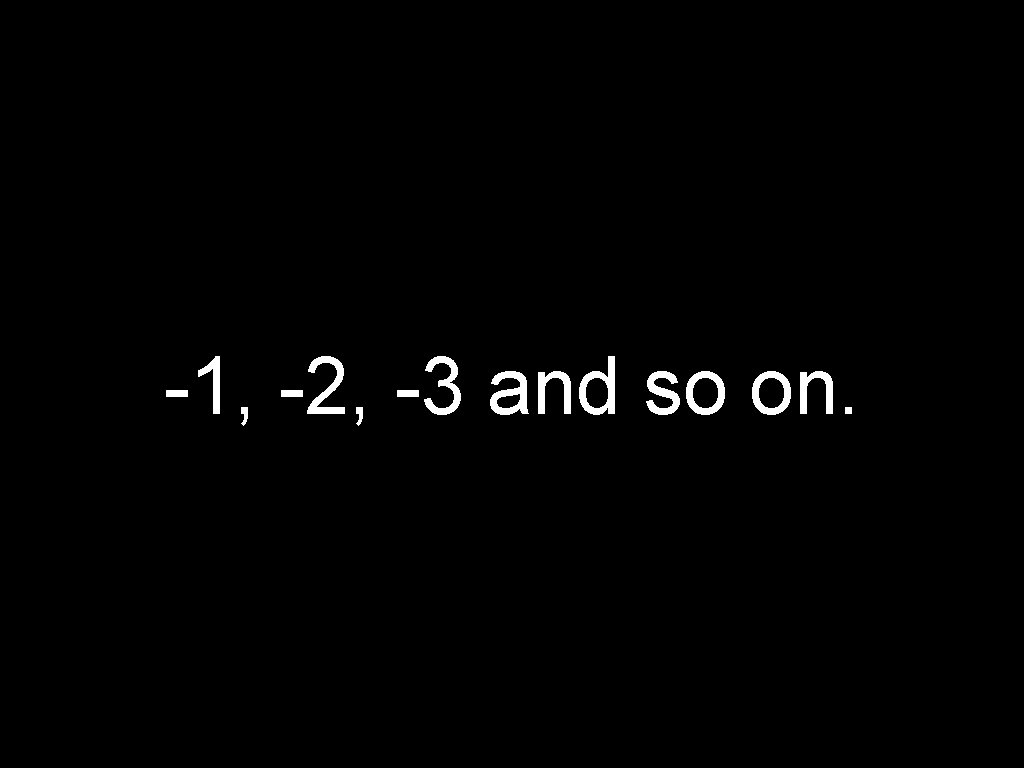
-1, -2, -3 and so on.

Is zero an integer?

Yes, but is neither positive nor negative
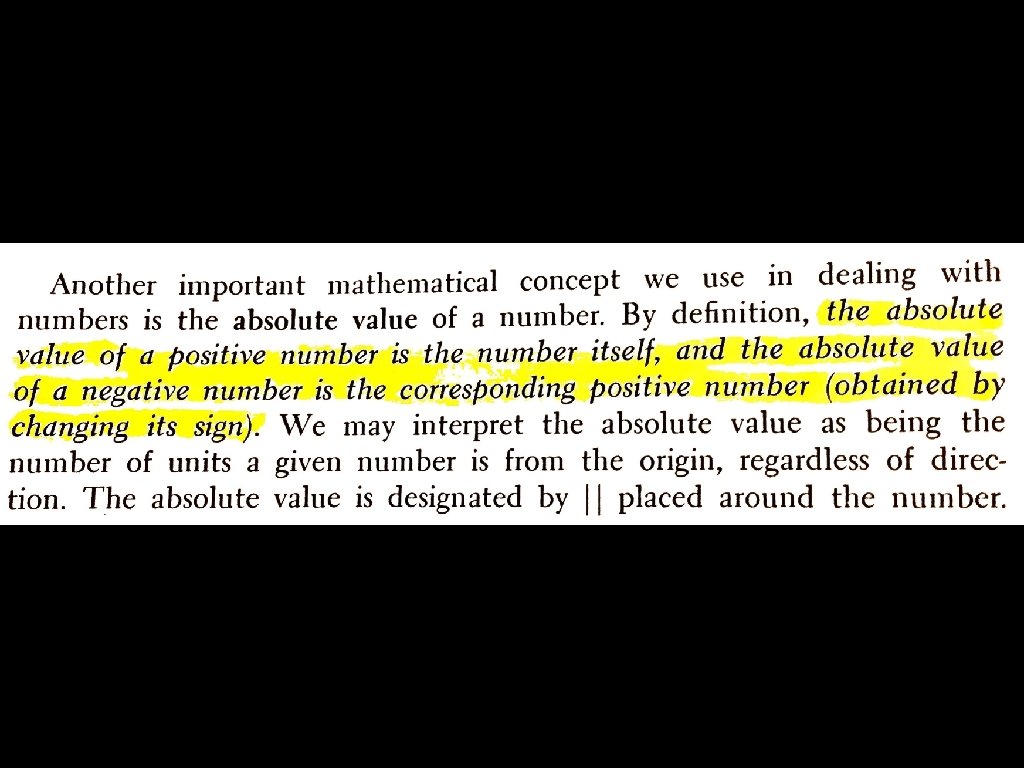
Define the absolute value of a number
Define the reciprocal of a number
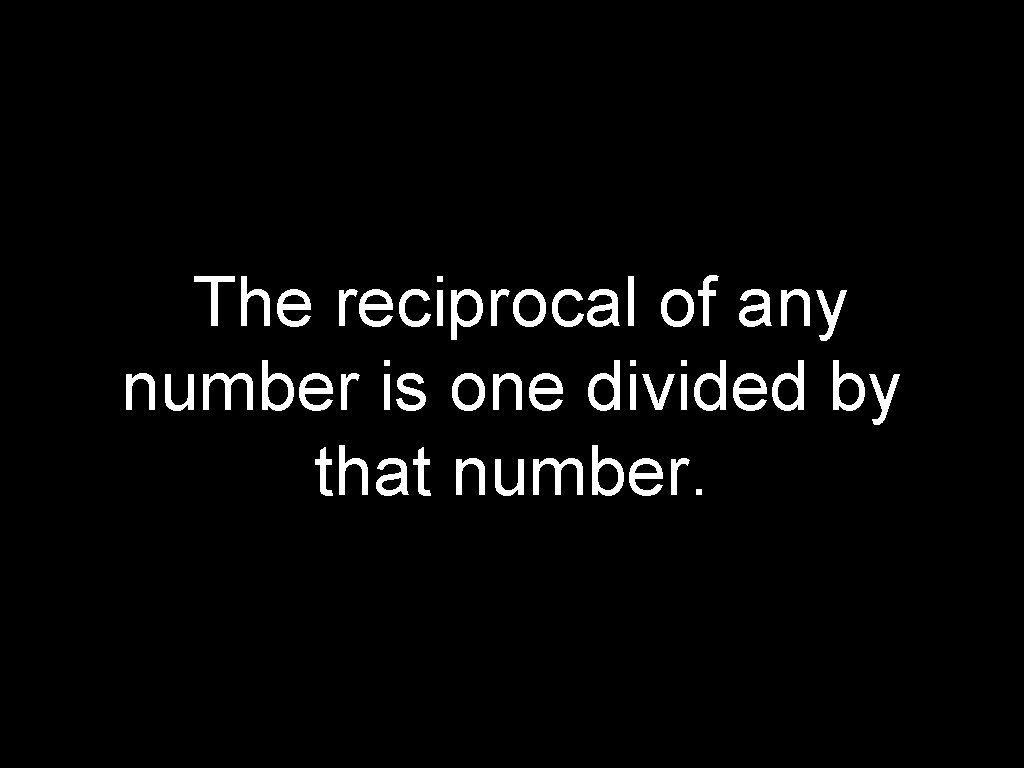
The reciprocal of any number is one divided by that number.
What is the commutative law of addition?
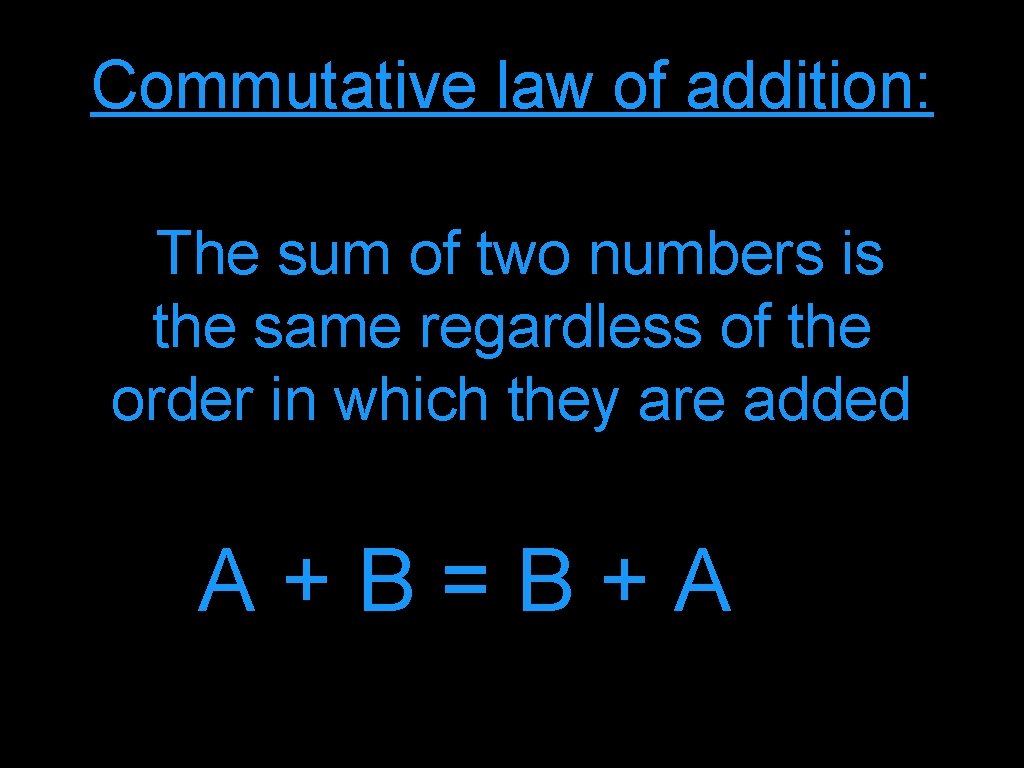
Commutative law of addition: The sum of two numbers is the same regardless of the order in which they are added A+B=B+A
What is the associative law for addition?
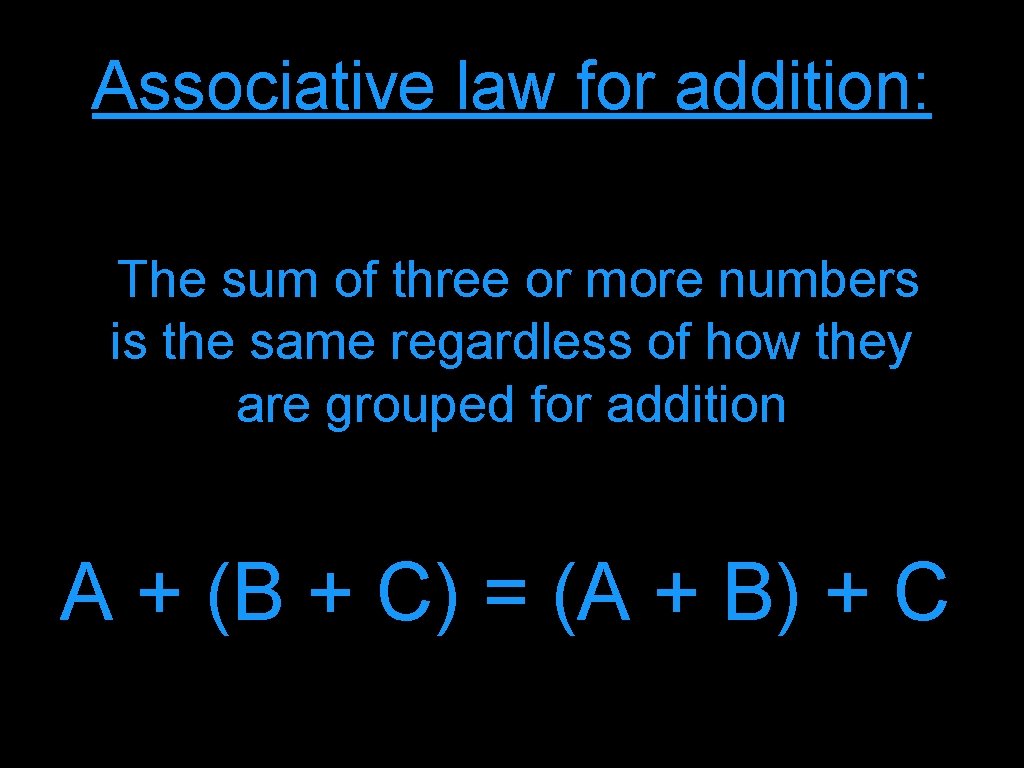
Associative law for addition: The sum of three or more numbers is the same regardless of how they are grouped for addition A + (B + C) = (A + B) + C
Write in symbolic form the associative and commutative laws of multiplication
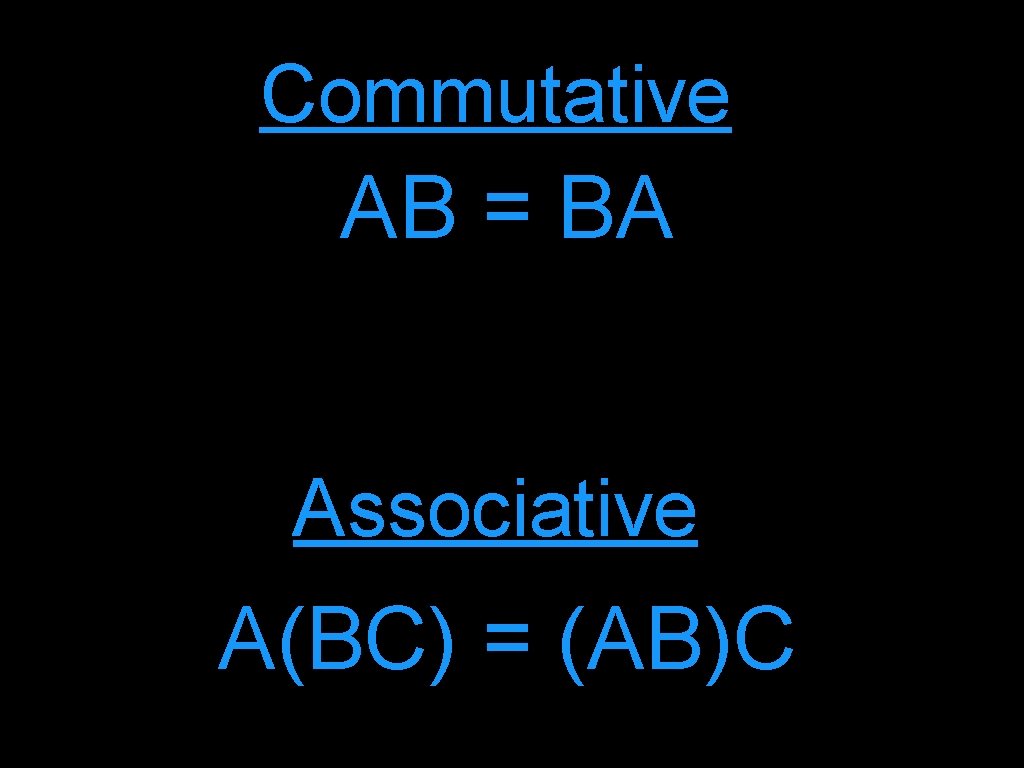
Commutative AB = BA Associative A(BC) = (AB)C
Give an example of the distributive law
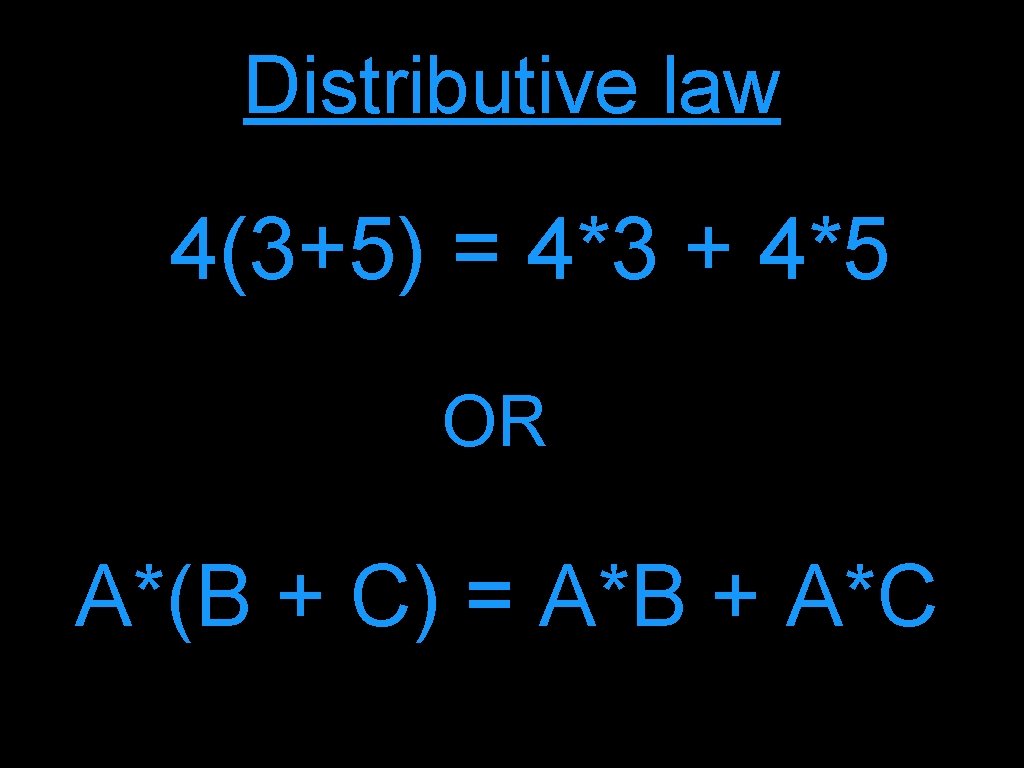
Distributive law 4(3+5) = 4*3 + 4*5 OR A*(B + C) = A*B + A*C
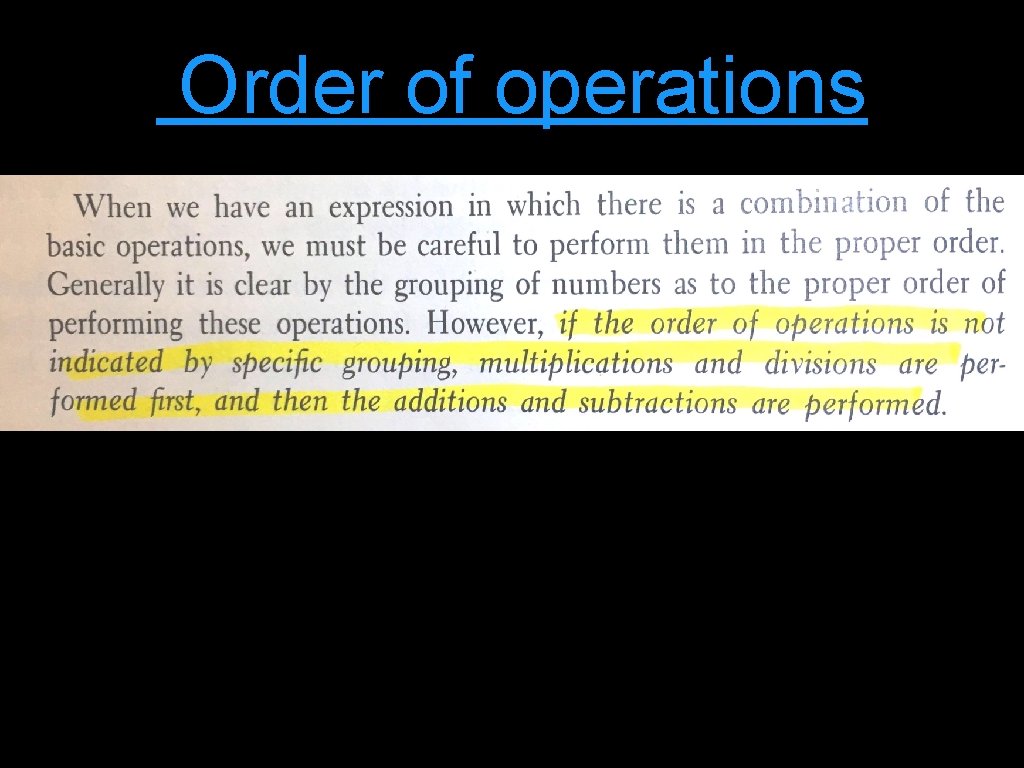
Order of operations
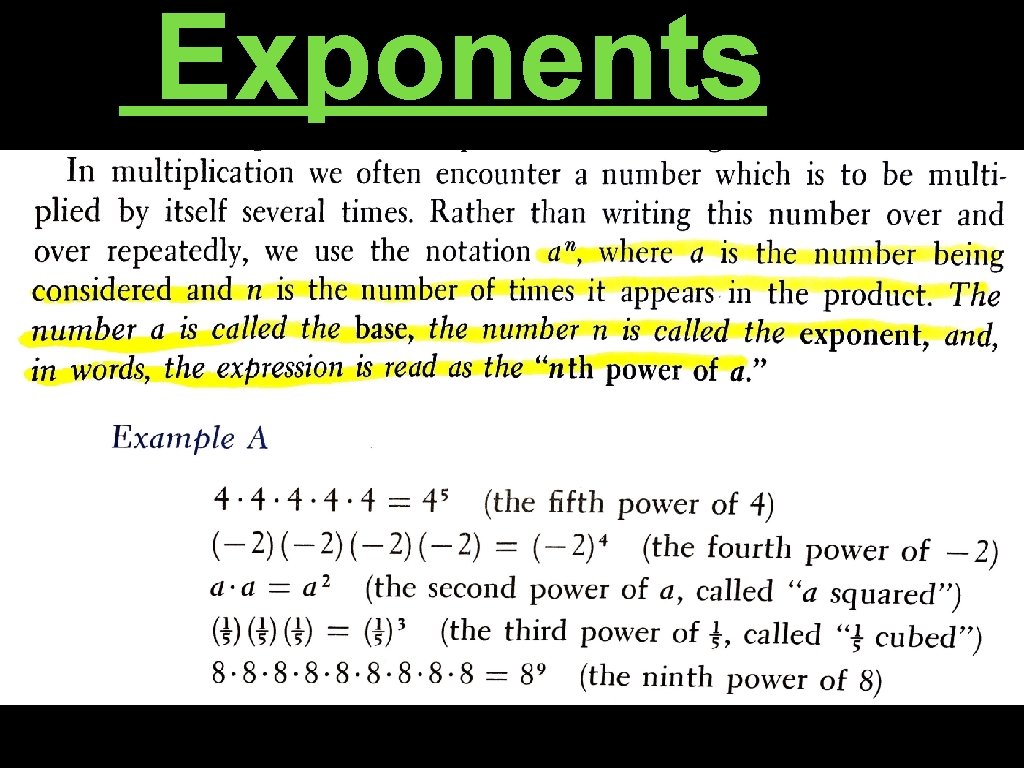
Exponents

Operations for exponents
Only exponents with the same base may be combined
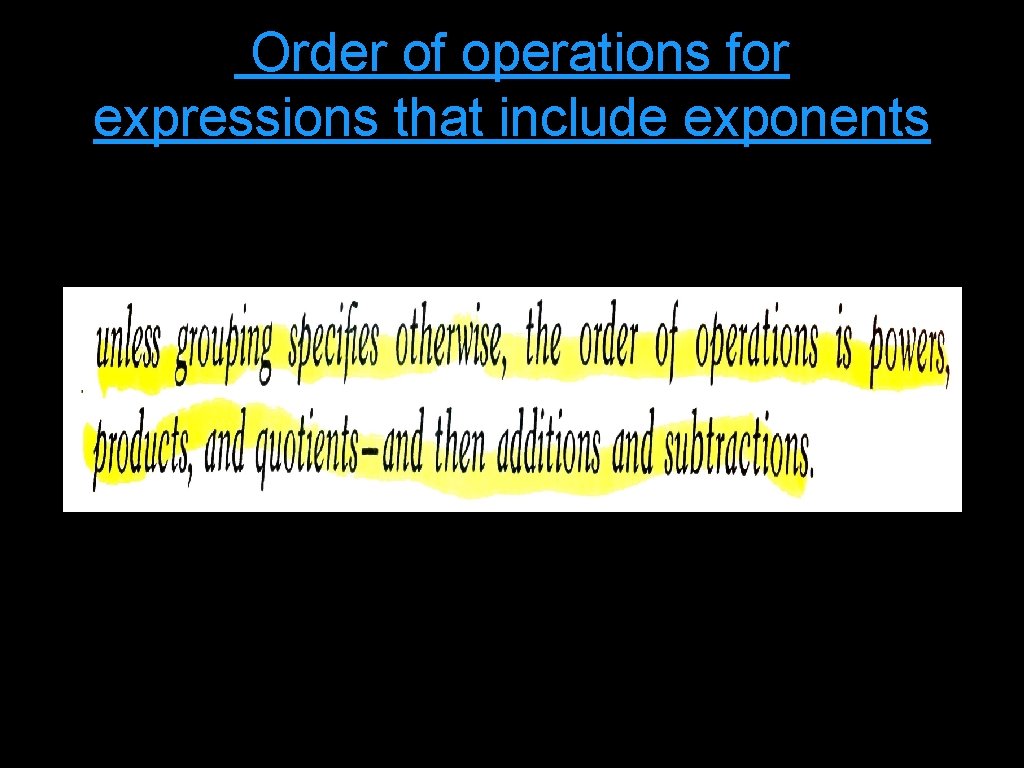
Order of operations for expressions that include exponents
Exponents - Self Test The following slides contain simple questions on solving basic exponent equations. The slide following each question contains the answer to that question NOTE: Using only odd numbered questions.
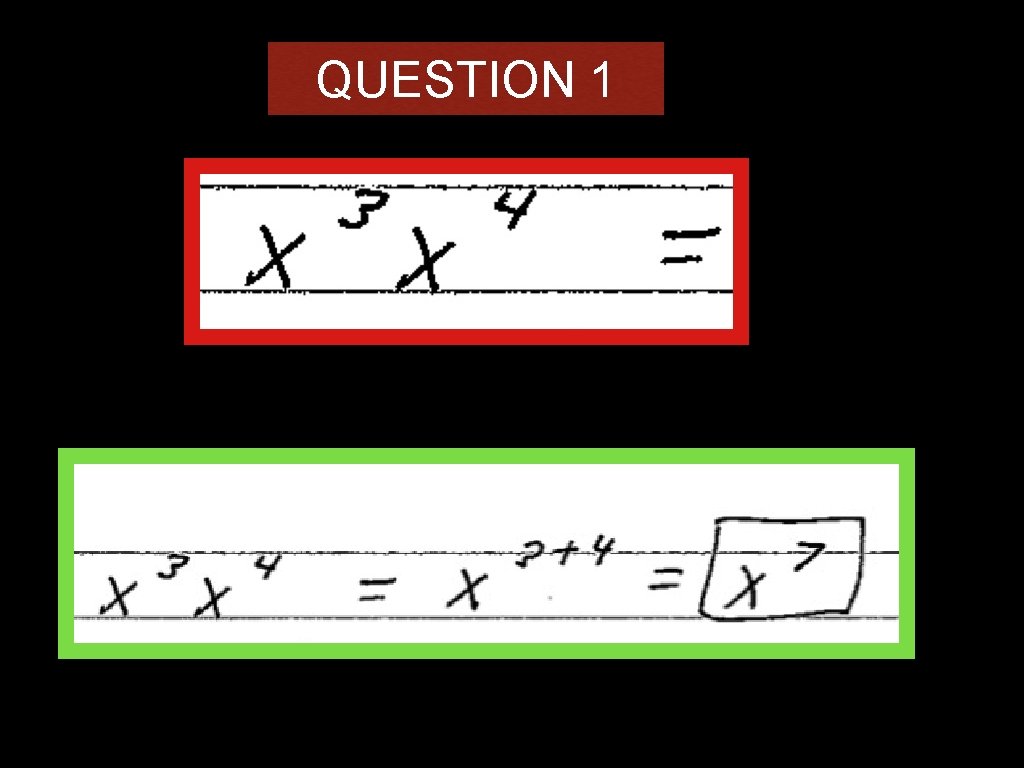
QUESTION 1
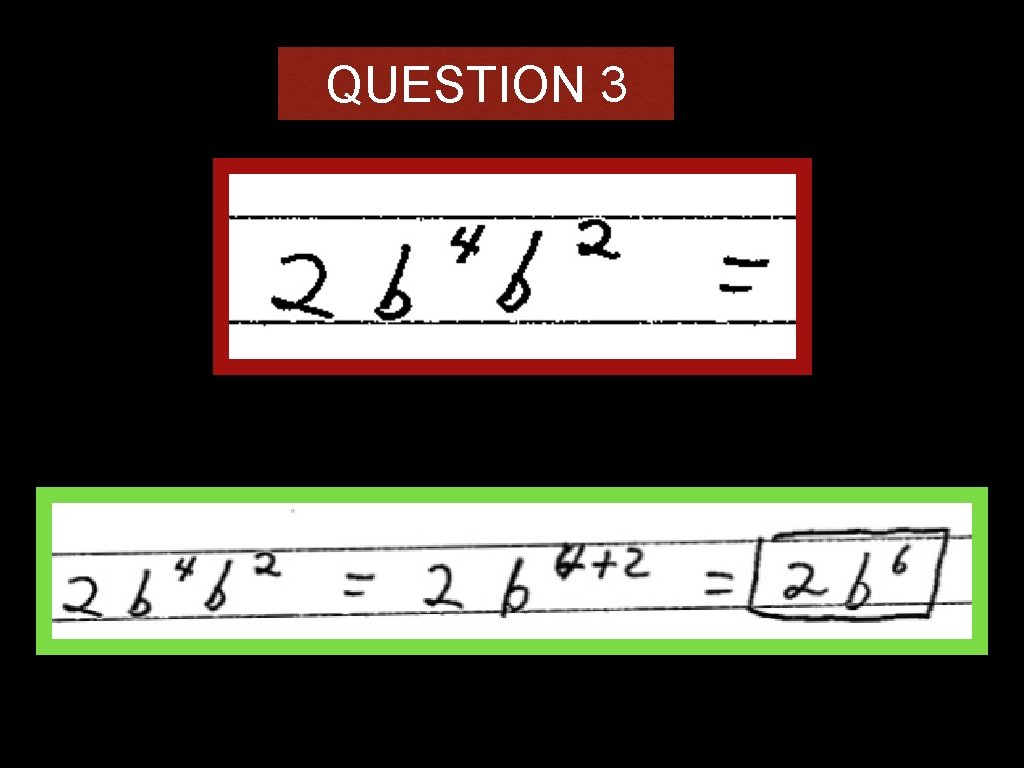
QUESTION 3
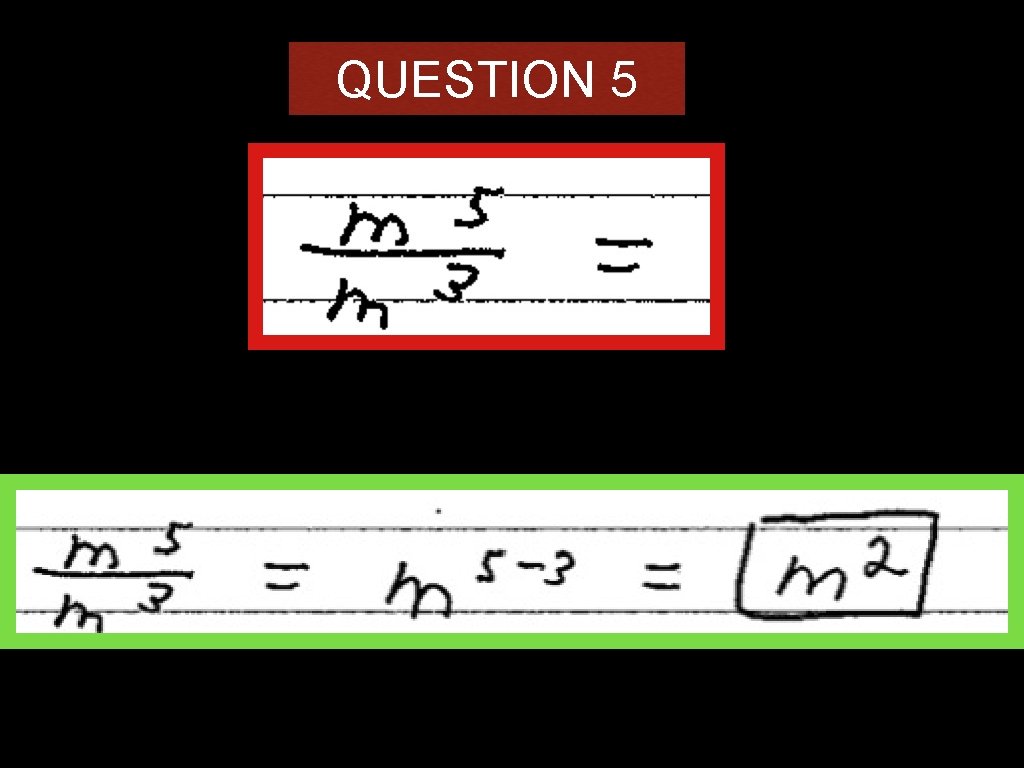
QUESTION 5
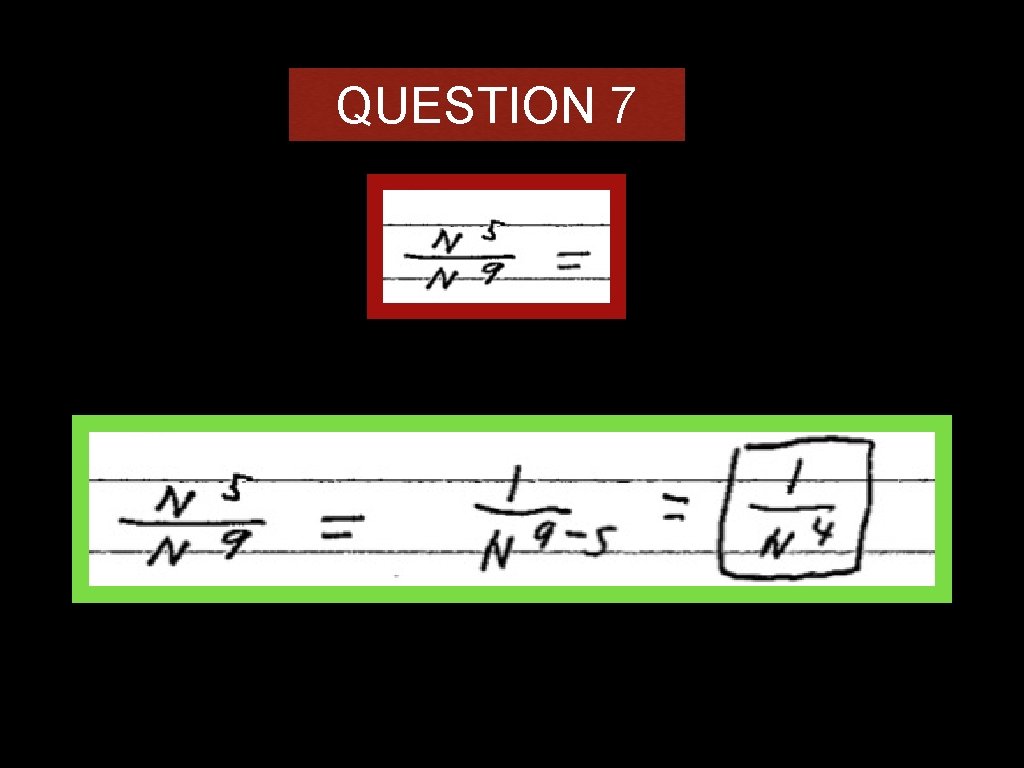
QUESTION 7
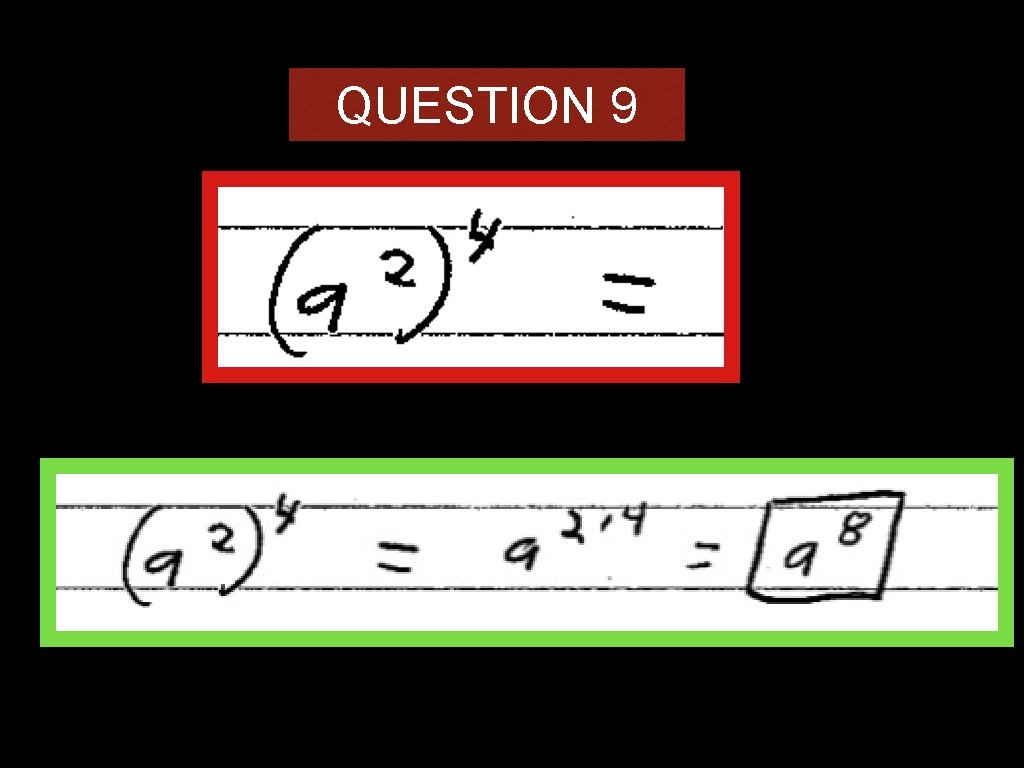
QUESTION 9
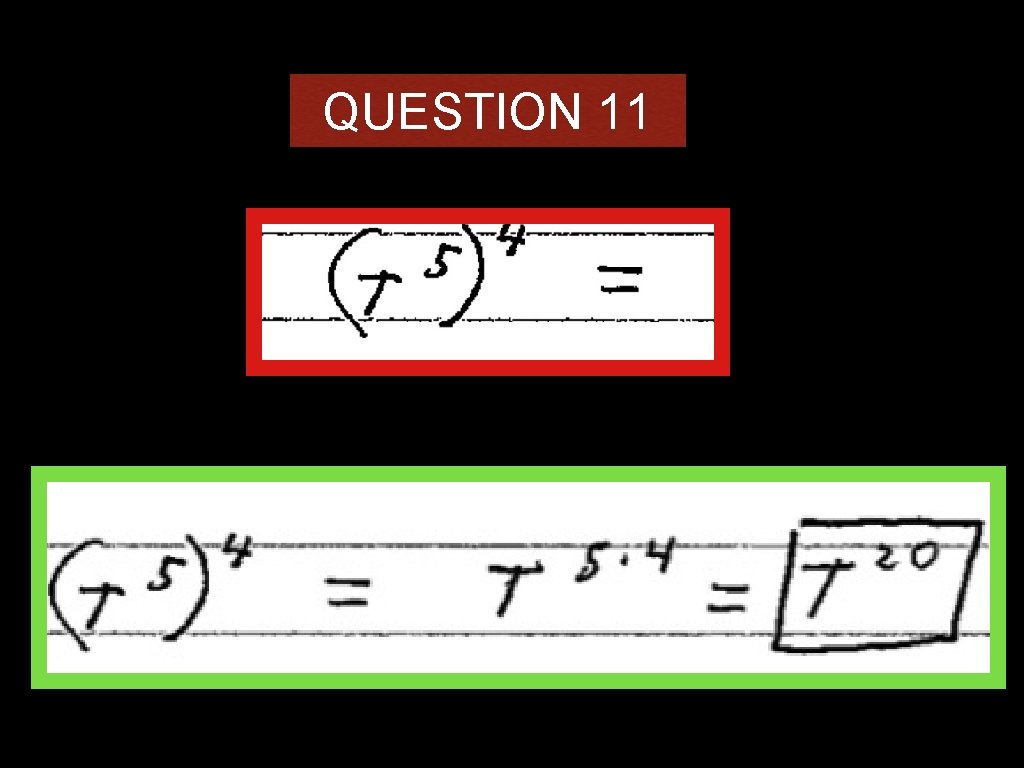
QUESTION 11
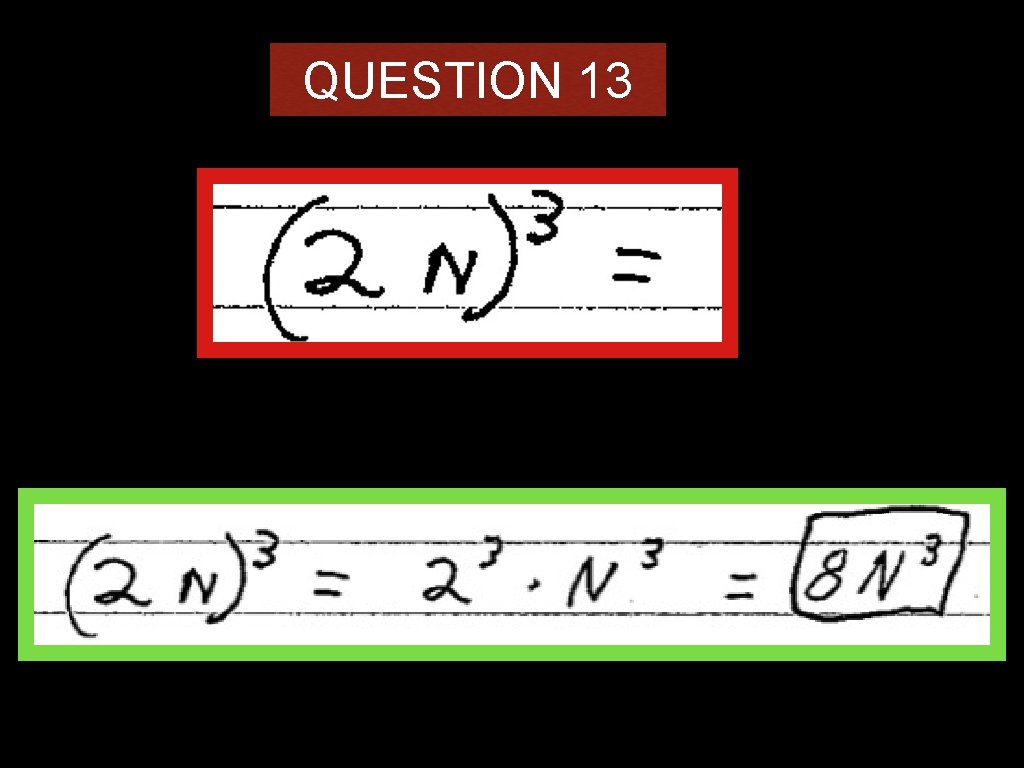
QUESTION 13
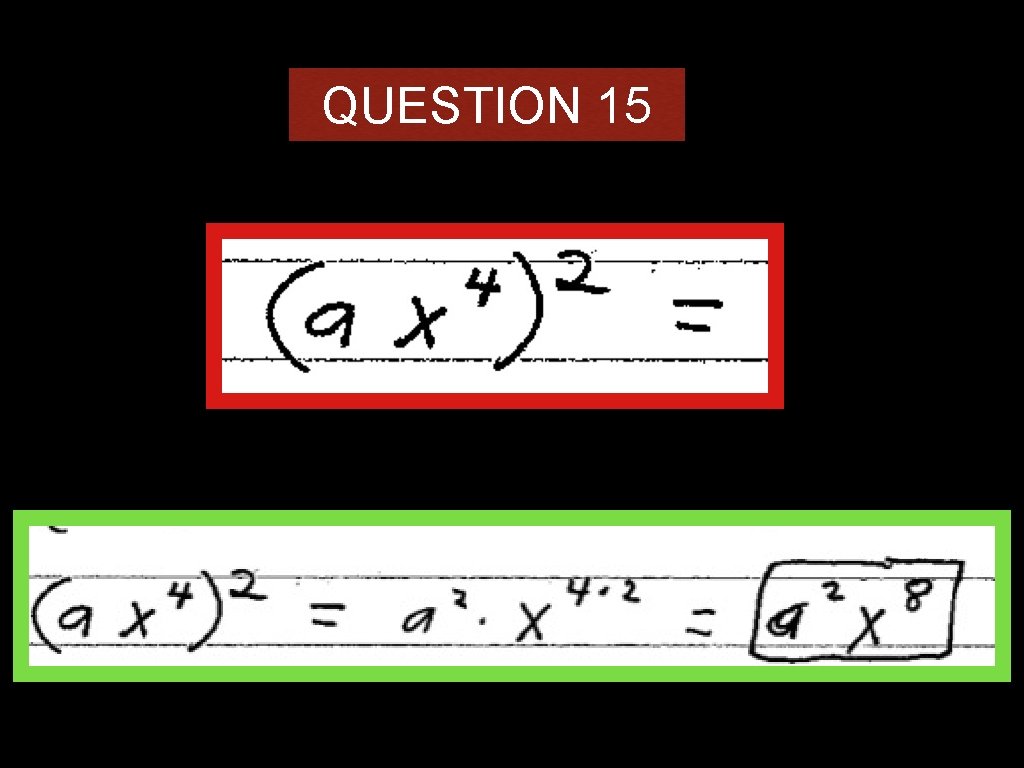
QUESTION 15
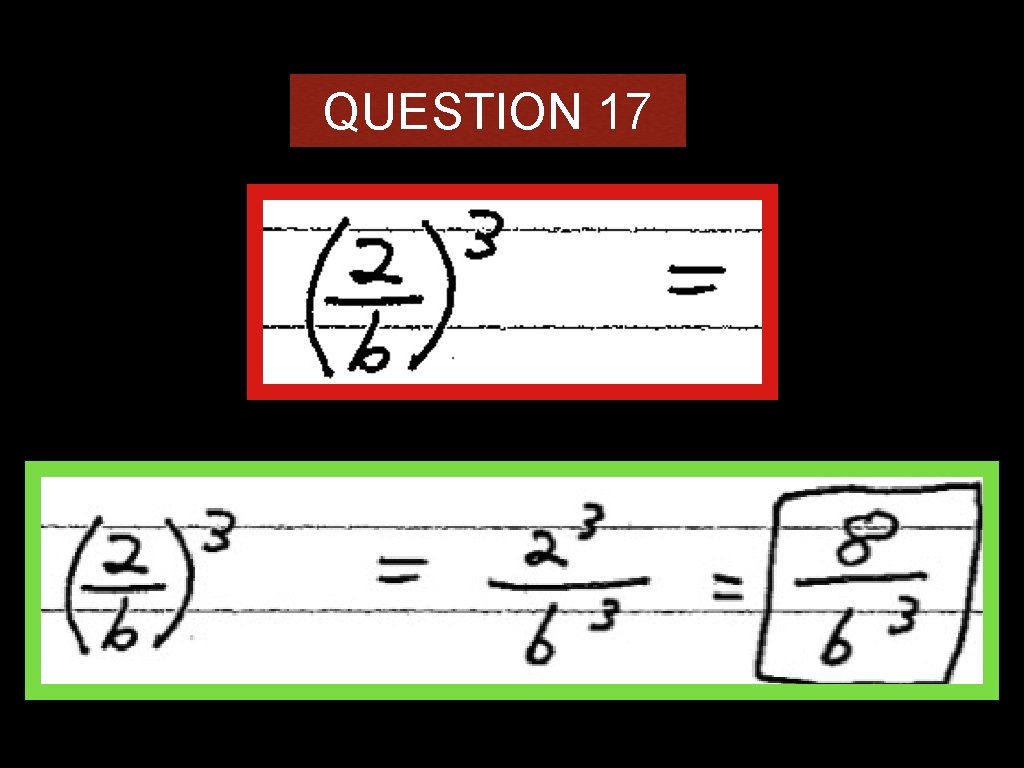
QUESTION 17
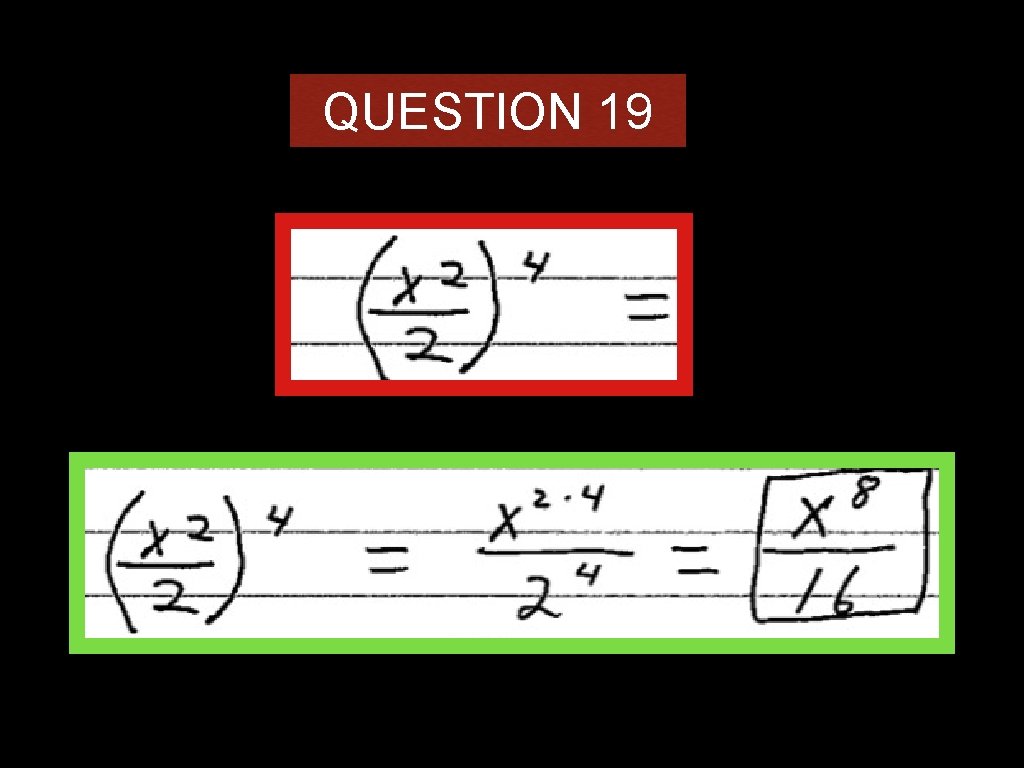
QUESTION 19
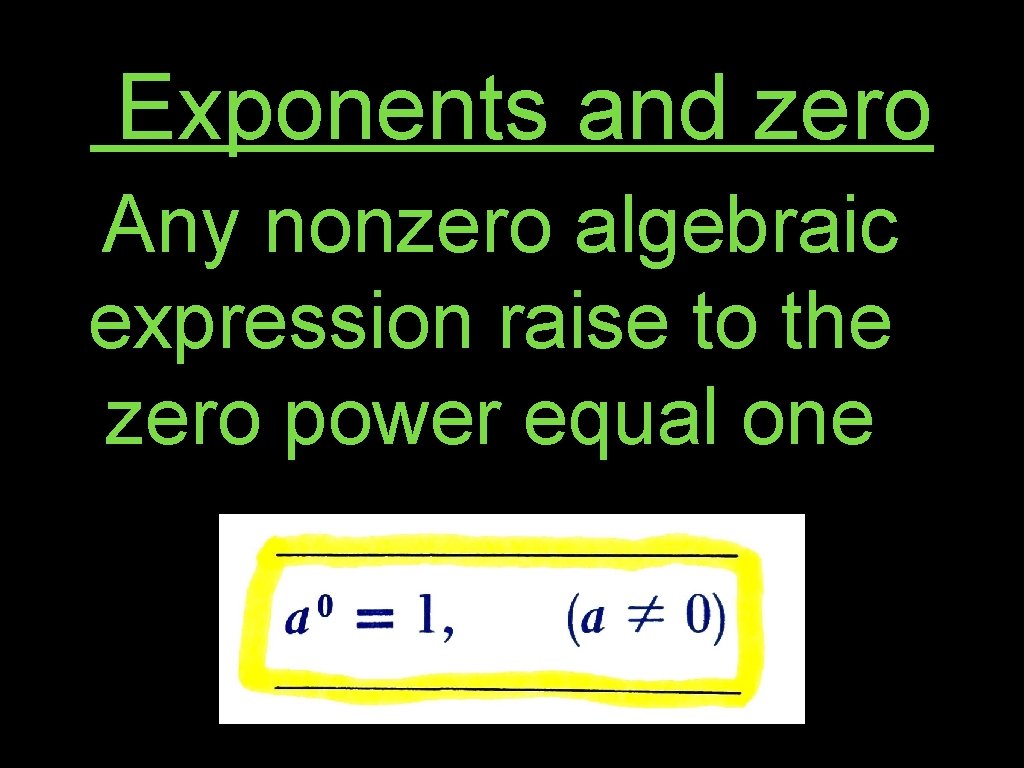
Exponents and zero Any nonzero algebraic expression raise to the zero power equal one
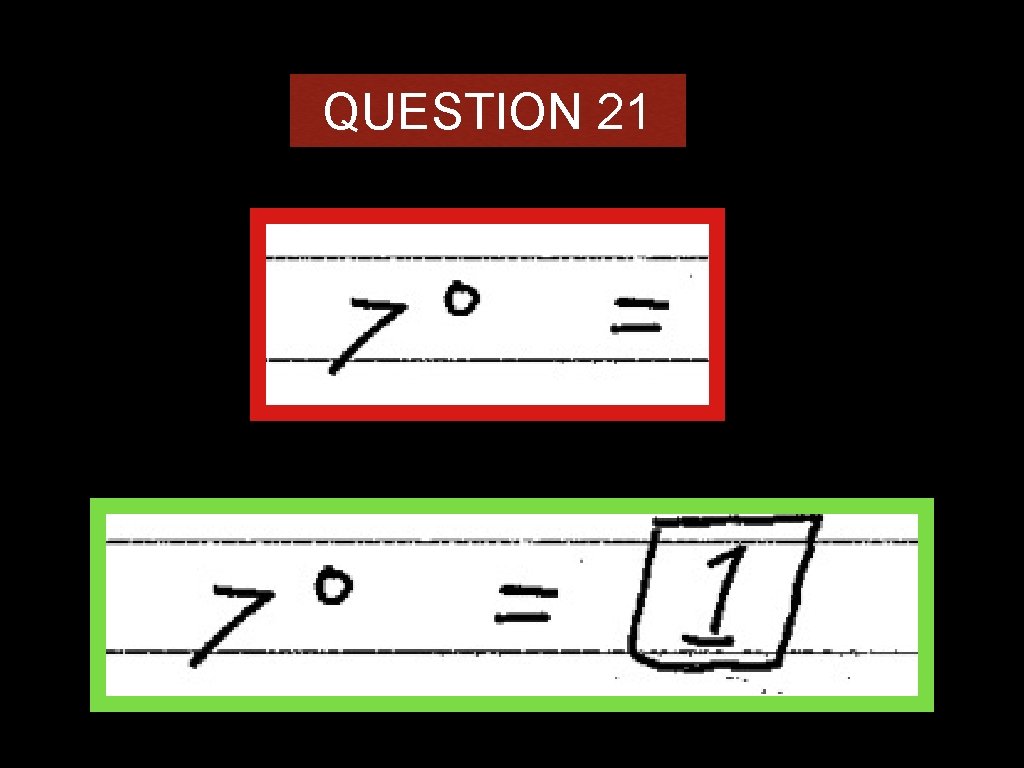
QUESTION 21
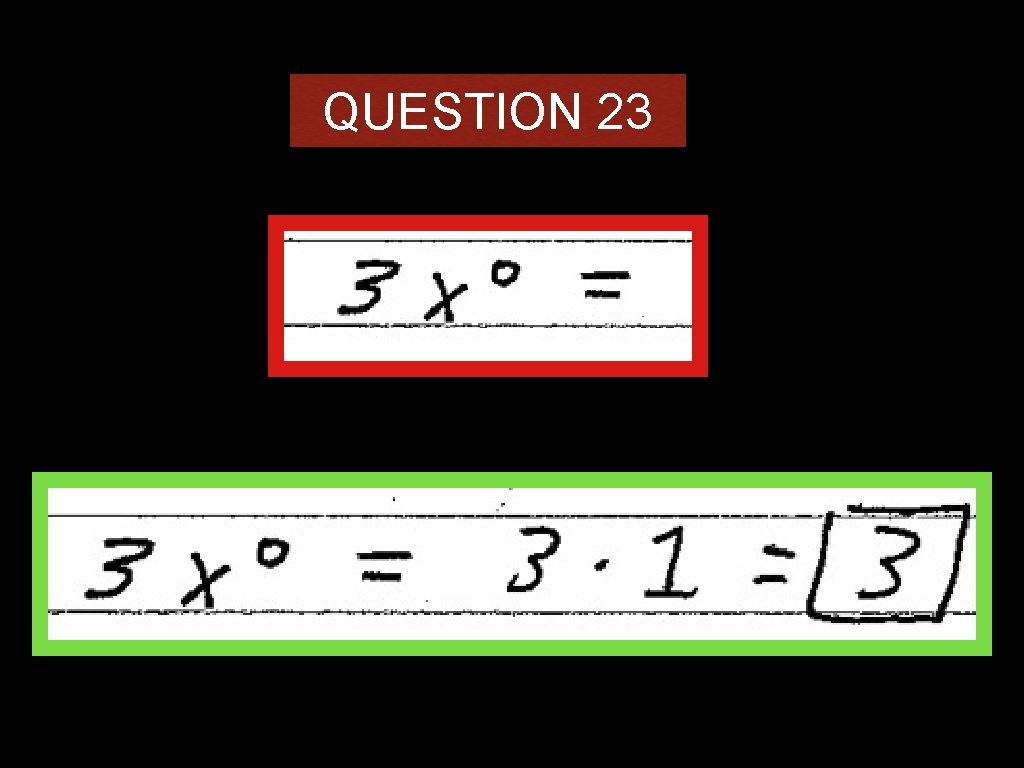
QUESTION 23
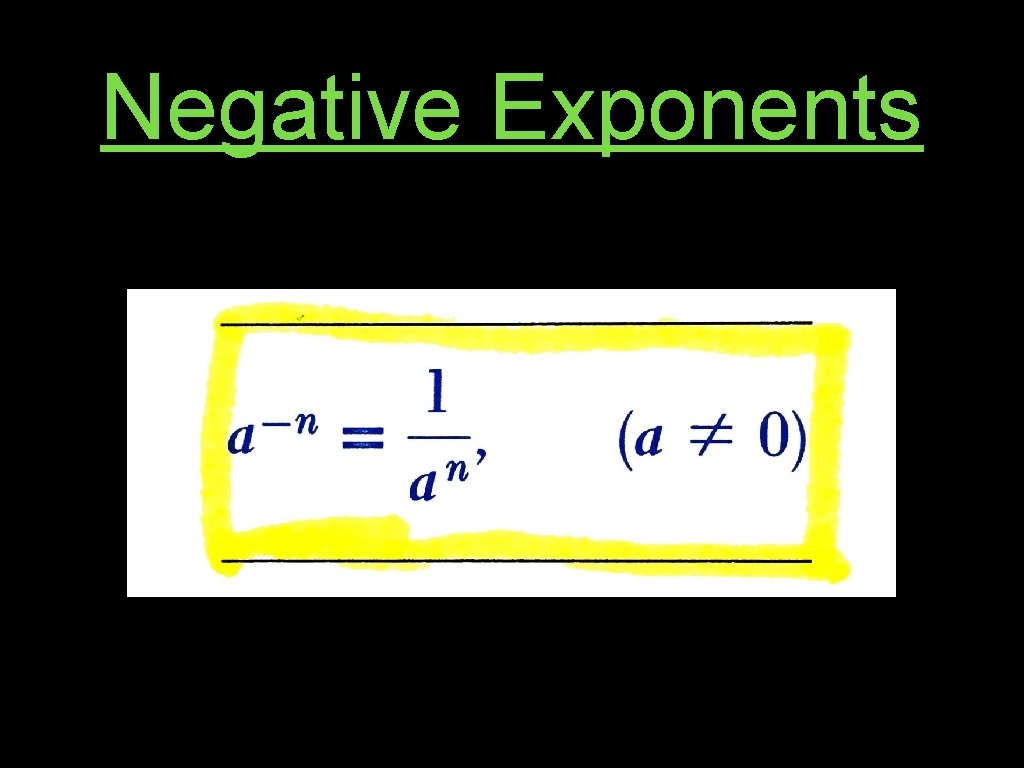
Negative Exponents
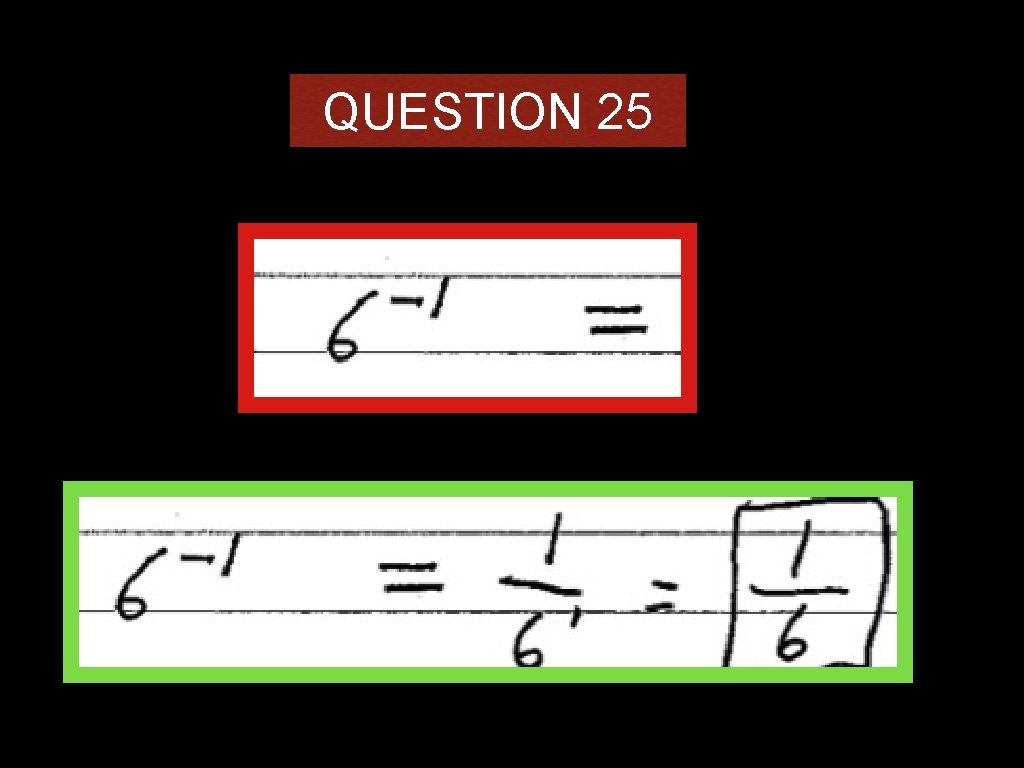
QUESTION 25
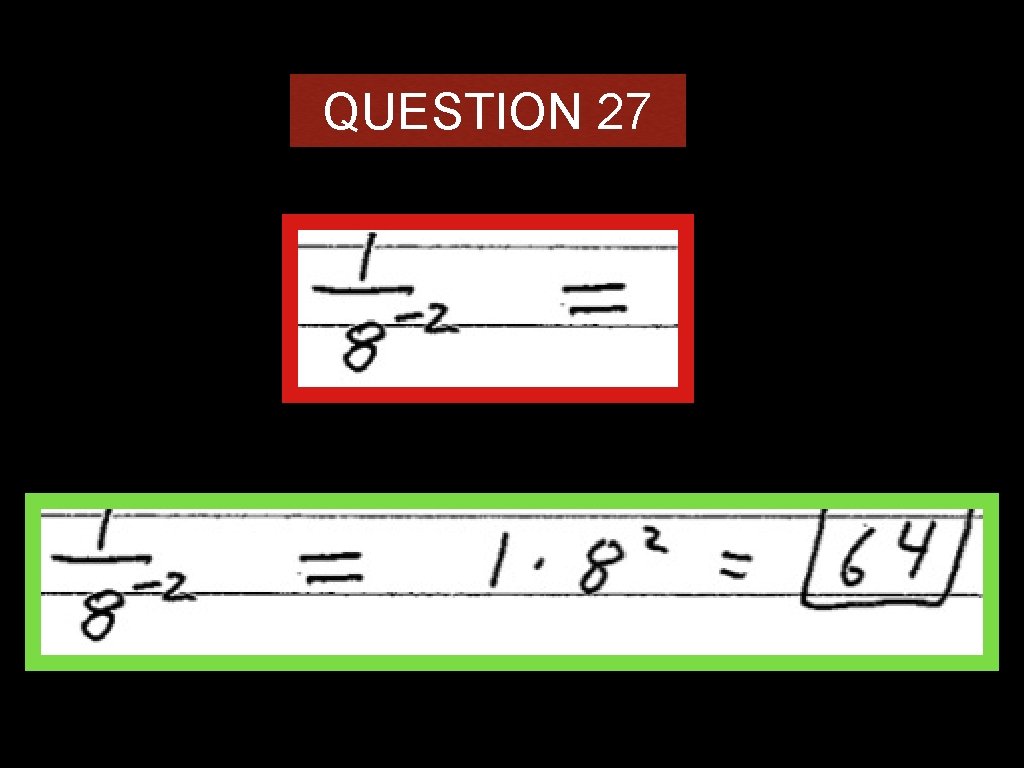
QUESTION 27

The following questions put together what you've learned.
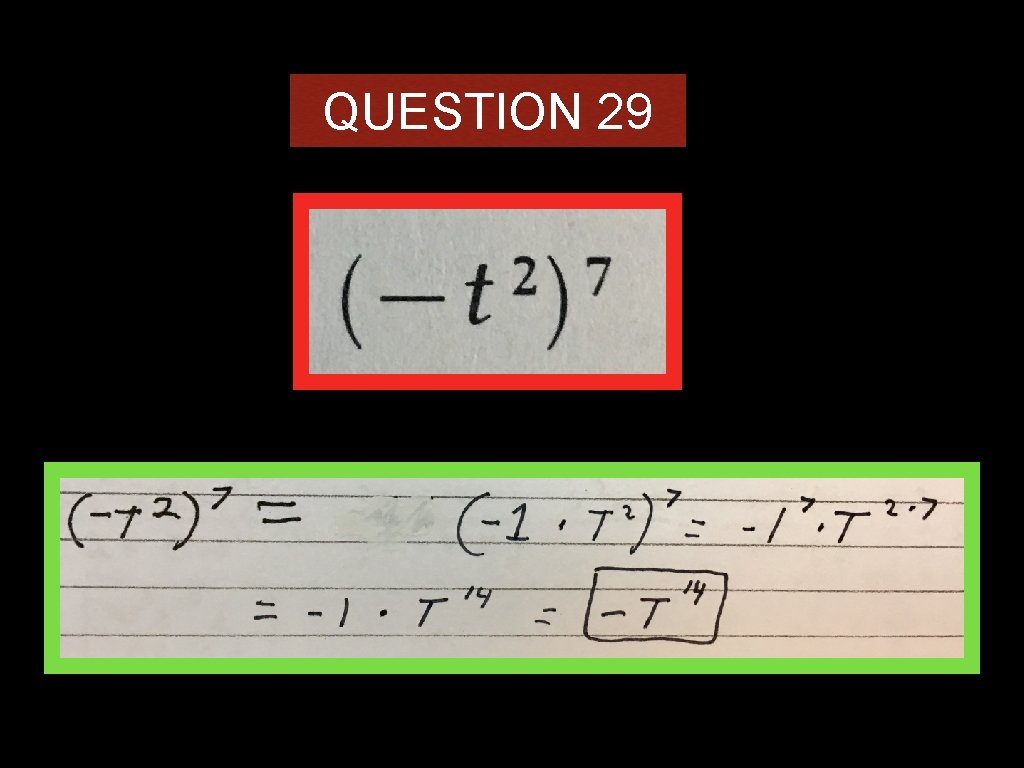
QUESTION 29
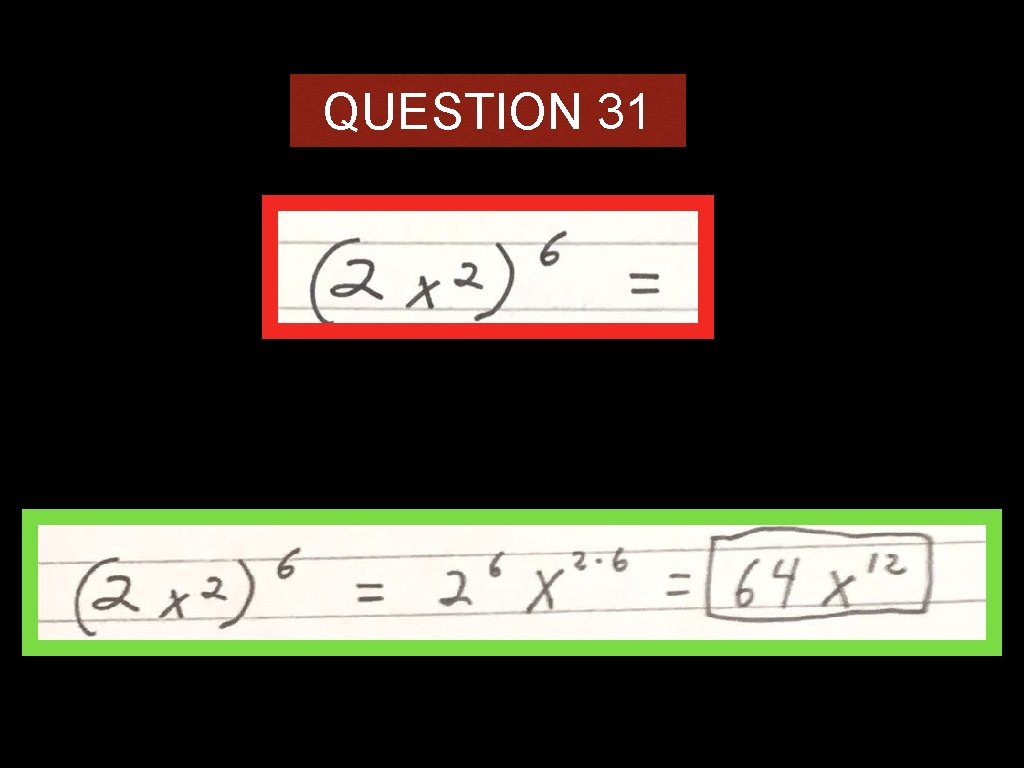
QUESTION 31
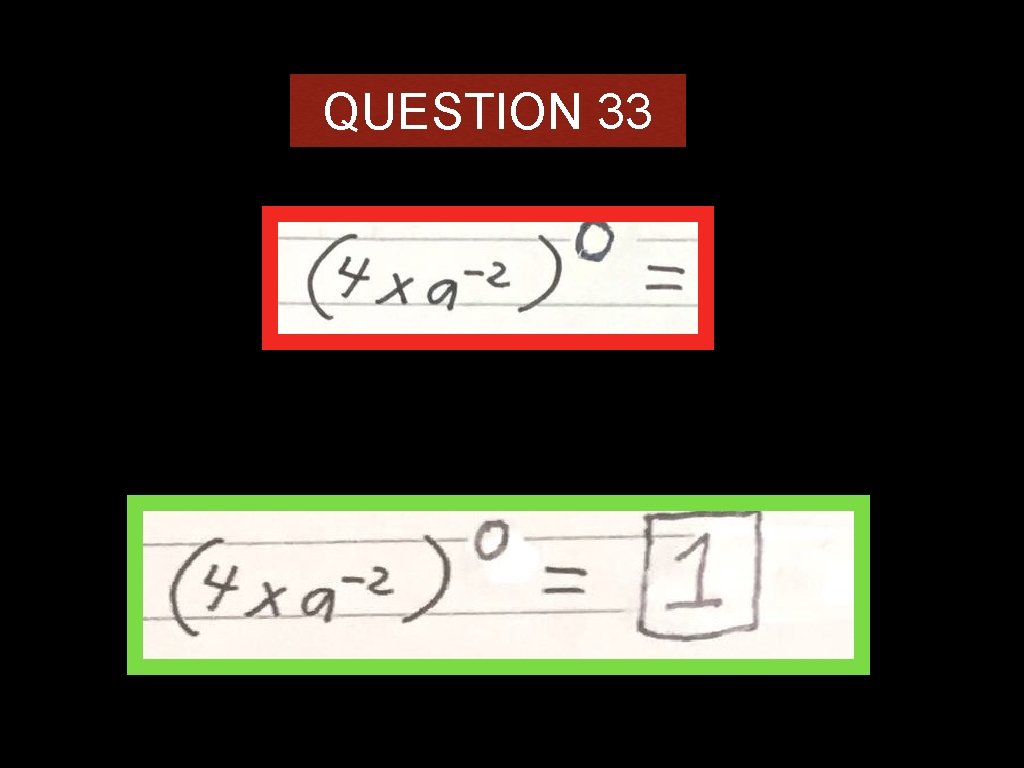
QUESTION 33
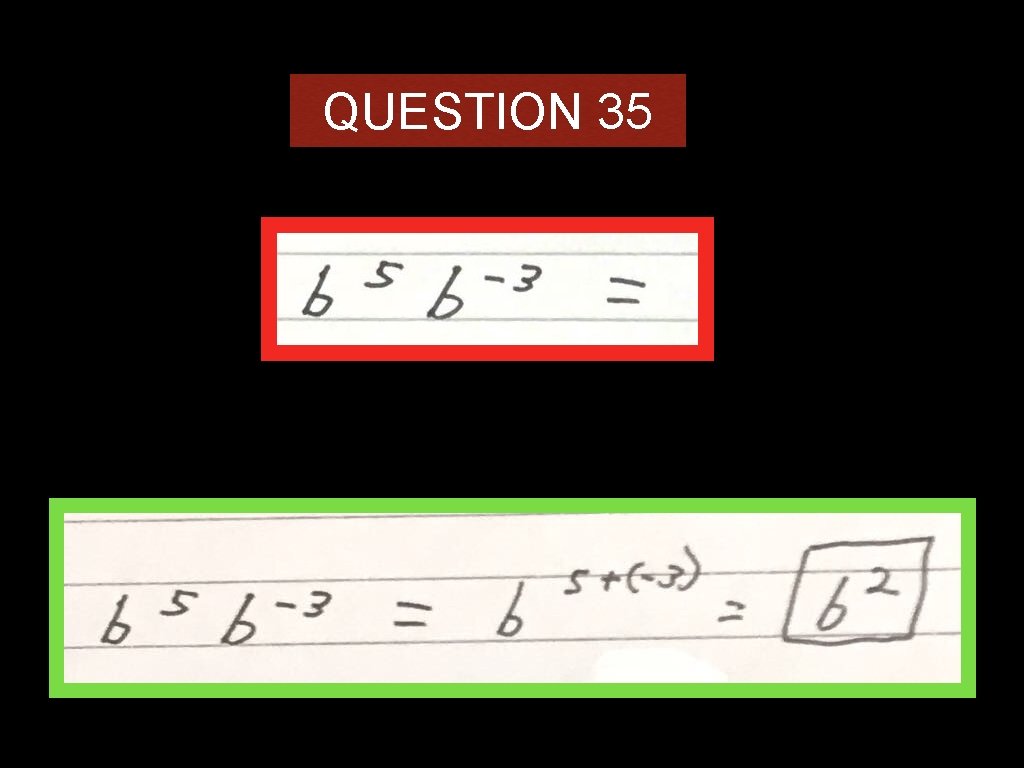
QUESTION 35
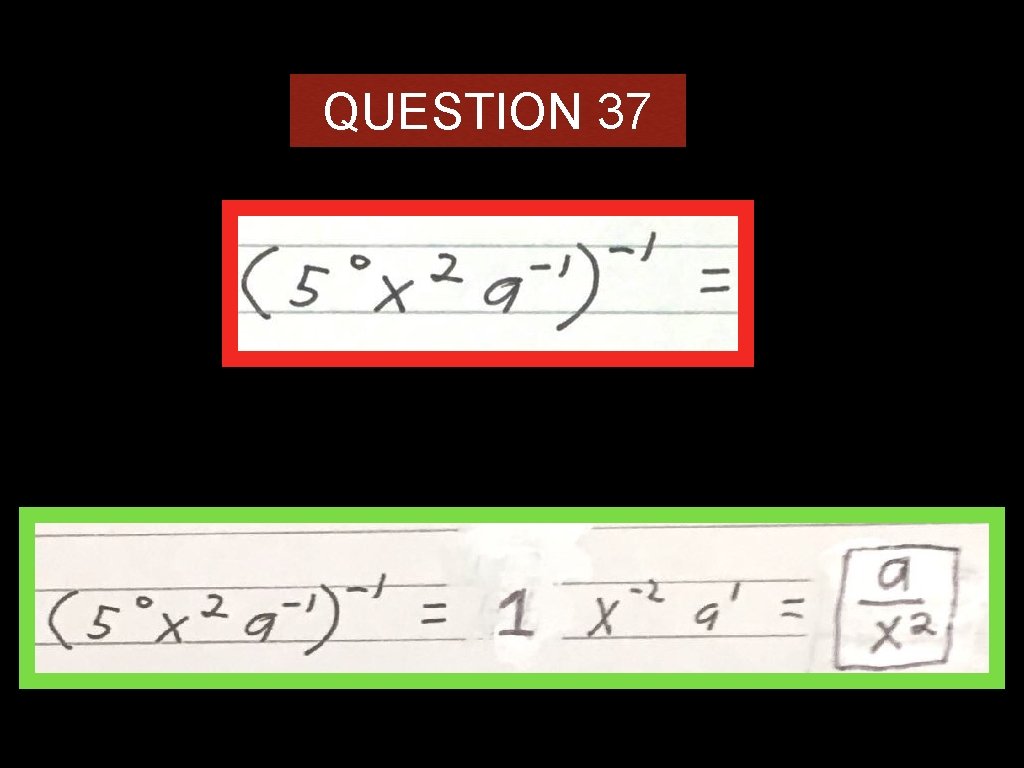
QUESTION 37
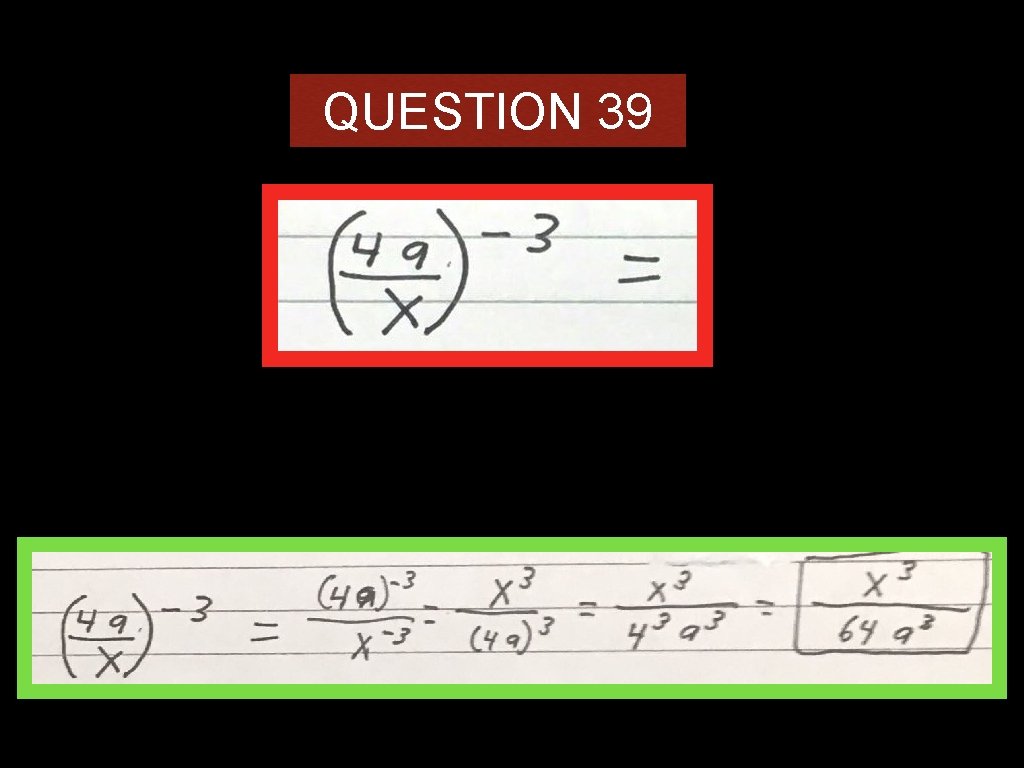
QUESTION 39
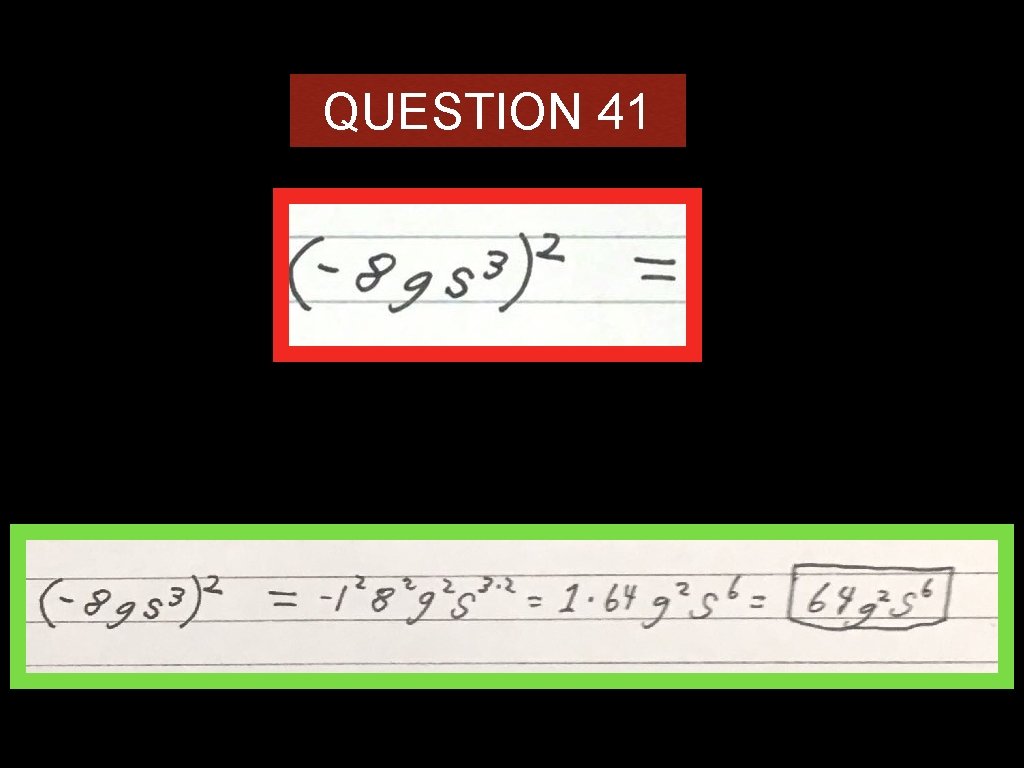
QUESTION 41
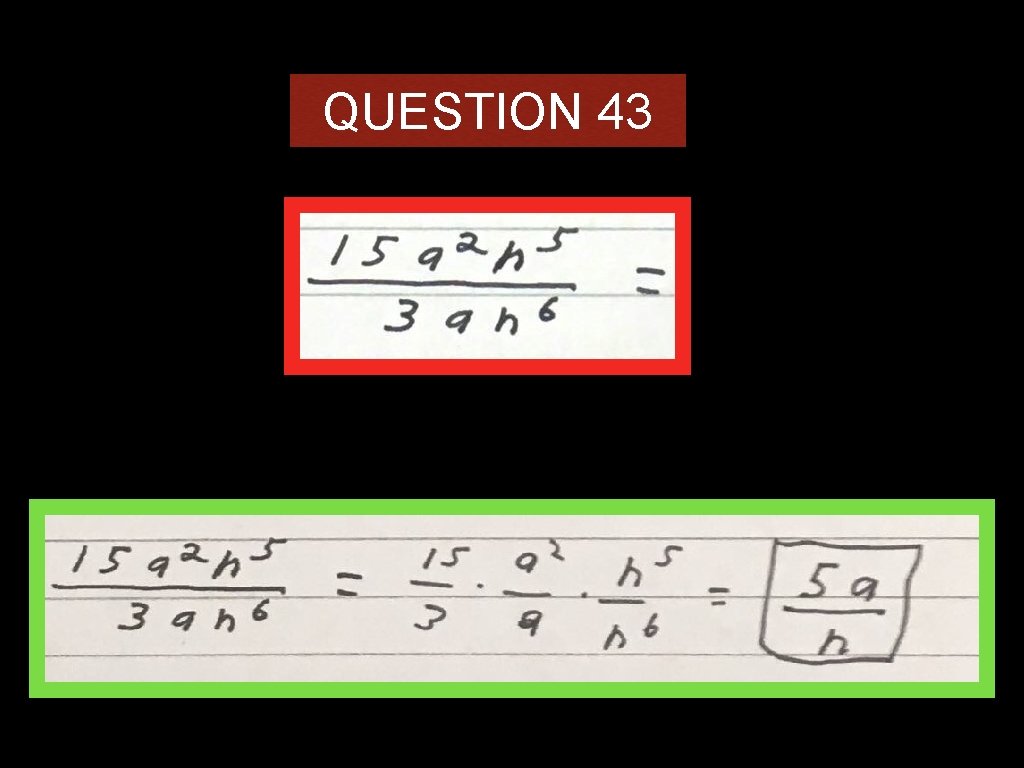
QUESTION 43
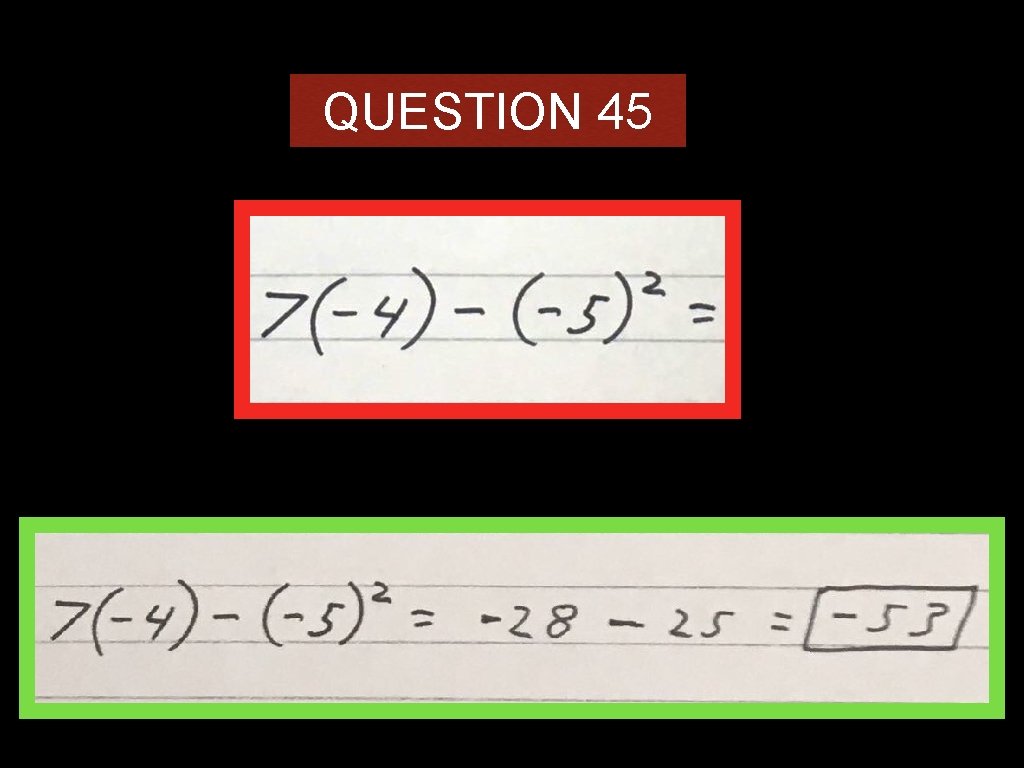
QUESTION 45
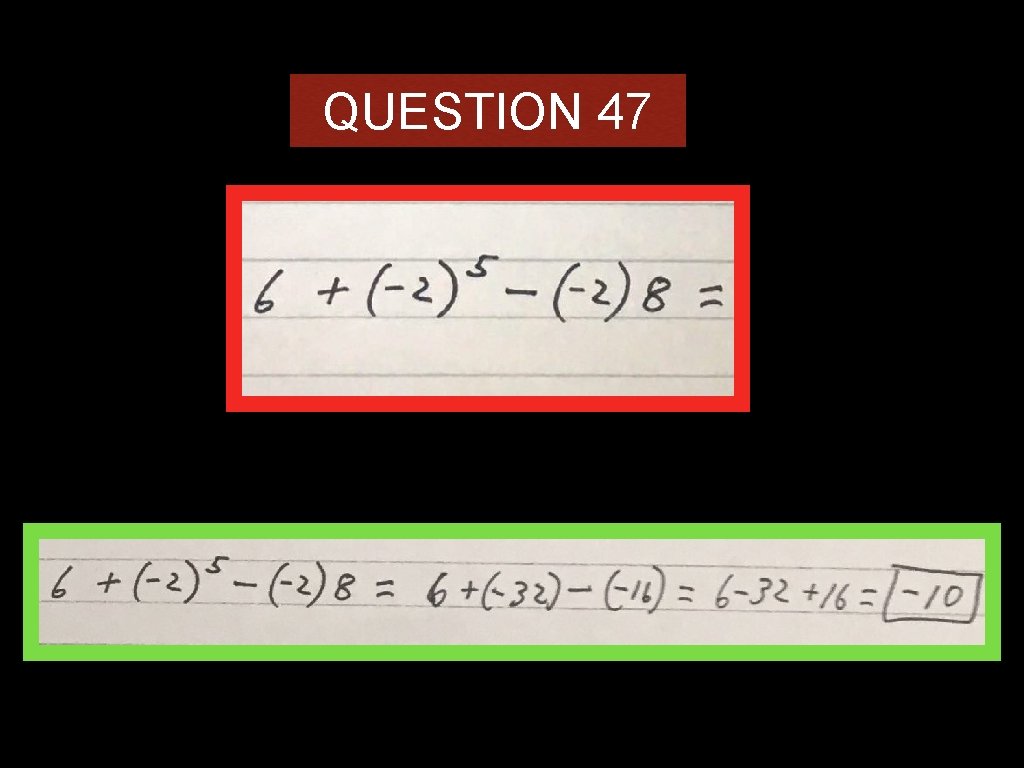
QUESTION 47
- Slides: 55