
Basic 2 channel EEG Training Protocols Approaches Methods
Basic 2 -channel EEG Training Protocols Approaches, Methods, and Functional Block Diagrams T. F. Collura, Ph. D. , P. E. © 2004

Rationale for 2 -channel training • Address L & R Brain, A & P Brain, or Whole Brain • Train 2+ locations at one time • Increase/reduce intersite coupling • Increase/reduce intersite communication • Achieve brain balance • Achieve brain asymmetry
Approaches • • • Single-channel Bipolar Training Sum-channel Training Separate Protocol Training Coherence Training Phase Training Asymmetry Training
2 -channel vs. bipolar training • Bipolar takes difference between two sites to produce 1 channel of EEG • E. g. F 7 – O 1 measures across left hemisphere • Any difference in EEG produces measurable signal • Cannot (generally) train direction, only difference
Single-Channel Bipolar Training • Always training difference in instantaneous signal amplitudes • When signals are alike, output is low • When signals are different, output is high • Downtraining -> signals more similar • Can encourage synchrony, similarity – Typically occipital alpha, O 1 vs. O 2 • Can also cause both to decrease
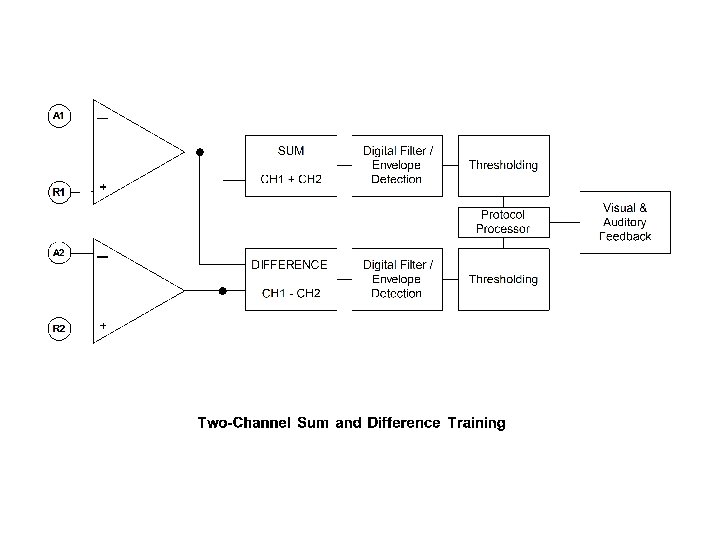
Sum-Channel Training • • Chan 1 = sum, Chan 2 = difference Can train sum or difference of channels, or both Sum trains synchrony, similarity Difference looks for differences Can uptrain sum, downtrain difference Ratio of sum to difference important indicator Phase-sensitive, and amplitude sensitive All amplitude-based training outputs work, e. g. bargraphs, games, etc.
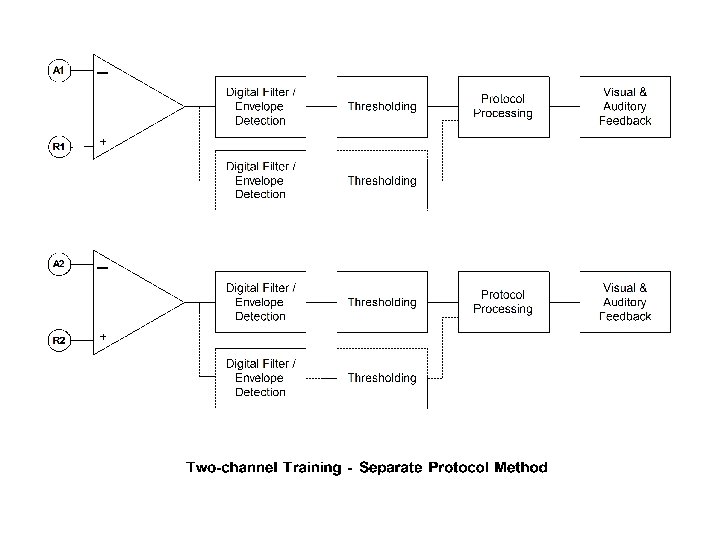
Separate Protocols • Each channel has own training criteria • Reward presented when either channel meets criteria – MIDI notes • OR – Reward presented with both channels meet criteria – Reward Sounds • Can use complex protocols, up to 16 go’s and stops • Brain “sorts it out” • All amplitude-based screens, games work
Separate Protocols Example I • • Built-in protocol “peak 2” C 3 / A 1 / GND / A 2 / C 4 Left: beta up, theta & hibeta down Right: SMR up, theta & hibeta down Performs “alert” on right, “focus” on left Also “slows down right brain” General mental fitness, improved affect Single reward sound sufficient for feedback
Separate Protocols Example II • • • Built-in protocol “deep 2” Trains up alpha on both left and right Trains up theta on both left and right Can use stops on delta, hibeta Can hear when either channel meets criteria with MIDI sounds – STEREO sound • Can hear when all criteria met with Reward Sounds – more useful for alpha only
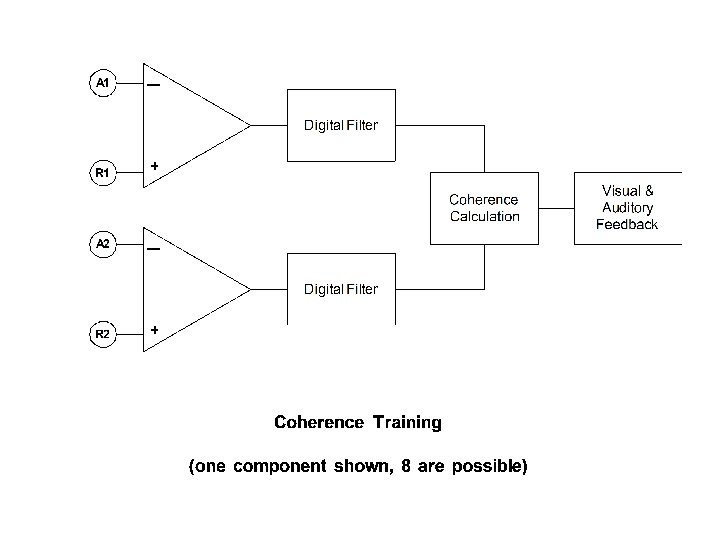
Coherence Training • • • Built-in protocol “peak” Use computed coherence as training variable Trains similarity between sites Used to “bind” or “connect” sites Increase amount of shared information / communication between sites • Can also downtrain coherence -> “break up” dependencies between brain locations
Phase Training • • Typically Downtrain Phase Reduces delay between sites Increased speed of information transfer Can also synchronize to a third location, e. g. thalamic pacemaker
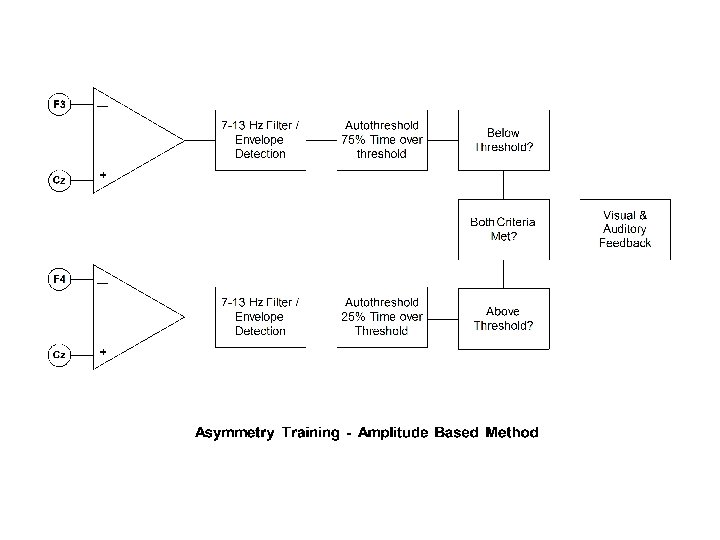
Asymmetry Training • • Used to train asymmetrically Make e. g. right side larger, left side smaller Associated with mood, affect Typically done frontally, e. g. F 3 & F 4 with Cz reference • Cannot be done with 1 channel
- Slides: 17