
Baseline Mapping Baseline Mapping B 1 Determine scope

Baseline Mapping
Baseline Mapping B 1 - Determine scope of analysis. What is the subject of analysis (e. g. organization, department, product, sub-system etc)? 2009 The Natural Step
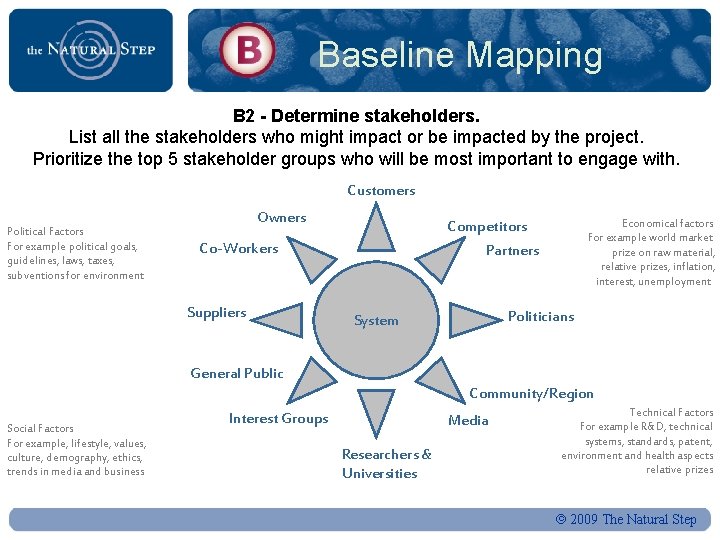
Baseline Mapping B 2 - Determine stakeholders. List all the stakeholders who might impact or be impacted by the project. Prioritize the top 5 stakeholder groups who will be most important to engage with. Customers Political Factors For example political goals, guidelines, laws, taxes, subventions for environment Owners Co-Workers Suppliers Economical factors For example world market prize on raw material, relative prizes, inflation, interest, unemployment Competitors Partners Politicians System General Public Community/Region Social Factors For example, lifestyle, values, culture, demography, ethics, trends in media and business Interest Groups Media Researchers & Universities Technical Factors For example R&D, technical systems, standards, patent, environment and health aspects relative prizes 2009 The Natural Step
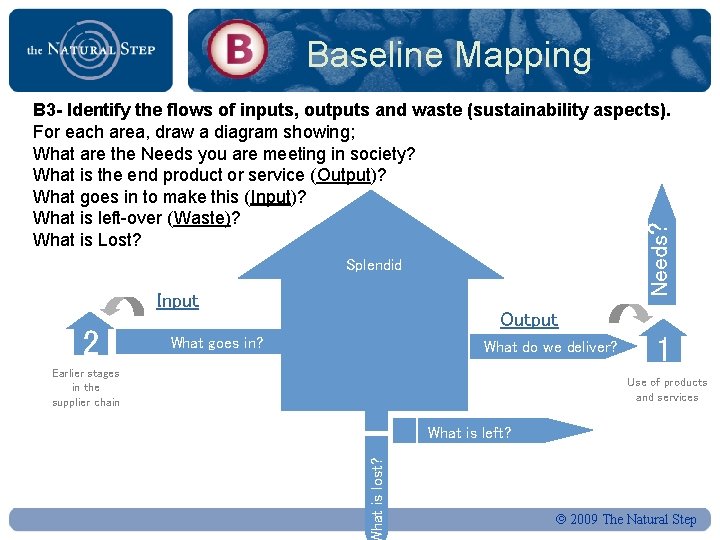
Baseline Mapping Needs? B 3 - Identify the flows of inputs, outputs and waste (sustainability aspects). For each area, draw a diagram showing; What are the Needs you are meeting in society? What is the end product or service (Output)? What goes in to make this (Input)? What is left-over (Waste)? What is Lost? Splendid Input 2 Output What goes in? What do we deliver? Earlier stages in the supplier chain 1 Use of products and services hat is lost? What is left? 2009 The Natural Step
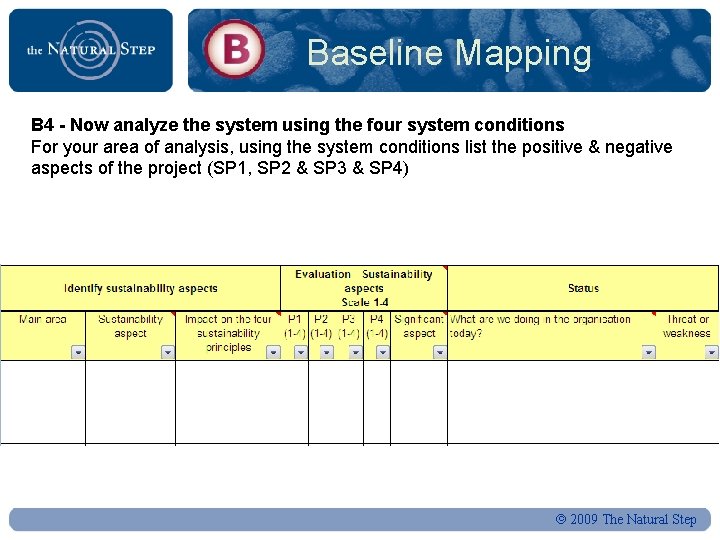
Baseline Mapping B 4 - Now analyze the system using the four system conditions For your area of analysis, using the system conditions list the positive & negative aspects of the project (SP 1, SP 2 & SP 3 & SP 4) 2009 The Natural Step
Baseline Mapping B 5 Determine Significant Areas: ü Overall, what do you think are the most significant sustainability challenges for the project? ü What are the key improvement areas? ü What are the best assets it can build upon? 2009 The Natural Step
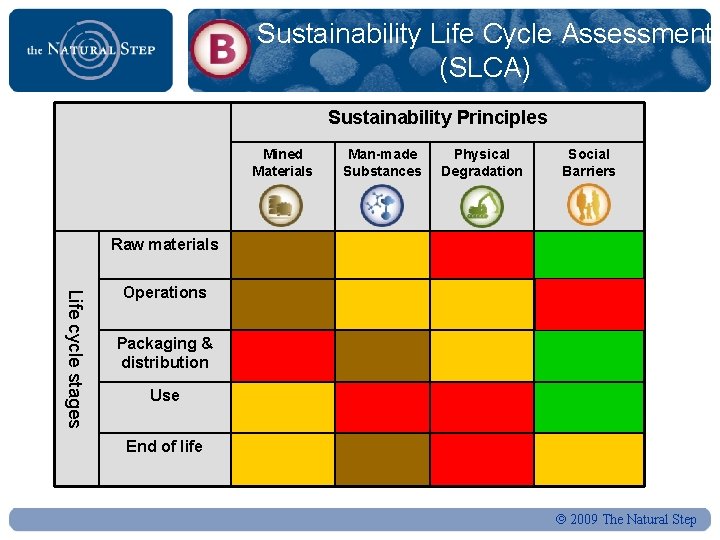
Sustainability Life Cycle Assessment (SLCA) Sustainability Principles Mined Materials Man-made Substances Physical Degradation Social Barriers Raw materials Life cycle stages Operations Packaging & distribution Use End of life 2009 The Natural Step
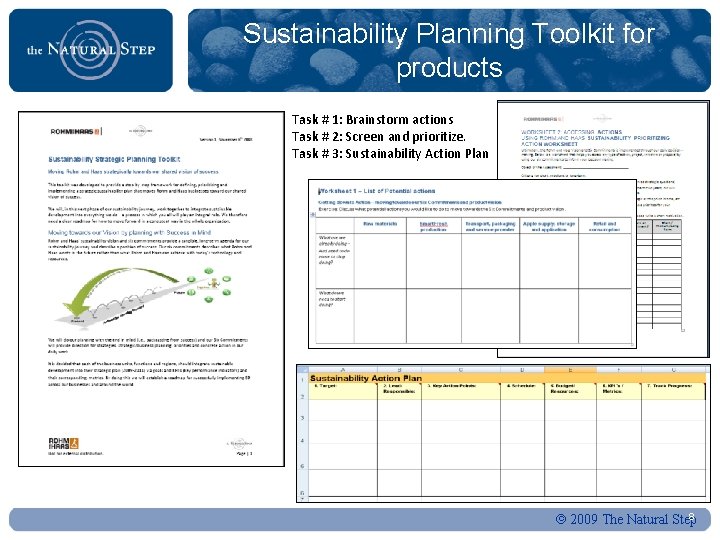
Sustainability Planning Toolkit for products Task # 1: Brainstorm actions Task # 2: Screen and prioritize. Task # 3: Sustainability Action Plan 8 2009 The Natural Step
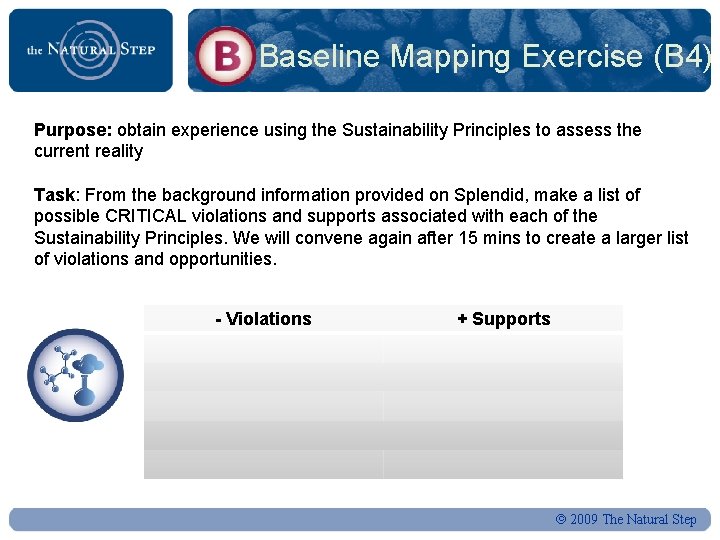
Baseline Mapping Exercise (B 4) Purpose: obtain experience using the Sustainability Principles to assess the current reality Task: From the background information provided on Splendid, make a list of possible CRITICAL violations and supports associated with each of the Sustainability Principles. We will convene again after 15 mins to create a larger list of violations and opportunities. - Violations + Supports 2009 The Natural Step

2009 The Natural Step
- Slides: 10