
BASEL II CAD 3 COREP The New Capital

BASEL II / CAD 3 COREP & The New Capital Adequacy Framework Madrid 2005 1
Outline z Why Basel II & CAD 3 z Basics of the future directive z COREP 2
What is it? z Banking Business is a global business z Large amounts of money are exchanged daily z Systemic importance z Need for common rules to avoid a global crisis => Basel Committee 3
Solvency Ratio z Capital Adequacy Framework y. Minimum requirements to run a Bank The most well-known is the: Cooke Ratio Own Funds / Lending > 8% 4
From Basel I to Basel II z Objectives of the new Basel capital accord : y. Enhance the sensivity of capital requirements to the degree of risk involved in banks’ positions and activities y. Encourage banks to improve their risk measurement and management systems y. Increase the role of banking supervisors and the role of market discipline y. Constitute a more comprehensive approach to addressing risks the banks are exposed to y. Promote safety and soundness in the financial system as well as competitive equality 5
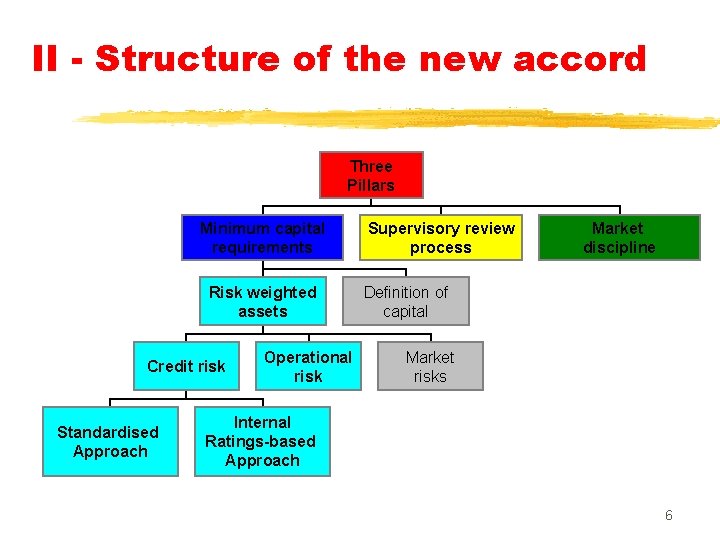
II - Structure of the new accord Three Pillars Minimum capital requirements Risk weighted assets Credit risk Standardised Approach Operational risk Supervisory review process Market discipline Definition of capital Market risks Internal Ratings-based Approach 6
A - Pillar 1 Minimum capital requirements 7
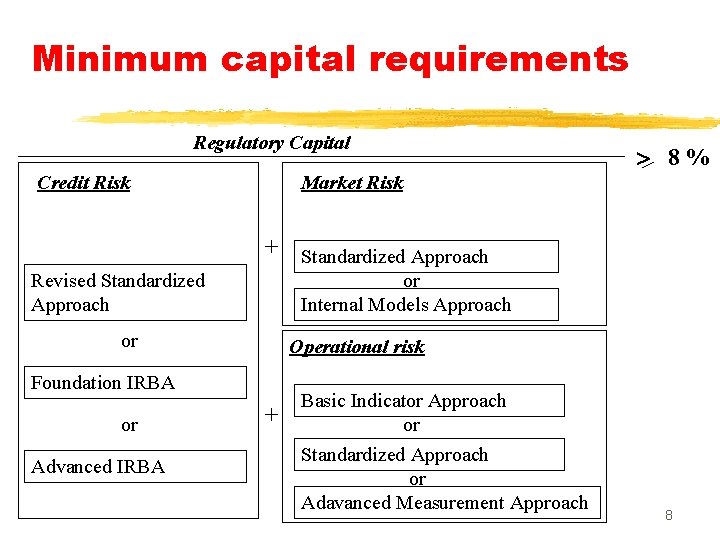
Minimum capital requirements Regulatory Capital Credit Risk 8% Market Risk + Standardized Approach Revised Standardized Approach or Internal Models Approach or Operational risk Foundation IRBA or Advanced IRBA + Basic Indicator Approach or Standardized Approach or Adavanced Measurement Approach 8
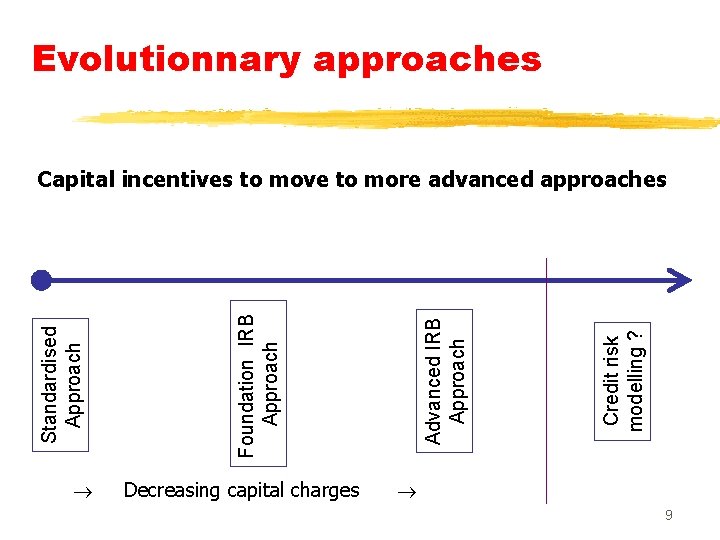
Evolutionnary approaches Decreasing capital charges Credit risk modelling ? Advanced IRB Approach Foundation IRB Approach Standardised Approach Capital incentives to move to more advanced approaches 9
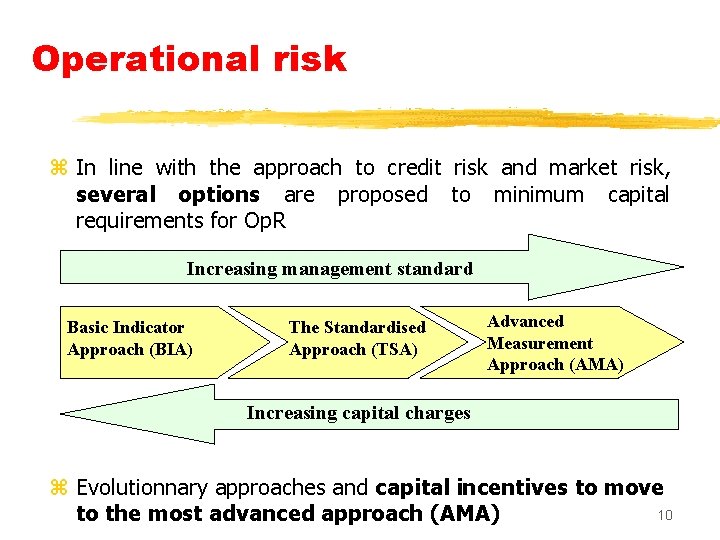
Operational risk z In line with the approach to credit risk and market risk, several options are proposed to minimum capital requirements for Op. R Increasing management standard Basic Indicator Approach (BIA) The Standardised Approach (TSA) Advanced Measurement Approach (AMA) Increasing capital charges z Evolutionnary approaches and capital incentives to move 10 to the most advanced approach (AMA)
3 - Market risk z Treatment remains unchanged, that is 2 options available : y. A standardised approach (for specific risk capital requirements, risk weights will be based on the external assessment of the issuer) y. An internal models approach (Va. R) 11
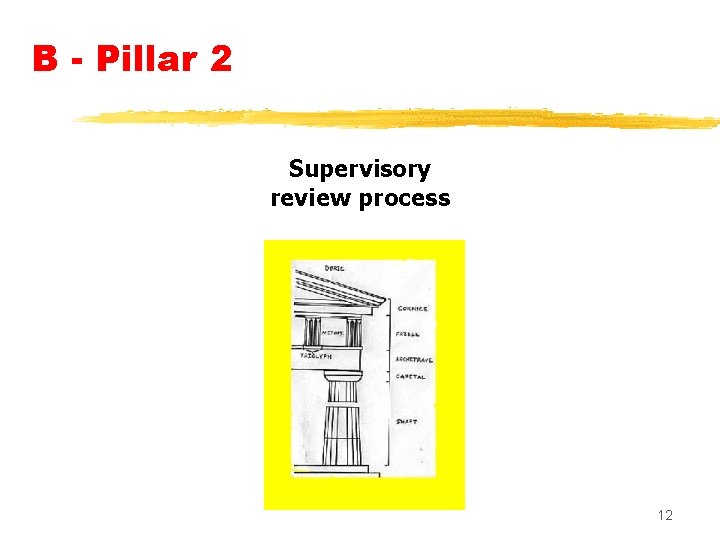
B - Pillar 2 Supervisory review process 12
Supervisory review process z Pillar 2 is intended : yto achieve a level of capital commensurate with a bank’s overall risk profile yto encourage banks to develop and use better risk management techniques in monitoring and managing their risks Only very limited impact on COREP 13
C - Pillar 3 Market discipline 14
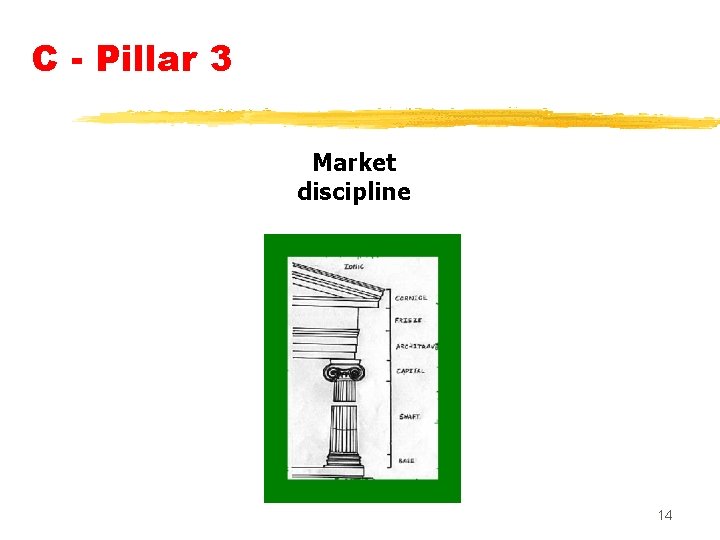
Market discipline z Pillar 3 is intended to provide investors with reliable and timely information to understand a bank’s risk profile z Enhance role of market participants in encouraging banks to hold adequate levels of capital z Pre-condition for the use of some methodologies (Internal ratings-based approaches, AMA) z Qualitative and quantitative disclosures (information on methodology and key inputs, e. g. explanation of structure of internal rating system and PD, LGD assumptions, …) Will not be covered by COREP 15
COREP z. A ratio has been defined z. Need to set up a reporting to monitor its application COREP 16
What has been done z An informal initiative, followed by an official working group y 9 European Countries, gathered on a voluntary basis to study the feasibility of a common EU reporting. y. Its main conclusions were presented to the CEBS on July 1 st. The CEBS agreed that a common reporting was feasible and highly desirable and the COREP Group was set up. z A Draft Framework was designed and included y. A proposed architecture, with y. Draft reporting templates attached, and y. Propose an IT Solutions. 17
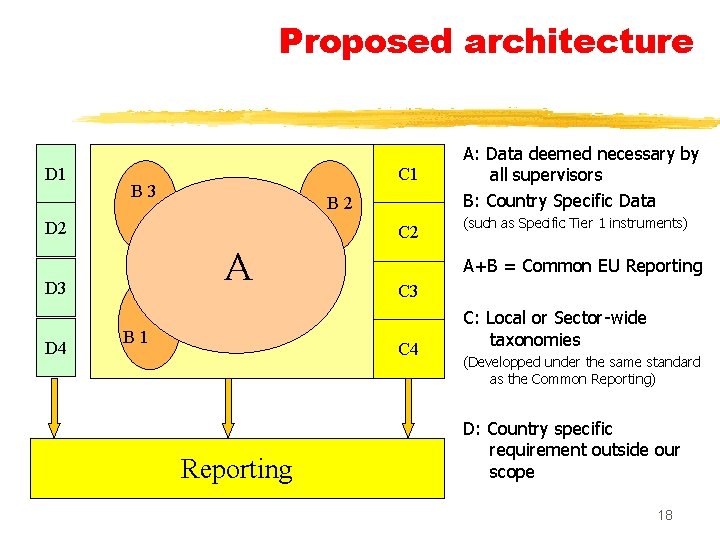
Proposed architecture D 1 C 1 B 3 B 2 D 2 C 2 A D 3 D 4 B 1 (such as Specific Tier 1 instruments) A+B = Common EU Reporting C 3 C 4 Reporting A: Data deemed necessary by all supervisors B: Country Specific Data C: Local or Sector-wide taxonomies (Developped under the same standard as the Common Reporting) D: Country specific requirement outside our scope 18
- Slides: 18