
Base Verb and Verbs Types of verb Bahasa

Base Verb and Verb-s

Types of verb Bahasa Inggris memiliki banyak tipe kata kerja, seperti linking verb, stative verb, dan action verb. v. Linking verb adalah kata kerja yang menghubungkan subjek dengan pelengkapnya. ex: Those lovely couples grow old together. v. Stative verb adalah kata kerja yang menyatakan keadaan / situasi / kondisi, sehingga tidak mengubah bentuk atau tidak memberi dampak apapun pada objek, ex: I love my parent. v. Action verb adalah kata kerja yang menyatakan tindakan sehingga bisa mengubah bentuk atau memberi dampak pada objek, ex: The kids kick the ball
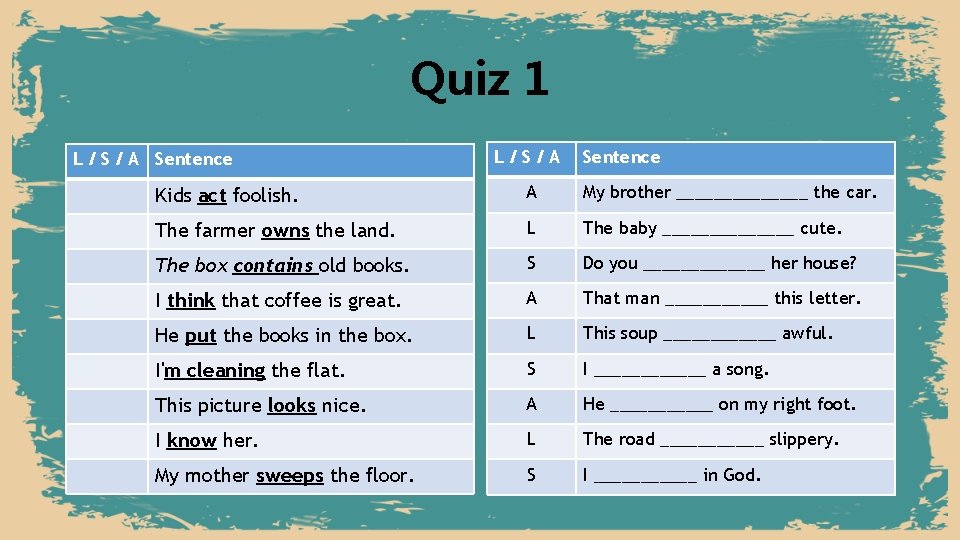
Quiz 1 L / S / A Sentence L/S/A Sentence Kids act foolish. A My brother _______ the car. The farmer owns the land. L The baby _______ cute. The box contains old books. S Do you _______ her house? I think that coffee is great. A That man ______ this letter. He put the books in the box. L This soup ______ awful. I'm cleaning the flat. S I ______ a song. This picture looks nice. A He ______ on my right foot. I know her. L The road ______ slippery. My mother sweeps the floor. S I ______ in God.

Base verb atau yang biasa disebut verb 1 adalah bentuk kata kerja paling dasar tanpa imbuhan apapun, misalnya have, see, ride, cook, study, etc. Base verb digunakan untuk menyatakan predikat dalam 1. Present tense 2. Frasa kata kerja yang terdapat modal 3. Subjek jamak (plural) 4. Subjek yang berupa pronoun I, you, they, and we 5. Kalimat perintah
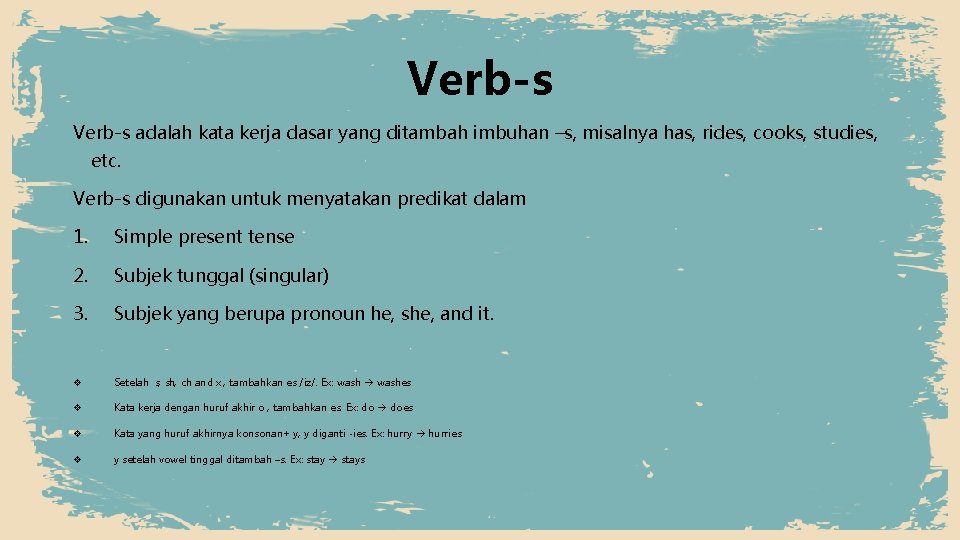
Verb-s adalah kata kerja dasar yang ditambah imbuhan –s, misalnya has, rides, cooks, studies, etc. Verb-s digunakan untuk menyatakan predikat dalam 1. Simple present tense 2. Subjek tunggal (singular) 3. Subjek yang berupa pronoun he, she, and it. v Setelah s, sh, ch and x , tambahkan es /iz/. Ex: washes v Kata kerja dengan huruf akhir o , tambahkan es. Ex: do does v Kata yang huruf akhirnya konsonan+ y, y diganti -ies. Ex: hurry hurries v y setelah vowel tinggal ditambah –s. Ex: stays
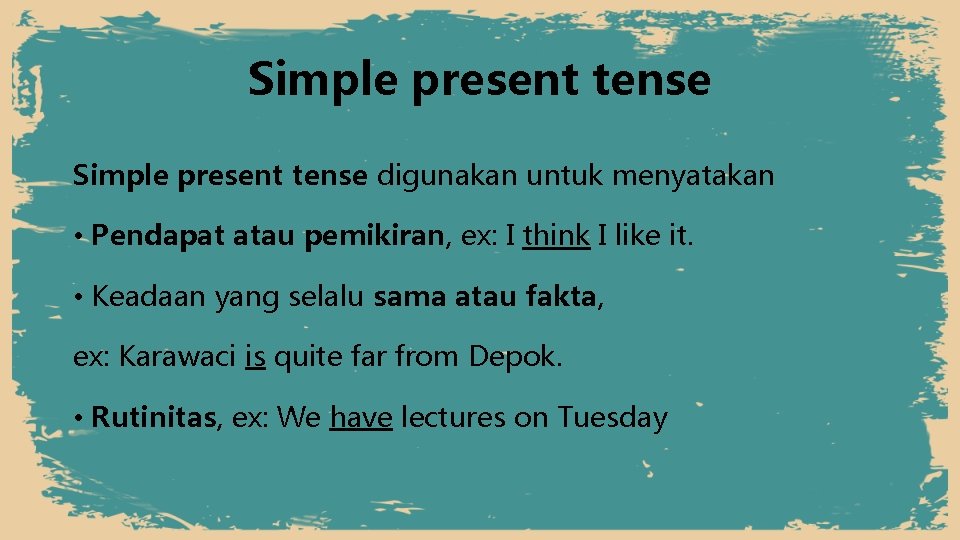
Simple present tense digunakan untuk menyatakan • Pendapat atau pemikiran, ex: I think I like it. • Keadaan yang selalu sama atau fakta, ex: Karawaci is quite far from Depok. • Rutinitas, ex: We have lectures on Tuesday
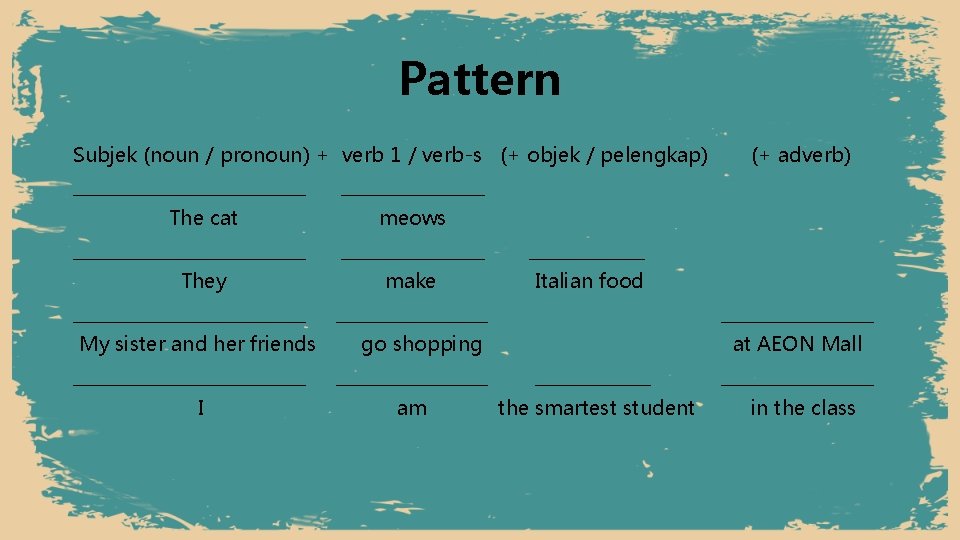
Pattern Subjek (noun / pronoun) + verb 1 / verb-s (+ objek / pelengkap) _____________ The cat _____________ They _____________ My sister and her friends _____________ I (+ adverb) ________ meows ________ make Italian food _________________ go shopping at AEON Mall _________ am the smartest student _________ in the class
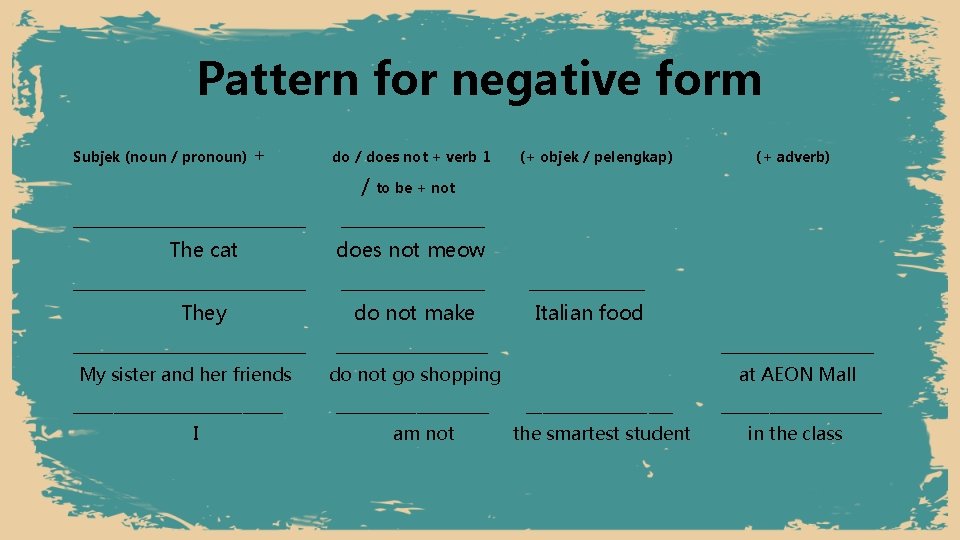
Pattern for negative form Subjek (noun / pronoun) + do / does not + verb 1 (+ objek / pelengkap) (+ adverb) / to be + not _____________ The cat _____________ They ________ does not meow ________ do not make Italian food _________________ My sister and her friends do not go shopping at AEON Mall _____________ I __________ am not ________ ___ the smartest student __________ in the class

Quiz 2 No subjek 1 Most children 2 3 verb complement hate The boxes on the table 4 of all 5 amazing 6 heard 7 At 11. 00 o’clock 8 9 10 modifier delicious cake The girl in the house remember in jar
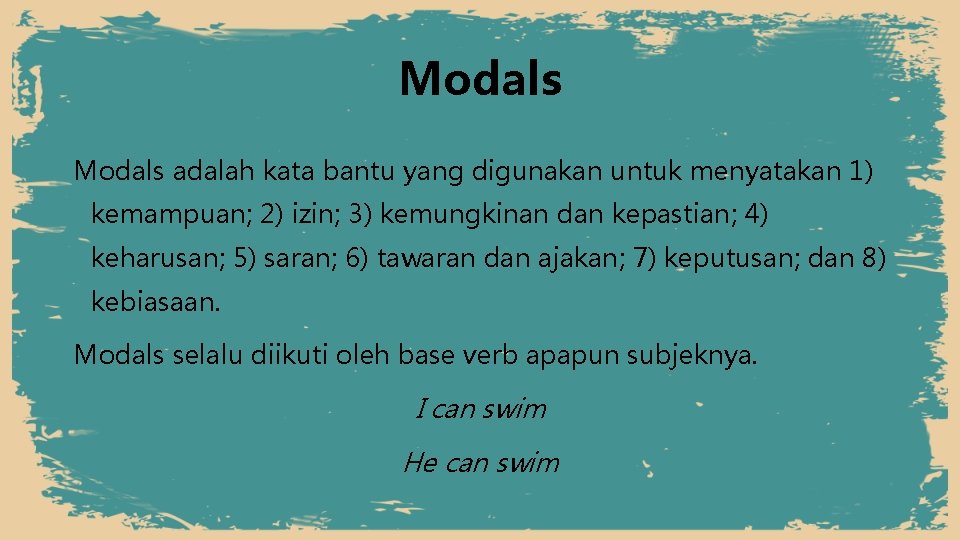
Modals adalah kata bantu yang digunakan untuk menyatakan 1) kemampuan; 2) izin; 3) kemungkinan dan kepastian; 4) keharusan; 5) saran; 6) tawaran dan ajakan; 7) keputusan; dan 8) kebiasaan. Modals selalu diikuti oleh base verb apapun subjeknya. I can swim He can swim
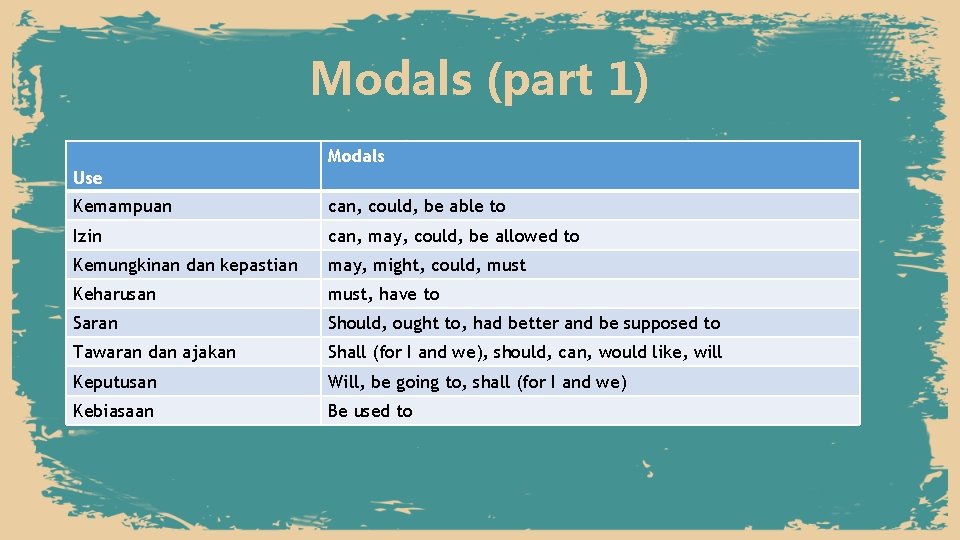
Modals (part 1) Modals Use Kemampuan can, could, be able to Izin can, may, could, be allowed to Kemungkinan dan kepastian may, might, could, must Keharusan must, have to Saran Should, ought to, had better and be supposed to Tawaran dan ajakan Shall (for I and we), should, can, would like, will Keputusan Will, be going to, shall (for I and we) Kebiasaan Be used to
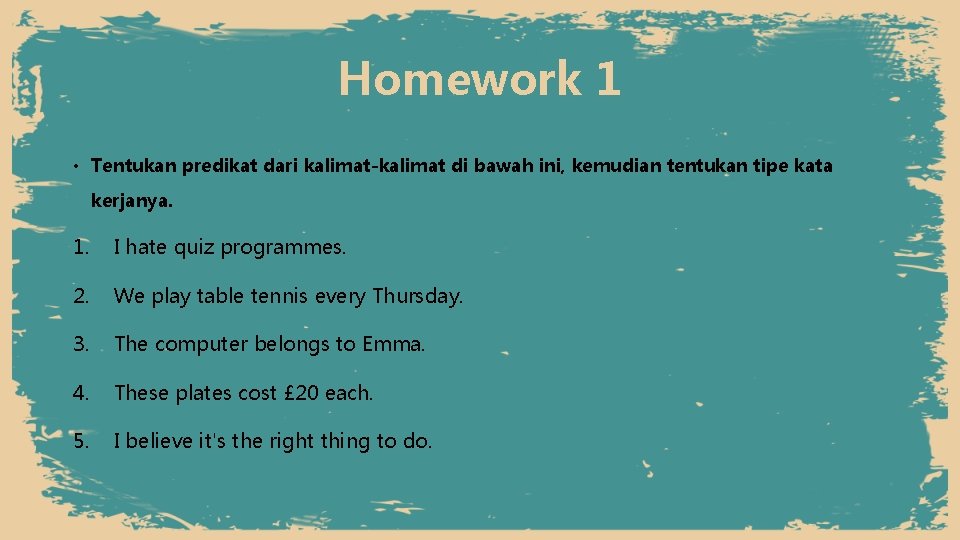
Homework 1 • Tentukan predikat dari kalimat-kalimat di bawah ini, kemudian tentukan tipe kata kerjanya. 1. I hate quiz programmes. 2. We play table tennis every Thursday. 3. The computer belongs to Emma. 4. These plates cost £ 20 each. 5. I believe it's the right thing to do.

6. I'm hungry. I want something to eat. 7. I usually go to work by bus. 8. It's OK. I understand your problem 9. Claire is very sociable. 10. We get plenty of chairs, thanks.
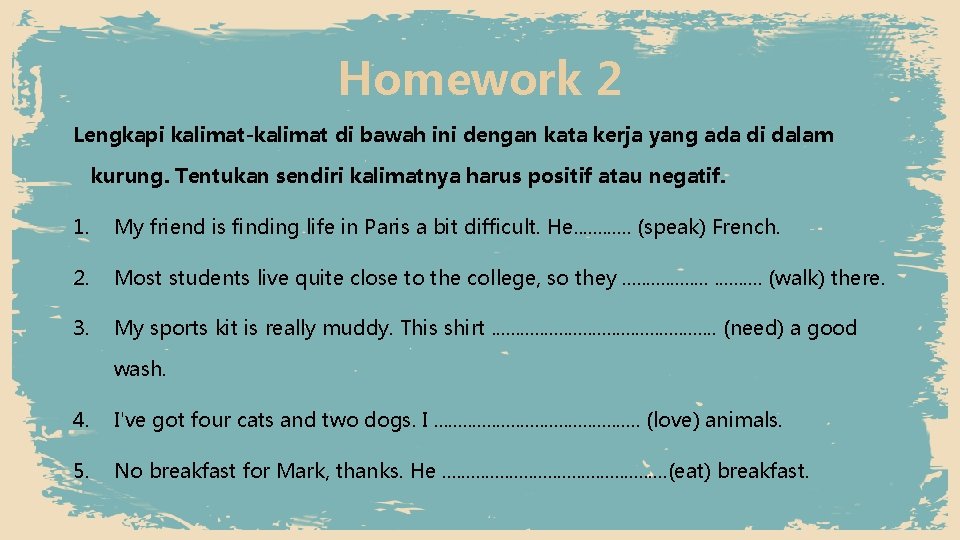
Homework 2 Lengkapi kalimat-kalimat di bawah ini dengan kata kerja yang ada di dalam kurung. Tentukan sendiri kalimatnya harus positif atau negatif. 1. My friend is finding life in Paris a bit difficult. He. . . (speak) French. 2. Most students live quite close to the college, so they. . . . (walk) there. 3. My sports kit is really muddy. This shirt. . . (need) a good wash. 4. I've got four cats and two dogs. I. . . (love) animals. 5. No breakfast for Mark, thanks. He. . . (eat) breakfast.
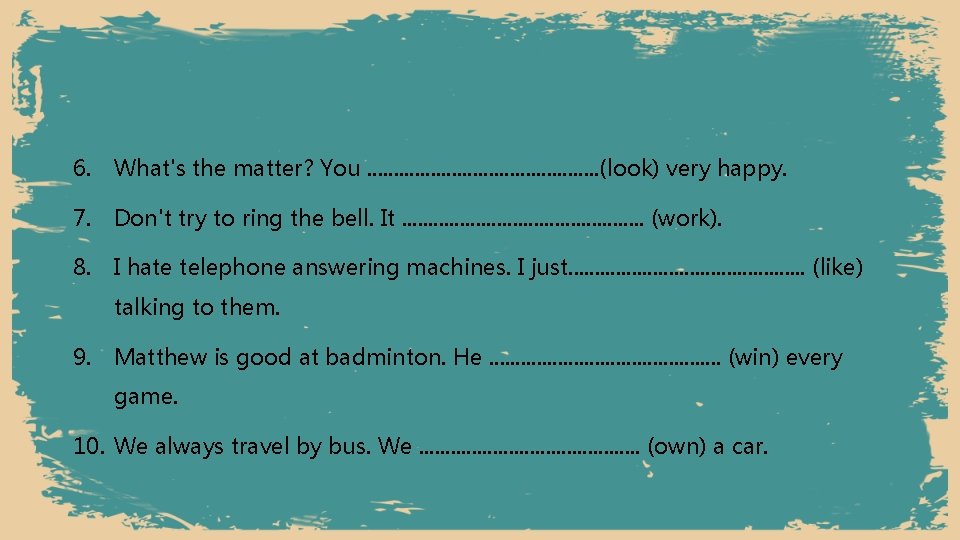
6. What's the matter? You. . . (look) very happy. 7. Don't try to ring the bell. It. . . (work). 8. I hate telephone answering machines. I just. . . (like) talking to them. 9. Matthew is good at badminton. He. . . (win) every game. 10. We always travel by bus. We. . . . . (own) a car.
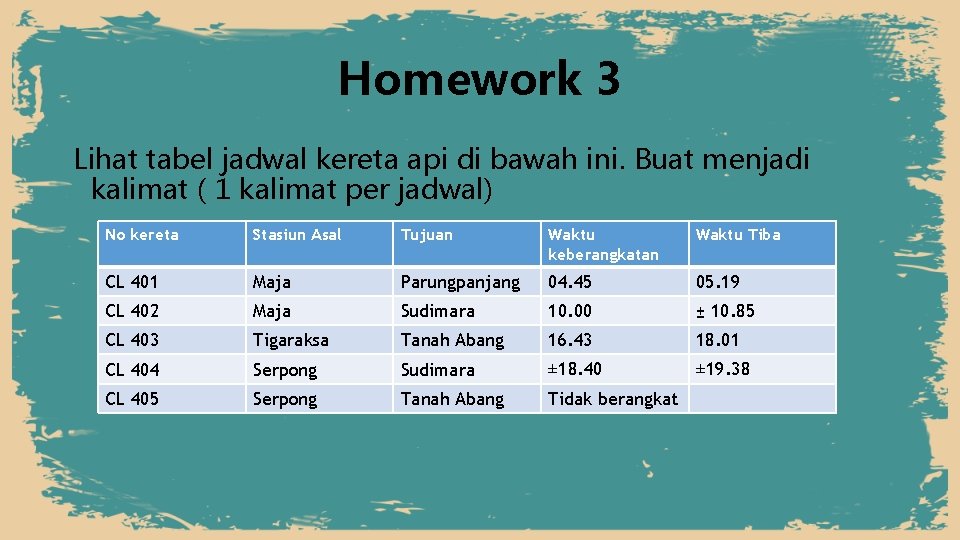
Homework 3 Lihat tabel jadwal kereta api di bawah ini. Buat menjadi kalimat ( 1 kalimat per jadwal) No kereta Stasiun Asal Tujuan Waktu keberangkatan Waktu Tiba CL 401 Maja Parungpanjang 04. 45 05. 19 CL 402 Maja Sudimara 10. 00 ± 10. 85 CL 403 Tigaraksa Tanah Abang 16. 43 18. 01 CL 404 Serpong Sudimara ± 18. 40 ± 19. 38 CL 405 Serpong Tanah Abang Tidak berangkat
- Slides: 16