
Basal ganglia Caudate N Putamen Globus pallidus Subthalamic
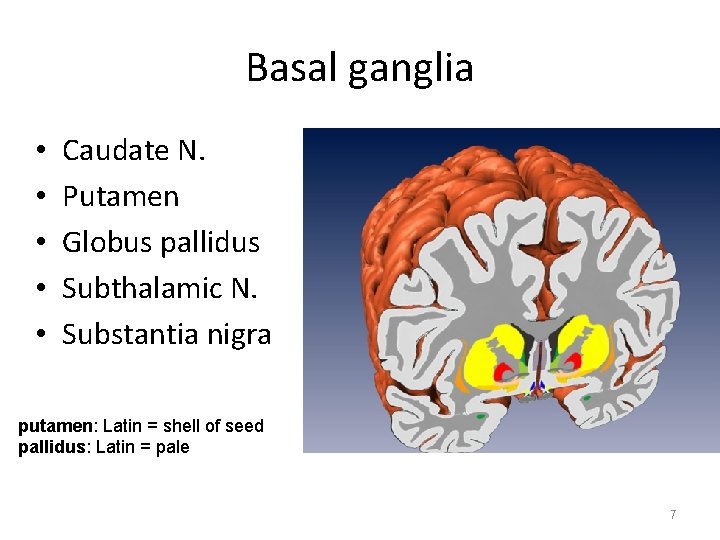
Basal ganglia • • • Caudate N. Putamen Globus pallidus Subthalamic N. Substantia nigra putamen: Latin = shell of seed pallidus: Latin = pale 7
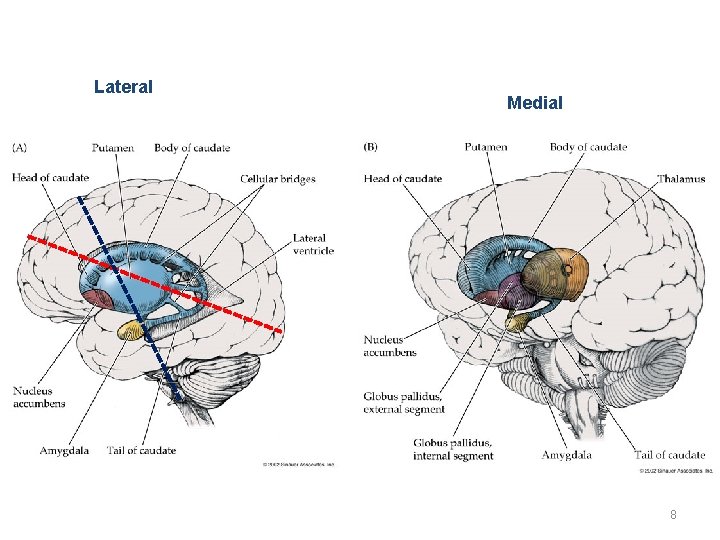
Lateral Medial 8
BG functions & pathology • Motor control • Motivation • Eye movements • • Cerebral palsy Huntington's disease Parkinson's disease Stuttering 9
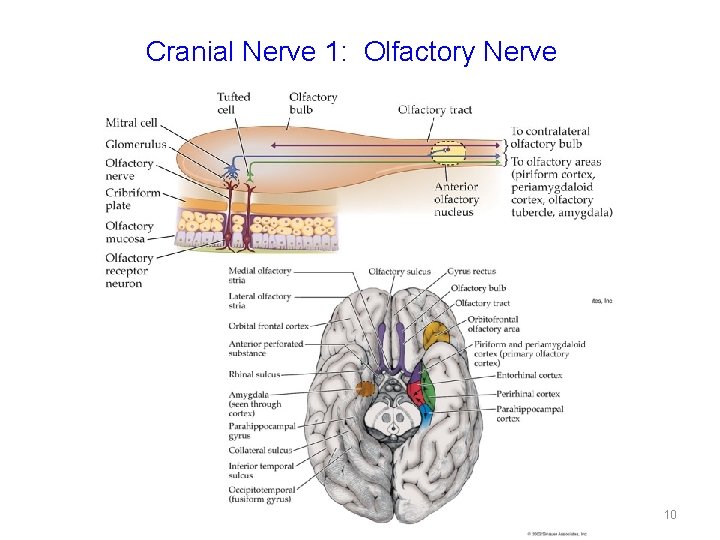
Cranial Nerve 1: Olfactory Nerve 10
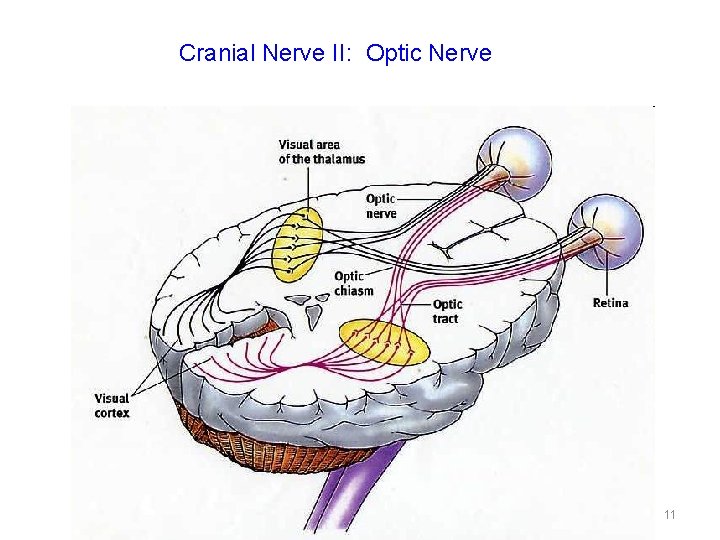
Cranial Nerve II: Optic Nerve 11
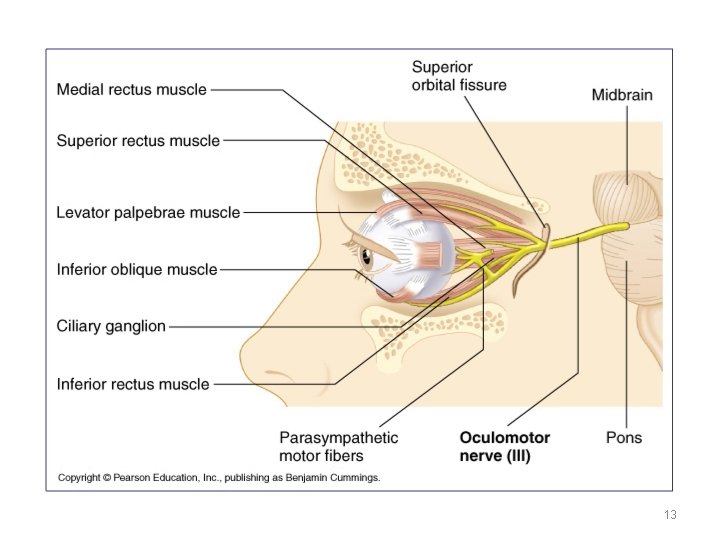
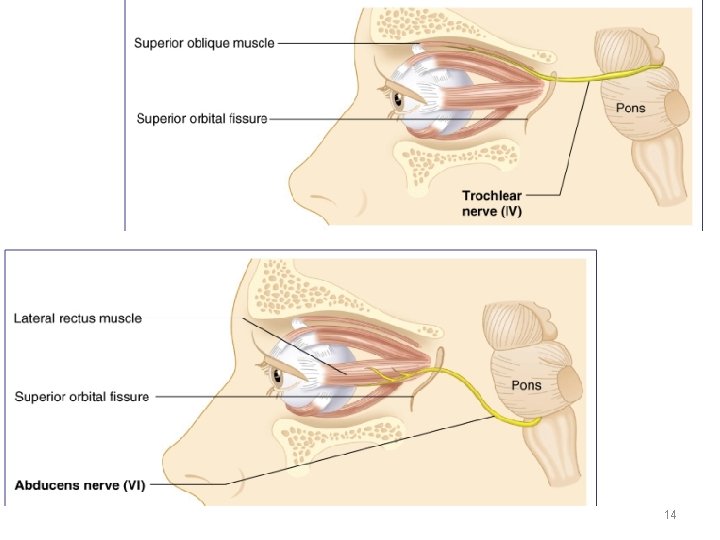
Cranial Nerves III, IV, VI: Oculomotor, Trochlear, Abducens • • • Oculomotor Innervates 4 extraocular muscles and functions in most eye movements Contains parasympathetic which innervates pupillary constrictor muscles • • • Trochlear Nerve exits dorsal surface and crosses over Moves eye medially and downward • • Abducens Moves eye laterally 12
13
14
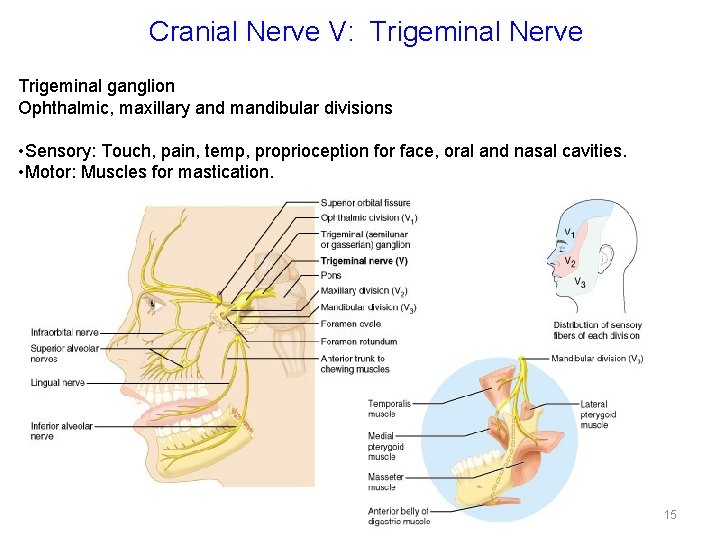
Cranial Nerve V: Trigeminal Nerve Trigeminal ganglion Ophthalmic, maxillary and mandibular divisions • Sensory: Touch, pain, temp, proprioception for face, oral and nasal cavities. • Motor: Muscles for mastication. 15
Cranial Nerve V: Trigeminal Nerve • V 1. Ophthalmic – Exits with eye muscle group (superior orbital fissure, through orbit to superior orbital notch/foramina) – Sensory to forehead, nasal cavity • V 2. Maxillary – Exits foramen rotundum through wall of maxillary sinus to inferior orbital foramina) – Sensory to cheek, upper lip, teeth, nasal cavity • V 3. Mandibular – – Exits foramen ovale to mandibular foramen to mental foramen Motor to jaw muscles-Masseter, temporalis, pterygoids, digastric Sensory to chin Taste Sensory to tongue (from facial N. ) 16
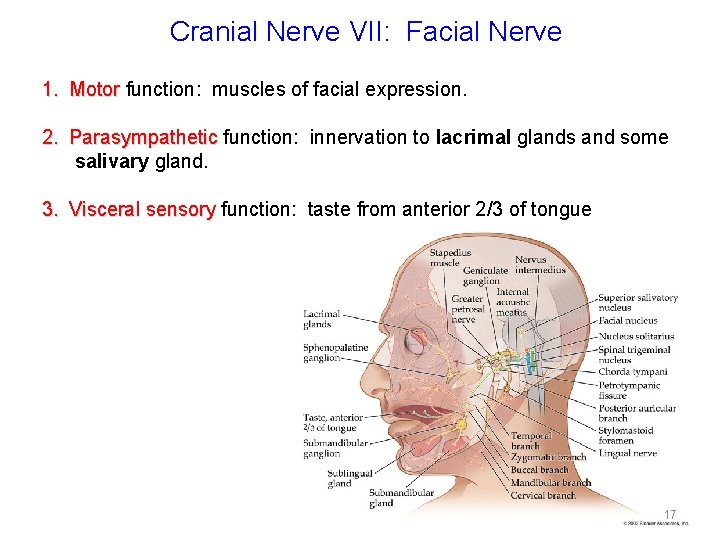
Cranial Nerve VII: Facial Nerve 1. Motor function: muscles of facial expression. 2. Parasympathetic function: innervation to lacrimal glands and some salivary gland. 3. Visceral sensory function: taste from anterior 2/3 of tongue 17
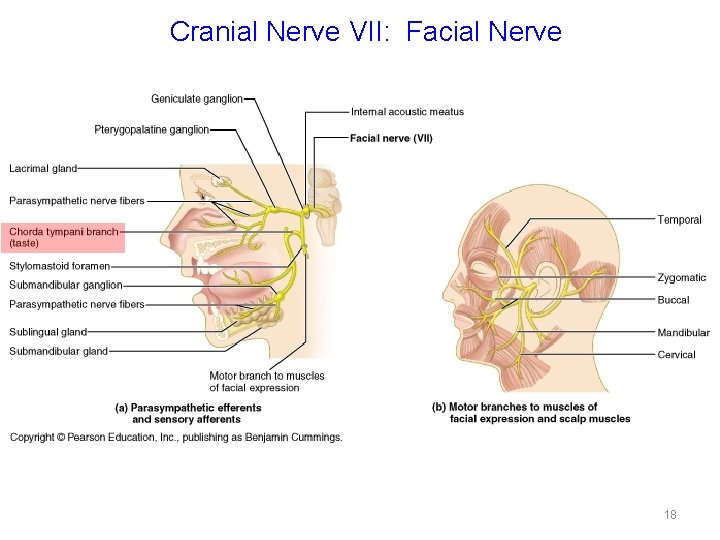
Cranial Nerve VII: Facial Nerve 18
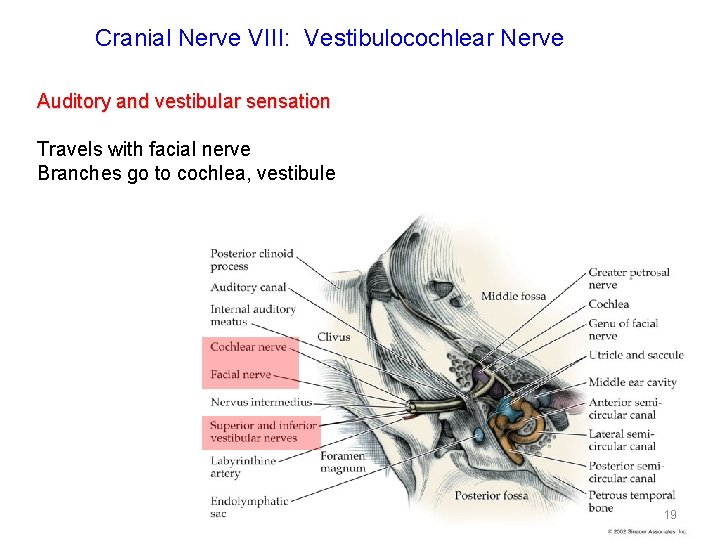
Cranial Nerve VIII: Vestibulocochlear Nerve Auditory and vestibular sensation Travels with facial nerve Branches go to cochlea, vestibule 19
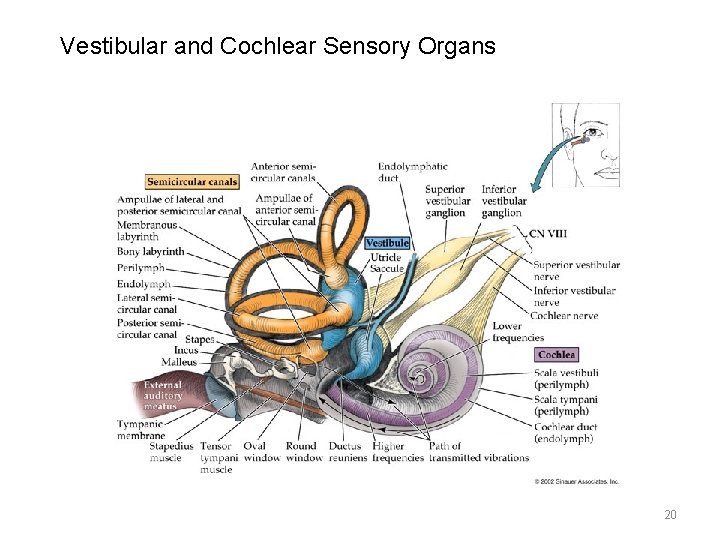
Vestibular and Cochlear Sensory Organs 20
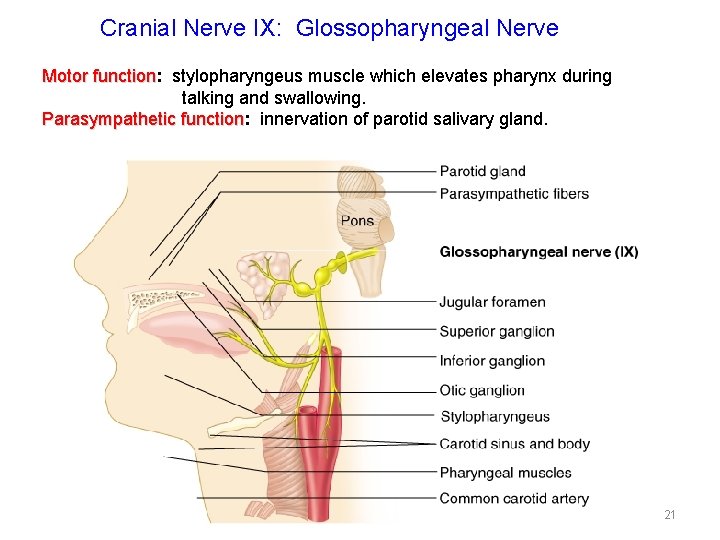
Cranial Nerve IX: Glossopharyngeal Nerve Motor function: function stylopharyngeus muscle which elevates pharynx during talking and swallowing. Parasympathetic function: function innervation of parotid salivary gland. 21
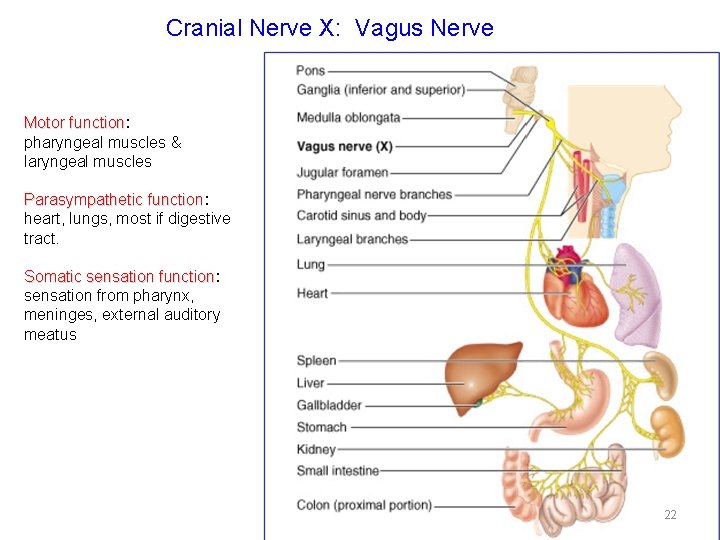
Cranial Nerve X: Vagus Nerve Motor function: function pharyngeal muscles & laryngeal muscles Parasympathetic function: function heart, lungs, most if digestive tract. Somatic sensation function: function sensation from pharynx, meninges, external auditory meatus 22
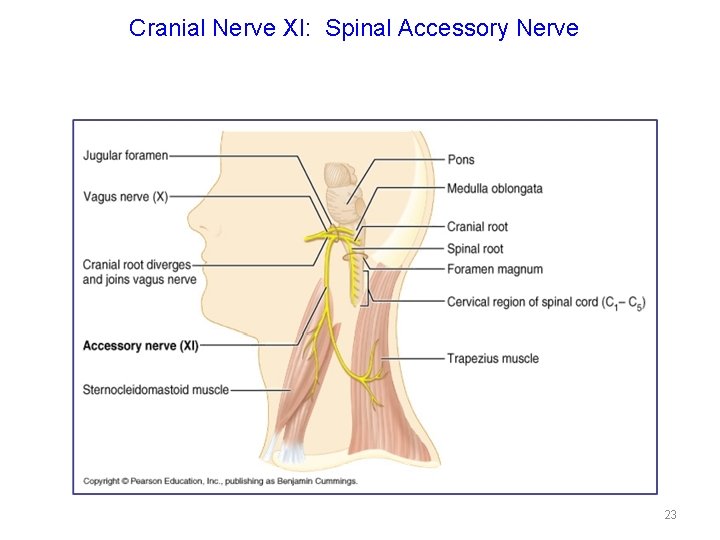
Cranial Nerve XI: Spinal Accessory Nerve 23
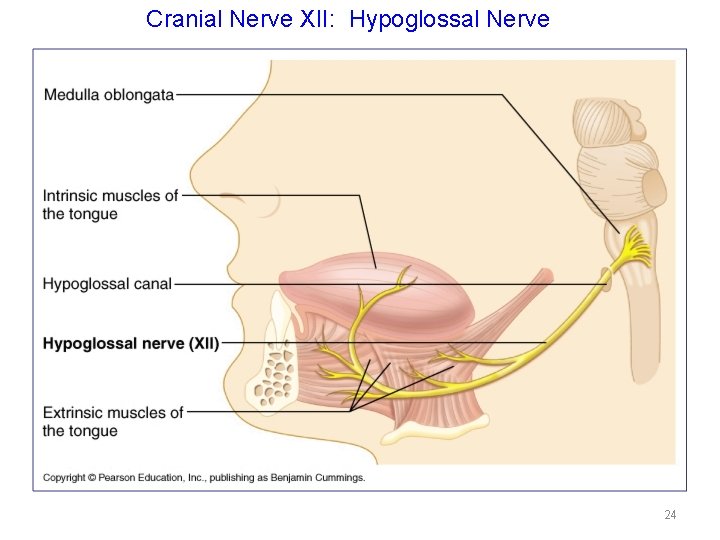
Cranial Nerve XII: Hypoglossal Nerve 24
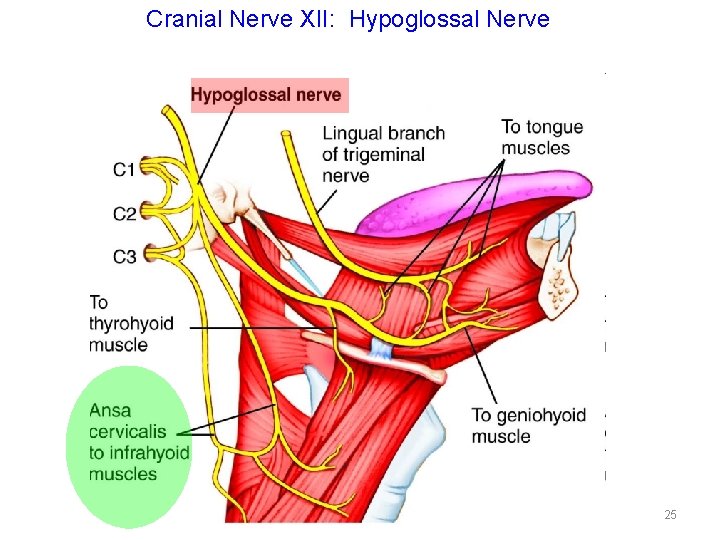
Cranial Nerve XII: Hypoglossal Nerve 25
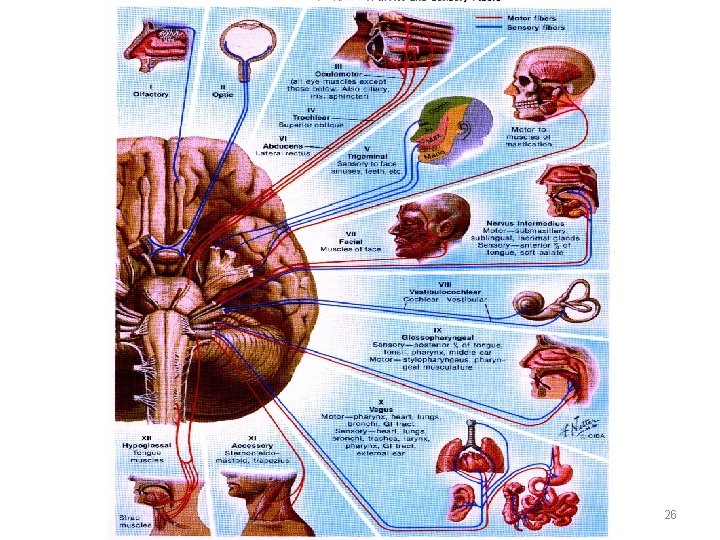
26

27
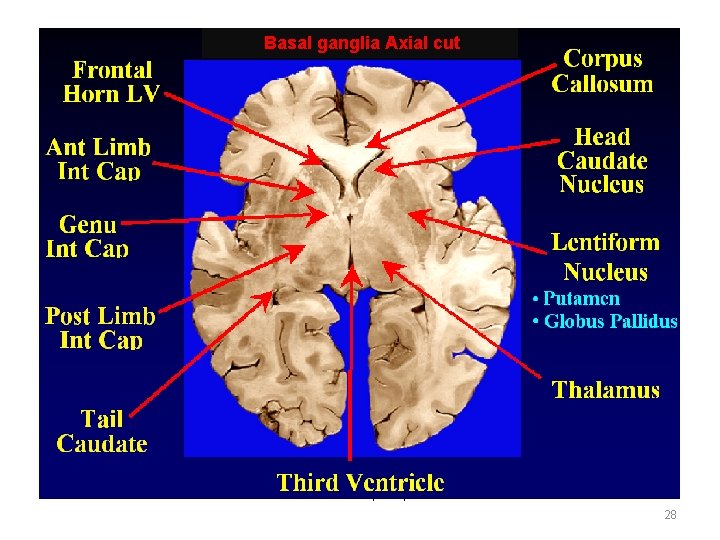
Basal ganglia Axial cut 28
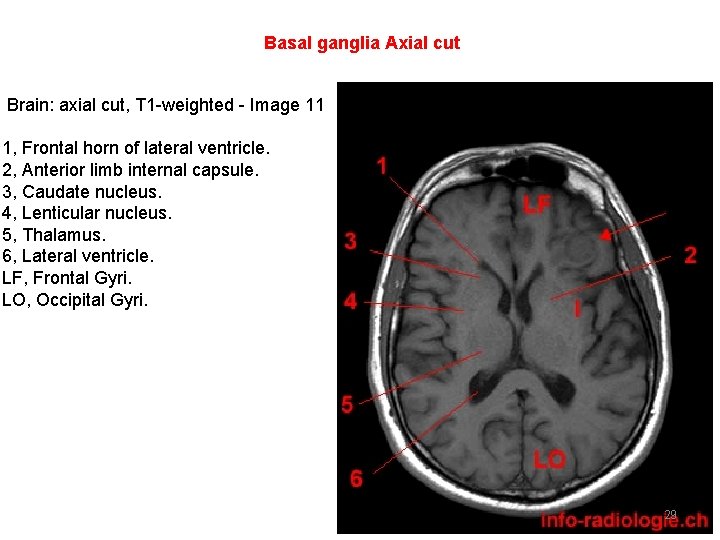
Basal ganglia Axial cut Brain: axial cut, T 1 -weighted - Image 11 1, Frontal horn of lateral ventricle. 2, Anterior limb internal capsule. 3, Caudate nucleus. 4, Lenticular nucleus. 5, Thalamus. 6, Lateral ventricle. LF, Frontal Gyri. LO, Occipital Gyri. 29
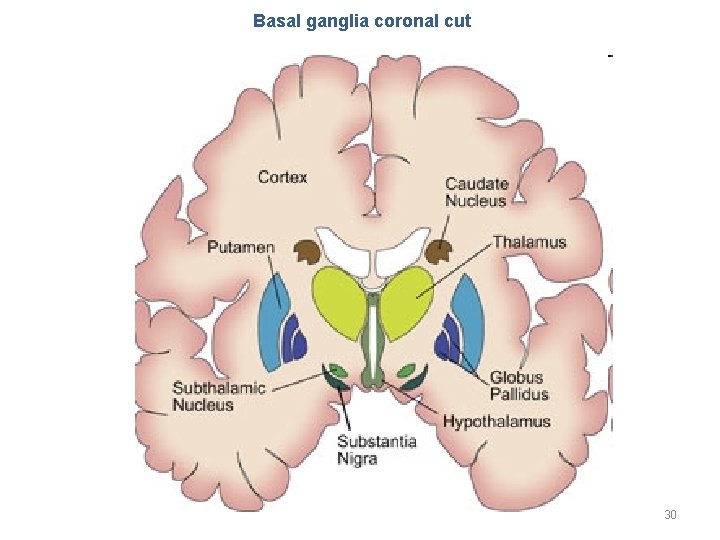
Basal ganglia coronal cut 30
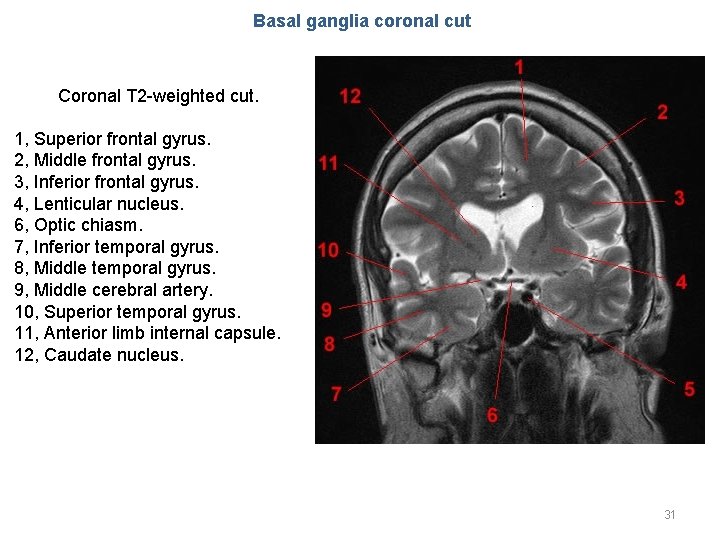
Basal ganglia coronal cut Coronal T 2 -weighted cut. 1, Superior frontal gyrus. 2, Middle frontal gyrus. 3, Inferior frontal gyrus. 4, Lenticular nucleus. 6, Optic chiasm. 7, Inferior temporal gyrus. 8, Middle temporal gyrus. 9, Middle cerebral artery. 10, Superior temporal gyrus. 11, Anterior limb internal capsule. 12, Caudate nucleus. 31
- Slides: 31