
Barriers to intercultural communication 1 In a group

Barriers to intercultural communication 1
In a group of 3 -4 students. Choose one of the statements and discuss it with your group members. Do you agree or disagree with it? 1. Globalization means that there is now one business culture everywhere in the world. 2. If they want to do business with me, then they’ll have to adapt to my culture. 3. ‘When in Rome, do as the Romans do. ’ 4. It’s impossible to generalize about cultures – there are so many differences. 5. Intercultural training just confirms stereotypes. 6. Today I’m dealing with the Americans, tomorrow with a group from Japan. I can’t possibly learn all I need to know about all the cultures I have to deal with. 7. What I need when I go abroad is a list of dos and don’ts. 2

Sharing ideas 3
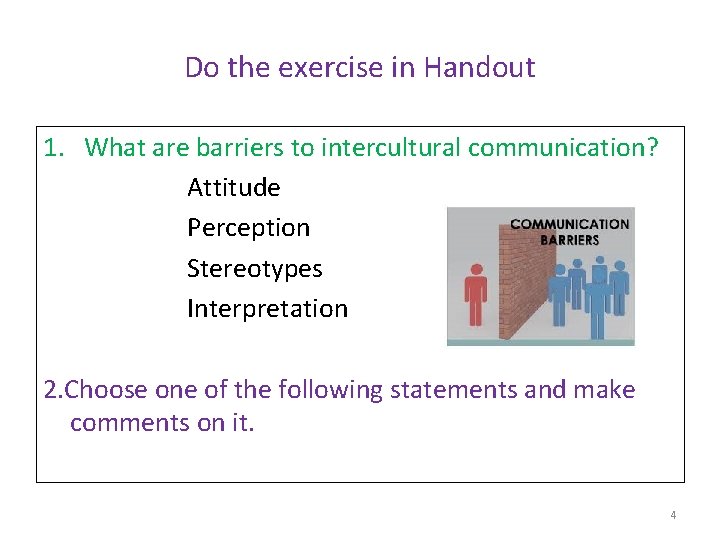
Do the exercise in Handout 1. What are barriers to intercultural communication? Attitude Perception Stereotypes Interpretation 2. Choose one of the following statements and make comments on it. 4

1. Globalization means that there is now one business culture everywhere in the world. Comments: 1. Business people do share certain beliefs and values, but it is highly misleading to believe that they are stronger than other types of cultural influence. 2. For example, Mc. Donalds tries to standardize its products, and adapts them to local taste. 3. The pressure of globalization can also lead to the strengthening of local identities. 4. For example, In Europe – the case of Scotland leaving UK and the Brexit In the USA- the concept of ‘melting pot’ is changed to ‘ the salad bowl’, where individual elements retain their own identity. 5

2. If they want to do business with me, them they’ll have to adapt to my culture. Comments: - This is an ethnocentric approach, and is unlikely to lead to success in business. - Many opportunities will be missed if this is taken into account. 6
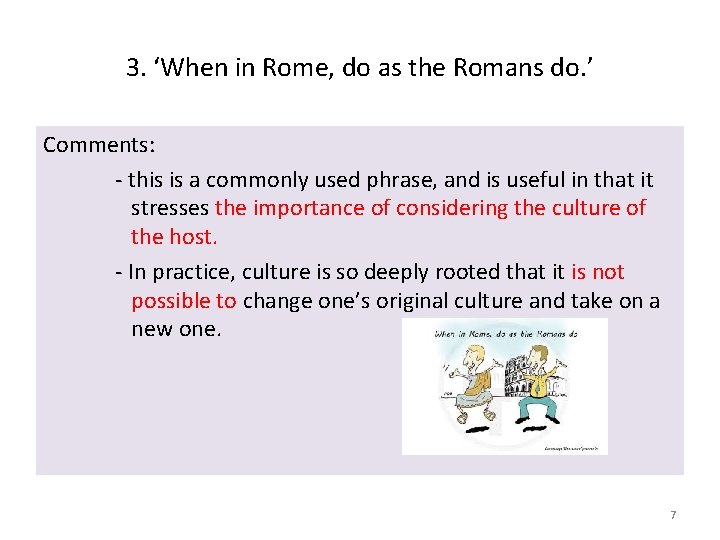
3. ‘When in Rome, do as the Romans do. ’ Comments: - this is a commonly used phrase, and is useful in that it stresses the importance of considering the culture of the host. - In practice, culture is so deeply rooted that it is not possible to change one’s original culture and take on a new one. 7
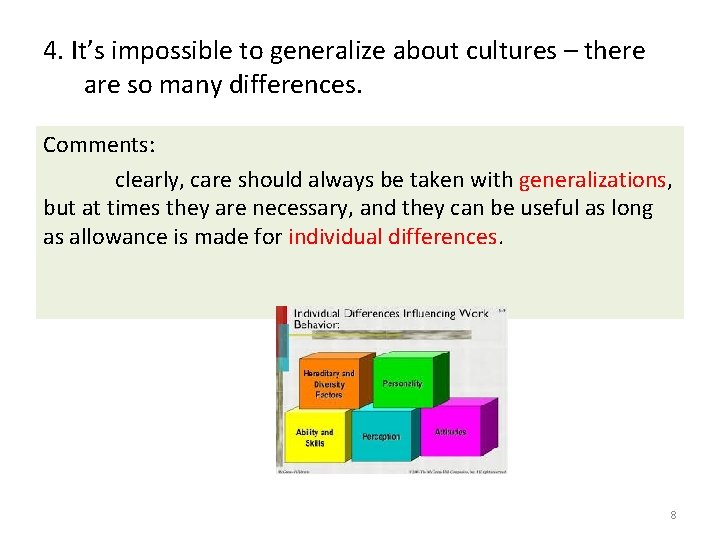
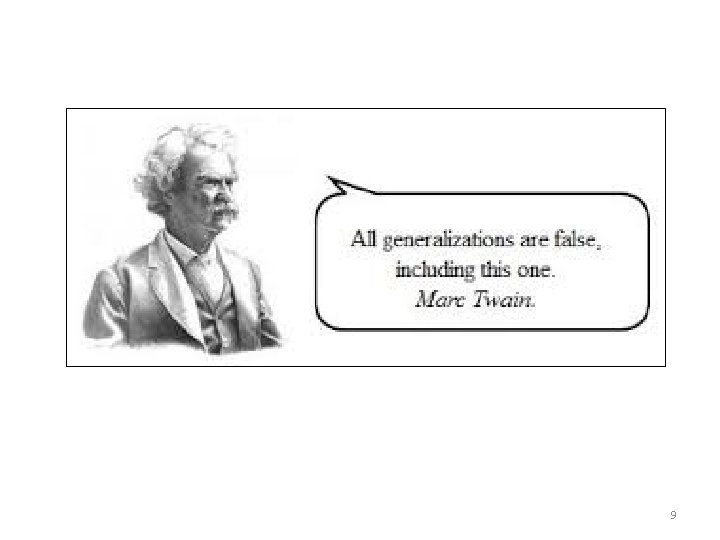
4. It’s impossible to generalize about cultures – there are so many differences. Comments: clearly, care should always be taken with generalizations, but at times they are necessary, and they can be useful as long as allowance is made for individual differences. 8
9
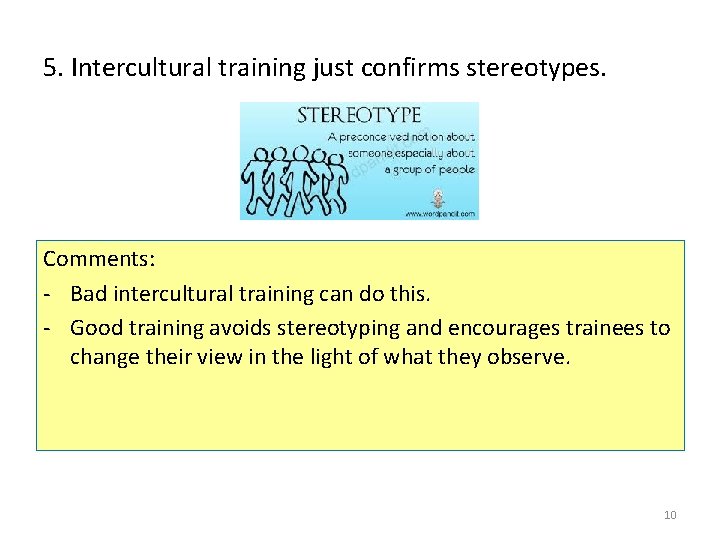
5. Intercultural training just confirms stereotypes. Comments: - Bad intercultural training can do this. - Good training avoids stereotyping and encourages trainees to change their view in the light of what they observe. 10
6. Today I’m dealing with the Americans, tomorrow with a group from Japan. I can’t possibly learn all I need to know about all the cultures I have to deal with. Comments: - Although this is true, intercultural training can sensitize you to the sorts of factors that may be influencing communication. 11
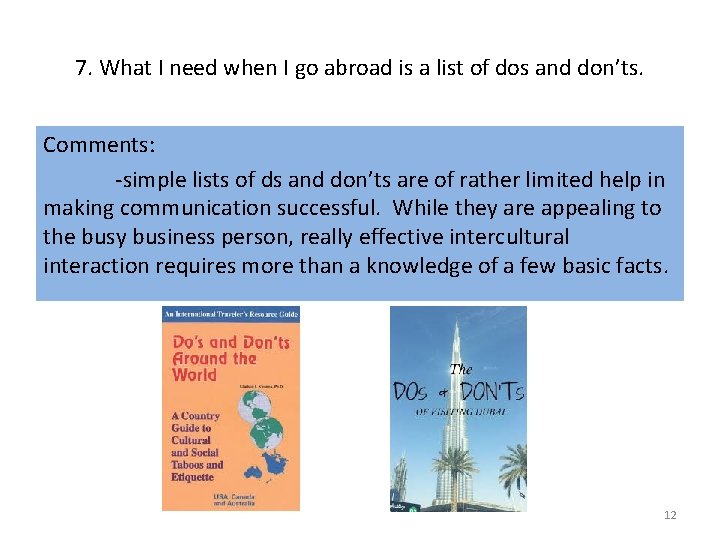
7. What I need when I go abroad is a list of dos and don’ts. Comments: -simple lists of ds and don’ts are of rather limited help in making communication successful. While they are appealing to the busy business person, really effective intercultural interaction requires more than a knowledge of a few basic facts. 12

3. Do you think what might be the purposes of the man who is wearing this T-shirt? Any possible answers. 13
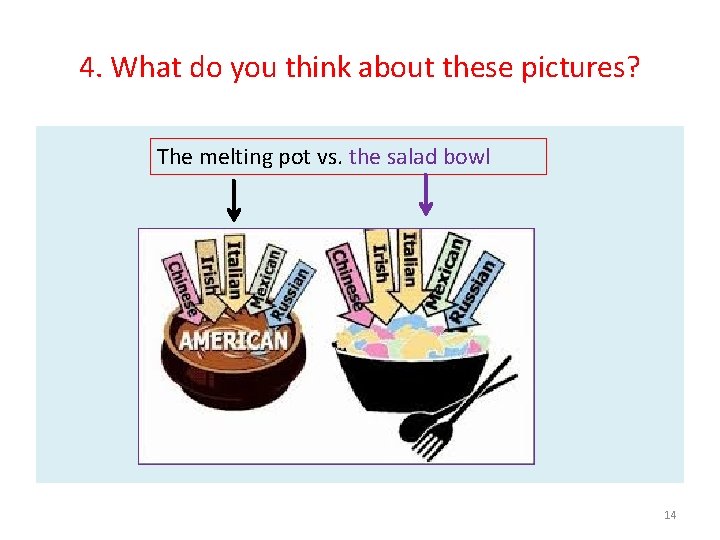
4. What do you think about these pictures? The melting pot vs. the salad bowl 14
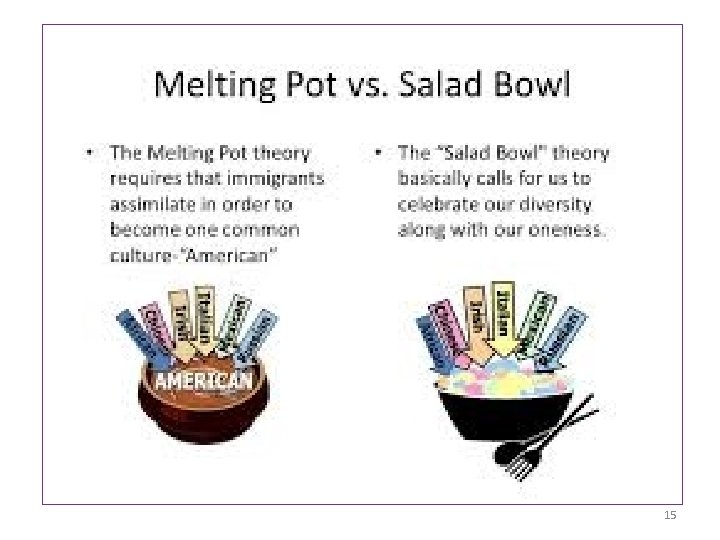
15

5. What do you see in this picture 16
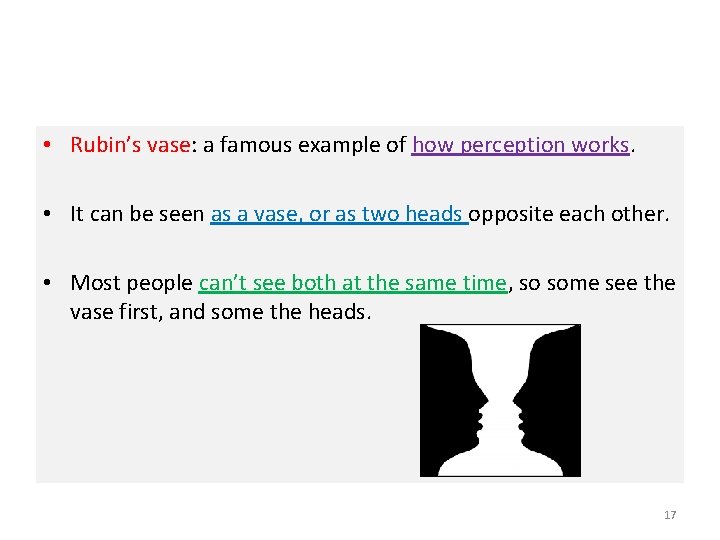
• Rubin’s vase: a famous example of how perception works. • It can be seen as a vase, or as two heads opposite each other. • Most people can’t see both at the same time, so some see the vase first, and some the heads. 17
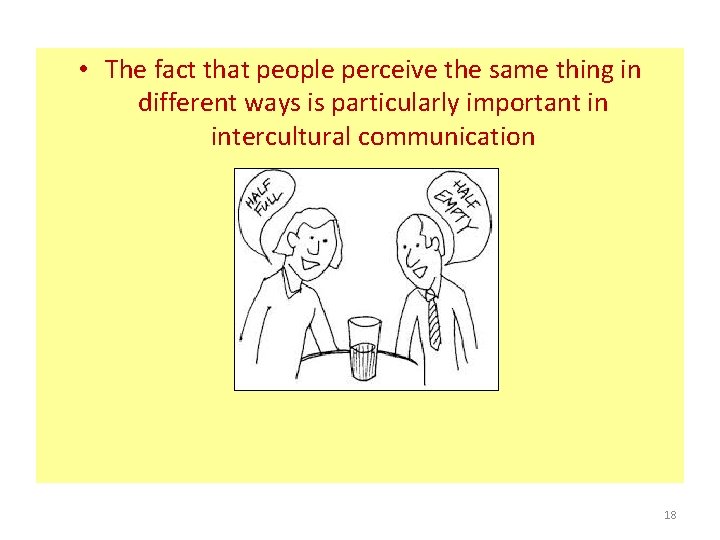
• The fact that people perceive the same thing in different ways is particularly important in intercultural communication 18

19
• The way we perceive is culturally determined, and the general lack of awareness of this is another barrier to intercultural communication. 20
- Slides: 20