
Barriers To Communication What is Barriers to Communication
Barriers To Communication
What is Barriers to Communication? -are specific items that can distort or prevent communication within an organization. -there are several barriers in an organization which reduce the effectiveness of communication. -mxr-
“ 12 kinds of Barriers” *Distance *Distortion *Semantics *Lack of Levelling *Lack of Trust *Inaccessibility *Lack of Clear Responsibility
“ 12 Kinds of Barriers” *Personal Incompatibility *Refusal to Listen *Failure to Use Proper Media *Communication Gap *Lack of Direction
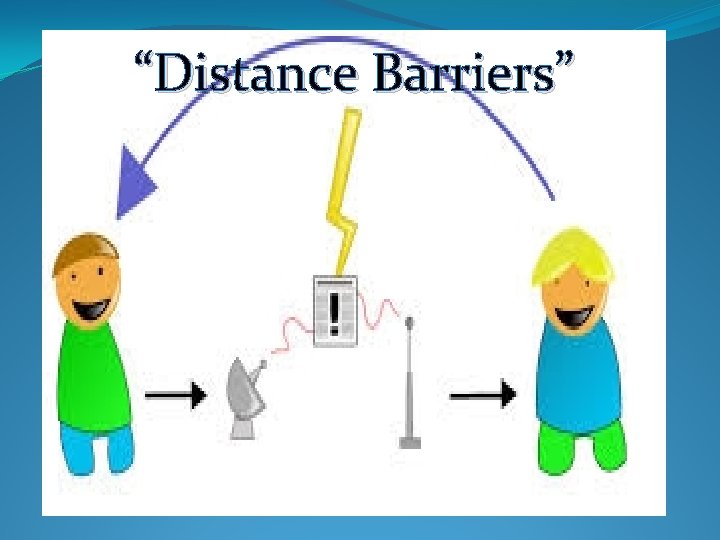
“Distance Barriers”
“ DISTANCE BARRIERS” -the physical distance between the supervisor and his subordinates results in less face-to-face communication. -mxr-
“ Distance Barriers” -physical distance also makes it difficult for supervisor and subordinate to seek clarification. -mxr-
“Distortion Barriers” - it occurs when an individual fails to distinguish actual data from his own views, feelings, emotions, and others. -mxr-
“Distortion Barriers” -Carl Rogers contends that the barriers to communication is the tendency to make value judgements on the statements of others. -mxr-
“Semantics Barriers” -this deals with the language aspects of communication. -mxr-

SEMANTIC LANGUAGE BARRIER
“Semantics Barriers” - Graham states that the structure of our language leads to misrepresentation of the true nature. -mxr-
“Lack of Levelling” -this refers to various difference in the levels of supervisors and subordinates. -mxr-
“Lack of Trust” -this barriers has to do with the previous experience of subordinates dealing with supervisor. -such activities may change subordinates trust in the supervisor. -mxr-
“Inaccessibility” -in some organization we find supervisor who are often out, of keep themselves busy with trival things and therefore are not available to subordinates for consultation, discussion, or guidance. -is not necessarily physical, it can be psychological. -mxr-
“Lack of Clear Responsibility” -when the responsibility assigned to the subordinates are not clear, they find scapegoat or come out with excuses. - lack of clarity in duties and responsibilities results in status and role ambiguities. -mxr-
“Personal Incompatibility” -often the personality of the supervisor and the subordinate clash and thus create communication blocks. -rather than viewing things objectively personality factors dominate and issues become personalized. -mxr-
“Refusal to Listen” -maybe due to a superiority complex feeling of “ I know everything” or an inferiority complex feeling of “I am no good” -mxr-
“ Refusal to Listen” -there are some supervisor, who by their careless attitude or arrogant nature, refuse to listen to their subordinates. -mxr-
“Failure to Use Proper Media” -several types of media are available in the organizational situation for communication purposes. -the effectiveness of communication depends on how a supervisor chooses the proper media for his own situation. -mxr-
“Communication Gap” -refers to the defects or loopholes in the formal network of communication. - the formal communication are built along the authorityresponsibility lines of the organization. -mxr-
“Lack of Direction” - a lack of direction in message content messages have 2 types of message: *Manifest or Evident Meaning *Latent or Real Meaning
Lack of Direction *Manifest/evident *Latent/real

Thank you For Listening. God bless you all Take care And Love Lots. -mxr-

Quisaot, Merry Grace N.
- Slides: 25