
Barn Owl Adaptations Eyesight Large Eyes Eyes do
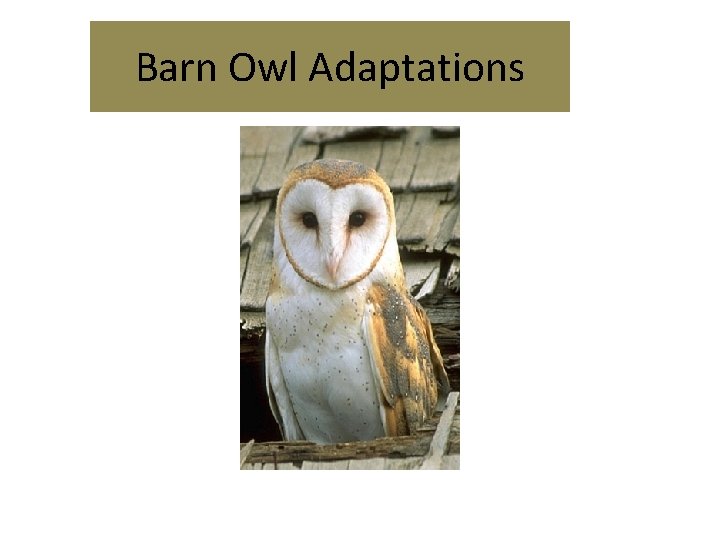
Barn Owl Adaptations
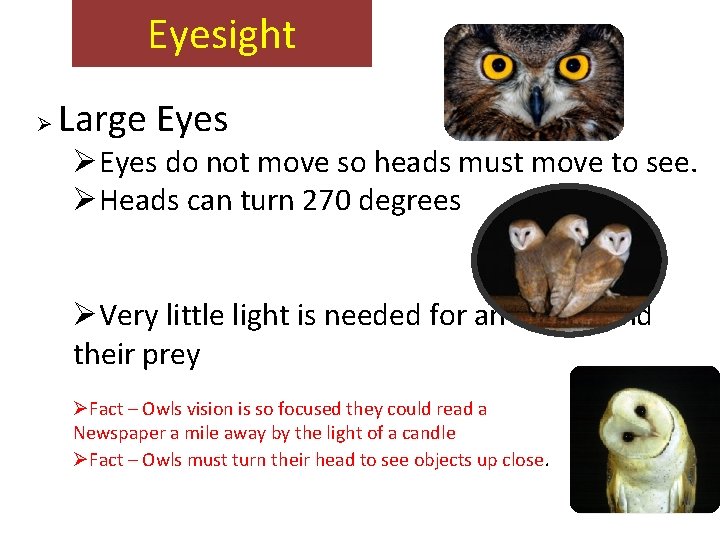
Eyesight Ø Large Eyes ØEyes do not move so heads must move to see. ØHeads can turn 270 degrees ØVery little light is needed for an owl to find their prey ØFact – Owls vision is so focused they could read a Newspaper a mile away by the light of a candle ØFact – Owls must turn their head to see objects up close.

Ø Large Hearing Oval-shaped ear openings with raised flaps called operculum ØFace is shaped like a satellite dish to collect and direct low intensity sounds ØEars are at different heights…. if sound reaches top ear first then the sound comes from above ØOwl’s sense of hearing is 35 to 100 times more sensitive than a human ØAn Owl can hear a mouse 60 feet away ØAn Owl can open and close it’s ears Facts
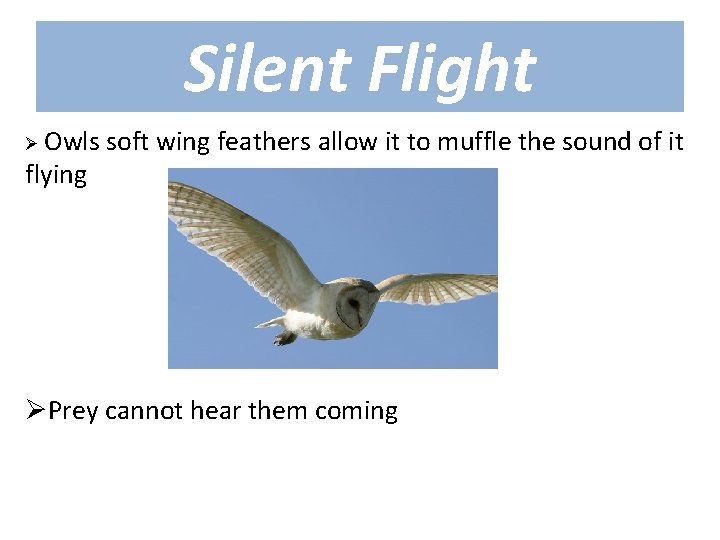
Silent Flight Ø Owls flying soft wing feathers allow it to muffle the sound of it ØPrey cannot hear them coming
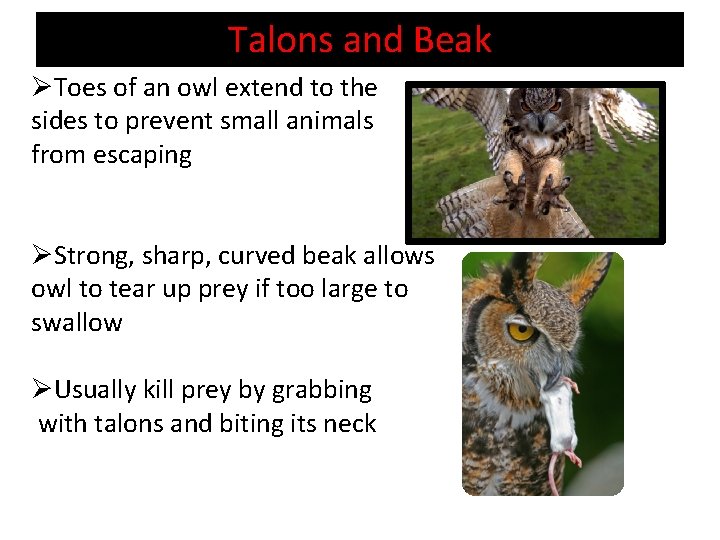
Talons and Beak ØToes of an owl extend to the sides to prevent small animals from escaping ØStrong, sharp, curved beak allows owl to tear up prey if too large to swallow ØUsually kill prey by grabbing with talons and biting its neck
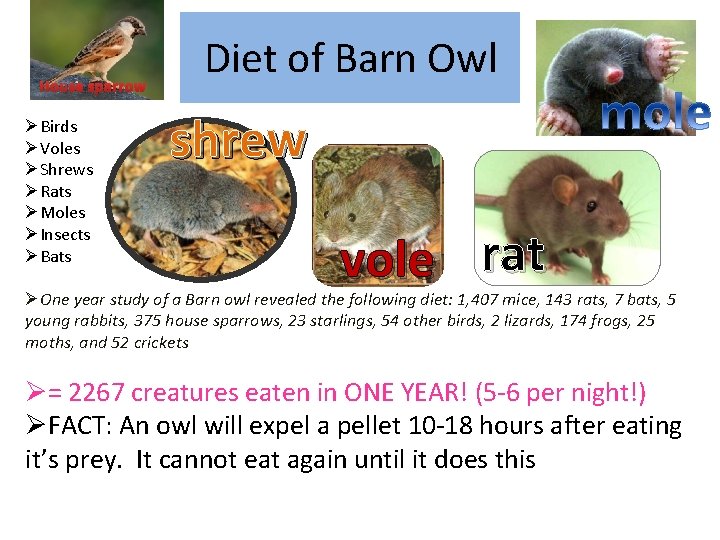
House sparrow ØBirds ØVoles ØShrews ØRats ØMoles ØInsects ØBats Diet of Barn Owl shrew vole rat ØOne year study of a Barn owl revealed the following diet: 1, 407 mice, 143 rats, 7 bats, 5 young rabbits, 375 house sparrows, 23 starlings, 54 other birds, 2 lizards, 174 frogs, 25 moths, and 52 crickets Ø= 2267 creatures eaten in ONE YEAR! (5 -6 per night!) ØFACT: An owl will expel a pellet 10 -18 hours after eating it’s prey. It cannot eat again until it does this
- Slides: 6