
BARIATRIC WHY SEATING MATTERS OBESITY IS NOW RECOGNISED

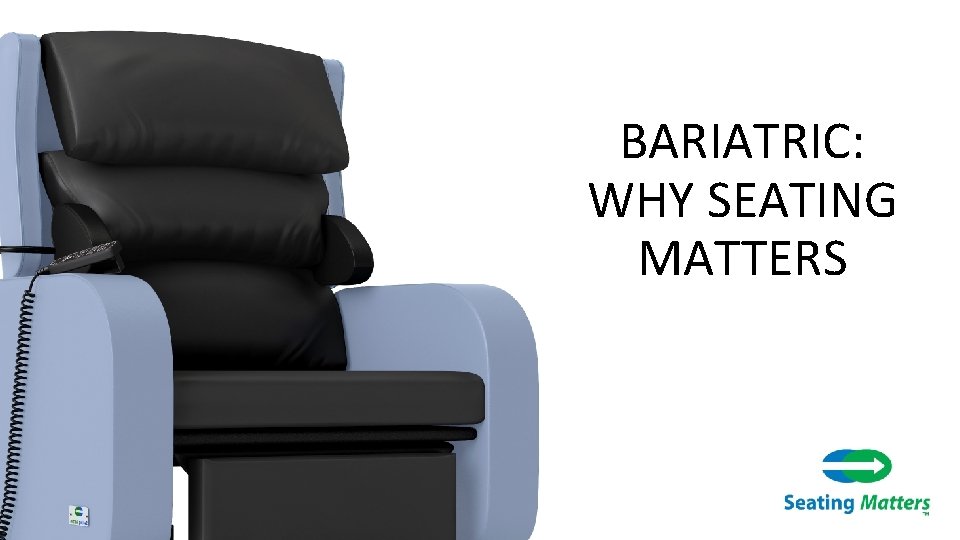
BARIATRIC: WHY SEATING MATTERS
OBESITY IS NOW RECOGNISED AS A WORLDWIDE EPIDEMIC • In 2010, 42% of men and 32% of women in the UK were classed as overweight (EPUAP) • The government project that by 2050 60% of men and 50% of women could be clinically obese • In the past 20 years there has been an increasing number of bariatric clients which presents a significant challenge to healthcare providers who must ensure they provide care and equipment which is safe for both clients and staff
ASSESSMENT OF THE BARIATRIC CLIENT • Very little literature or training available for this area of seating and positioning. It is a relatively new addition to our case loads • In 2010/11, there were 8, 087 weight-loss stomach operations in England's hospitals, up from 7, 214 in 2009/10, according to data from the NHS Information Centre • The report highlights around a 30 -fold increase in the number of people going under the knife in the last decade, from just 261 weight loss operations in 2000/01 • Education and research has not kept up with this challenge
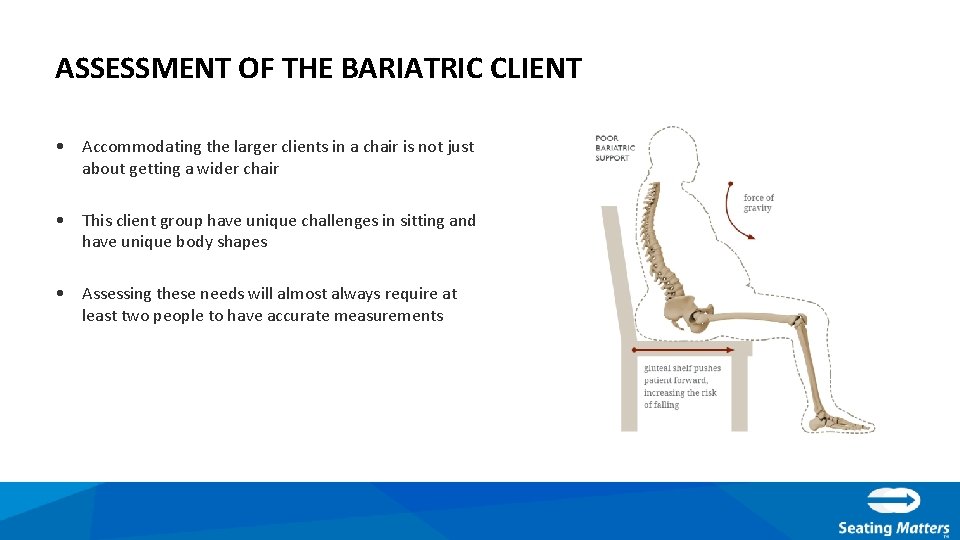
ASSESSMENT OF THE BARIATRIC CLIENT • Accommodating the larger clients in a chair is not just about getting a wider chair • This client group have unique challenges in sitting and have unique body shapes • Assessing these needs will almost always require at least two people to have accurate measurements
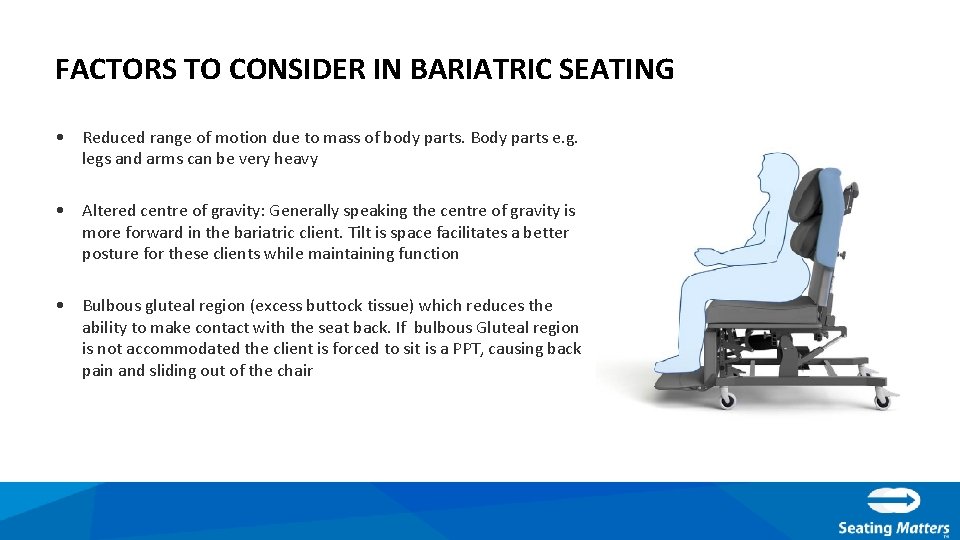
FACTORS TO CONSIDER IN BARIATRIC SEATING • Reduced range of motion due to mass of body parts. Body parts e. g. legs and arms can be very heavy • Altered centre of gravity: Generally speaking the centre of gravity is more forward in the bariatric client. Tilt is space facilitates a better posture for these clients while maintaining function • Bulbous gluteal region (excess buttock tissue) which reduces the ability to make contact with the seat back. If bulbous Gluteal region is not accommodated the client is forced to sit is a PPT, causing back pain and sliding out of the chair
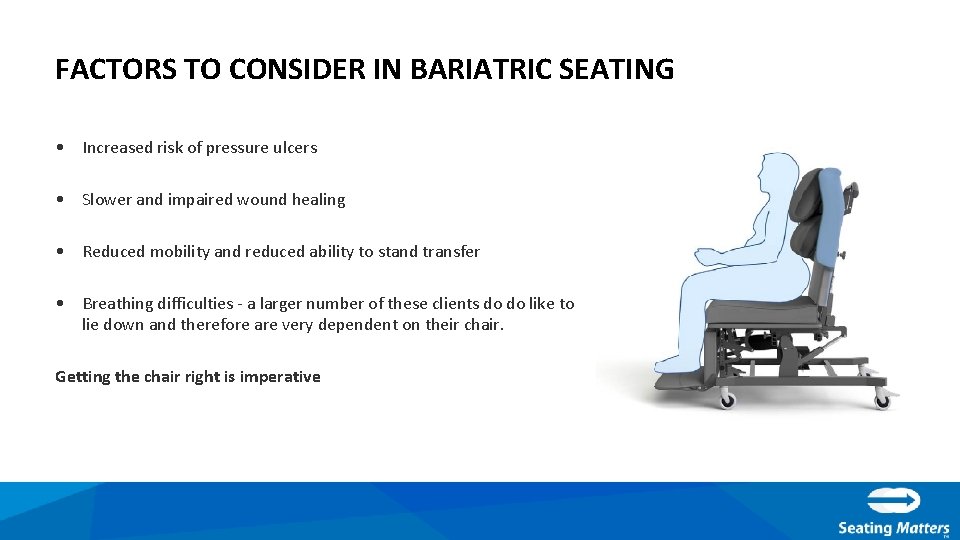
FACTORS TO CONSIDER IN BARIATRIC SEATING • Increased risk of pressure ulcers • Slower and impaired wound healing • Reduced mobility and reduced ability to stand transfer • Breathing difficulties - a larger number of these clients do do like to lie down and therefore are very dependent on their chair. Getting the chair right is imperative
FACTORS TO CONSIDER WHEN MOVING THE BARIATRIC CLIENT • Body shape • Reduced ability to move joints • Large body mass • Reduced strength and endurance • Centre of gravity shifts • Tire easily • Decreased balance • Need more space • Poor sensation in feet • Limited bending at knees and hips • Unable to see feet • Breathless
HIP FLEXION Measuring hip flexion in the Bariatric client is challenging due to the excess tissue. By using the back angle recline on the chair we are accommodating any possible hip flexion restriction and reducing the hip abduction. This will necessitate some ‘trial and error ‘ in order to get it as accurate as possible. KNEE FLEXION/EXTENSION Accommodation of tight hamstrings is necessary to prevent the client from sliding of the chair, however with the obese client the restriction in knee flexion may be due to excess tissue. This must be accommodated in the chair to avoid pressure ulcers. Adjustable leg rest is imperative for this client group.
SEAT WIDTHFOOTREST WIDTH Seat width and footrest width are always considered together. Ensure the width of your hand can fit comfortably between the lateral aspects of the clients thigh and the armrest, to reduce the risk of shear or friction. When measuring use a wood guide to assist with accurate measurements
Pressure ulcers and skin damage represent a preventable and serious health threat to bariatric clients… It is estimated that by 2050 obesity related diseases and complications will cost an extra £ 45. 5 billion a year
BARIATRIC CLIENTS ARE AT AN INCREASED RISK OF SKIN BREAKDOWN PARTICULARLY: • Between folds of skin • Across the buttocks • Other areas of high adiposity (fatty tissue) and reduced vascularity (Sturman-Floyd 2013) • Skin damage may also develop in locations where tubes, such as oxygen and catheters have been compressed (EPUAP) • Lateral aspects of knee • Lower leg
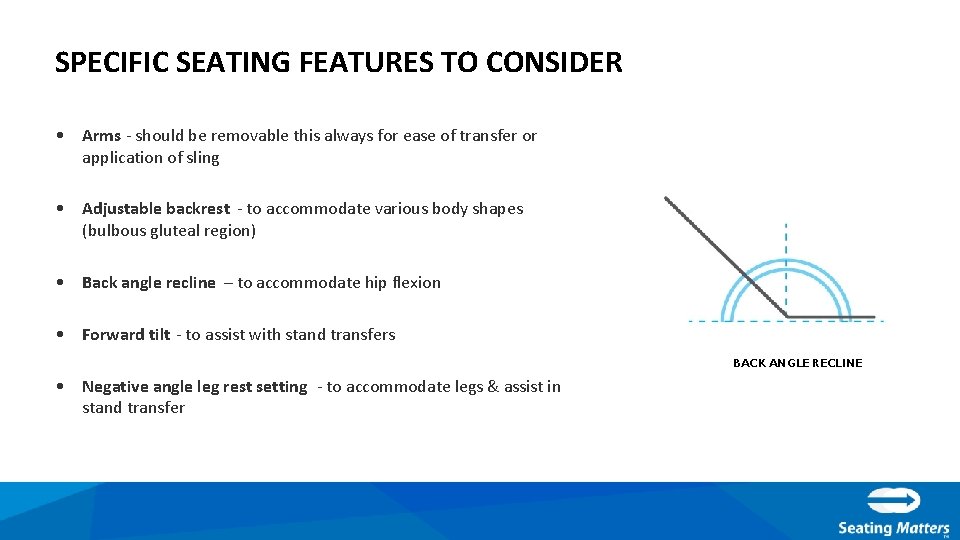
SPECIFIC SEATING FEATURES TO CONSIDER • Arms - should be removable this always for ease of transfer or application of sling • Adjustable backrest - to accommodate various body shapes (bulbous gluteal region) • Back angle recline – to accommodate hip flexion • Forward tilt - to assist with stand transfers BACK ANGLE RECLINE • Negative angle leg rest setting - to accommodate legs & assist in stand transfer
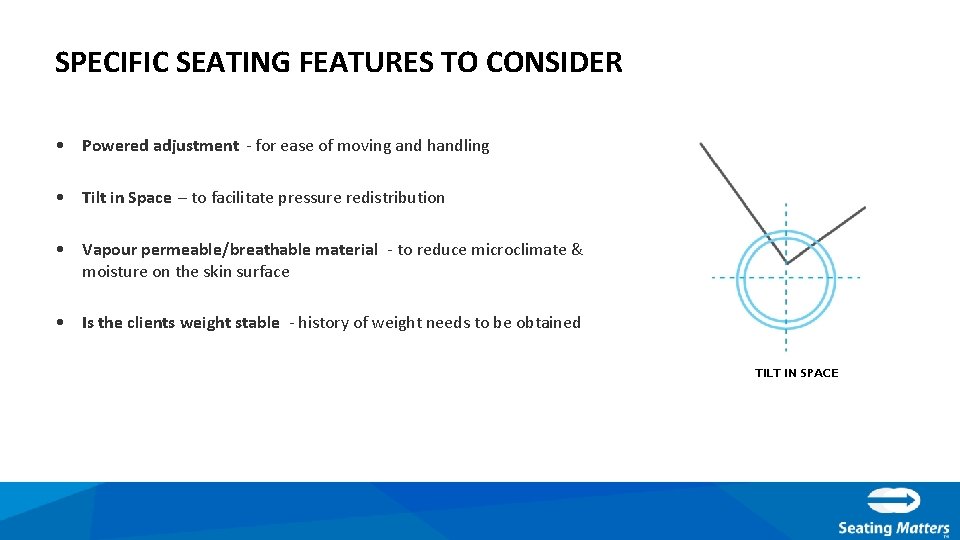
SPECIFIC SEATING FEATURES TO CONSIDER • Powered adjustment - for ease of moving and handling • Tilt in Space – to facilitate pressure redistribution • Vapour permeable/breathable material - to reduce microclimate & moisture on the skin surface • Is the clients weight stable - history of weight needs to be obtained TILT IN SPACE
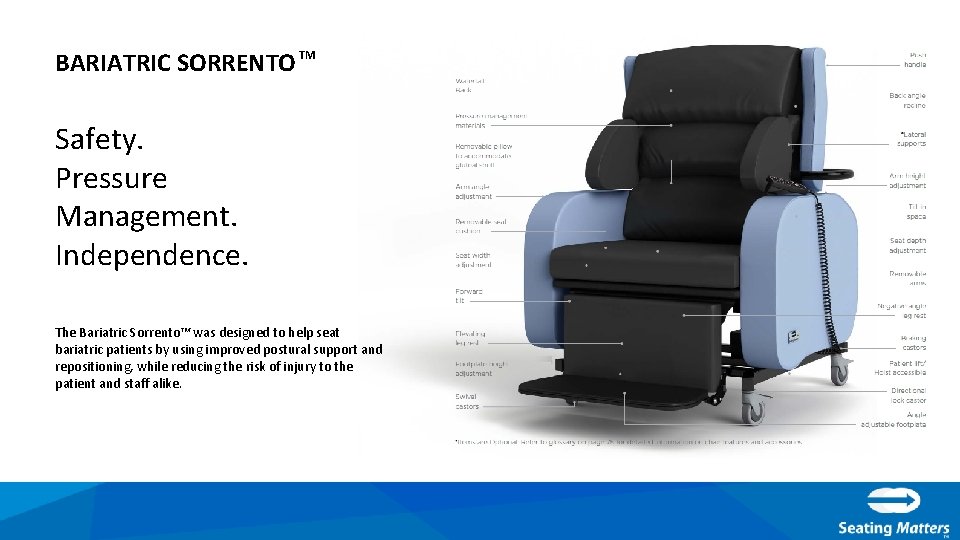
BARIATRIC SORRENTO TM Safety. Pressure Management. Independence. The Bariatric Sorrento™ was designed to help seat bariatric patients by using improved postural support and repositioning, while reducing the risk of injury to the patient and staff alike.
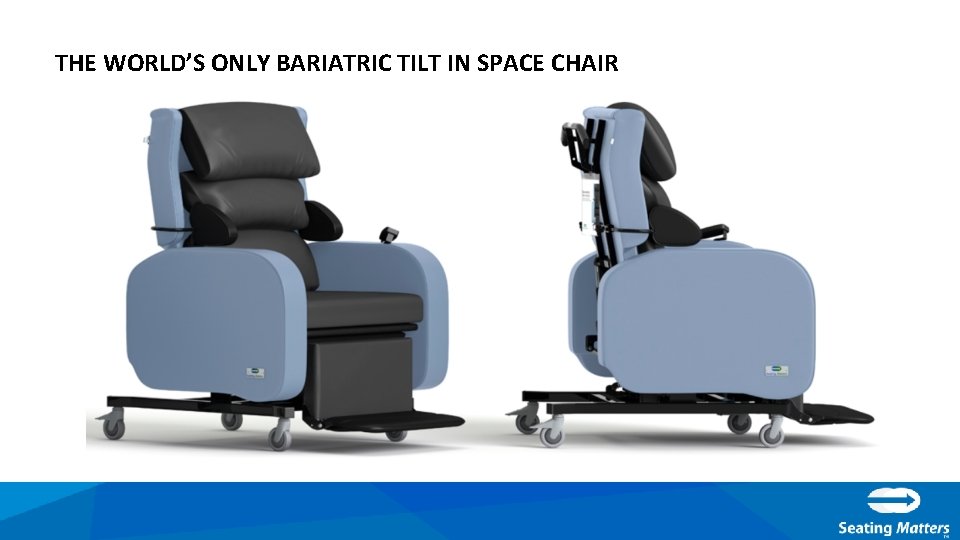
THE WORLD’S ONLY BARIATRIC TILT IN SPACE CHAIR
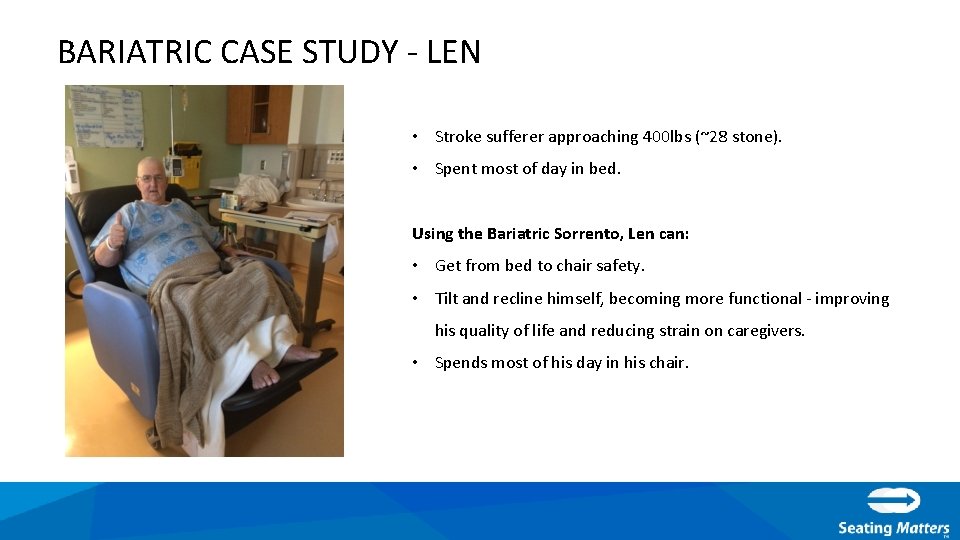
BARIATRIC CASE STUDY - LEN • Stroke sufferer approaching 400 lbs (~28 stone). • Spent most of day in bed. Using the Bariatric Sorrento, Len can: • Get from bed to chair safety. • Tilt and recline himself, becoming more functional - improving his quality of life and reducing strain on caregivers. • Spends most of his day in his chair.
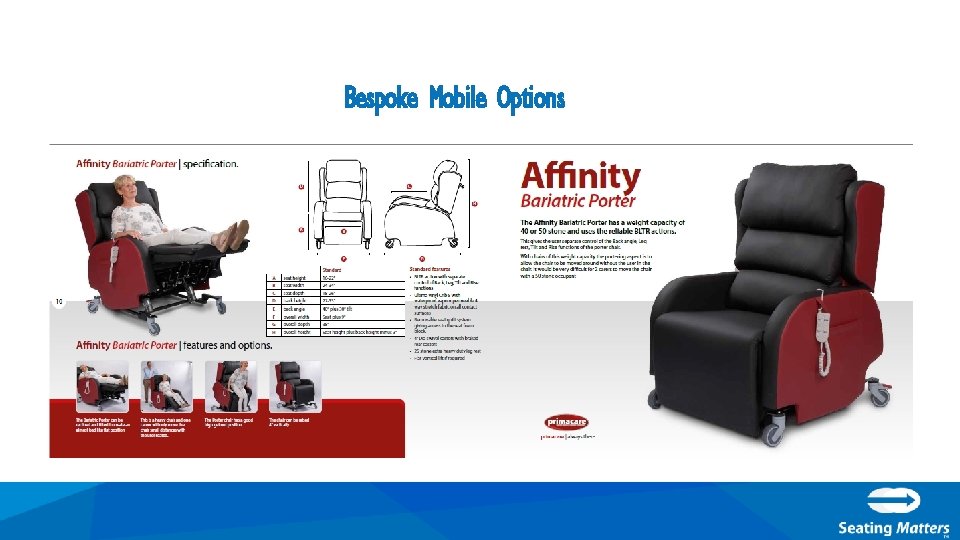
Bespoke Mobile Options
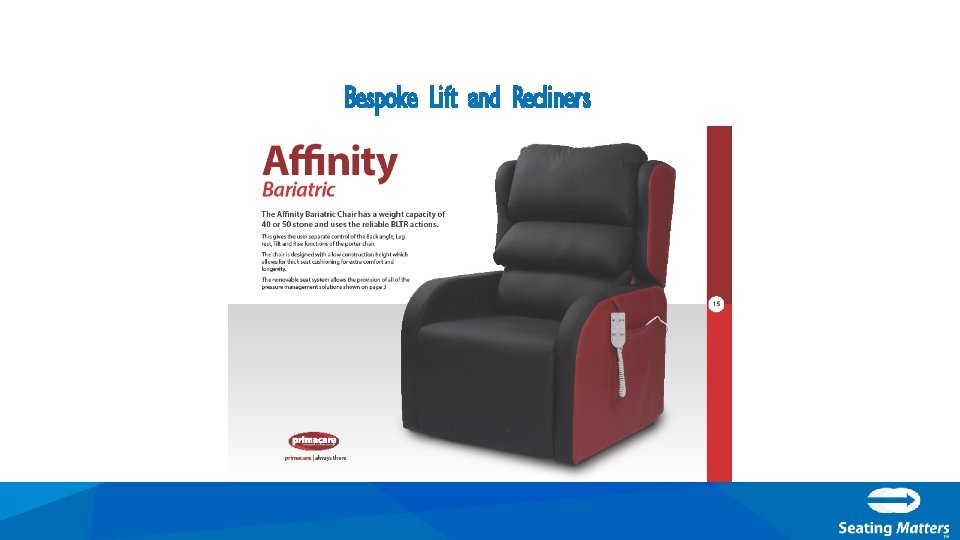
Bespoke Lift and Recliners
Evolution Healthcare Limited Scotland Lewis Seaton – Seating and Postural Advisor Kevin Seaton – Seating and Postural Advisor Head Office www. Evolutionhealthcare. co. uk 07525814962 07720739970 02887727855
- Slides: 20