
Bard High School Early College 1 Learning Goals
第十八课 运动 Bard High School Early College 巴德高中 1
Learning Goals 学习目标 l l Name some popular sports; Talk about your exercise habits. Discuss your opinions about various sports; Make a simple comparison between how soccer and American football are played. 2
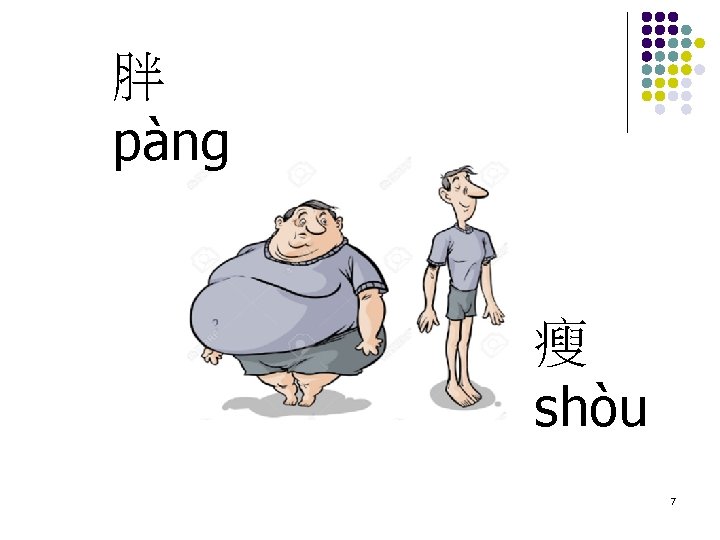
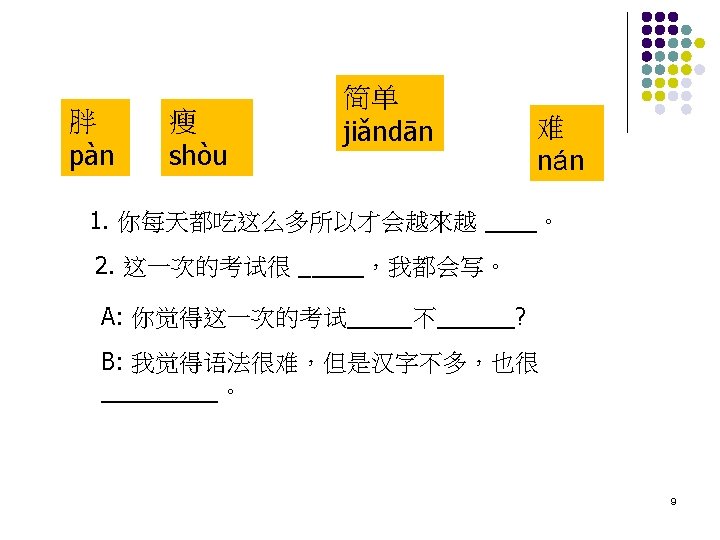
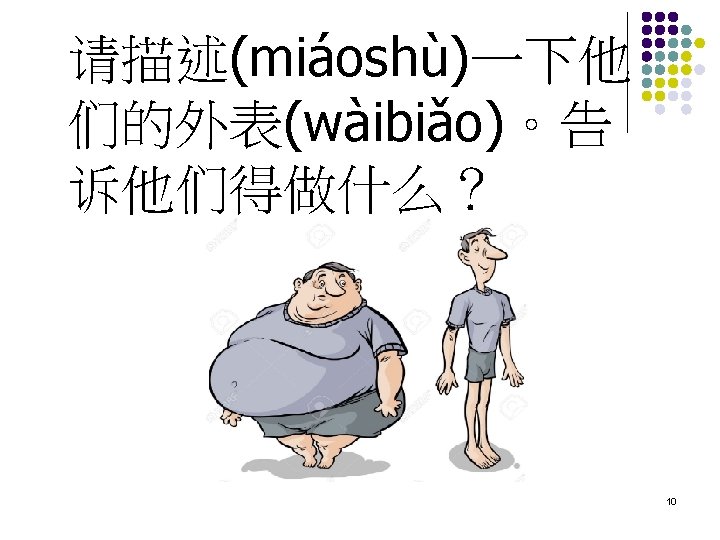
胖 pàng 瘦 shòu 7
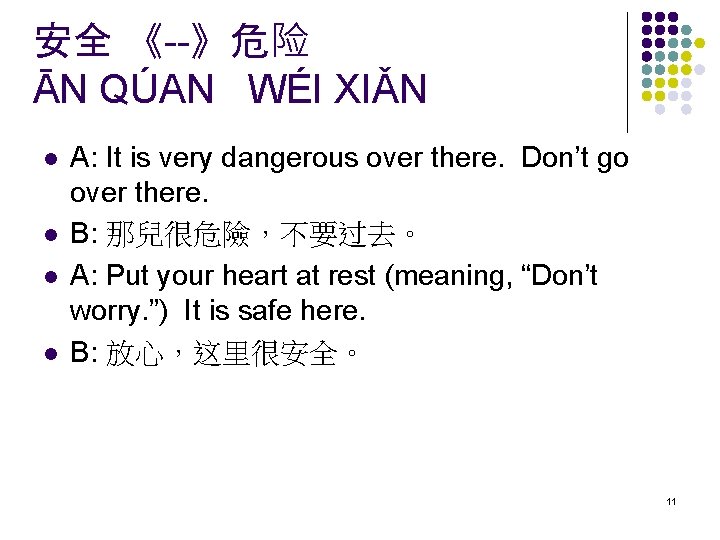
安全 《--》危险 ĀN QÚAN WÉI XIǍN l l A: It is very dangerous over there. Don’t go over there. B: 那兒很危險,不要过去。 A: Put your heart at rest (meaning, “Don’t worry. ”) It is safe here. B: 放心,这里很安全。 11
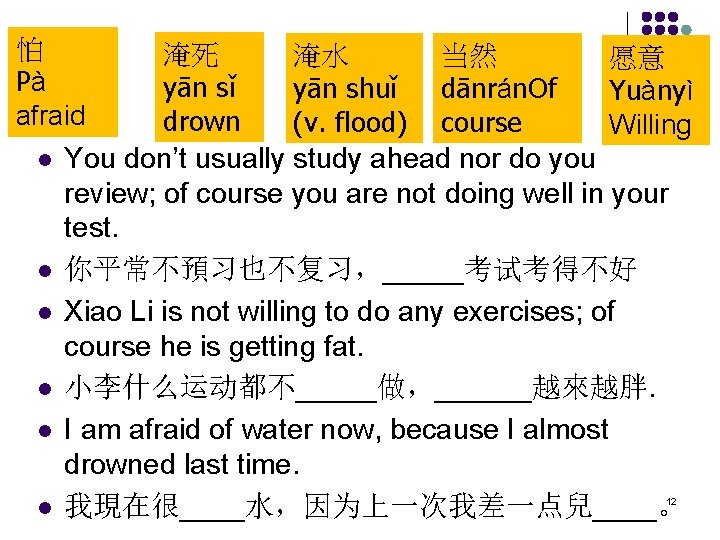
怕 Pà afraid l l l 淹死 淹水 当然 愿意 yān sǐ dānrán. Of yān shuǐ Yuànyì drown (v. flood) course Willing You don’t usually study ahead nor do you review; of course you are not doing well in your test. 你平常不預习也不复习,_____考试考得不好 Xiao Li is not willing to do any exercises; of course he is getting fat. 小李什么运动都不_____做,______越來越胖. I am afraid of water now, because I almost drowned last time. 我現在很____水,因为上一次我差一点兒____。 12
SPEAKING EXERCISES 说话练习 l l l According Wang Peng, why has Gao Wenzhong gained weight? 王朋说为什么高文中越来越胖? How many times a week does Wang Peng recommend Gao Wenzhong should exercise? 王朋建议高文中得一个星期运动几次? How long does Wang Peng recommend Gao Wenzhong should exercise each time? 王朋建议高文中一次得运动多久? 13
l l l How long has it been since Gao Wenzhong exercised? 高文中多久没做运动了? What sports does Wang Peng recommend Gao Wenzhong? 王朋建议高文中做什么运动? What excuses does Gao Wenzhong give for disliking jogging? 高文中说为什么他不喜欢慢跑? 14
l Why does Wang Peng recommend swimming? l 为什么王朋建议游泳? l What is Wang Peng’s conclusion? l 最后王朋说了什么? l 最后王朋下了什么结论? 15
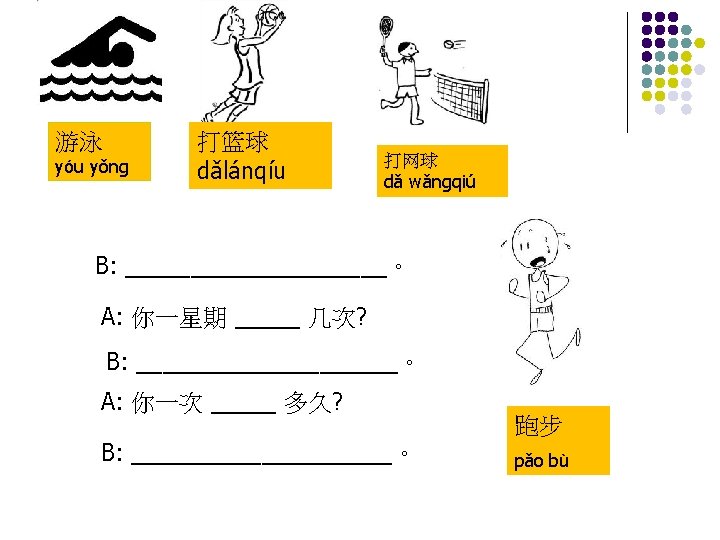
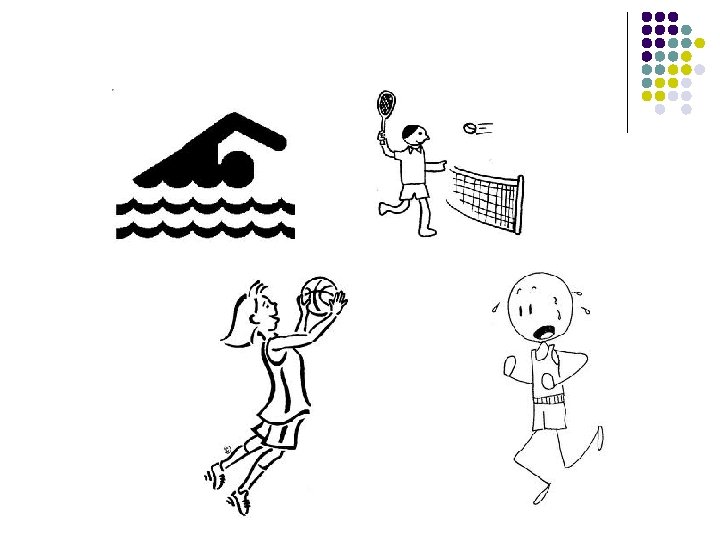
B. WORK WITH YOUR CLASSMATE Ask your classmate the following questions: l Do you exercise? l How often do you exercise? l What kind of exercise do you do? l Why do you like this kind of exercise? 16
l l l l Do you exercise? 你做运动吗? How often do you exercise? 你多久做一次运动? What kind of exercise do you do? 你喜欢做什么运动? Why do you like this kind of exercises? ’ 为什么你喜欢做这种运动? 17
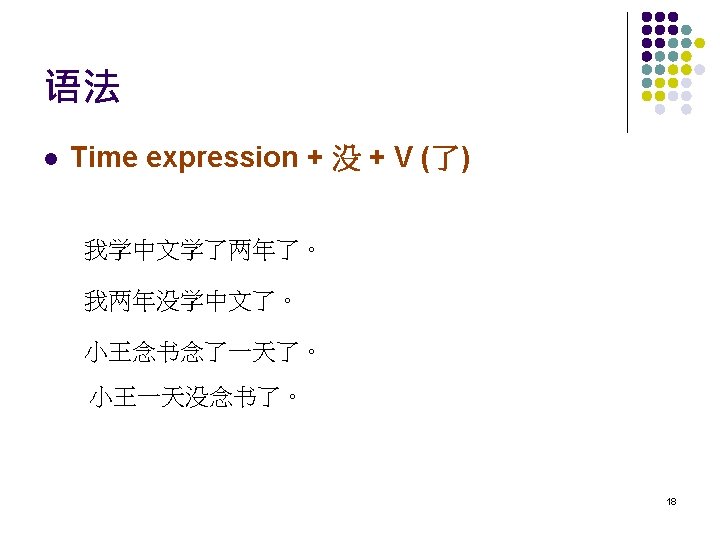
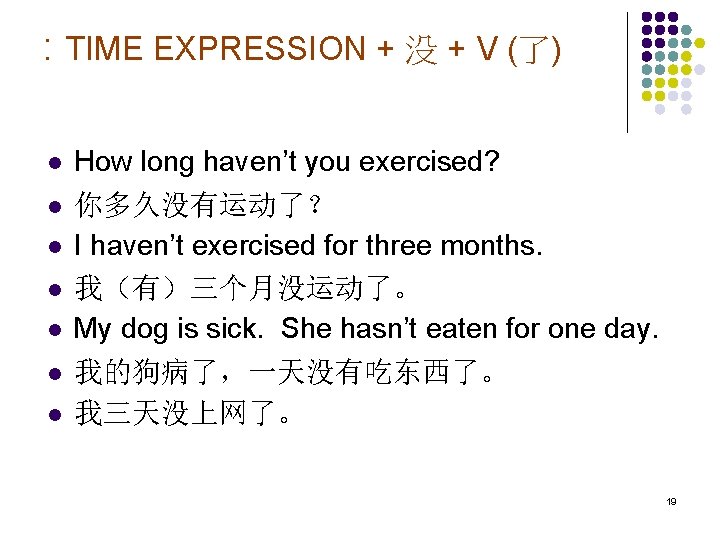
: TIME EXPRESSION + 没 + V (了) l l l l How long haven’t you exercised? 你多久没有运动了? I haven’t exercised for three months. 我(有)三个月没运动了。 My dog is sick. She hasn’t eaten for one day. 我的狗病了,一天没有吃东西了。 我三天没上网了。 19
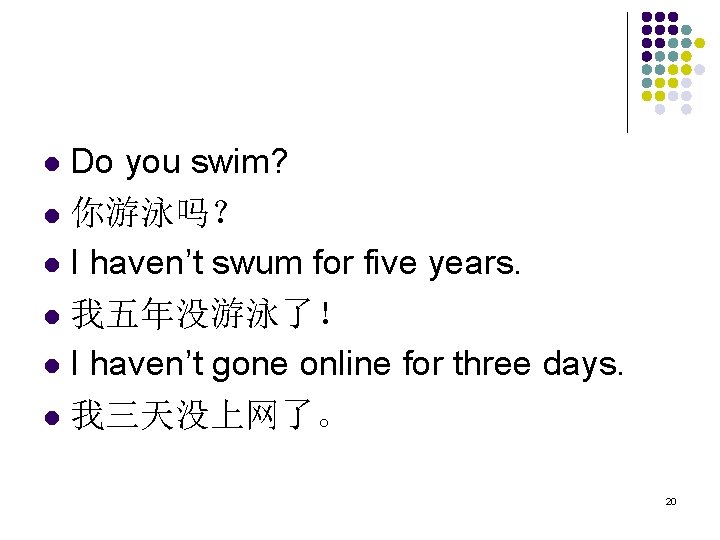
Do you swim? l 你游泳吗? l I haven’t swum for five years. l 我五年没游泳了! l I haven’t gone online for three days. l 我三天没上网了。 l 20
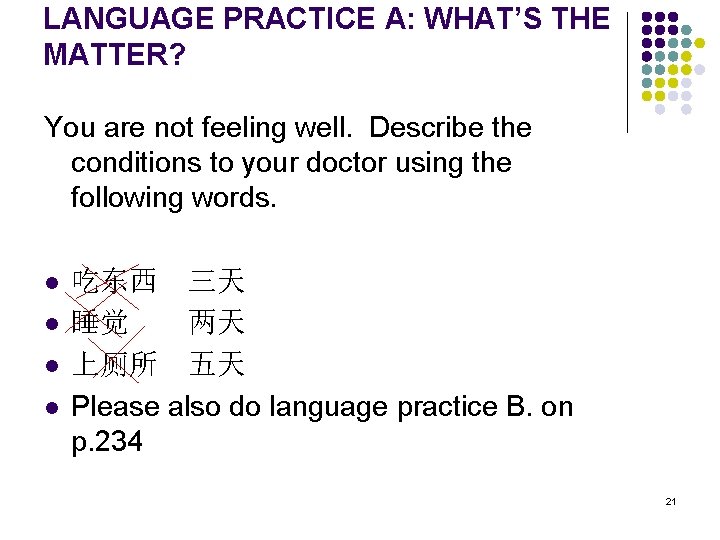
LANGUAGE PRACTICE A: WHAT’S THE MATTER? You are not feeling well. Describe the conditions to your doctor using the following words. l l 吃东西 三天 睡觉 两天 上厕所 五天 Please also do language practice B. on p. 234 21
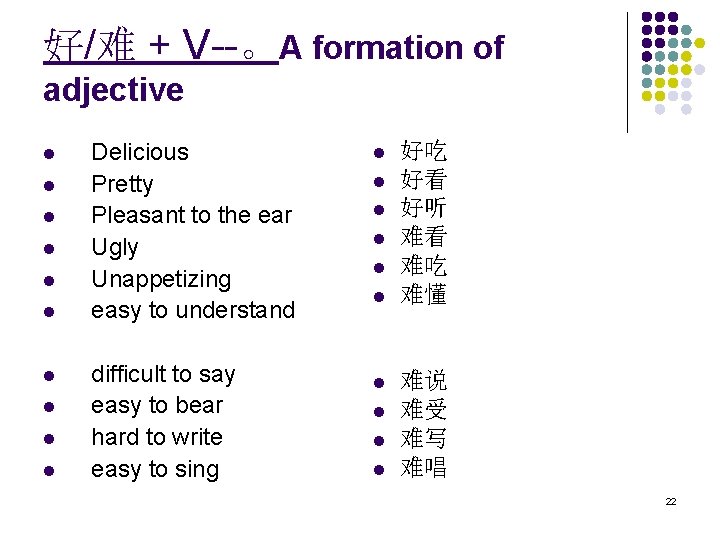
好/难 + V--。A formation of adjective l l l l l Delicious Pretty Pleasant to the ear Ugly Unappetizing easy to understand difficult to say easy to bear hard to write easy to sing l l l l l 好吃 好看 好听 难看 难吃 难懂 难说 难受 难写 难唱 22
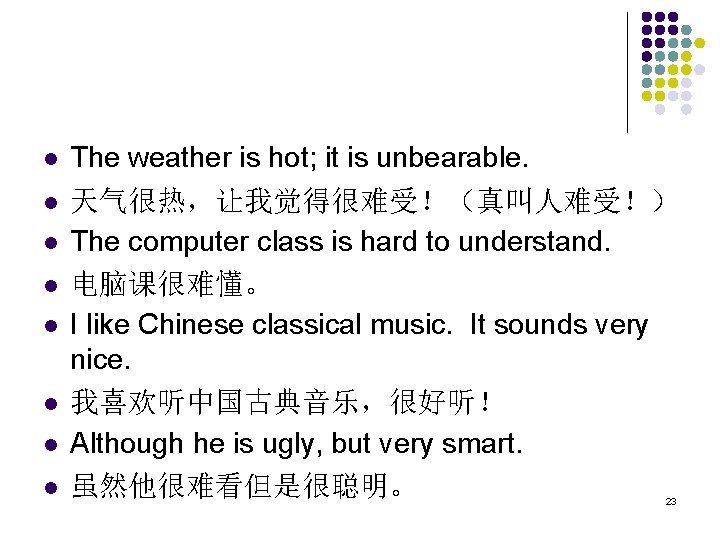
l l l l The weather is hot; it is unbearable. 天气很热,让我觉得很难受!(真叫人难受!) The computer class is hard to understand. 电脑课很难懂。 I like Chinese classical music. It sounds very nice. 我喜欢听中国古典音乐,很好听! Although he is ugly, but very smart. 虽然他很难看但是很聪明。 23
l Do Language practice p. 235 -236 Opinion Forum using 好/难 24
V /ADJ + (不)下去 l l l The book is very boring. I can’t continue reading it! 这本书很没有意思,我看不下去了! You have already run for more than an hour. If you keep running, you will be exhausted. 你已经跑了一个多小时了,再跑下去,要累死 了! If you want to learn Chinese well, you have to continue learning. 要是你想学好中文,你得学下去! 26
Express that you like certain activity very much and that you would like to continue doing it. 27
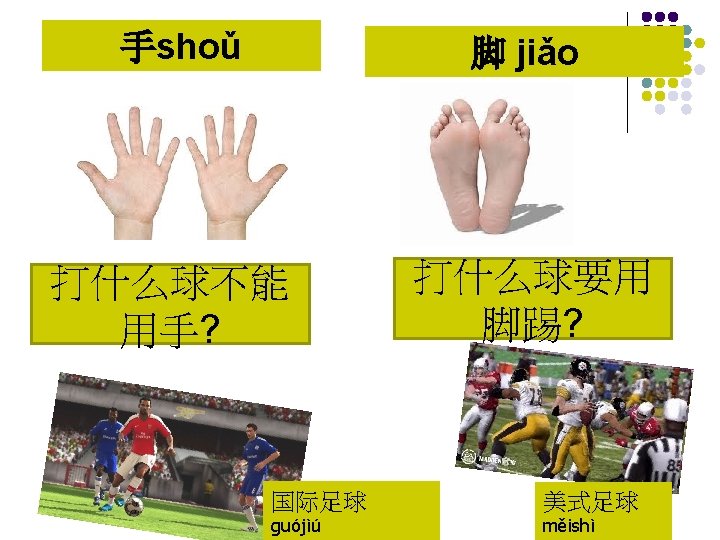
LESSON 18 -II WATCHING AMERICAN FOOTBALL 第十八课看美式足球 28
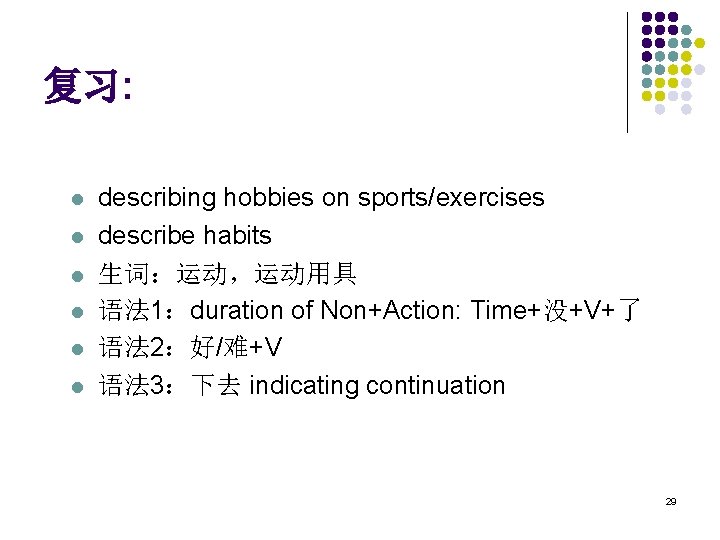
复习: l l l describing hobbies on sports/exercises describe habits 生词:运动,运动用具 语法 1:duration of Non+Action: Time+没+V+了 语法 2:好/难+V 语法 3:下去 indicating continuation 29
B. WORK WITH YOUR CLASSMATE Ask your classmate the following questions: l Do you exercise? l How often do you exercise? l What kind of exercise do you do? l Why do you like this kind of exercise? 30
l l l l Do you exercise? 你做运动吗? How often do you exercise? 你多久做一次运动? What kind of exercise do you do? 你喜欢做什么运动? Why do you like this kind of exercises? ’ 为什么你喜欢做这种运动? 31
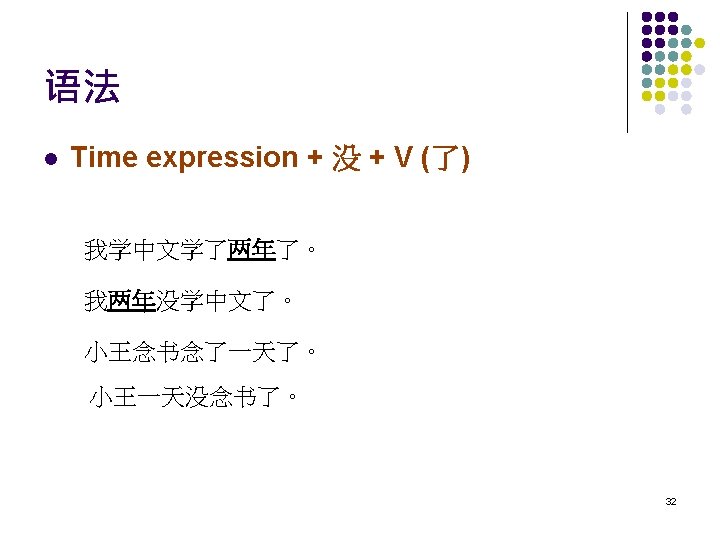
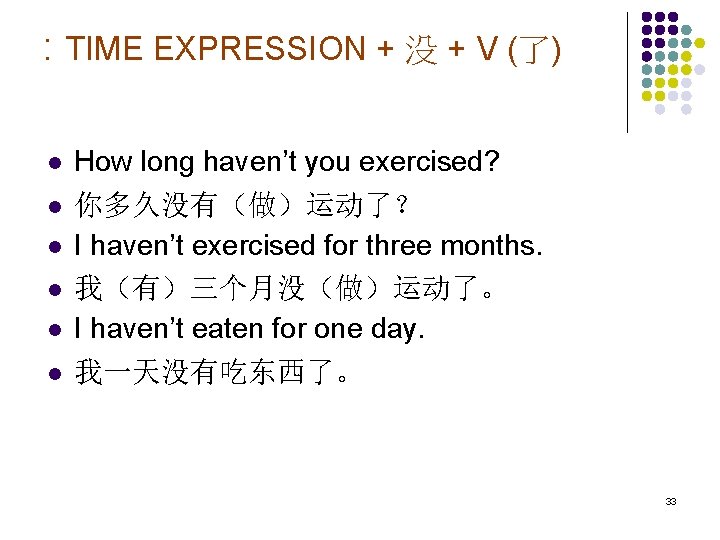
: TIME EXPRESSION + 没 + V (了) l l l How long haven’t you exercised? 你多久没有(做)运动了? I haven’t exercised for three months. 我(有)三个月没(做)运动了。 I haven’t eaten for one day. 我一天没有吃东西了。 33
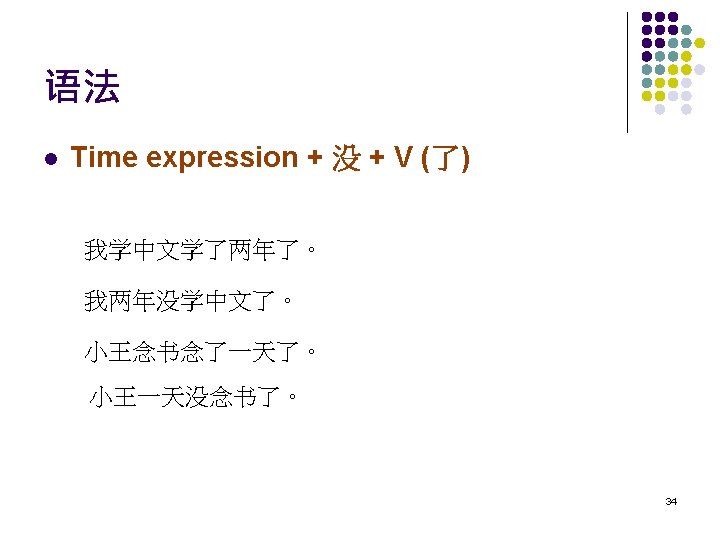
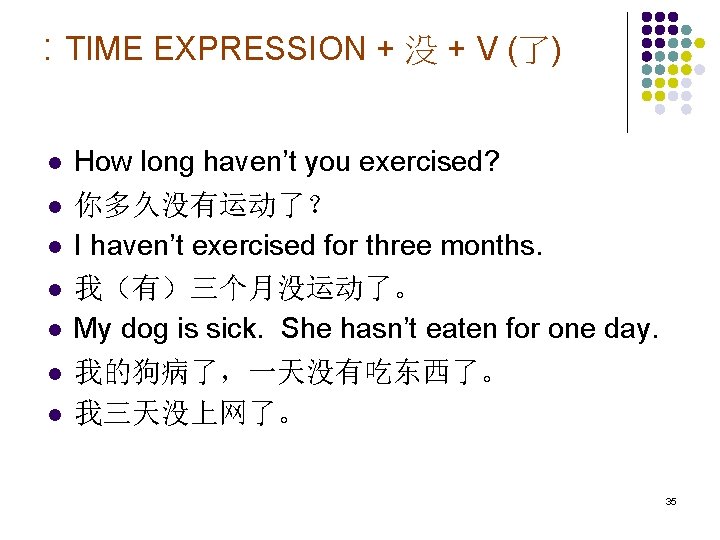
: TIME EXPRESSION + 没 + V (了) l l l l How long haven’t you exercised? 你多久没有运动了? I haven’t exercised for three months. 我(有)三个月没运动了。 My dog is sick. She hasn’t eaten for one day. 我的狗病了,一天没有吃东西了。 我三天没上网了。 35
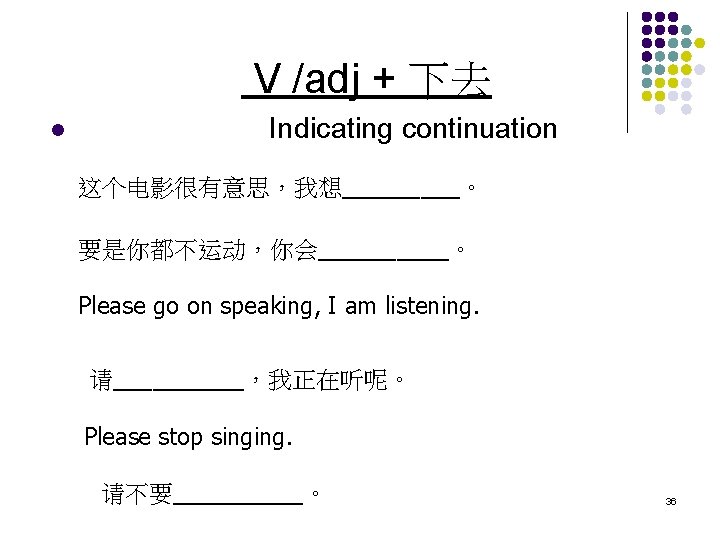
V /adj + 下去 l Indicating continuation 这个电影很有意思,我想_____。 要是你都不运动,你会_____。 Please go on speaking, I am listening. 请_____,我正在听呢。 Please stop singing. 请不要_____。 36
Express that you like certain activity very much and that you would like to continue doing it. 37

l 生词 生詞 Hui. Ju Chu ang 40
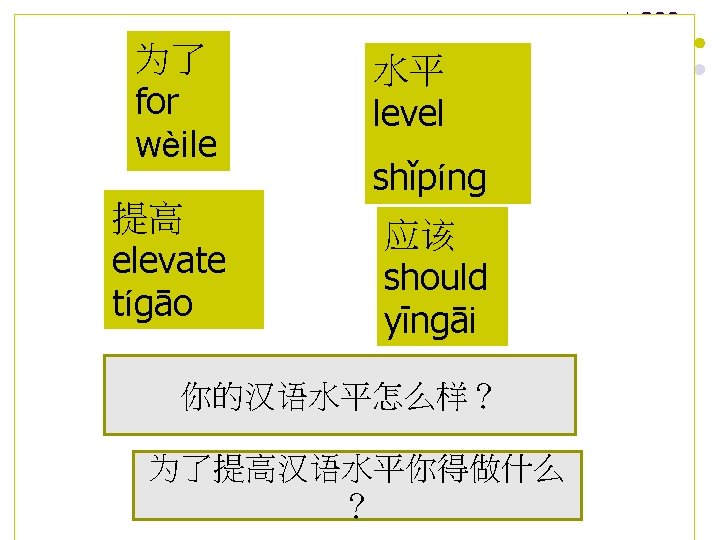
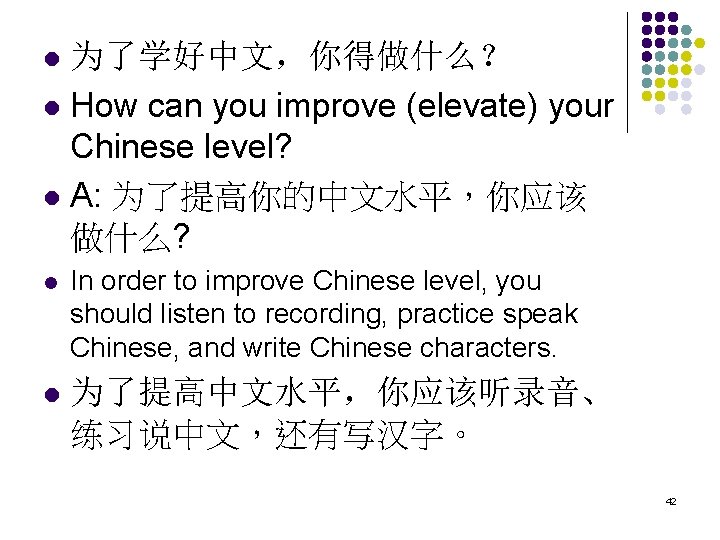
为了学好中文,你得做什么? l How can you improve (elevate) your Chinese level? l A: 为了提高你的中文水平,你应该 做什么? l l In order to improve Chinese level, you should listen to recording, practice speak Chinese, and write Chinese characters. l 为了提高中文水平,你应该听录音、 练习说中文,还有写汉字。 42
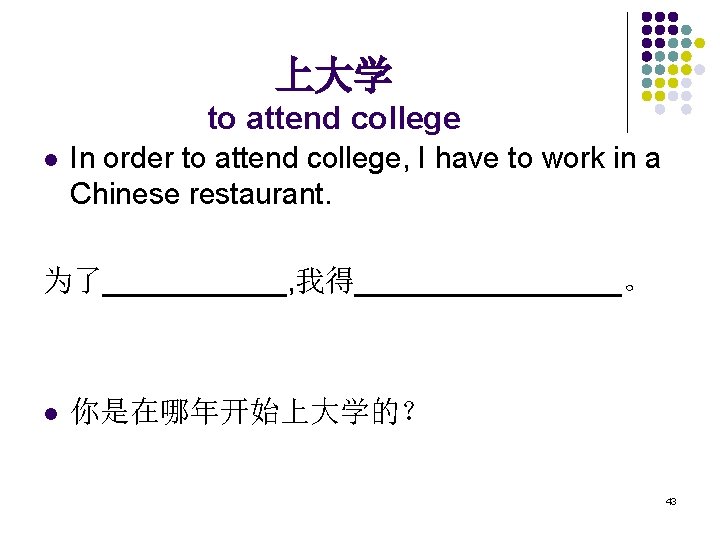
上大学 to attend college l In order to attend college, I have to work in a Chinese restaurant. 为了______, 我得________。 l 你是在哪年开始上大学的? 43

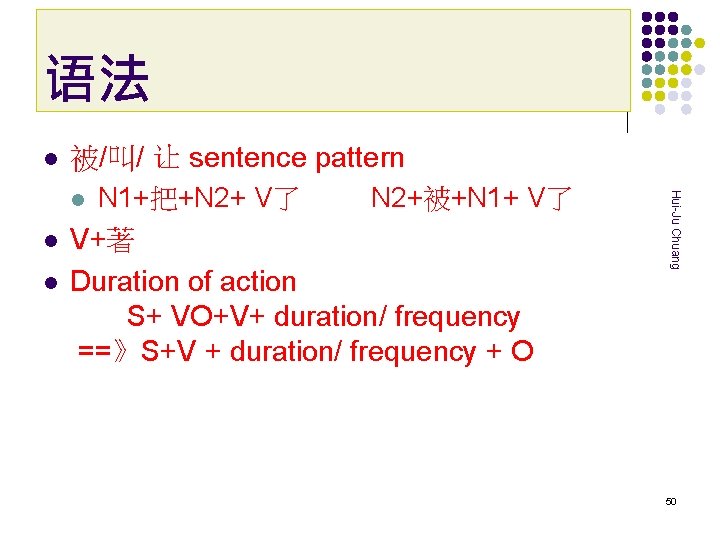
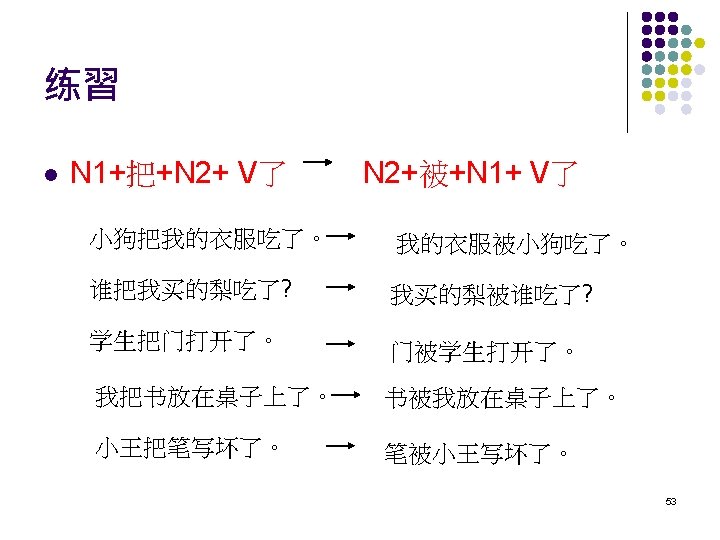
语法 l l Hui-Ju Chuang l 被/叫/ 让 sentence pattern l N 1+把+N 2+ V了 N 2+被+N 1+ V了 V+著 Duration of action S+ VO+V+ duration/ frequency ==》S+V + duration/ frequency + O 50
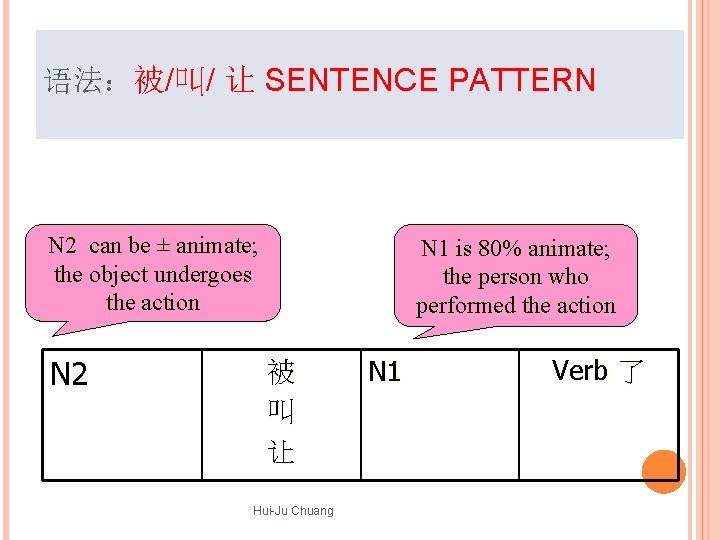
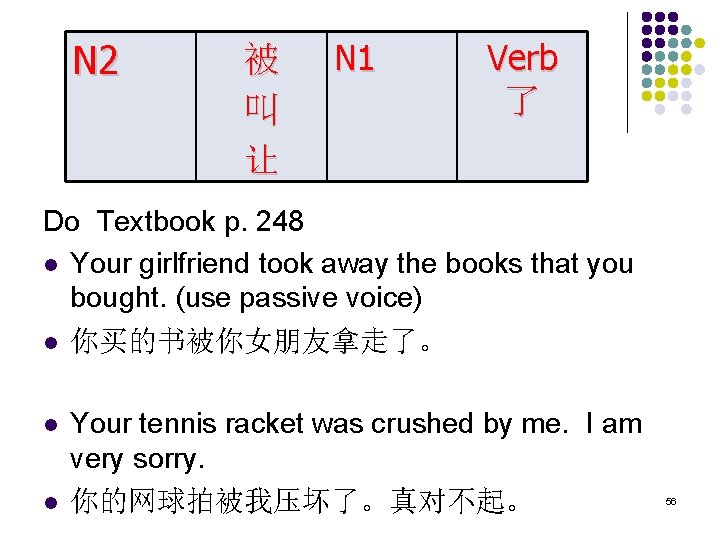
语法:被/叫/ 让 SENTENCE PATTERN N 2 can be ± animate; the object undergoes the action N 2 N 1 is 80% animate; the person who performed the action 被 叫 让 Hui-Ju Chuang N 1 Verb 了 51
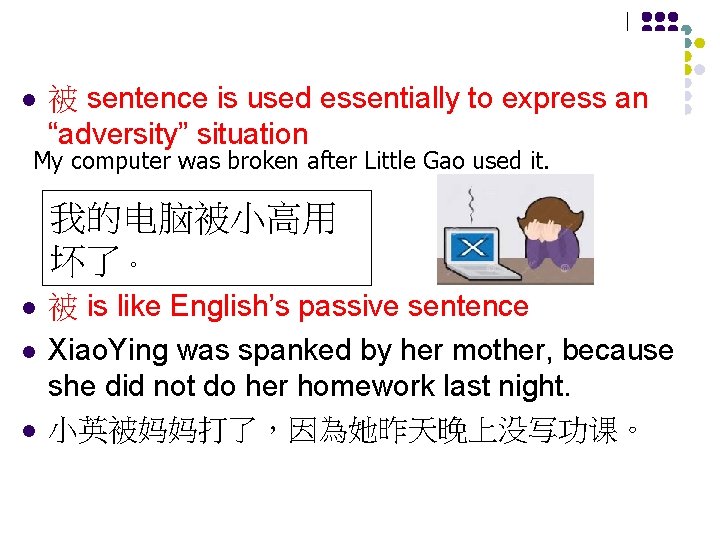
l 被 sentence is used essentially to express an “adversity” situation My computer was broken after Little Gao used it. 我的电脑被小高用 坏了。 l l l 被 is like English’s passive sentence Xiao. Ying was spanked by her mother, because she did not do her homework last night. 小英被妈妈打了,因為她昨天晚上没写功课。 Hui. Ju Chu ang 52
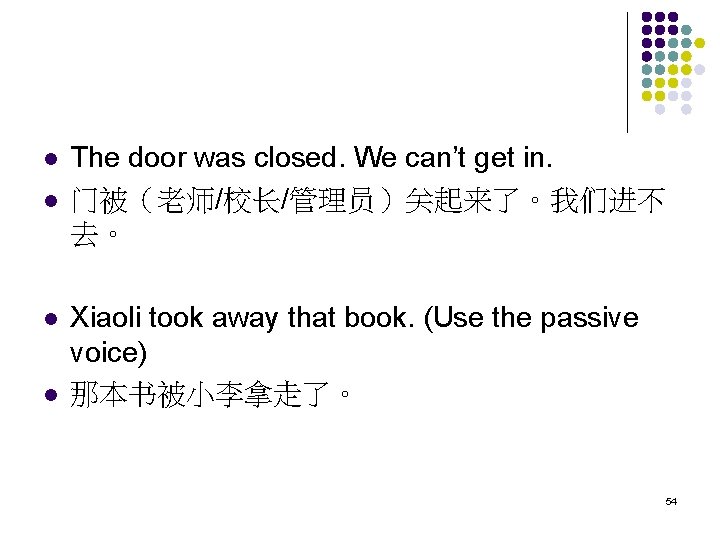
l l The door was closed. We can’t get in. 门被(老师/校长/管理员)关起来了。我们进不 去。 Xiaoli took away that book. (Use the passive voice) 那本书被小李拿走了。 54
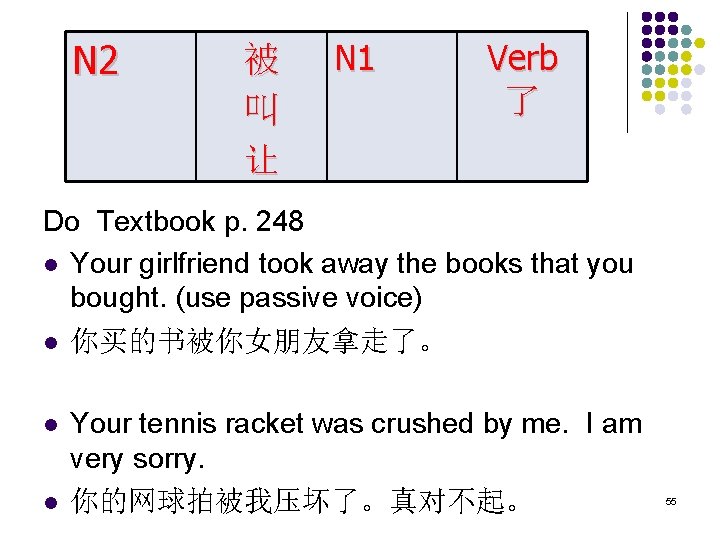
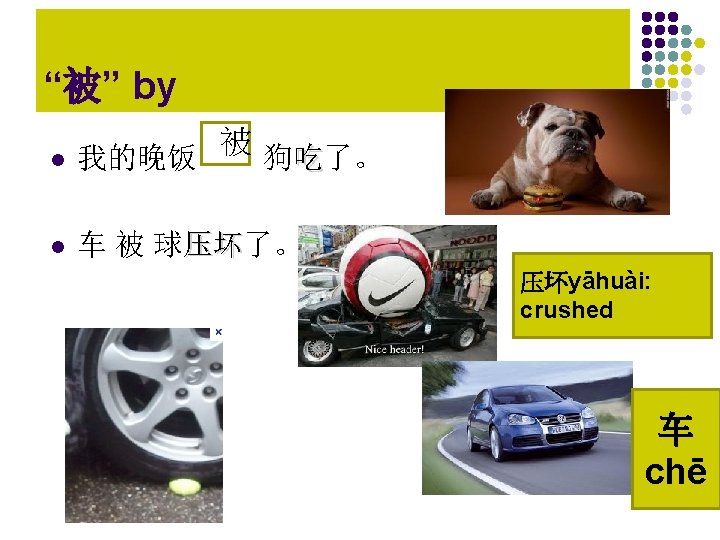
N 2 被 叫 让 N 1 Verb 了 Do Textbook p. 248 l Your girlfriend took away the books that you bought. (use passive voice) l 你买的书被你女朋友拿走了。 l l Your tennis racket was crushed by me. I am very sorry. 你的网球拍被我压坏了。真对不起。 55
N 2 被 叫 让 N 1 Verb 了 Do Textbook p. 248 l Your girlfriend took away the books that you bought. (use passive voice) l 你买的书被你女朋友拿走了。 l l Your tennis racket was crushed by me. I am very sorry. 你的网球拍被我压坏了。真对不起。 56
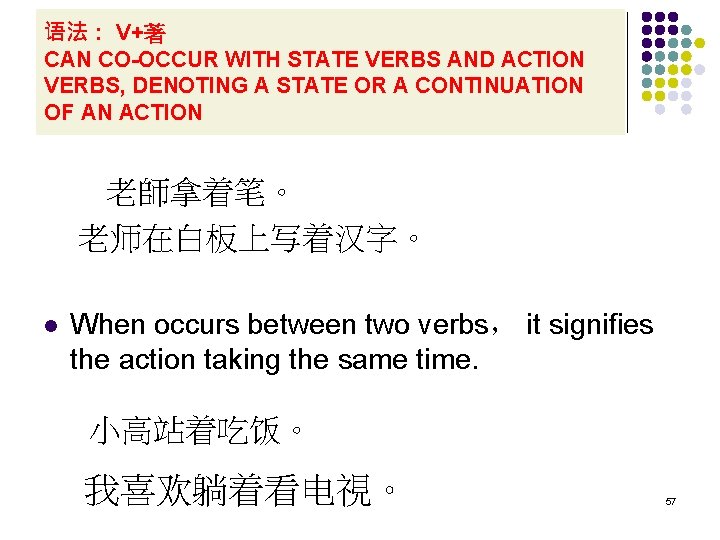
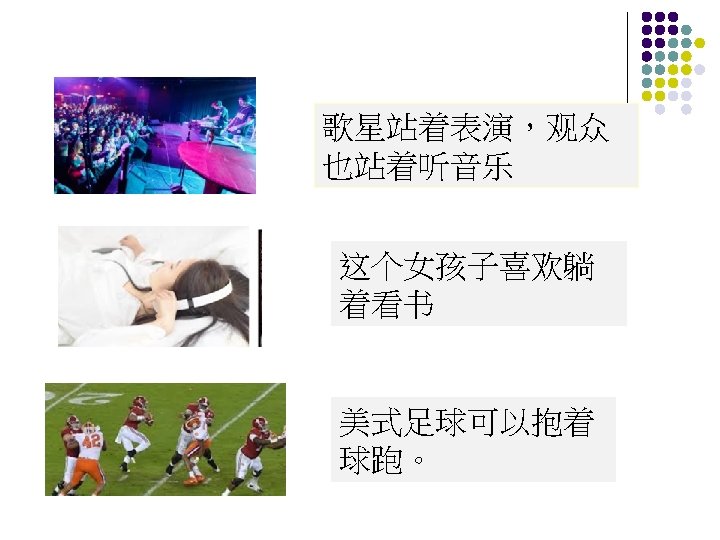
语法: V+著 CAN CO-OCCUR WITH STATE VERBS AND ACTION VERBS, DENOTING A STATE OR A CONTINUATION OF AN ACTION 老師拿着笔。 老师在白板上写着汉字。 When occurs between two verbs, it signifies the action taking the same time. Hui-Ju Chuang l 小高站着吃饭。 我喜欢躺着看电視。 57
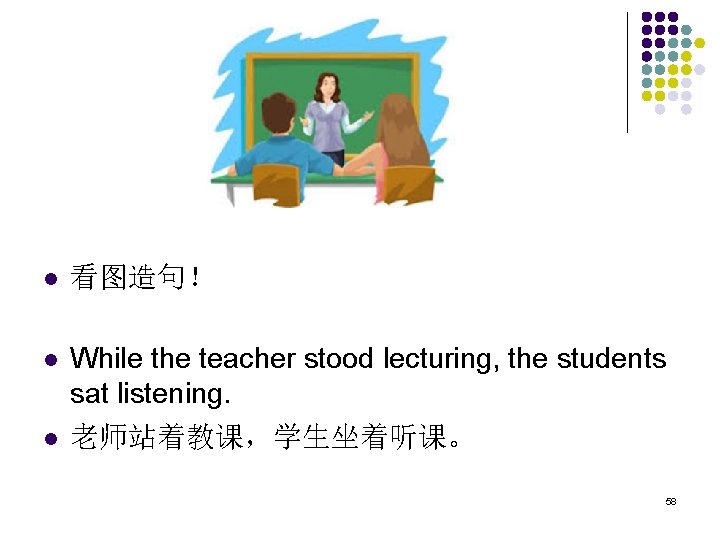
l 看图造句! l While the teacher stood lecturing, the students sat listening. 老师站着教课,学生坐着听课。 l 58
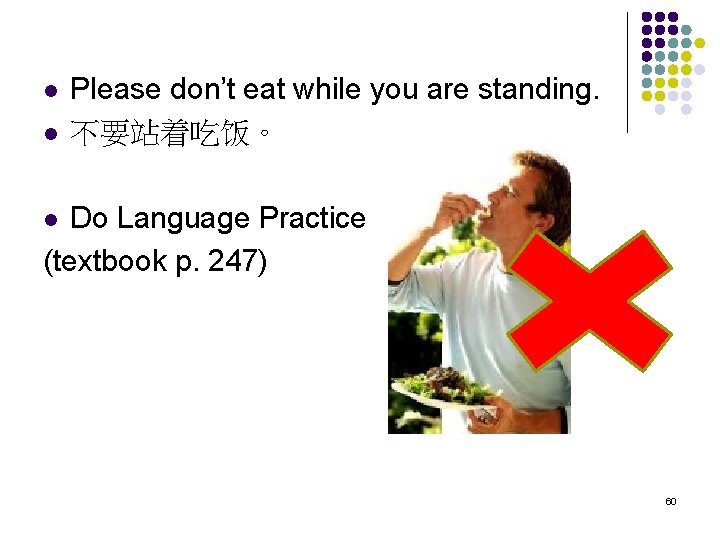
l l Please don’t eat while you are standing. 不要站着吃饭。 Do Language Practice (textbook p. 247) l 60
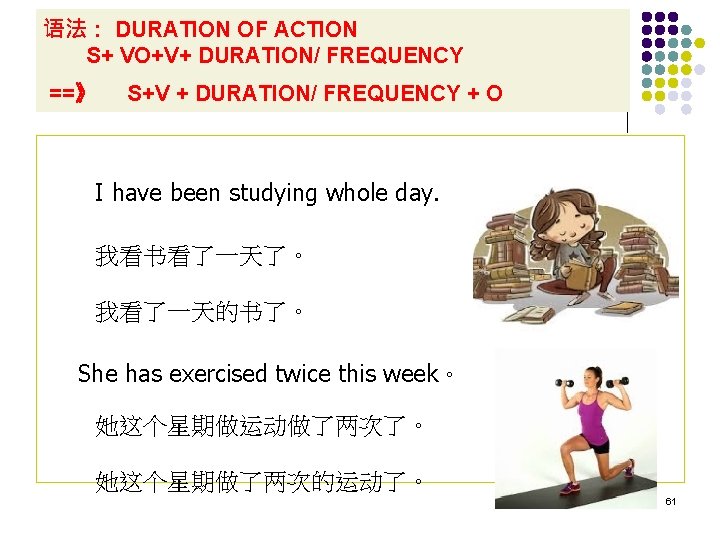
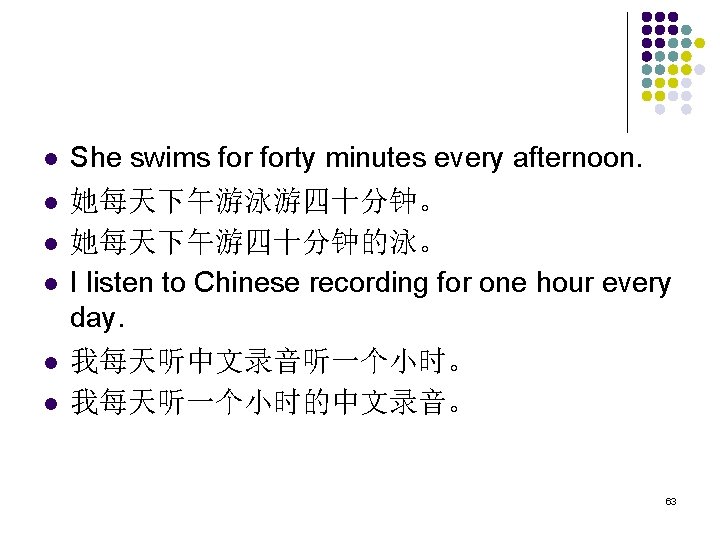
语法: DURATION OF ACTION S+ VO+V+ DURATION/ FREQUENCY ==》 S+V + DURATION/ FREQUENCY + O I have been studying whole day. 我看书看了一天了。 我看了一天的书了。 She has exercised twice this week。 她这个星期做运动做了两次了。 她这个星期做了两次的运动了。 61
MORE PRACTICE WITH “DURATION OF ACTIONS l Do Language Practice on textbook p. 245, do 1, 3, 5. 62
- Slides: 64