
Bandaging Purpose of Bandages Protect wounds To keep
Bandaging
Purpose of Bandages � Protect wounds � To keep areas clean and medications in place � To prevent self- mutilation � Control bleeding and edema � Restrict motion � Prevent weight bearing � Support and stabilize soft tissue � Support bone
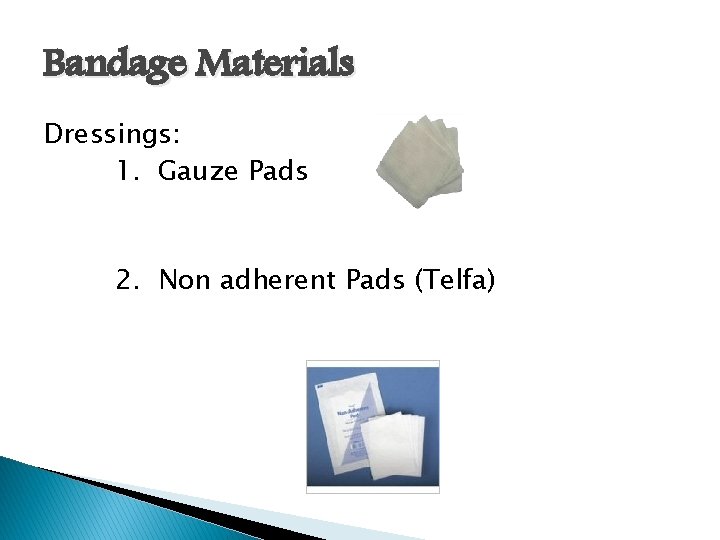
Bandage Materials Dressings: 1. Gauze Pads 2. Non adherent Pads (Telfa)
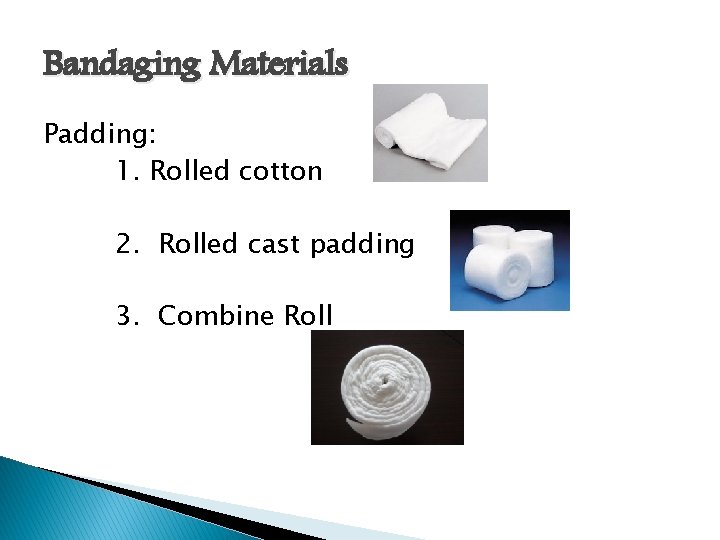
Bandaging Materials Padding: 1. Rolled cotton 2. Rolled cast padding 3. Combine Roll
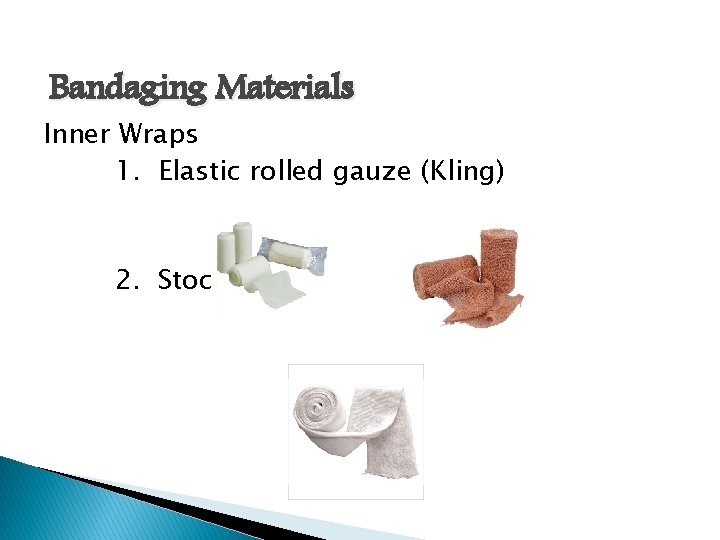
Bandaging Materials Inner Wraps 1. Elastic rolled gauze (Kling) 2. Stockinette

Bandaging Materials Outer Wraps 1. Elastikon ` 2. Vetwrap (Petflex, Coflex) 3. Ace Bandage
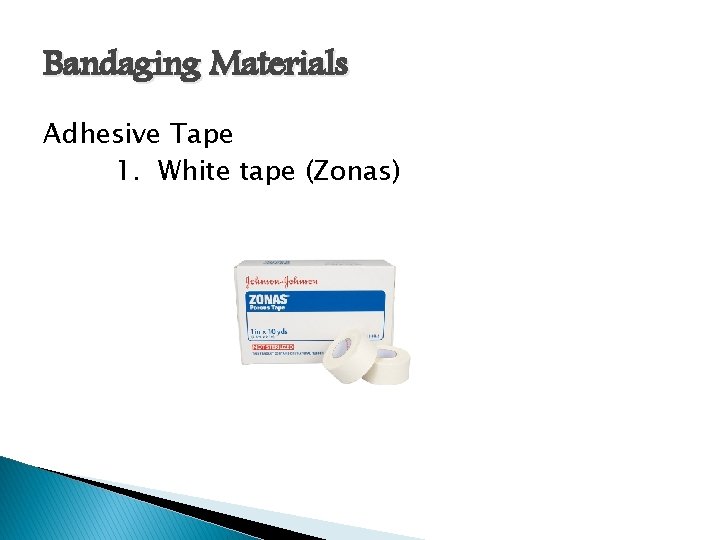
Bandaging Materials Adhesive Tape 1. White tape (Zonas)
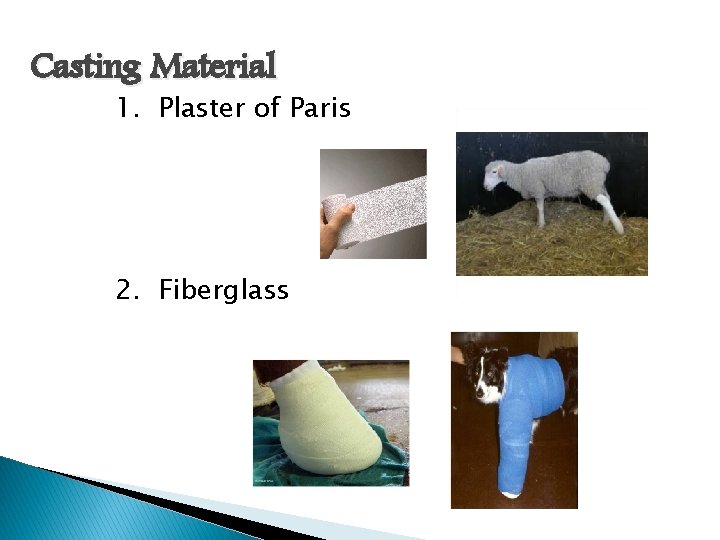
Casting Material 1. Plaster of Paris 2. Fiberglass
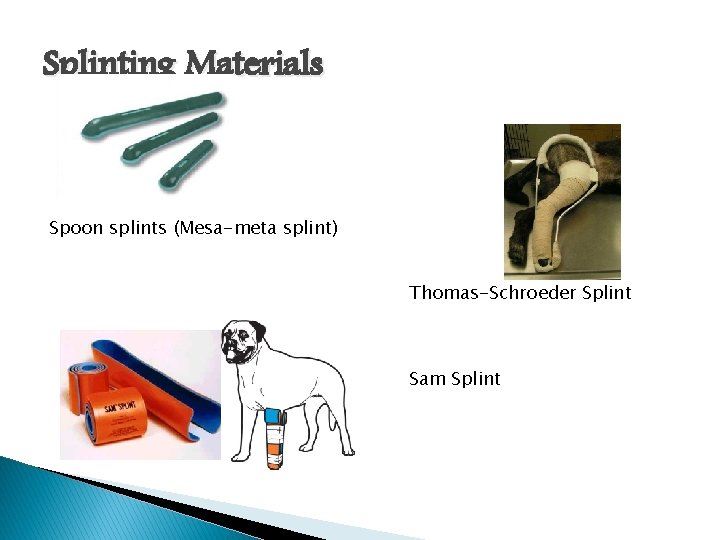
Splinting Materials Spoon splints (Mesa-meta splint) Thomas-Schroeder Splint Sam Splint
Bandage Application Techniques "If you do no good - do no harm" � Protect wound � Don't apply too much pressure � Overlap the bandaging material by 50%. � Apply material smoothly with no ridges or lumps � Use materials that allow for circulation � Use absorbent materials and change when saturated � To gain support of a long bone, immobilize the joint above and below the bone � Apply the bandaging material to the leg with the leg in its intended position � Leave part of the toes out
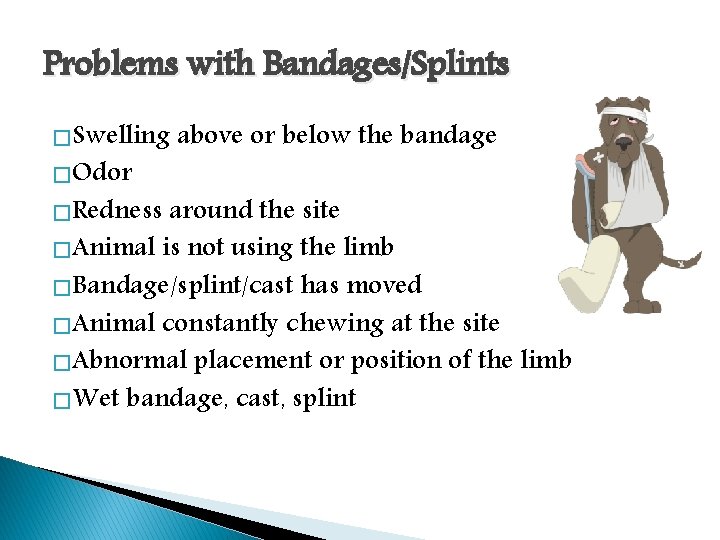
Problems with Bandages/Splints � Swelling � Odor � Redness above or below the bandage around the site � Animal is not using the limb � Bandage/splint/cast has moved � Animal constantly chewing at the site � Abnormal placement or position of the limb � Wet bandage, cast, splint
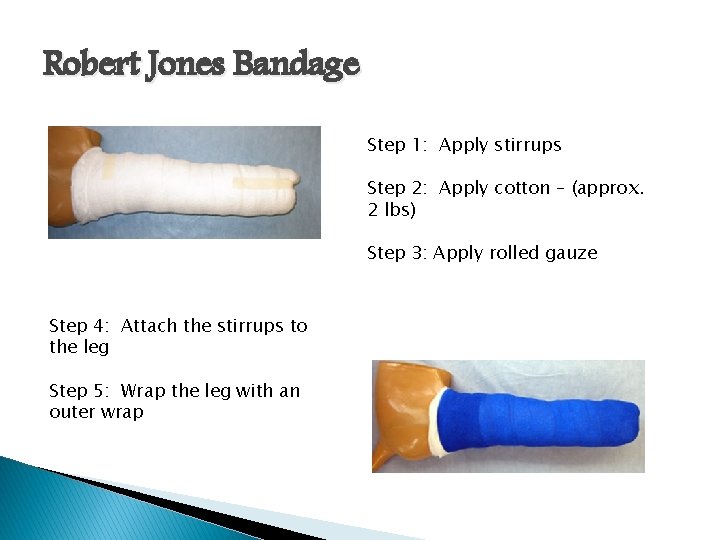
Robert Jones Bandage Step 1: Apply stirrups Step 2: Apply cotton – (approx. 2 lbs) Step 3: Apply rolled gauze Step 4: Attach the stirrups to the leg Step 5: Wrap the leg with an outer wrap
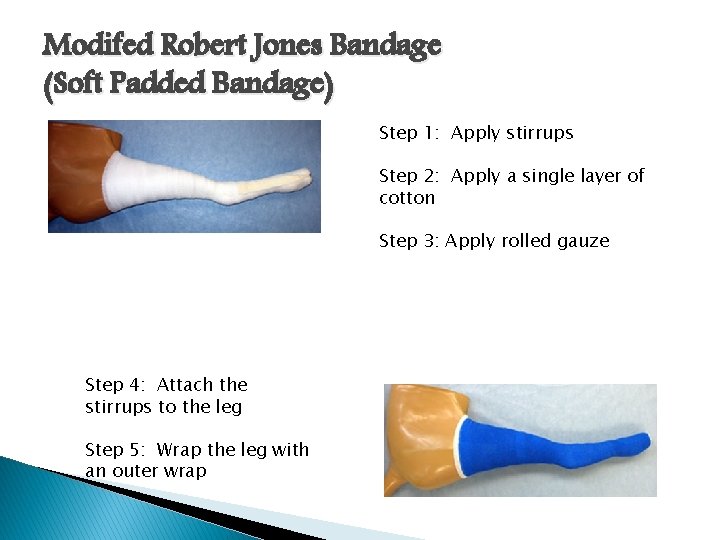
Modifed Robert Jones Bandage (Soft Padded Bandage) Step 1: Apply stirrups Step 2: Apply a single layer of cotton Step 3: Apply rolled gauze Step 4: Attach the stirrups to the leg Step 5: Wrap the leg with an outer wrap
- Slides: 13