
Balsa Glider Construction Balsa Wood Very high strength

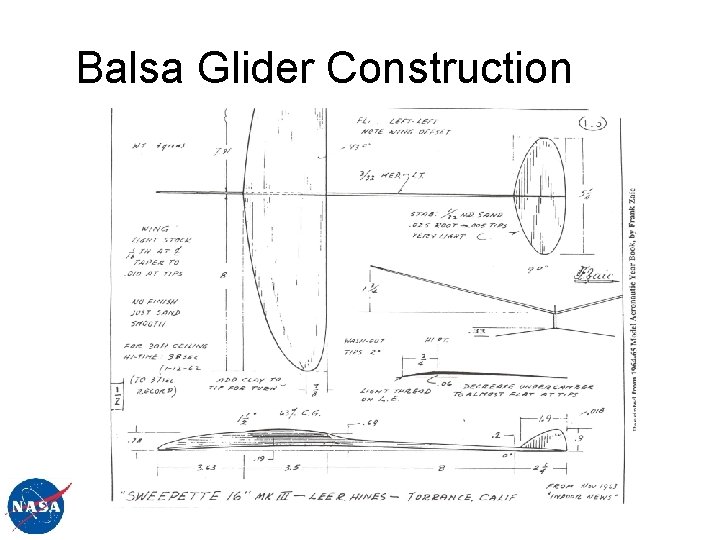
Balsa Glider Construction

Balsa Wood • Very high strength to weight ratio. • Easy to cut and sand • Grainy • Available in strips, sheets, or blocks • Not very durable for a fuselage… spruce is better.
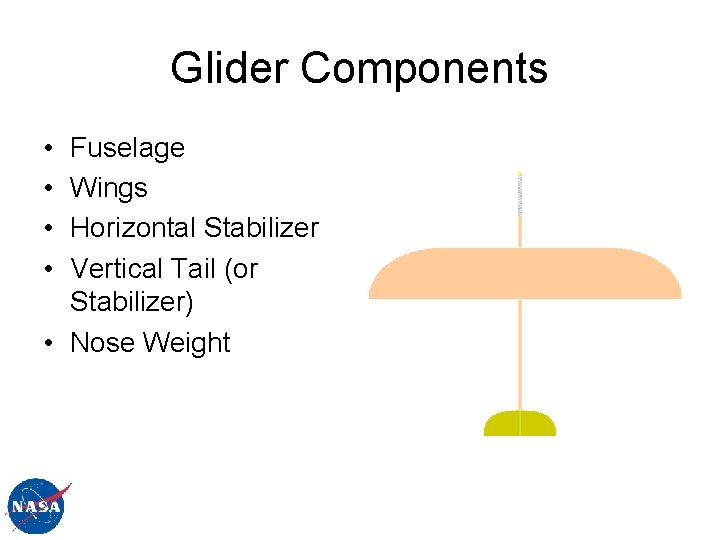
Glider Components • • Fuselage Wings Horizontal Stabilizer Vertical Tail (or Stabilizer) • Nose Weight
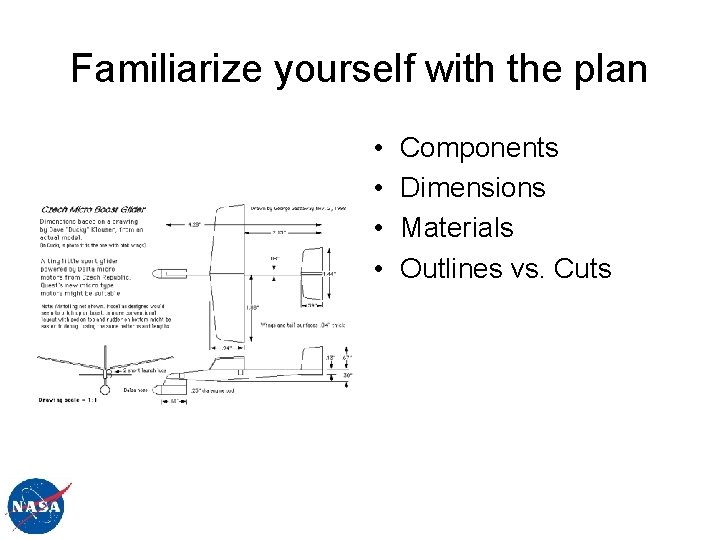
Familiarize yourself with the plan • • Components Dimensions Materials Outlines vs. Cuts

Building on a single sheet Wing Horizontal Stabilizer Leave extra space at these locations if material allows. Notice the grain direction: Always spanwise! Vertical Tail

Marking the fuselage Cut for Length Wing Location Center of Gravity Neutral Point Horizontal Stabilizer Vertical Tail
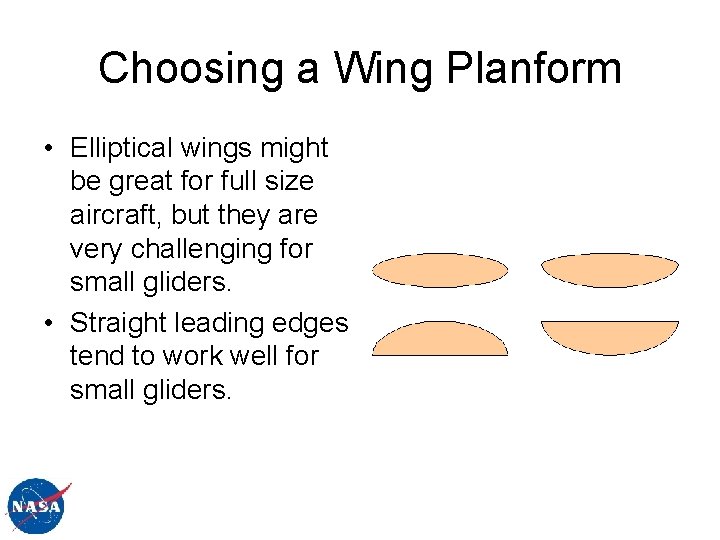
Choosing a Wing Planform • Elliptical wings might be great for full size aircraft, but they are very challenging for small gliders. • Straight leading edges tend to work well for small gliders.
Cut out all of the pieces • Cut the wing with extra span if material allows. (See later note for reason) • Cut out stabilizers and sand leading and trailing edges with minimal rounding.
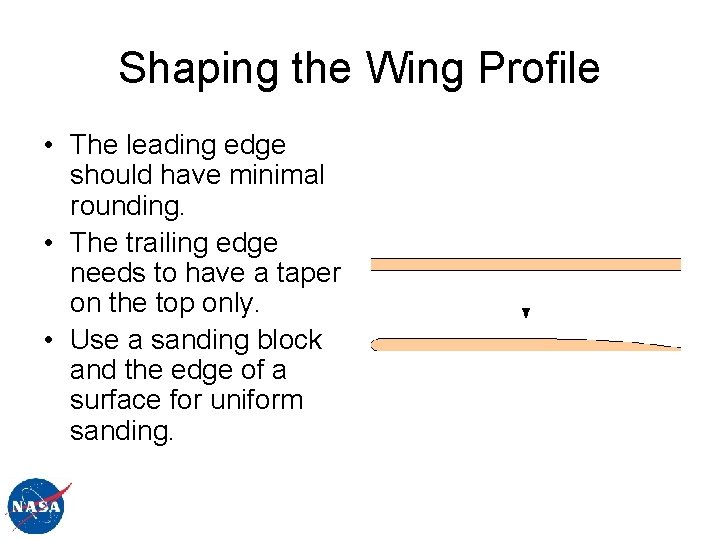
Shaping the Wing Profile • The leading edge should have minimal rounding. • The trailing edge needs to have a taper on the top only. • Use a sanding block and the edge of a surface for uniform sanding.
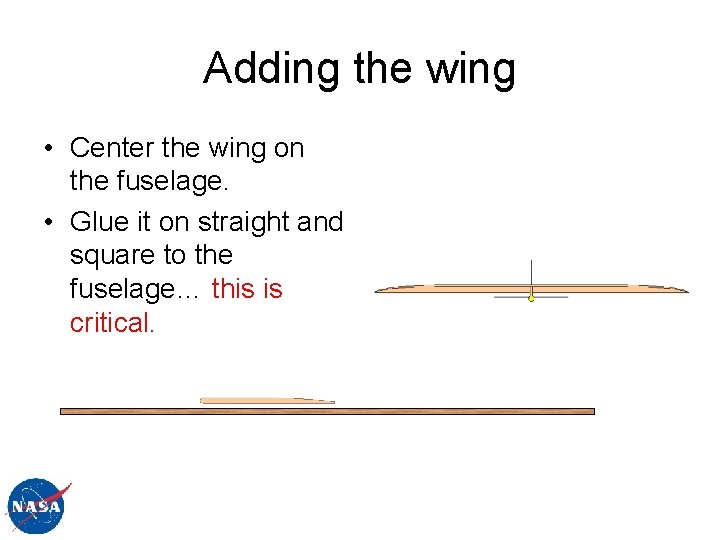
Adding the wing • Center the wing on the fuselage. • Glue it on straight and square to the fuselage… this is critical.
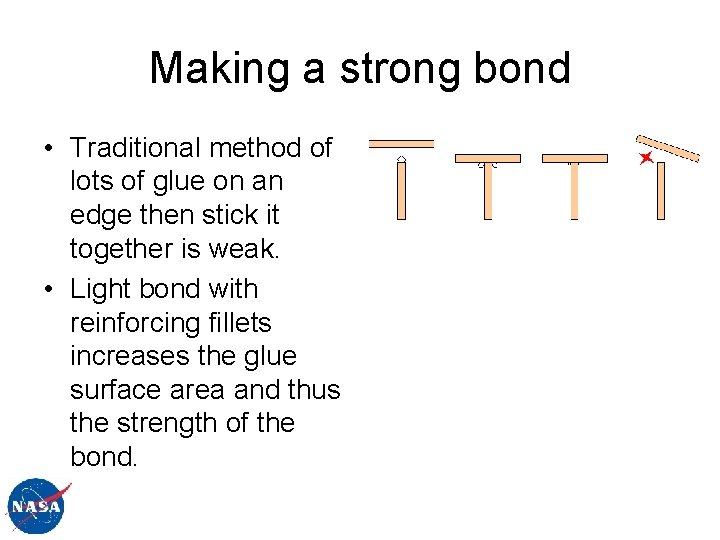
Making a strong bond • Traditional method of lots of glue on an edge then stick it together is weak. • Light bond with reinforcing fillets increases the glue surface area and thus the strength of the bond.
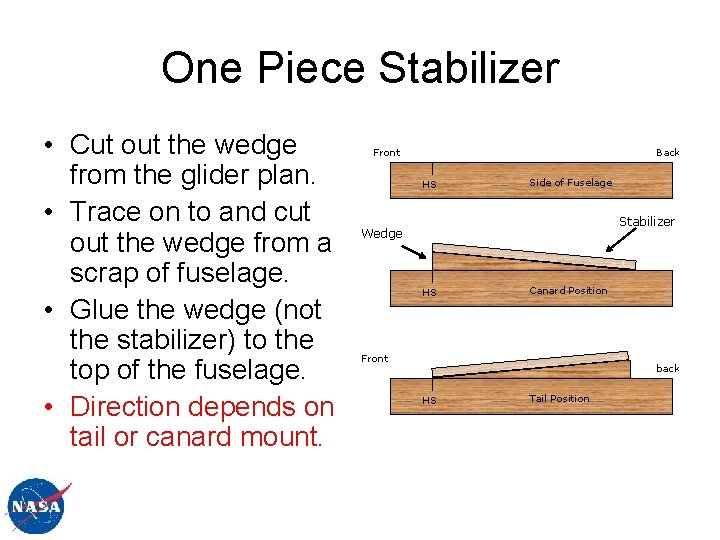
One Piece Stabilizer • Cut out the wedge from the glider plan. • Trace on to and cut out the wedge from a scrap of fuselage. • Glue the wedge (not the stabilizer) to the top of the fuselage. • Direction depends on tail or canard mount. Front Back HS Side of Fuselage Stabilizer Wedge HS Canard Position Front back HS Tail Position
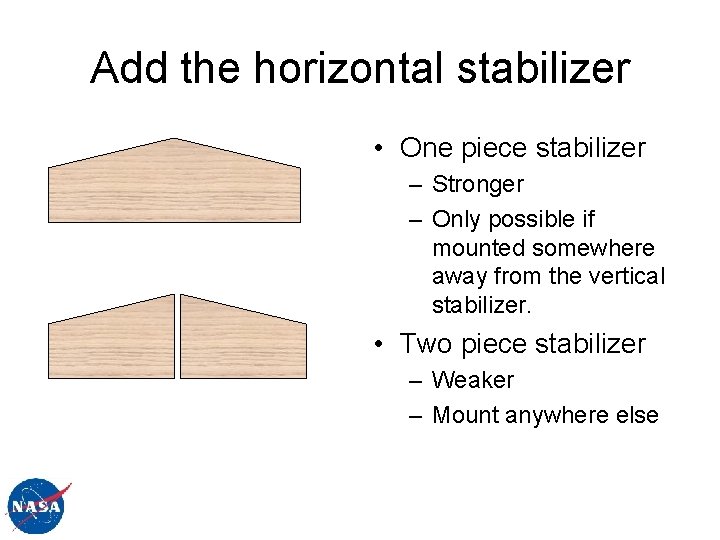
Add the horizontal stabilizer • One piece stabilizer – Stronger – Only possible if mounted somewhere away from the vertical stabilizer. • Two piece stabilizer – Weaker – Mount anywhere else
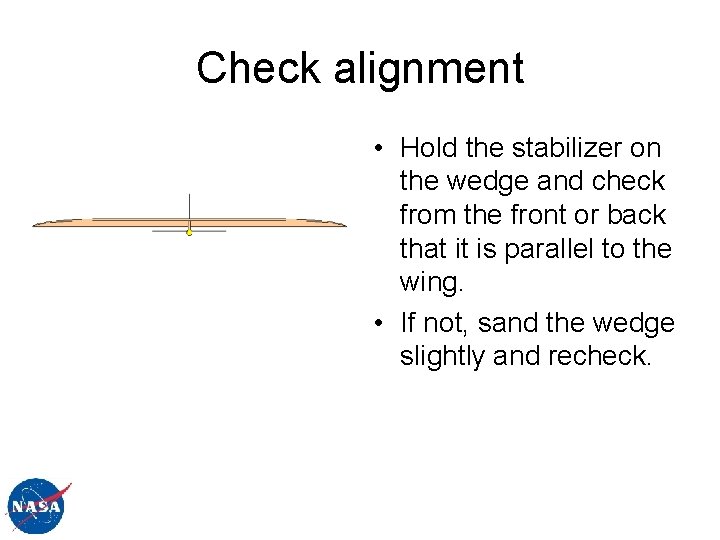
Check alignment • Hold the stabilizer on the wedge and check from the front or back that it is parallel to the wing. • If not, sand the wedge slightly and recheck.
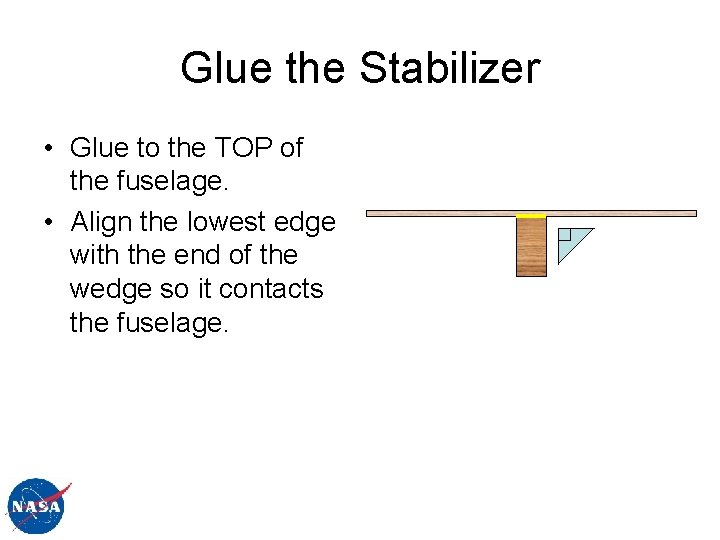
Glue the Stabilizer • Glue to the TOP of the fuselage. • Align the lowest edge with the end of the wedge so it contacts the fuselage.
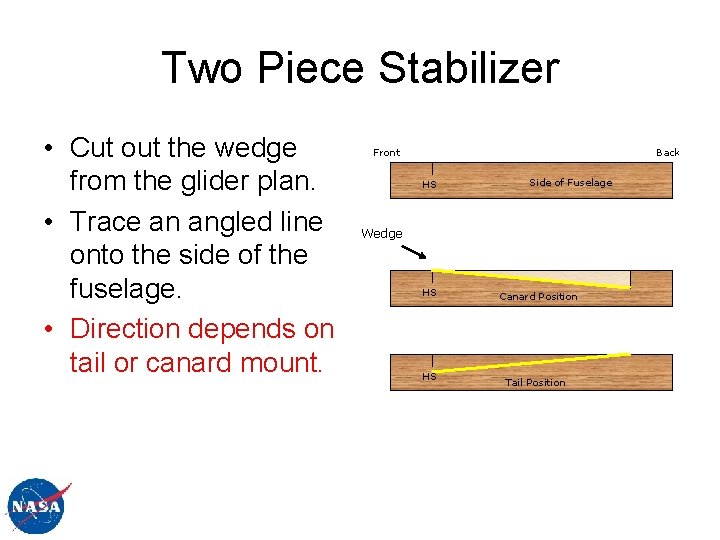
Two Piece Stabilizer • Cut out the wedge from the glider plan. • Trace an angled line onto the side of the fuselage. • Direction depends on tail or canard mount. Front Back HS Side of Fuselage Wedge HS HS Canard Position Tail Position
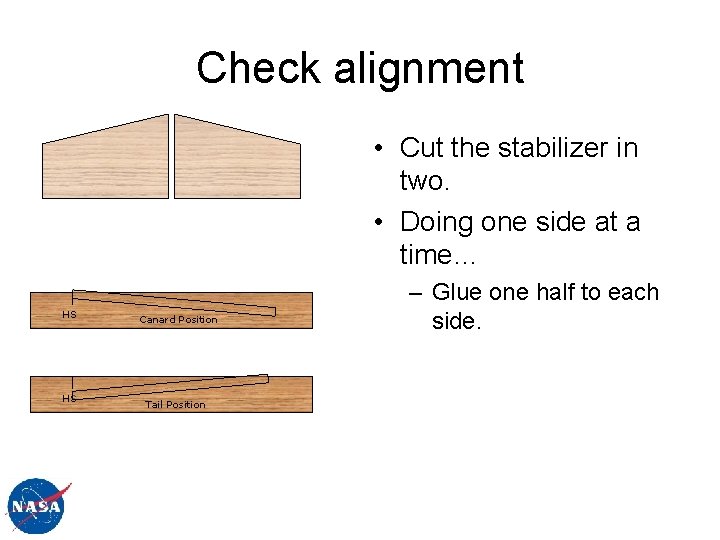
Check alignment • Cut the stabilizer in two. • Doing one side at a time… HS HS Canard Position Tail Position – Glue one half to each side.
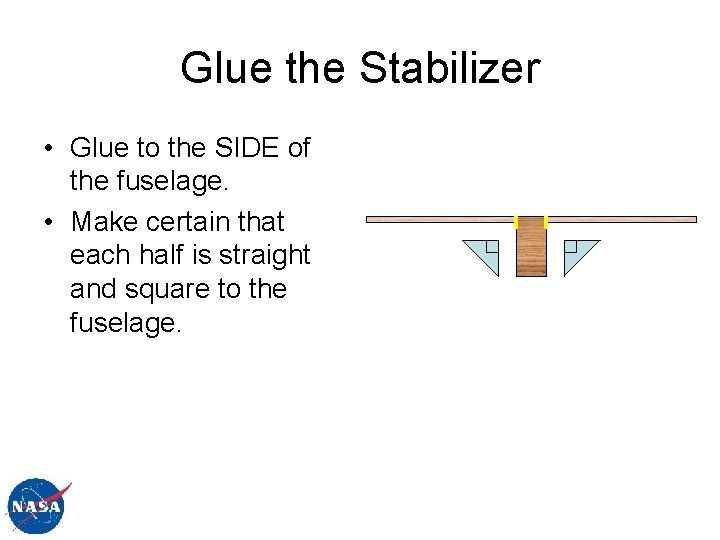
Glue the Stabilizer • Glue to the SIDE of the fuselage. • Make certain that each half is straight and square to the fuselage.
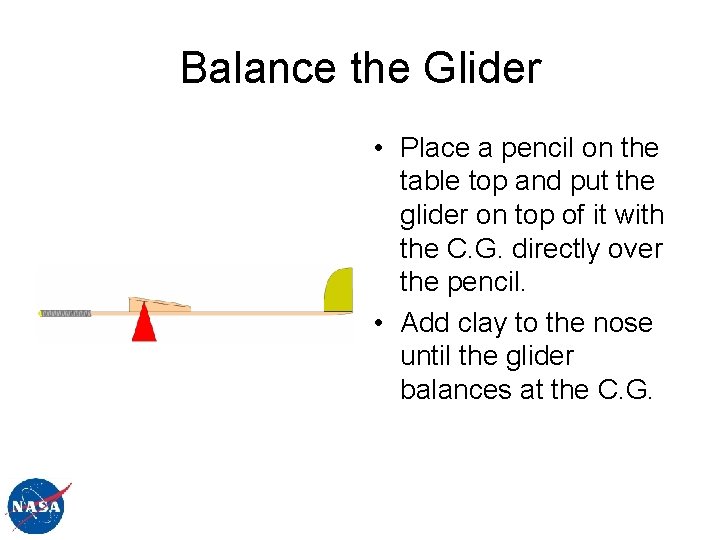
Balance the Glider • Place a pencil on the table top and put the glider on top of it with the C. G. directly over the pencil. • Add clay to the nose until the glider balances at the C. G.
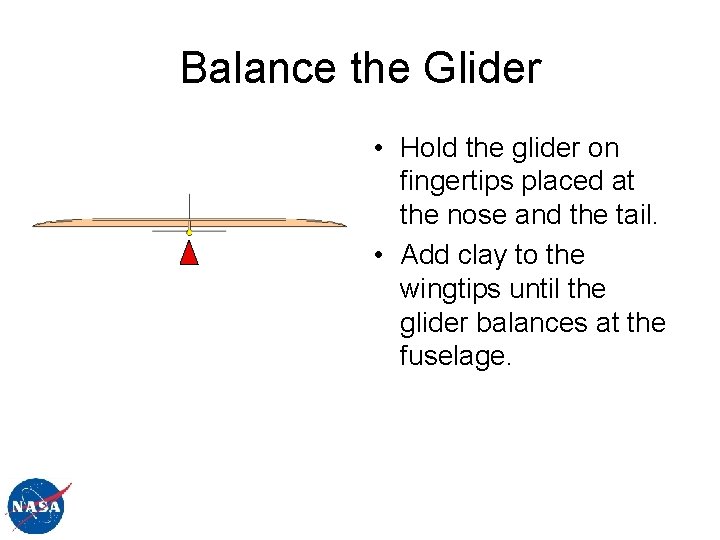
Balance the Glider • Hold the glider on fingertips placed at the nose and the tail. • Add clay to the wingtips until the glider balances at the fuselage.
- Slides: 21