
Balloon Buggies Power Point Design test improve a
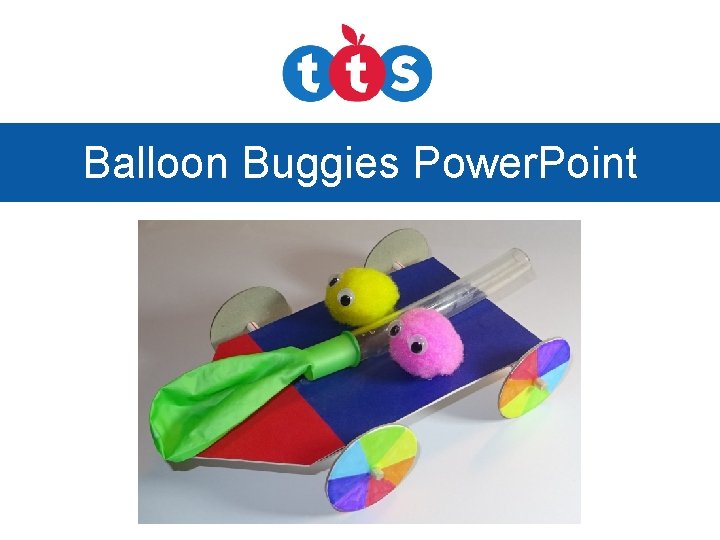
Balloon Buggies Power. Point
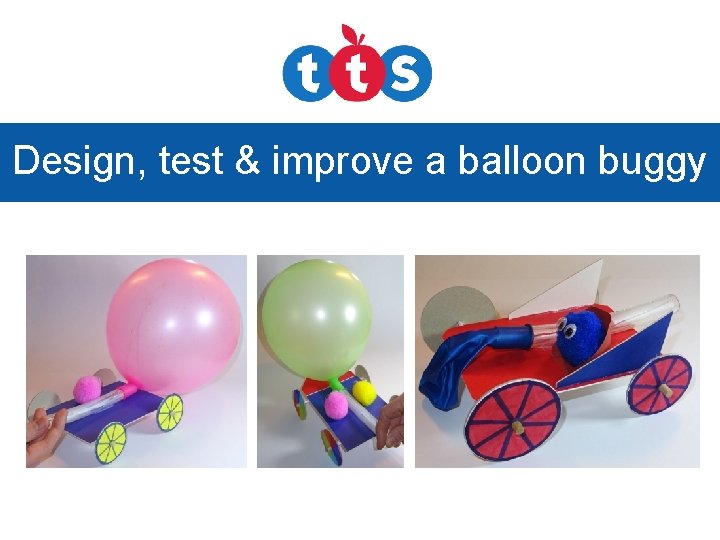
Design, test & improve a balloon buggy

STEM Learning objectives • Science – experience forces that make things begin to move, get faster or slow down • Technology – understand use mechanical systems in products • Engineering – design, build, test and improve products • Maths – measure distance and time, calculate average speed
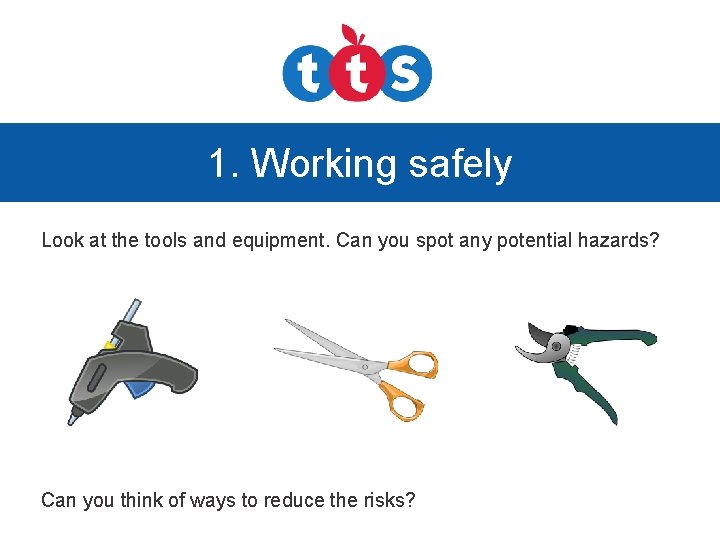
1. Working safely Look at the tools and equipment. Can you spot any potential hazards? Can you think of ways to reduce the risks?
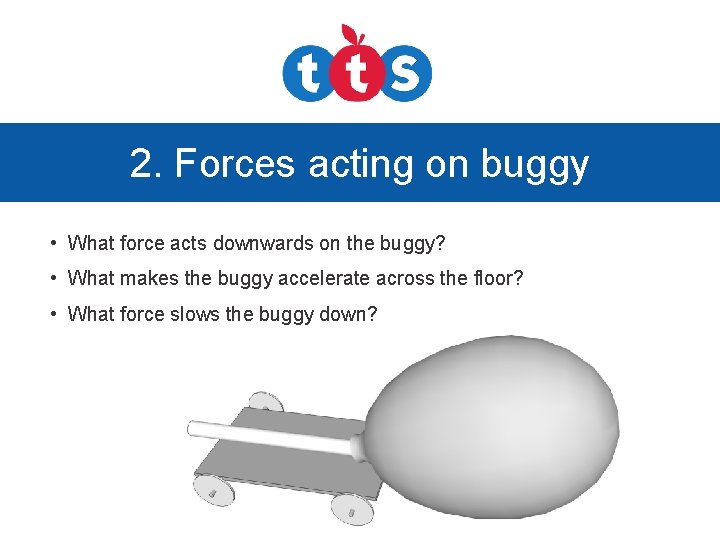
2. Forces acting on buggy • What force acts downwards on the buggy? • What makes the buggy accelerate across the floor? • What force slows the buggy down?
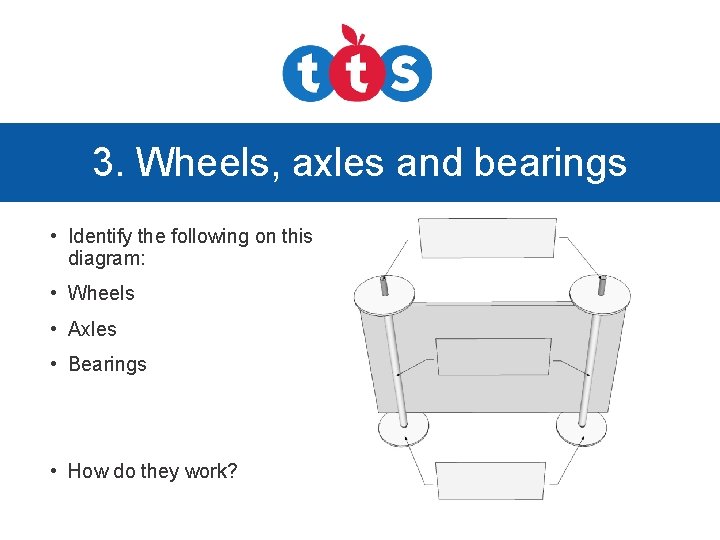
3. Wheels, axles and bearings • Identify the following on this diagram: • Wheels • Axles • Bearings • How do they work?
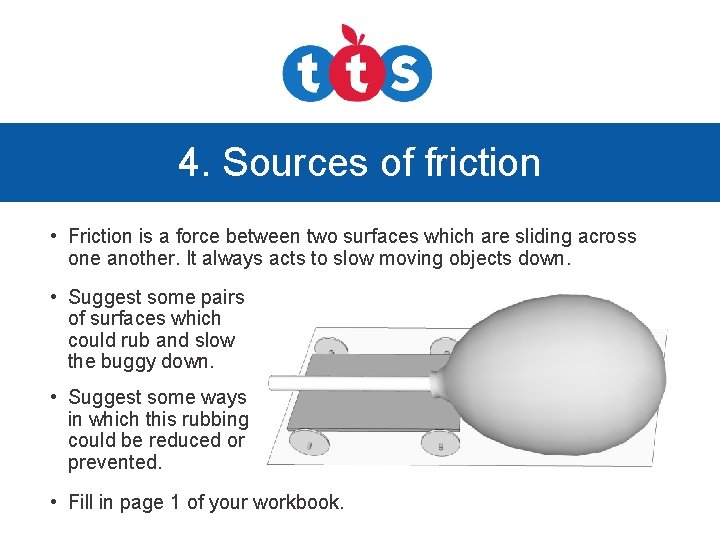
4. Sources of friction • Friction is a force between two surfaces which are sliding across one another. It always acts to slow moving objects down. • Suggest some pairs of surfaces which could rub and slow the buggy down. • Suggest some ways in which this rubbing could be reduced or prevented. • Fill in page 1 of your workbook.
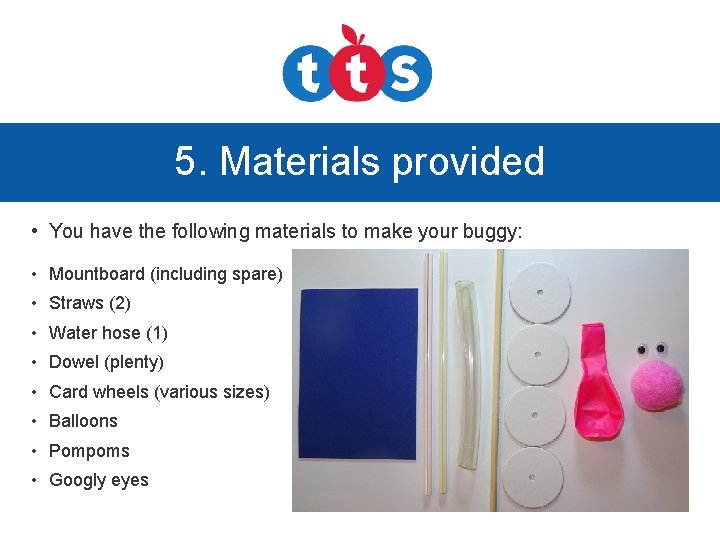
5. Materials provided • You have the following materials to make your buggy: • Mountboard (including spare) • Straws (2) • Water hose (1) • Dowel (plenty) • Card wheels (various sizes) • Balloons • Pompoms • Googly eyes
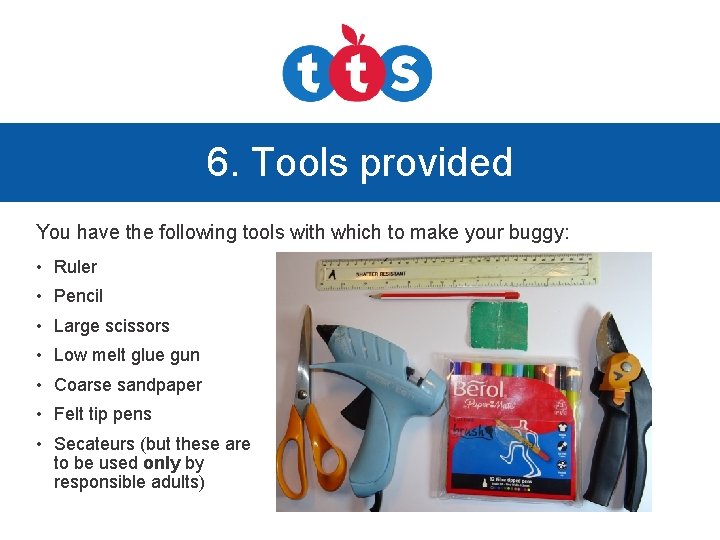
6. Tools provided You have the following tools with which to make your buggy: • Ruler • Pencil • Large scissors • Low melt glue gun • Coarse sandpaper • Felt tip pens • Secateurs (but these are to be used only by responsible adults)
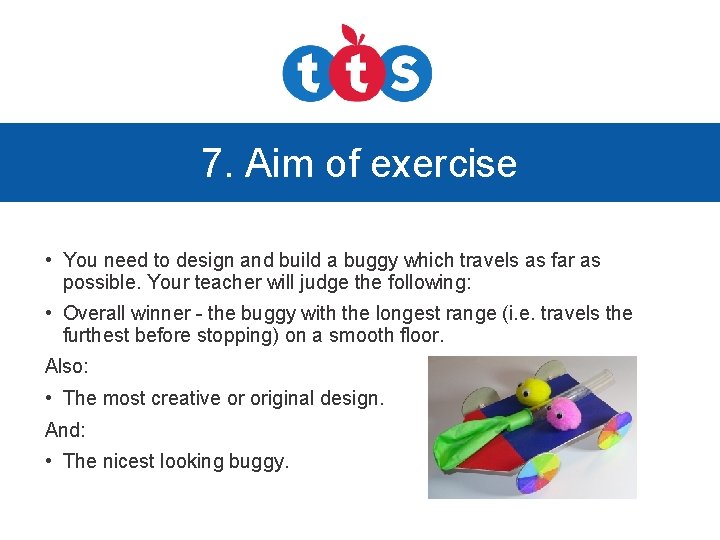
7. Aim of exercise • You need to design and build a buggy which travels as far as possible. Your teacher will judge the following: • Overall winner - the buggy with the longest range (i. e. travels the furthest before stopping) on a smooth floor. Also: • The most creative or original design. And: • The nicest looking buggy.
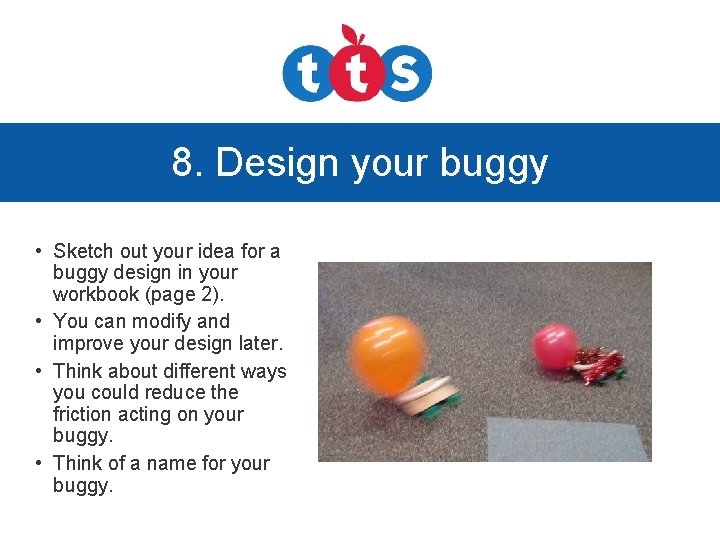
8. Design your buggy • Sketch out your idea for a buggy design in your workbook (page 2). • You can modify and improve your design later. • Think about different ways you could reduce the friction acting on your buggy. • Think of a name for your buggy.
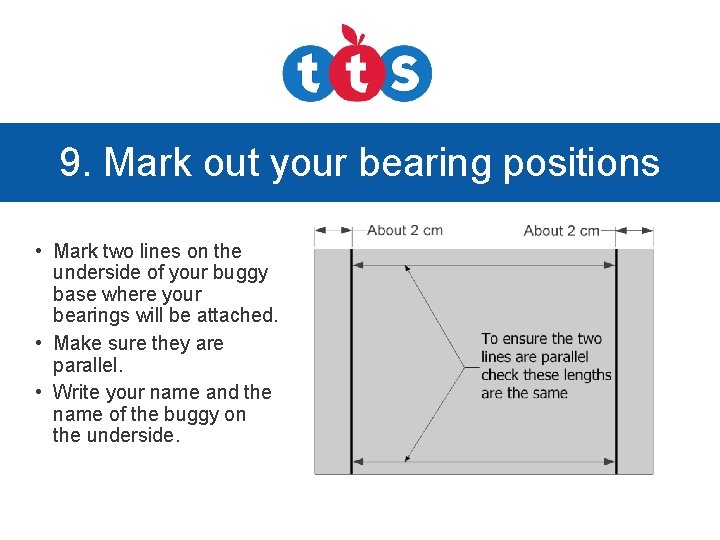
9. Mark out your bearing positions • Mark two lines on the underside of your buggy base where your bearings will be attached. • Make sure they are parallel. • Write your name and the name of the buggy on the underside.
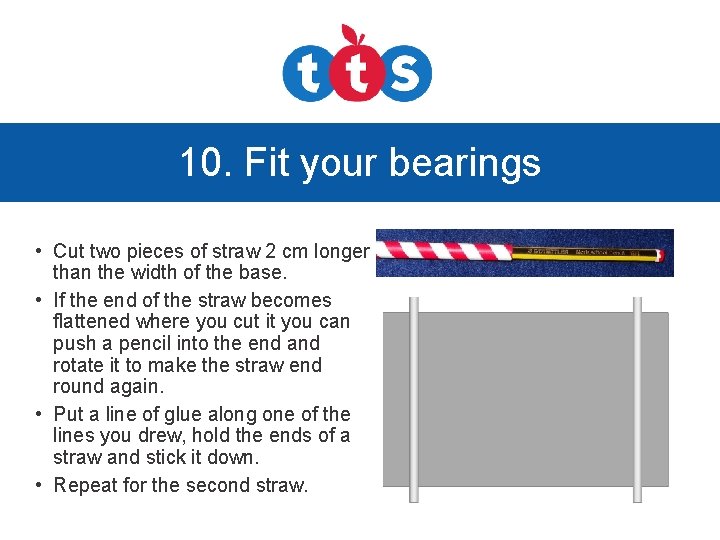
10. Fit your bearings • Cut two pieces of straw 2 cm longer than the width of the base. • If the end of the straw becomes flattened where you cut it you can push a pencil into the end and rotate it to make the straw end round again. • Put a line of glue along one of the lines you drew, hold the ends of a straw and stick it down. • Repeat for the second straw.
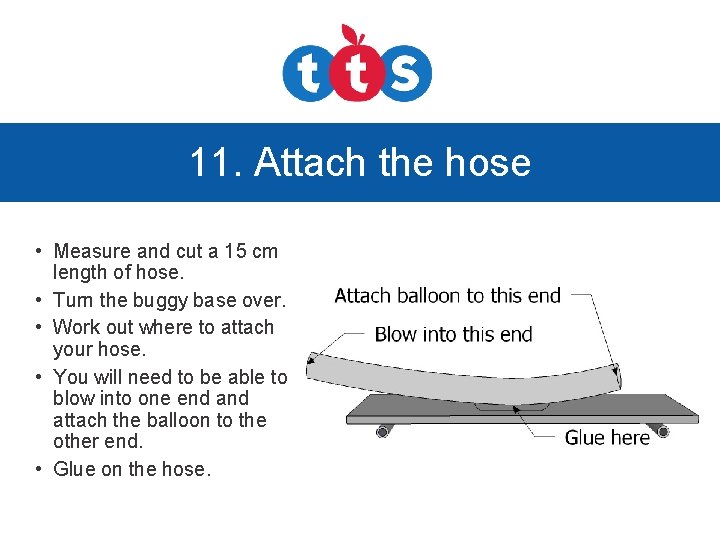
11. Attach the hose • Measure and cut a 15 cm length of hose. • Turn the buggy base over. • Work out where to attach your hose. • You will need to be able to blow into one end attach the balloon to the other end. • Glue on the hose.
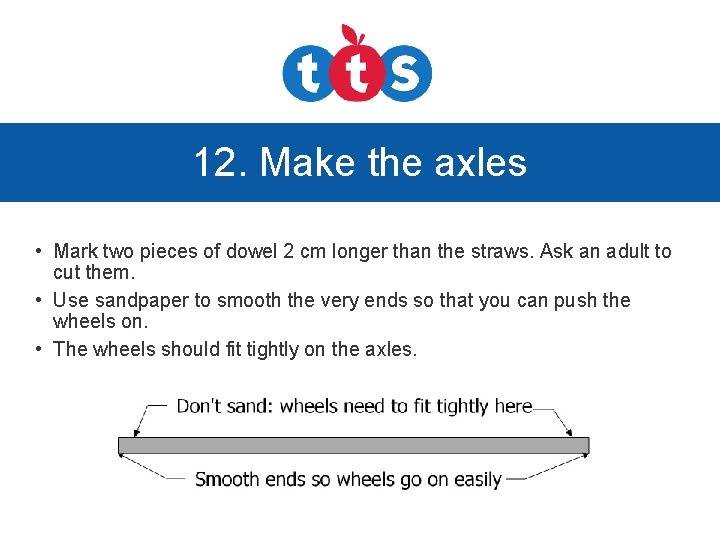
12. Make the axles • Mark two pieces of dowel 2 cm longer than the straws. Ask an adult to cut them. • Use sandpaper to smooth the very ends so that you can push the wheels on. • The wheels should fit tightly on the axles.
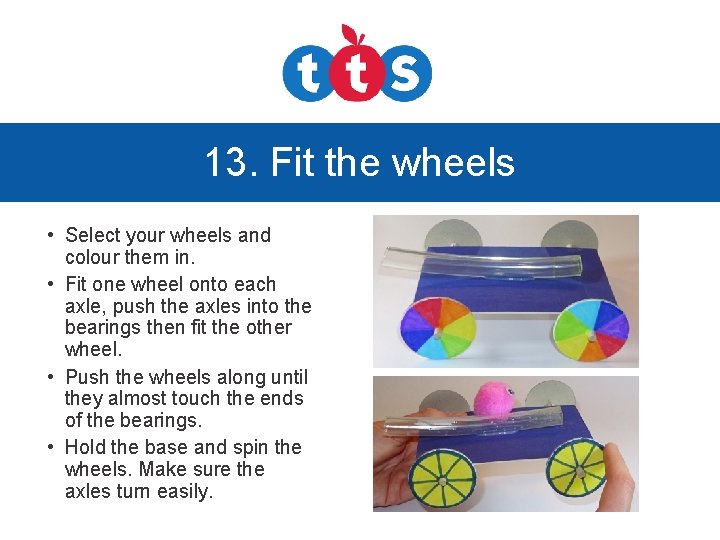
13. Fit the wheels • Select your wheels and colour them in. • Fit one wheel onto each axle, push the axles into the bearings then fit the other wheel. • Push the wheels along until they almost touch the ends of the bearings. • Hold the base and spin the wheels. Make sure the axles turn easily.
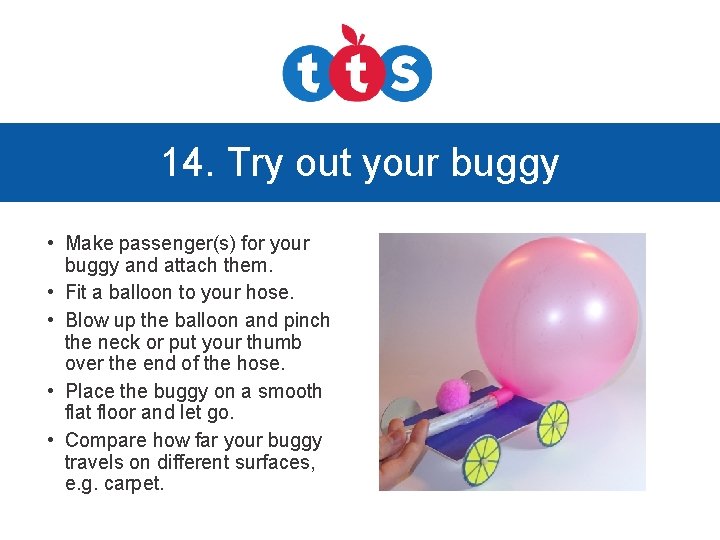
14. Try out your buggy • Make passenger(s) for your buggy and attach them. • Fit a balloon to your hose. • Blow up the balloon and pinch the neck or put your thumb over the end of the hose. • Place the buggy on a smooth flat floor and let go. • Compare how far your buggy travels on different surfaces, e. g. carpet.
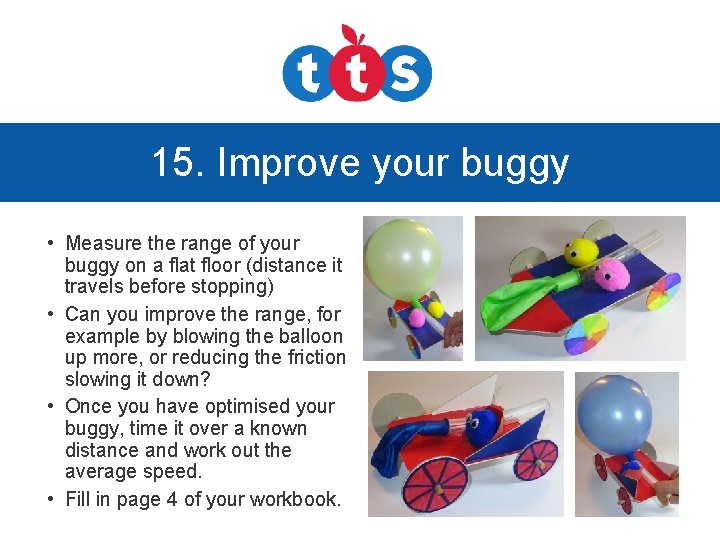
15. Improve your buggy • Measure the range of your buggy on a flat floor (distance it travels before stopping) • Can you improve the range, for example by blowing the balloon up more, or reducing the friction slowing it down? • Once you have optimised your buggy, time it over a known distance and work out the average speed. • Fill in page 4 of your workbook.
16. Plenary • Compare the performance of the different buggies. • What features do you think were responsible for the higher performing buggies? • What features (or problems) do you think were responsible for the lower performing buggies? • What were the main problems you encountered, and how did you overcome them? • What have you learnt? • What did you enjoy most about the activity? • Now clear up thoroughly!
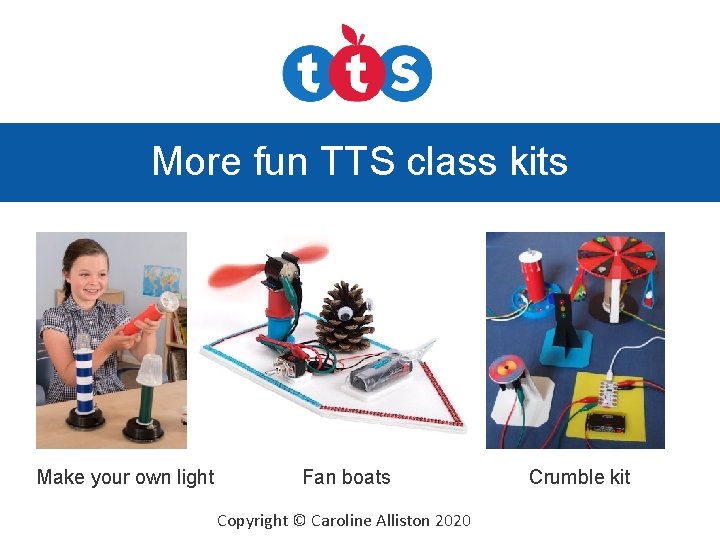
More fun TTS class kits Make your own light Fan boats Copyright © Caroline Alliston 2020 Crumble kit
- Slides: 20