
BALLISTICS Bullets and Casings TIMELINE OF BALLISTICS EXAMINATION
BALLISTICS Bullets and Casings
TIMELINE OF BALLISTICS EXAMINATION 1923: FBI Bureau of Forensic Ballistics established 1929: weapons used in the St. Valentine’s Day massacre identified by matching bullets 1992: Drugfire database is established 1996: NIBIS is established by the ATF 2000: NIBIN is established by merging of Drugfire and NIBIS
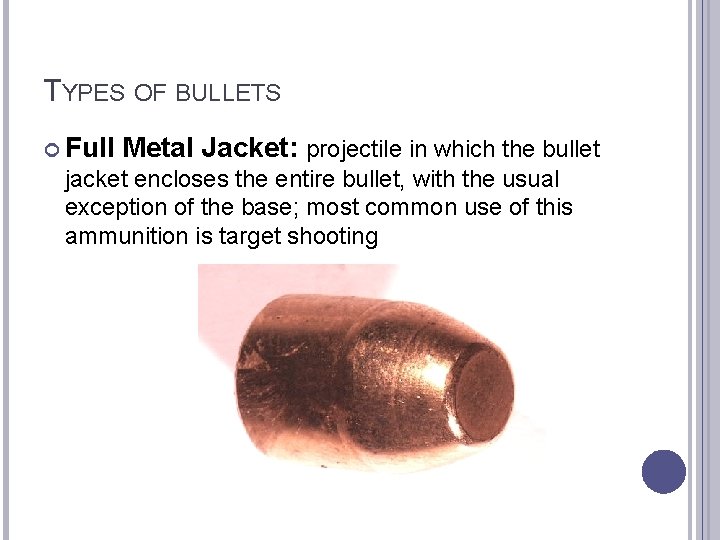
TYPES OF BULLETS Full Metal Jacket: projectile in which the bullet jacket encloses the entire bullet, with the usual exception of the base; most common use of this ammunition is target shooting
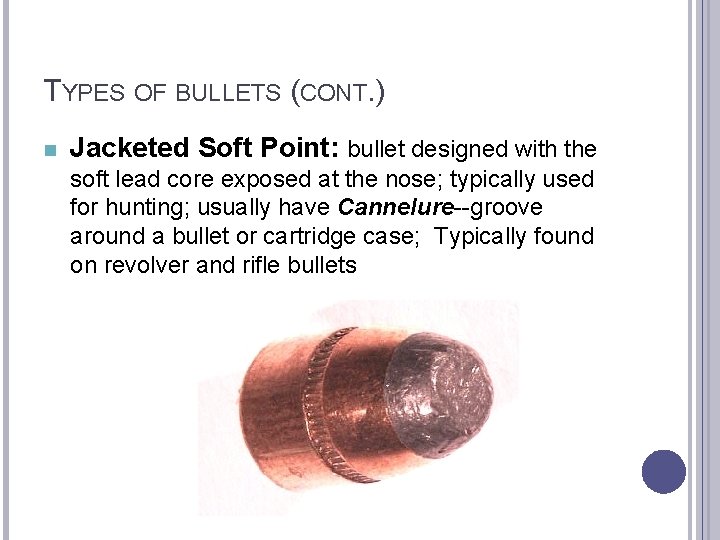
TYPES OF BULLETS (CONT. ) n Jacketed Soft Point: bullet designed with the soft lead core exposed at the nose; typically used for hunting; usually have Cannelure--groove around a bullet or cartridge case; Typically found on revolver and rifle bullets
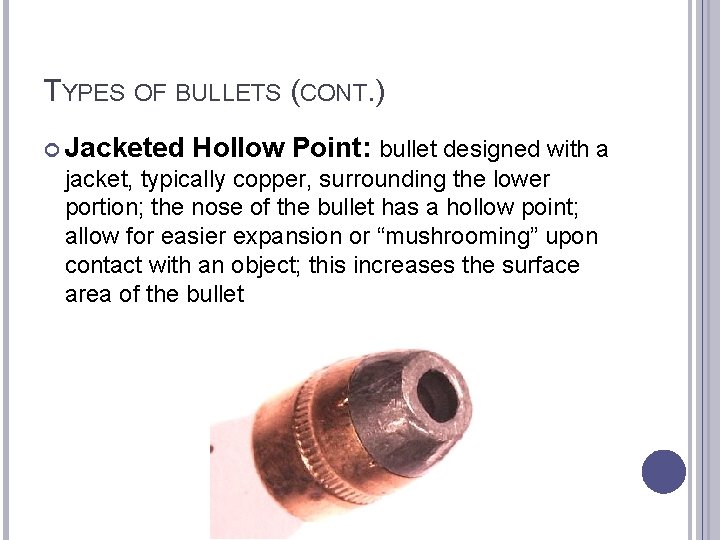
TYPES OF BULLETS (CONT. ) Jacketed Hollow Point: bullet designed with a jacket, typically copper, surrounding the lower portion; the nose of the bullet has a hollow point; allow for easier expansion or “mushrooming” upon contact with an object; this increases the surface area of the bullet
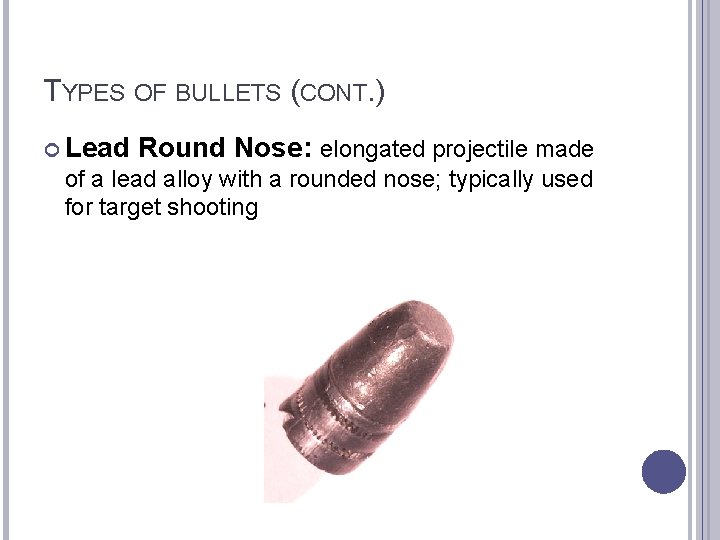
TYPES OF BULLETS (CONT. ) Lead Round Nose: elongated projectile made of a lead alloy with a rounded nose; typically used for target shooting
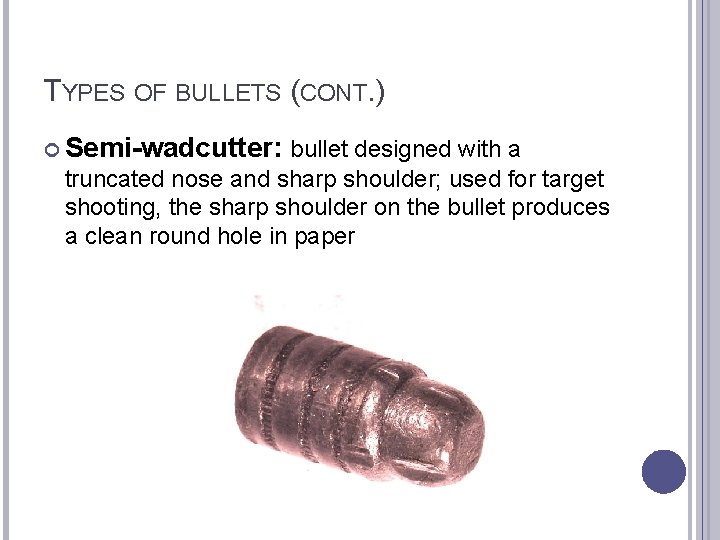
TYPES OF BULLETS (CONT. ) Semi-wadcutter: bullet designed with a truncated nose and sharp shoulder; used for target shooting, the sharp shoulder on the bullet produces a clean round hole in paper
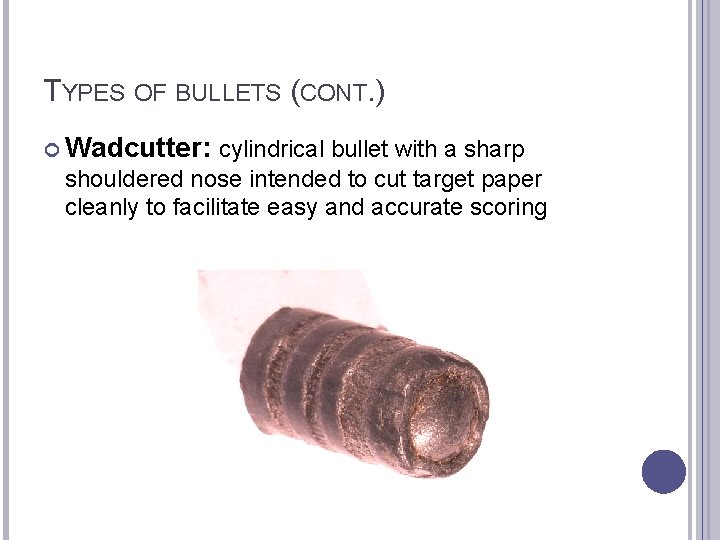
TYPES OF BULLETS (CONT. ) Wadcutter: cylindrical bullet with a sharp shouldered nose intended to cut target paper cleanly to facilitate easy and accurate scoring
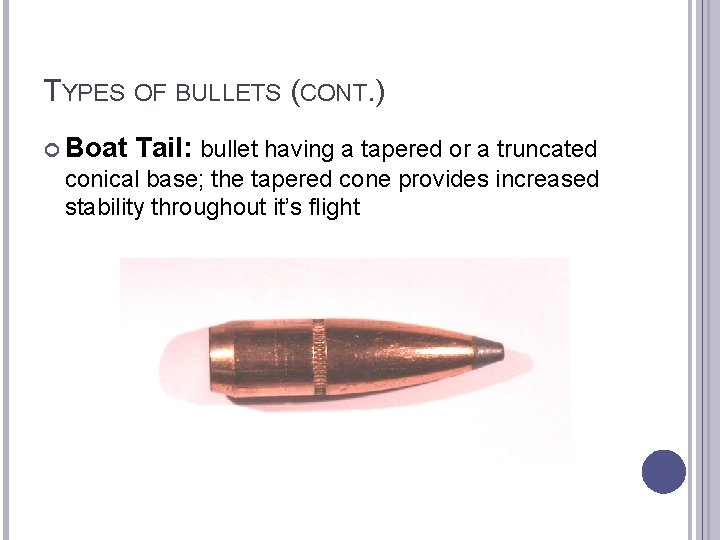
TYPES OF BULLETS (CONT. ) Boat Tail: bullet having a tapered or a truncated conical base; the tapered cone provides increased stability throughout it’s flight
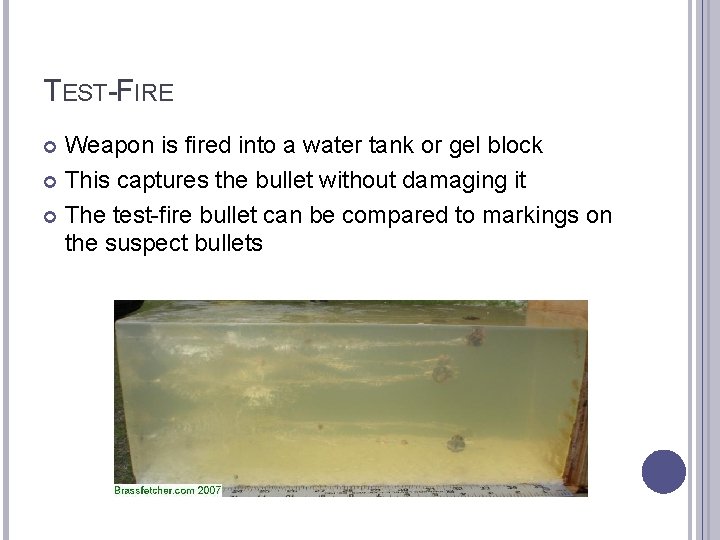
TEST-FIRE Weapon is fired into a water tank or gel block This captures the bullet without damaging it The test-fire bullet can be compared to markings on the suspect bullets
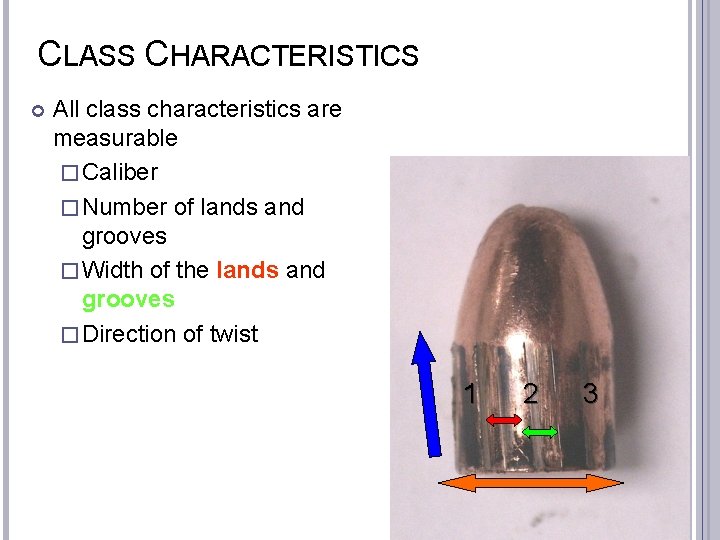
CLASS CHARACTERISTICS All class characteristics are measurable � Caliber � Number of lands and grooves � Width of the lands and grooves � Direction of twist 1 2 3
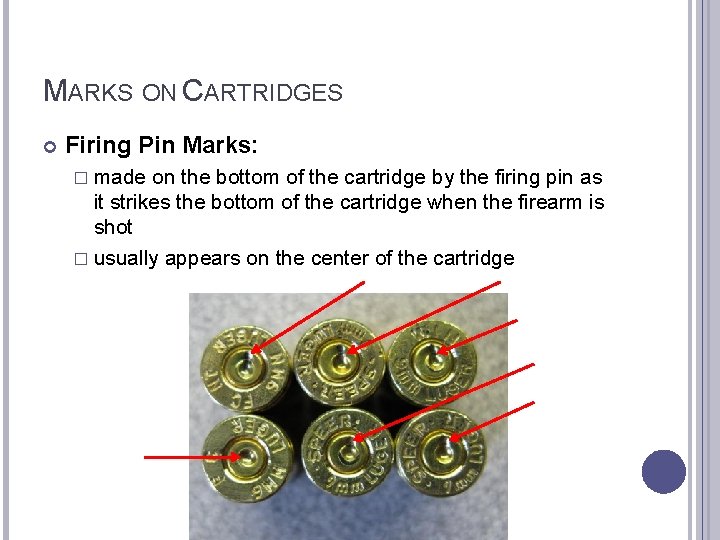
MARKS ON CARTRIDGES Firing Pin Marks: � made on the bottom of the cartridge by the firing pin as it strikes the bottom of the cartridge when the firearm is shot � usually appears on the center of the cartridge
MARKS ON CARTRIDGES (CONT. ) Breechblock Marks: � during the shot, the explosive force pushes the bullet forward and at the same time, an equal and opposite force pushes the cartridge casing backward against the breechblock, leaving marks on the casing � the breechblock prevents the cartridge from shooting toward the user as it recoils � marks appear as parallel lines, circular lines, or stippled pattern
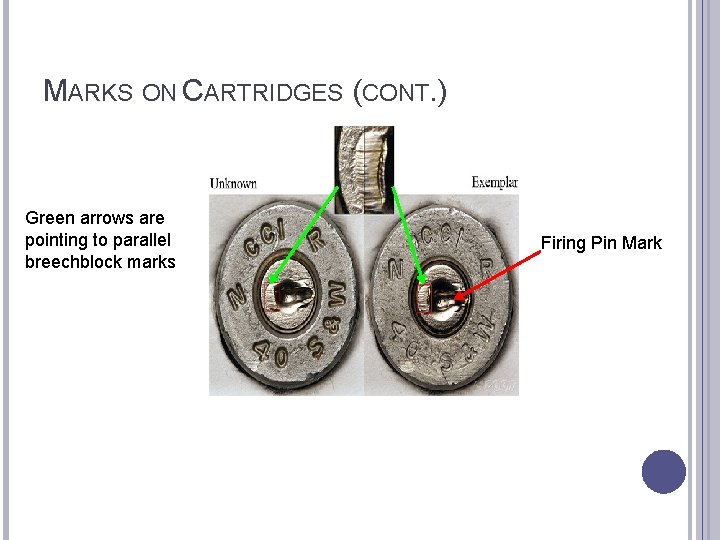
MARKS ON CARTRIDGES (CONT. ) Green arrows are pointing to parallel breechblock marks Firing Pin Mark
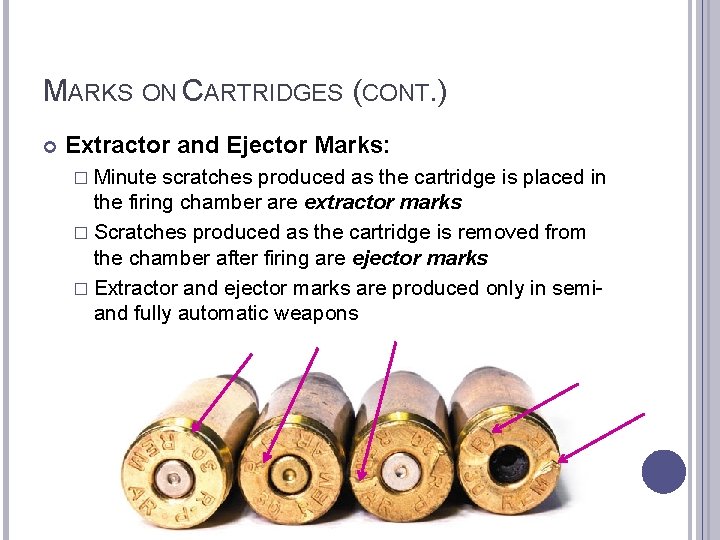
MARKS ON CARTRIDGES (CONT. ) Extractor and Ejector Marks: � Minute scratches produced as the cartridge is placed in the firing chamber are extractor marks � Scratches produced as the cartridge is removed from the chamber after firing are ejector marks � Extractor and ejector marks are produced only in semiand fully automatic weapons
DATABASES National Integrated Bullet Identification System (NIBIS): ATF database that has computer files of ballistic markings of firearms used in previous crimes Drugfire: FBI database that focuses on cartridge casings These two databases were merged to form the National Integrated Ballistics Network (NIBIN)
- Slides: 16