
BALLET HISTORY DANCE ORIGINS OF DANCE Dance has
BALLET HISTORY DANCE
ORIGINS OF DANCE � Dance has began as far back as cave paintings, Egyptian hieroglyphics, descriptions of ancient Olympic games, and Old Testament references. � The HEARTBEAT offered a melody for stamping feet and breathing. DANCE IN THE MIDDLE AGES: 1450 � Spain’s baile de los seises (dance of the six) performed at Corpus Christi services with boys is still performed today. Costumes wore out and secretly patched. � Carole- a basic form of folk dance where chains were made that included a leader who led hand-linked dancers in circles and lines. (maypole dance- dance of fertility). � Danseomania and danse macabre- people dancing until they collapsed or died of exhaustion. � Court dances: joglars (jugglers) and minstrels.
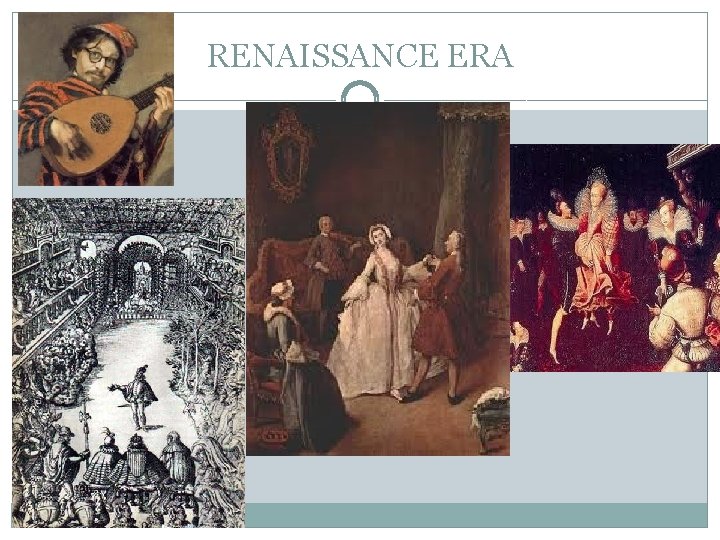
RENAISSANCE ERA �Both in Italy and France. 1500’s �The Italians developed basic ideas to measure dance: keeping time, ability to memorize, use of space, posture, use of footwork, graceful movements. �The French: Catherine de Medici: Greatgranddaughter of Lorenzo the Magnificent. Huge supporter of ballet. �Ballet Comiques, Ballet Masquerades, Equestrian Ballets.
RENAISSANCE ERA
BAROQUE BALLET �Mid 1600’s still in France �LOUIS XIV: Ballet Royal De La Nuit. Le Roy En Soleil. �Danse d’ecole: schooled dancing that followed timehonored and strict rules for executing specific poses and steps. Also known as Classical Ballet. This was the start of professional ballet. �Ballet d’action: where the dancers conveyed the dramatic plot during distinct sections of dance based on conventional steps and a robust amount of pantomime and gesture.
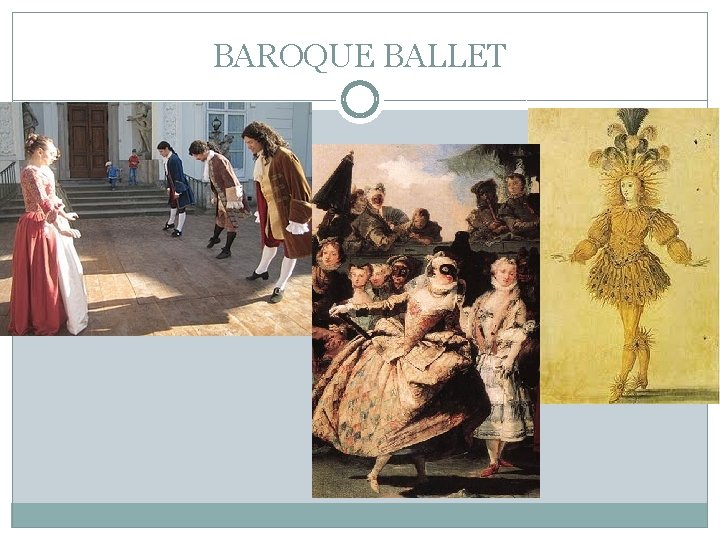
BAROQUE BALLET
CLASSICAL BALLET �Jean Georges Noverre: (1727 -1810) entered the Opera Comique as a professional dancer. He choreographed ballets and taught many famous ballerinas such as Marie Antoinette.
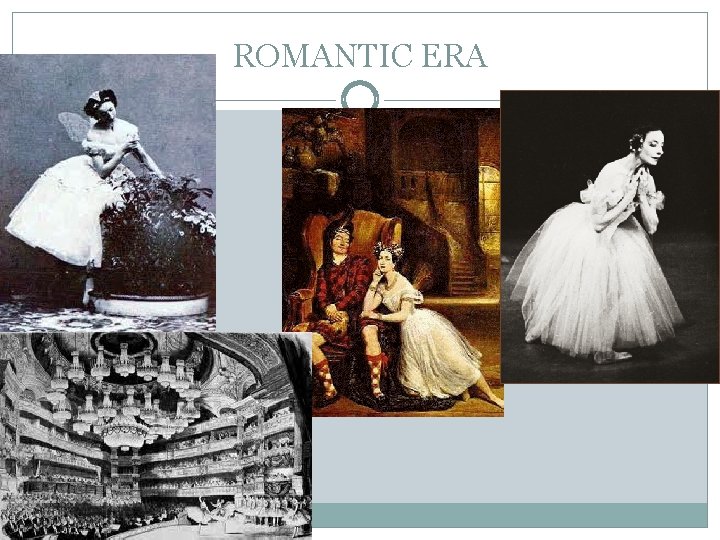
ROMANTIC ERA � 1800’s: Based on emotion and individualism. � Gothic Folklore: wilis and sylphs. � The 2 greatest ballets of this era: La Sylphide and Giselle. � 1880: first commercial blocked shoes were introduced. The first pointe shoes were heel-less, square-tipped, satin slippers. � For the first time in the history of dance, the female presence superseded that of the male. � Flying devices used, trap doors, and music. � Marie Taglioni: her father choreographed La Sylphide and she was prima ballerina. � Carlotta Grisi and Fanny Essler: argument between who wore the first pointe shoes and who was the better dancer.
ROMANTIC ERA
La Slyphide �http: //www. youtube. com/watch? v=l 7 xkcl 0 I 6 z. A

GISELLE �http: //www. youtube. com/watch? v=n 9 T- fts. Uc 2 o&feature=related
RUSSIAN BALLET � Harles-Louis Didelot: Father of Russian Ballet. Flying machines. � Marius Petipa( 1818 -1910): Collaborated with Tchaikovsky to make The Sleeping Beauty and collaborated with Ivanov to make Swan Lake. � Sergei Diaghilev: Formed the Ballet Russes. � Ballet Russes performed in America in New York, January 1916. � Dance grew to great heights with the influence of Avant-Garde and Neoclassicism that it quickly spread to many different countries such as Canada, Australia, Scandinavia, Switzerland, and beyond.

Bibliography � Lee, Carol. Ballet in Western Culture. 2002. Routledge. � Youtube. com video. http: //www. youtube. com/watch? v=l 7 xkcl 0 I 6 z. A � Youtube. com video. http: //www. youtube. com/watch? v=n 9 T- fts. Uc 2 o&feature=related
- Slides: 13