
Balantidium coli Causes Balantidiasis Geog Distribution cosmopolitan Affects
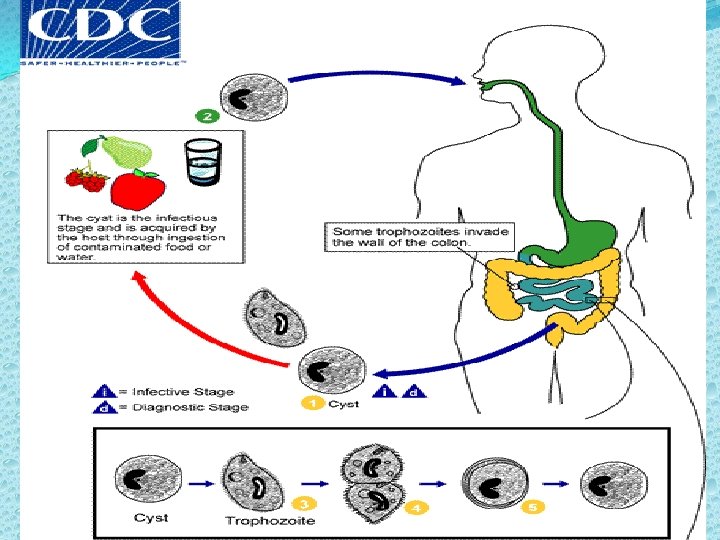
Balantidium coli Causes : Balantidiasis. Geog. Distribution : cosmopolitan. Affects man and Pigs are reservoir hosts. Habitat : large intestine esp. the caecum. Infective stage : the cyst. Mode of infection : ingestion of cyst in: Cotaminated food or water. Flies and food handlers. Heteroinfection Faeco-oral. Autoinfection
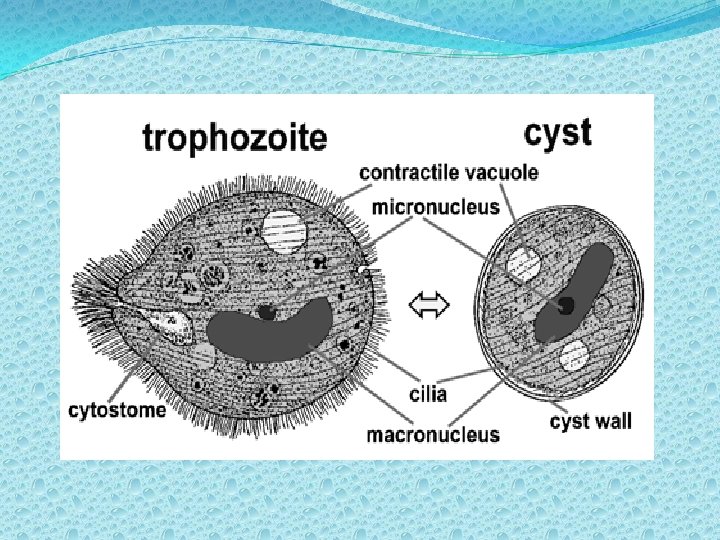
Introduction Largest protozoa and only pathogenic ciliate of man. Causing balantidiasis, balantidial dysentery. • Lives in the lumen, mucosa and submucosa of the large intestine. Cyst is the infective form. • Trophozoites invade and multiply in the intestinal wall but do not metastasis therefore no extraintestinal complication. • Form nests and necrotic ulcers of the large intestine • .
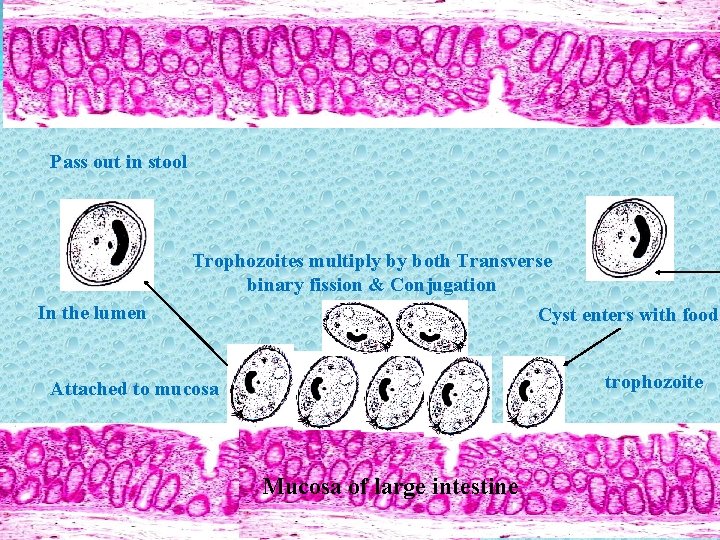
Pass out in stool Trophozoites multiply by both Transverse binary fission & Conjugation In the lumen Cyst enters with food trophozoite Attached to mucosa Mucosa of large intestine
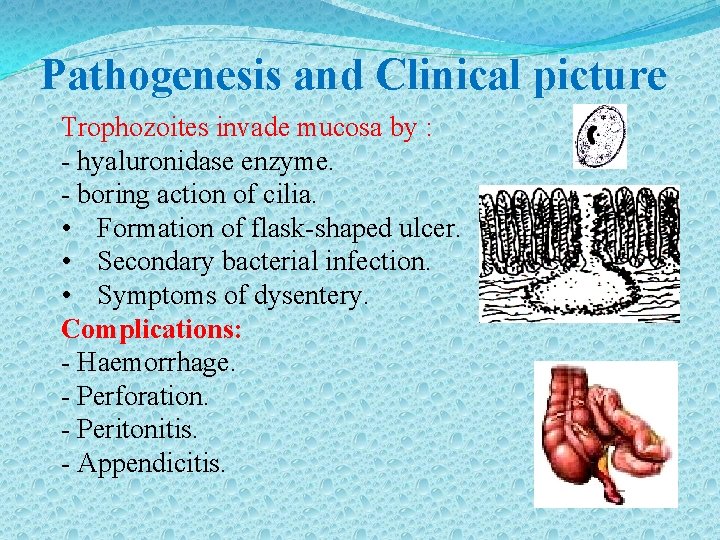
Pathogenesis and Clinical picture Trophozoites invade mucosa by : - hyaluronidase enzyme. - boring action of cilia. • Formation of flask-shaped ulcer. • Secondary bacterial infection. • Symptoms of dysentery. Complications: - Haemorrhage. - Perforation. - Peritonitis. - Appendicitis.
Clinical Signs Mild infections occur with diarrhea, Abdominal pain Alternating periods of constipation Ulceration of the gut wall
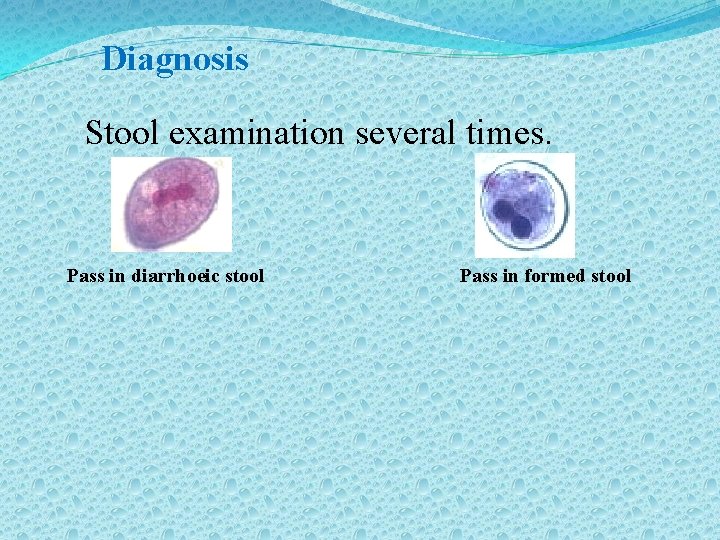
Diagnosis Stool examination several times. Pass in diarrhoeic stool Pass in formed stool
Treatment Metronidazole OR Oxytetracycline
Control Eradication of fecal contamination of food and water. Cysts killed by boiling Avoid practices that allow fecal-oral contact Improved sanitation in institutions. Care in disposal of pig’s excreta
- Slides: 11